 |
 HRD
HRD
 4 March 2012 | by
 HRD Software, LLC has released version 5.11a of Ham Radio Deluxe, the first version since their acquisition of HRD from Simon Brown, HB9DRV. The release appears to be a minor update with the most notable changes being cosmetic updates to splash screens, showing the new ownership of the product.
As many predicted at the time of the acquisition, the next version of HRD, 6.0, will be a pay-only product. The 5.x version will continue to be free and will have bug fixes released for an unidentified amount of time. Version 6.0 will be released at the Dayton Hamvention, but customers can receive a $20 discount for the product by subscribing to HRD support for $59.95 prior to Dayton. At Dayton and afterwards the price for 6.0 will be $79.95. That is a one year subscription. Subsequent support subscription renewals are $39.95 for two years of support. The software doesn’t expire and can continue to be used after support expiration, however users must have a subscription in order to get software updates.
Personally I think Ham Radio Deluxe is worth this price. As I’ve mentioned in previous posts, I think it’s the best amateur radio logging software ever written (though in a sea of outdated and badly designed sophomoric applications, the bar is often set low). But considering how good version 5.x is, it may take quite awhile for people to actually want or need to upgrade. Unless the trial version of 6.0 really knocks my socks off, I’m going to wait until perhaps version 6.1 or 6.2 to consider upgrading.


It isn’t spring yet…
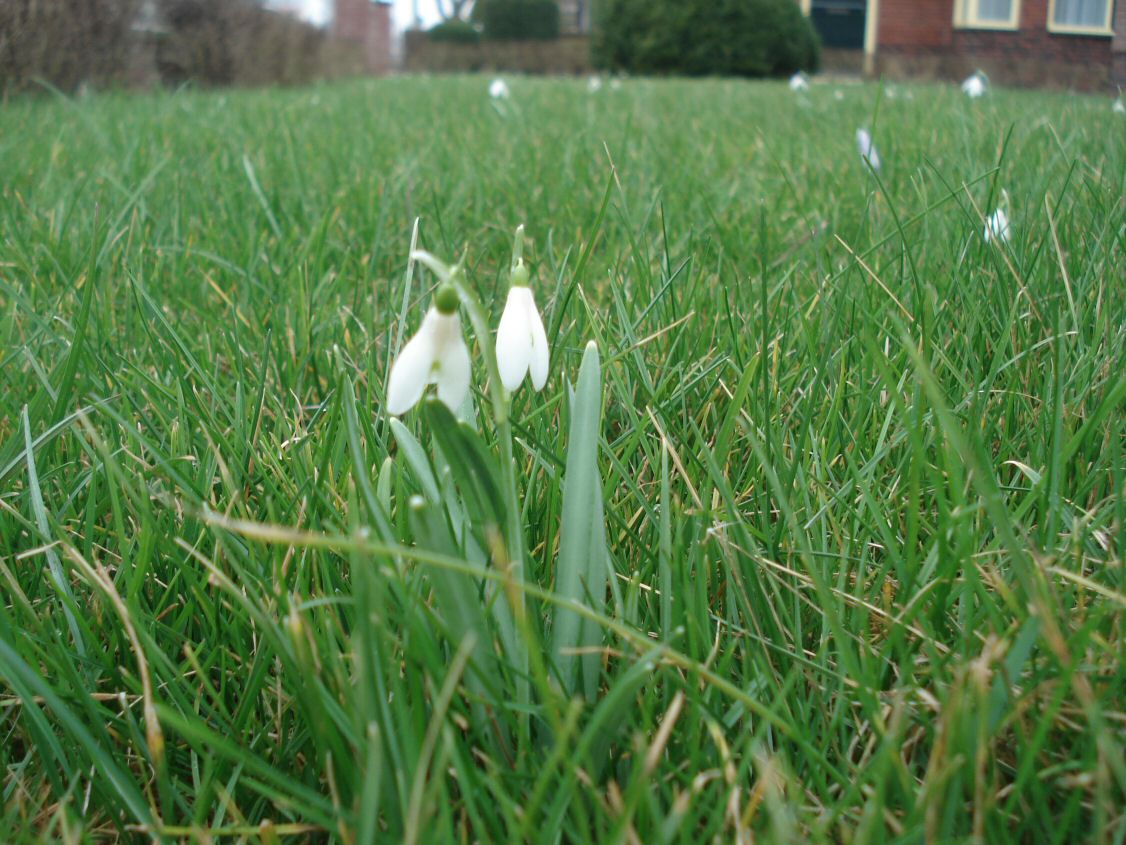
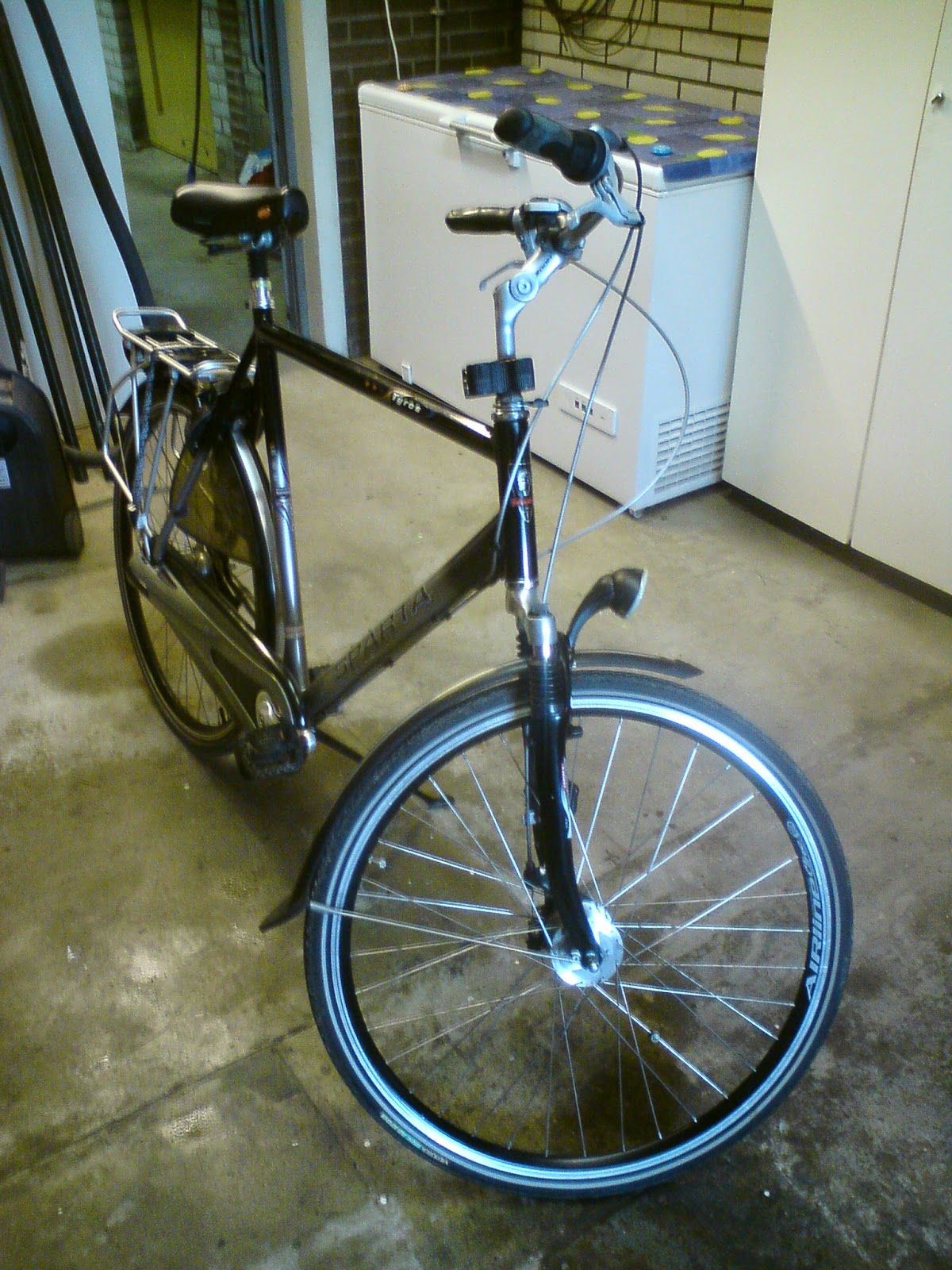
Snowdrops are blooming in our front garden though it is still more then a month before spring. I think everyone had it with winter at the nortern hemisphere and are desperately looking out for the spring to come. Hopefully we don’t get any snow and ice anymore. Luckely the days are already getting longer. March means I go to the job by bicycle. Before I had my drivers license (long time ago) I did everything by bicycle. But the posession of a car makes you lazy. Now, with the increasing fuel prizes in mind I started to use the bicycle again and leave the car in the garage for as long as possible. Last year I cycled about 1900 Km in total. I checked the bicycle today and want to try the little Baofeng HT together with the mini headset while cycling. The mini headset has been modified as it did hang on TX due to RFI. Luckely there is nice video of this little headset mod.
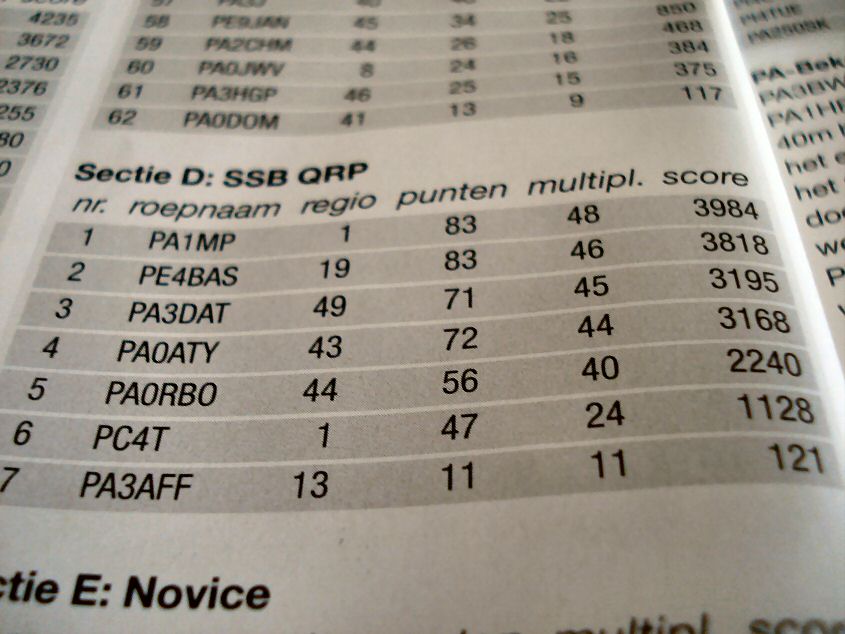
The results of the PA-beker contest last year are published. I became 2nd again, just 2 multipliers short. Fellow blogger Paul PH0TO (PC4T last year) became 6th, not even the last place Paul. I will do my best to win this years QRP-SSB section. It’s just a matter of persistance I think…
Bas, PE4BAS, is a regular contributor to AmateurRadio.com and writes from Groningen, Netherlands. Contact him at [email protected].
Sorry for my absence
But it’s been a heckuva week. Not any Ham radio activity or blogging for W2LJ this past week as my Mom was in the hospital and that was my main focus.
She was having a lot of pain in her right side and it finally got to be too much for her to take. My sister texted me very early Tuesday morning that she was with our Mom and had called 911. I didn’t go into work that day; and spent most of it in the Emergency Room. First thoughts were either gall bladder or kidney stones. All the sophisticated tests didn’t reveal too much of anything. A thorough “old fashioned” exam by an “old school” Chinese doctor led to a hunch and another X-ray revealed a slight fracture to a rib.
Today my Mom was sprung from the hospital and is currently staying at my sister’s house and should be there for the next few weeks to a month. She’s looking rested and more relaxed now that she knows what was causing the pain. I think that finding out the cause of something like this is more than half the battle. Once you can get a little peace of mind, the rest can fall into place.
I did get a chance to get back on the radio for a bit this afternoon to find not much going on. 10, 12, 15 and 17 Meters were all dead when I listened this afternoon. I finally worked EA3DD, Manuel on 20 Meters for a brief QSO. He was very loud – 599 into NJ and I was graced with a 549 report back. I’ll take that any day.
Oh, even though it seems that 2011/2012 will be known as the “Winter That Never Was” here in the NorthEast (I saw robins this morning and the crocusses are already popping up in the front yard), here’s K6BBQ’s homage to FYBO:
Hey, according to the KX3 reflector – the Operator’s Manual will be released on Monday at the Elecraft Website! Getting closer!
72 de Larry W2LJ
QRP – When you care to send the very least!

Larry Makoski, W2LJ, is a regular contributor to AmateurRadio.com and writes from New Jersey, USA. Contact him at [email protected].
A morning’s radio including a QSO from the shed roof
.JPG)

Tim Kirby, G4VXE, is a regular contributor to AmateurRadio.com and writes from Oxfordshire, England. Contact him at [email protected].
CQ CLASSICAL MUSICIANS DE NØIP
How many of you ham radio operators are also classical musicians? (I’m using “classical” loosely here, the way NPR does — not merely referring to the classical period per se, but broadly referring to all music of higher artistic expression.) I’ve always been intrigued by this kind of simultaneous development of artistic ability and scientific/technical ability. I’ve long heard that the two complement one another nicely, e.g. I’ve heard that musicians make better programmers.

Rehearsal of Exultate Festival Choir and Orchestra (Kristi Brackett, Photographer)
Right now I’m working hard with the Exultate Festival Choir and Orchestra to get ready for an upcoming performance of The Messiah by George Frideric Handel. Ham Radio has taken a back seat in my life during this seven-week project (as well it should, if we have our priorities straight). Yesterday’s rehearsal in the Twin Cities was exhilarating, and once again proved that the 2 1/2 hour drive to get there is definitely worth it. Dr. Tom Rossin is an outstanding conductor, and the choir is so good I have to pinch myself sometimes to see if my place there in the bass section isn’t just a dream. (If any of you happen to be in the Twin Cities on the weekend of March 9-11 and would like to hear The Messiah in its entirety, send me an email and I’ll email you a coupon that will get you two tickets for the price of one.)
Music was part of my life as a boy before I became a ham, but it didn’t blossom until 13 years ago at the age of 31. That was when my brother Tom (NØBSY) got me involved in a cappella shape-note singing from The Sacred Harp. This taught me how to sing parts; without it I could never have gotten into choral singing the way I have. My first choral work was with Exultate, singing Bach’s Mass in B-Minor, followed by Brahms’ German Requiem (in Rutter’s English translation). Since then I’ve been involved in a small choir here in the church, too. All of this has been a huge surprise to me. Up until I was 31 years old I was afraid to sing in front of other people, and I couldn’t sing parts if my life depended on it! So if any of you think you can’t sing, think twice — you might be surprised at what has been lying dormant in those vocal chords of yours, just waiting for the proper nudge to burst forth into beautiful song.
I see Tyler Pattison, N7TFP, is not only an accomplished ham radio operator but an accomplished musician. Along with his excellent tutorials for ham radio operators, Tyler has also posted a video of his performance of Charles-Marie Widor’s Toccata in F from Symphony No. 5. In this video you can see the organ from Tyler’s perspective, not only as a musician but as an electrical engineer. He is bringing both sides of his brain to bear upon the magnificent task of rebuilding and upgrading this organ — and then making beautiful music on it.

How many others like Tyler and myself are out there? If you are a musician and an amateur radio operator, what do you think? Has one influenced the other in your life? How?


Todd Mitchell, NØIP, is a regular contributor to AmateurRadio.com and writes from Minnesota, USA. He can be contacted at [email protected].
FreeTrak progress
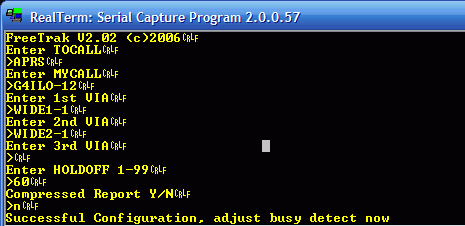
I have made some progress with the FreeTrak PIC based APRS tracker. I found a slightly newer version of the PICFlash programming software. At first this gave exactly the same warning message as the original version. But after a bit of random clicking I tried again and this time the software reported that it was writing to the chip. It verified OK as well. I don’t know exactly what I did, but at least that hurdle was now passed.
 |
| FreeTrak configuration |
I set the DIP switches on the EasyPIC board to link the PIC pins used for serial I/O to the serial output. That didn’t seem to work the first time, either, but at the second attempt at powering up I saw the configuration prompt appear in the terminal window. I was able to complete the FreeTrak configuration with the PIC in the development board.
Next, I changed a DIP switch to put the chip in Run mode. Using a utility called NMEAGen I began sending simulated GPS messages to it using the same serial connection I used for configuration. The LED began flashing at 1 second intervals and using a crystal earpiece on the output pin I could hear the familiar sound of 1200baud packet bursts. I don’t know why it appears to be transmitting at 1 second intervals, but perhaps it is something to do with the simulated GPS data.
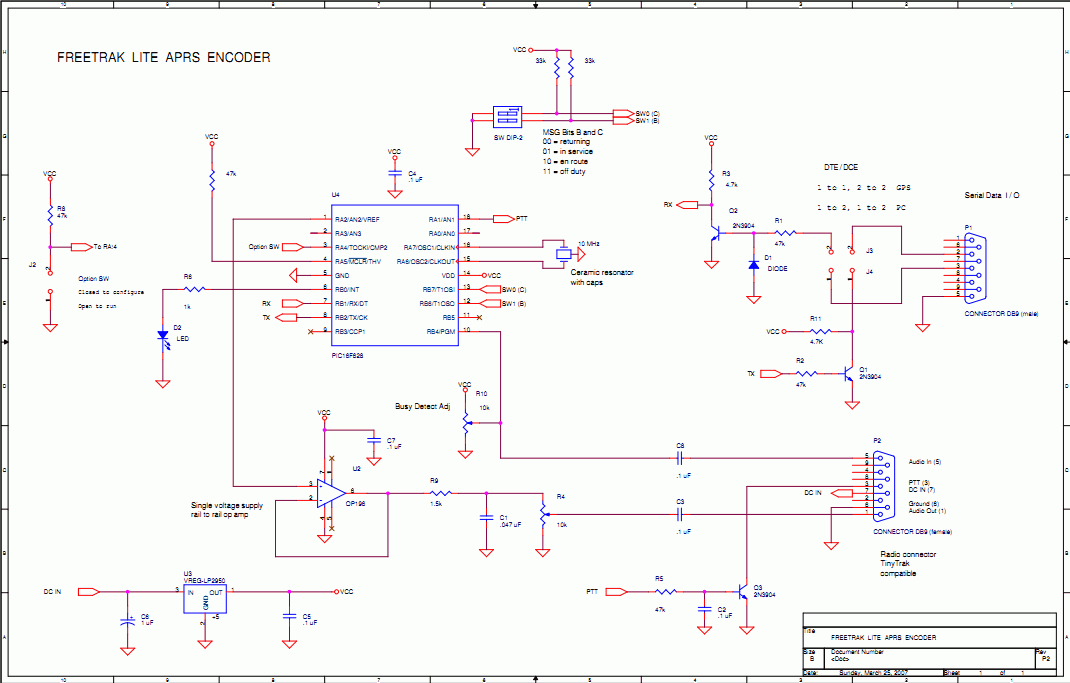 |
| FreeTrak schematic |
So FreeTrak appears to be working. All I need to do now is build it on to a circuit board and attach it to my GPS module and a radio. Here’s where I could use a little help from readers. The AFSK audio output of the FreeTrak uses an obsolete op-amp which is unobtainable. I presume I could just replace this with a simple transistor amplifier stage using a 2N3904 or similar, but do I really need anything at all, given that the audio will drive a sensitive microphone input? Could I get away with just a DC blocking capacitor and a trimpot to set the level?
The other thing I’m unsure about is how to interface the FreeTrak to my GPS module. I think the circuit shown is intended to work with GPS devices that use 5V TTL or even RS-232 signal levels. The data sheet for my bare GPS module states quite clearly that the absolute maximum voltage on any of the pins is 3.3V. The serial lines on the PIC measure close to 5V. How to connect them?

Julian Moss, G4ILO, is a regular contributor to AmateurRadio.com and writes from Cumbria, England. Contact him at [email protected].
Show Notes #076
Introduction:
- Only 317 days until the end of the world as we know it!
Announcements:
- The Black Sparrow Media application for iPad, iPhone and iPod has been submitted to the iTunes store. It is just awaiting validation from Apple, which may take up to two weeks. We’ll let everyone know when it’s available.
- Special Event Station W0S (Whiskey Zero Sierra) will be operating from the Titanic Branson Museum from April 13-15, 2012, commemorating the 100th anniversary of the Titanic disaster. Russ, K5TUX, will be operating the station at some point.
Feedback:
- Scott, AD7MI, asks for help linking APRS and his his Davis Vantage Pro2 weather station with Xastir. Our hosts suggest trying one or both of these:
- Meteo – Davis weather station platform software for Linux. You can subscribe to the Meteo mailing list by sending a subscription request to [email protected]. It has been several years since Meteo was updated, and is still not at version 1.0. You must download the .tar file from the web site as it does not appear in the distribution repositories.
- wview- Cross-platform weather station software. It does need an internet connection if you are going to contribute information to various weather sites, such as:
This program is under active development. Even if it requires a work-around to perform as you wish, it may be worth the trouble. If you’ve ever configured a Linksys router, the web interface of wview looks a lot like that. wview has a support site via Google Groups at http://groups.google.com/group/wview.
Let us know how you get on, Scott!
Russ signed up for the AllStarLink network; it’s very similar to joining EchoLink. AllStar uses the Asterisk VOIP system, and Jim, WB6NIL, is the author of the repeater link software. Russ had success using a Mac computer, but not with a Linux machine.
Richard sees the biggest problem with EchoLink is that it only allows one connection per IP address, so you can’t have both a server and client at home. The EchoLink site only sees your IP address assigned by your ISP, which limits you to one connect from home. In this respect, AllStarLink appears to better in that it seems to allow multiple connections.
AllStarLink is available in several combinations of Linux and Asterisk:
- ACID – based on CentOS
- Limey Linux – based on embedded Linux and bootable from a flash drive, and runs ONLY on several specific Mini-ITX motherboards.
- Pickle – a specialized embedded Linux distro designed to operate on a BeagleBoard-xM (and DMK Engineering LOX board).
Russ then provides an overview of setting up an AllStar Link client.
Richard defends the use of “mode” as appropriate as the definition allows it to mean “a method or means of doing something”. For example, CW vs DFCW (dual-frequency CW), where DFCW uses frequency shifts to distinguish dots and dashes, rather than two different lengths of the same frequency, and spaces. Both are CW.

Contact Info:
- Contact Richard at [email protected], Russ at [email protected], or both at the same time at [email protected].
- Listen to the live stream every other Tuesday at 8:00pm Central time. Check the LHS web site for dates.
- Leave us a voice mail at 1-909-LHS-SHOW (1-909-547-7469), or record an introduction to the podcast.
- Sign up for the LHS mailing list.
- Sign up for the MAGNetcon mailing list.
- LHS merchandise is available at the Merch link on Web site. Check out the Badgerwear or buy one of the other LHS-branded items at PrintFection.com/lhs or Cafe Press. Thanks!
- Thanks to Dave from Gamma Leonis for the theme music.
Music:
- To be added.
Russ Woodman, K5TUX, co-hosts the Linux in the Ham Shack podcast which is available for download in both MP3 and OGG audio format. Contact him at [email protected].
 Ham Radio Deluxe |
 W5SWL Electronics |
 Ham Radio Prep |
 KB3IFH QSL Cards  Hip Ham Shirts  HamRadioAuctions HamRadioAuctions Reliance Antennas Reliance Antennas Enigma Shop Enigma Shop |  morseDX  Ni4L Antennas  R&L Electronics R&L Electronics antennas.us antennas.us QRV QRV |
- Matt W1MST, Managing Editor
