 |
 Raspberry Pi update from RS
 26 March 2012 | by
 I registered with RS Components for a Raspberry Pi board (when they get released) and whilst I’m not expecting one this side of the summer it was nice to get an update from them. If the truth be told I’m having too much fun activating summits in at the moment. Especially now as we seem to have a warm spell. It certainly makes a change from hail and snow I had on Scafell Pike a couple of weeks ago. Anyway see below for the update from RS:
Welcome to the latest Raspberry Pi update from RS Components!
Much has been happening behind the scenes since you received our last update, not least the start of compliance testing on the Raspberry Pi.
Why are we doing this? Compliance testing is an essential part of bringing any electronic product to market. The Raspberry Pi is being tested to make sure it conforms to all the regulations that apply to electronic devices around the world. This means that we can be sure the Raspberry Pi we deliver to you meets the correct standards and is as safe as you would expect any electronic device you purchase to be.
We’re working with the Raspberry Pi Foundation to manage the testing process as quickly as possible, while ensuring all tests are carried out to guarantee safety. More information is being posted on the Raspberry Pi website , as well as on our own FAQ pages rswww.com or DesignSpark. We’re also regularly tweeting updates on progress. Follow @RSElectronics on twitter to catch the latest news.
Alongside this, we’ve also been contacting the first group of people who registered for a Raspberry Pi from RS, to help us plan delivery of the initial batch of boards. In next week’s update, we’ll provide more information on how we’re managing the queue and the order process.
RS Components
Alex Hill, G7KSE, is a regular contributor to AmateurRadio.com and writes from Cumbria, UK. Contact him at [email protected].
ICQ Podcast S05 E07 – Radio Spring Clean (25 March 2012)
Series Five Episode Seven of the ICQ Podcast has been released. News Stories include :-
- RAFARS AOTA event
- London 2012 Games Final Update
- VO-52 to return soon
- 'Birthplace of Radio' awarded City status
- BBC highlight problems with PLT
- Complete collection of QRPp Journal is online
- DXCC Online
- Special Callsign for Naval Social Event
- HMS Collingwood Amateur Radio Special Event station
- Ham moves to 'ideal' North Dakota
Martin M1MRB gets ready for Spring with his Radio Spring Cleaning tips and Ed Durrant, VK2ARE provides an intro to the HF bands.
Colin Butler, M6BOY, is the host of the ICQ Podcast, a weekly radio show about Amateur Radio. Contact him at [email protected].
My Antenna
My antenna…

…didn’t wake you up at 3 AM last night with loud music.
…doesn’t mind it when you leave your curtains open and walk around naked in your house.
…doesn’t rev up its engine for two hours like Joe does down the street with his old Mustang on Friday nights.
…won’t pollute your water well.
…didn’t mess up your TV yesterday, but the signal coming out of it may have. Sorry about that. I can fix that if you’ll let me.
…won’t drive up over the curb and over your flowers and shrubs.
…doesn’t belong to a gang.
…isn’t as cute as the woman next door, but my antenna didn’t call the township office like the woman next door did when you didn’t get a building permit.
…will never be on a sexual predator list.
…doesn’t bark at everything that moves.
…is a technological sculpture…well, to me, at least.
…is a gathering place for birds, when they’re not over at your bird feeder.
Come to think of it, my antenna is a pretty good neighbor.


A kit builders "magic" tool

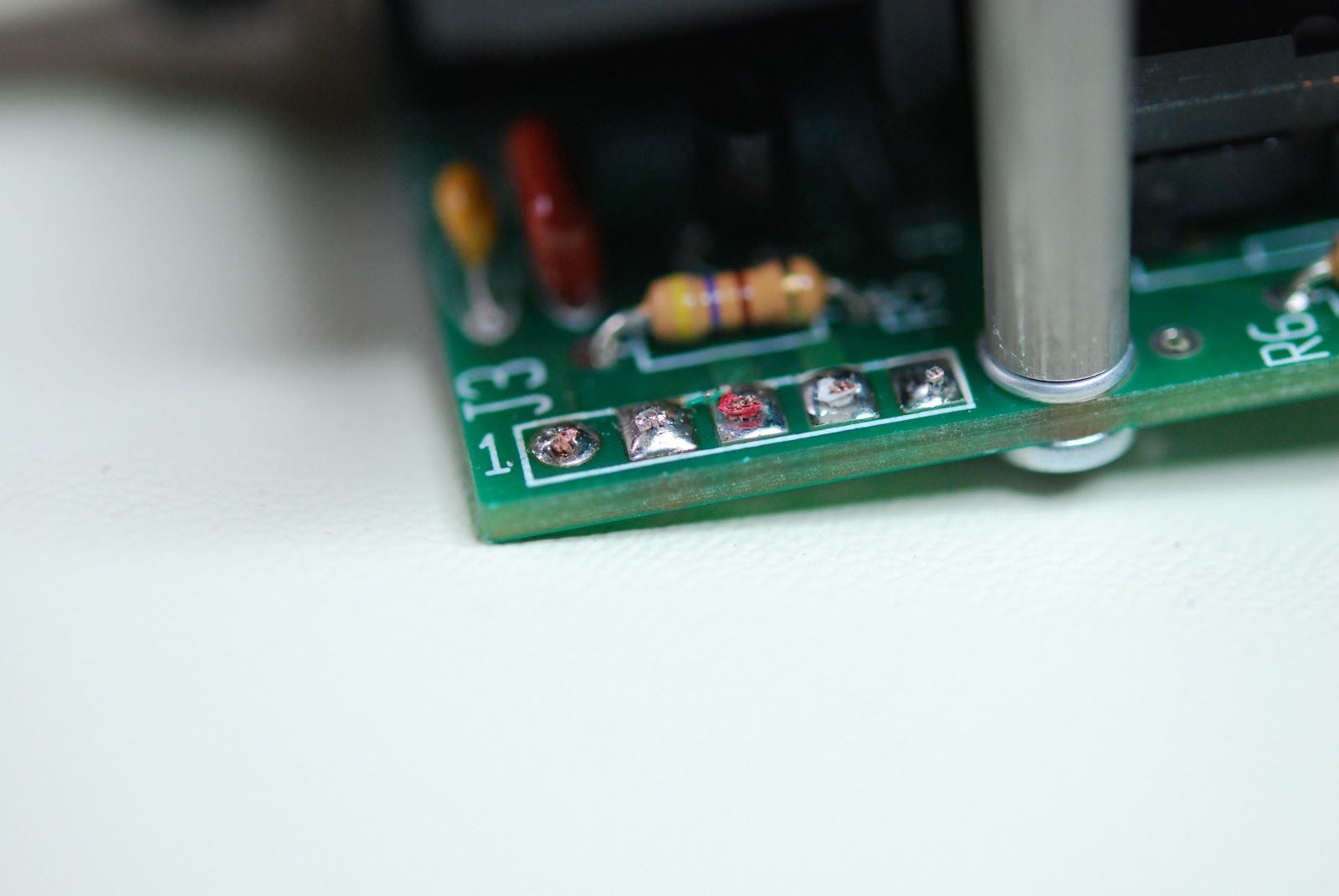
I really enjoy kit building I find it to be a nice pass time when the propagation is not co-operative and the bands are slow. With kit building it's a learning curve starting out with basic kits and moving up to kits that
contain SMT components....I have yet to dive into that pond. There sure is a reward when you have spent time
 |
| Replacing a cable |
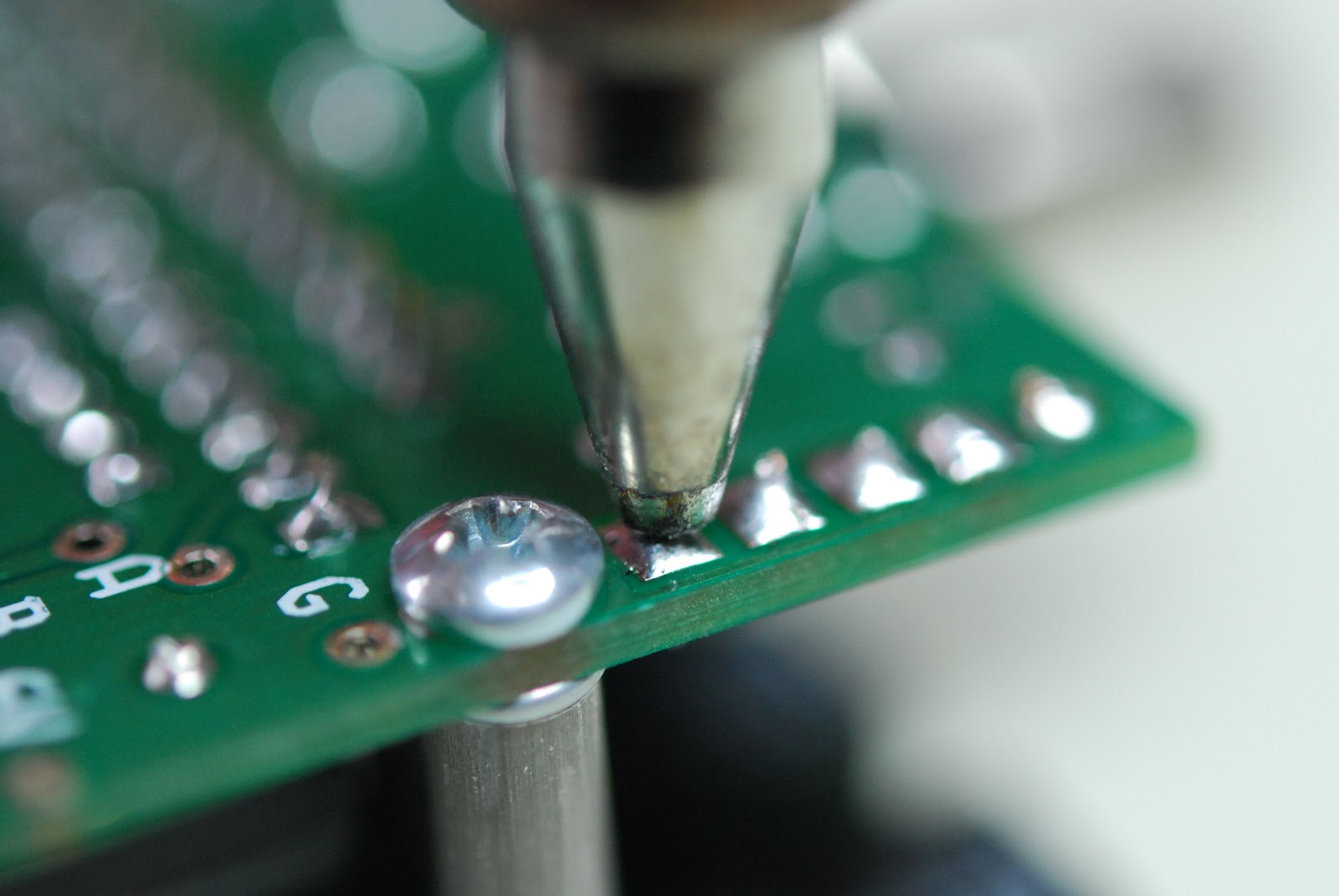
Recently I had to open up my Elecraft K2 to add an internal antenna tuner and battery. I had not had the top off the K2 for some time.....I was amazed at all the components to which I thought..."I actually put all this together" For those of you who build kits like me you have run into times when things just don't go as planned. I have soldered components in the wrong place. There has been solder run onto two pads instead of the one the solder was intended for and so on. I would bet there are a lot of kit builders out there who have their own stories. As kit builders we all have our "tools" from soldering stations to multimeter's
 |
| Hakko at work |
 |
| The finished product |

Mike Weir, VE9KK, is a regular contributor to AmateurRadio.com and writes from New Brunswick, Canada. Contact him at [email protected].
A hint of changing conditions and a trip to White Horse Hill
As I was driving home last night, I was looking around on 28MHz SSB as I usually do. In addition to the ‘usual’ South Americans that I’ve been hearing for a few weeks there were a couple of fairly weak French stations. This interested me as I suspected I was hearing them via Es propagation. If that’s true, then with any luck we will start to hear more Es on 28MHz and then hear it rising in frequency towards 50MHz and beyond.
This afternoon, in celebration of the gorgeous weather, Julie and I decided to go up White Horse Hill, which is about 10 miles to the south of where we live. Although it was a little misty up there, we had a great time walking, listening to the skylarks, watching the buzzards and picking out some of the local villages. I took my Icom E-92 handheld and had a tune around on 145 and 433MHz. I was particularly pleased to have a nice 145MHz simplex contact with Mike 2E0YYY/P who was on the Long Mynd in Shropshire. I suppose the distance between us was around 80-90 miles.

Tim Kirby, G4VXE, is a regular contributor to AmateurRadio.com and writes from Oxfordshire, England. Contact him at [email protected].
Four State QRP Group hits a home run!
This sounds like a great kit at a fantastic price, for what you’ll be getting!
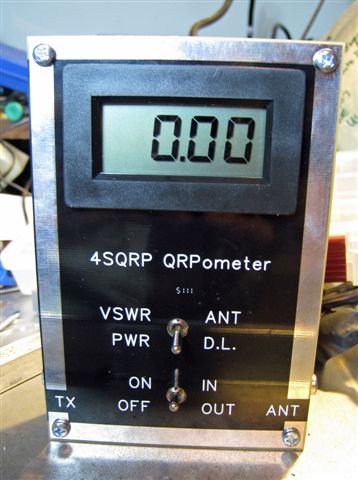
Dubbed the QRPometer during development, this useful accessory is a highly accurate and easy to use power and swr indicating meter. Unusual in any pwer meter, the range of accurate power measurement extends down to a low 100 milliwatts. It has a large digital display and boasts an accuracy level that few, if any, similar meters on the market can match. A unique design feature is that 2 circuit boards are included in the kit, they form the front and back of the enclosure. The boards are shiny black so there is no need to buy, build, or paint an enclosure.
This kit was conceived to fill a need within the hobby for an inexpensive, highly accurate VSWR and RF power meter for QRP power levels. The QRPometer uses simple analog signal-processing circuitry to provide a set of essential measurement features not previously available in a single unit. High quality, double sided, printed circuit board construction is used, with solder mask and silk screened component reference designators. All components are through-hole for easy assembly. NO toroids are required. All controls and jacks are PCB mounted, and a single, four conductor ribbon cable is the only wiring necessary. The QRPometer can be constructed by beginners as well as experienced builders. Construction time is approximately 3 hours, depending on experience level. The only equipment required for calibration of the QRPometer is a digital voltmeter, and a QRP transmitter.
First time builders please note: This kit is not difficult to build. All parts are thru hole parts, there are NO SMT parts. The parts are wide spaced on the board making installation easy, and all connectors are board mounted which eliminates point to point wiring. Also note that there are No TOROIDS to wind – none.
Specifications and Design Features
Power Range: 100 mW to 10 Watts
Accuracy: Power, 2% Typical
VSWR, 5% Typical
Large Digital Display The digits are .52″ in height.
Sensitivity: Direct readout on 3 1/2 digit LCD display. Minimum resolution 10 mW.
Enclosure: Silk Screened PC boards create the enclosure, no need to purchase one.
No Toroids: There are no toroids in this kit.
The price? Only $50.00 (US). Wow!
For all the details; and to order ……… http://www.wa0itp.com/qrpom.html
Please note that I am not a member of the 4 State QRP Group and have no “interest” in this kit, other than seeing great stuff get into the hands of my fellow QRPers!
72 de Larry W2LJ

Larry Makoski, W2LJ, is a regular contributor to AmateurRadio.com and writes from New Jersey, USA. Contact him at [email protected].
SKYWARN Training, and a Word of Advice About Amber Lights
 Over the last 30 years I’ve attended quite a few SKYWARN Storm Spotter training sessions, and I’ve always found the time well-spent. When I lived in the Twin Cities, Metro SKYWARN was simply part of being an amateur radio operator — there, SKYWARN is primarily a ham radio operation, and I got involved when I was a teenager. Later as a police officer I attended SKYWARN training in that capacity, but it was obvious that cops and firefighters weren’t nearly as effective as the ham radio operators who formed the well-oiled machine of Metro SKYWARN.
It’s a bit different out here in rural Minnesota. While some parts of rural Minnesota are connected via a hub-and-spoke repeater system to KØMPX — located right in the Chanhassen office of the NWS — such is not yet the case here in Granite Falls. Out here the well-oiled machine of storm spotters is the local fire department. Until we get the local repeater EchoLinked to KØMPX, ham radio operators must rely upon their cell phones to call in storm reports (unless of course they’re firefighters, who have their own radio net).

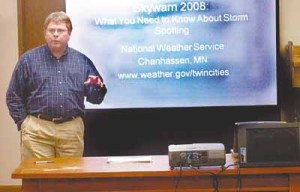
Todd Krause, KBØSGH, Warning Coordination Meteorologist with the National Weather Service, giving SKYWARN training in 2008. (Photo obtained from www.nujournal.com).
In any case SKYWARN training does come to our small town, thanks to the tireless efforts of Mr. Todd Krause, KBØSGH, a true gentleman and an excellent teacher. He’s on the road quite a bit in the spring of each year, putting on storm spotter classes all over Minnesota. Our class was two days ago, from 7:00-9:00 P.M., and the room was packed!
If you haven’t attended a SKYWARN class, or if it’s been a while since you have, I encourage you to find a training session near you (click here) and attend. This is the time of the year when these classes are offered, but we’re nearing the end of this year’s schedule — you’ll want to act quickly. In my experience you’ll need to attend this training more than once to really get the hang of it. It’s easy to identify the features of a storm by looking at pictures in the classroom, with the instructor right there to help you, but it’s much more difficult to do so out in the field. This class will help you distinguish between what really matters and what merely looks scary as you look up into the sky. More than once I’ve been with untrained people who freak out because of a scary-looking cloud, e.g. a rapidly rotating shelf cloud, and I’ve been able to calm them down by explaining what’s really happening.
One word of advice — if you do get into SKYWARN spotting, don’t go nuts decking out your car with amber lights and cheesy stickers/decals, okay? Even untrained observers know that stuff is for your ego, not for your storm spotting. They’re not impressed; they’re rolling their eyes. I don’t want to embarrass anybody in particular so I won’t provide any links, but a little Googling will show you how silly some storm spotters can be. I just saw one a few weeks ago with a bunch of amber lights on the rear deck of his car along with SKYWARN stickers and other home-made stickers proclaiming to the world that he is a Very Important Person as an Officially Certified Storm Spotter. Truly cringe-worthy! If you have this stuff, would you mind removing it? Maybe one SKYWARN sticker isn’t such a bad idea, but the other stuff is an embarrassment to the rest of us.
When I was a police officer I had all sorts of insignia and lights on my patrol car, but guess how much of it helped me when storm-spotting (with my 2m HT in my hand)? None of it. Ever. Flashing lights (including amber ones) can snarl traffic and even cause accidents if you use them, whether you’re driving or pulled over. Unless they’re absolutely necessary, they shouldn’t be used at all — and when it comes to storm-spotting, they’re almost never necessary. If you’re going to do your storm spotting from your car, drive the speed limit, obey all traffic laws, find a good vantage point where you can park safely, and you won’t even need the four-way flashers that came with your car.


Todd Mitchell, NØIP, is a regular contributor to AmateurRadio.com and writes from Minnesota, USA. He can be contacted at [email protected].
 Ham Radio Deluxe |
 W5SWL Electronics |
 Ham Radio Prep |
 KB3IFH QSL Cards  Hip Ham Shirts  HamRadioAuctions HamRadioAuctions Reliance Antennas Reliance Antennas Enigma Shop Enigma Shop |  morseDX  Ni4L Antennas  R&L Electronics R&L Electronics antennas.us antennas.us QRV QRV |
- Matt W1MST, Managing Editor
