 |
 Lido Key 2012 Wrap-up, Part 2
 9 April 2012 | by
 This is part 2 of this series. You might want to read Part 1 first if you haven’t already done so.
When I woke up for the second day of my operation, for some reason I had a feeling that I hadn’t remembered to pack up all my equipment the day before. I was sure that I had the radio, the antenna, and the mast, but I didn’t remember actually packing the tent stakes and guy lines. I was hoping that I’d forgotten and done that anyway, but I headed to the car to check the equipment, and found that I had indeed forgotten those small but important items. I did have some spare line with me, so the only thing I’d need to do is to figure out how to anchor that line, possibly with some rocks. I decided that I’d head to where I’d set up and figure out if maybe the missing items were still there. If not, I’d try to find a local store that sold what I needed.
When I arrived at the location where I’d set up the day before, I discovered the good news and the bad news: The good news was that the line and carabiners were lying on the ground. The bad news was that the bright-yellow tents stakes were gone. I took the line and carabiners and decided to have lunch while I mulled my options.
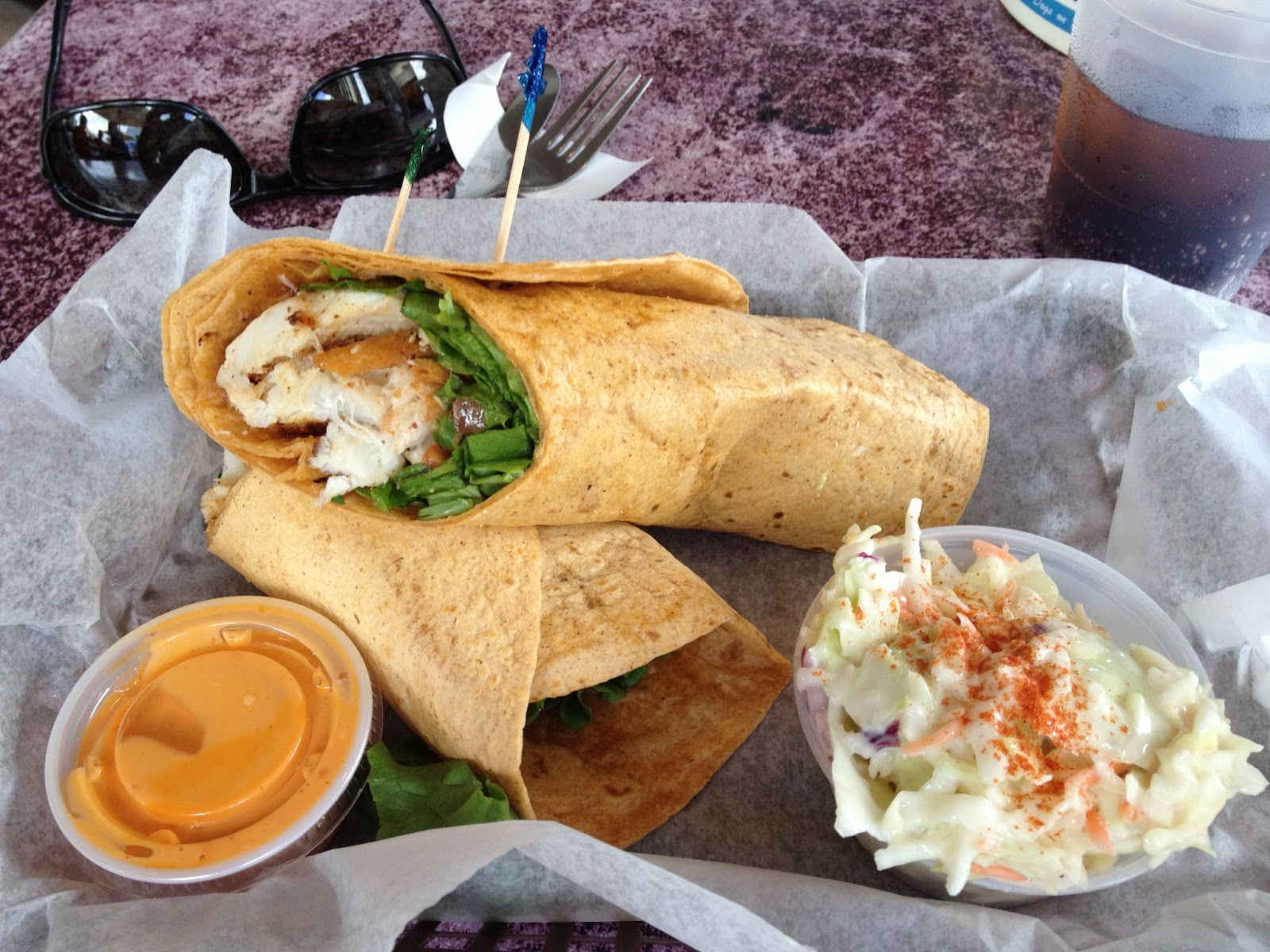
As I’ve done in the past, I headed to my favorite place for lunch, The Old Salty Dog, located just a few minutes away. As I was waiting for my blackened Grouper “Firecracker Wrap”, I used my iPhone to try to find a place that sold camping supplies. There was nothing at all nearby, with the closest place, a Wal-Mart, being over 10 miles away. I live in northern New Jersey and I’m used to traffic, but Sarasota County in the middle of the day during tourist season is awful. I figured that the amount of time that it would have taken to get the stakes and back just wasn’t worth the effort, so I tried to figure out an alternative. Thinking about how I’d set up on the first day, out in the direct sunlight, I realized that ideally I’d be able to set up where I could get a little shade. There was a section of the park where I’d set up on the previous trips that was shaded, but with the park being much busier than in the past, I couldn’t use that location. I then figured out that I could use a couple of bungee cords that I had with me to lash the mast to a fence that bordered the parking lot. I found a suitable location in the lot, with the only drawback being that there was no shade and no place to sit. (This second location is marked in green on the map in my first post of this series.)
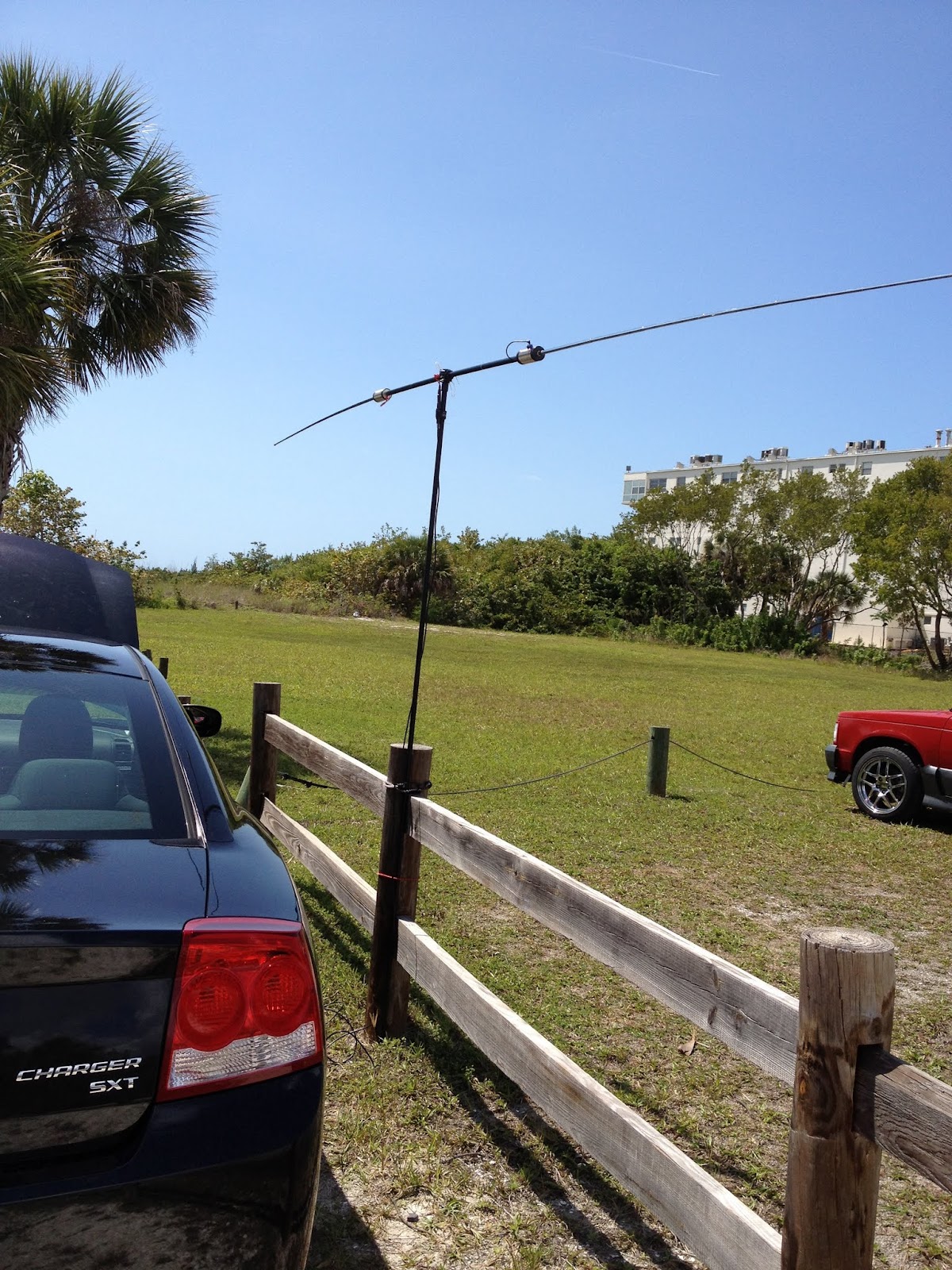
Although not as nice as sitting outside, I figured that I could set up the radio and logging computer inside the car, and with the doors open to help get a little air circulating through the car, it was pretty warm, but tolerable. To stay out of the sun, I wound up sitting in the back seat which also let me stretch out a bit. There was room for the radio on the console between the front seats, and by setting up the iPad (used for logging) and the keyboard carefully, I was able to log relatively easily while operating.
With the logistics out of the way, I decided to concentrate on 15m since the propagation seemed to be cooperating and the antenna was tuning up nicely on that band. Things started off fairly slowly, but after about an hour of operating I got spotted on the packet cluster by a few stations in Europe, and that brought in a lot more callers. Most of the time, the stations were far enough in between that I had a chance to chat a little bit with folks, but occasionally, usually after getting spotted, I’d have 3 or 4 stations call in at once. While hardly a pileup by most standards, I really enjoy working hard to pull individual callsigns out to work the stations. What was particularly enjoyable for me was being able to help out stations who needed NA-034 either for an “all-time” new IOTA entity, or to increase their scores for the IOTA Marathon event sponsored by Radio Society of Great Britain.
Unfortunately, because of the time spent trying to figure out how to set things up, (and of course the all-important lunch), I only wound up being on the air for about 90 minutes that day. I made about 35 contacts during that time, so for a lightweight, low-power operation I was very happy.
QRP ARCI Spring QSO Party
As I thought, I did not have any real time to devote to this contest, this being Easter weekend.
In about an hour and a half total operating time, I made 18 QSOs – the best DX being EA2LU, Jorge in Spain. One QSO was made on 40 Meters, and the rest were made on 20 and 15 Meters. 15 Meters was the pleasant surprise. There was a decent amount of activity there and the signals were nice. QSB was a fast and furious beast to deal with, though.
If it were any other weekend, I probably would have been able to devote more time. But it is what it is.
72 de Larry W2LJ
QRP – When you care to send the very least!

Larry Makoski, W2LJ, is a regular contributor to AmateurRadio.com and writes from New Jersey, USA. Contact him at [email protected].
Part II: Say Goodbye to the BNC
I had previously commented on the how most of the handheld radios are adopting SMA connectors instead of BNC connectors. See Say Goodbye to the BNC. For example, the Yaesu FT-60 uses a female SMA connector for the antenna connection. I’d say this is the standard approach for the amateur radio market.
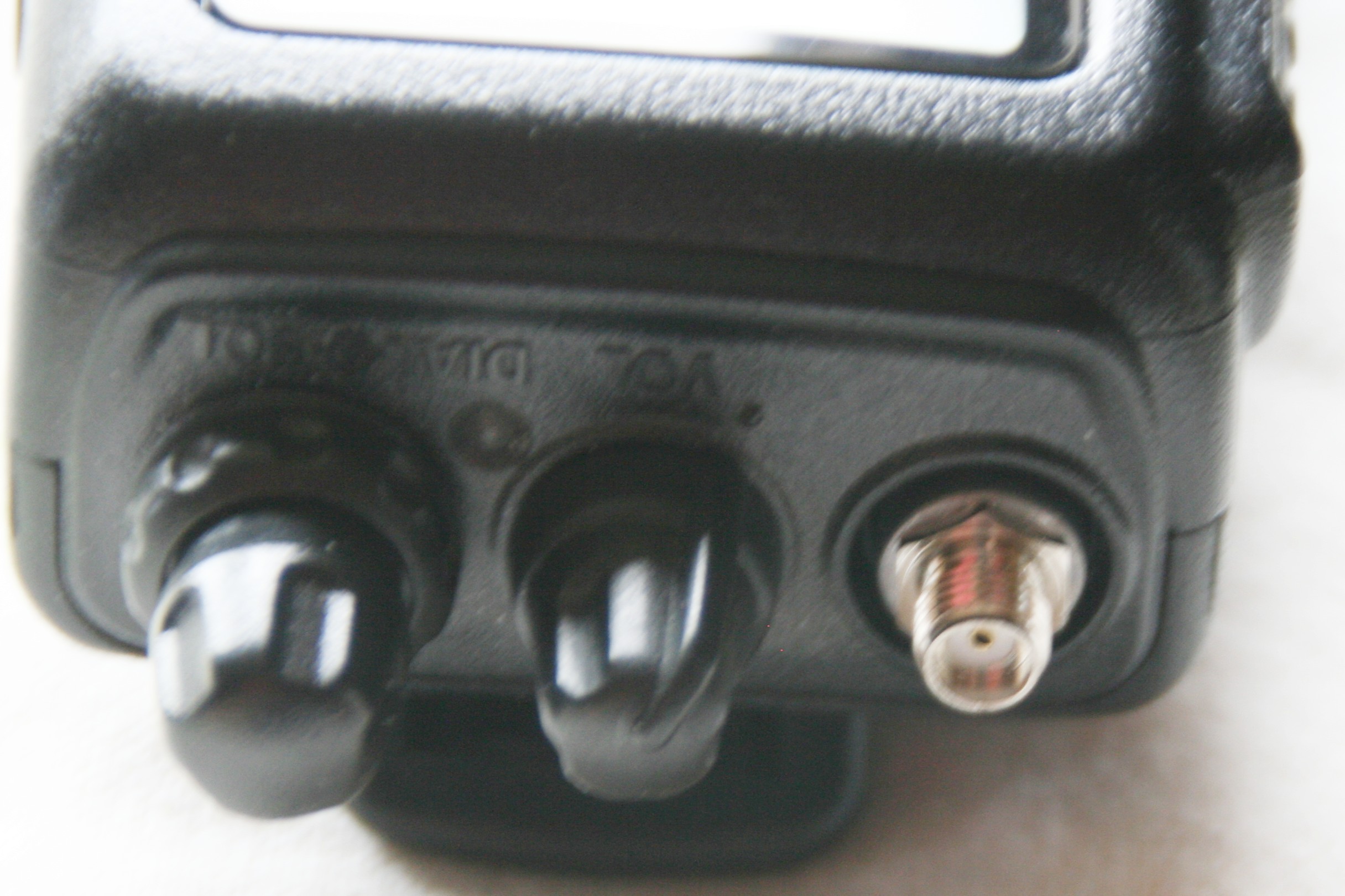
Female SMA on Yaesu FT-60
A few manufacturers have decided to use the male SMA connector as the antenna connection for their handheld radios. I suspect that these manufacturers are following the lead of commercial manufacturers (e.g., Motorola) who use the male connector.
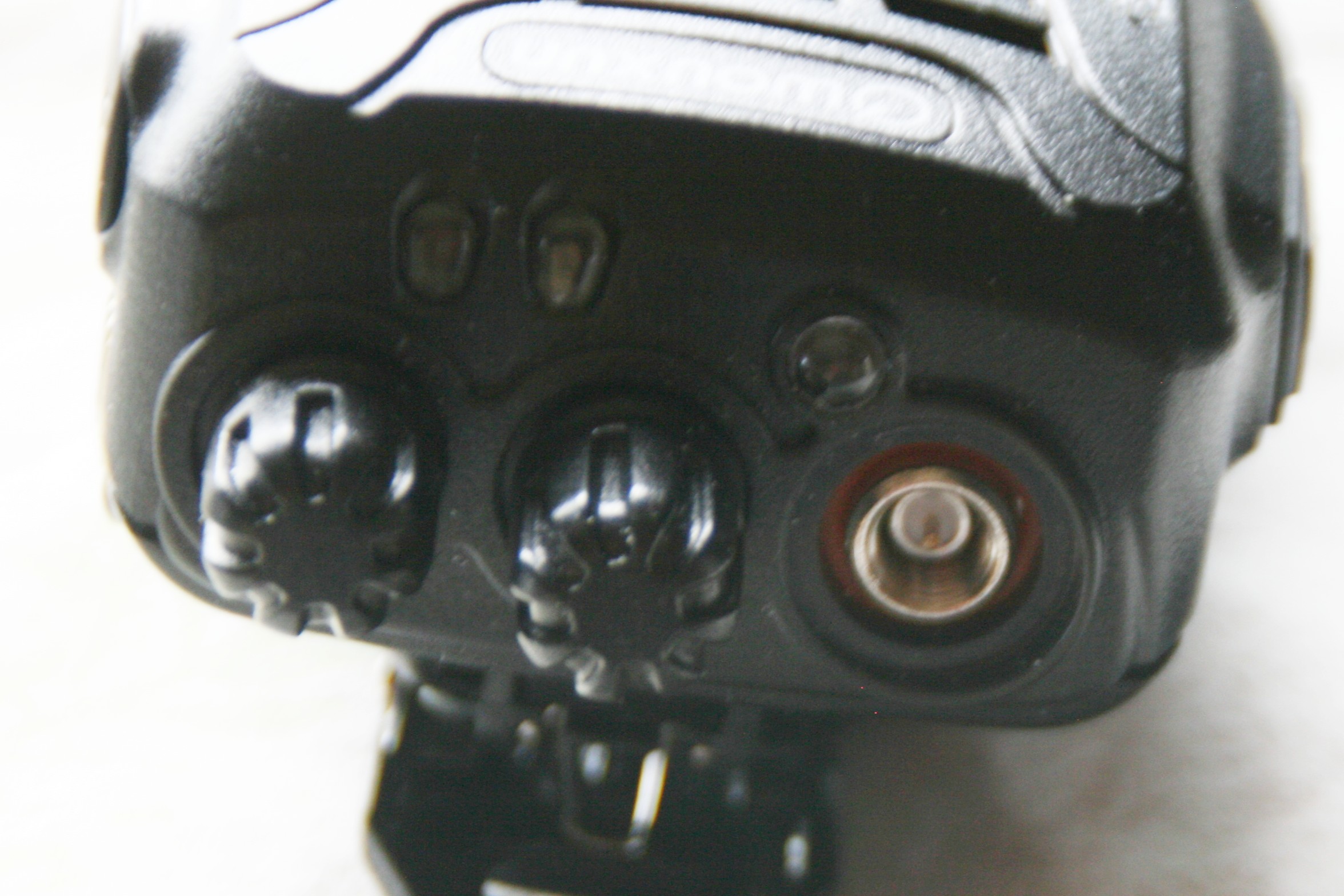
Male SMA on Wouxun KG-UV2D
Many hams will want to adapt these SMA connectors back to the good old BNC, to connect to existing BNC connectors or HT antennas. I had commented that these adapters are mechanically weak but recently I have come across some more sturdy adapters.
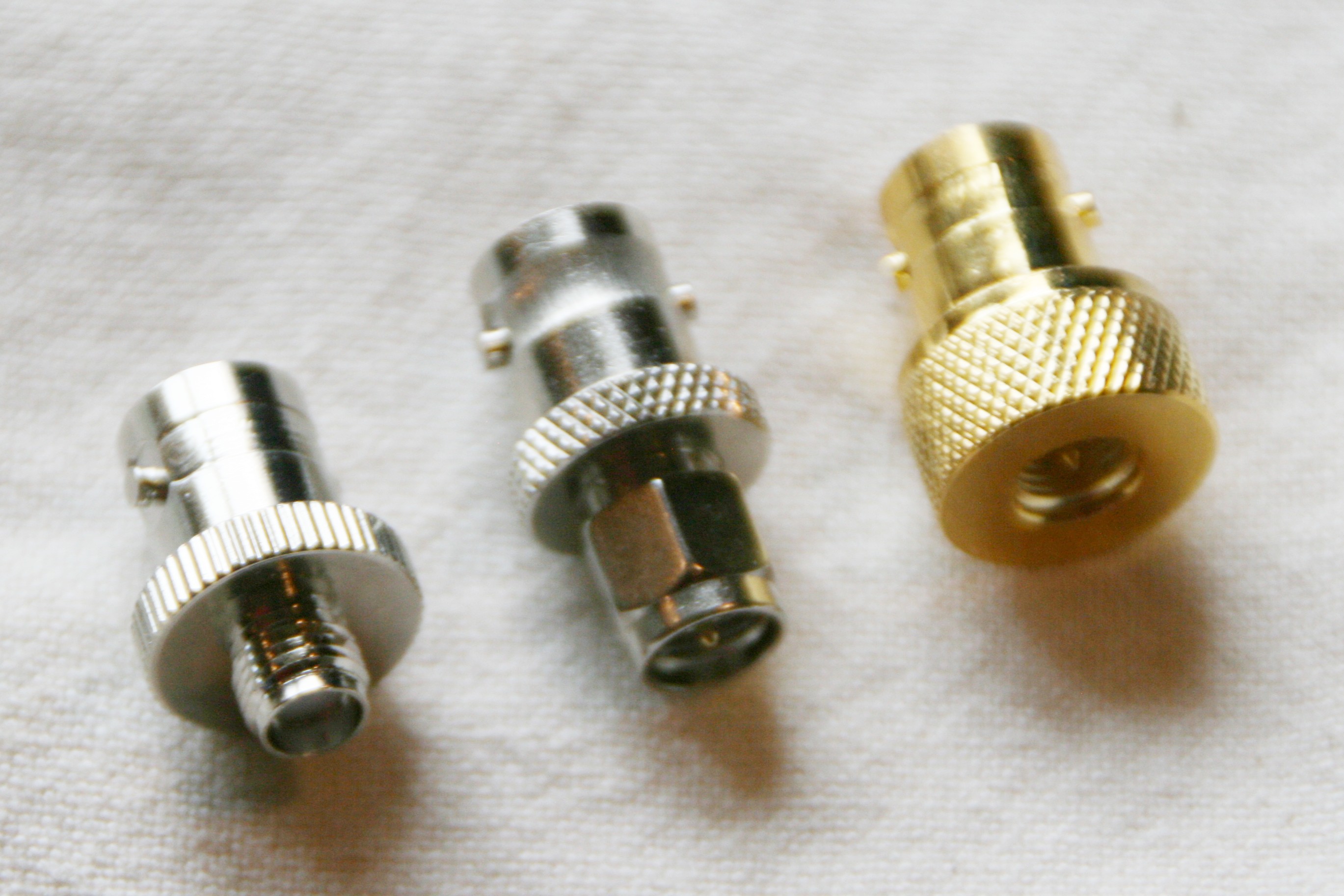
SMA-BNC Adapters
The adapter in the center is the common adapter for cable use but arguably mechanically weak for adapting HT antennas. The adapter on the left adapts BNC antennas to an HT with a male SMA connector. The adapter fits snugly on the top of the HT and provides mechanical support. Similarly, the adapter on the right adapts BNC antennas to an HT with a female SMA connector.
The adapter on the left is available from Import Communications. The other two adapters came from Affordable Radio.
I have just started to use these more capable adapters so I am not sure how reliable they are in regular use. In any case, it makes sense to be careful to minimize the strain on any radio connector.
73, Bob K0NR
Bob Witte, KØNR, is a regular contributor to AmateurRadio.com and writes from Colorado, USA. Contact him at [email protected].
ICQ Podcast S05 E08 – Young Ham Balloon Project (08 April 2012)
Series Five Episode Eight of the ICQ Podcast has been released. News Stories include :-
- Radio Stations for London 2012 Olympic and Paralympic Games
- Titanic special event callsign - GB100MGY
- Optical marking amateur radio exams
- 50W for Foundation holders in Belgium
- Amateur Radio Stamp for Luxembourg
- Ottawa relaxes rules for personal antennas
- New Irish Radio Enthusiast website launched
- Renewal of UK beacon and repeater public/products liability insurance
- V51VHF Beacons
- Lightning strike survivor feels lucky to be alive
Australian report from Ed Durrant VK2ARE and Martin M1MRB discusses a Young Hams Balloon Project with Alex M0WOJ.
Colin Butler, M6BOY, is the host of the ICQ Podcast, a weekly radio show about Amateur Radio. Contact him at [email protected].
Easter Sunday – 2012


Larry Makoski, W2LJ, is a regular contributor to AmateurRadio.com and writes from New Jersey, USA. Contact him at [email protected].
Supporting CW
RSGB had this puzzling note in its recent news script:
Some say that CW has been made obsolete by modern digimodes, which work well in conditions far too poor for the older mode. Now that Morse is no longer used in commercial radio traffic, the RSGB confirms that it would fight any moves to prohibit CW on amateur bands. The Society recognises that Morse gives much pleasure to thousands of operators, and will continue to support its use.
The blurb doesn’t cite any specific threats. To use a quote never said by, but attributed to Jerry Seinfeld, “Who are these people?“
I’ve said before that there are people saying there are people saying that CW is dying, but I have yet to find anyone saying CW is dying. Much like American politics, we tend to get our panties in a bunch making up things to be outraged over and threats to be worried about. No radio amateur who has been licensed more than a week would seriously propose to outlaw CW operation. Any amateur who does is likely insane or doesn’t have the capacity to garner support of anyone from amateurs to government officials.
Perhaps I’m reading more into the RSGB statement and giving it more time than it deserves, but my guess is RSGB suffers from one of the thorns that has been in the side of ARRL here in the States. People make accusations that the organization doesn’t support the code, in order to increase the number of licensed amateurs and fill its coffers with more memberships. The people who make such nonsense accusations are still upset with the elimination of the code test or just dislike the organization and look for whatever means to criticize it. To this day I still hear people claim ARRL doesn’t support CW, despite petitioning the FCC for a 5 WPM test for the Extra class test and running code practice and bulletin broadcasts every weekday. Myths are hard to replace with facts.


The QRPometer arrived
 |
| The 4 state QRP QRPometer |

Mike Weir, VE9KK, is a regular contributor to AmateurRadio.com and writes from New Brunswick, Canada. Contact him at [email protected].
 Ham Radio Deluxe |
 W5SWL Electronics |
 Ham Radio Prep |
 KB3IFH QSL Cards  Hip Ham Shirts  HamRadioAuctions HamRadioAuctions Reliance Antennas Reliance Antennas Enigma Shop Enigma Shop |  morseDX  Ni4L Antennas  R&L Electronics R&L Electronics antennas.us antennas.us QRV QRV |
- Matt W1MST, Managing Editor
