 |
 FT-790R, 1W of Forlorn Hope? Part II
 16 May 2012 | by
 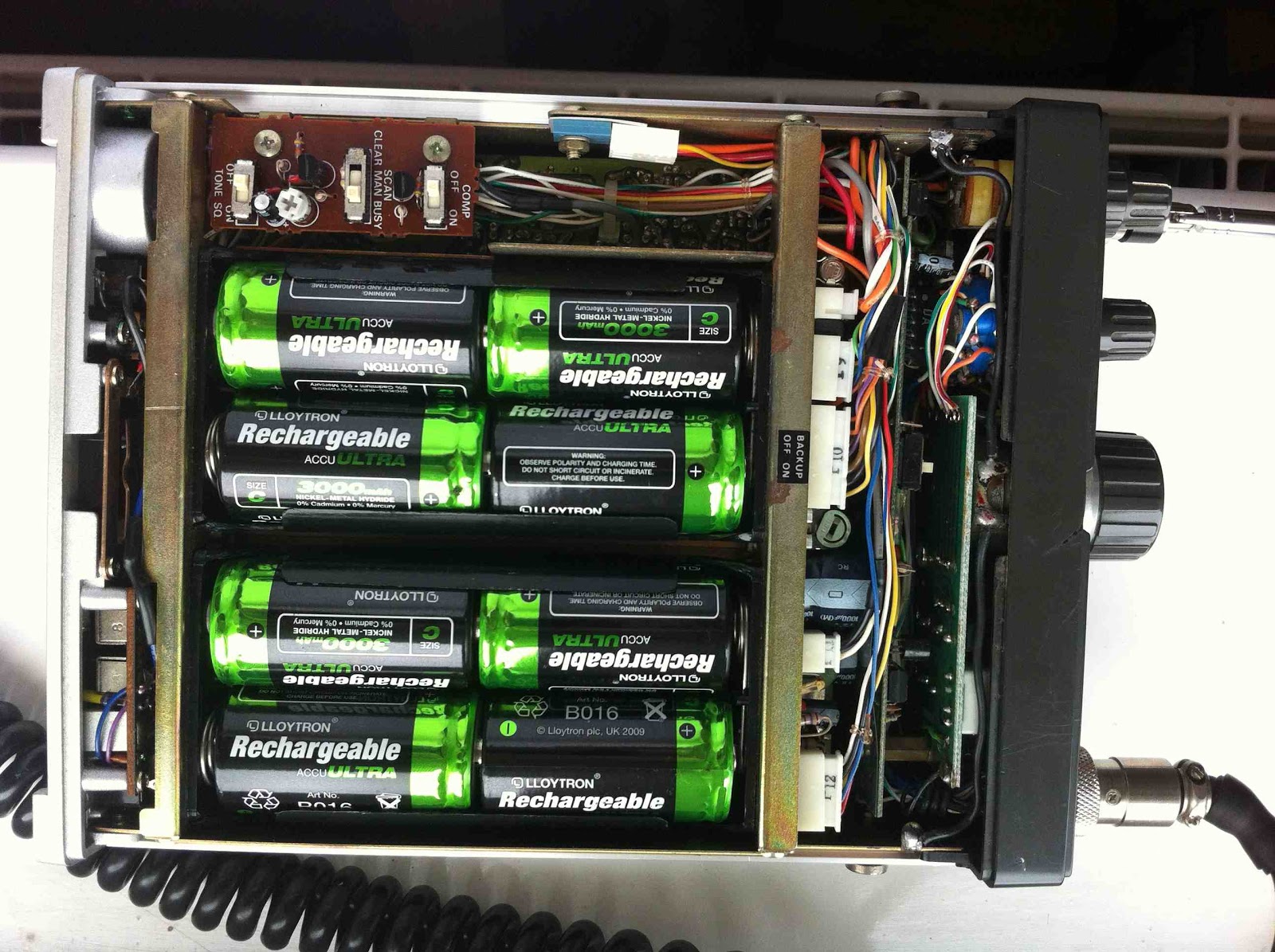 |
| Powered by 8 'C' cells |
 |
 |
| Anglesey to the Isle of Man |

Rob Law, MW0DNK, is a regular contributor to AmateurRadio.com and writes from Anglesey, Wales. Contact him at [email protected].
My Comments on FCC Proceeding 12-91
 At the direction of Congress, the FCC opened up Proceeding 12-91: COMMISSION SEEKS COMMENT ON EMERGENCY COMMUNICATIONS BY AMATEUR RADIO AND IMPEDIMENTS TO AMATEUR RADIO COMMUNICATIONS.
I decided to file my comments with the Commission, which can be read in full here. I’ll also provide the short version here:
1. The contributions of amateur radio operators during disasters and emergencies is substantial and well documented.
2. The key attributes that make the Amateur Radio Service so valuable in an emergency or disaster situation include the large number of trained operators available, the tendency for many amateur radio operators to prepare their stations for emergency operating conditions, the high degree of flexibility due to the wide range of spectrum and emission types available, and the ability of amateur radio operators to adapt to adverse operating conditions,
3. Restrictions from homeowners associations banning all external antennas is a serious and pervasive impediment to amateur radio emergency communications.
4. Limitations on emission type in Part 97 should be relaxed or eliminated.
5. There is the potential to improve the use of the Amateur Radio Service within the overall planning and organization of the federal government.
There are many different issues that could be highlighted but I decided to focus on these…with an emphasis on restrictive covenants.
What do you think? File your comments with the FCC here.
73, Bob K0NR
Bob Witte, KØNR, is a regular contributor to AmateurRadio.com and writes from Colorado, USA. Contact him at [email protected].
Thank you so much!
Thanks to all of you out there, who have so kindly shared your thoughts, prayers, kind comments here and elsewhere as well as e-mails that I have received during this difficult time. I am so blessed to have so many friends because of Amateur Radio, and this blog. Even if we’ve never formally met, I consider you all to be truly great friends. Please know you have my utmost appreciation and gratitude and that I will, in turn, be remembering you all in my prayers.
72 de Larry W2LJ
QRP – When you care to send the very least!

Larry Makoski, W2LJ, is a regular contributor to AmateurRadio.com and writes from New Jersey, USA. Contact him at [email protected].
A good 70MHz day
Some nice 70MHz Es today – mostly to the south east. Around lunchtime I worked IK0SMG (JN61) and IK5YJY (JN53). Later on, just before 1600z I was listening to a weak signal on 70.200 – I think an I4 which I was struggling to copy. Mark, CT1FJC heard me and called me at great strength. Really delighted to work Mark on a new band! Following that, Mark faded out and I was able to work another two Italian stations IZ5EME (JN52) and I0DLP (JN61). Conditions when I worked I0DLP were just perfect – he was a huge signal and very easy to work.

Tim Kirby, G4VXE, is a regular contributor to AmateurRadio.com and writes from Oxfordshire, England. Contact him at [email protected].
Another Birthday for PARP
When I started the practical amateur radio podcast on May 8th 2008, I really had no idea how long it would last or how big it would grow. Four years later (and my 5th season podcasting) I still continue to receive emails thanking me for doing what I do. I’m also frequently reminded of why I podcast, when I receive emails letting me know a new ham has his or her license as a result of the podcast. I very much enjoy creating the audio podcast, the video supplements and blogging. I consider it an extension of the hobby.
This blog post is what I referred to in episode 55 (just released today), as part of the PARP Birthday Trifecta. In other words, I typically use my Podcast, my YouTube Channel and this Blog to Elmer and promote amateur radio to anyone who will listen, watch and read. These avenues are referred to as new media.
Pacificon 2012

Speaking of new media, I’ve been invited to attend the 2012 ARRL National Convention and Pacificon in October of this year. I will participate in a panel discussion titled, “Amateur Radio New Media Elmering”. I’m very excited to share the stage with other “Big Names” in the new media elmering space. I’m sure you’ve heard of all three…
Chris Matthieu, N7ICE is the founder/creator/developer of the amateur radio social networking site 73s.com.
Randy Hall, K7AGE. Randy is best known as that YouTube guy. Randy is approaching his 6th year of using his YouTube channel to Elmer. His total video views surpass the 2 million mark.
FInally, the three of us will be joined by Mr. Elmer himself…Gordon West, WB6NOA. Gordo has helped thousands earn their technician license (and upgrade to general and extra) through his exam prep guides and excellent audio material. I’m proud to say I’m a three time graduate of Gordo’s material.
I’m truly honored to have the opportunity to meet these three gentlemen and share the stage to discuss our share passions for helping others and promoting this wonderful hobby. I’ll make certain to continue to provide updates as we get closer to the October timeframe. I hope to see you at Pacificon.
A Gift to You
In an effort to help celebrate PARP’s 4th birthday, I asked three popular amateur radio vendors to help me celebrate. In return, each have provided coupon codes you may use for a limited time to save money when purchasing items from their website. Consider it a gift to you.
It just so happened I was able to tie each of these three vendors into the educational/discussion segment in episode 55 of the practical amateur radio podcast. The topic of episode 55 is about programming your radio.
I would like to thank Nifty Ham Accessories, RT Systems Inc. and RFinder – The Worldwide Repeater Directory for helping me celebrate the 4th birthday of the practical amateur radio podcast. Please listen to episode 55 to learn about the coupon codes from Nifty Ham Accessories, RT Systems Inc. and RFinder – The Worldwide Repeater Directory.
Until next time…
73 de KDØBIK
Jerry Taylor, KD0BIK, is a regular contributor to AmateurRadio.com and writes from Colorado, USA. He is the host of the Practical Amateur Radio Podcast. Contact him at [email protected].
Reading about QSOs at unfeasibly high frequencies
Having been off work today with a stupid cold, I’d been doing a little reading around. I was enthused reading Roger G3XBM’s ever-interesting blog about the experiments that he is making at optical frequencies with 481THz experiments using LEDs. I remembered I’d had a QSO with Gordon G8PNN last year when he mentioned these experiments. Fascinating stuff!
What intrigued me is that these experiments have been going on for a while and that Australian amateurs have quite a history of experimentation in the field. I found and enjoyed ‘Optical Communication for the Amateur’ written by Chris Long in 1979 and later revised. Back in the UK, Eddie G0EHV has an interesting page on the optical experiments in the North East of England.
I wondered whether Dave WW2R/G4FRE had done any optical experiments. It turns out that he hasn’t, but his website contains details of some fascinating ‘First’ UK QSOs on 134GHz and 142GHz which I think you will also find fascinating.
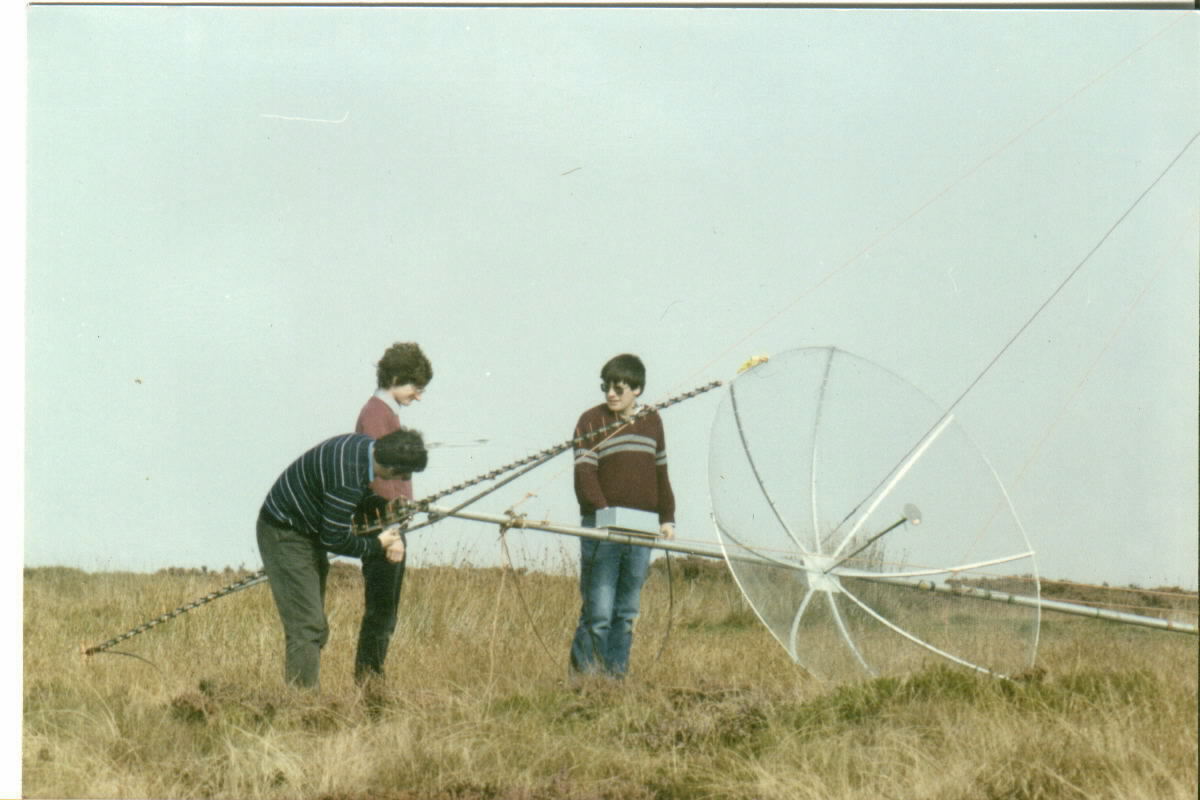
Oh and the picture? I took it off Dave’s website (Dave, I hope you don’t mind!). It shows a very youthful G4VXE in the middle (doing nothing, apparently), Kelvin GW4TTU to the left and Dave G4FRE on the right. We were on Mynydd Maen in South Wales preparing for a microwave contest. I’m guessing 1986 or 1987.

Tim Kirby, G4VXE, is a regular contributor to AmateurRadio.com and writes from Oxfordshire, England. Contact him at [email protected].
Big Gun
It’s not often I hit some DX but WSPR helps me out quite a lot. Here’s a screenshot from my latest 1w big gun escapade

1w into Hustler 6-BTV
Whilst some might say that lifes too short for QRP. Newly licenced hams take note. 1w into a lossy vertical in a bad location doesn’t mean you’re stuck with QSO’s as far as the end of the street.
All this was achieved with a modest transceiver (IC-7000) and a modest antenna (Hustler 6-BTV with a few radials). The lesson here is that DX isn’t just for those with limitless pockets of cash, elevated QTH’s and antenna systems that can rival your nearest broadcaster. You just might not be talking to the other station!
Alex Hill, G7KSE, is a regular contributor to AmateurRadio.com and writes from Cumbria, UK. Contact him at [email protected].
 Ham Radio Deluxe |
 W5SWL Electronics |
 Ham Radio Prep |
 KB3IFH QSL Cards  Hip Ham Shirts  HamRadioAuctions HamRadioAuctions Reliance Antennas Reliance Antennas Enigma Shop Enigma Shop |  morseDX  Ni4L Antennas  R&L Electronics R&L Electronics antennas.us antennas.us QRV QRV |
- Matt W1MST, Managing Editor
