 |
 A good 50/70MHz Es day
 26 May 2012 | by
 Although 50MHz in particular, has been noisy today with some local electrical interference, there’s been some good Es propagation, particularly to the south. Around 1000z I noticed some loud Spanish stations on 50MHz, loud enough and short enough skip (EA1) that made me think that the MUF would be high enough for 70MHz. And so it was, with EA7HG coming through on 70MHz – we worked, although it wasn’t the easiest of QSOs. CT1DIZ and EA7KB were also worked on the band before propagation faded.
I dropped back to 50MHz and the band was still good into Spain and I made some nice QSOs. I was very pleased to work EA8BWY in the Canaries – pretty sure this must have been double hop – first hop to Spain and second hop from there to the islands. There was a brief opening this evening, again to Spain when I worked EB4IC.
G6AVK is reporting the 6V7SIX beacon on TEP – nothing here!

Tim Kirby, G4VXE, is a regular contributor to AmateurRadio.com and writes from Oxfordshire, England. Contact him at [email protected].
First QSOs with the UV-5R
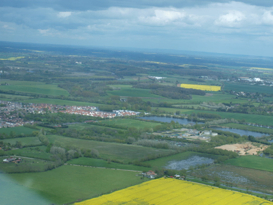
Although I’ve had the UV-5R around for several weeks and I’ve been using it to listen to various repeaters and stations, I hadn’t actually had a QSO with it!
This afternoon, a glorious hot afternoon, with temperatures around 23C I went out for a walk to our neighbouring village, Hinton Waldrist to deliver some papers and some Sky at Night Magazines to a friend. I popped the UV-5R in my pocket.
First QSO was a bit unusual actually – through the 2m repeater GB3WH. I’m faintly suspicious in retrospect that the gentleman concerned, although he was sporting an M6 call may have actually been a CBer trying out a rig, with a made up call! I couldn’t be certain of course, it might have just been a newcomer to the bands who’d spent time on CB before. As I’ve said before, I’ve no problem with that and most modify their operating style over time to reflect amateur, rather than CB, practice.
Second QSO was much easier, with Rob G4XUT on the 70cm repeater GB3TD. Rob was using a converted PMR rig which sounded good and was able to give me a good report on the UV-5R so that was very pleasing.
I also found that I could get into the GB3UK repeater up on the Cotswolds very reliably.
I’ve programmed the UV-5R now, with most of the local repeater frequencies as well as 145.800 in case of any ISS passes and some of the marine band frequencies used in the London area.

Tim Kirby, G4VXE, is a regular contributor to AmateurRadio.com and writes from Oxfordshire, England. Contact him at [email protected].
Vacuum tubes could revolutionize computer chips?
No, I’m fairly sure I haven’t lost my mind … that really is the right headline.
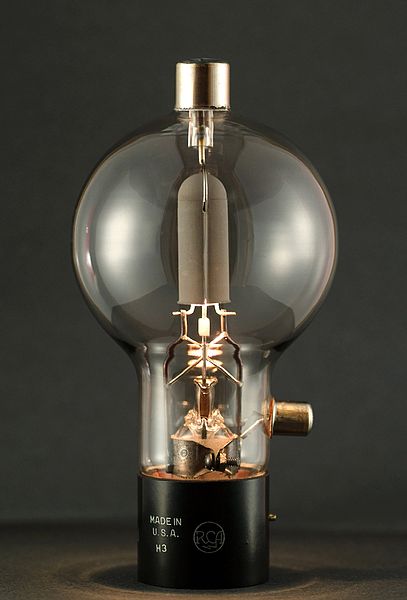 According to a resent paper published in the American Institute of Physics, nanoscale vacuum “tubes” manufactured using conventional chip making techniques have operated at frequencies as high as .46 THz.
Dr. Meyya Meyyappan, Director at the Center for Nanotechnology at the NASA Ames Research Center, has highlighted the advantages of nanoscale vacuum devices which include resistance to hard radiation and significantly improved operating frequencies.
.jpg) The increased operating frequency comes about because of the speed at which electrons travel through different materials. The speed of electron travel through silicon is comparatively slow, through graphine it is approximately 100 times faster and through a vacuum it approaches the speed of light.
The increased operating frequency comes about because of the speed at which electrons travel through different materials. The speed of electron travel through silicon is comparatively slow, through graphine it is approximately 100 times faster and through a vacuum it approaches the speed of light.
While the cavity is not technically a vacuum it contains so few atoms of any other material, such as oxygen, it is functionally the same. This also gives the vacuum nanoscale device an advantage in space where hard radiation can disrupt an electron’s travel through silicon leading to errors or sometimes permanent failure.
Dr Meyyappan estimates that vacuum nanoscale components will run ten times faster than the best conventional silicon chips and who knows what advances the future will hold. Faster chips will aid in signal processing and more capable software defined radios.
Do you want to monitor every CW & PSK31 transmission on the 40M band at once? With a vacuum “tube” rig you may be able to!
Owen Morgan, KF5CZO, is a regular contributor to AmateurRadio.com and writes from Texas, USA. Contact him at [email protected].
Done!
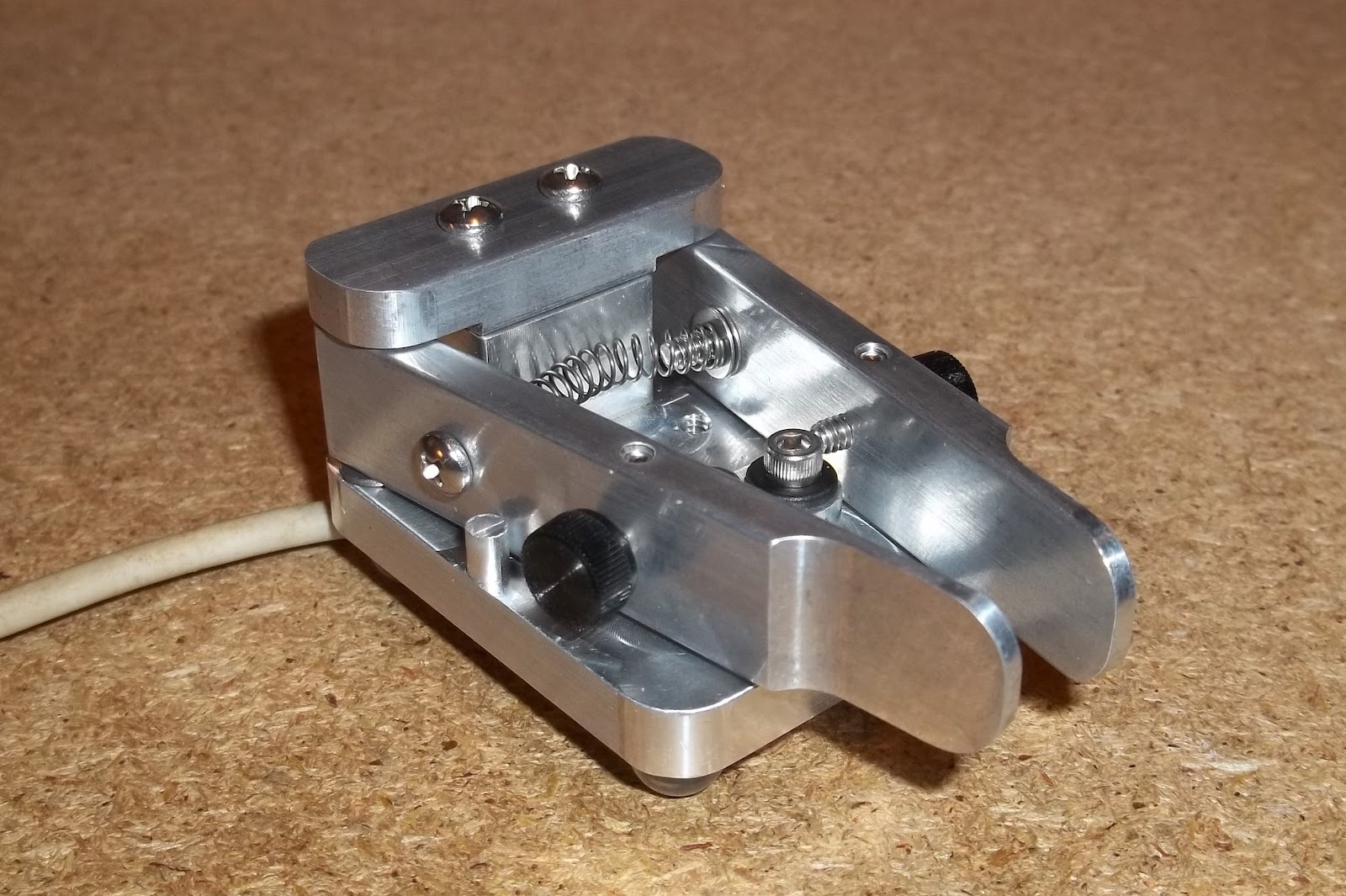
The paddles are done. The assembly was in the class of “Easy-peasy-lemon-squeezy” territory. And assembly time was all of about a 1/2 hour or so.
The instructions provided by Doug Hauff were superb and easy to follow. The hardest part, installing the compression spring was no big deal at all. Slipped one end of the spring over one of the spring retainer screws and used a tweezer to finagle the other end over the other screw. No launching into orbit or getting lost. Viola!
What I like most about these are:
1) Materials – nice grade of aluminum.
2) Weight – minscule.
3) Size – Super small; but yet not to the point where these are difficult to use. And I can be ham fisted, at times.
4) Ease of adjustment – Here’s the best part. I like my paddles to have MINIMUM arm movement. There should be no “clacking” and the closer I can get the feel to compare to a touch keyer the better. I succeeded here with the DCP. The adjustment screws have a fine enough thread pitch where this was easy to attain.
The only thing that I have to say that is negative, is that when you have the paddles attached to your radio (and it is on), you have to be careful about how you pick these up if you want to move them. Your first inclination will be to reach down (or over) and just grab the key with your hand. If you do it that way, you will most likely start inadvertently sending dits and dahs. Like I did – several times. Oops!
That minor inconvenience being noted, I would give these paddles a 5 out of 5 star rating. For their intended use, these paddles will more than fit the bill. Now all I have to do is figure out some kind of leg mounting scheme.
72 de Larry W2LJ
QRP – When you care to send the very least!

Larry Makoski, W2LJ, is a regular contributor to AmateurRadio.com and writes from New Jersey, USA. Contact him at [email protected].
Congratulations to Dustin, KC5FML!

Dustin, KC5FML from McKinney, Texas is the winner
of our TYT TH-UV3R giveaway from Import Communications!
Congratulations, Dustin!
Matt Thomas, W1MST, is the managing editor of AmateurRadio.com. Contact him at [email protected].
Have Handheld, Will Travel — Third Stop: VE3OSC!
This morning I once again brought my HT outside with me while I sipped my morning coffee. Don, VA3XFT, was my first contact. Don is a friendly, helpful fellow. The first time I met him was yesterday evening, when he heard me calling for Wade, VE3WGK — when Wade didn’t answer, Don called me and offered to call Wade on the telephone for me.  I didn’t take him up on it then, but this morning I did take him up on his offer to call and find out more about the amateur radio station at the Ontario Science Centre. When he came back on the air he said that the station is manned every day from 1000-1400 hrs. Thanks, Don!
After another contact with Steve, VA3SF (who, like Don, operated the repeater we were using), I prepared to go to the Ontario Science Centre.  My wife decided to come along, making it a grand adventure. We walked to the nearby subway terminal and soon were rumbling along. After transferring to a bus, we arrived at the Ontario Science Centre and made our way to amateur radio station VE3OSC on the fourth level.

Bill, VA3WTT, volunteering at VE3OSC
Bill, VA3WTT, was manning the station. This Scottish gentleman showed us the warmest hospitality, inviting me to come into the booth, sign the guestbook, and check in to a 2m ARES net that was in progress.

NØIP checking in to the Toronto ARES 11:00 daily 2m net
Ken, VA3KRS, was net control and gave me a warm welcome.
Bill also helped me get on 40m, where I tapped out a CQ with some Bencher paddles. For some reason the HF radio seemed deaf, so I’m not sure all was in order at the moment. But no matter! I thoroughly enjoyed seeing the station of the Ontario Science Centre Amateur Radio Club. It’s a great idea. I applaud the Ontario Science Centre for including this permanent display, and I applaud all the hams who man it every day.
Bill gave me a very nice QSL card, pictured above, and shook my hand. After saying farewell, my wife and I made our way to the OMNIMAX theater where we watched a documentary on the building of the Canadian Railroad through the Rocky Mountains. It was informative and full of amazing footage of a restored steam engine puffing through some sublimely scenic parts of Canada.
None of this would have happened had I not brought along my HT on this trip. Only because I happened to contact Wade, VE3WGK, did I learn about the station at the Ontario Science Centre. I’m glad I brought the HT, and I’m glad I met Wade and all these other fellows on the air. Maybe when I get back home I’ll even EchoLink back to Toronto and chat with them again on 2m and 70cm.
Here you can see some more photos of our trip to VE3OSC, the amateur radio station at the Ontario Science Centre.


Todd Mitchell, NØIP, is a regular contributor to AmateurRadio.com and writes from Minnesota, USA. He can be contacted at [email protected].
Deployable Aerial Communications Architecture

Today the FCC release a Notice of Inquiry (NOI) regarding Deployable Aerial Communications Architecture (DACA). In a nutshell, this technology involves deploying a light aircraft containing communications equipment over a disaster area to provide emergency communications. Those familiar with mobile wireless will recognize this as somewhat analogous to a COW (cellsite on wheels), and the military has been using similar technology for years.
A whitepaper on DACA describes the potential for this technology:
The DACA vision for disasters involves an aerial capability that is deployable within the first 12-18 hours after a catastrophic event to temporarily restore critical communications, including broadband, for a period of 72-96 hours. This capability would be useful in situations where the power grid may be inoperable for 5-7 days, depleting back-up power supplies and resulting in an almost complete failure of landline, cellular, land mobile radio, broadcast, and cable transmissions, as well as Wi-Fi and Internet services. In such circumstances, access roads and bridges may be impassable, preventing communications repair crews and fuel suppliers for generators from entering the area. If DACA systems were available, users on the ground could continue to rely on their day-to-day communications devices in a transparent manner.
While DACA technology does not involve amateur radio, nor does amateur radio have a horse in this race, amateurs may find DACA technology interesting, as the recent interest in unmanned balloon experiments with amateur radio payloads would suggest. The FCC in the NOI is seeking comment from industry on logistical, regulatory, and technological questions. I imagine it will be several years before we see DACA technology ready for prime time and probably only in major metropolitan areas.

 Ham Radio Deluxe |
 W5SWL Electronics |
 Ham Radio Prep |
 KB3IFH QSL Cards  Hip Ham Shirts  HamRadioAuctions HamRadioAuctions Reliance Antennas Reliance Antennas Enigma Shop Enigma Shop |  morseDX  Ni4L Antennas  R&L Electronics R&L Electronics antennas.us antennas.us QRV QRV |
- Matt W1MST, Managing Editor
