 |
 QRPometer case….
 24 August 2012 | by
 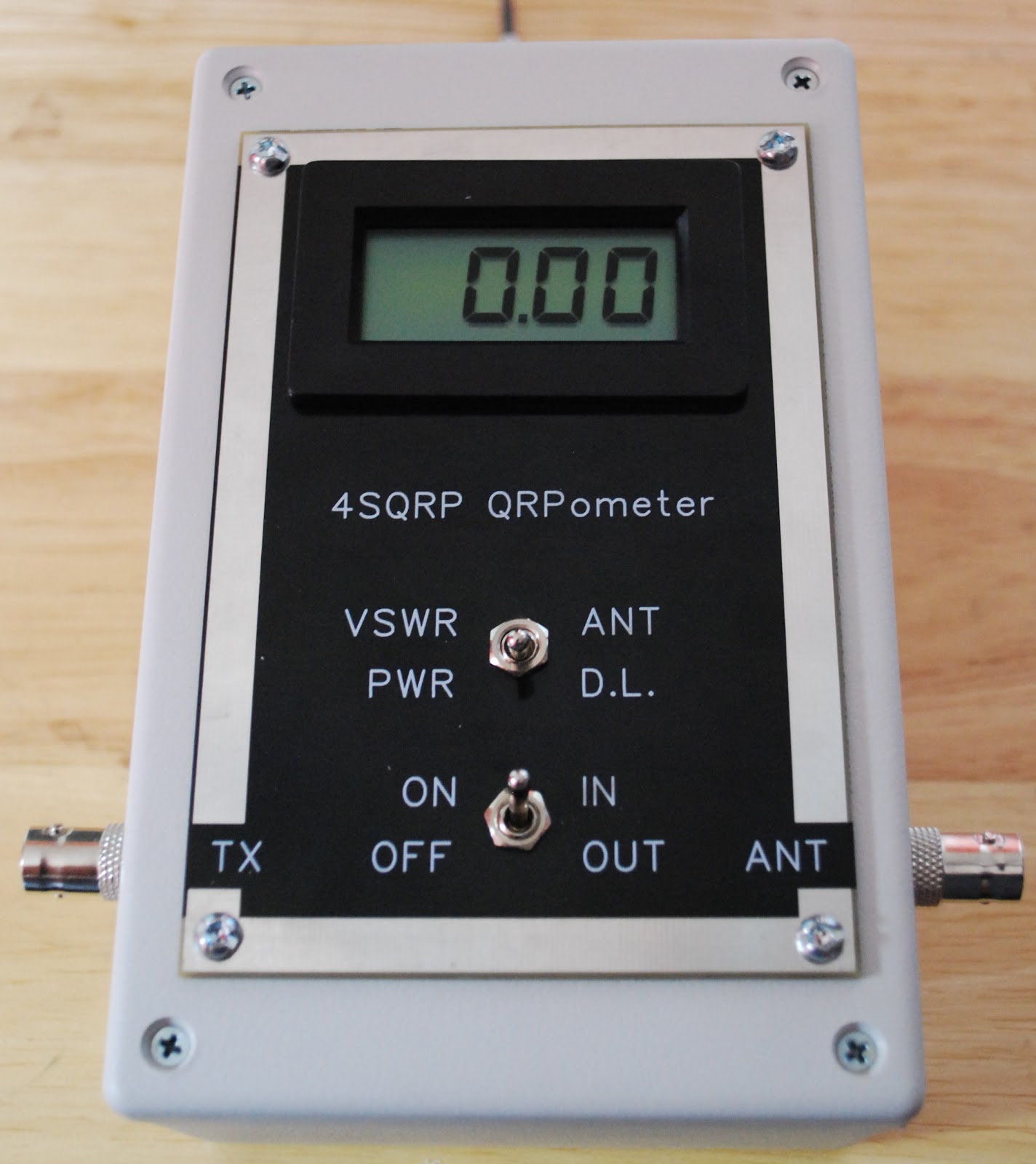 |
| Finished product |
A few months ago I built and blogged about my QRPometer build from the 4 state qrp club its a great kit. In the post there was only 2 con's that I could think of regarding the kit.
1.The TX and Antenna connections were RCA and not BNC, the kit now ships with the RCA to BNC adapters.
2. The meter did not come with a case and the rear of the meter had an exposed circuit board. I felt this left the meter vulnerable to damage.
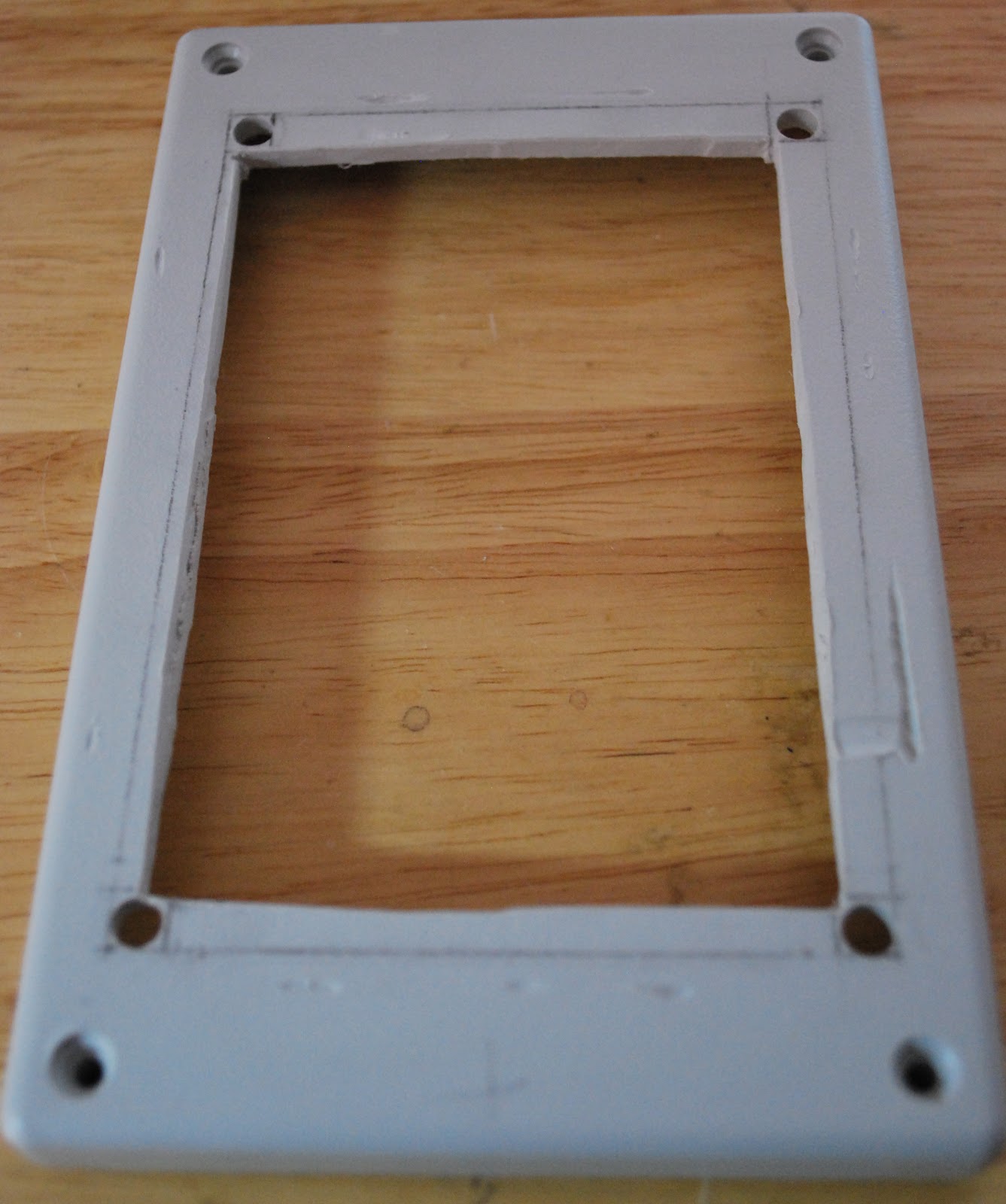 |
| first attempt....not good |
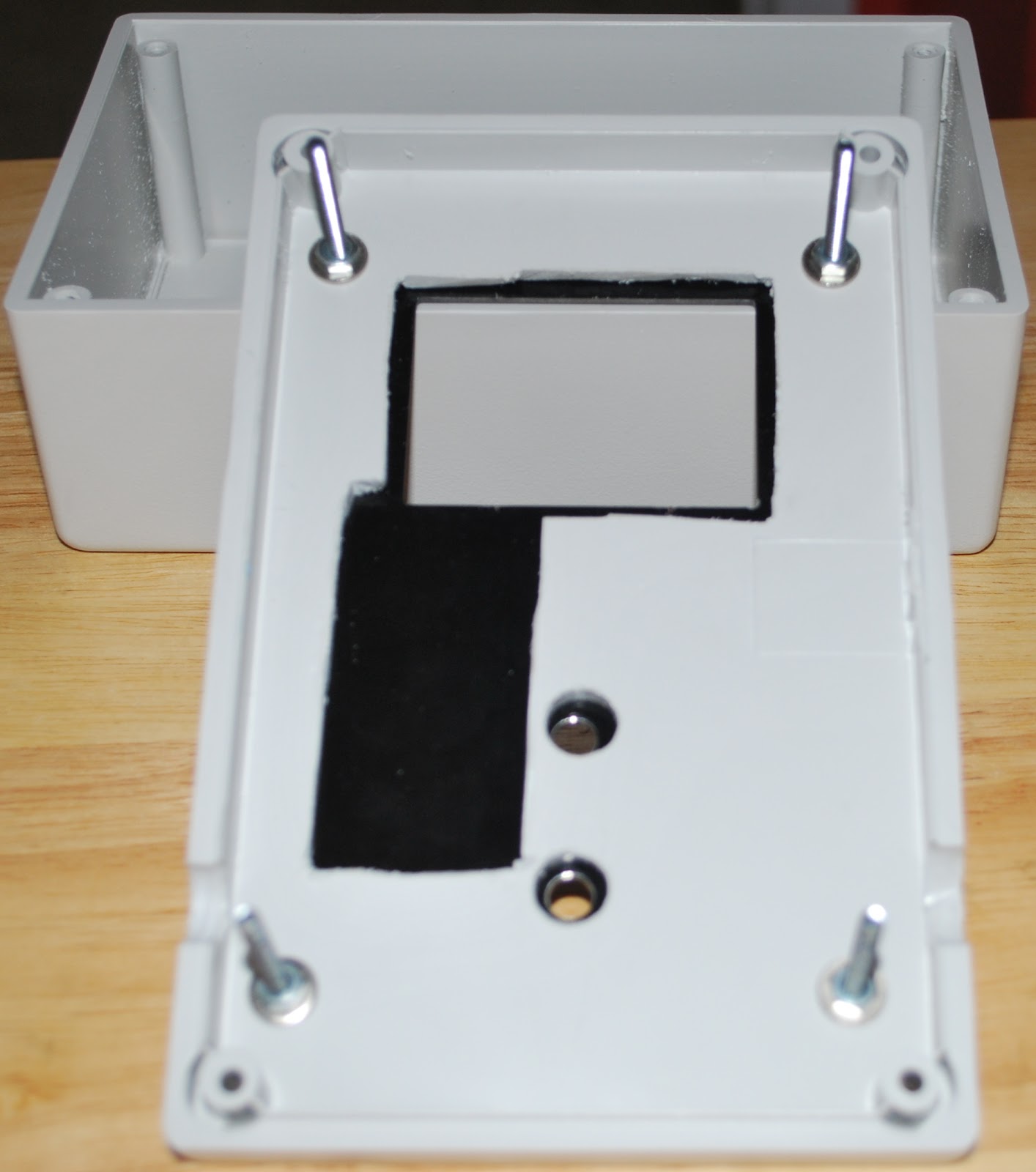 |
| New opening and front plate on |
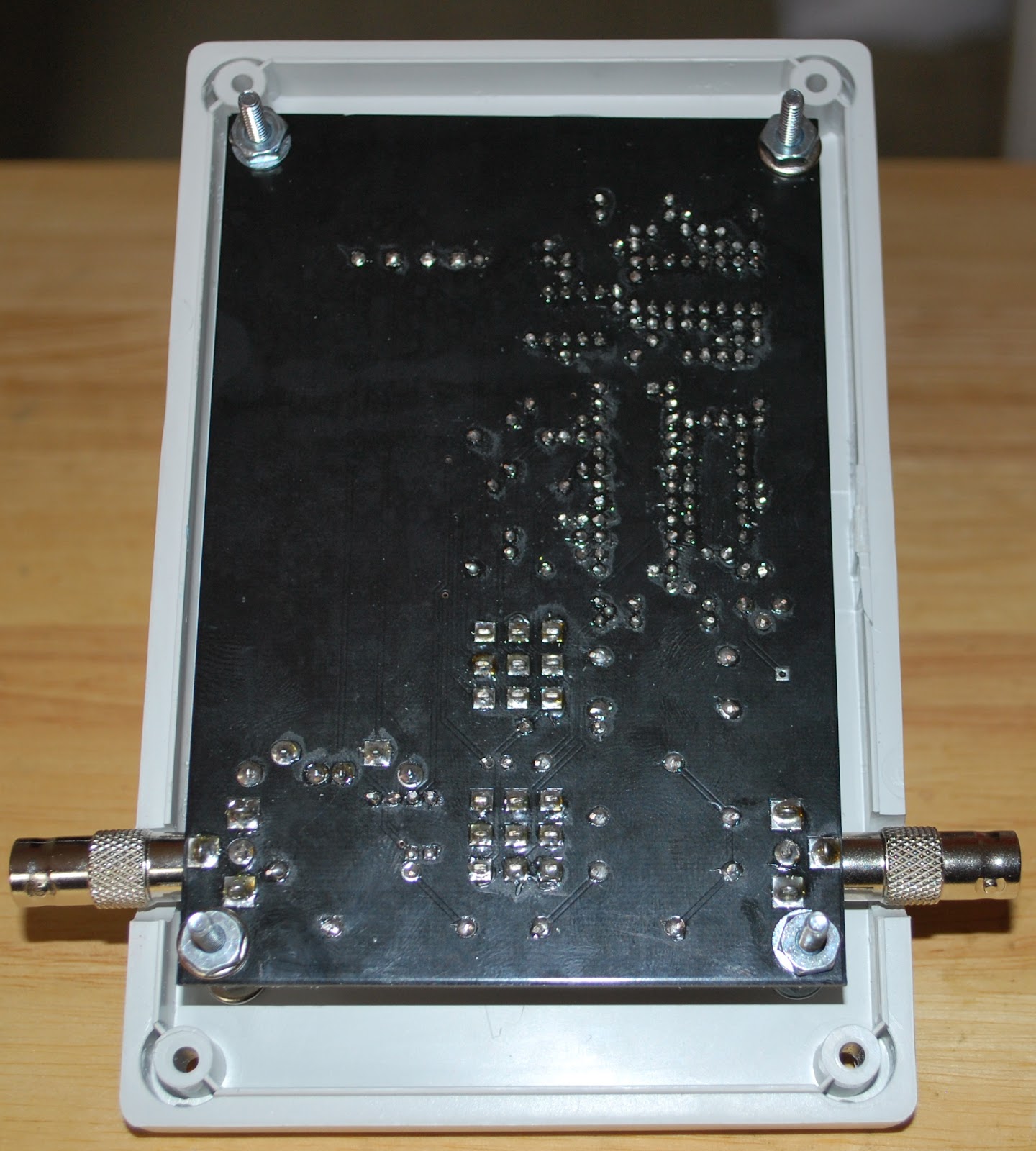 |
| Meter in the new case |
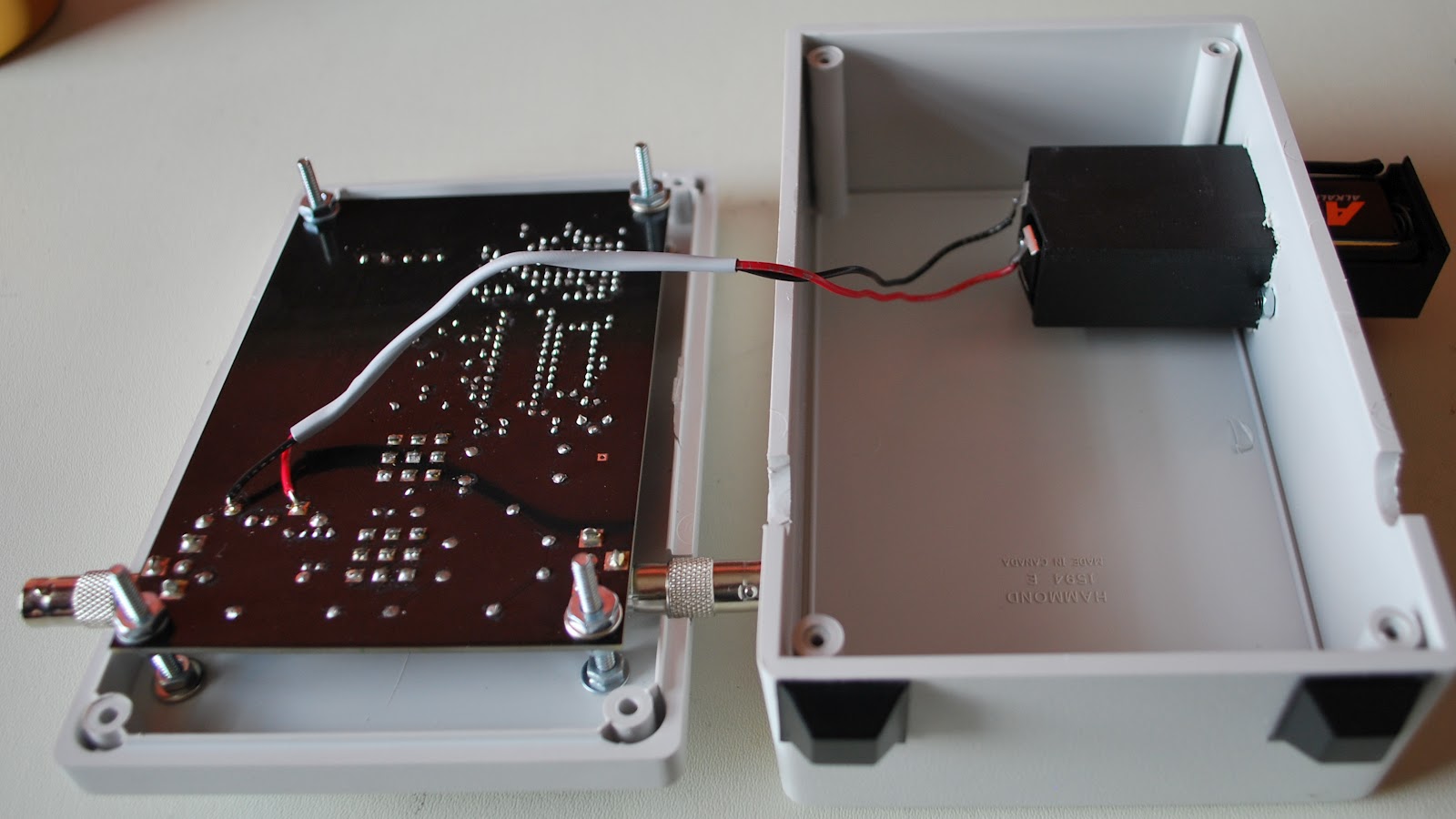 |
| 9 volt battery mod |
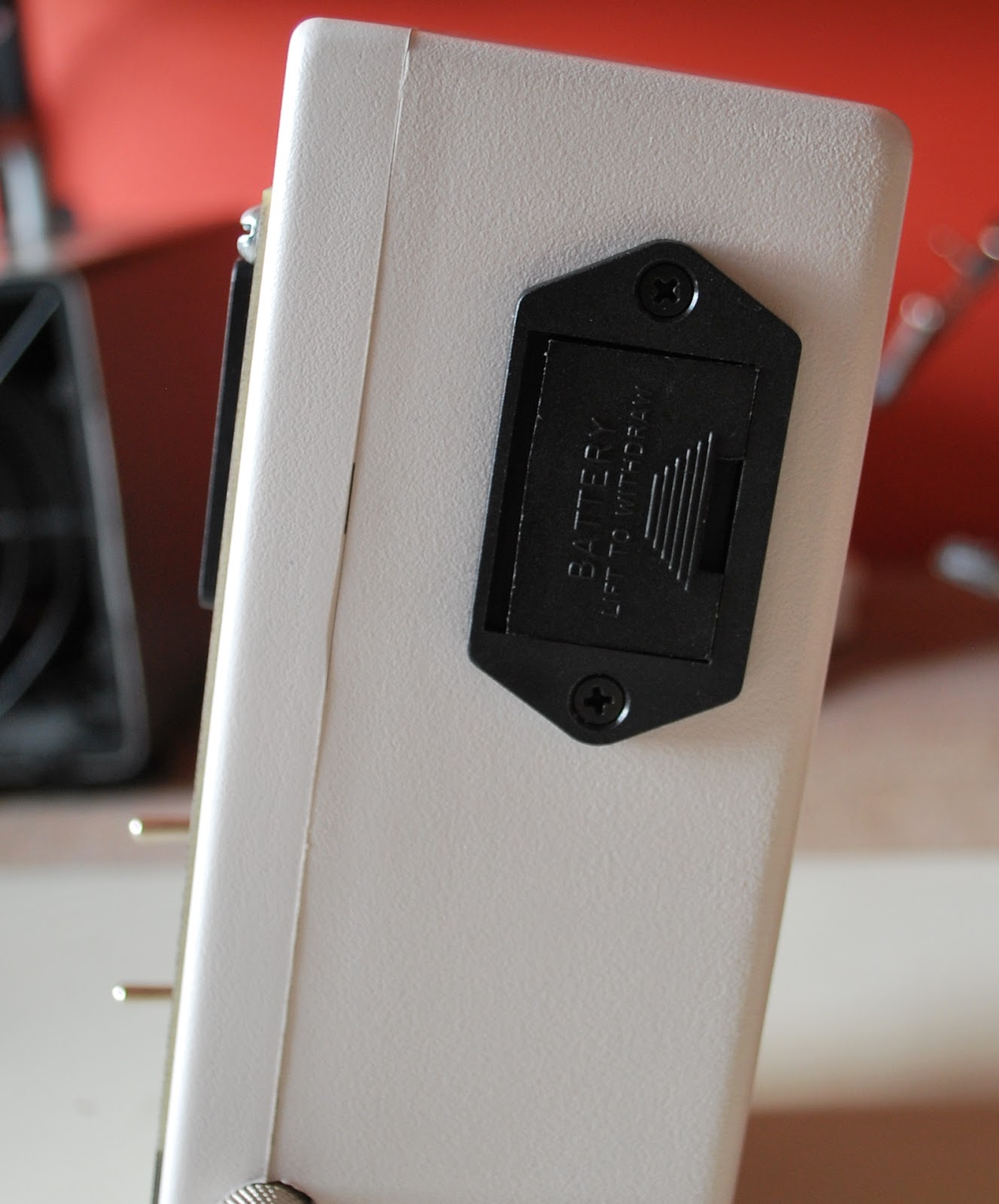 |
| Side view of 9v holder |

Mike Weir, VE9KK, is a regular contributor to AmateurRadio.com and writes from New Brunswick, Canada. Contact him at [email protected].
No can do.
On Tuesday, when Mr. Liu from the NCC asked me for my opinion on matters regarding radio amateurs in Taiwan, I gave him my two wishes:
- 1 – an English version of the exam, to get more foreigners licensed.
- 2 – being able to choose your own call sign.
Both requests were torpedoed right away. First off, when the NCC would make an English version of the exam then they would also have make a Japanese version to accommodate them. And then an Indonesian version. And a …….. well, you get the drift.
Assigning call signs was a more sensitive matter. Even though the R.O.C. on Taiwan has been independent since 1949, it has not been recognised by many. Hence, over here we depend on the generosity of our next door big brother – the P.R.C. of China – to be able to use some prefixes from the ITU assigned block for China (Taiwan uses BM, BN, BO, BQ, BU, BV and BX, China the rest of the B-block). Amateur radio call signs are kept back for 20 years after expiry, so the resulting pool is small. So, unfortunately, once you get your call sign you are stuck with it, because the NCC doesn’t want to hand our new ones at your will. And even though changing areas would be a good reason, they still refuse. I am now living in area 3, but I still have to use my area 2 call because the NCC doesn’t want to assign a new BX3 call to me.
Luckily I am happy with my call. After all, ABT stands for “Any Bloody Thing” and that is how I enjoy the hobby: any bloody thing goes! Have a nice weekend.
Hans "Fong" van den Boogert, BX2ABT, is a regular contributor to AmateurRadio.com and writes from Taiwan. Contact him at [email protected].
Ham Nation 61

http://dts.podtrac.com/redirect.mp4/twit.cachefly.net/video/hn/hn0061/hn0061_h264m_1280x720_1872.mp4
http://dts.podtrac.com/redirect.mp4/twit.cachefly.net/video/hn/hn0061/hn0061_h264m_864x480_500.mp4
http://dts.podtrac.com/redirect.mp4/twit.cachefly.net/video/hn/hn0061/hn0061_h264b_640x368_256.mp4
http://www.podtrac.com/pts/redirect.mp3/twit.cachefly.net/hn0061.mp3
Hosts: Bob Heil (K9EID), Gordon West (WB6NOA), and George Thomas (W5JDX)
The controller of the 40-meter after-show nets, the latest from the Huntsville Hamfest, upcoming kit builds, and more.
Guests: Mike Ferreira (WT6H) and Don Wilbanks (AE5DW)
Download or subscribe to this show at http://twit.tv/hn.
Submit your own video to Ham Nation! See the Video Guidelines, http://www.frozen-in-time.com/guide/
We invite you to read, add to, and amend our show notes at wiki.twit.tv.
Thanks to Joe Walsh who wrote and plays the Ham Nation theme.
Thanks to Cachefly for the bandwidth for this show.
Running time: 1:00:20
Dr. Bob Heil, K9EID, is the founder of Heil Sound and host of TWiT.tv's Ham Nation which streams live each Tuesday at 6:00pm PT (9:00pm ET) at http://live.twit.tv. Contact him at [email protected].
Whisper it!
I was at home but too busy to play radio, so I did the WSPR thing on 10 MHz all day. Here is a screenshot of the local morning session. As you can see I am right in the middle between JA2GRC, DU1MGA and W8TOD in Beijing. W8TOD in Beijing??? There must be something wrong with his set up of WSPR! But there isn’t. On the QRZ.com page of Warren you can read the following:
I live in Beijing, China currently and am operating under the “less than one watt” and the “it’s legal if you don’t get caught” rules.
There you go! Stay under the radar, mingle in the crowd and you can get your radio fix, even if it is not allowed. The radio situation in Asia is messy, so turn it into your advantage.
Mind you, I wouldn’t do what Warren does and as I wrote yesterday, I am very careful in my actions, because I want to enjoy my hobby for a long time. So I do my best to play by the rules, but I will bend them if necessary.
Hans "Fong" van den Boogert, BX2ABT, is a regular contributor to AmateurRadio.com and writes from Taiwan. Contact him at [email protected].
Learning something new
You never know when you’re going to learn a new and better way of doing something. TJ W0EA posted this on the KX3 list, which led to (what I thought) was a fascinating discussion on how to coil and store antenna wire.
You’d think that winding up a wire antenna is a pretty mundane thing, eh? But no, there is an art to it, so that when you’re out in the field, you’re not dealing with a tangled mess and cussing like a sailor on shore leave. I tried the method shown above and dang it! It works!
I love it when I learn a new way to do something better.
I am taking some needed vacation time from work on Friday and Monday. Have to use what days are coming to me as I found out my department is being eliminated due to a contract change. Originally, I was given to the end of August; but found out that I was extended until the end of October, in order to help train the guys from the new company that is taking over the contract.
But I digress. I still have a lot of yard work to do and hope to accomplish it over this prolonged weekend. But I am also hoping to perhaps get out to one of NJ’s state parks to do a park activation. Maybe Hacklebarney State Park which is located between the villages of Chester and Long Valley in Morris County. If the weather’s nice on Sunday, perhaps the KX3 and the PAR can get a workout.
72 de Larry W2LJ
QRP – When you care to send the very least!

Larry Makoski, W2LJ, is a regular contributor to AmateurRadio.com and writes from New Jersey, USA. Contact him at [email protected].
Show Notes #088
Introduction:
- A sticky, stormy night in Texas, just right for podcasting and Russ’ attempt to take over the MintCast.
Announcements:
- Pimpin’ the band: Thanks, as always, to Gamma Leonis for the theme music for the show.
- We recently learned of Tom, KB4HQA’s, unfortunate car accident after leaving the Dayton Hamvention this past May. We wish him a speedy recovery and return to podcasting.
- Richard is a fan of America’s Test Kitchen.
Topics:
- Pimpin’ the network: If you have a podcast and want to reach LHS listeners, please visit Black Sparrow Media and contact us to become a member! The Waveguides Podcast did and so can you.
- Who is your hero in amateur radio, living or dead? Let us know! Richard is gathering information for his super-secret project.
- Storm watchin and workin on radios. While a storm raged in Texas, Richard received an email about an IC-735 that would not power on reliably. Richard’s trouble-shooting philosophy: start with the things that are cheap to replace.
- Richard is hoping to pursue a high-speed multimedia (HSMM) and mesh radio project using DD-WRT or OpenWrt for use in emergency communications. Used routers, such as the Linksys WRT54GL, are ideal and can be found for little money.
Feedback:
- Leif, KC8RWR, wrote to clarify a comment to episode 86, explaining that he’d like to try using an NE602 frequency converter to an RTLSDR radio to receive ham bands.
- Brian, G3XGY, heard Russ on the Mintcast and is looking forward to listening to episodes of LHS! Welcome, Brian.
- Leif, KC8RWR, offers a suggestion for Grant, who was having difficulty with the LHS live Linux CD handed out at Dayton. He thinks it may have been due to Linux not recognizing Grant’s video card. Thanks, Leif.
- Harrison, VE2HKW, a sometime participant in MintCast, expresses his appreciation for episode 85, our interview with David Rowe and discussion of Codec2. Thanks, Harrison. Speaking of Codec2, Russ reports that David Rowe has won the 2012 ARRL Technical Innovation Award for his work on Codec2. Congratulations, David!
- Harrison, VE2HKW, wrote to ask for help with his Icom IC-735 (as mentioned above).
- Claudio of the LinuxBasement podcast thanks us for the mention in episode 87.
Contact Info:
- Contact Richard at [email protected], Russ at [email protected], or both at the same time at [email protected].
- Listen to the live stream every other Tuesday at 8:00pm Central time. Check the LHS web site for dates.
- Leave us a voice mail at 1-909-LHS-SHOW (1-909-547-7469), or record an introduction to the podcast.
- Sign up for the LHS mailing list.
- Sign up for the MAGNetcon mailing list.
- LHS merchandise is available at the Merch link on Web site. Check out the Badgerwear or buy one of the other LHS-branded items at PrintFection.com/lhs or Cafe Press. Thanks!
- Thanks to Dave from Gamma Leonis for the theme music.
Music:
- “The Television Song” by Bryan Dunn, from the album Vicious Waltz, courtesy of Jamendo.
- “Total Breakdown” by Brad Sucks, from the album Out of It, courtesy of Jamendo.
Russ Woodman, K5TUX, co-hosts the Linux in the Ham Shack podcast which is available for download in both MP3 and OGG audio format. Contact him at [email protected].
Remote control JT65 QSOs with my iPad and iPhone and the LogmeIn client
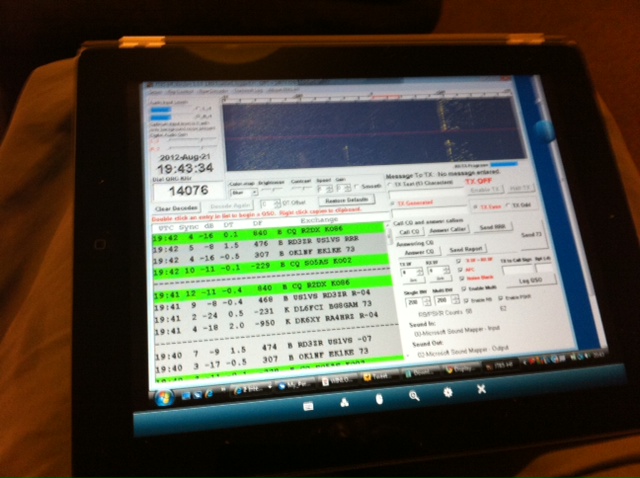
Recovering from a heavy cold and cough yesterday and because there was apparently nothing doing on 50MHz, I thought it was about time I got the HF JT65A gear going again, which I did and made some
enjoyable QSOs on 14MHz.
I’d wondered from time to time about making remote control QSOs. I use the Logmein client to control my PC if I’m out and about and just recently, I’d noticed that their iPad/iPhone client was free for the basic service. Since for datamodes, I didn’t need anything more than screen control – no need to ‘pipe’ audio, this should work just fine.
So last night, I sat on the sofa downstairs, with my iPad and tried to control the PC running JT65-HF. It seemed to work just fine. It felt odd calling someone without being in front of the radio and being able to tweak the power/alc settings and of course to be able to hear signals! However, I made the leap of faith and R2DX was my first ever remote control QSO. I followed on with AB1J and a German station.
I also have the Logmein client on my iPhone, so this lunchtime, I tried the same type of experiments across the Internet from the office. Although broadly successful, there was too much latency, and though I could see signals being decoded and press the appropriate buttons – the timing didn’t always work out correctly. Apologies to Harald DL8ZBA who must have wondered what was happening when I calleed him!
Nevertheless, this looks quite promising, particularly around the house and perhaps further afield when there is a good network connection.

Tim Kirby, G4VXE, is a regular contributor to AmateurRadio.com and writes from Oxfordshire, England. Contact him at [email protected].
 Ham Radio Deluxe |
 W5SWL Electronics |
 Ham Radio Prep |
 KB3IFH QSL Cards  Hip Ham Shirts  HamRadioAuctions HamRadioAuctions Reliance Antennas Reliance Antennas Enigma Shop Enigma Shop |  morseDX  Ni4L Antennas  R&L Electronics R&L Electronics antennas.us antennas.us QRV QRV |
- Matt W1MST, Managing Editor
