 |
 2012 Colorado QSO Party Results–KD0BIK
 3 September 2012 | by
The 2012 Colorado QSO Party is over and I had a fantastic time. The new ham shack which I scrambled to get ready for the event performed beautifully. It’s really a comfortable and inviting space which I believe is important when working a multi-hour contest.
At best, I consider myself a casual contester. I do enjoy operating during many of the contests taking place throughout the year….but for the most part, I am just giving away points to other contesters and trying to add to either my WAS, DXCC etc. etc.
Last year (2011), was the first year for me to take a serious approach to operating in the Colorado QSO Party. I operated for approx. 6-8 hours of the 16 hour contest. I managed to make 138 QSO’s in 2011. My goal for 2012 was to try to break that.
Before I discuss my 2012 results, I just want to say “Thank You” to my wonderful wife. Without her organization skills and encouragement to me throughout the summer months, the new ham shack wouldn’t have been ready. Thank you honey…
Oh…one more thing. While I’ve mentioned the new ham shack is ready, this is really only partially true. Yes, the shack operating position is setup and fully active. But I still have some painting and touch-up work to do in the space. It is my hope to get this all done in the next several weeks. Also there is still much work required on fully evacuating the old space and getting everything organized and into its place in the new area.
Again, my expectations for 2012 was to beat 138 Q’s. The contest began at 6 AM, but I made a slow start to the day and managed to get on the air around 7. I was surprised to hear 20m open to the east coast that early in the morning. The first 100 Q’s seem to fly into the logbook. I took my first break around 10 AM and had already logged over 100 Q’s.
As I returned about 15-20 minutes later, the band had shifted and the Q’s were slower to get logged. I focused mainly on 20 meters. I would occasionally check 10 and 15 meters, but heard nothing and would go back to 20m after 15-20 minutes of calling CQ.
My friend Bob Witte, K0NR posted a note to an email reflector about a SOTA activation taking place on Mt. Evans (W0/FR-003). The activation consisted of several operators from the Colorado QRP Club and one was operating on 146.52 VHF FM. I worked him for both points in the Colorado QSO Party as well as earned myself 10 SOTA Chaser points. Not a bad deal for about 60 seconds of effort.
During the afternoon hours, 20 meters came back to life and I had a nice pileup going for almost an hour. I worked stations all over the lower 48 and Canada. One call sign I heard answering me sounded familiar. Kilo, Five, Sierra, Oscar, Romeo.
As a young child, I would listen to my uncle talk on his ham radio and while I didn’t know any of the other phonetic alphabet names, I knew Kilo, Five, Sierra, Oscar, Romeo. YES…my Uncle heard me calling CQ from down at his QTH in Texas and answered me back.
While I’ve worked over 70 DXCC, have multiple versions of the WAS awards….the most sought after QSO for me since 2007 has been K5SOR. Yes, we perhaps could have setup a sked to work each other, but this particular QSO…unexpected…is one that I will always cherish.
Ok…enough rambling. My 2012 Colorado QSO results ended up with 281 QSO’s and 25,852 points. I more than doubled my 2011 results and got the one QSO in my log I had been wanting for a long, long time.

My station setup consisted of the Yaesu FT-950 running 100 watts into my 20m hamstick dipole. I received some really great signal reports with this setup and when asked, many found it hard to believe this antenna setup produced the results others were hearing. The new voice keyer and keypad setup for the 950 really helped as well.
All in all….I truly had a blast operating and representing Colorado in this QSO Party. I would like to thank the Pikes Peak Amateur Radio Association for sponsoring this event. I certainly look forward to next year.
Until next time…
73 de KD0BIK
Jerry Taylor, KD0BIK, is a regular contributor to AmateurRadio.com and writes from Colorado, USA. He is the host of the Practical Amateur Radio Podcast. Contact him at [email protected].
K0NR Colorado QSO Party Results
 It was a fun day working the Colorado QSO Party from the cabin near Trout Creek Pass. State QSO parties are contests designed to focus attention on a particular state, with an emphasis on activation of counties. This brings out the County Hunters and other folks interested in working that particular state.
I decided to operate from our cabin near Trout Creek Pass in Park County, which is considered “rare” by most folks. My station was a Yaesu FT-950 running 100W to a trap dipole up in the trees. I mostly operated phone since I don’t consider my CW skills up to that challenge of a contest. I did make a few CW contacts at the request of a few folks than wanted Park County on CW.
Thanks to all of the mobile stations out there, both in Colorado and out of state. I was surprised how many people were mobile or operating portable (often camping out for the holiday weekend). I normally monitor 146.52 MHz while up at the cabin for anyone out hiking or mobile. I heard Eric W0ECE doing a SOTA activation on Mt Evans and worked him for QSO Party points and SOTA points.
The score below includes the CW contacts so the score will drop a bit when I submit in the phone only category (77526, I think).
I was disappointed with the Qs on 15 Meters but I looked in my log from last year and it was also light on 15 Meter contacts. Twenty meters is always a bit crowded and I really like when 15M and 10M open up. I almost doubled my score from last year, so I was happy with the result.
        Band  Mode  QSOs    Pts   Sec   Mul
            7  CW       3      12    2    0
            7  LSB     93     186   23    1
           14  CW       1      4     1    0
           14  USB    400     802   41    0
           21  USB     23      64    5    0
           28  USB      1      2     0    0
          144  FM       4      8     3    0
        Total  Both   525    1078   75    1
           Score : 81,928
Thanks to the Pikes Peak Radio Amateur Association for sponsoring this event.
73, Bob K0NR
Bob Witte, KØNR, is a regular contributor to AmateurRadio.com and writes from Colorado, USA. Contact him at [email protected].
A VERY SMART charger
 |
| Charger ready for testing |
1. The charger can be connected to the battery indefinitely and no harm will come to the battery. Once the battery is fully charged the Smart charger will remain in maintenance mode delivering a float charge. Therefore the battery cannot be over charged.
2. The charger can stay hooked up to the battery while operating the radio if you so choose to do so. The charger will enter the bulk mode to help with the load of the radio operating.
3. When the charger is connected it automatically determines the type of charge the battery needs.
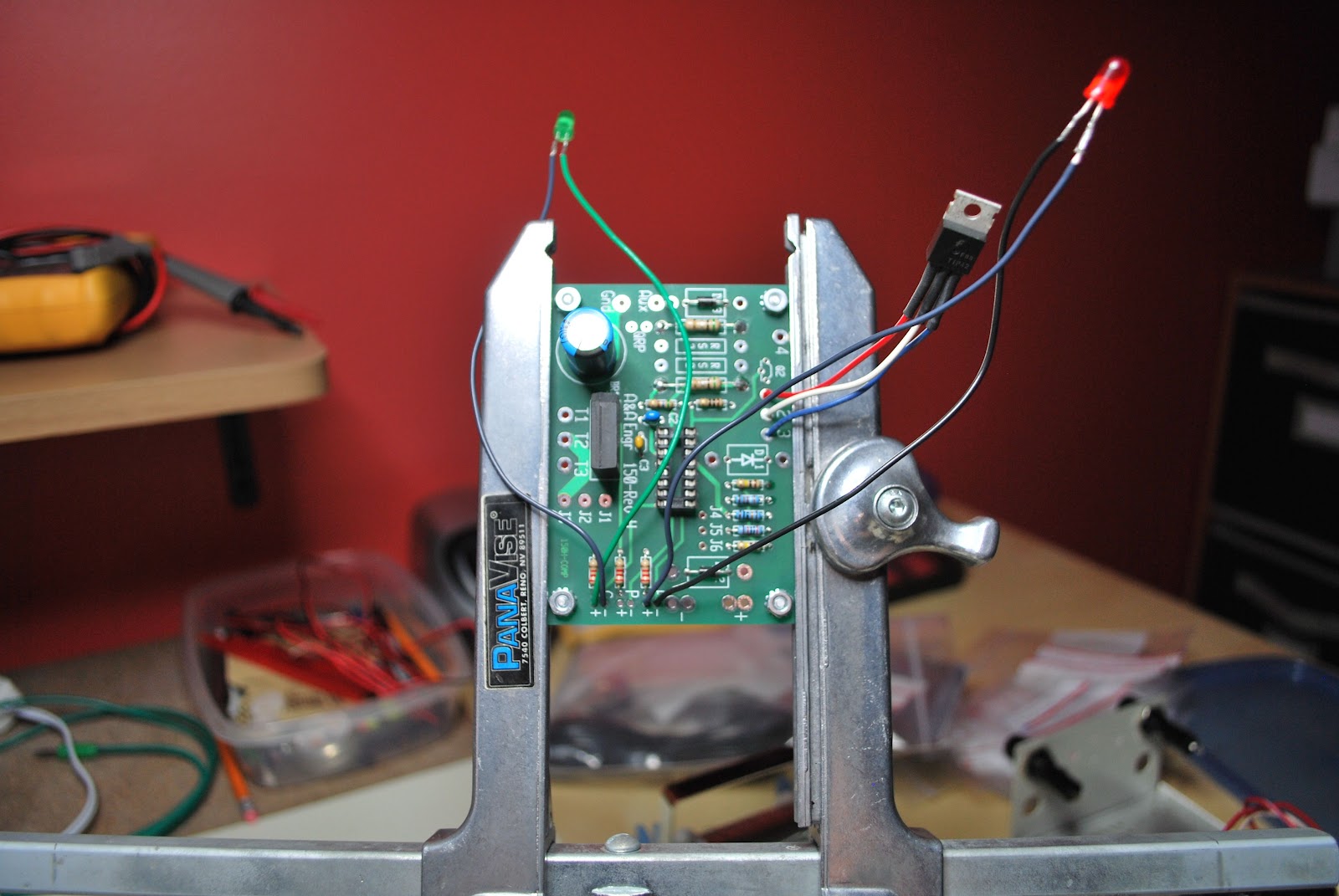 |
| Close to done but no heat shrink on LED |
 |
| Top view with no jumpers or D1 ops |
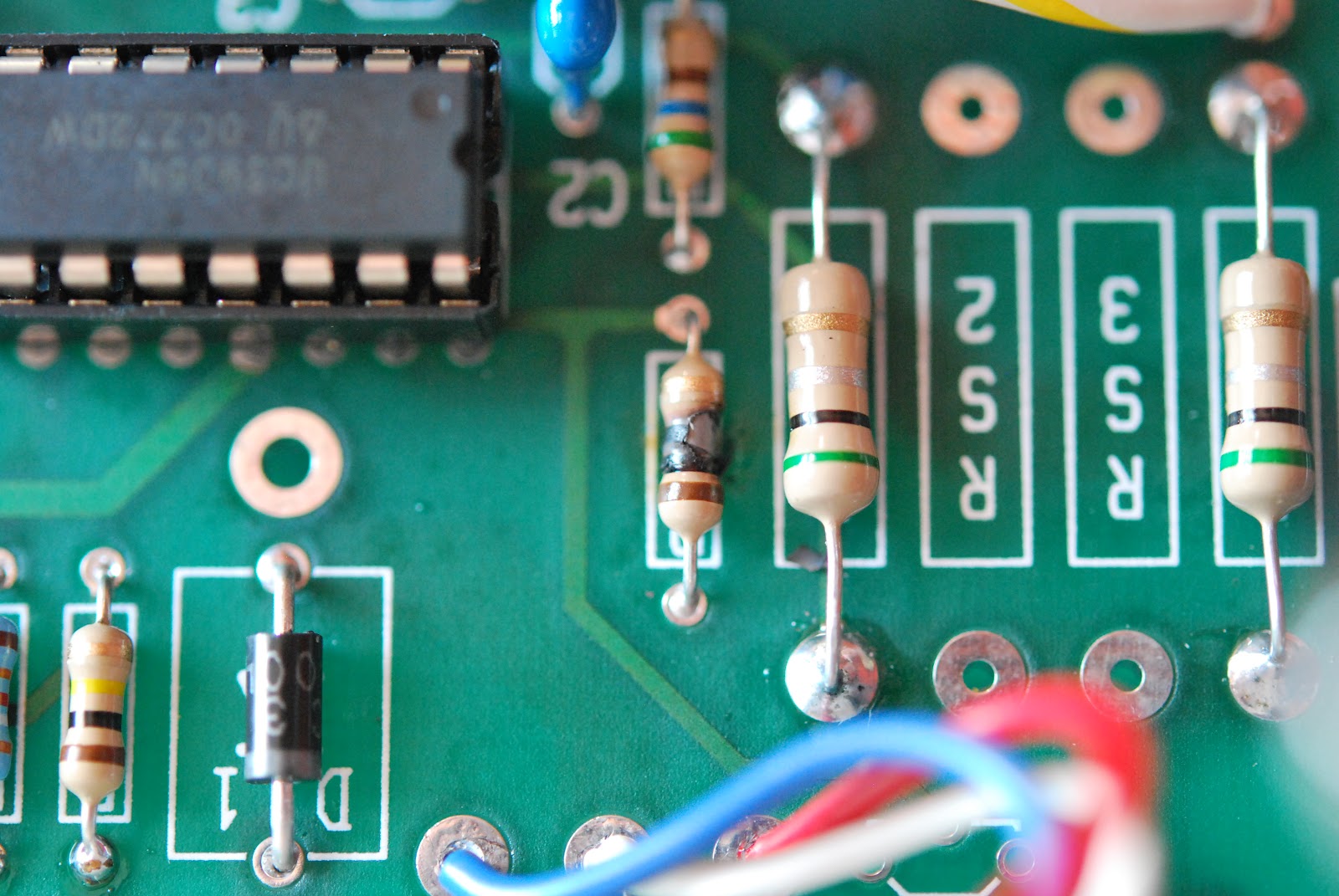 |
| Fried resistor |
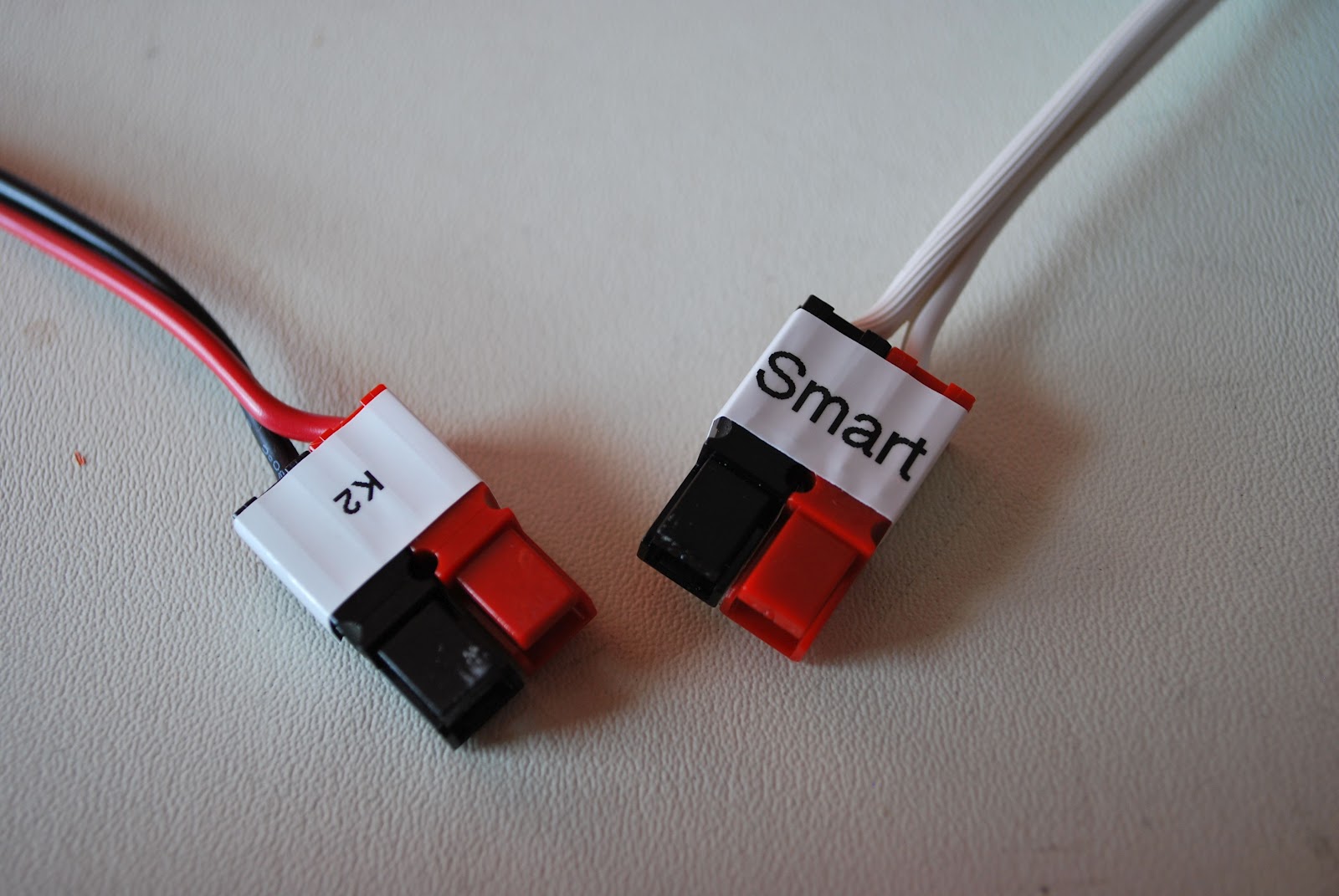 |
| Decided to use Anderson conn's |
either:
1. You are in measuring in the wrong place.
2. You have made a mistake in the assembly.
In either case nothing has been toasted
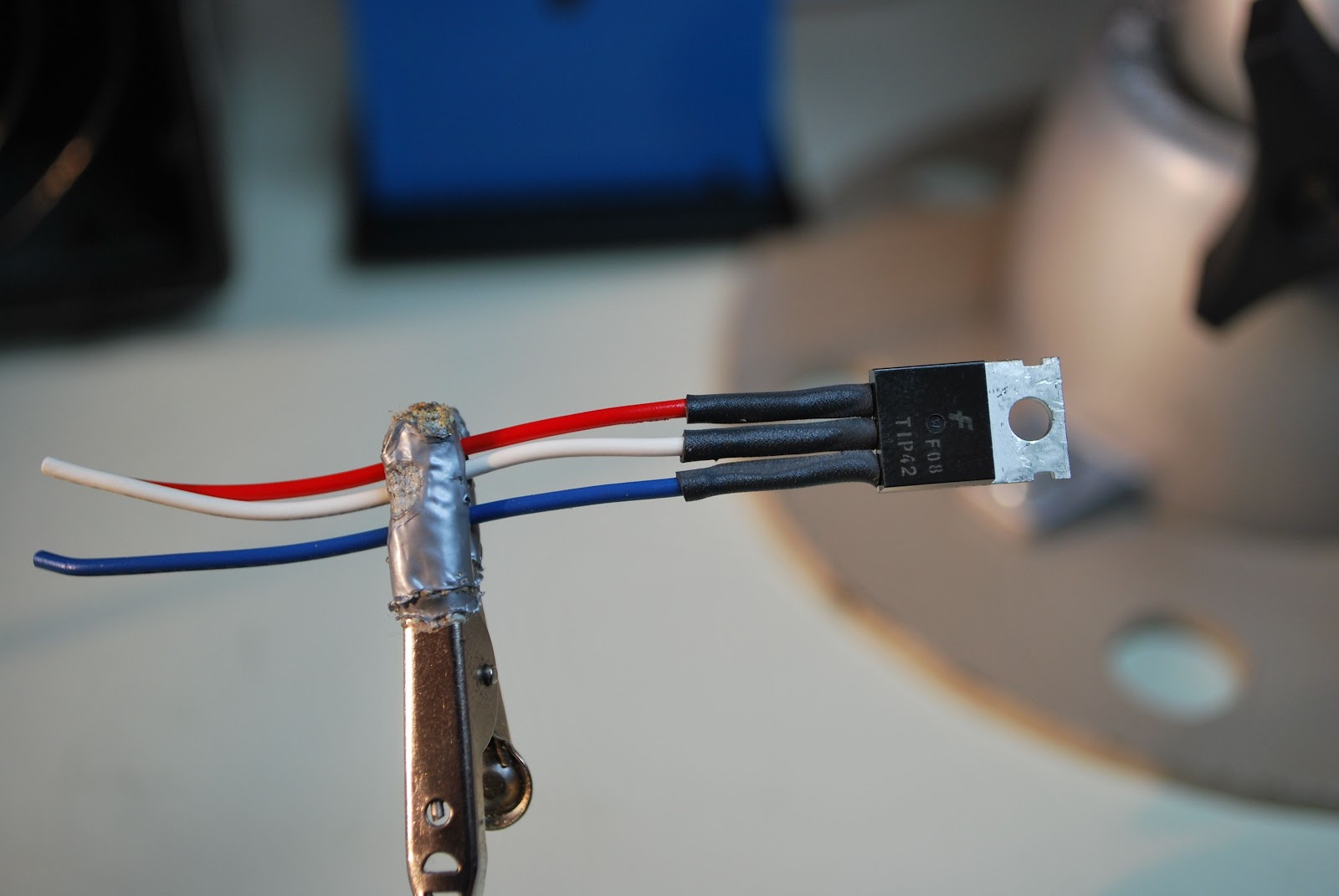 |
| Some heat shrink fun |
1. The heat shrink tubing is very clearly stated to go on the transistor but it also should go on the leads of the LED's...that was not so clear and I have redo the LED's.
2. Make sure you add the jumper J1 to J2 in my case it is mentioned but off to the side of the instructions
3. There is no diode to be installed in D3 position, instructions just say install parts and there are is D1, D2 and D3. Just install the diodes (both are the same diode) one in D1 the other D2.
 |
| D1 needs to have the diode not D3 |
4. If you ordered the QRP version of the charger as I did you will get a separate kit that allows the charger to switch between two charging currents. Read those instructions and install the resistors they tell you too or you will end up removing resistors if you follow the main instructions then move to the add on kit instructions as I did.
5. When done remember the output leads will SHOW NO VOLTAGE UNLESS A LOAD IS APPLIED.
6. The document required to test the unit can be found at the link above under "test procedure". BUT when you do it be very careful!!!

Mike Weir, VE9KK, is a regular contributor to AmateurRadio.com and writes from New Brunswick, Canada. Contact him at [email protected].
LHS Episode #089: Minty Fresh
 On this episode of Linux in the Ham Shack, your hosts had the very great pleasure or talking with Rob Hawkins from The MintCast. In a discussion which could have gone on for a much longer time, had they let it, the topics range from software patents and intellectual property to Windows 8 to the future of tablets and mobile devices. There’s even a little peek into Rob’s personal life, which Rob may or may not regret once this episode reaches the public. So stick it in your ear, as the saying goes, and enjoy this latest installment of the rowdiest tech and ham radio podcast on the Internet.
73 de The LHS Guys
Russ Woodman, K5TUX, co-hosts the Linux in the Ham Shack podcast which is available for download in both MP3 and OGG audio format. Contact him at [email protected].
Scanning and memories for your RTLSDR using K5DEV’s SDR#
If like me, you got one of the £13 SDR receivers from eBay and got it working you might be looking to get some more use out of it. How about if you could save frequencies to memory and scan them? Well, thanks to a post on Dave G4FRE’s blog I learned about K5DEV’s version of the SDR# software which you can see in action in this video from K5DEV’s blog
This looks really excellent and you can download the software from K5DEV’s website

Tim Kirby, G4VXE, is a regular contributor to AmateurRadio.com and writes from Oxfordshire, England. Contact him at [email protected].
When something doesn’t work, it’s probably not connected properly….
Over the years, operating in different contest, expedition and reasonably complex stations, I can’t count the number of things that haven’t worked quite as they should. And over the years, most of the time, the same problems have been rectified by doing something as complex as plugging it in properly, or switching something on! It’s just so true!
This morning, I had a slight variation on this theme. I came into the shack and I thought it would be nice to try some 144MHz FSK441 Meteor Scatter, as I’ve not done any serious MS for ages. A few months ago, I recommissioned one of the 144MHz amplifiers, capable of 300W or so and I thought I’d give it a blast this morning.
I set up the computer with WSJT and adjusted the drive from the FT847 – warmed the amplifier up and tried a test. Click, click, click from the amplifier with no output. Hmmm. I made a new patch lead between the rig and the amp a few weeks ago – I think it’s ok – but I checked it – fine. Tried the FT817 driving the amp – same issue. I was starting to think that perhaps it was something to do with the 5el yagi, so I went to the back of the amplifier to disconnect the beam and try the vertical antenna.
And then it struck me. When I reconnected the new patch lead – I’d connected the antenna to the input of the amplifier and the patch lead from the rig to the output! With the amp not switched on I hadn’t noticed! Swapped them over and I could see healthy amounts of output again.
Of course, by the time all that had been done – it was time to get on with the day, so no MS QSOs for me this morning.
A silly mistake, but at least they are always the easy ones to fix.

Tim Kirby, G4VXE, is a regular contributor to AmateurRadio.com and writes from Oxfordshire, England. Contact him at [email protected].
Cool – neat – keen!
I was playing around on 30 Meters and 40 Meters tonight, listening, tuning, calling CQ. I had a very FB QSO with Rudi W8DJ on 30 Meters, where the signals were plentiful and loud.
After our QSO, I hopped on over to 40 Meters and heard a weak; but perfectly copyable CQ from VA3IED/QRP near 7.030 MHz. So I decided to throw out my call, and sure enough, I got an answer.
The op’s name was Scott, and he told me that he was on a camping trip to a remote island in Canada. Alarm bells immediately went off in my head! I remembered seeing a video on YouTube about something like this! I asked Scott if that was him and sure enough, it was!
Scott is back to the same island – canoeing out there and having a grand old time camping and playing radio, QRP style that is. Last year’s video told the tale of his PFR3A. This year it is Scott’s new KX3 that has accompanied him.
During our QSO, he was about 539 and I got a 529 in return. Not the strongest of signals; but very easily readable nonetheless. As I sit hear typing this, Scott is in conversation with another Ham after taking a short break after our QSO. I don’t know if it’s changing band conditions; or if he re-oriented his antenna, because he is an honest 579/589 into NJ now.
This is last year’s video; so you can see where he is camping. It sure is beautiful, that’s for sure. I didn’t ask Scott; but sure hope he’s shooting more video this year, showing off his KX3!
72 de Larry W2LJ
QRP – When you care to send the very least!

Larry Makoski, W2LJ, is a regular contributor to AmateurRadio.com and writes from New Jersey, USA. Contact him at [email protected].
 Ham Radio Deluxe |
 W5SWL Electronics |
 Ham Radio Prep |
 KB3IFH QSL Cards  Hip Ham Shirts  HamRadioAuctions HamRadioAuctions Reliance Antennas Reliance Antennas Enigma Shop Enigma Shop |  morseDX  Ni4L Antennas  R&L Electronics R&L Electronics antennas.us antennas.us QRV QRV |
- Matt W1MST, Managing Editor
