 |
 Double-hop Es?
 28 September 2012 | by
 Thursday brought more great 10m propagation. Take a look at the screen-grab below.
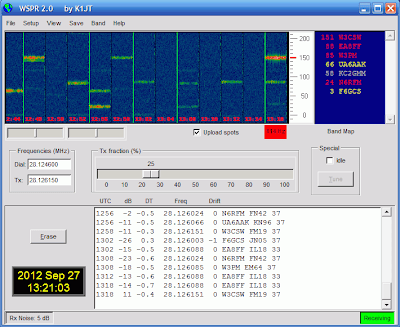 |
| 10m WSPR signals received on G4ILO’s attic dipole |
The bright trace at the top right is the 10 watt signal of W3CSW at 11dB over noise. That is one of the strongest WSPR traces I’ve ever seen, and definitely the strongest signal from a station outside Europe. I think it has to be double-hop Sporadic-E propagation. It is interesting that my previous spot of the same station was 11dB below the noise. My 2 watts produced a positive result from his side as well.
Tuning around the 10m band and there was not the wall of loud signals that such good propagation would suggest. A couple of good old boys from Mississippi and Tennessee were chewing the rag, oblivious to the fact that their signals were bending S meter needles thousands of miles away. But apart from those few stations there was an absence of signals. A station I worked called CQ with no takers for some time afterwards. I tried CQing myself, with no result. To me this also shows that the enhanced propagation was very selective, supporting the theory that it was Sporadic-E propagation.
 |
| 10m signals spotted by G4ILO, 27/9/2012 |
I did make a couple more SSB contacts but once again the digital sector provided the best returns for my efforts.
There is yet more interesting 10m propagation today. I have already spotted stations from VK2 and from Thailand. It’s a shame you can’t WSPR and operate on the same band at the same time. Or rather, it’s a shame that I can’t. So I’ll switch between modes, running WSPR when I’m not actually in the shack and able to use the keyboard or mic.

Julian Moss, G4ILO, is a regular contributor to AmateurRadio.com and writes from Cumbria, England. Contact him at [email protected].
All it needs is a title
I found this on a scrap piece of paper at the club last night. Being a bit thick and not knowing what it was for certain I asked a few people and the response was fairly consistent.
‘Its a…errr…y’know…..that you know used to do as kits for err’
Obviously I wasn’t the only one who was a little stuck. Well I don’t know what it is exactly, but I can have a few guesses – I’ll nail my colours to the mast and suggest it is a current meter of sorts. Anyone else care to join in the guesswork with more confidence? It took me long enough to find out what brass treblet tube is!

Alex Hill, G7KSE, is a regular contributor to AmateurRadio.com and writes from Cumbria, UK. Contact him at [email protected].
USS Slater
At the beginning of the month, I posted about a Special Event Station – K2N, that was going to be operating from NY State aboard the USS Slater.
As luck would have it, my schedule did not permit me to get on the air that day “to give a shot” at working them. This was a disappointment as I love working Special Event Stations, especially those that in anyway commemorate our Military or our Veterans.
Fortunately, Stan WB2LQF announced on the e-mail reflectors about a video posted to YouTube showing the day’s activities. Here it is:
On a different note, I spent the evening printing out certificates for the 2012 NJQRP Skeeter Hunt. The top five finishers, as well as the high scorers from each state or province that entered should be seeing something in their mailboxes within the next week or two.
Again – thanks to all for making this inaugural 2012 event a big success!
Lastly – ATTENTION KIT BUILDERS !!!!!!
The ARRL wants your input, as they are looking for recommendations for “easy to build” kits for first time or Newbie kit builders. The link to the page is: http://www.arrl.org/news/attention-kit-builders-the-arrl-wants-to-hear-from-you.
I recommended the ACME QRP GC100 Gel Cell Charger Kit. It was easy to build and is highly functional and usable. What more could you ask for?
72 de Larry W2LJ
QRP – When you care to send the very least!

Larry Makoski, W2LJ, is a regular contributor to AmateurRadio.com and writes from New Jersey, USA. Contact him at [email protected].
The postman came by today……….
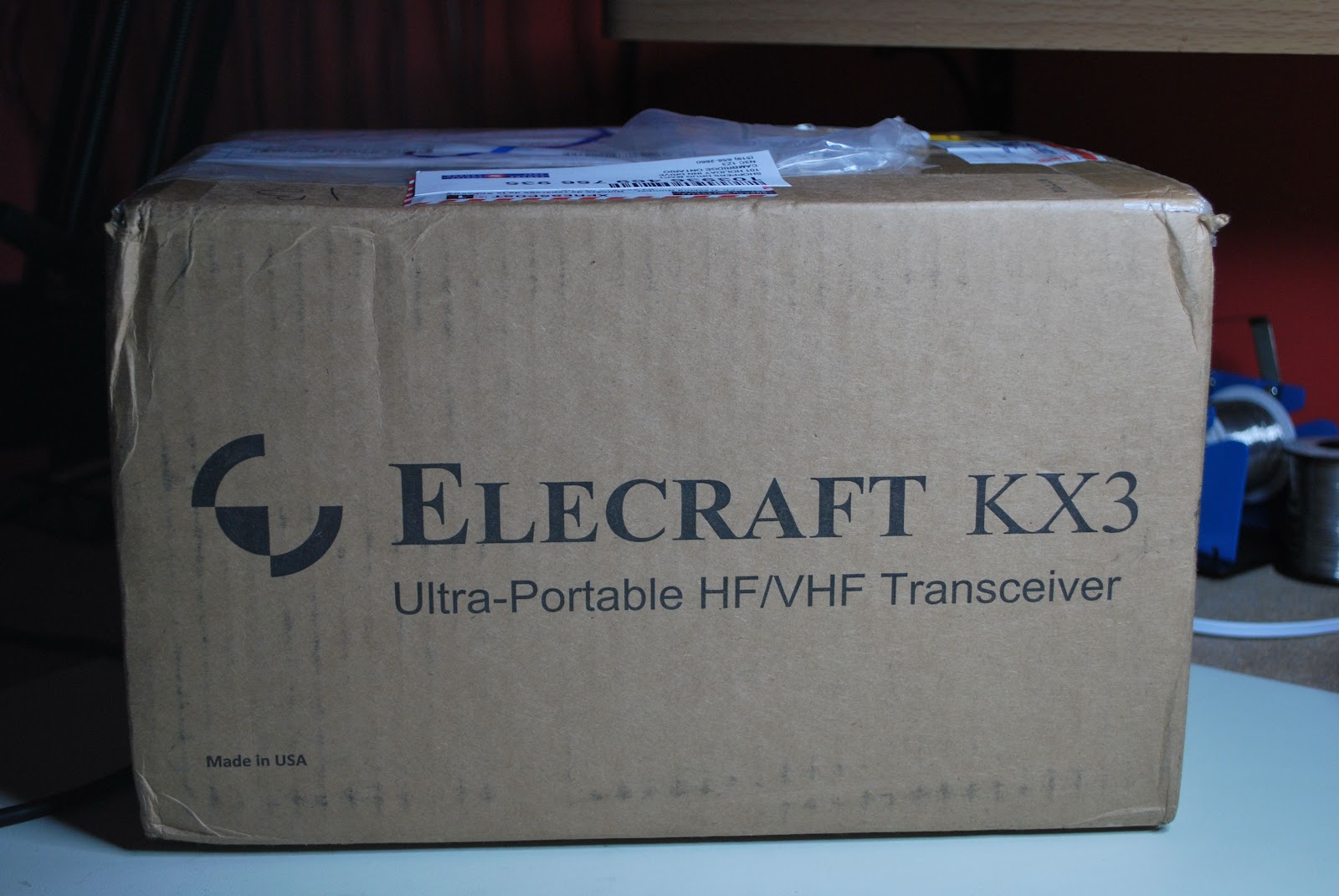 |
| Someone is going to be busy this weekend with a kit!! |
Mike Weir, VE9KK, is a regular contributor to AmateurRadio.com and writes from New Brunswick, Canada. Contact him at [email protected].
Ham Nation 66

http://dts.podtrac.com/redirect.mp4/twit.cachefly.net/video/hn/hn0066/hn0066_h264m_1280x720_1872.mp4
http://dts.podtrac.com/redirect.mp4/twit.cachefly.net/video/hn/hn0066/hn0066_h264m_864x480_500.mp4
http://dts.podtrac.com/redirect.mp4/twit.cachefly.net/video/hn/hn0066/hn0066_h264b_640x368_256.mp4
http://www.podtrac.com/pts/redirect.mp3/twit.cachefly.net/hn0066.mp3
Hosts: Bob Heil (K9EID), Gordon West (WB6NOA), and George Thomas (W5JDX).
Capacitor and resistor substitution boxes, remote Ham radio operation, and videos from viewers.
Guests: Cheryl Lasek (K9BIK), Don Wilbanks (AE5DW), and Julian Frost
Download or subscribe to this show at http://twit.tv/hn.
Submit your own video to Ham Nation! See the Video Guidelines, http://www.frozen-in-time.com/guide/
We invite you to read, add to, and amend our show notes at wiki.twit.tv.
Thanks to Joe Walsh who wrote and plays the Ham Nation theme.
Thanks to Cachefly for the bandwidth for this show.
Dr. Bob Heil, K9EID, is the founder of Heil Sound and host of TWiT.tv's Ham Nation which streams live each Tuesday at 6:00pm PT (9:00pm ET) at http://live.twit.tv. Contact him at [email protected].
PARP News – Episode 59 and Transcripts

It’s been a while since I posted any new news regarding the Practical Amateur Radio Podcast (PARP). However, I did want to pass along two points of interest. First, PARP 59 was released yesterday. PARP 59 is titled “The Well Equipped Ham Shack”. In this episode I share some thoughts on items to consider other than the usual transceiver, tuner etc.
Second, I received an email yesterday from a fellow ham who just discovered PARP. He introduced himself and explained he was hearing impaired and asked if written transcripts were available. He was aware of the quality of content in my PARP episodes but is unable to listen to my audio podcasts.
Some may know that I prepare a written script which I read from for each of my shows content. I do this for several reasons. One, I believe those who can sit down in front of a microphone and just begin talking without stumbling, stammering, inserting hmmmms and ahhhhhs truly have a gift. I’m not one of these individuals and I’m OK with that.
Second, while I understand the content I discuss…..I try very hard to ensure what I put out for my listeners is accurate. Yes…sometimes I make a mistake…but after all I’m only human. For me, writing out a script just helps make sure I have all the information I need to communicate already available to me in the script. Since I already have the written script I use to record my audio podcasts, it was really simple to fulfill the request for a transcript.
Going forward, each regular monthly PARP episode as well as the weekly PARP Plus editions will include a link in the show notes to a downloadable transcript in Adobe PDF format. Just visit MyAmateurRadio.com and view the show notes. You’ll see a link labeled “Transcript”. I’ve also linked all regular monthly PARP episodes recorded in 2012 and 2011 with their transcript. I’m working on 2010 and 2009 as I have time. Unfortunately, I can only go back to episode 16 as the first 15 scripts have disappeared.
I hope you’ll help me share this news with any of our fellow hearing impaired hams you may know.
Thank you for your time.
Until next time…
73 de KDØBIK
Jerry Taylor, KD0BIK, is a regular contributor to AmateurRadio.com and writes from Colorado, USA. He is the host of the Practical Amateur Radio Podcast. Contact him at [email protected].
Activity update; UHF tropo, 28MHz DX, some late summer Es, new valves and antenna!
The last week or two seem to have had their share of interesting propagation, but little time to blog about it.
The morning of Sunday, 16th September was an interesting one on 432MHz. Thanks to Steve M0BPQ on Twitter, I gathered that there was some good tropo into the south of France and Spain. I went up to the shack not really expecting to hear much, but there was a French contest on and I was surprised to hear signals. The first couple of stations that I worked were in the north of France but with excellent signals. I came across F6EZS/P who was very loud and I assumed he was in Normandy. I was a bit surprised when it turned out that he was in IN93 square in the Pyrenees – we had an easy QSO. I was also pleased to work into JN03 square with F2JR/P (from memory) – another nice QSO at just under 1000 km. I wasn’t able to stick around too long as I had a busy day planned, but thoroughly enjoyed the QSOs.
Over the last week or so, 28MHz has shown some great improvements in propagation. Like last year, I have been playing on JT65A and although have not made so many QSOs, have been interested to see what has been coming through and where I have been heard, even when I’ve been working other stations close by – the PSK Reporter website is very useful in that regard.
I was pleased to find 50MHz open last Saturday afternoon – to Poland and Germany mostly – I even found some new squares! Signals improved and improved and I decided to try 70MHz. OK1VBN was a great signal who I was able to work – and nice to work YO2LAM for a new square. 9A2SB was around too. Quite late in the season for 70MHz Es. Although I didn’t work it, there was apparently some Es+TEP to southern African on 50MHz, with ZS6WN being worked from the UK. On Sunday, 50MHz was open again but with weaker signals and nothing on 70MHz that I could detect.
The Virtual Radar experiment is proving quite interesting on 1090MHz with planes showing up over distances of 50-60 miles on a regular basis. I am looking forward to seeing what happens in tropo conditions.
A pair of replacement 4CX350As have been found – following the demise of the valve in the ‘melted aerial’ incident – so will be able to get the 144MHz amp going again.
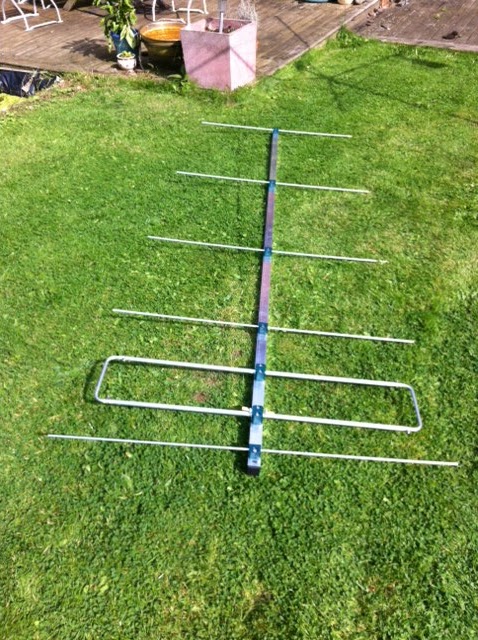
The new Innovantennas 6el yagi is constructed and awaiting some testing – I was hoping to do that last weekend, but a bad cold got in the way. As it may be a little time before I can get the 6el up on the mast, I may even hook it up on a stepladder in the back garden and point it at the moon and see what happens.
All good fun and plenty going on!

Tim Kirby, G4VXE, is a regular contributor to AmateurRadio.com and writes from Oxfordshire, England. Contact him at [email protected].
 Ham Radio Deluxe |
 W5SWL Electronics |
 Ham Radio Prep |
 KB3IFH QSL Cards  Hip Ham Shirts  HamRadioAuctions HamRadioAuctions Reliance Antennas Reliance Antennas Enigma Shop Enigma Shop |  morseDX  Ni4L Antennas  R&L Electronics R&L Electronics antennas.us antennas.us QRV QRV |
- Matt W1MST, Managing Editor
