 |
 Show Notes #091
 4 October 2012 | by
 Introduction:
- It’s Second Spring in Texas, and Autumn is beginning in Arkansas, so sit back and enjoy another exciting episode of LHS.
Announcements:
- Paid subscribers to LHS may have noticed the web site certificate had expired. That problem is fixed.
- Welcome new subscribers Michael S., Michael C., and Bill A. Thank you!
- Sign-up for the LHS mailing list.
- Our LHS Ambassador to Ohio LinuxFest will be Scott, N8VSI. Thanks, Scott, and we look forward to hearing all about it.
- Please donate to the podcast and click on the affiliate links on the website.
Topics:
- HF Antennas, Horizontal vs. Vertical
- Tonight, our hosts discuss the pros and cons of horizontally and vertically polarized HF antennas.
- One thought is that once the RF radiation hits the various layers in the ionosphere, the polarization doesn’t really matter much as it gets reflected to and fro.
- Richard offers the practical reason for preferring horizontal antennas for HF: it’s easier to build and erect the long antennas necessary for these frequencies. However, for chasing DX, those long-distance contacts, many hams prefer vertical antennas as they tend to have lower angles of radiation.
- Also mentioned: GAP antennas and the G5RV antenna.
- Wire horizontal dipoles are inexpensive and easy to construct. Verticals are a good choice when space is limited and can have a lower take-off angle, providing a good ground radial system is installed beneath them.
- Horizontal antennas can be more directional. A dipole wire running north and south will have a better propagation east and west. A vertical is omnidirectional, radiating equally in all directions. To complicate matters, a horizontal antenna lower to the ground will radiate at higher angles than the same antenna that is higher. This can be useful for communicating with stations that are close to you.
- A new section of the podcast: Russ’ Rant!
- Russ has a Yaesu FT-7900R, a dual-band UHV/VHF mobile radio. It has a removable front panel, allowing the main part of the radio to be hidden and the display can be easily mounted on the dash. However, the speaker is on the body of the radio, so you can’t hear it if it’s hidden under the seat or in the trunk! Russ thinks the head unit should also contain a speaker, perhaps a very small one like in an mp3 player. Or put the speaker in the microphone.
- Returning to antennas, Richard recommends that KD8SZG (in the chat room), should try building his own wire antennas for HF. Any of the antenna books written by Doug DeMaw, W1FB, are good resources. His Antenna Notebook is one. (I also like the various ARRL antenna books, like the Simple and Fun Antennas for Hams. -Ed.)
Contact Info:
- Contact Richard at [email protected], Russ at [email protected], or both at the same time at [email protected].
- Listen to the live stream every other Tuesday at 8:00pm Central time. Check the LHS web site for dates.
- Leave us a voice mail at 1-909-LHS-SHOW (1-909-547-7469), or record an introduction to the podcast.
- Sign up for the LHS mailing list.
- Sign up for the MAGNetcon mailing list.
- LHS merchandise is available at the Merch link on Web site. Check out the Badgerwear or buy one of the other LHS-branded items at PrintFection.com/lhs or Cafe Press. Thanks!
- Thanks to Dave from Gamma Leonis for the theme music.
Music:
- “A Little Time” by Not From Georgia, from their album Love & Umbrella, courtesy of Jamendo.
- “Metal Heart” by Zamza, from their album Songs for Jukebox, courtesy of Jamendo.
Russ Woodman, K5TUX, co-hosts the Linux in the Ham Shack podcast which is available for download in both MP3 and OGG audio format. Contact him at [email protected].
FCC Proposes Part 97 Changes
 The FCC finally got around to addressing a number of issues via a NOTICE OF PROPOSED RULE MAKING AND ORDER. This proposal is an odd mix of Volunteer Examiner (VE) rules, changing the license renewal grace period and dealing with a problem with emission designators.
This notice proposes changes to Part 97 of the FCC Rules and seeks comment on these proposals:
- Require that VEs give examination credit to an applicant who can demonstrate that he or she formerly held a particular class of license
- Provide that a CSCE provides element credit for the holder’s lifetime
- Reduce the grace period for renewal of an expired license to six months
- Reduce the time before a call sign becomes available for reassignment to six months (to match the grace period)
- Reduce the number of VEs required to administer an examination from three to two
- Allow remote observation of examination sessions by VEs (allow exams to be given via an audio and video system)
- Clean up some issues in the rules concerning Morse code testing (which has been eliminated)
- Allow emission types FXE and FXD to clear up issues concerning MOTOTRBO and DMR (see my previous post on this topic)
Comments on theses items must be filed with the FCC within 60 days.
73, Bob K0NR
Bob Witte, KØNR, is a regular contributor to AmateurRadio.com and writes from Colorado, USA. Contact him at [email protected].
Handiham World Podcast for 03 October 2012
Pat Tice, WA0TDA, is the manager of HANDI-HAM and a regular contributor to AmateurRadio.com. Contact him at [email protected].
6 and 10 short report
The September 6 and 10 short form report has been compiled by Martin Harrison, G3USF and is available in the usual place
Alex Hill, G7KSE, is a regular contributor to AmateurRadio.com and writes from Cumbria, UK. Contact him at [email protected].
2012 Challenge–One Quarter to Go
As the subject line reads, I’ve reached the final quarter of 2012 in my 2012 Challenge of having at least one QSO per day. This update is for the month of September.
September was a busy month for me with a total of 346 QSO’s. This surge in QSO numbers is of course due to my participation in the Colorado QSO Party. I also spent a great deal of time organizing the new ham shack and even found time to attempt and successfully activate my sixth SOTA summit.
While it was looking grim on adding a new DXCC entity in September, Uruguay entered the logbook on 28 September to keep my streak alive of also adding at least one new DXCC each month in 2012. I also had a fairly active month in working DX with 18 QSO’s logged.

The QSO breakdown for September is as follows:
Mode
Number QSO’s
JT65
38
SSB
302
PSK31
1
2m FM
5
Additional notes of interest:
DX Stations Worked in September – 18
New DX Entities in September – 1
Total QSO’s for 2012 – 1283
Total consecutive QSO days – 274
Days left in 2012 – 92
Until next time…
73 de KD0BIK
Jerry Taylor, KD0BIK, is a regular contributor to AmateurRadio.com and writes from Colorado, USA. He is the host of the Practical Amateur Radio Podcast. Contact him at [email protected].
Designing PCB’s
It seems that most of us hams make a lifelong commitment to learning. Mainly about technical stuff to do with the hobby but occasionally about yourself. Yesterday I learnt that designing a simple PCB for my shack clock was going to take longer than a couple of hours.
Starting at the beginning I did the usual Googling about to find the right piece of software that would “easily” and “simply” turn my ideas into reality (I’m paraphrasing the marketing blurb but you know the kind of thing). I must be in a minority but this isn’t simple or easy. My shack clock is simple a radio controlled clock that receives a signal from the MSF 60KHz transmitter in Anthorn, Cumbria. No more than 30 miles from the house. An Arduino microprocessor converts the signal from the receiver into a simple LCD display. Currently the clock runs from a USB cable into the Arduino and into a heap of cables and wires on the desk. It has a certain aesthetic quality but not one you’d particularly call ‘3 year old boy proof’ (Sam likes to pull the wires out).
So downloading the freeware version of Eagle and firing it up, running through a bunch of tutorials and within a few short hours I had a schematic up on the screen. Even after wrestling about with some of the vast array of included libraries and checking of specs of things on various websites and ‘guessing’ my way through I think the schematic looks about right.
For this part of the project the Arduino had been replaced with the barebones microprocessor from Hobbytronics. Switching to the board layout gives a complete mess of wires and components that need shifting round. I now realise that this isn’t going to be a quick design. Normally at this point I’d share a picture of the work in progress. This time I will keep it to myself, until I can stop the board looking like a, well I don’t really know what it looks like but I know it isn’t a PCB yet.
Onwards and upwards!
Alex Hill, G7KSE, is a regular contributor to AmateurRadio.com and writes from Cumbria, UK. Contact him at [email protected].
Can I Use My Ham Radio on Public Safety Frequencies?
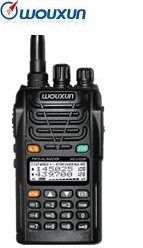 We have quite a few licensed radio amateurs that are members of public safety agencies, including fire departments, law enforcement agencies and search and rescue. Since they are authorized users of those public safety channels, they often ask this question:
Can I use my VHF/UHF ham radio on the fire, police or SAR channel?
It is widely known that many amateur radios can be modified to transmit outside the ham bands. The answer to this question used to be that amateur radio equipment cannot be used legally on public safety channels because it is not approved for use under Part 90 of the FCC Rules. (Part 90 covers the Private Land Mobile Radio Services.) The only option was to buy a commercial radio with Part 90 approval and a frequency range that covered the desired amateur band. Some commercial radios tune easily to the adjacent ham band but some do not. The commercial gear is usually two to three times as expensive as the amateur gear, and just as important, does not have the features and controls that ham operators expect. Usually, the commercial radios do not have a VFO and are completely channelized, typically changeable only with the required programming software.
The situation has changed dramatically in the past two years. Several wireless manufacturers in China (Wouxun, Baofeng, etc.) have introduced low cost handheld transceivers into the US amateur market that are approved for Part 90 use. These radios offer keypad frequency entry and all of the usual features of a ham radio. It seems that these radios are a viable option for dual use: public safety and amateur radio.
Here is a short list of the most common radios on the market:
| Model | Features | Price |
| Wouxun KG-UV2D, KG-UV3D | Several different models with slight variation in features, check carefully before ordering 136-174/420-470 MHz 5 kHz is smallest frequency step | $120 |
| Wouxun KG-UV6D | Several different models with slight variation in features, check carefully before ordering 136-174 / 420-520 MHz 2.5 kHz frequency step | $175 |
| Baofeng UV-5R, UV-5RC | The UV-5RC is an updated case style 136-174 / 400-480MHz 2.5 kHz frequency step | $65 |
Some Things to Consider When Buying These Radios
- The manufacturers offer several different radios under the same model number. Also, they are improving the radios every few months with firmware changes and feature updates. This causes confusion in the marketplace, so buy carefully.
- Make sure the vendor selling the radio indicates that the radio is approved for Part 90 use. I have seen some radios show up in the US without an FCC Part 90 label.
- Make sure the radio is specified to tune to the channels that you need.
- The 2.5-kHz tuning step is required for some public safety channels. Your particular set of frequencies may or may not need it. For example, a 5-kHz frequency step can be used to select frequencies such as 155.1600 MHz and 154.2650 MHz. However, a 2.5 kHz step size is needed to select frequencies such as 155.7525 MHz. There are a number of Public Safety Interoperability Channels that require the 2.5-kHz step (e.g., VCALL10 155.7525 MHz, VCALL11 151.1375 MHz, VFIRE24 154.2725). The safest thing to do for public safety use is to get a radio that tunes the 2.5-kHz steps.
- Although these radios have two frequencies in the display, they only have one receiver, which scans back and forth between the two selected frequencies. This can be confusing when the radio locks onto a signal on one of the frequencies and ignores the other.
Recommendation
I own 3 different models of Wouxun radios and two Baofeng UV-5R radios. I think they are all great radios for what they do. For serious public safety use, I would recommend getting the Wouxun KG-UV6D with the 2.5-kHz frequency step. The controls of the Wouxun are superior, including a knob for channel/VFO selection and RPT key for changing repeater shift. The Wouxun software works much better than Baofeng’s (which is really a mess). Also, if you show up at an incident with the Baofeng, your fellow first responders will think it is a toy. If you are absolutely sure you don’t need the 2.5-KHz frequency step, then you might consider one of the other Wouxun models.
I have purchased several radios from importcommunications.com and have been very satisfied with the service. You may want to shop around for the best price.
73, Bob K0NR
Bob Witte, KØNR, is a regular contributor to AmateurRadio.com and writes from Colorado, USA. Contact him at [email protected].
 Ham Radio Deluxe |
 W5SWL Electronics |
 Ham Radio Prep |
 KB3IFH QSL Cards  Hip Ham Shirts  HamRadioAuctions HamRadioAuctions Reliance Antennas Reliance Antennas Enigma Shop Enigma Shop |  morseDX  Ni4L Antennas  R&L Electronics R&L Electronics antennas.us antennas.us QRV QRV |
- Matt W1MST, Managing Editor
