 |
 Nostalgia time again: My first shortwave receiver (almost..) the Sony ICF2001
 29 December 2012 | by
 Since I seem to have engaged in nostalgia a bit, with the IC-740 post here’s another one! As I was driving back to Cheltenham with Mum this afternoon, talking about her father, Harold Iles, my Grandpa (who incidentally features in Laurie Lee’s novel, ‘Cider With Rosie’) . Harold was a great experimenter and really should have been a radio amateur. He was building radio sets when this was very cool stuff. Mum was telling me that he’d helped her build her own valve receiver. Certainly in the 1970s, he helped me build my own crystal set, which I still have! When he died in 1979, he was kind enough to leave me a little money.
By 1979, I was already very interested in amateur radio and had been shortwave listening for sometime, using a Nordmende Globetrotter broadcast bands radio which I had acquired when a dear, if distant, uncle had passed on. The Globetrotter was excellent, although the tuning was not so precise and it was hard to know exactly where you were listening – which could be tricky when sending off SWL reports!
I think I really wanted to buy myself a Trio (not Kenwood in those days) R1000, but could not really afford it and I was not working at the time, so the affordable option, which would bring me SSB reception for the amateur bands was the Sony ICF-2001D.
.JPG)
I’ve a feeling that the ICF-2001 was £199, but I’m not sure. I remember buying it from a shop on the High Street in Cheltenham, ‘Ray Electrical’ (Robber Ray, as my Dad, perhaps unkindly, referred to him!), using Grandpa’s gift.
Having digital readout and SSB was amazing! Being 1979/1980, solar conditions were good and I was able to hear lots of DX, particularly on 28MHz. With the receiver in my bedroom using the whip antenna, I listened to the USA working into the Indian Ocean (VQ9) and much more DX! I was captivated and knew that this was the hobby for me.
The ICF-2001 served as a great introduction to amateur radio for me, and I entered the SWL ladder in ‘Short Wave Magazine’ for a couple of years. By early 1983, I had taken and passed the Radio Amateurs Examination (then a City and Guilds exam) and obtained my first callsign, G6TTU. The ICF2001 formed part of my first station, being used on the Mode A satellites (145MHz up and 29MHz down) enabling me to work such DX, to a VHF only call, at least, as OX3WS in Greenland and TU2IT in the Ivory Coast.
Of course, not long after, I aimed for my Class A licence, passing the 12 wpm morse test, and by then was working, and had purchased the IC-740 so the need for the ICF2001 was lessened.
However, my Dad was always interested in short wave and I made the rig available to him. When I was off on a DXpedition somewhere, such as D68C in the Comoros, or ZF1VX in the Caymans, he would listen out for me, which was a nice feeling.
Wind the clock forward to this afternoon. I wondered if the ICF2001, which was still in Dad’s old study, would still work (not having been used since Dad’s death almost 3 years ago), so I grabbed it and brought it home.
I popped a couple of AA batteries into the ‘computer’ battery box, connected a power supply and fired it up! IT WORKS!
Fun to listen around, just on the internal antenna – just for old times’ sake, but it’s nice to know it still works, and I’m sure I can still coax some DX out of it!
Thanks, Grandpa, for getting me started…
(PS This is the first blog post written on my Raspberry Pi computer)
Tim Kirby, G4VXE, is a regular contributor to AmateurRadio.com and writes from Oxfordshire, England. Contact him at [email protected].
Grounded
I hope all of you had a very good Christmas. I was not very well a couple of days before the holiday. Nothing to do with my cancer, I’m glad to say, but possibly a result of all the treatment for it. I’m feeling a lot better now, but have got to have more tests and may have to go into hospital for removal of gallstones or kidney stones – I’m not sure which as I’ve been told I have gallstones but I have had some sharp pain in the kidney area. As a consequence of this I haven’t felt much like getting up at a reasonable hour to start the beacon monitor or HF APRS gateway.
 |
| Creative Design New FM+DAB USB DVB-T RTL2832U+R820T |
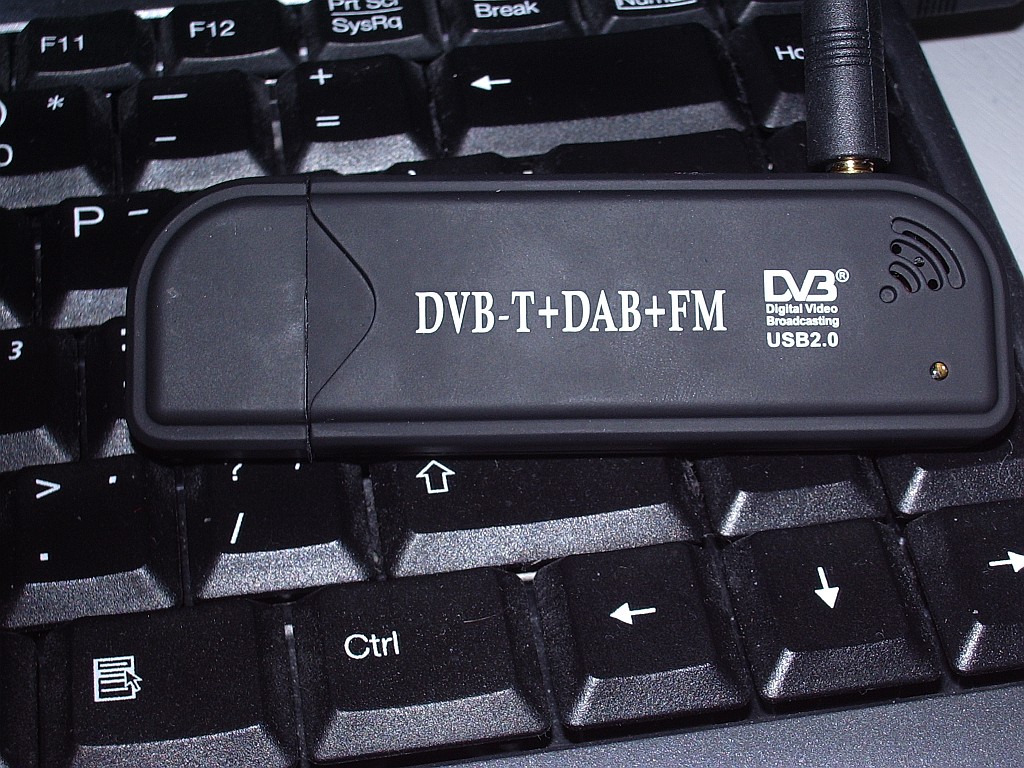
Before Christmas my interest was piqued by Tim G4VXE’s adventures using cheap digital TV dongles as receivers for, amongst other things, aircraft spotting. The first dongle I ordered was described as a Creative Design New FM+DAB USB DVB-T RTL2832U+R820T with antenna, and cost just over six quid!
 |
| EZCAP eztv645 RTL2832U / FC0013 USB DVB-T Digital TV Dongle |
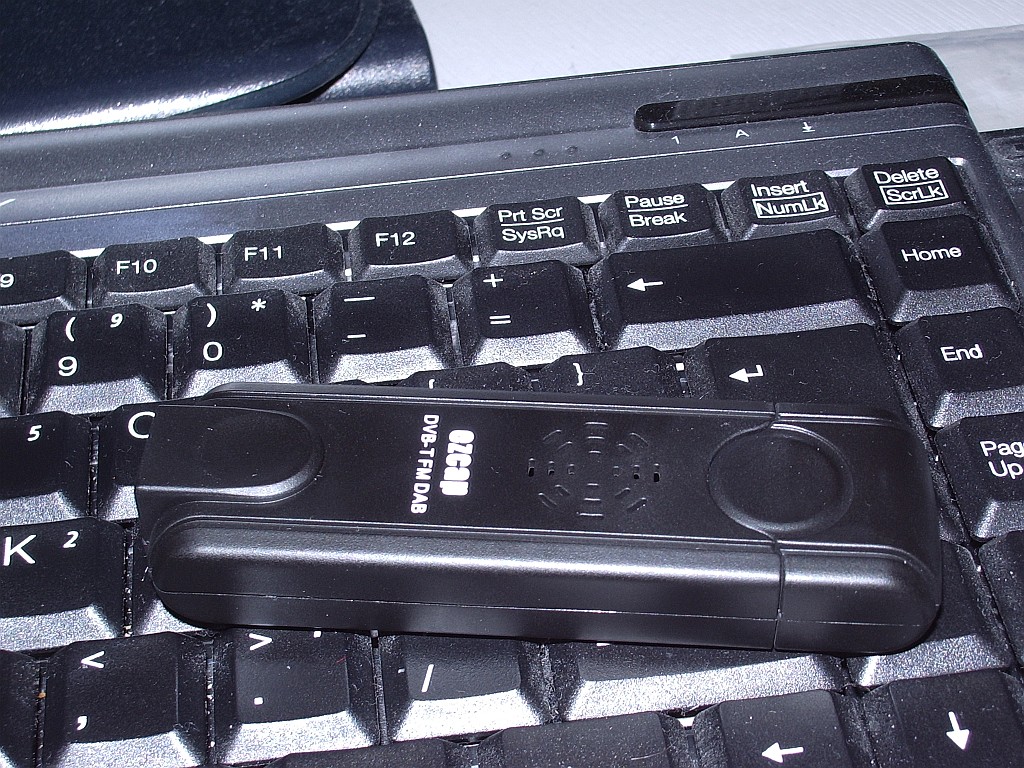
After a bit more reading up on the subject I began to doubt that this would be compatible with the software everyone was using so I ordered a second one, described as an EZCAP eztv645 RTL2832U / FC0013 USB DVB-T Digital TV Dongle for WIN7 LINUX SDR which was a massive £8.68 including postage from Hong Kong.
Both arrived yesterday. I tried the ezcap first, but my shack PC didn’t like the mini-disc that came with it so I was unable to test it as a TV receiver. Following the instructions for the aircraft decoders I installed the driver using zadig_xp, then downloaded and ran rtl1090 which is a decoder for the ADSB packets. This seemed to work – no error messages appeared – but nothing else happened. To display the aircraft data that I hoped to receive I downloaded ADSBScope and installed it. I then spent a lot of time trying various options to connect ADSBScope with rtl1090 but got nowhere. I also tried SDRSharp in the hope that I could use the dongle as a VHF/UHF SDR, and ADSBSharp as an alterntive to rtl1090. But neither of them received anything.
After a while I gave up, disappointed. I then installed the Creative Design dongle and its software. A scan for channels found about 55 TV channels with its quarter wave antenna hung in the window. So it was obviously working. Just not with any of the SDR or ADSB software, as I had suspected.
This morning I tried installing the ezcap software CD that my shack PC couldn’t read on another computer. The software installed perfectly on this laptop so I plugged in the dongle and hung the antenna in the window. The software scanned for channels and found precisely nothing. I think this proves conclusively that I have a duff ezcap dongle. Ah, eBay!
Julian Moss, G4ILO, is a regular contributor to AmateurRadio.com and writes from Cumbria, England. Contact him at [email protected].
Another free logging program
I recently mentioned using PZTLog which has been the work of Charlie M0PZT. This is an extremely well done logging program and on the plus side, is free. Don’t let the “free” part dissuade you in any way. Charlie has put together a magnificent piece of software that will compete with any program that you would pay for.
There’s another one that I have been playing around with that is also free. This one is called LOG4OM and has been written by Daniele Pistollato IW3HMH.
This program is also very good. It is a little more basic than PZTLog and was written more in mind for the Ham who might be considering moving away from paper logging to computer logging. It’s no slouch of a program, though. It has many great features – ADIF import/export, mapping of QSOs, labeling, onboard DX Clusters, rig control, etc.
If you have been searching for a logging program and haven’t found one that quite fits your needs yet, I would highly recommend giving each of these a look.
The price is right!
72 de Larry W2LJ
QRP – When you care to send the very least!
Larry Makoski, W2LJ, is a regular contributor to AmateurRadio.com and writes from New Jersey, USA. Contact him at [email protected].
Half a year of APRS temperature monitoring
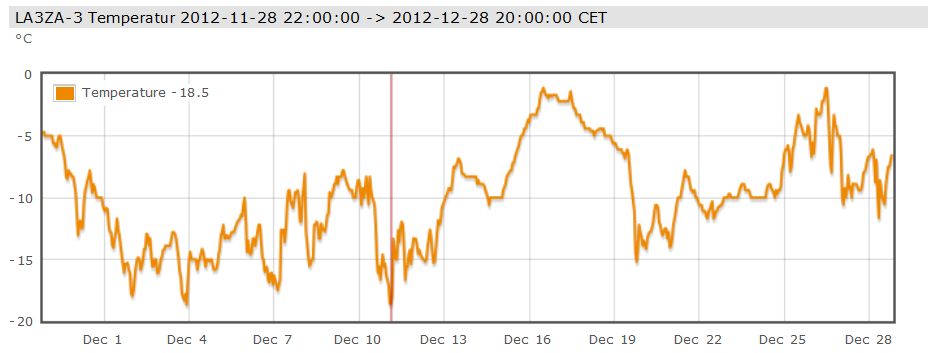 My APRS-based temperature monitor has now worked flawlessly for half a year. APRS stands for Automatic Packet Reporting System so it can send much more than temperature data, the chief usage is really for GPS position reports.
But I just needed a temperature monitor and here are the readings for December. As one can see, there were no days with temperature above freezing. At 800 m elevation in the mountains of Telemark in Norway, this is not unexpected for this time of year and makes for good skiing!
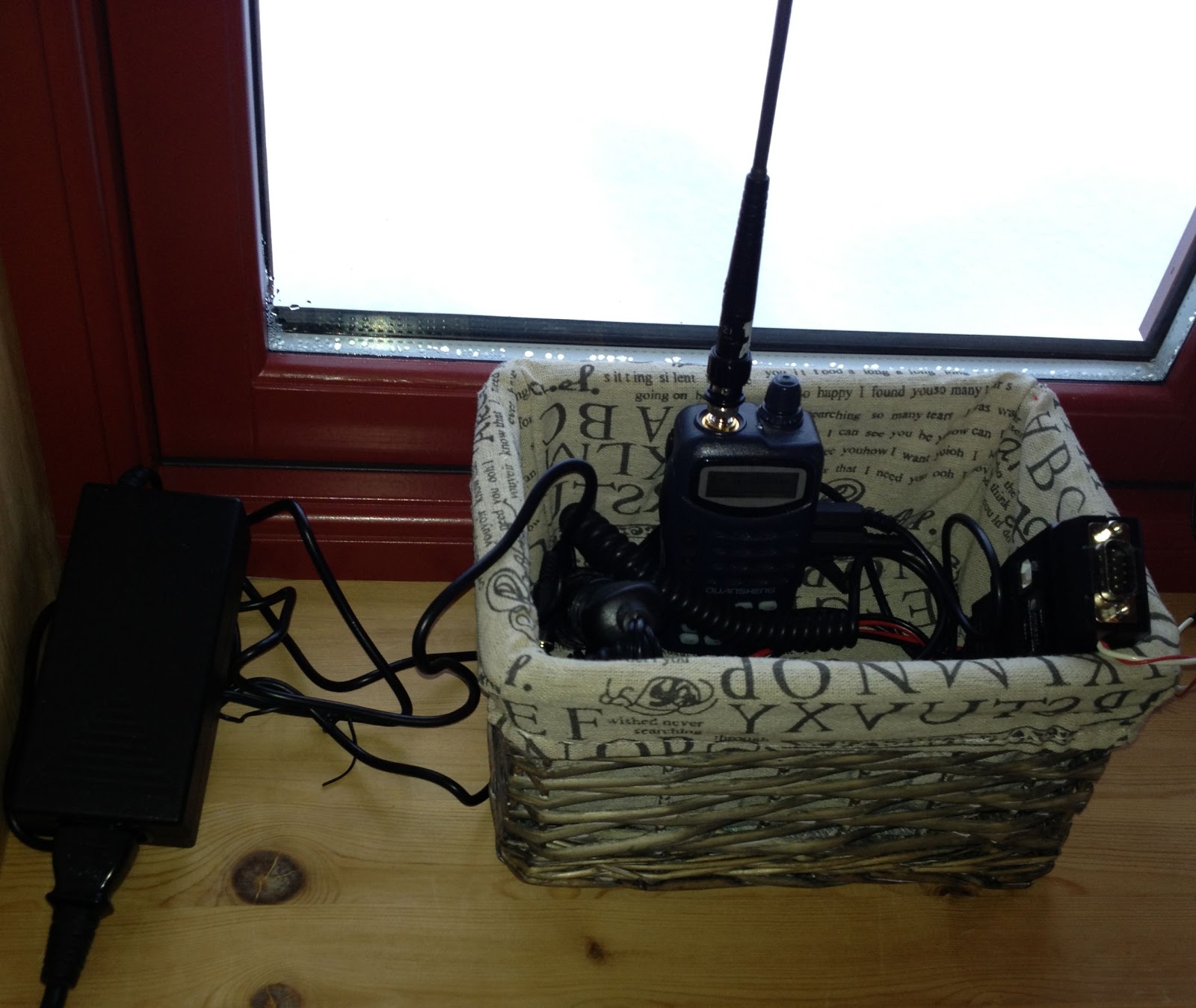
I use a Quanzheng TG-25AT handheld with a quarter-wave whip antenna on 144.800 MHz. Its signals reach the LD3GT digipeater at 1845 m above sea level. Although I don’t have direct line of sight, the low power (1 Watt) setting is adequate as the distance is only 10 km. The APRS-beacon is an OpenTracker USB set up for transmission every 15 minutes. An external DS18S20 temperature sensor which measures the outside temperature is connected to the 1-Wire® bus of the OpenTracker USB.
Thanks to the infrastructure providers: The Tønsberg group of NRRL (LA1T) who operate the LD3GT digipeater, probably the one with the largest coverage in Southern Norway (Gaustadtoppen). Thanks also to the various operators who receive packets from LD3GT and pass them on to the internet, and thanks to aprs.fi for processing and displaying the data on their excellent web site!
Sverre Holm, LA3ZA, is a regular contributor to AmateurRadio.com and writes from Norway. Contact him at [email protected].
Beach Boys ARC On The Edge Of A Continent
The Beach Boys ARC later this morning will set up wireless gear on the edge of a continent. Currently, beach weather is off the hook and conditions are stellar with blue skies while Cycle 24 rages above our craniums. It is the kinda of day that explains why I love living on the central coast of California.
Our gear list —
- Yaesu FT100.
- Paddles for Morse code.
- Boom microphone for single sideband.
- Buddipole antenna system.
- Honda EU2000i generator.
- Table.
- Chairs.
I want to tweet a few photographs into our #hamr network, high definition video using a small Sony Cyber Shot camera with mini tripod for stabilization, and an Olympus D-550 digital camera for still photography.
- 14.055 KHz plus or minus 10 KHz (CW)
- 21.055 KHz plus or minus 10 KHz (CW)
- 14.300 KHz plus or minus 10 KHz (SSB)
- 21.300 KHz plus or minus 10 KHz (SSB)
The Beach Boys ARC is looking forward to launching their signal from the edge of a continent while experiencing ham radio in the great outdoors.
Interesting blog post
News from friendly sources tonight:
As pointed out to me by my friend Drew W2OU – this was posted Sunday on the “DC to White Light” blog:
http://scopefocus.blogspot.com/2012/12/theres-group-of-people-out-there-men.html
The following was posted to QRP-L by Hank N8XX today:
The Stew Perry Top Band Challenge is this coming Weekend. It starts at 1500Z December 29 and ends at 1500Z December 30. One may operate a maximum of 14 hours during the 24 hour period.
The call 160 meters “Top Band” but I figure this will need adjusting, since we will soon have an allocation around 500 KHz, or 600 meters. But, for now, let’s let sleeping lies dog (or some converse thereof).
Details of this event may be found at
http://www.kkn.net/stew/stew.rules.txt
The scoring is a bit convoluted, and the scoring team does all the scoring, so I’m not worrying about how this is done.
BUT, it DOES have a QRP category, and one gets a multiplier for operating with <5 considerably.=”considerably.” even=”even” may=”may” p=”p” platform=”platform” scoring=”scoring” the=”the” watts=”watts” which=”which”>
So, why not crank up the wavelength to about 166.666 ⅔ and give it “ye olde college try.”
72/73 de n8xx Hg
QRP >99.44% of the time
Thanks to both Drew and Hank for some interesting stuff.
72 de Larry W2LJ
QRP – When you care to send the very least!
Larry Makoski, W2LJ, is a regular contributor to AmateurRadio.com and writes from New Jersey, USA. Contact him at [email protected].
Nostalgia time: QSOs with my first HF rig – the Icom IC-740
I was up in the loft this morning looking for a couple of bits (with an eye on another project) when I came across the microphone for my Icom IC-740 – my first HF rig from when I was licenced in 1983. Being a bit of a hoarder – well who would want to buy such a vintage rig (!) – I have never disposed of the rig. For years I kept it at my parents home in Cornwall, so that I could operate from there when I visited. Now they are no longer there, the rig has been living in our loft for probably the last 6 or 7 years lying unused.
.JPG)
I decided to bring the rig and the microphone down from the loft this morning and see if I could get it to work. I gave it a dust first of all and then connected the power. I was pleased that the rig came up ok and seemed to be responding. I put it on a dummy load initially. One of the long standing faults with the rig was an intermittent on the Comp button which needs to be jiggled around a little to get RF power out. I was a little concerned that might have become a permanent problem over the years, but happily it wasn’t.
Time to try it on an antenna! I plugged the HF vertical into the rig and the receiver was working well. Tuning around was quite pleasant. The VFO was a little more ‘plasticy’ that some of the other rigs I use now, but the receiver was ok. When I bought the rig, I used the 500hz CW filter pretty much all the time. Nowadays I am happy to tune around on a wider filter, but it sounded nice enough. Sadly the S9 noise on 14MHz experienced on the other rigs was still there on the 740 (I didn’t expect it to be otherwise!).
When I was living in Canada in the mid 90s, the local radio store in Toronto, Atlantic Ham Radio were closing out some of the modules for the IC740, so I had installed the keyer module and the FM board, which I didn’t buy in 1983 – I had only just started work and I’m pretty sure that the rig was several months wages as it was!
Anyway, I plugged in the paddle, turned the power down and had a play. It sounded ok! The keyer chip was obviously a little different to the keyers I normally used as I was dropping the odd dot here and there, but quite manageable. I had a listen on another rig in the shack and the signal sounded fine, so I decided to see if I could make some QSOs.
Forty metres seemed like the best bet, so I tuned the CW end looking for a nice strong CQ to answer. PA/ON6QO was CQing from IOTA EU-146, so we successfully exchanged reports. I then found Rob M0TIX calling CQ and we had a longer ragchew on the key and I explained I was using my very first HF rig from nearly 30 years ago. Finally, I decided to try 10MHz – when I first had the rig, the 10MHz band had only just been allocated to amateurs and I had to do a modification in the rig to enable the 10, 18 and 24MHz bands! Tuning up 10MHz I heard W1MK calling CQ (not bad for the middle of the day), so I replied to him and we had a short but pleasant QSO.
Perhaps sometime I will try it on SSB. I remember that the audio reports on SSB always were a bit poor – perhaps one of the reasons that in my early years on the air, I concentrated on CW operation! As I recall the Icom microphones of the day had a preamp in them.
A happy distraction with the old rig and I am delighted that it is still working. I will have to think of a use for it! Now, back to the original reason for the visit to the loft….
Tim Kirby, G4VXE, is a regular contributor to AmateurRadio.com and writes from Oxfordshire, England. Contact him at [email protected].
 Ham Radio Deluxe |
 W5SWL Electronics |
 Ham Radio Prep |
 KB3IFH QSL Cards  Hip Ham Shirts  HamRadioAuctions HamRadioAuctions Reliance Antennas Reliance Antennas Enigma Shop Enigma Shop |  morseDX  Ni4L Antennas  R&L Electronics R&L Electronics antennas.us antennas.us QRV QRV |
- Matt W1MST, Managing Editor
