 |
 Pipeline To The Arabian Peninsula Over The South Pole
 6 January 2013 | by
 Over the past three days I have made two-way amateur radio contacts (a “QSO” to hams) via an unusual short wave propagation path – the long way, over the south pole – from my home in Glade Park, Colorado to amateur radio stations in the Arabian Peninsula, each day in the late morning my time. Signals have been surprisingly strong and audible for hours.
Short wave radio signals usually follow the shortest path from point A to point B, the ‘great circle path.’ From my house to the United Arab Emirates this is approximately 13,000-km. Since the circumference of the earth is just over 40,000-km the long path to the UAE is around 27,000-km and crosses the equator twice! The DX Atlas Map below has markers for my home (QTH), where the map is centered, and the UAE and also shows the location of the sun, dusk/dawn zones and areas of darkness for 1744z on January 5, 2013 (this is the time for one of the YouTube videos I made of this event).

Here are the QSOs I’ve made over this path (so far, fingers crossed this path will be here tomorrow and beyond):
- Jan 3 1805z A65BR 28076-kHz JT65A
- Jan 4 1839z A65BP 24893-kHz CW
- Jan 4 1844z A45XR 24902-kHz CW
- Jan 5 1702z A45XR 28009-kHz CW
My four contacts were made with a simple vertical antenna and 100-watts transmitter power (except for the JT65A mode contact which was made with a mere 10-watts). The footprint of the propagation was very specific – the southern Arabian/Persian Gulf area on one end and western North America on the other. Here is what the A65BP DX Cluster spots looked like as of this morning. You can get a feel for the where the signals were landing in this part of the world from the spotting stations’ locations:

Why did this path open now? A recent spike in the solar flux above 140 helped refract the 25/28-MHz radio waves a long distance, a ‘quiet sun’ (low Kp and Ap indexes) helped the signals transverse the auroral zone around the south pole and a double crossing the trans-equatorial zone – where radio waves from the upper HF all way up to low UHF can get a turbo boost plus the seasonal geometry of the sun and earth which puts a lot of solar radiation in the southern hemisphere all played a part. I wonder if higher solar flux would have resulted in a rare (for the USA) long path opening in the amateur 50-MHz (6 meter) band?
Here is a recording of A65BP operating from the United Arab Emirates with a great signal on 28,012.26-kHz as heard in Glade Park, Colorado (DM59pa) today 2013-Jan-05 morning at 1743z with a simple vertical antenna. The signal was propagating via long path over the south pole. A45XR was also strong on 10m CW on this path around this time. I completed QSOs with A65BP and A45XR on 24.9-MHz long path on January 4th and had a 28,076-kHz JT65A QSO with A65BR on January 3rd. Nice to hear some 10m long path in Cycle 24!
Here is a recording of A65BP operating from the United Arab Emirates just a little later with a great signal on 24,902.00-kHz, also captured with a simple vertical antenna.
These last few days have really lit a fire under me to get off my ass and build the 3-element 12-meter LFA Yagi and 5-element 10-meter LFA Yagi from InnovAntennas that are sitting in my shed. If I can work stuff like this on my vertical what will I be able to do with a pair of state-of-art antennas? Who cares that hasn’t been above freezing here since December 17th when there is DX to be worked!
(Sunday morning update – A92GR & VU2XO are audible on 10m SSB at approximately 1600z, looks like another good morning on the long path.)
Bill Hein, AA7XT, is a regular contributor to AmateurRadio.com and writes from Colorado, USA. He is co-owner of Force 12 and InnovAntennas. Contact him at [email protected].
Comments Turned Back On
Bob Witte, KØNR, is a regular contributor to AmateurRadio.com and writes from Colorado, USA. Contact him at [email protected].
Back from Christmas break
There’s been a bit of radio silence over the last 2 weeks. mainly because I’ve not been at home. We spent Christmas and new year up in Scotland and then I started a new job last week away was away from home for 3 days. Hence the quiet conditions. I prefer not to broadcast that I’m away until after the event, just in case.
I did have a couple of hours listening in for the Christmas cumulative but only worked a couple of stations that were very close. Apart from that Santa dig bring me a new antenna for 6m, which was interesting on the way home (My journey down was spent hoping that the cardboard tube would stay in tact, despite torrential rain). This has prompted me to have a rethink about my shack and what kit is going where, what I need and what I can sell on. Plenty to think about.
I hope Santa was good to you and here’s wishing everyone an active new year.
Alex Hill, G7KSE, is a regular contributor to AmateurRadio.com and writes from Cumbria, UK. Contact him at [email protected].
Yet Another HT From China (Baofeng UV-B5)
Bob Witte, KØNR, is a regular contributor to AmateurRadio.com and writes from Colorado, USA. Contact him at [email protected].
My #hamr Weekend Update
 |
| Winter Maintenance |
Good evening from the Shell Beach shack as the Kenwood TS850S listens on 20m CW through a trapped vertical between a pair of condominiums. I’ve noticed a significant uptick in activity as the weekend roller coasters into Sunday. Truly, it is good to hear signals on 15 and 20m with a bangin’ sunspot count of one hundred and sixty seven!
If this number remains stable through the night into tomorrow my plan is CW all day long.
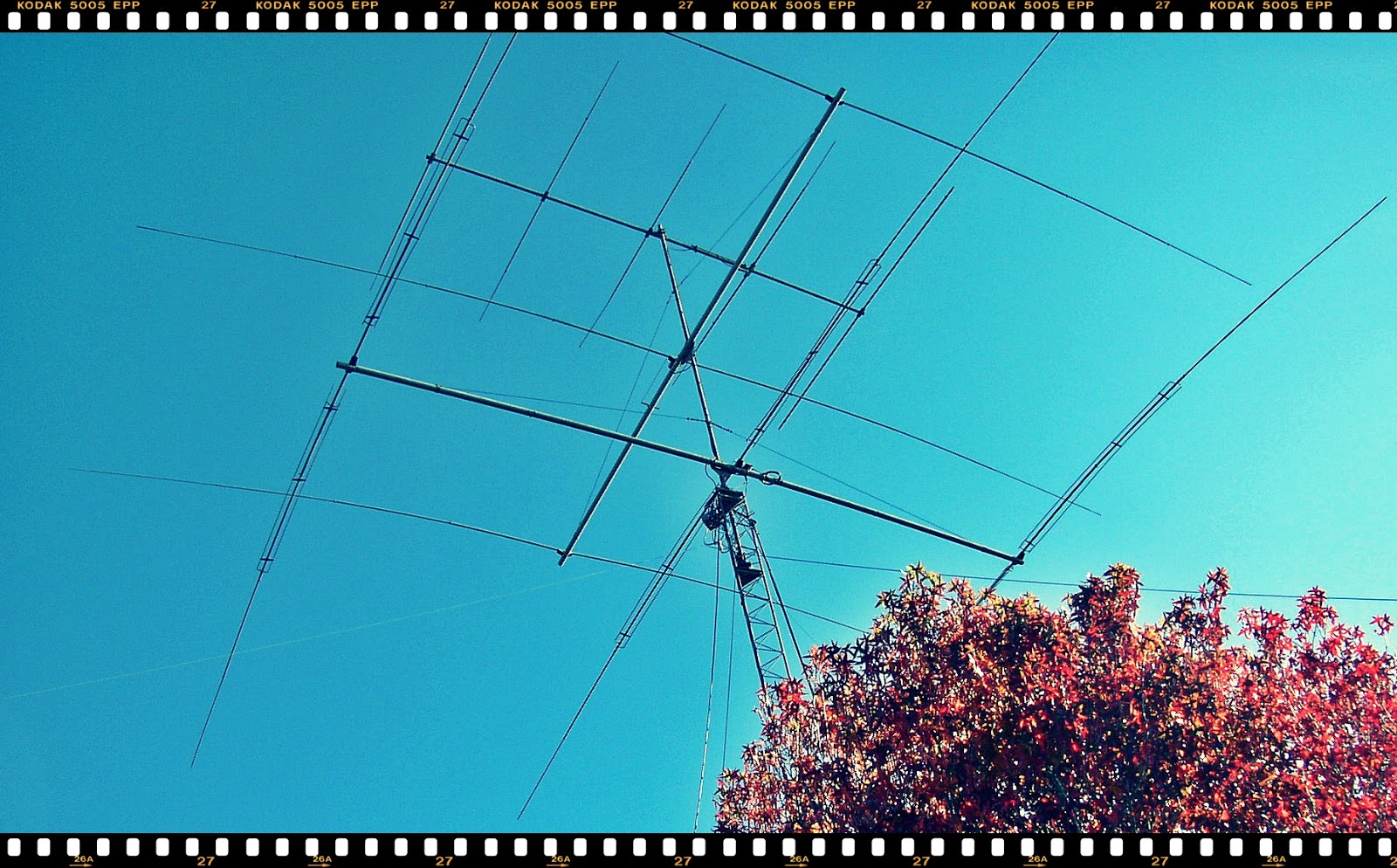
In the meantime, our break in weather has allowed time for antenna maintenance and one reflector on the KLM, 3 element 40m yagi, at SL’s antenna ranch is going through corrosion treatment. Our local marine environment is terribly corrosive and fighting it is an on going test of patience. The climbing standing wave ratio reached a point of diminishing performance.
We are taking down one element at a time instead of the entire antenna. This afternoon all the hardware on the rear reflector featured in the photograph was removed for cleaning and/or replacement. Additionally, alkaline was removed from tubing intersections and intersections were thoroughly cleaned. Likewise, linear loading hardware was removed with contact at elements given a good scrub with wire brush to remove deposits.
John is going to check intersections for continuity prior to re-installing the removed reflector.
I’m stoked to see best numbers in a long time and looking forward to tomorrow’s CW marathon session inside my Shell Beach shack.
Life is wireless.
Never too early – less than a month away!
Happy Three Kings or Epiphany – and to our Orthodox brothers and sisters, Merry Christmas!
Now that the Christmas season is approaching its end (next weekend for Roman Catholics), it’s not too early to start to think about the inaugural outdoor QRP event for 2013 ……..
Freeze Your Buns (or Butt, if you prefer) Off – which should be held the first Saturday of February – the 2nd, which is also Groundhog Day. So you can freeze your body parts off operating in the Arizona ScQRPions QRP sprint, while simultaneously keeping an eye peeled for groundhogs!
There hasn’t been any official notice of any rule changes for 2013; so if you’d like a refresher on the rules that were used last year, click here.
Last year I made 11 contacts using my PFR3A and the Buddistick on top of the car, and the temperature when I started was 45F (7C). Accuweather is predicting colder than normal temperatures for the second half of January and all of February. That would be good for a better multipler; but not so great, comfort wise.
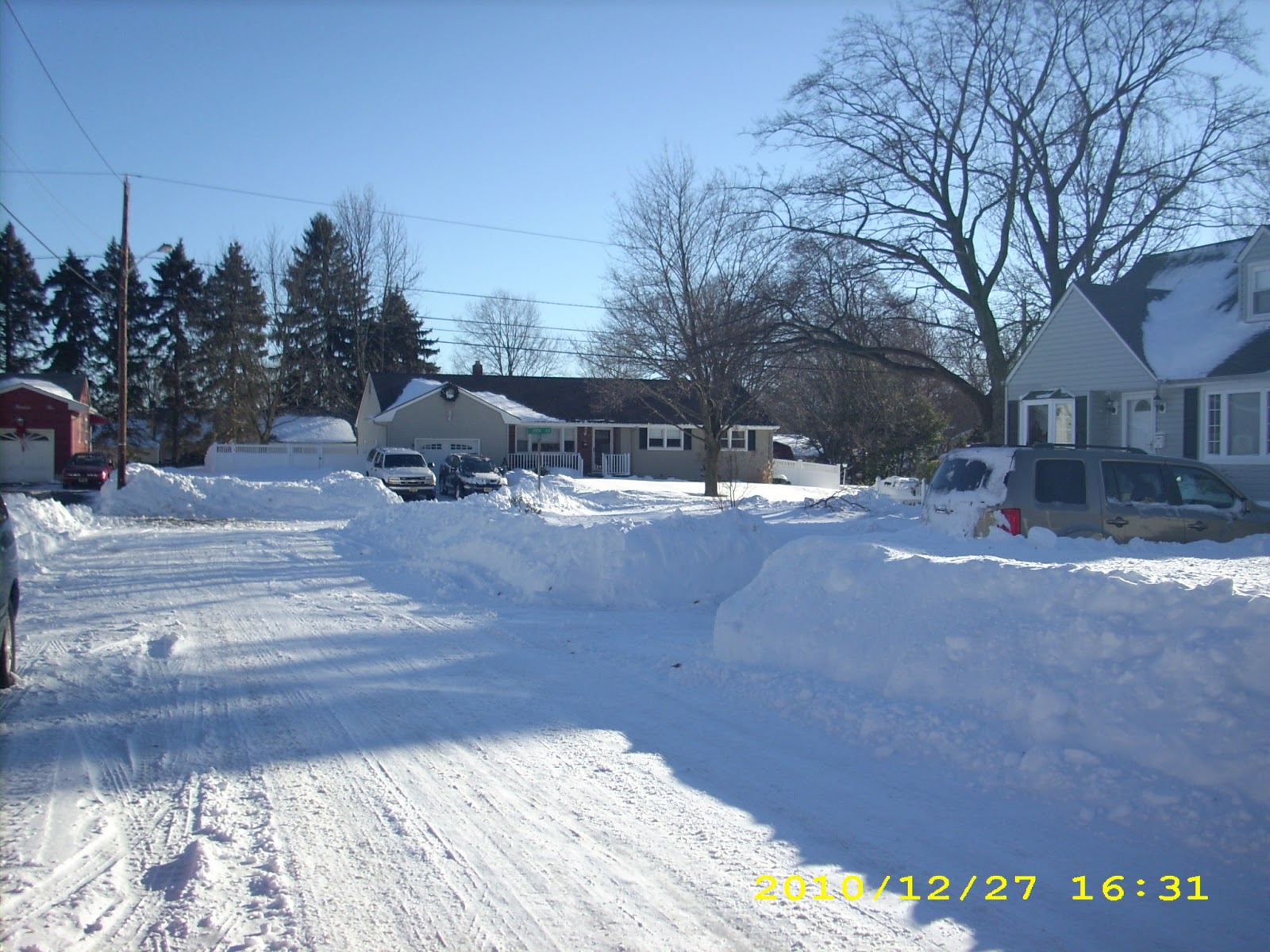
Let’s hope that it’s not like THIS, that day! Or worse yet …. like it was the day before!
72 de Larry W2LJ
QRP – When you care to send the very least!
Larry Makoski, W2LJ, is a regular contributor to AmateurRadio.com and writes from New Jersey, USA. Contact him at [email protected].
SDR-Radio and Omni-Rig
Yesterday I thought I would set up my Cross Country Wireless SDR-4+ receiver to use for IBP beacon monitoring using Faros. The purpose of this was mainly to reduce the wear and tear on my Elecraft K3 which otherise would have to be on 24 hours a day.
I established that Simon Brown’s SDR-Radio software supported external program control by emulating a Kenwood transceiver. I therefore needed to see if SDR-Radio could be controlled using Omni-Rig, the control mechanism used by Faros.
 |
| SDR-Radio supports CAT control using a virtual serial port. |
I created a linked pair of virtual serial ports, COM8 and COM9, using VSPE, a virtual serial port emulator. Using the serial ports option of SDR-Radio, I assigned the control port to COM8. Then I used a serial port emulator connected to COM9 (I use RealTerm) to verify that SDR-Radio ‘spoke’ Kenwood. It did. In fact it emulated the Kenwood protocol well enough to fool KComm into thinking it was talking to an Elecraft K2. So far so good.
Now to see if Omni-Rig could control SDR-Radio. Omni-Rig uses “rig files” to define the command set of different radios and it includes one for generic Kenwood. Unfortunately it did not work with SDR-Radio: the receiver indicator of Faros turned red to indicate a fault.
I downloaded the rig file documentation and debug tools from Omni-Rig’s site and tried hacking the Kenwood rig file to get it to work with Omni-Rig by trial and error. But no luck. Whatever I did, the program reported an error with the inscrutable message: “RIG1 Status commands already in queue”.
 |
| Error messages reported by Omni-Rig |
So it looks as if I’ve hit a brick wall. Clearly there is something in SDR-Radio’s emulation of the Kenwood protocol that Omni-Rig doesn’t like. If anyone else would like to have a go solving this problem, be my guest.
Julian Moss, G4ILO, is a regular contributor to AmateurRadio.com and writes from Cumbria, England. Contact him at [email protected].
 Ham Radio Deluxe |
 W5SWL Electronics |
 Ham Radio Prep |
 KB3IFH QSL Cards  Hip Ham Shirts  HamRadioAuctions HamRadioAuctions Reliance Antennas Reliance Antennas Enigma Shop Enigma Shop |  morseDX  Ni4L Antennas  R&L Electronics R&L Electronics antennas.us antennas.us QRV QRV |
- Matt W1MST, Managing Editor
