 |
 My grandfather’s Blaupunkt radio
 13 February 2013 | by
As I was clearing out my childhood home I came across an old radio that my father had tucked away in the basement. It was a German Blaupunkt radio, and what a historic dial it had!
It turned out that my father had himself found it as he was clearing out his childhood home many years before and that it had belonged to my grandfather who died in 1959.
It covers longwave, medium wave and three shortwave bands from 5.5 to 21 MHz. I had never before seen a radio with a dial given in meters rather than kHz or MHz, but I have later understood that that was not uncommon for pre world war II radios.
Since the back was missing, I had no information about age or type. The tubes which were all in the 11-series suggested the end of the thirties, but here it turned out that the dial had valuable information.
The medium wave part of the dial had a separate side on the left hand for German stations and here one can find cities that are no longer in Germany such as Königsberg on 223 m and 291 m (1348 and 1031 kHz). Today this is Kaliningrad in Russia. The dial also showed Danzig on 230 m (1303 kHz), ”Schles. G. W.” (Schlesische Gleichwelle – a single frequency net with stations in Gleiwitz and Reichenbach/Oberlausitz) on 244 m (1231 kHz), and Breslau (315 m – 950 kHz). Today these are the cities of Gdansk, Gliwice and Wroclaw in Western Poland, an area which was in Germany until the end of the war. At least the radio must have been from before the end of WW2.
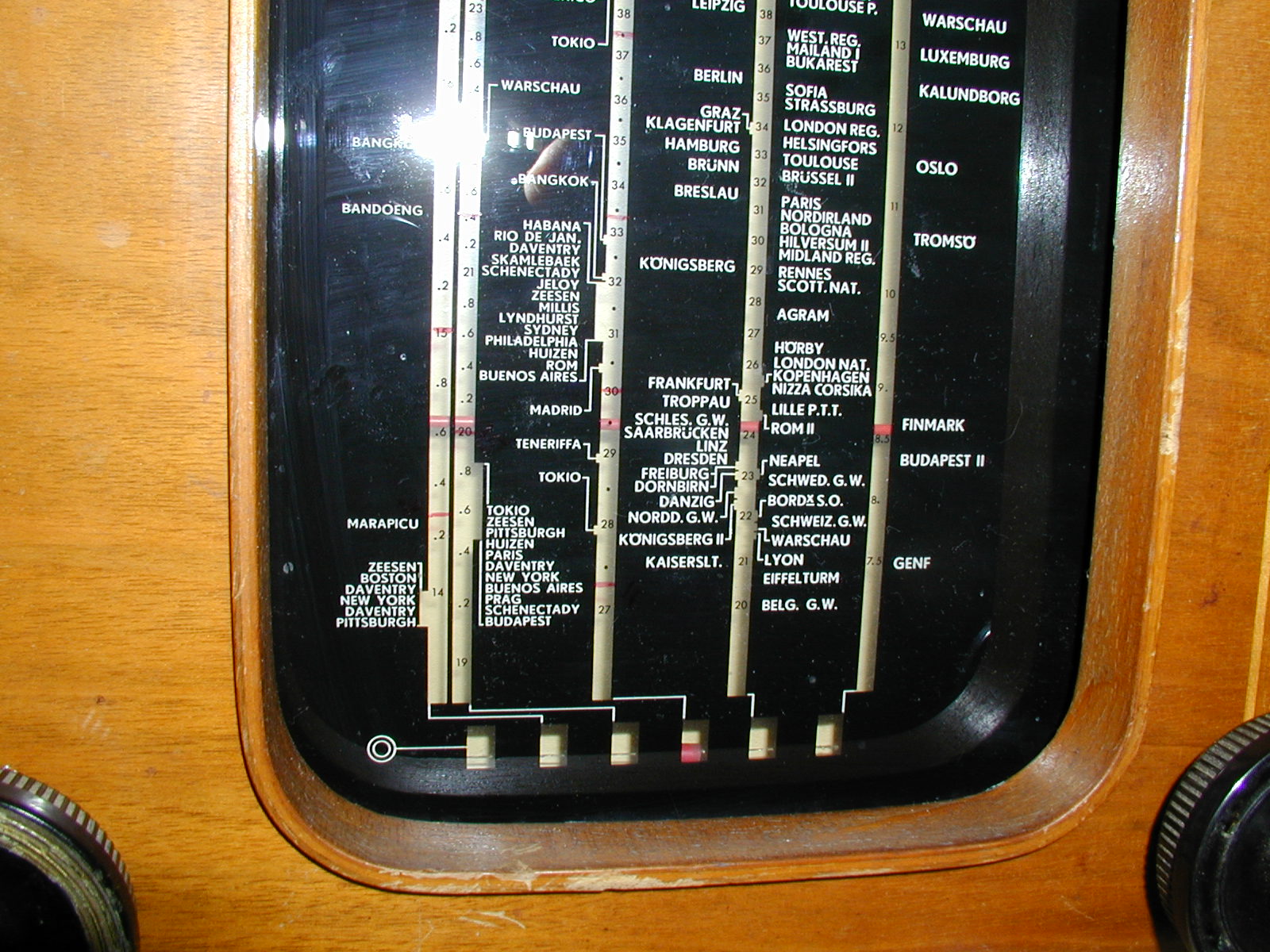
But there were a couple of more names with a lot of history in them. Troppau can be found on a wavelength of 249 m (1204 kHz), a frequency which it had until September 1939. Today Troppau is called Opava and lies in the Czech Republic. Troppau lies in the Sudetenland which Germany annexed on 30. September 1938. Finally one can find Memel on 531 m (565 kHz). This city is today called Klaipeda and lies in Lithuania. It was occupied on 22. March 1939 as the last German annexation before the outbreak of the war on 1. September 1939.
Thus the conclusion of this historic search across the dial is that the radio dates from some time between March and September 1939.
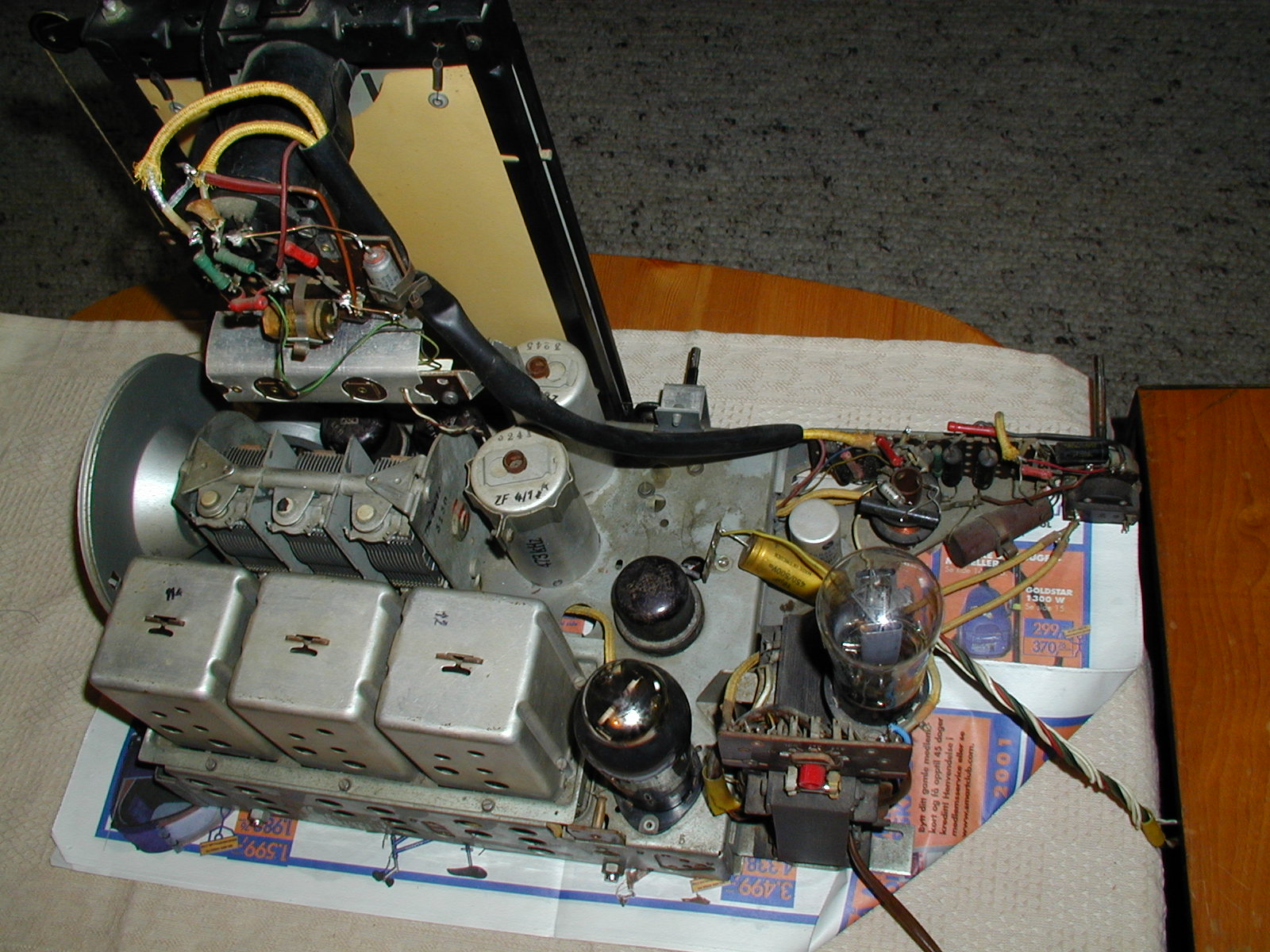
With some cleaning the exterior turned out to be quite nice. I thought to myself that I cannot give up now, so on inspection I could see that a couple of electrolytic capacitor had been replaced, probably by my father. It had the following tubes: ECH11 as mixer/oscillator, EBF11 and EF11 for the intermediate frequency stages, and EFM11 for the magic eye and the first low frequency amplifier.
The output tube and the rectifier were missing, and it was natural to look for tubes in the same 11-series. I was not able to find this particular radio in the large archives of the Norwegian Radio History Society, but there was documentation for a few other Blaupunkts there. From their descriptions I could guess EL11 for the output tube. Measuring the filament voltage for the rectifier gave 4 Volts, so then AZ11 was a good choice.
With some excitement I turned on the voltage for the first time, and to be on the safe side I connected it in series with a 60 W light bulb to reduce the voltage. No explosion! As incredible as it sounds, with full voltage it actually produced sound. But unfortunately after a few seconds everything disappeared. One evening with diagnosis of the radio and I could isolate the problem to the beginning of the audio section and two rotten shielded cables connecting audio in and out of the pentode in the magic eye. Not everything is as new after 60 years! After having replaced the cables the radio was perfect, and even the magic eye and the dial lamps functioned. In my experience the magic eye is often weak and in the Oslo region the dial lamps for the longwave band may have burnt out as the local station used to be on 218 kHz.
Some weeks later as I was about to clean the dial for dust I disassembled the glass in the front and found an inscription saying Blaupunkt 7W79 and the date 28.3.39. So the result of my detective search wasn’t too bad! In fact the dial was produced with an updated name just 6 days after the occupation of Memel/Klaipeda.
This radio cannot have been more than a couple years old when all radios were confiscated in Norway in 1941. Imagine how sad it must have been to give up such a nice and costly radio at that time! This must also have been one of the few radios that actually were returned to their rightful owners in 1945.
Now the radio has a prominent place in my house and every time it is turned on it is a reminder of both the history of my family and of a turbulent era in the history of Central Europe.
First published as “Min farfars Blaupunkt radio” in Hallo Hallo of the Norwegian Radio History Society, September 2001, updated in 2013. © Sverre Holm
Sverre Holm, LA3ZA, is a regular contributor to AmateurRadio.com and writes from Norway. Contact him at [email protected].
Show Notes #099
Introduction:
- Apologies for the tardiness of the show notes for Episode 99. I spent a few days in warmer climes, neglecting my duties. -Bill, KA9WKA
- Welcome to episode 99 of Linux in the Ham Shack.
Announcements:
- Linuxfest Northwest has announced their Call for Papers, Sponsors and Exhibitors. The show will be at Bellingham Technical College in Bellingham, Washington on April 27th and 28th, 2013. Visit their website for more information.
- Donations for LHS to be at the 2013 Dayton Hamvention are already rolling in. Thank you to everyone who has contributed so far. Please send anything you can. Even a dollar helps out. Donate here!
- The Wouff-Hong Podcast has been announced. It will star Tracy Holz, N5UNX and Joel McLaughlin, W3RAZ. Joel is also a co-host of the long-running Linux Link Tech Show podcast. Tracy has been a guest on many podcasts and also did his own show, Working in the Open, a couple of years ago. The show will be ham radio focused, with topics ranging from operating practice to folklore to hardware. Tracy is currently co-hosting The Techie Geek podcast with Russ Wenner.
- Things to do:
- Sign up for the LHS mailing list.
- Become a subscriber for $2/month or $20/year. That donation does count towards the Dayton Hamvention fund.
- Record a little memento for the 100th episode. Tell us you like us, or hate us, or whatever. Just let us hear from you. Leave your voice message at +1-909-547-7469. (By the time these notes are published, the 100th episode has already been recorded. However, feel free to leave a message, anyway!)
- Check out the Events and Ambassadors pages on the LHS site. If you can help us out by being at an event for us, please let us know. We provide the booth setup and a free T-shirt or ball cap. You provide a presence and a demo computer. Everyone has a good time.
- Join the LHS IRC channel. We are at #lhspodcast on Freenode (irc.freenode.net), and there’s almost always someone to chat with. Plus you can participate in the live show that way.
- Listen to the live show every other Tuesday night at 8:00pm Central. You get to hear all the stuff we cut out of the podcast release. Plus, if you’re in the IRC, your experience is twice as fun. The URL to listen is http://stream.blacksparrowmedia.net:8008/lhslive.
- Join the Linux in the Ham Shack Google+ Community.
- Follow LHS on Google+, Identi.ca and Facebook. Also, follow BSM_Network and LHSPodcast on Twitter.
Topics:
- FreeDV is a GUI application for Windows and Linux (MacOS and BSD are in testing) that allows any SSB radio to be used for low bit rate digital voice. It appears to be using Codec 2!
- Hamux 6 is a CentOS-based repository with ham radio software. It is compatible with the Extra Packages for Enterprise Linux (EPEL) project. It works with CentOS 5 and 6, and i386 and x86_64 versions are now available. It’s not a distro, but repackaged RPMs for RHEL and CentOS. It does require EPEL (Extra Packages for Enterprise Linux).
- Fedora 18 has finally been released, and Russ shares his experience with this much anticipated, and often delayed, release. Russ provides a brief and not very favorable, review.
- Richard suggests trying SliTaz GNU/Linux.
Feedback:
- Leif, KC8RWR (in reference to our discussion of using short wave radio for Internet connectivity in Episode 98), offers his thoughts.
- Dave, M0DCM, also chimes in with some comments about high-speed Internet over HF.
Contact Info:
- Contact Richard at [email protected], Russ at [email protected], or both at the same time at [email protected].
- Listen to the live stream every other Tuesday at 8:00pm Central time. Check the LHS web site for dates.
- Leave us a voice mail at 1-909-LHS-SHOW (1-909-547-7469), or record an introduction to the podcast.
- Sign up for the LHS mailing list.
- Sign up for the MAGNetcon mailing list.
- LHS merchandise is available at the Merch link on Web site. Check out the Badgerwear or buy one of the other LHS-branded items at PrintFection.com/lhs or Cafe Press. Thanks!
- Thanks to Dave from Gamma Leonis for the theme music.
Music:
- “Drinkin’ Problem” by Freeky Clean & Dickey F from the album South of Pearly Gates, courtesy of Jamendo.
- “Writing on the Wall” by Freeky Clean & Dickey F from the album Double Feature, courtesy of Jamendo.
Russ Woodman, K5TUX, co-hosts the Linux in the Ham Shack podcast which is available for download in both MP3 and OGG audio format. Contact him at [email protected].
handiham – ham radio for people with disabilities 2013-02-13 15:47:00
Pat Tice, WA0TDA, is the manager of HANDI-HAM and a regular contributor to AmateurRadio.com. Contact him at [email protected].
My first JT9-1 QSO
PC4T Paul’s blog post about working Tasmania with 5 watts gave me the spur to try the new JT9-1 mode, so I installed the WSJT-X software. The user interface is quite a bit different to the older WSJT programs but most of the same controls are there. I never really figured out how to use WSJT, much preferring the simpler interface of Joe W6CQZ’s JT65-HF application.
 |
| Working SM5CS using JT9-1 mode |
Julian Moss, G4ILO, is a regular contributor to AmateurRadio.com and writes from Cumbria, England. Contact him at [email protected].
Hexbeam Photos
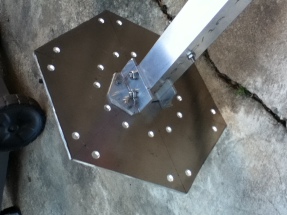
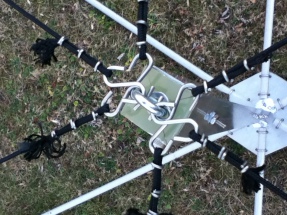
Construction project: G3TXQ hex beam built from scratch. K4KIO directions with K8GU modifications (and reverse-engineered square coaxial center post). Details to follow once I determine it works to my satisfaction.
Ethan Miller, K8GU, is a regular contributor to AmateurRadio.com and writes from Maryland, USA. Contact him at [email protected].
Long post – two things
First – an announcement from Doug Hendricks KI6DS about a new Steve Weber design kit offering from Hendrick’s QRP Kits:
I am pleased to announce that Steve Weber, KD1JV, has designed another new kit for Hendricks QRP Kits. The kit will be on sale for the first time Friday and Saturday at the Yuma Hamfest.
Here are the specs for the rig:
~10 PEP @ 13.8V
0.2 uV receiver sensitivity
5 pole crystal ladder filter for selectivity
325 or 175 kHz tuning range, selectable at build
Coarse and Fine tuning controls
8 ohm – 500 mW speaker output
SSB, CW, and, “TUNE” mode
50mA Rx current (with optional Digital Dial)
Inexpensive electret microphone input
All through hole construction
Professional silk screened and solder masked pcb
Full aluminum chassis w/bail, cutout for optional digital dial
Small size, 6″ x 4″ x 1.5″
Assembled weight, w/dd: 330g./11.6 oz.
13.8 @ 2A, min. recommended power supply
Your first question might be why did they name it the “Survivor”. Well that comes from several years ago when Jim Cates and I were running Norcal. Many people have asked me what my favorite Norcal kit was, and they were usually surprised when I told them it was the Epiphyte. The Epiphyte was a ssb transceiver that was designed by the late Derry Spittle, VE7QK. It was a marvelous design, and worked fabulously. Several people were able to work all 50 states with it, and Vern Wright probably worked well over 100 countries with his. I kept a daily schedule with Derry and Vern for over 9 months, never missing a day of making contact. So? We were using dipoles up about 30 feet, and Derry, Vern and I were all running Epiphytes with 5 Watts of power!! Derry was in Vancouver, BC, and Vern and I were in California.
The only problem with Derry’s design was that the parts were basically obsolete when he finished the design. He use a Murata filter that is no longer available, and neither is the round 8 pin driver IC. Norcal kitted 100 of them, and I was finally able to find the filters on my trip to England. The 100 kits were sold out almost overnight, and there was a clamor for more. But we just could not source the filter, and we were never able to do another run. George Dobbs did do a smaller run for the G-QRP Club, which also sold out very quickly. I have always wanted someone to design a radio similar to the Epiphyte, but using parts that are available. I wanted it simple, easy to build, yet capable of making reliable contacts on 75 meters. Last year at Dayton, Steve Weber and I were talking, and I asked him to design a modern version with the Epiphyte as the model, but using parts that I could source. Steve agreed and the Survivor is the result.
Now how did we come up with that name? Derry used to take his Epiphyte with him whenever he went on camping trips in the back woods of British Columbia. In fact, one time he used it to get rescued. Derry would take a 130 ft. dipole made out of magnet wire and RG 174. He would string the dipole on bushes, about 3 or 4 feet above the ground. He ran the short length of coax into his tent, and used that setup to check into a British Columbia SSB net at 8:00 every evening when he was out. The setup was a perfect NVIS system and Derry had reliable contacts out to about 200 miles. He often said that the Epiphyte was what gave him the confidence that he could survive any situation in the woods, because it worked so well. So to honor Derry, and to illustrate one of the great uses for the rig, we called it the Survivor.
Ham radio has been used many, many times for rescue. But 2 meters doesn’t always reach a repeater in the woods. Many hams want to talk with their wives back home while they are hunting or camping, but many of the wives don’t know CW. The Survivor is the perfect rig for taking camping. With a battery, simple dipole antenna or end fed half wave only 4 feet off the ground, reliable communications with SSB are available.
We also think that groups and clubs that like to build will find this a perfect club project. Hams love to talk and hams love to build. Think about how much fun a round table of locals will be with radios that you build yourself. It is a great way to get club members involved and motivated to operate. The kit is only $100 for the basic radio. Accessories include digital readout for $35 and an electret microphone kit for $15. But, if you buy the combo together, radio, digital readout and microphone, you save $10 as it is available for $140. The kit will be available on Hendricks QRP Kits web page at www.qrpkits.com on Sunday, Feb. 17th. The rig is easy to build and align. In fact the only test equipment needed is a volt ohm meter and a dummy load. Doesn’t get any easier than that. The kit is complete with everything needed to build. Case, commercial quality pc board, all through hole parts in the radio (the digital dial has surface mount parts but is easily built) and an online manual so you can see what you are getting into.
If you attend the Yuma Hamfest this weekend, you will get a sneak peak at this radio. We will have them available for sale. Hope to see you there at the Hendricks QRP Kits booth. 72, Doug
Steve posted these photos on Facebook earlier today:
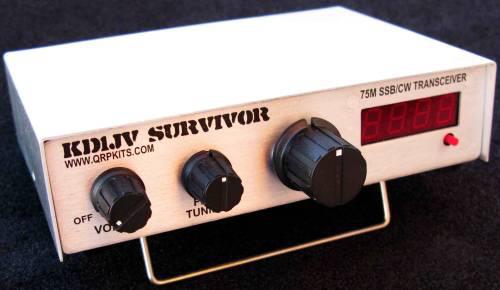
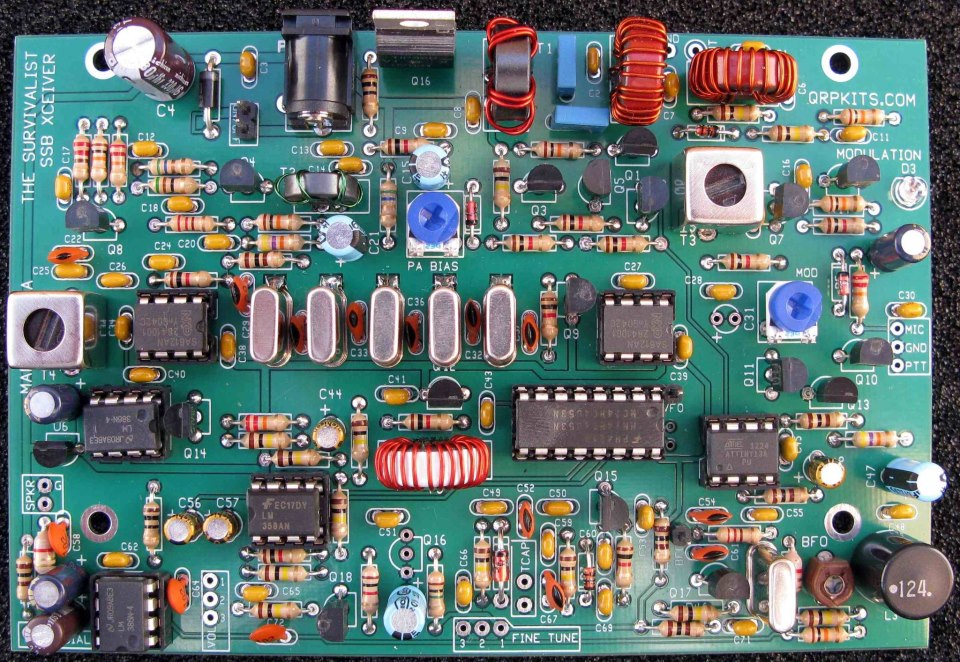
Looks like another fantastic offering from Doug Hendricks and Steve Weber. We are so fortunate to have gentlemen like these continuing to supply us QRPers with fine fare.
Post – Part II – ARRL DX Contest (CW) coming up this weekend
This coming weekend is the ARRL DX Contest. For you contesters, this one is the “Big GranDaddy” of them all. I am willing to lay down some heard earned cash that ALL the “Non-WARC” bands will be active this weekend, abuzz with all kinds of signals from all over the world.
So, what’s a non-contester to do? Well, you can go to the WARC bands (i.e 30, 17, 12 Meters) and rag chew to your heart’s content. You can go up to the phone portions of the band and give SSB QRP a whirl. You can stay off the radio altogether – take in a play, read a good book (I have several suggestions, if you’re so inclined), go to a movie, a museum, go visit your wife’s family, shovel snow, paint the bathroom, clean out the attic or garage, etc, etc, etc.
Or …… you can get creative.
Use the chance to begin, work on, or finish DXCC (QRP or not, that’s up to you). This contest has such an easy exchange, it’s ridiculous! W/VE stations – signal report and state or province. DX Stations – signal report and power. No name, rank or serial number – how easy can it be?
If you’re brand new to DXCC but are not into contesting, you can still easily (and I mean easily) walk away with a quarter or more of your DXCC award achieved within a single weekend. If you’re really dedicated and conditions are good, it’s NOT unheard of to actually accomplish DXCC (even QRP DXCC) in a single weekend. Just listen around and cherry pick the stations that are in the countries that you need. This is also a good opportunity to hunt for Alaska and Hawaii if you need those two for WAS.
For QRPers, a contest like this can be like Manna from Heaven. There are a ton of “Big Gun” stations on the air from all over the globe, with monstrous Yagis on top of stratospheric towers, just waiting to pick your QRP signal out of the aether. This is truly one of the two or three great QRP DXCC opportunites that presents itself throughout the year.
Is DXCC a “been there, done that” thing for you? Not interested in working towards DXCC Honor Roll? There’s still a bunch of exciting opportunities out there for you.
Turn down your power even lower – see how far you can work on 1 Watt or less. This is a great way to earn a cool looking “Miles Per Watt” certificate for your shack. I did something similar a couple years ago, I turned down my power from 5 Watts to 2 Watts and I was amazed that it didn’t seem to have made much of a difference at all. I was working foreign countries left and right, as easily with 2 Watts as I had been with 5 Watts. I’ll bet you’ll be amazed at how much you’ll be able to snare by even going QRPp, in the milliWatt neighborhood. Personally, I’m playing around with the idea of seeing how many countries I can work using 900 mW.
Or, you can use the contest as a vehicle towards earning other, neat looking certificates to wall paper your shack. Here are some good Websites with links to all kinds of good information about earning DX operating awards.
DX Awards in general
http://www.qsl.net/va3rj/awards_dx.html
QRP awards
http://www.dxawards.com/DXAwardDir/QRP.htm
If your CW speed isn’t the greatest, don’t get discouraged. I am going to tell you right here and now, the CW sent for roughly the first 12 hours or so of the contest will probably make your head swim. Speeds approaching 40 WPM are not rare at all. Can you say, “buzz saw”? Towards Saturday evening and all day Sunday, CW speeds will approach what the rest of us mere mortals can handle. The latter part of Sunday is THE best time for QRPers. Point hungry super contest stations will be more likely to listen for weak signals that they might have otherwise ignored or glossed over. This is a good time for QRPers.
Finally, if you get on the air and you’re totally blown away by the ARRL DX Contest; but still want to give QRP contesting a try, you’re still in luck. After the big contest is over on Sunday, the Flying Pigs February Run for the Bacon is this Sunday night. This is a small and friendly two hour QRP sprint that is a very fun event. Comparing it to the ARRL DX Contest, it as far as the East is from the West. But it is a blast and all are welcome – and most, if not all QRPers will be more than happy to QRS for you, if needed.
Above all – have fun!
72 de Larry W2LJ
QRP – When you care to send the very least!
Larry Makoski, W2LJ, is a regular contributor to AmateurRadio.com and writes from New Jersey, USA. Contact him at [email protected].
ARRL DX Contest questions
I see that the ARRL DX CW contest is next weekend. I haven’t decided yet whether I will come on and give away a few points, nor whether I will operate QRP or run 100 watts. I think it will depend on propagation.
One thing I am unsure about is what exchange to send. I believe DX stations – which means me in this context – are supposed to send RST and power.
If I’m running QRP (5 watts) do I send “5NN 5” or “5NN 005” or even “5NN TT5”?
If I’m running 100 watts would I send “5NN 100” or “5NN 1TT” or even “5NN ATT”? These short form numbers confuse me a bit. I’ve heard 1 being sent as A, and 0 (zero) being sent as the letter “O”. Or at least, I think I have.
If I change the power as I normally do and run 100W only when it is needed do I send the actual power I am using or stick to the same exchange (100W) throughout the contest?
Do I work only US stations or will all stations, even Europeans, benefit from working me with a point?
Julian Moss, G4ILO, is a regular contributor to AmateurRadio.com and writes from Cumbria, England. Contact him at [email protected].
 Ham Radio Deluxe |
 W5SWL Electronics |
 Ham Radio Prep |
 KB3IFH QSL Cards  Hip Ham Shirts  HamRadioAuctions HamRadioAuctions Reliance Antennas Reliance Antennas Enigma Shop Enigma Shop |  morseDX  Ni4L Antennas  R&L Electronics R&L Electronics antennas.us antennas.us QRV QRV |
- Matt W1MST, Managing Editor
