 |
 Ghosts on JT9-1
 3 March 2013 | by
 I spent a couple of hours working JT9-1 on 20m this afternoon. I only messed up once when I forgot where I was in the sequence. I could do with the software showing the outgoing message in the log as well.
Julian Moss, G4ILO, is a regular contributor to AmateurRadio.com and writes from Cumbria, England. Contact him at [email protected].
2013 QRP To The Field Pre-Announcement
From Paul NA5N on QRP-L:
“Head’s Up” – Initial announcement:
The 2013 QRP TO THE FIELD will be held on SATURDAY, APRIL 27, 2013
QRP TO THE FIELD is the annual “get out of the house and operate somewhere from the field” QRP event and contest. It is also the annual event for QRP-L, as this is where it is exclusively administered.
PROBLEMS:
1. Our solar maximum is very disappointing, making contacts more difficult
than should be expected at this point in the solar cycle.
2. #1 above discourages many QRPers from participating
3. #1 and #2 means fewer stations to work for our efforts.
4. We have new hams and new QRPers joining our ranks all the time, both
CW and SSB, with various skills wanting to get on the air.
PROPOSED CHANGES:
SOTA (Summits on the Air). Last year, we joined forces with SOTA for plenty of new stations to work and a new measure of fun (with those strange exchanges!). We will join forces again with SOTA for the increased on-the-air activity for us both. Most SOTA stations are QRP. SOTA does not have an organized annual event; QRPTTF can serve as their annual special event, as well as ours, for increased activity.
THEME: QRPTTF has always been unique by having a “theme” each year. Last year it was SOTA and summits. This was last year only. The different themes for QRPTTF will continue … though, I haven’t figured out YET what this year’s theme will be. Ideas welcome. I wasn’t expecting to live past the Mayan Calendar thingie!
CW vs. SSB: For years, I have been asked to add an SSB category to QRPTTF. There are few organized events for SSB QRPers, and many QRP-L members are SSB QRPers. We also have plenty of new QRP hams who are SSB only. Many SOTA stations also find SSB more convenient from those mountain tops.
Therefore, I have decided to add SSB to QRPTTF this year to those who prefer SSB or are no-code QRPers.
I NEED YOUR HELP.
It’s been years (like decades) since I’ve had an SSB QSO on HF. I know nothing about it, what frequencies are REALLY used, etc. I need someone who is willing to serve as the Contest Manager for the SSB side of QRPTTF and accept the summary sheets. Results can be published on your website, or of course, my existing site http://www.zianet.com/qrp/ Please contact me privately if you are interested.
Again, I see QRPTTF (and the Zombie Shuffle) as events for the QRP-L community and our new SOTA friends. I am always interested in your comments or thoughts on the above to bring more fun and enjoyment to the majority of us. Hopefully, adding SSB will be one.
There are yet no rules for this year’s QRPTTF (not much different than in the past). I will wait until I have a volunteer SSB Contest Manager before finalizing this year’s rules and get some feedback from SOTA on their preferred SSB protocols. But basically, get on the air, work stations, have fun. The rest are just details!
72, Paul NA5N
Socorro, NM
http://www.zianet.com/qrp/
72 de Larry W2LJ
QRP – When you care to send the very least!
Larry Makoski, W2LJ, is a regular contributor to AmateurRadio.com and writes from New Jersey, USA. Contact him at [email protected].
This Interference Seems to Follow Me Everywhere
 A few weeks ago, I was at my day job working diligently on something. I popped up the SotaWatch web site to see of anyone was out activating SOTA summits. Sure enough, Steve (AKA Goathiker, AKA WG0AT) was headed up Mt Herman for the day. (I have recently declared Mt Herman to be the Most Radioactive Summit in Colorado…at least for amateur radio.)
When I had a few minutes break, I went out to my amateur-radio equipped SUV in the parking lot to call Steve on 146.52 MHz. Steve came back to my call and we made a quick contact and he was in the log. Even though he was an easy line-of-sight path away, I had trouble copying him. Opening the squelch revealed that I had a large noisy signal sitting on 146.52 MHz. I didn’t think too much of it and assumed it was coming from the vast array of electronic equipment inside the building.
As I left work that day, I tuned to 146.52 MHz to see how quickly the interference disappeared as I drove away. I was surprised to find that the interference did not go away, it was covering a wide area. On my commute home, the noise was remarkably constant. This interference seems to follow me everywhere! Eventually, it sunk in that the interference was coming from my own vehicle. Huh, I didn’t have that problem before.
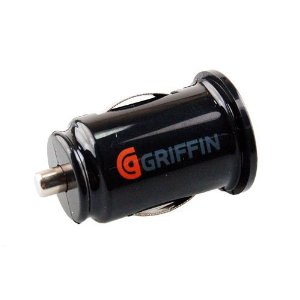
When I arrived home, I turned off the ignition and the noise was still there. I started disconnecting everything in sight, trying to make the noise disappear. Finally, I unplugged the cute little USB charger/adapter that was inserted into the cigarette lighter socket. Bingo, the interference disappeared. It seems that this little adapter has a switching circuit in it that is generating a large amount of hash. I have not investigated it fully, but it trashes out a substantial portion of the 2 Meter ham band.
It used to be my favorite adapter. Buyer beware.
73, Bob K0NR
Bob Witte, KØNR, is a regular contributor to AmateurRadio.com and writes from Colorado, USA. Contact him at [email protected].
WSJT-X update
A couple of days ago I had an email from Joe, K1JT, author of the WSPR and WSJT software. He had read my post about my first JT9-1 QSO in which I said that I missed the JT65-HF user interface. Joe pointed out that WSJT-X is in a very early stage of program development, and user input will surely help to define its future evolution. He asked what features of the JT65-HF GUI I found desirable.

I replied with what I thought were the key points that made JT65-HF easier to use. The result is a new version of WSJT-X which I have just tried. One change is that the horizontal ‘panadapter’ display scale now matches the waterfall when the user has set FFT Bins/Pixel greater than 1.
However, the real big change is that double-clicking on a decode line now generates a set of messages addressed to the second callsign on the line, regardless of where you double-click. It also sets the Tx and Rx frequencies to that of the decoded transmission and selects the first message in the sequence. This is a big time and error-saver in the few seconds you have between receiving a call and having to reply. You still have to set Auto to ON to enable the transmitter and select the next message in the sequence after the first has been received. Perhaps it’s a matter of personal preference but I don’t think it is a bad thing for the user to take control of this rather than have the program try to work out the appropriate reply. In other words, double-click on a decode when it is a CQ call or a reply to your CQ. Use the Tx n buttons to select the next message in the sequence as you progress through the QSO.
Try this latest version of WSJT-X. I think you’ll find it a big improvement. Now all we need is for Laurie VK3AMA to come up with a version of JT-Alert that adds logging and ‘worked before’ detection and there will be no reason not to switch to this much narrower JT mode.
Julian Moss, G4ILO, is a regular contributor to AmateurRadio.com and writes from Cumbria, England. Contact him at [email protected].
Long Delayed Echo on VOA Chinese Service

Thierry, F4EOB from Paris is still hearing strange echoes on the VOA Chinese service broadcasts. There isn’t really any good explanation for this phenomenon.
Now during winter he is hearing it both on 13650 kHz from 9 to 12 UTC and on 21590 kHz from 9 to 11 UTC. The 21590 kHz transmission has been heard by him for a long time and I mentioned it here last year also. As then the echo is about 2 seconds. Thierry also made a youtube video of it with a recording.
The transmitter locations are in Asia. The 19 m band site is on the Mariana Island (Tinian) and the 13 m band transmitter is in Tinang in the Philipines.
In my blog last year I discussed possible explanations such as multiple transmitters or multiple round-the-world travel. But since the delay is so consistent and has had the same delay for such a long time, the probability that it is man-made is rather large.
Thierry tells me that this LDE can easily be heard with the WebSDR at the University of Twente in the Netherlands also. I would be curious to hear from people outside Europe who could compare the Dutch WebSDR with their own local reception and see if the same echoes are heard everywhere.
Sverre Holm, LA3ZA, is a regular contributor to AmateurRadio.com and writes from Norway. Contact him at [email protected].
New method to produce graphene may lead to a revolution in battery technology

Graphene Supercapacitor
This is a small article I wrote for our office newsletter. Major implications for portable Amateur Radio equipment and emergency communications.
Batteries. They have become a huge part of our everyday lives. Think of how many devices we use that need to be recharged regularly. Cell Phones, iPads, laptops, digital cameras, cordless vacuums, electric razors, and now cars too. Tesla and other pioneers in the electric car industry are slowly moving toward technology that resolves a lot of the capacity issues in their devices, with some models now reaching a 300 mile range. The iPhone has become another great example of what engineering can do for battery capacity, with newer models able to go for a day or more between charges with normal use. Capacity is no longer the issue it once was. Charging time is now what’s holding battery technology back in applications like cars, industrial machinery, and tools. Even using one of the Tesla Superchargers takes about 30 minutes to charge a Tesla S to 50 percent capacity, and most cell phones still take an hour or more for a full charge.
The answer to this problem may lie in a substance called graphene. Graphene was invented in 2010 at the University of Manchester, UK. The two scientists who came up with the process were awarded the Nobel Prize in Physics. Graphene is a single layer of carbon, forming a thin sheet, one molecular layer thick, and has amazing properties both physically and electrically. Graphene is extremely conductive, and shows promise in the field of electronics, helping to create faster and smaller semi-conductors, as well as many other practical uses.
The original method to create graphene is extremely low-tech, and not very practical. The Scientists at the University of Manchester were able to pull a single layer of carbon molecules off of a piece of graphite by using Scotch Tape. This proves to be impractical on a large scale though, and a new method was needed. Last year at UCLA, researchers found a way to make graphene out of graphite oxide dispersed in water using low powered lasers. The lasers they used however, were the ones in an ordinary DVD burner. By coating a DVD with graphite oxide, and burning it on the label side using LiteScribe technology, they were able to create sheets of graphene, opening the door to a cheap method of creating this substance.
The real surprise came when one of the researchers attached a square of graphene to a light bulb, and managed to keep it lit for 5 minutes, after a charge time of only a few seconds. What they had stumbled on, was a new way of creating something called a super capacitor. Capacitors store electricity like batteries do, but charge and discharge rapidly, sometimes many times a second. A super capacitor combines the properties of both a battery and a capacitor, giving us a component that can charge rapidly, but behave like a battery once charged.
Thanks to the new method of creating graphene, this technology is closer to reality than most. Imagine being able to recharge device in seconds instead of minutes or hours. The possibilities this brings to the computer and auto industries are fantastic. It also opens up the idea of cordless, rechargeable devices to a host of new industries. Keep an eye on this, as it is going to change the way we look at portable devices, and energy storage.
Neil Goldstein, W2NDG, is a regular contributor to AmateurRadio.com and writes from New York, USA. Contact him at [email protected].
Kit building
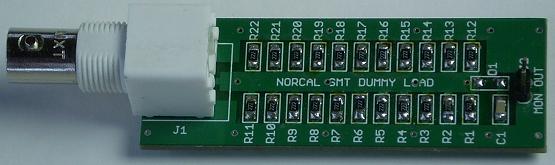
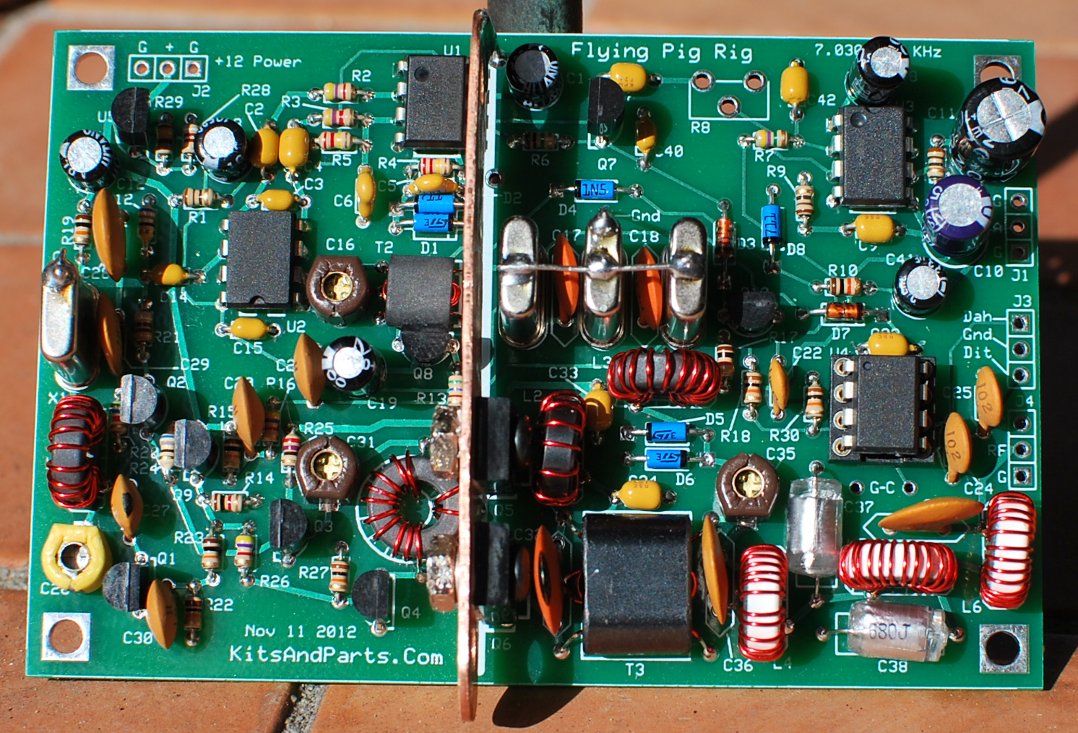
While listening to the bands this evening, I finished my NorCal QRP Dummy Load kit that I purchased a few years ago.
Larry Makoski, W2LJ, is a regular contributor to AmateurRadio.com and writes from New Jersey, USA. Contact him at [email protected].
 Ham Radio Deluxe |
 W5SWL Electronics |
 Ham Radio Prep |
 KB3IFH QSL Cards  Hip Ham Shirts  HamRadioAuctions HamRadioAuctions Reliance Antennas Reliance Antennas Enigma Shop Enigma Shop |  morseDX  Ni4L Antennas  R&L Electronics R&L Electronics antennas.us antennas.us QRV QRV |
- Matt W1MST, Managing Editor
