 |
 A weekend of fun and then snow!!
 12 May 2013 | by
 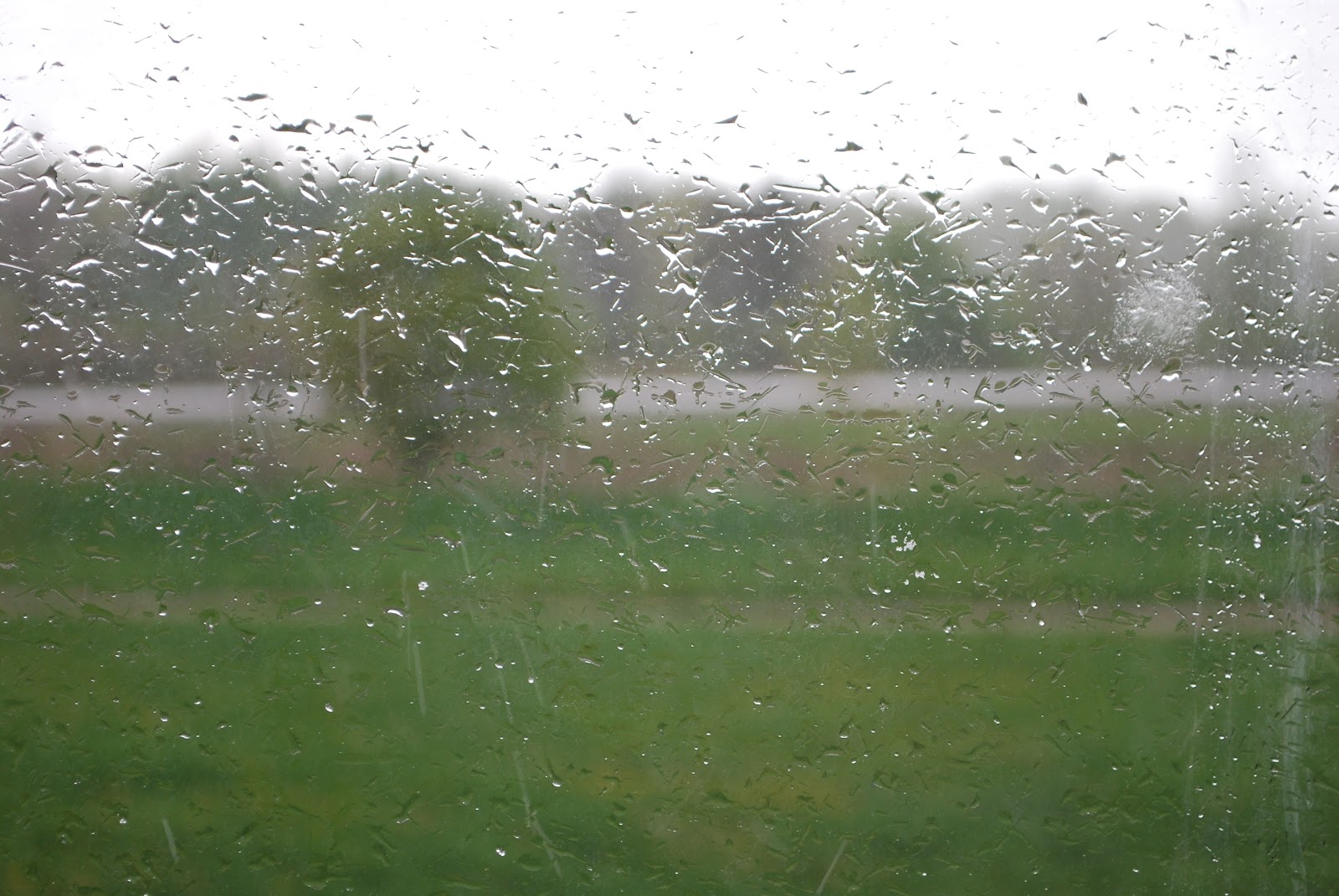 |
| It may look like rain on the window but it's very much snow |
 |
| Male Polar bear |
 |
| Sumatran tiger...seeing us as dinner dinner |

 |
| White Lion not to camera shy |
 |
| Jaguar having his say |

Mike Weir, VE9KK, is a regular contributor to AmateurRadio.com and writes from New Brunswick, Canada. Contact him at [email protected].
AmateurLogic.TV 54: Remote Control

AmateurLogic.TV Episode 54 is now available for download.
We explore three different Remote Control options to control a station from anywhere in the world. George and Tommy prepare for Dayton Hamvention. And some really funny stuff…
1:10:00 of interesting and entertaining ALTV.
View in web browser: YouTube
George Thomas, W5JDX, is co-host of AmateurLogic.TV, an original amateur radio video program hosted by George Thomas (W5JDX), Tommy Martin (N5ZNO), Peter Berrett (VK3PB), and Emile Diodene (KE5QKR). Contact him at [email protected].
First 70MHz Es QSOs (and a friendly scarecrow)
Since last weekend, I’ve been keeping a much closer eye on 50 and 70MHz. Being Sunday, having a bit more time made all the difference.
50MHz was already opening as I got into the shack this morning. I checked 70MHz, not really expecting anything and immediately heard my neighbour, Neil, G4BRK working something I couldn’t hear. I listened a bit longer and there was propagation to the east. SP2JYR came up briefly, but not well enough for me to work. As the Es closed down this morning, a 70MHz CW contest started up, but this didn’t enthuse me!
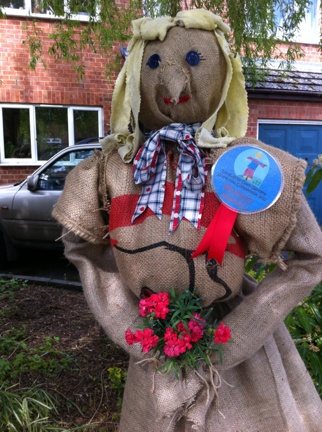
This afternoon we were out at the village open gardens. By the way, Julie won a prize for her excellent scarecrow, Gardenia De Hessian!
When we came back from an enjoyable afternoon, I checked the bands. 50MHz was going well; EA9UG was a nice one on 50MHz CW. CT8LI was a got away on phone. I checked 70MHz and initially although I could hear some signals, it was all a bit faint.
I spent a few minutes trying to work EA4DS on 50MHz JT6M without success, but couldn’t resist working EA4HW on RTTY for my first ever RTTY QSO on the band.
Finally a bit of luck went my way on 70MHz; I had a nice QSO with Jo CT1HZE and also great to work EA7KB.
Lots of other nice QSOs in the log over the weekend; YU6MM and E77OA yesterday, LY1R today – all on six.
Good fun!
Tim Kirby, G4VXE, is a regular contributor to AmateurRadio.com and writes from Oxfordshire, England. Contact him at [email protected].
Not much happening
Nothing blogworthy has happened at G4ILO in the last few days. My mind has been preoccupied with two other things: frustration at still being without a driving license and anxiety about my forthcoming gall bladder operation. As a nurse said yesterday during my pre-operation assessment, a gall bladder op is nothing compared to the surgery I have had for my brain tumour. The difference is with the brain tumour everything happened very quickly so I didn’t have time to do much thinking about it.
I haven’t been completely inactive on the radio in the time since my last post. Most days when I haven’t been going to a medical appointment I have turned on my 2 metre and 30 metre APRS gateways. Most days I have also set my K3 to monitor the WSPR frequencies on 10 metres. There have been some signs of Sporadic-E activity, such as the presence of Russian taxi operators on the 10m WSPR frequency. A few days ago DXmaps showed a small but intense Sporadic-E opening on 6 metres. My 10m signals have frequently been spotted by 4X1RF and have also reached Argentina and the Philippines. I hope that things will soon perk up and motivate me to do something worth writing about again.
Julian Moss, G4ILO, is a regular contributor to AmateurRadio.com and writes from Cumbria, England. Contact him at [email protected].
The Mysterious Case of Alternator Noise
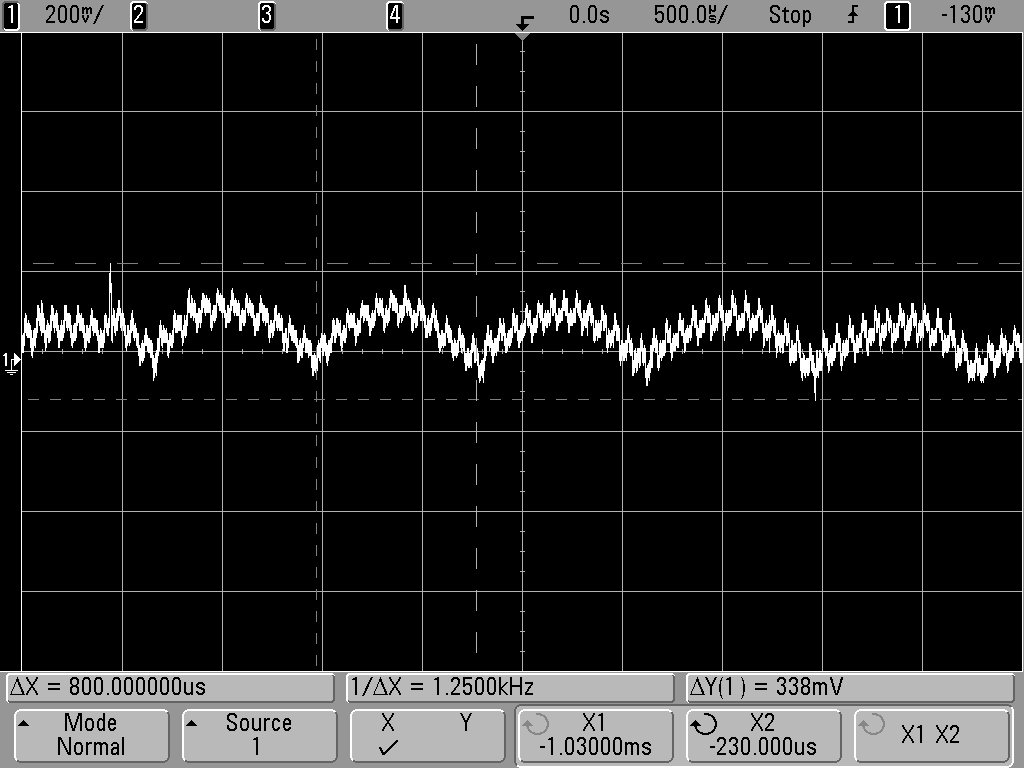
When I purchased my 2003 Ford Escape, I decided to install multiple ham radios and a bunch of antennas. Mostly I use a Yaesu FT-8900 FM transceiver for operating on the 2-Meter and 70-cm ham bands. A while back, I started getting reports that I had alternator whine on my transmit audio. I was perplexed because I thought I had done a pretty darn good job of installing the radio, including connecting heavy 12V power cables directly to the battery. (See K0BG’s web page for more information on battery connections.) I really wasn’t sure if this was a day one problem (and no one ever told me about the crummy audio) or something that had just started. My first course of action was to ignore it and see if it goes away. This strategy failed miserably as my FCC-licensed spouse continued to report that I was “whining”. Finally, I decided to put my alleged knowledge of electricity to work. I got out my trusty oscilloscope and took a look at the voltage near the transceiver. There was about 800 mV of ripple on the DC voltage, as shown below.
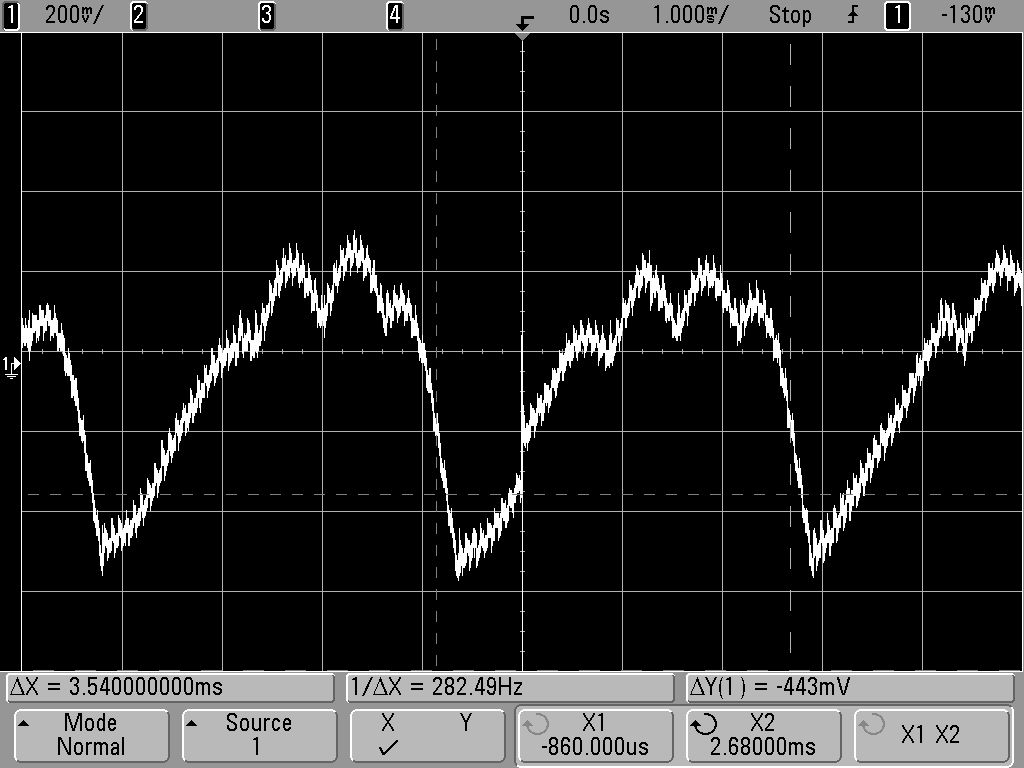
The frequency of the ripple was in the audio range, consistent with alternator whine. The frequency of the ripple increased when I rev’d the car engine, so it was clearly coming from the alternator. I was surprised to find that the size of the ripple did not depend much on whether I was transmitting or not. The transmit current is much higher than the receive current, so I expected the ripple to be worse on transmit.
Then I decided to measure the ripple voltage right at the battery, which is shown below. The peak-to-peak ripple is smaller (about 400 mV) than at the radio but still present. I expected the the voltage to be mostly clean right at the battery.
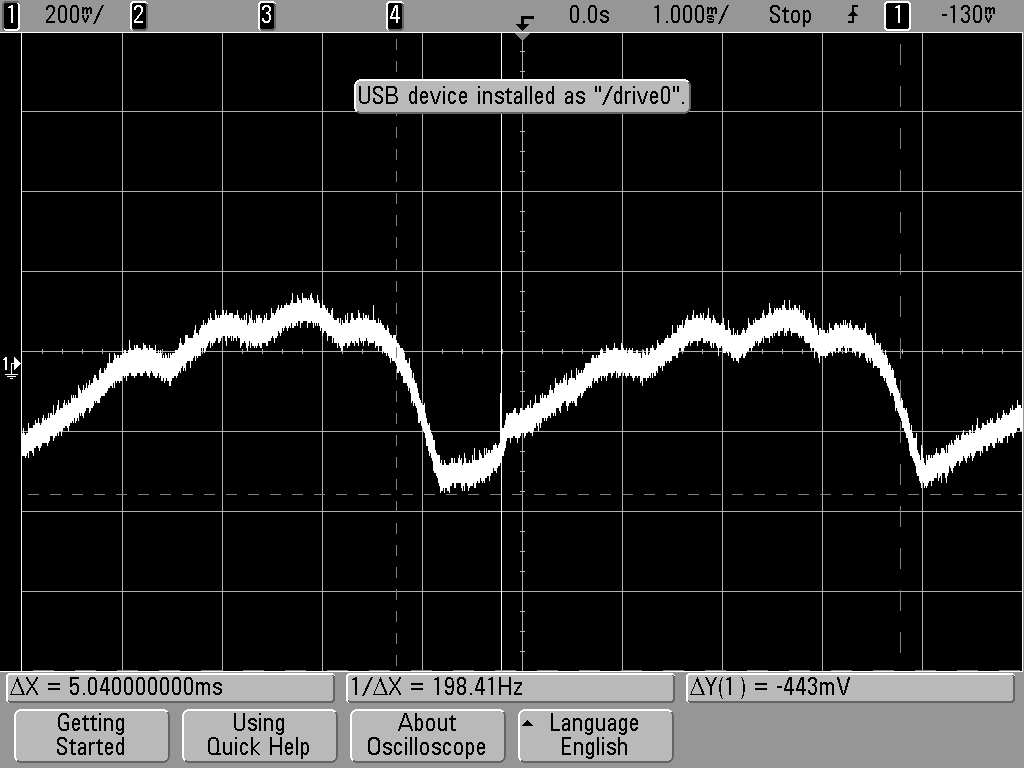
I pondered what to do next. One approach would be to install a filter to eliminate the ripple. However, filtering out a few hundred Hz signal while maintaining a low voltage drop on the 12V power feed is not trivial. More importantly, I had the sense that the Escape’s electrical system was just not operating properly. I decided to take it to my local mechanic, who tested the alternator and determined that a diode had failed. He replaced the alternator for me and the whine is now gone.
I did measure the 12 volt supply with the new alternator installed and the radio transmitting. I was surprised to find that there is still some ripple, a bit less than 200 mV (shown below). Apparently, this is not enough to disturb the FT-8900 signal.
So that’s the story about my alternator whine.
My spouse says “I still whine sometimes” but it has nothing to do with my ham transceiver.
– 73, Bob K0NR
Bob Witte, KØNR, is a regular contributor to AmateurRadio.com and writes from Colorado, USA. Contact him at [email protected].
Back handed compliment
The weather today in Central NJ was a very sunny 72F (22C) when I headed out the door from work at lunchtime. I wanted to accomplish two things. I wanted to try the 18 MHz wire that I cut for the PAR ENDFEDZ, and I also wanted to set up the Jackite pole again using my drive on mast holder.
I went to the same park that I went to last week; but I went to the other side. This was away from the tree-filled picnic area and towards the soccer fields and some other baseball fields. I set up right in the parking area:
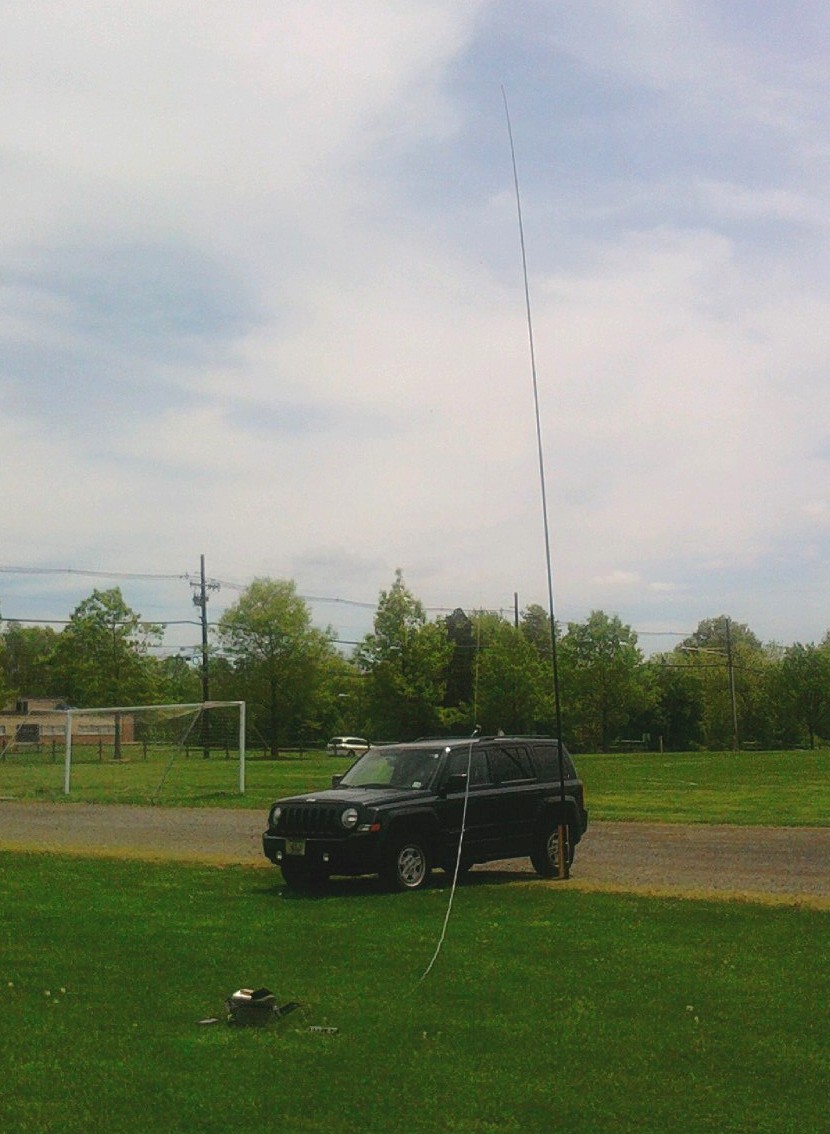
Set up went very fast, and since the 17 Meter wire is much shorter than the regularly supplied 10/20/40 MKII radiator, I needed to use a piece of coax that I normally carry for when I use the Buddistick. I called CQ and was answered by Mike K8NS who lives in Florida, in the Daytona Beach area.
Mike was 589 here, and he gave me a 569 in return. Copy was solid in both directions. Mike was using an Icom IC-725 to a vertical antenna. My PAR ENDFEDZ was more or less a vertical, although it did slope somewhat.
It was just turning 90F (32C) for the day at Mike’s QTH; but he informed me that there was a nice off shore breeze that was keeping things bearable. I couldn’t stay too long as I had to get back to work; but it was a rewarding effort. I made a QSO, the wire worked well and the drive on mast support continued to work like a charm. A very productive lunchtime, indeed.
What’s that about the blog post title, you ask? Well, off to the right of me, about 75 yards or so was a very big, open field. There were some older gentlemen there flying RC model planes. I was watching them while I was operating; and I guess they were watching me. One of them came over, of course, to ask what I was doing and I started explaining about Amateur Radio (you would think model RC pilots would know something about radio). He asked me if I was actually working anyone, so I took the earbud jack out of the KX3, so he could hear me as I worked Mike K8NS.
“Morse Code ….wow! People still use that?”
“Yes”, I replied. “It’s still very popular”.
“Isn’t that nice. It’s good to know there are folks out there using older technology than what I use.”
I started explaining about SDR, microprocessors, SMD technology and all that; but I was getting a glassy-eyed stare (and you could almost hear the crickets chirping), so I ended up just letting it go at that.
72 de Larry W2LJ
QRP – When you care to send the very least!
Larry Makoski, W2LJ, is a regular contributor to AmateurRadio.com and writes from New Jersey, USA. Contact him at [email protected].
Four Days In May: A look back at FDIM 2012…
Four Days In May is sponsored by the QRP ARCI
One of the highlights of my trip to the Dayton Hamvention last year was attending evenings at Four Days in May (FDIM), a QRP convention sponsored by the QRP ARCI that rather conveniently coincides with the Dayton Hamvention, which I try to attend annually. Though scheduling makes it difficult for me to attend all of FDIM’s daytime presentations, the camaraderie and innovation one discovers at the evening sessions is wholeheartedly worthwhile.
Last year, I snapped quite a few photos at FDIM which I planned to post following the Hamvention. Unfortunately, shortly after the Hamvention, my laptop began displaying signs of an early demise. In haste, I archived my photos on a portable drive, where they remained buried for a year. I just rediscovered this photographic treasure, and thought I’d share it with readers; looking through them rekindled my enthusiasm for FDIM 2013, which starts next week!
A quick look at FDIM 2012
A great characteristic about FDIM is the array of QRP products offered by QRPers for the community. More often than not, these products are fairly priced, and often in support of the QRP community rather than major profit-making ventures.
For example, the North Georgia QRP Club produces affordable wood stands for QRP rigs. They’re incredibly simple, but fully finished and beautifully designed, just the thing to prop up your QRP portable at the right angle for desktop use.
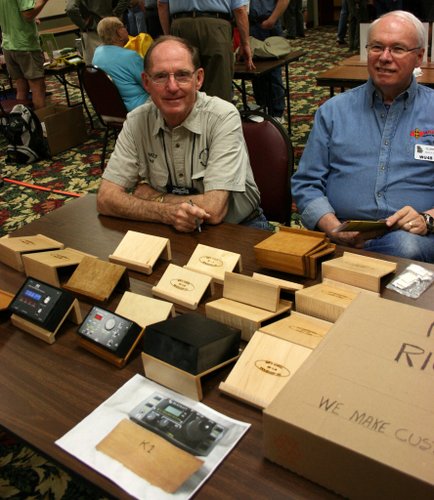

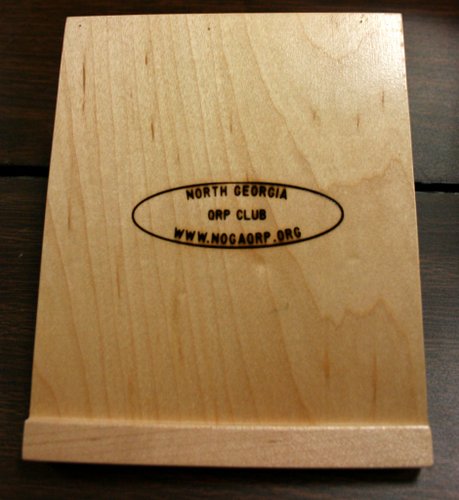
These wooden stands support the following rigs:
- Elecraft K1, KX1
- Ten Ten R4020/R4030/R4040
- Yaesu FT817/FT817N
- Hendricks PFR3
The club can even accommodate custom orders for other rigs. Check out and purchase these on the NOGAQRP website.
Speaking of wood products–one vendor last year featured an amazing array of wooden paddle pieces and even custom wooden tuning dimples (spinner knobs) for the Elecraft K2 and K1.
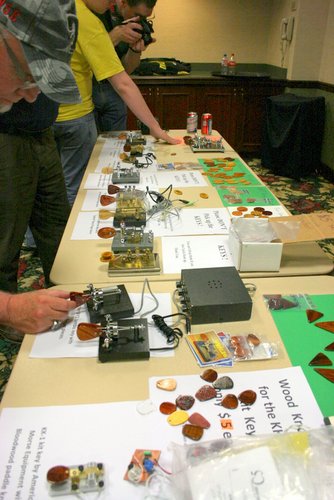
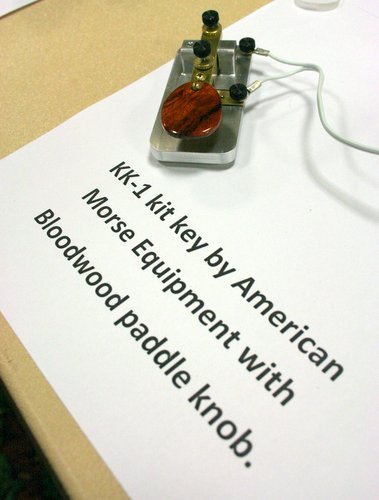
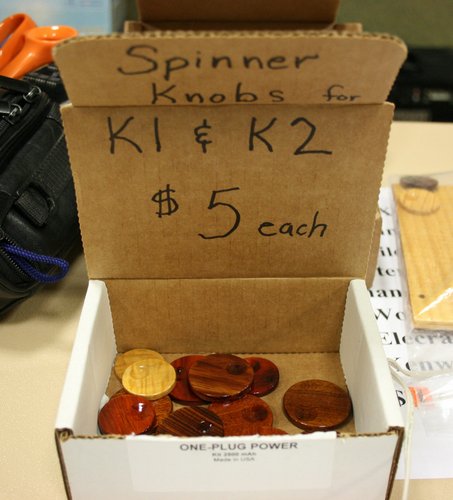
As you can see from the photos, each piece is perfectly finished and has great character, as one might expect of real wood.
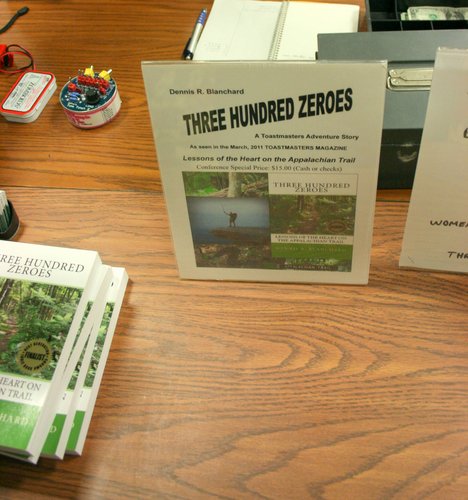
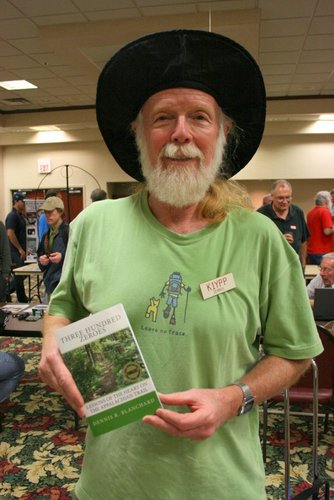
I also ran into Dennis Blanchard (K1YPP) and his wife, Jane, who were signing and selling their books. I wrote a review here on QRPer about Dennis’ story of the challenges and joys of through-hiking the Appalachian Trail. If you haven’t read Three Hundred Zeroes: Lessons of the Heart on the Appalachian Trail, you’re in for a treat. I’m hoping Dennis will attend FDIM this year.
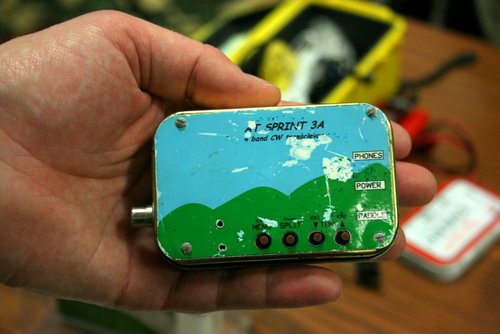
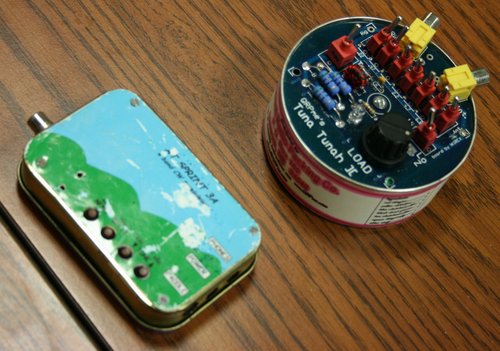
Dennis, being a hard-core QRPer, trekked with ham gear in tow; he brought his kits to FDIM:
There were a variety of keys and paddles to be seen, of course; offerings range from the home brewed to gorgeous Italian Begali designs:
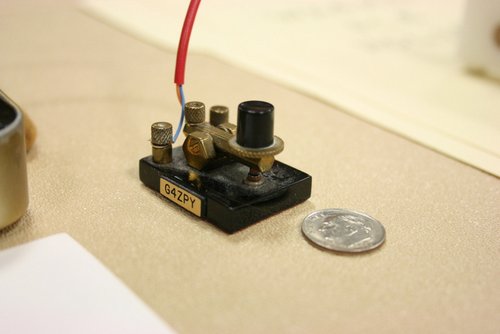
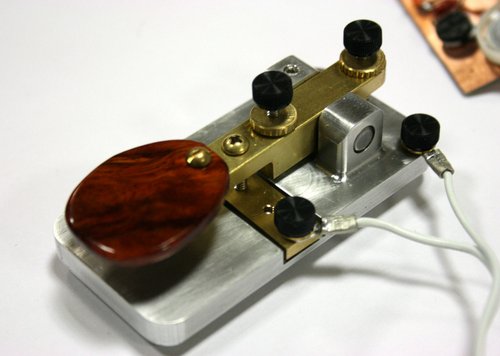
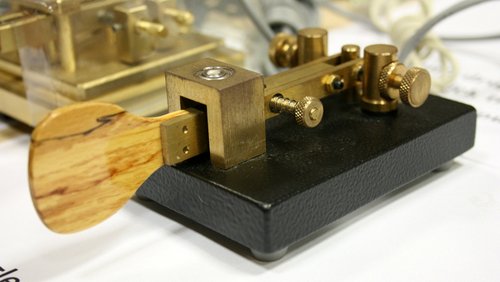
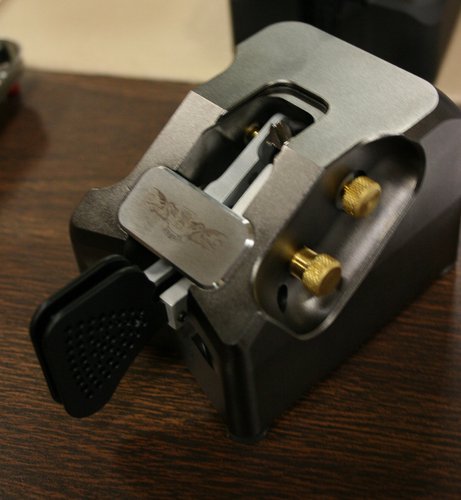
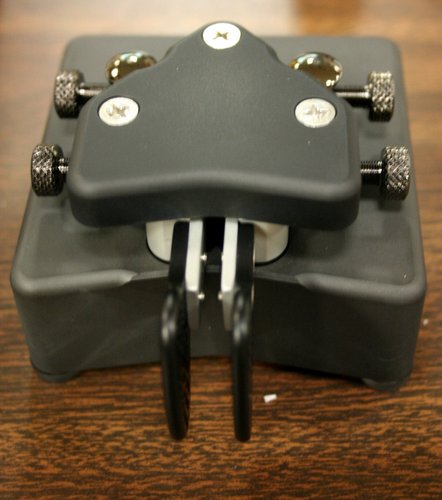
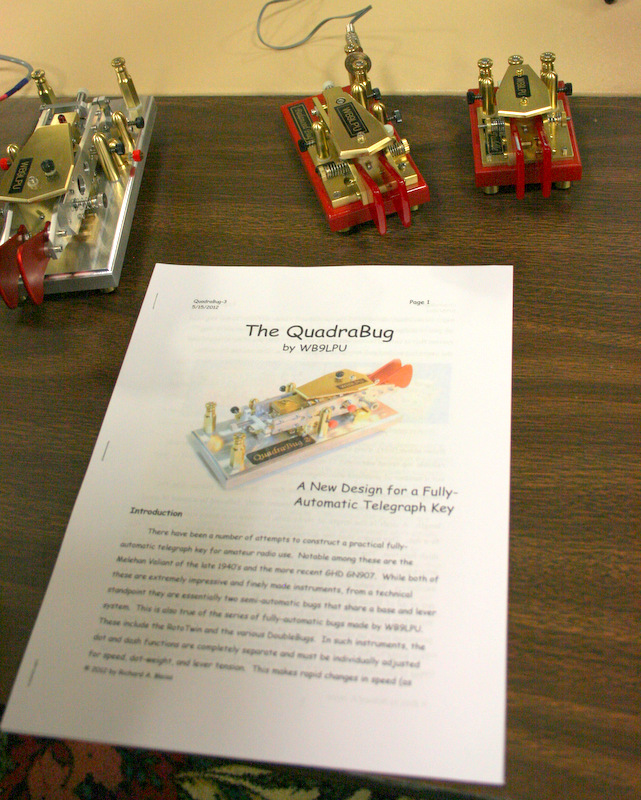
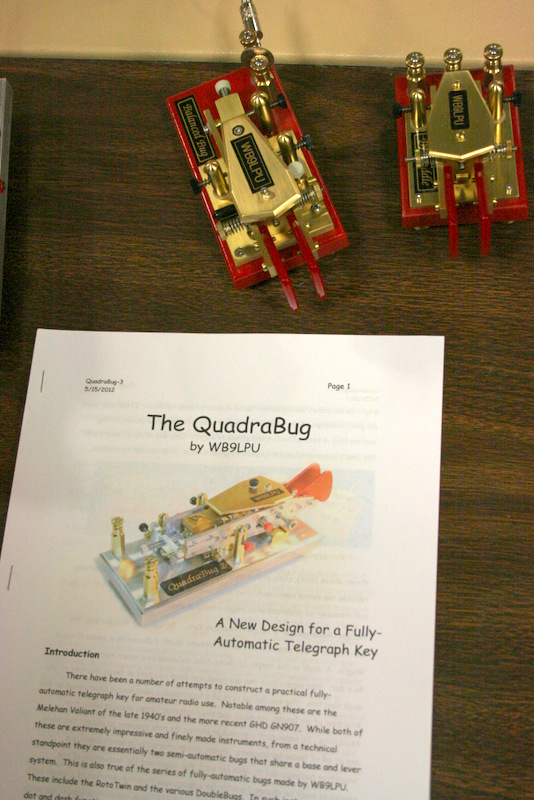
One paddle that really caught my attention was QuadraBug, a creation of WB9LPU. What makes this gem stand apart from other “Bugs” is that not only will it form “dits” automatically, but it also forms “dahs.” Truly, an amazing work of engineering. I searched the web for a video of the QuadraBug in action, but found nothing. [UPDATE: Thanks, Yan for finding a video! See video below.] This year, I’ll take a video if I’m fortunate enough to see it again.
Home-brew galore
There were an amazing number of home-brewed projects on display, and even a home-brew contest. I didn’t capture photos of them all, but I did manage to snap a few.
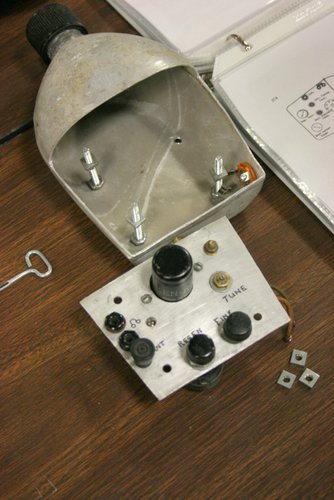
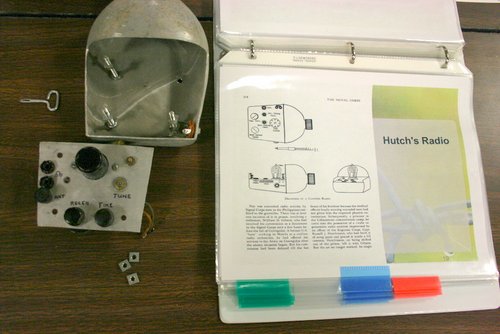
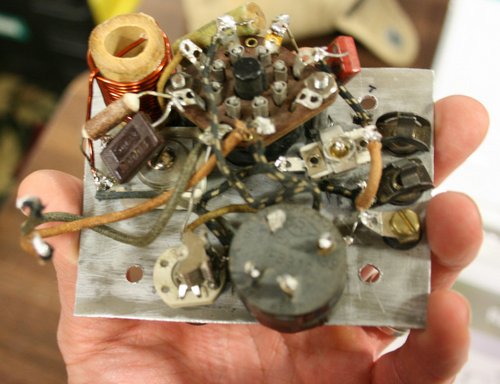
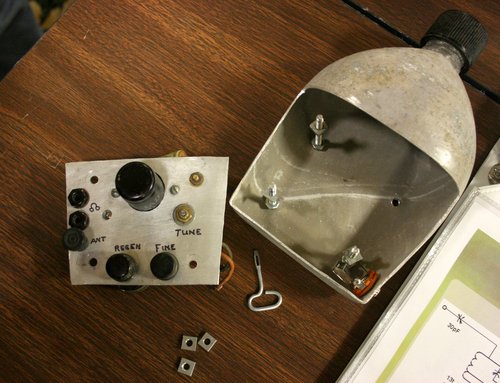
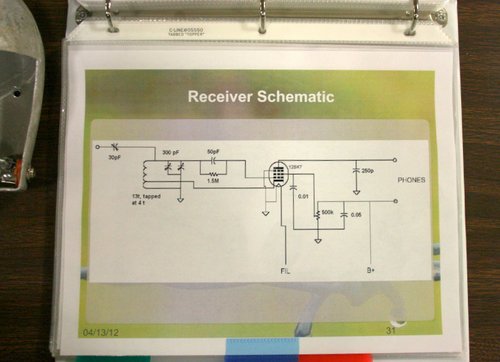
One that really caught my eye (being a shortwave receiver enthusiast) was David Cripe’s (NM0S) version of Hutch’s Radio. The original Hutch’s Radios were built by US and British POW’s in WWII. Built in canteens, often from confiscated parts, these radios gave POWs hope by allowing them to tune in the outside world, via the BBC WS and Voice of America. In the spirit of the original, David challenged himself to build his version prior to FDIM, with original parts of the era, and in “secrecy.” Secrecy? As many of the components had to be purchased from suppliers on eBay, David tried to intercept all of the incoming packages without his wife noticing. His success was brief–alas, his wife discovered the mission–but fun; still, the end result was a very cool piece of historical recreation with a humorous story to match:
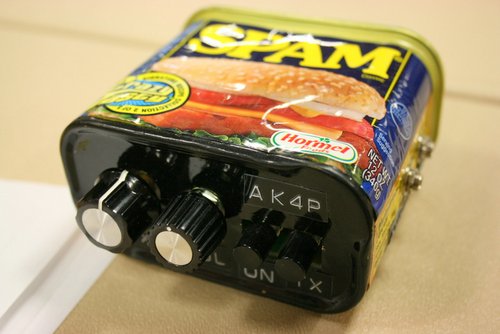
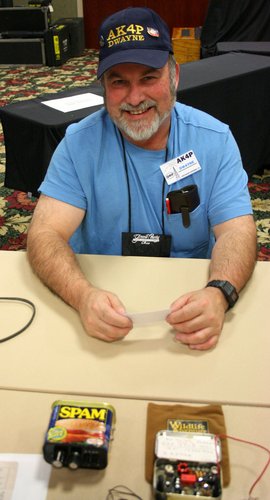
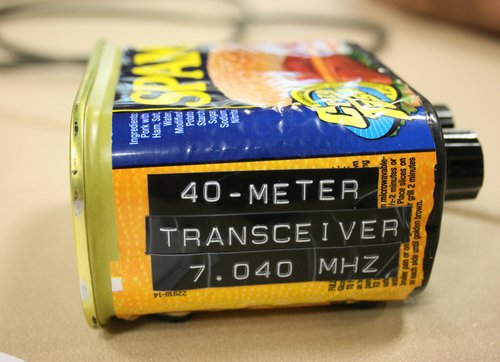
Of course, FDIM featured loads of QRP transmitters, receivers and transceivers; here is Dwayne’s (AK4P) 40 meter transceiver, built in a SPAM container:
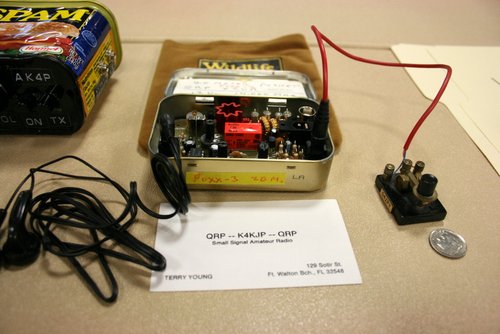
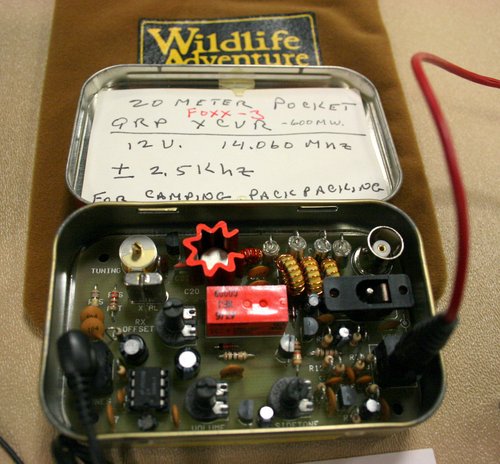
Terry Young, K4KJP, built a very cool pocket 20 meter transceiver in an Altoids tin:
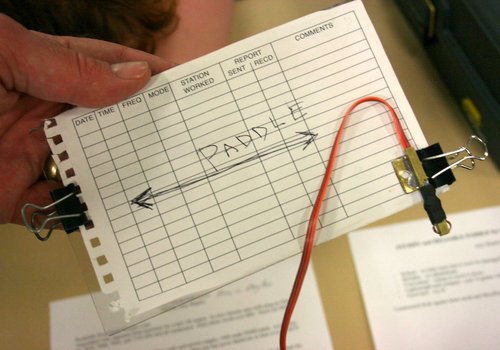
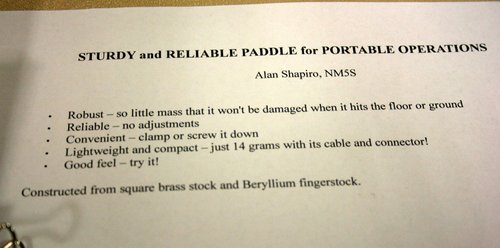
And Alan Shapiro, NM5S, should have won a prize for the most compact set of CW paddles. These paddles are so small that they can be clamped onto your log book. Much to my surprise, they were amazingly easy to use, and would be a great addition to any field-portable radio:
FDIM 2013
If FDIM 2012 is any indication (yes), this is a mere sampling of the stuff you’ll see at Four Days In May 2013. I encourage you to attend: if nothing else, make a little time either Thursday, Friday or Saturday evening to visit the evening displays at FDIM–they’re free and open to the public.
If you can’t attend, I hope you’ll earmark your calendar for a future date. I do plan to bring my camera again this year and will share some photos. Hopefully, I’ll post them a little earlier this go-around!
Hope to see you at FDIM and the Hamvention. For the third year in a row, I will be representing my charity, Ears To Our World (ETOW), at an inside exhibit at the Hamvention. We should be in booth 601 in the East Hall. Please feel free to stop by and introduce yourself! (And if you feel so inclined, you can even donate a few bucks to our worthy cause.) See you there–!
Best & 72,
Thomas, K4SWL
Tom Witherspoon, K4SWL, is a regular contributor to AmateurRadio.com and writes from North Carolina, USA. Contact him at [email protected].
 Ham Radio Deluxe |
 W5SWL Electronics |
 Ham Radio Prep |
 KB3IFH QSL Cards  Hip Ham Shirts  HamRadioAuctions HamRadioAuctions Reliance Antennas Reliance Antennas Enigma Shop Enigma Shop |  morseDX  Ni4L Antennas  R&L Electronics R&L Electronics antennas.us antennas.us QRV QRV |
- Matt W1MST, Managing Editor
