 |
 Four SOTA Summit Activation’s in W1
 11 June 2013 | by
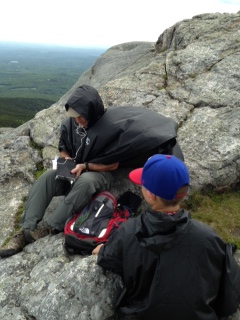
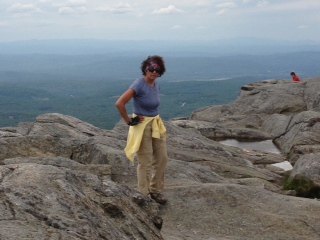
 W1/HA-009 Mount Monadnock (4 pts) June 6, 2013, New Hampshire
This is a tough 4 pointer. With over 2,000 feet of prominence I under estimated the mountain and made a few mistakes as well. First I counted on my grandson to carry the Buddi-stick, he forgot it and I didn't double check. Thankfully I had an EFHW with me, but only a 13 foot pole to run it from. There are no trees on the summit. Accordingly I think my signal suffered a little. It was very windy and cool on the summit and relatively crowded, which ultimately shortened our stay. I used an FT-817 on this activation because the original plan was for my two grandsons, KF5GYD and KF5GYE to operate some SSB, however conditions were marginal for CW, so we weren't able to execute that part of the plan.
The trail up is one granite rock after another. I had envisioned a wide, sodden trail to the summit, but that is not the case, lots of scrambling up granite slopes on a trail that goes straight up. For those familiar with the mountain, we took the White Dot Trail up, the more direct, and the White Cross Trail down. Coming down is tough because its like descending on a path of uneven steps and no real opportunity to enjoy the downhill slope and some relatively steep pitches down granite slabs. Two hours up and 1.5hrs down. I was able to make 7 QSO's from here (it only takes 4 QSO's to qualify for the points). I did work G4ELZ and S58AL to spice up the day.
W1/AM-381 Mount Agamenticus (1 pt) June 7, 2013, Maine
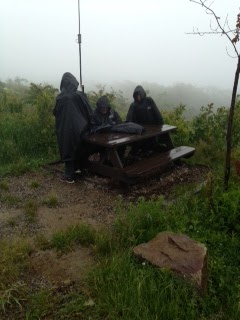
The morning dawned with steady rain and the forecast called for more. Not a good day for a hike. We decided to travel to the southern coast of Maine. A quick check of the SOTA database revealed a drive-up one pointer, Mt. Agamenticus. Easy, right. Wrong. My grandsons and I set up, after the ceremonial climb up the last few feet, on a picnic table in the blowing rain and zero visibility. Let's get four quick QSO's and get out of here. What I didn't know was that the A-index was 34 and the K was 4. Over an hour later I made the fourth QSO, way too much work for one point. This day was our 38th anniversary and Boogies 11th birthday.
W1/GM-003 Equinox Mountain (8 pts) June 8, 2013 Vermont
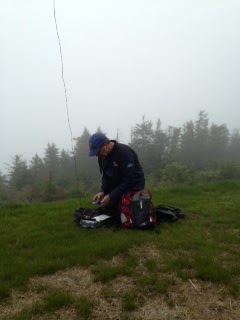
Equinox Mountain is near the town of Manchester, VT. It is an 8 Pointer, with a road to the top. I decided to make the most of my remaining time in the region and a drive up would save some time and give me a shot at getting another summit in. There is a toll road to the top and there is actually a functioning monastery on the mountain. Again visibility was near zero on the summit and misting rain. I first set- up with the vertical and had some success but it was noisy as conditions still weren't very good, so I was able to get some height on the EFHW, lashing my telescopic pole to the balcony of the visitor center on the summit, and made a few more QSO's finishing with 10. I started with the FT-817, but finished with my MTR which I discovered has a better receiver in noisy conditions. No real DX from here, NS7P from Oregon was my most distant contact.
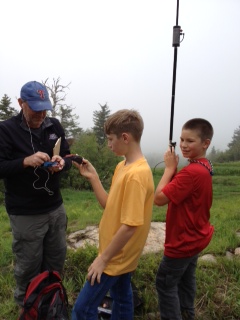
Mount Snow is a ski mountain with a lift most of the way up the mountain leaving a relative short but steep hike to the summit. The question was whether I could get the QSO's I needed in the time I had. We arrived at the mountain at 3:00 and the lift closed at 4:00. We summited at 3:25, set up the vertical with one grandson holding the trekking pole mounted vertical, the other holding my battery and me with the MTR, micro key and log and we were on the air by 3:30. DJ5AV was the first in the log and CT1BQH followed a couple of minutes later. By 3:40 I had 6 QSO's in the log. A quick tear down and back to the lift by 3:55. Made it. This one was the most satisfying, six points I didn't think I would get.
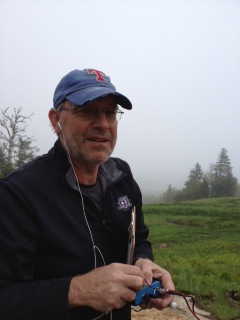
Mike Crownover, AD5A, is a regular contributor to AmateurRadio.com and writes from Texas, USA. Contact him at [email protected].
9K2MU on 20 meters this evening
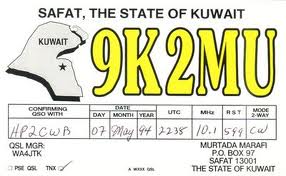 |
| One day my call will be in the confirmation box |
Mike Weir, VE9KK, is a regular contributor to AmateurRadio.com and writes from New Brunswick, Canada. Contact him at [email protected].
Cosmetic K2 Upgrade
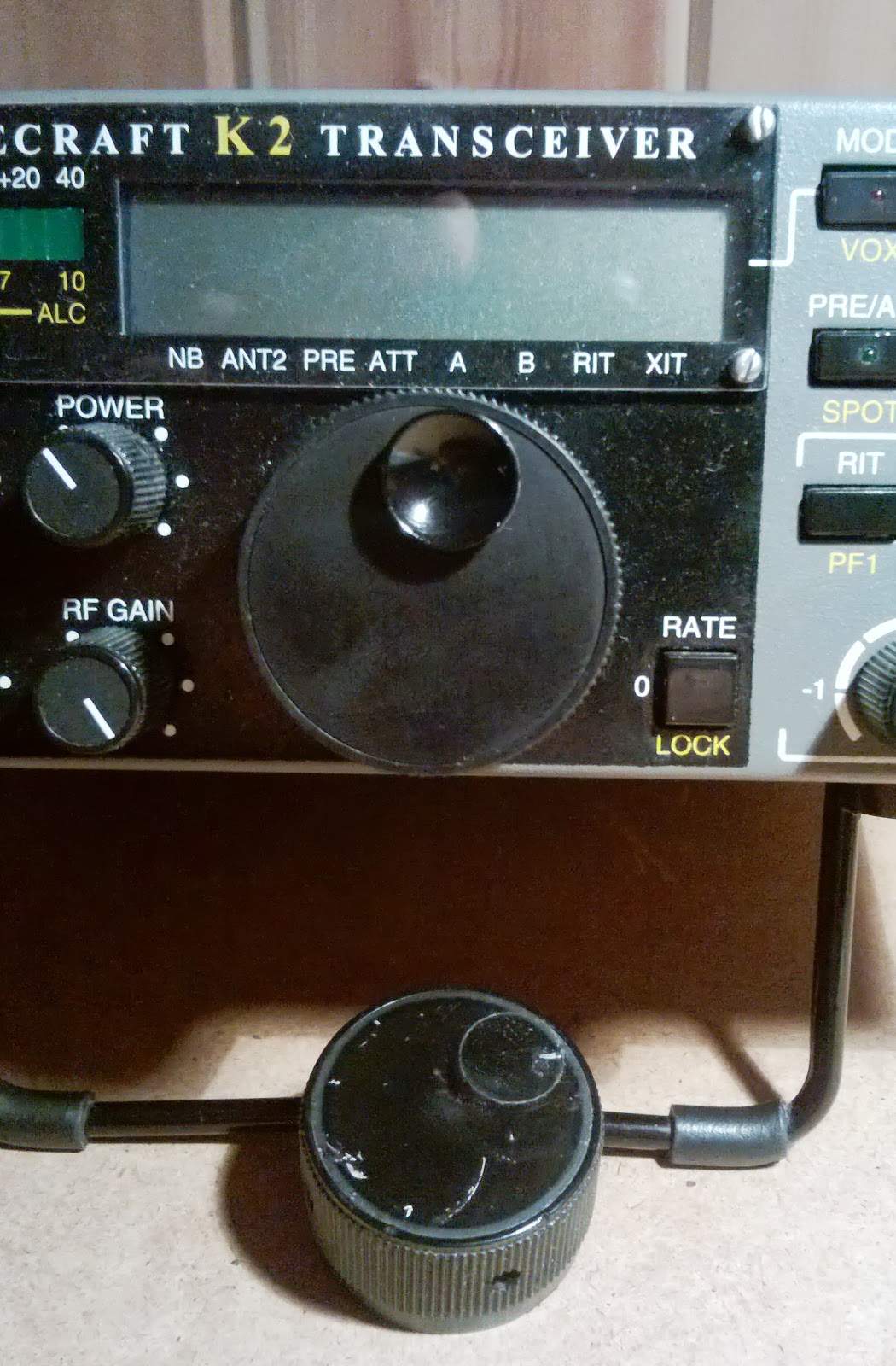
My Elecraft K2 which is now more than 11 years old (serial #2198) has served me well, even earning me QRP DXCC (100 countries with 5 Watts) some years ago. It is still cosmetically in mint condition, except for that single item which sticks out like a sore thumb: The tuning knob.
This became very clear to me a couple of months ago when LA8OKA’s and my K2 were displayed side by side at our stand at Oslo Maker Faire. His is less than two years old, serial #7224, and they were similar except for the scratches in the faceplate of my tuning knob. If I am allowed to generalize from my knob only, it seems as if the faceplate had poor quality paint and has been replaced by a better quality version over the years.
Anyway I ordered a new one and paid the price which at present is $30.37 plus shipping. The difference is really striking and I feel like I have a new K2 now, well worth the price! The K2 now serves as my second rig, and I think it has many years of good service still to come.
Related posts:
Sverre Holm, LA3ZA, is a regular contributor to AmateurRadio.com and writes from Norway. Contact him at [email protected].
A dongle for the FT-817
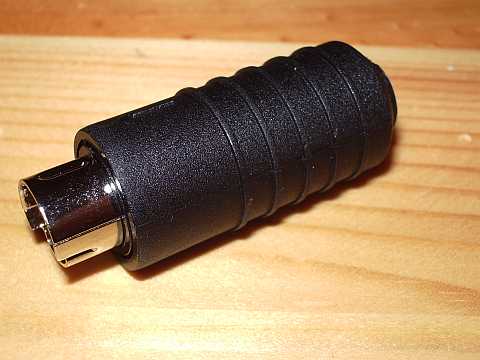
If you have used a Yaesu FT-817 on SSB you’ll have probably been annoyed by the lack of a TUNE button to generate a steady carrier for antenna tuning. You usually have to press the MODE button a few times to select FM or PKT, use PTT to send a carrier, then change mode back to USB or LSB. It isn’t one of life’s greater annoyances, but it’s a nuisance all the same, especially if you use an antenna like the AlexLoop which needs retuning every time you change frequency.
A couple of weeks ago I received a letter from one of my blog readers, John G4HUK, enclosing a Quick-Tune Dongle that he makes for the Yaesu FT-817, FT-857 and FT-897 rigs. It’s a neat little gadget that plugs into the ACC port on the back of the radio. What it does is let you generate a tuning signal in SSB mode by double-clicking the microphone PTT. Simple but effective! It won’t be so useful for home users who have a CAT cable plugged into their ACC port already, but for SOTA operators and other exponents of outdoor radio (apart from CW operators who can just hold the key down) it could be a godsend.
 |
| The Quick Tune Dongle installed on the back of the FT-817 |
The dongle didn’t work for me at first until I set the baud rate of my FT-817’s ACC port to 9600. This is explained in the ‘manual’. The instructions also explain how you can reconfigure the dongle to change the way it works. By default it will use PKT mode to generate the tuning carrier and ignore double-clicks made in any mode other than USB and LSB, which I think will suit most people.
I think it is an ingenious little gadget which you can get from HUK Electronics for £15.95 + postage. Here’s a video of the dongle in action.
Julian Moss, G4ILO, is a regular contributor to AmateurRadio.com and writes from Cumbria, England. Contact him at [email protected].
Upgrade?
A couple of years ago I attempted to upgrade my rig to a more ‘vase’ station type. I really like my IC7000 and have thoroughly enjoyed using it but I have also enjoyed operating from larger rigs more. There’s less need to get a PC up and running and to use that to drive the menu’s. The reason why I didn’t get a new rig last time is because a more pressing need was there, we needed a new car.
Well now I get to think about it all over again. I’ve got a figure of around £1500 in my head and thought that the TS590 might do me well. Other options would be a second hand K3 but they are rarer than hens teeth and likely to be more money and an ideal would be a new Hermes SDR, but then again that would be more like £2000+.
I found this decision quite difficult before but the issue doesn’t seem to want to go away in a hurry. New or second hand I’m not really bothered. I just want the best I can for the money. HF & 6m are a must. 2m would be great and 70cm’s as well so i can do some satellite work but I’ll happily drop the VHF for a better HF rig. The TS590 does seem like the best choice so far.
Alex Hill, G7KSE, is a regular contributor to AmateurRadio.com and writes from Cumbria, UK. Contact him at [email protected].
It’s nice when a plan comes together
 |
| My contest screen |
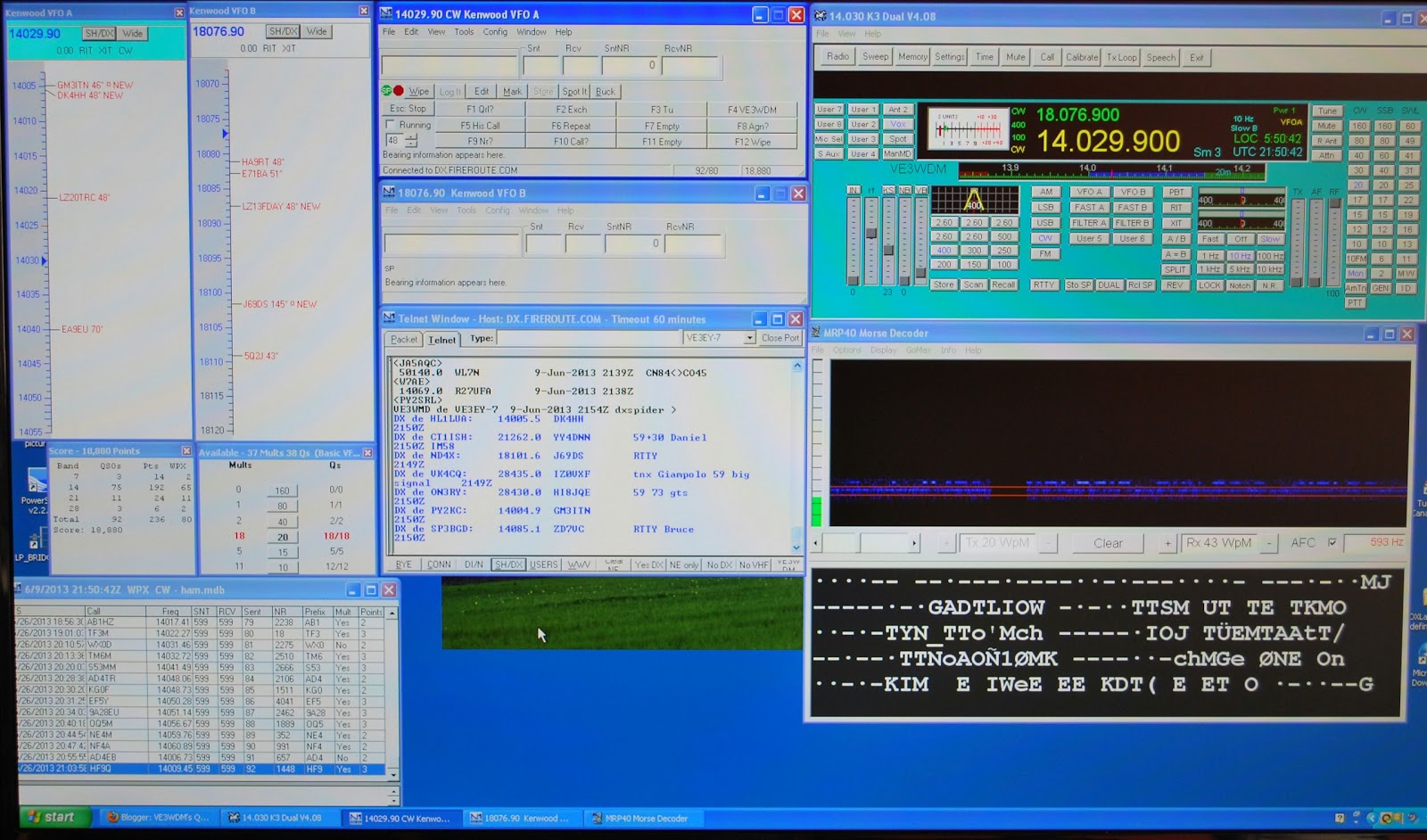
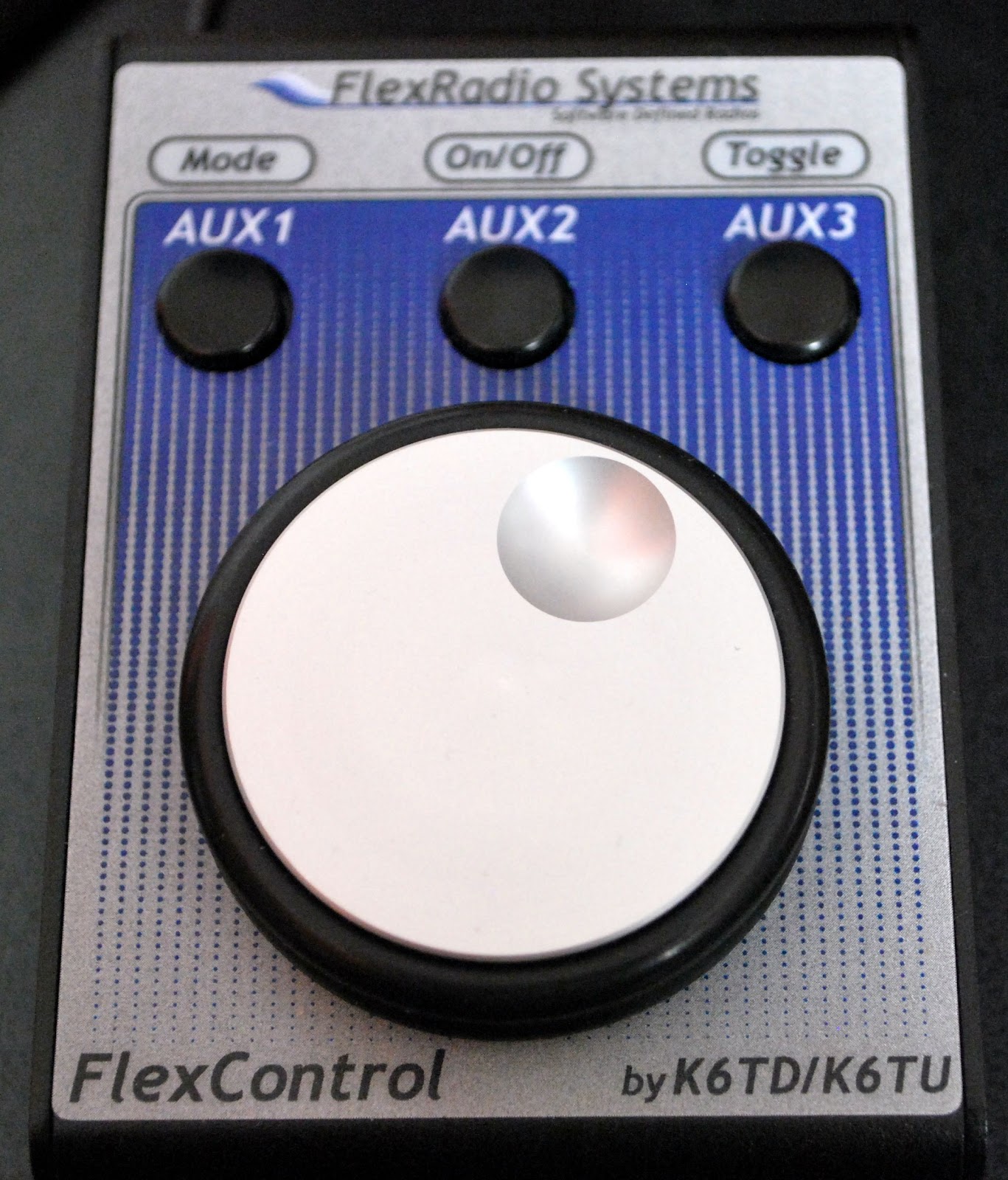
Begali Contour key and why not VFO control as well!!! Now comes the Flexcontrol VFO knob. This is a USB device that allows you to tune your rig (and more) from where you ask.....well the keyboard tray of VSP manager to the mix. This great little program (that is free to hams) allows all the programs to live happily with each other.
 |
| FlexControl knob |
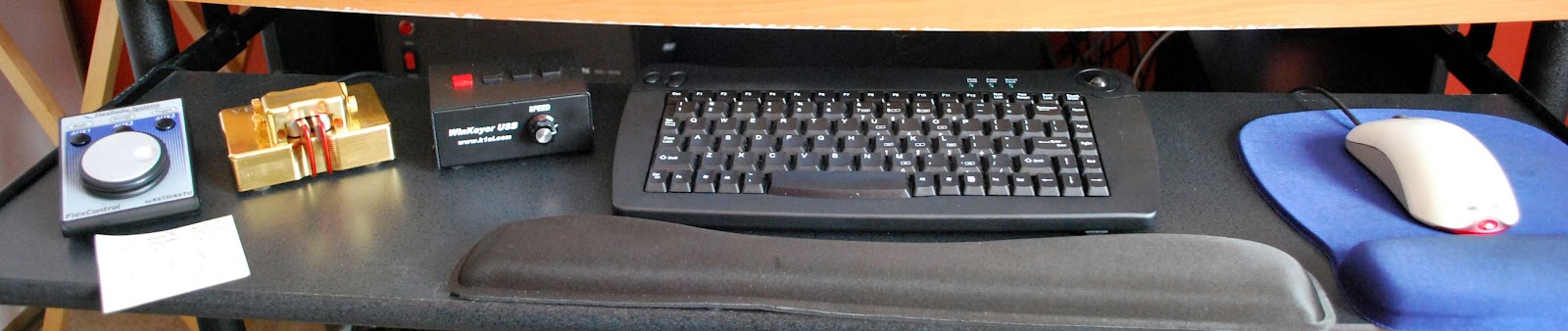
You all know how it is when you have had a nice dinner and there is still room for a nice desert......well my nice dinner on my keyboard tray was the Flexcontrol knob, Begali Contour key and the mouse....there is still room for one more item! I added the K1EL USBwinkey which I assembled myself. The N1MM contest program is able to incorporate the Winkeyer in it's program, so when I program the CW messages into the winkeyer they will be used by N1MM when I mouse click on the N1MM macro button. This is great because the Winkeyer is very easy to program and you can save various keying programs into individual files. This way I will have a file for each CW contest and just a mouse click to program N1MM for each CW contest. If all files are stored on my PC and the Winkeyer is set up via the PC and CW is set through N1MM logger then why the heck does the Winkeyer have to be on the tray!!! Well Winkeyer has a nice variable pot control that can vary the CW on the fly. This way for op's who are sending slower or faster CW you can be varied by a simple turn of the Winkeyer knob.
 |
| Keyboard tray setup |
Mike Weir, VE9KK, is a regular contributor to AmateurRadio.com and writes from New Brunswick, Canada. Contact him at [email protected].
Massive Floods in Europe
My heart turns out to the people in Europe today as I read about the massive floods in Europe.
Most of the DX stations I work with my QRP station live in these areas, and personally, I remember a lot of the towns I’m reading about on the Danube River. I found it to be one of the most beautiful and interesting places on earth. When I was there, my thoughts were always revolving around the fantastic “bicycle” routes. It was common, to see entire families on their bicycles, enjoying nature in a way that only can be experienced at this slow pace, and demanded, by human powered transportation.
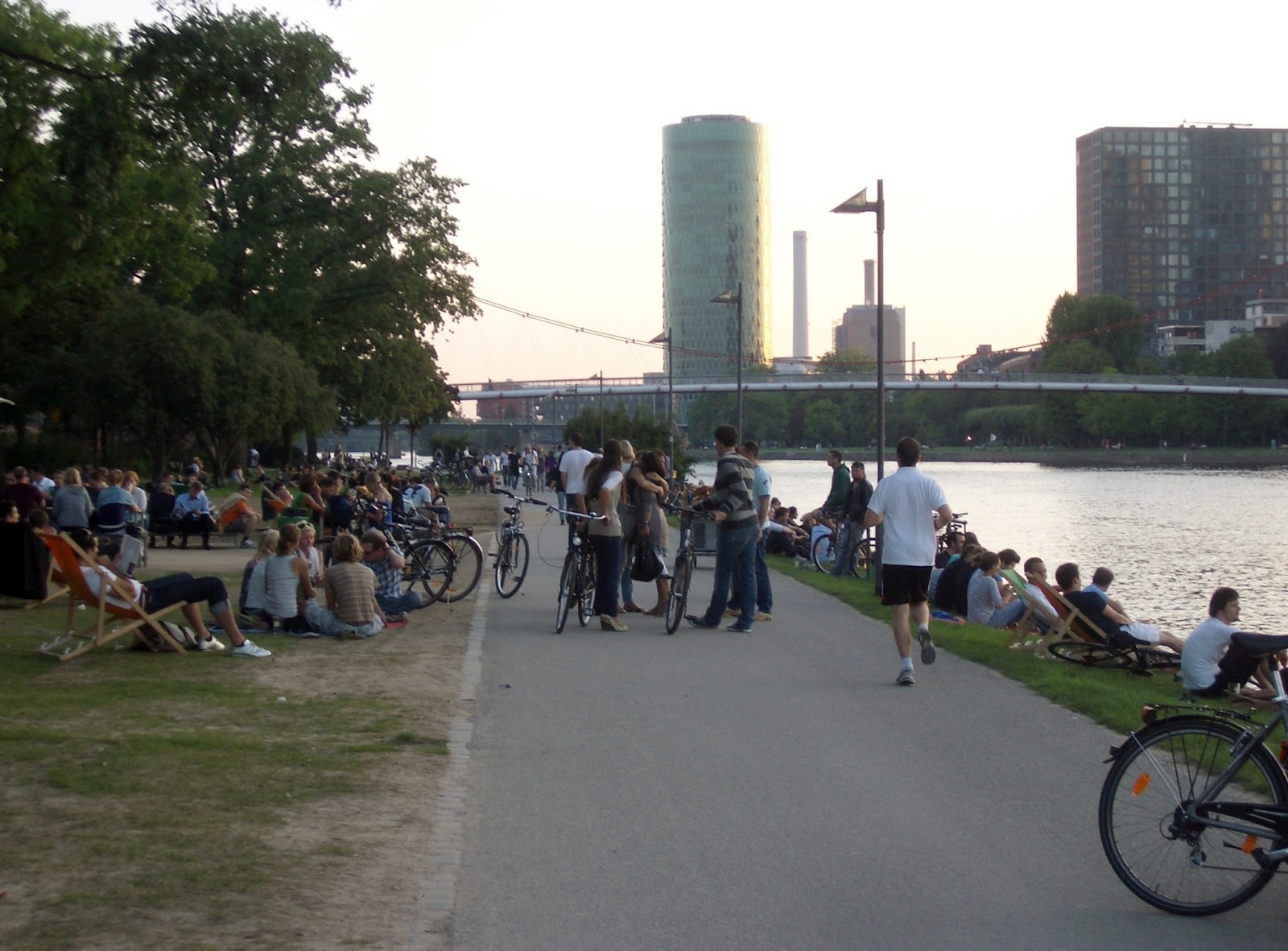
We’re experiencing similar events here in the United States with heavy rain and high winds. Sadly, I feel the world is experiencing a deteriorating climate which is about to cause an inland shift of major populations. At times like this, I feel fortunate to live in this sheltered valley in West Virginia. Although I’m only 630 ft above sea level, I feel safe because of a series of locks and dams on this coal mining transportation route.
I worked a couple of stations yesterday in Poland and Denmark. I’ve worked the Polish station before. (SP9KR), and I’ve also worked Denmark previously, but this station was a new one. It was nice to see this card in my mail box before I could list him in my log book.
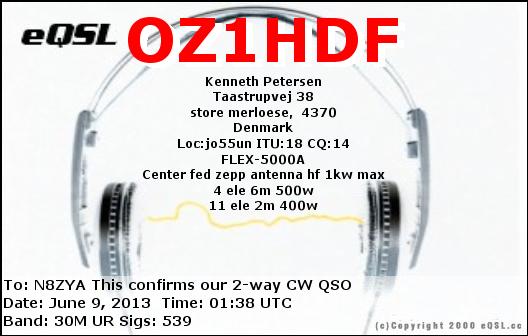
I still get “paper cards” in the mail without a SASE. On all the data bases on the web, I’ve made it crystal clear that I only respond with the electronic E-QSL format. I enjoy the memories of a nice QSO but find it “silly” to send a card to everyone I talk to on the air. However; “if you absolutely got’a have a paper card”, join the E-QSL group. It’s free…..and you can have a “paper card” printed and mailed to you for a fraction of the normal postage rates. (hint)
John Smithson, Jr., N8ZYA, is a regular contributor to AmateurRadio.com and writes from West Virginia, USA. Contact him at [email protected].
 Ham Radio Deluxe |
 W5SWL Electronics |
 Ham Radio Prep |
 KB3IFH QSL Cards  Hip Ham Shirts  HamRadioAuctions HamRadioAuctions Reliance Antennas Reliance Antennas Enigma Shop Enigma Shop |  morseDX  Ni4L Antennas  R&L Electronics R&L Electronics antennas.us antennas.us QRV QRV |
- Matt W1MST, Managing Editor
