 |
 Antenna expansion
 14 June 2013 | by
 I know when summer is here when I have to keep on tweaking the tuning of my MFJ magnetic loop antenna throughout the day. Having an antenna farm in the attic (or loft as it is more commonly called over here) protects the antennas from the depredations of the elements but it does subject them to extremes of temperature during the summer months. As the loft warms up during the morning the metal of the magnetic loop expands. Because the magnetic loop is a very sharply tuned antenna this has an effect on the SWR. I don’t know what the temperature in the loft reaches on a sunny day but I wouldn’t want to go up there.
I’m not talking about a small change. I may tune the antenna to achieve a 1.2:1 SWR first thing in the morning and by lunchtime it can have increased to 2:1 or more. This wouldn’t be so noticeable if I was moving around the bands retuning as I go. But I use the magnetic loop for my 30m APRS station which stays on 10.1473MHz all day and every day. (It does a jolly good job there, by the way.) If I don’t pop into the shack now and again and give the antenna a quick tune I could be subjecting the transceiver to a higher SWR than is good for it.
The magnetic loop is the only antenna I have that will cover 30m, so I don’t have any alternative for my APRS system. This need for retuning affects all the bands I can use the loop on, not just 30m.
I suppose my multiband dipole also expands and contracts with temperature, but because the tuning is broader the effect on the SWR is less noticeable. Outdoor antennas have their tuning affected by rain or ice, of course, so I’m not alone in having to put up with weather effects on my antennas.
Julian Moss, G4ILO, is a regular contributor to AmateurRadio.com and writes from Cumbria, England. Contact him at [email protected].
Field Day Generic Public Service Announcement
Generic Ham Radio Field Day PSA
Talent: Jim Davis W2JKD
Running Time: 26 Seconds
144 Days of DX
I worked CO8LY in Cuba this evening for my 144th day of daily DX contacts. Cuba is such a short distance from here (1,325 miles) ; it’s become embarrassingly easy to work this country. Tonight marks the 24th time I’ve worked Cuba and the 10th I’ve worked this particular station. I’ve been dropping my power down to one watt occasionally just for the fun of it…..
I’ve become somewhat lax on my blog entries lately, but here are the basic facts for the last several days:
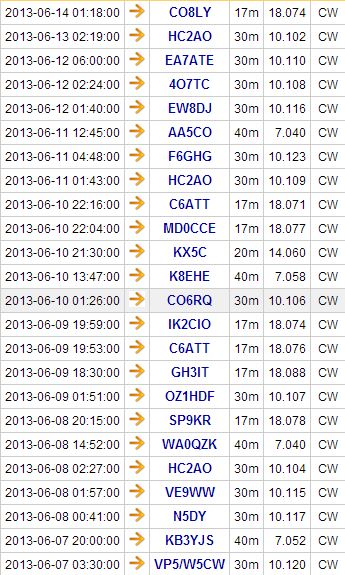
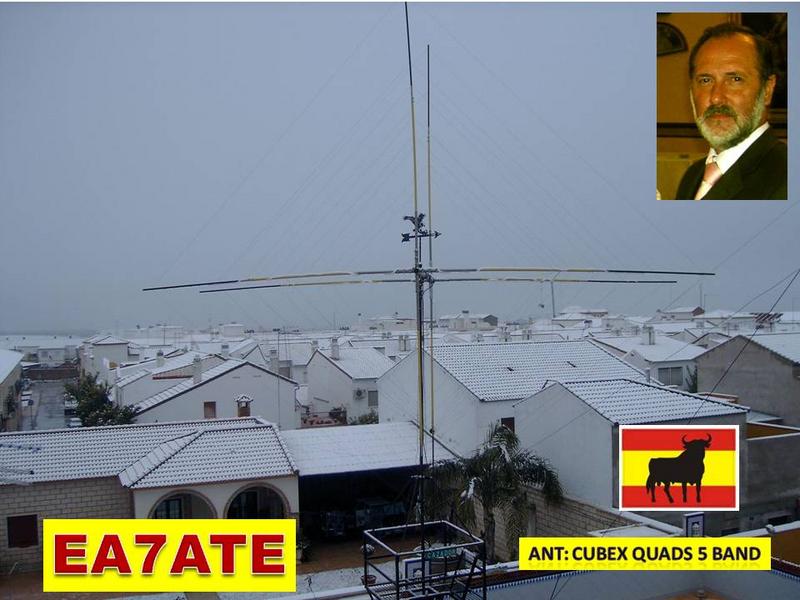
There’s several short distance contacts here. The Caribbean area is a gold mine for me. I’ve worked Bermuda several times, and also Ecuador. A surprising and difficult contact was EA7ATE in Spain. I got a nice e-mail from him and expect a card soon.
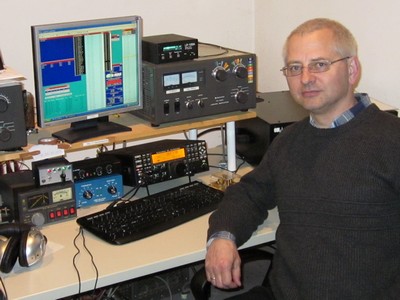

John Smithson, Jr., N8ZYA, is a regular contributor to AmateurRadio.com and writes from West Virginia, USA. Contact him at [email protected].
Minimalist Radio: A Lesson in Efficiency
Recently I took a trip to Santa Fe, NM. I had never been to Santa Fe and had heard what a great place it was so my wife and I wanted to experience the city for ourselves. Also there are some nice SOTA summits in the area that I wanted to tackle having become a SOTA addict. In my brief planning for the trip I contacted Fred, KT5X, who lives there to ask his advice on what summits might be doable for a relatively fit flatlander. Fred offered not only his advice but also his willingness to serve as a guide on the first summit. Eventually he recruited John, K1JD, a recently transplanted Santa Fe resident to come along. It was this trip that I learned what minimalism is all about.
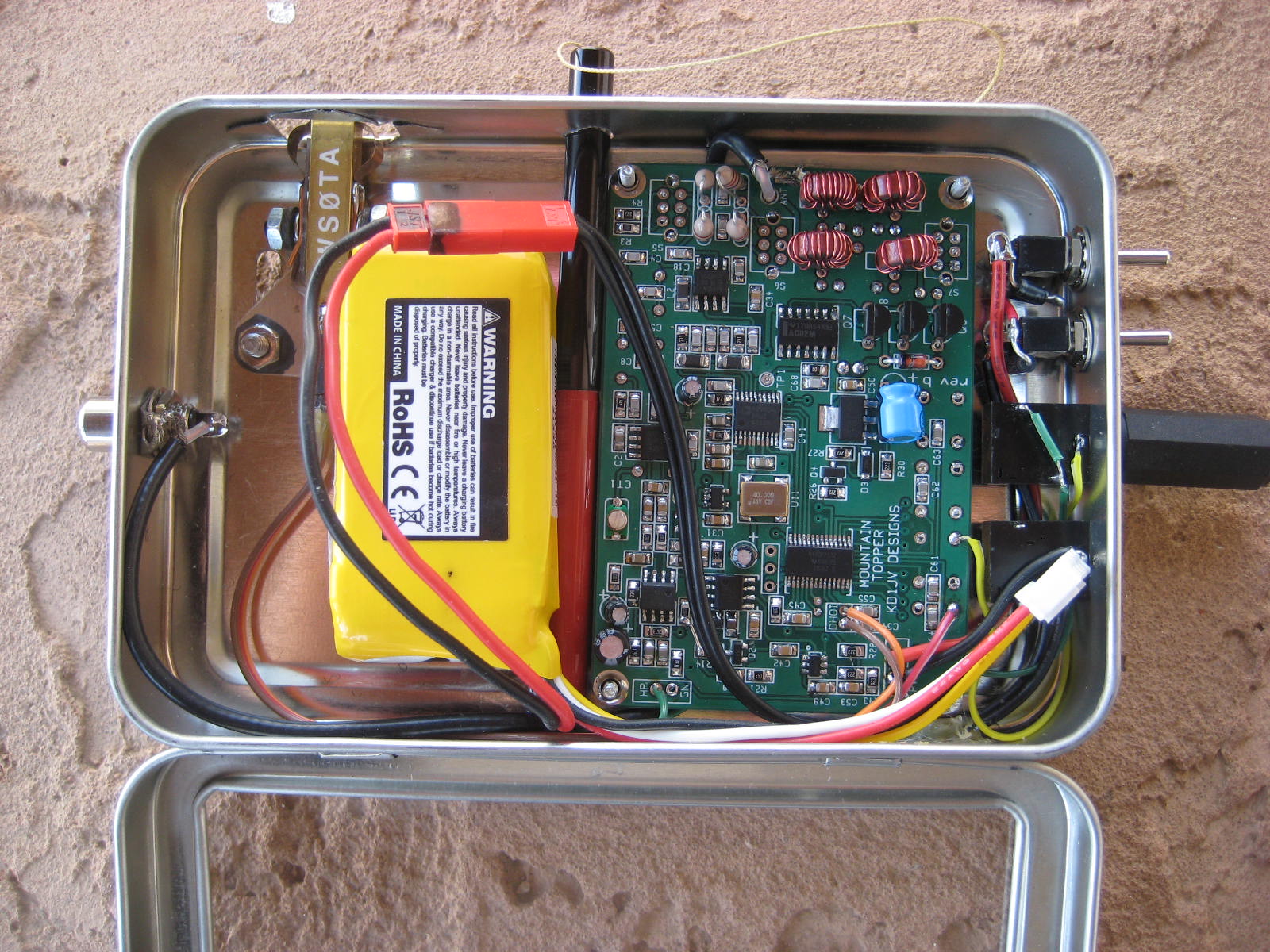
I had a normal size day pack filled to brim with redundant equipment, two radios (ATS-4B, MTR), two antennas (vertical, EFHW), you get the picture, redundant but not a huge load. I will defend some of the redundancy in that I have limited time and don't want to miss an opportunity to activate a summit because of some equipment failure. Fred shows up with basically a camal back water pack that has a front pocket on it. A small carbon fiber pole that collapses down to 21" and extends to 21 feet, a resonant antenna and a home brew enclosure for his MTR that contains a key, power supply, logging pen and serves as an operating desk to log QSO's with. Fred's total set up is around 1.5 lbs. The MTR Board is designed fit in an Altoids tin to give a perspective on the size of the enclosure.
Mike Crownover, AD5A, is a regular contributor to AmateurRadio.com and writes from Texas, USA. Contact him at [email protected].
It was one of those CQs you don’t expect to be answered… (and trouble in the FT8900 PA)
If you’re a VHF/UHF enthusiast, you’ll know what I mean when I say that there are CQs you make, which you don’t expect to be answered.
And so it was last night, around 2030 local time as I was driving back from the gym to home. I knew that 50MHz had been lively earlier on the evening as I heard a CT station on FM as I drove up from the station. As I drove out of the gym, I could hear a local QSO (local to Italy, that is, with no callsigns) fading up and down on 50.500.
I wondered if the band was still open – so as I drove out along the main road, I tried a CQ call on 51.510 – completely expecting silence to be the only reply. But there was a signal – which completely caught me by surprise with its’ strength – but I didn’t have the volume set right. I thought it was a local and asked for a repeat. It was EA2DVT!
Although Alejandro was obviously having some problems copying me, we were able to have a nice QSO as I drove home. A real surprise and pleasure!
The FT8900 seems to have a bit of an intermittent fault though. A few times recently, I have had reports of interference on the audio. Baz, G8DOR thought it was something to do with the PA. The issue seems to be temperature related and only seems to happen for a short time. The suggestion seems to be that there might be a dry joint somewhere in the PA. It will be interesting to see if it occurs on both sides of the radio (the FT8900 having two distinct radios in it) – at the moment, I’ve been using the right hand side. I’ll switch it over to the left and see if that changes things.
Tim Kirby, G4VXE, is a regular contributor to AmateurRadio.com and writes from Oxfordshire, England. Contact him at [email protected].
Amateur Radio Newsline Report 1870 June 14 2013
- The IARU sets its sights on WRC 2015
- A busy agenda for GAREC 2013 in Zurich
- Over the horizon radar invades the upper HF bands
- Petition to extend 10 meter Tech voice ops filed
- Some strange communications from the insect world
Interesting
Tomorrow should be interesting. I don’t know if it’s just TV weatherman hype, out what, but I overheard the forecast for tomorrow, and I heard the possibility of three inches (7.5 cm) of rainfall.
So I stopped at Home Depot and picked up an old fashioned cylindrical type rain gauge. I installed it on the back deck, where it will be out in the open and not shielded in any way. It will be fun to see how much rain we actually get.
72 de Larry W2LJ
QRP – When you care to send the very least!
Larry Makoski, W2LJ, is a regular contributor to AmateurRadio.com and writes from New Jersey, USA. Contact him at [email protected].
 Ham Radio Deluxe |
 W5SWL Electronics |
 Ham Radio Prep |
 KB3IFH QSL Cards  Hip Ham Shirts  HamRadioAuctions HamRadioAuctions Reliance Antennas Reliance Antennas Enigma Shop Enigma Shop |  morseDX  Ni4L Antennas  R&L Electronics R&L Electronics antennas.us antennas.us QRV QRV |
- Matt W1MST, Managing Editor
