 |
 My first 50-MHz QSOs with Japan from new Colorado QTH
 15 June 2013 | by
 I made contact with 19 Japanese stations yesterday afternoon (June 14, 2013) on the 50-MHz (6 meter) band between 2314 and 2356 UTC. This was my first “JA opening” on 50-MHz in a LONG time; my last Japanese QSOs on 50-MHz were back in the ’90s when we lived in Tiffany, Colorado (grid square DM67), a bit south of our new home in Glade Park, Colorado (grid square DM59pa). During the years we lived in Vermont the furthest west I ever reached on 50-MHz was Guam, a bit short of Japan.
If I’m anywhere near my radio (and sometimes when I’m not – thank you, smartphone) I point a Web browser at the “ON4KST 50 MHz IARU Region 2″ chat page to read late breaking 50-MHz DX related news, spots, rumors and general chatter especially during during times of the year when 50 MHz propagation is known to be possible:
- Around the spring and autumn equinoxes for Trans-Equatorial Propagation (TEP)
- May through the first half of August for the northern hemisphere summer Sporadic-E (Es) season
- A few weeks either side of New Year’s Day for the northern hemisphere winter Es season sometimes with propagation links to the southern hemisphere
- And – if we had more sunspots than Cycle 24 has seen fit thus far to bequeath – the northern hemisphere autumn and winter for F2 propagation
(Of course 50-MHz can open at any time of day and year and much of what happens on “The Magic Band” is poorly understood. But the periods above are the ‘prime time for six.’)
It all began yesterday afternoon at 2200 UTC (which was 4 pm Colorado time) when Han JE1BMJ, a noted 50-MHz enthusiast and propagation theorist, was reported on 50,090.5 kHz by Jay K0GU on the ‘KST chat which grabbed my attention. Jay lives in Wellington, Colorado (grid square DN70mq) about 230 miles east of me and is a dedicated, experienced 50-MHz DXer. Jay hears a lot of stations before any one else in the Rocky Mountain region and his ‘KST posts are always worth noting. I turned my new 50-MHz antenna (thanks to K7JA for assistance in building and installing this last month and of course G0KSC for the design) towards Japan – 312 degrees azimuth – and started listening. At 2226 UTC I started hearing Han’s CW (Morse Code) signal slowly fade and out.

Green Heron RT-20D controlling a Spid RAK rotator
When I first attempted to make contact with Han but he was unable to hear my complete callsign and was responding to me as “AA7X” (leaving off the final T, I am AA7XT). I eventually stopped calling JE1BMJ – I didn’t want to ‘hog the DX’ as Han and other Japanese stations were being heard over much of the US. For a two-way contact to be considered legitimate in ham radio circles each party must copy correctly the other parties callsign and preferably some other information such as a signal report.

DXMaps.com caught the action!
At 2314 I noticed Han’s signal had gotten louder so I called him again and made a solid contact straight away. Success! I was amazed my ‘barefoot’ (no amplifier, only 80 Watts output) Elecraft K3 transceiver and InnovAntennas 8 element LFA Yagi (an awesome antenna but it was on a tower parked at only 3 meters [10 feet ]above ground due to recent high winds) were making the 9,000 kilometer journey! At ten feet up towards Japan my antenna was looking into a hillside! I listened to Han work other stations for a few few minutes and savored the moment.

InnovAntennas 8 element 50-MHz LFA Yagi
Here’s a short YouTube video I made of JE1BMJ’s signal yesterday:
I would have likely made many more contacts if had started calling CQ earlier! For a long time I was only hearing JE1BMJ so I didn’t bother calling CQ until around a full hour after opening started. I had an ‘instant pileup’ after first my CQ call; clearly I should have started CQing much earlier – Doh! I proceeded to work 18 more Japanese stations before the path closed:
| UTC | kHz | MODE | CALL | KM | GRID | RST_RCVD | RST_SENT |
| 2356 | 50,093.0 | CW | JA0DET | 9079.748 | PM97jk | 559 | 559 |
| 2355 | 50,093.0 | CW | JA7LGE | 9355.597 | PM85io | 559 | 529 |
| 2350 | 50,093.0 | CW | JA0MVW | 9011.677 | PM97ox | 559 | 559 |
| 2349 | 50,093.0 | CW | JA7DDK | 8920.079 | QM08dg | 599 | 549 |
| 2348 | 50,093.0 | CW | JH1RFR | 9063.668 | PM96wr | 559 | 559 |
| 2346 | 50,093.0 | CW | JN1JFC | 9355.597 | PM85io | 559 | 549 |
| 2345 | 50,093.0 | CW | JQ1TIV | 9355.597 | PM85io | 559 | 559 |
| 2344 | 50,093.0 | CW | JA1UAV | 9133.899 | PM96ta | 559 | 559 |
| 2343 | 50,093.0 | CW | JR2UKF | 9351.394 | PM85km | 559 | 559 |
| 2342 | 50,093.0 | CW | JF2WXS | 9355.597 | PM85io | 559 | 559 |
| 2341 | 50,093.0 | CW | JA7KE | 8843.041 | QM08pk | 559 | 569 |
| 2340 | 50,093.0 | CW | JH1MDJ | 9355.597 | PM85io | 579 | 559 |
| 2339 | 50,093.0 | CW | JA0RUG | 9066.984 | PM97jo | 599 | 599 |
| 2338 | 50,093.0 | CW | JH7FNM | 8856.099 | QM08ml | 579 | 569 |
| 2337 | 50,093.0 | CW | JA7EVP | 9355.597 | PM85io | 599 | 529 |
| 2334 | 50,093.0 | CW | JI1DMH | 9150.703 | PM96nf | 559 | 549 |
| 2331 | 50,093.0 | CW | JH0INP | 9155.598 | PM96cw | 559 | 559 |
| 2329 | 50,093.0 | CW | JA9SJI | 9236.878 | PM86pp | 559 | 559 |
| 2314 | 50,094.5 | CW | JE1BMJ | 9355.597 | PM85io | 559 | 559 |
Toshi ,JA0RUG, who I worked during this opening, sent me a MP3 recording of my signal as heard in Japan (click on link to listen to the audio):
2013June14-2340z-AA7XT-50.093MHz-CW
Here are the grids I worked during yesterday’s opening:

The WG7J Gridmapper is a great post opening analysis tool
The first hop was certainly Es as I was hearing loud stations in Oregon, Washington and British Columbia at reasonable Es single distance, but how about the rest of the way? Han, JE1BMJ, the first station I worked in this opening, has developed a theory on these openings – which cluster around the summer solstice – and he has dubbed the mechanism “Short-path Summer Solstice Propagation” aka SSSP. Articles on SSSP by JE1BMJ, W3ZZ, WB2AMU and KH6/K6MIO have been published in Dubus, CQ VHF, Six News and elsewhere. Here are a few links:
- http://www.cq-vhf.com/vhf_highlights/2008_vhf/2008_fall_vhf/Fall08SSP.html
- http://k0ha.com/6m/ExtremeMultihopEsPubv2.pdf
- http://www.uksmg.org/content/g5kw/Short%20Path%20Summer%20Solstice%20Propagation%20bt%20JE1BMJ.pdf
So far, SSSP, if it in fact exists (such mysteries make 50-MHz DXing a fascinating avocation!) seems to be unique to the 50-MHz band. I look forward to learning more about SSSP as more and more DXers become aware of the mode and watch for it. Ham Radio is the exception to the ‘watched pot never boils’ rule of thumb. In DXing, an unwatched band never opens! One interesting note is that propagation like SSSP frequently repeats itself the next day so you can be sure I will be at my radio this afternoon!
73 and CU on the Magic Band!
Bill AA7XT
PS: Some interesting recordings of 50-MHz DX signals heard in Japan by JE1BMJ can be found here (including yours truly):
Bill Hein, AA7XT, is a regular contributor to AmateurRadio.com and writes from Colorado, USA. He is co-owner of Force 12 and InnovAntennas. Contact him at [email protected].
Self-publishing, amateur radio and what it means for RSGB, ARRL etc
Over on Twitter, this week, my pal Rachael Lucas, who has recently self-published an amazing successful first novel, drew my attention to some ‘interesting comments’ from the established publishing industry about self-publishing. Let’s just say, the comments weren’t encouraging. They reminded me of music company executives who hadn’t worked out how downloads would revolutionise their industry.
I’d casually wondered about self-publishing before, but I decided to look into what you needed to do to publish your own book. It turns out remarkably simple to get your eBook content onto Amazon. Clearly, you need to write something compelling and to be able to market it. Social Media is your friend, after all.
What does this mean for amateur radio publications? Well, if you’ve an idea and you want to put an eBook together, it’s simple! What does it mean for established publishers such as RSGB and ARRL? Time will tell, but I’d guess they will get squeezed as we see a shift towards self-publishing. That should mean that the breadth of titles available increases – up until now, ARRL/RSGB would presumably only commission titles that were reasonably mainstream. With subject matter experts able to self-publish, it would be good to feel that a wider and more esoteric range is available ( though sales may not be that high!).
For ARRL/RSGB who have traditionally made some money out of publishing, this represents an opportunity (or a threat, depending on your standpoint).
And yes, I have some ideas – I just have to find time to apply brain to keyboard.
Tim Kirby, G4VXE, is a regular contributor to AmateurRadio.com and writes from Oxfordshire, England. Contact him at [email protected].
New DX Country # 86
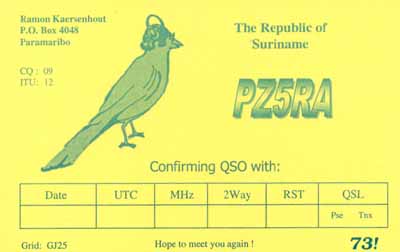
I was able to work this new DX country (PZ5RA) on the Northern tip of South America this evening. Suriname is a mere 2,791 miles but was a difficult catch for me. He was listening “up two” and it took me several attempts to work him. Fortunately my friend Eric (AC8LJ) who also lives here in Charleston, worked him just a few moments before me. It gave me a good estimate of where he was listening.
This station in Suriname, makes my 86th DX contact.
John Smithson, Jr., N8ZYA, is a regular contributor to AmateurRadio.com and writes from West Virginia, USA. Contact him at [email protected].
Listening for the SO-50 satellite with the UV-5R and the Nagoya NA-771 antenna
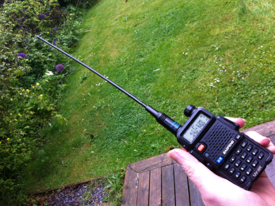
Inspired by David, KK4MND’s video the other day, I thought it would be fun to see if I could at least listen to the SO-50 satellite with the UV-5R. I realised that I would most likely need a better antenna than the stock antenna which comes with the UV-5R.
Via eBay, I ordered a Nagoya NA-771 dual bander which seems to have quite a good reputation. Having read about ‘counterfeit’ antennas, I wondered what I would get, but at around £8 including shipping from Hong Kong, it would not be the end of the world if it was useless.
The antenna arrived yesterday. Some quick comparisons, inside, on local repeaters were encouraging and signals were better on several UHF repeaters that I listened to with both antennas.
This morning, SO-50 obliged with a nice overhead pass as I was out in the garden, digging out a new vegetable bed. To my delight, signals were quite audible. Rob, M0TFO had a particularly good signal and I also heard an EA7. I’m pretty sure that on a quieter pass, I should be able to make a QSO with the UV-5R.
Of course the Elk antenna is much better – but the simplicity of the UV-5R and the NA-771 is appealing.
Tim Kirby, G4VXE, is a regular contributor to AmateurRadio.com and writes from Oxfordshire, England. Contact him at [email protected].
Project Loon
Google has announced Project Loon, an experiment to use balloons aloft at about 60,000 feet / 20 km to provide broadband wireless Internet service to the hinterlands. The Loon moniker is somewhat of an admission that the project is a bit crazy and a play on the word balloon, but it does have a sound technological foundation. The technology is much cheaper than satellites and naturally easier to launch.

The experiment is beginning this month with the launch of a handful of balloons from New Zealand which will orbit about the 40th parallel and navigate around New Zealand using varying direction and magnitude air currents at various levels. Beta testers have been selected in New Zealand to try out the system.
The idea of using aircraft to provide wireless services isn’t new, and radio amateurs have been launching experimental balloons with radios for quite awhile although recently there has been an upshot in interest. Google is known for using open source software and contributing open source technology back to the community. I’m curious if Google will open source the hardware, perhaps enabling amateur radio to benefit with its own balloon network similar to this someday. Current typical amateur radio balloon missions last only a few days. Having several balloons aloft could perhaps be an alternative to satellites which are becoming increasingly expensive and difficult to launch.
The Project Loon site has a nice video detailing the project here.

Anthony, K3NG, is a regular contributor to AmateurRadio.com.
Setting up for some morning radio time
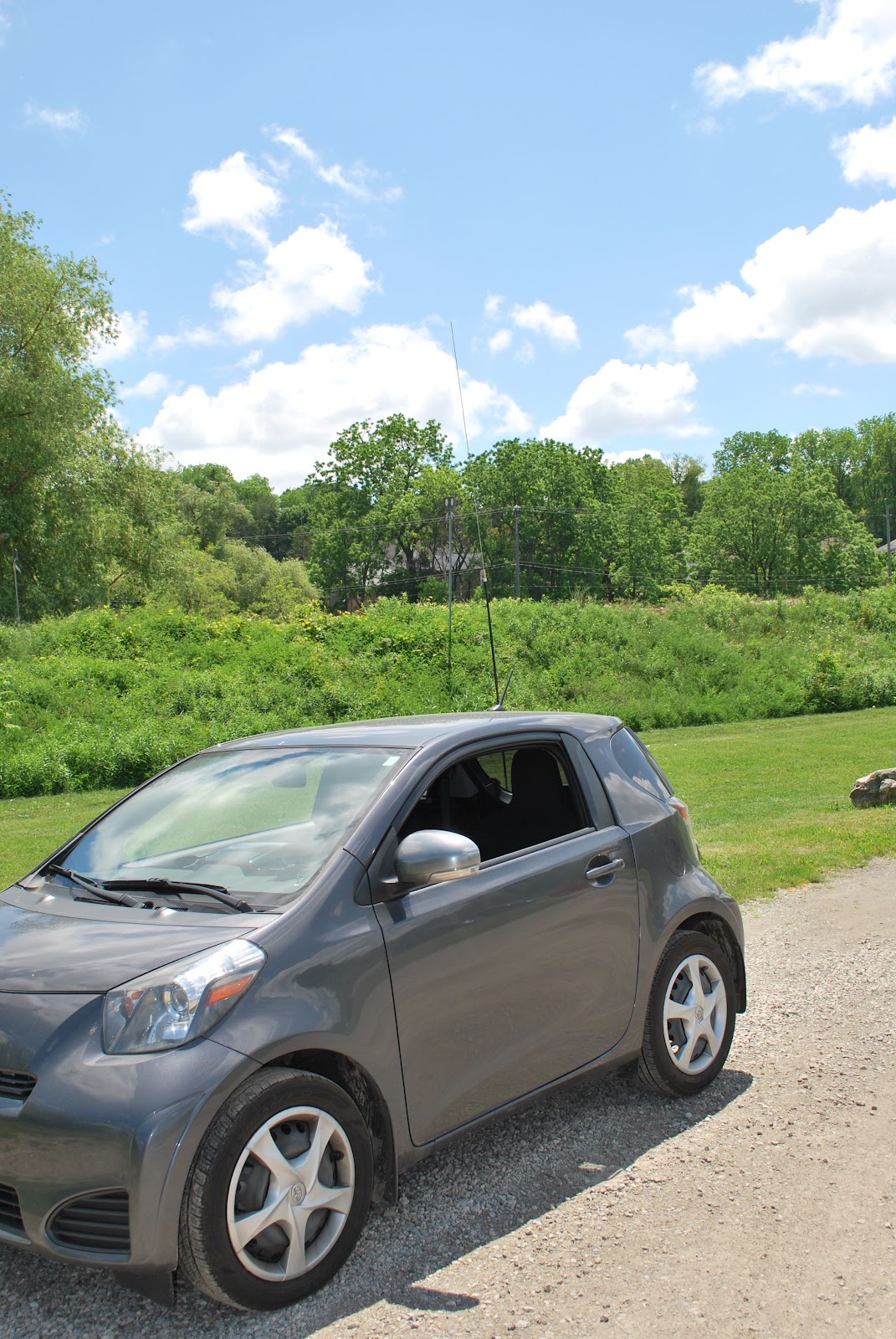 |
| The car with the mono band 30m whip |
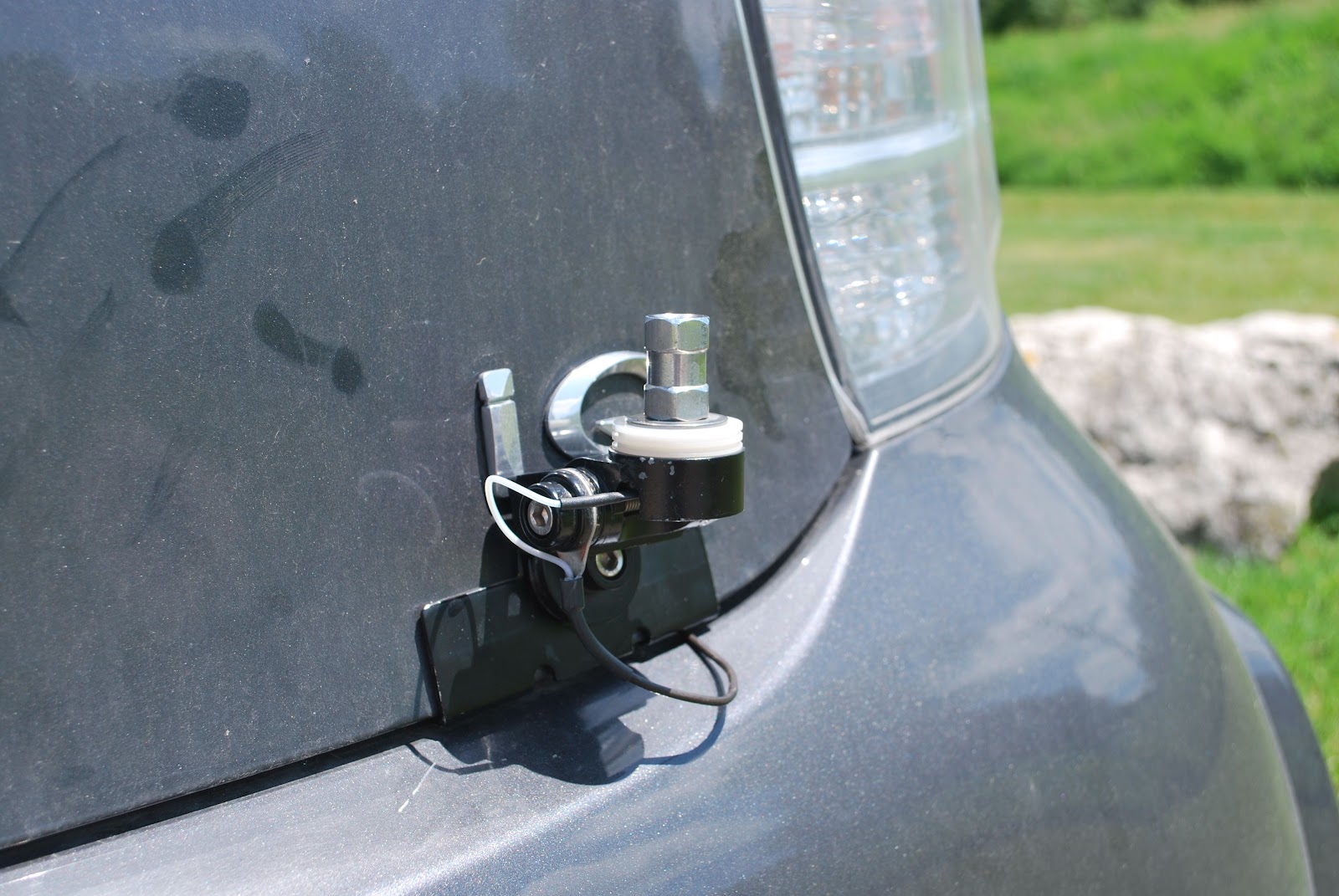 |
| The mount |
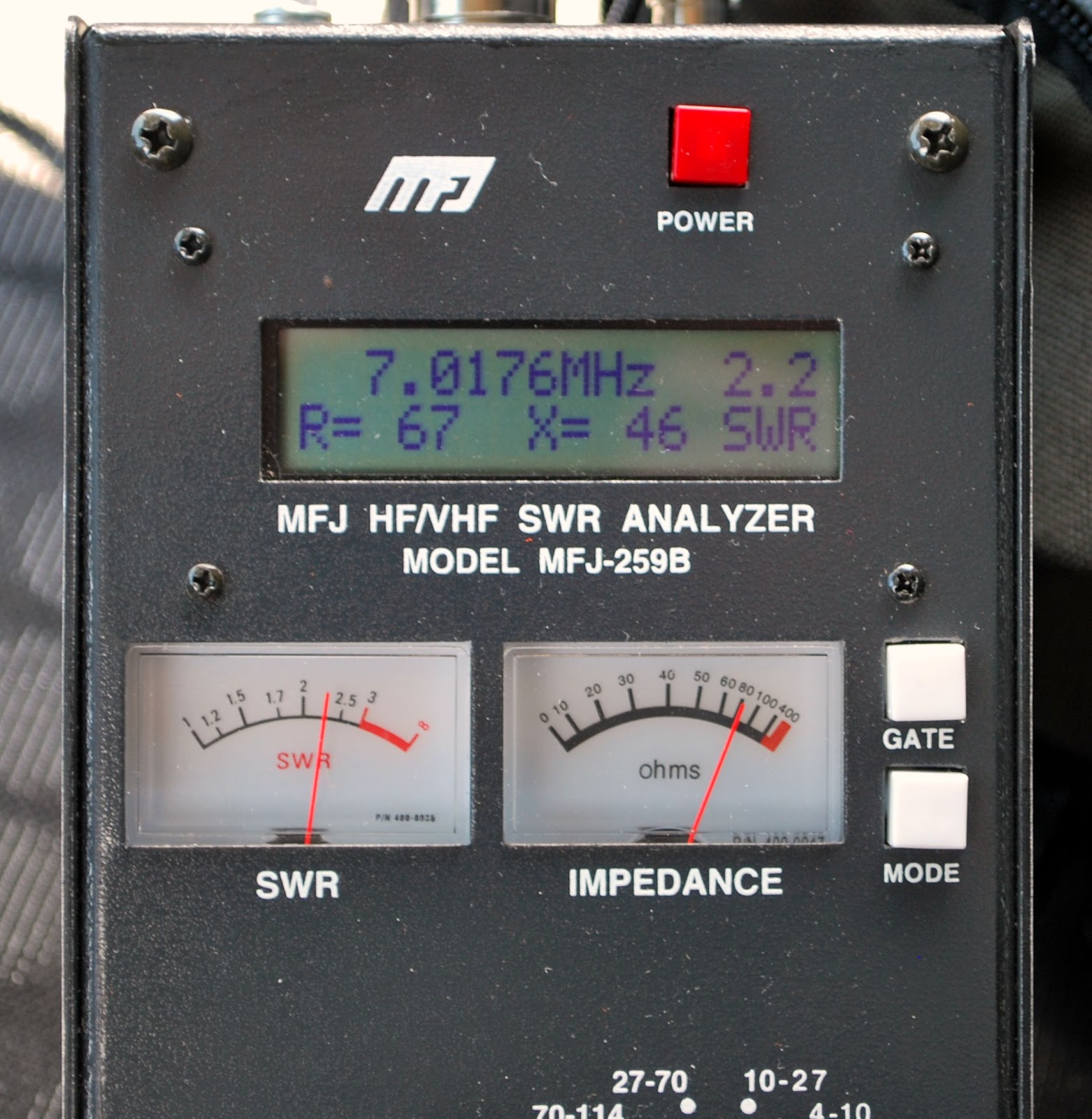 |
| Final SWR on 40m |
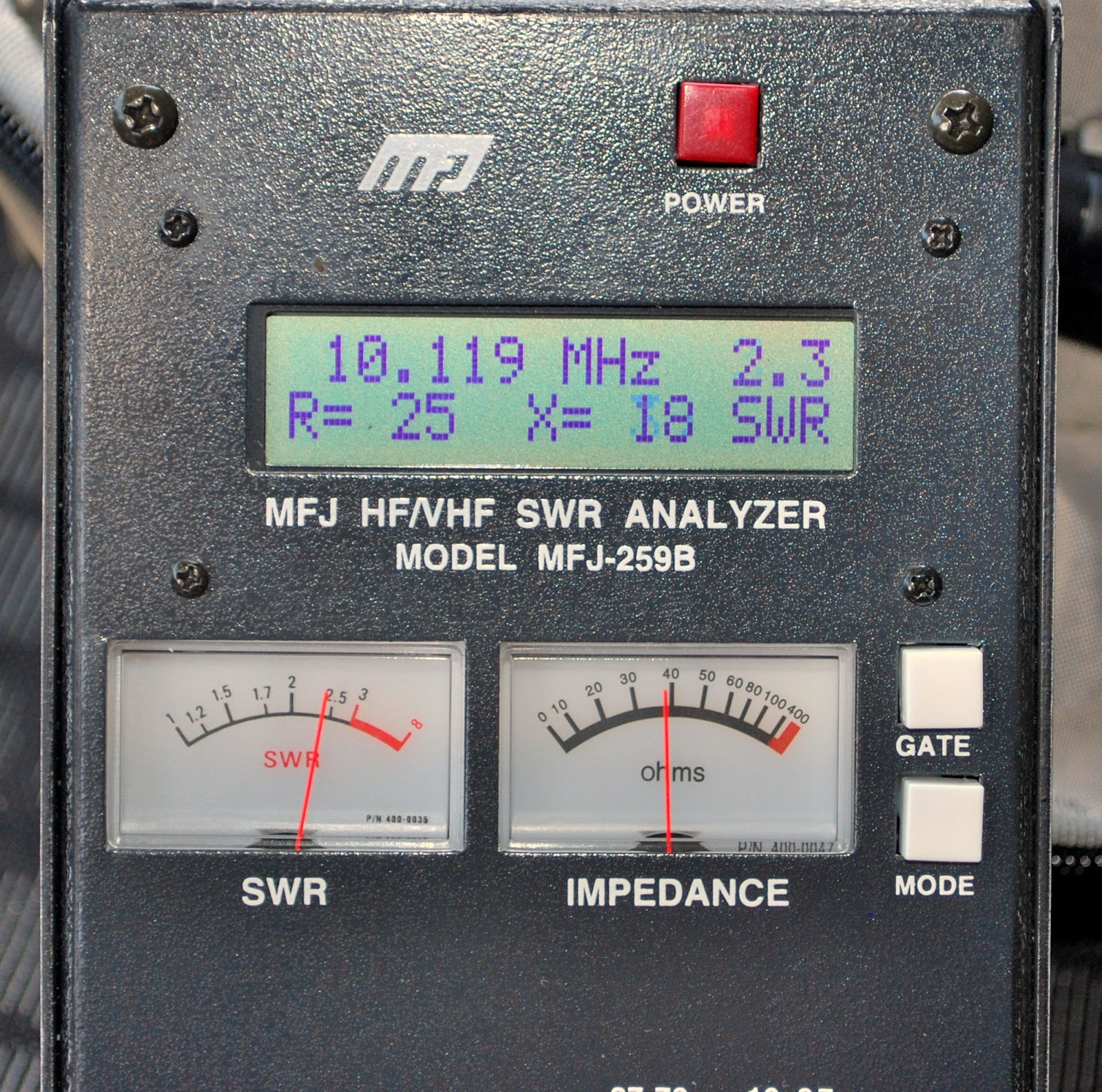 |
| Final SWR on 30m |
Mike Weir, VE9KK, is a regular contributor to AmateurRadio.com and writes from New Brunswick, Canada. Contact him at [email protected].
Skeeters and Bees, oh my!
I have been getting a lot of e-mails about the Flight of the Bumblebees, which is understandable, as I managed it two years ago. However, just a reminder, I am NOT managing it this year. FOBB belongs to the Adventure Radio Society and falls under the province of Rich Fisher KI6SN.

Rich is a VERY busy man! He edits and is largely responsible for a lot of the content of WorldRadio and CQ VHF. So in between running around with his hair on fire trying to meet the deadlines for two very popular publications, he also manages FOBB and the monthly Spartan Sprints. That is a lot to have on your plate!
I would ask for you all to be as patient as possible. The new edition of QST came out, and sure enough, FOBB is listed in “The Contest Corral” as occurring on July 28th, the last one of July. I am sure that within the next few weeks (if not sooner), Rich will be making an announcement about FOBB on QRP-L. My advice to you all is keep your eyes peeled and your stingers sharp.
Speaking of Summer time outdoor QRP operating events – please make sure to keep two others in mind! The first being “SYBO – Scorch Your Butt Off”, which is being sponsored by Rem K6BBQ. This is scheduled for Saturday, July 20th. This is a semi-inaugural event as SYBO is Rem’s current edition of the Bubba event, which went by the wayside. For all the details, please visit Rem’s SYBO Website by clicking on the contest name in this paragraph.
The second event, of course, is the NJQRP Skeeter Hunt. The Skeeter Hunt will be held on the second Sunday of August – which is the 11th, this year. You can sign up for a Skeeter number by sending me an e-mail at [email protected]. When you request a Skeeter number, please include your name, call and the state from which you plan to operate. This years theme is “Bodies of Water” and you can earn bonus points by operating close to a body of water, whether that be a lake, pond, river, brook, ocean, etc. Rules can be found at the hyperlink above.
Now, the reason that I am bringing up the Skeeter Hunt is that I received an e-mail from someone who informed me in that correspondence that it was his third request for a Skeeter number! I checked my spam folder and I never found the two initial Skeeter number requests, and that has me a bit concerned. If you have requested a Skeeter number and haven’t gotten one – it’s not because I have put you on “ignore”. It’s because I haven’t received your request. I try my best to respond to all requests as quickly as possible – certainly within 24 hours.
So as a backup – here are three ways to request a number, in order of preference on my part. If number 1 doesn’t work, try number 2, and then finally number 3. I’ll get you a Skeeter number if I have to come out to your house and deliver it personally!
Number 1 – send an e-mail to [email protected]
Number 2 – send an e-mail to [email protected] (sometimes the ARRL reports funky things about that arrl.net domain thingy)
Number 3 – Leave a comment on any blog post. Since comments are on moderation to avoid spam, I have to manually review each one – so that should be a safe “last fallback”.

Last year, we had 123 people sign up for Skeeter numbers, and as of today, number 67 was assigned. I would like to top last year’s total if at all possible. Last year over 50 log summaries were sent in and I would like to exceed that, also. The top five scores and the high score for each state/province got a nifty certificate last year, and that will be repeated this year. And this year, SSB has been added as a category for those of you who prefer not to pound brass. So there’s truly something for everyone – no reason not to come out, join us and have a blast!
72 de Larry W2LJ
QRP – When you care to send the very least!
Larry Makoski, W2LJ, is a regular contributor to AmateurRadio.com and writes from New Jersey, USA. Contact him at [email protected].
 Ham Radio Deluxe |
 W5SWL Electronics |
 Ham Radio Prep |
 KB3IFH QSL Cards  Hip Ham Shirts  HamRadioAuctions HamRadioAuctions Reliance Antennas Reliance Antennas Enigma Shop Enigma Shop |  morseDX  Ni4L Antennas  R&L Electronics R&L Electronics antennas.us antennas.us QRV QRV |
- Matt W1MST, Managing Editor
