 |
 Father’s Day
 16 June 2013 | by
 I was able to get on the radio for a bit today. 15 Meters seemed to be alive jumping with “AA” contest stations. I didn’t have much interest in competing in the contest, but it’s always interesting to work Asian stations using QRP power. I managed to work several JA stations, cherry picking my way around, and trying the loudest ones. I also worked a few Asiatic Russian stations. Unfortunately, I did not hear or work anything more exotic.
I attempted to work Met TA3AX on 17 Meters, but this time QRP. Alas, Turkey was not to be had with 5 Watts – today. 😉
I finished the day by participating in the Run For The Bacon, the Flying Pigs monthly QRP sprint. Not a whole lot of activity, probably due to it being Father’s Day, but I did manage to work fellow blogger, Chris KQ2RP, and I also worked Jim W4QO and John K4BAI, twice. Earlier in the day we had another brief contact, so today was able to put John in the log three times today. I think that’s a record.
72 de Larry W2LJ
QRP – When you care to send the very least!
Larry Makoski, W2LJ, is a regular contributor to AmateurRadio.com and writes from New Jersey, USA. Contact him at [email protected].
A trip into the attic.
 |
| Alpha Delta DX-EE with balun. |
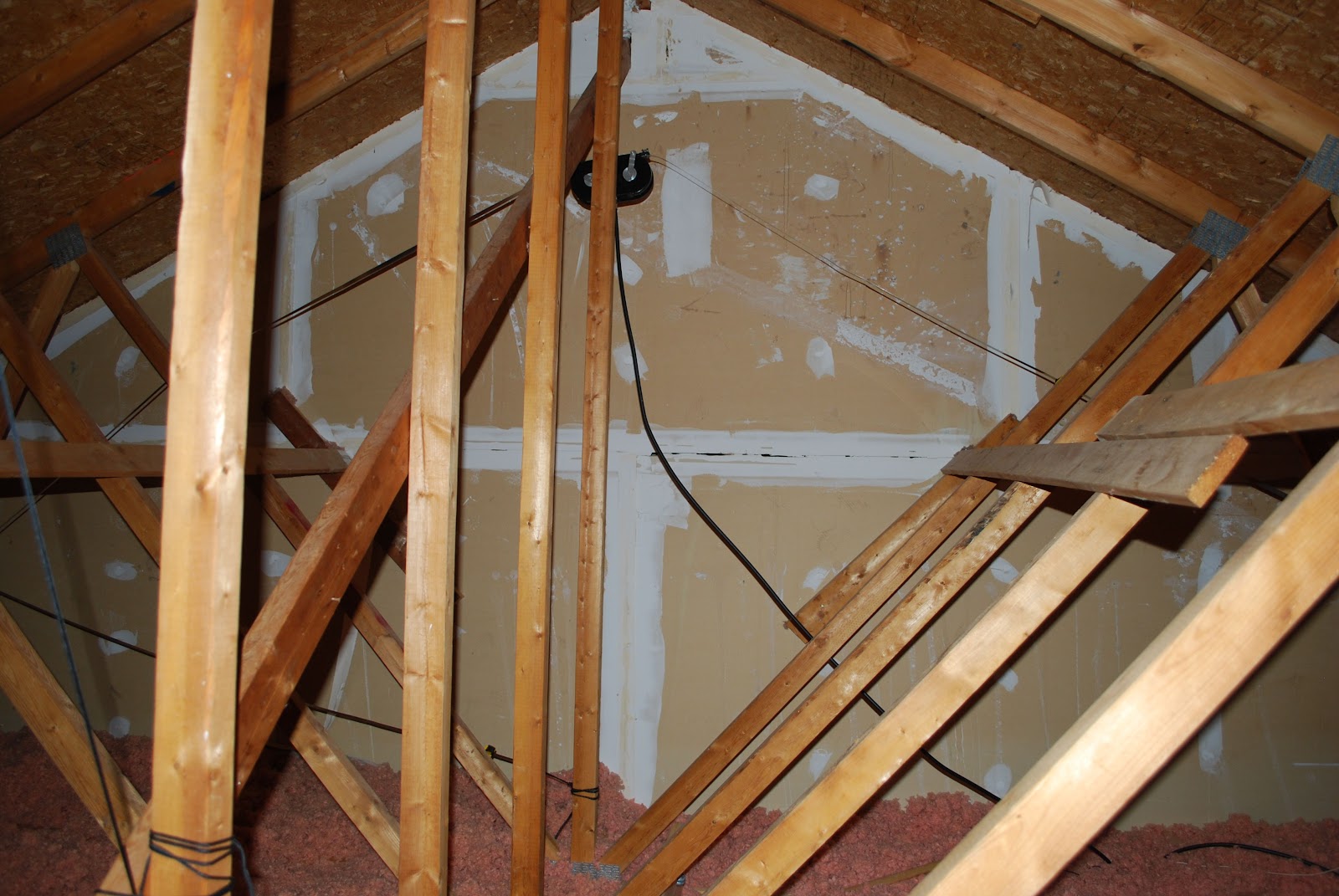 |
| Hy-gain noise antenna |
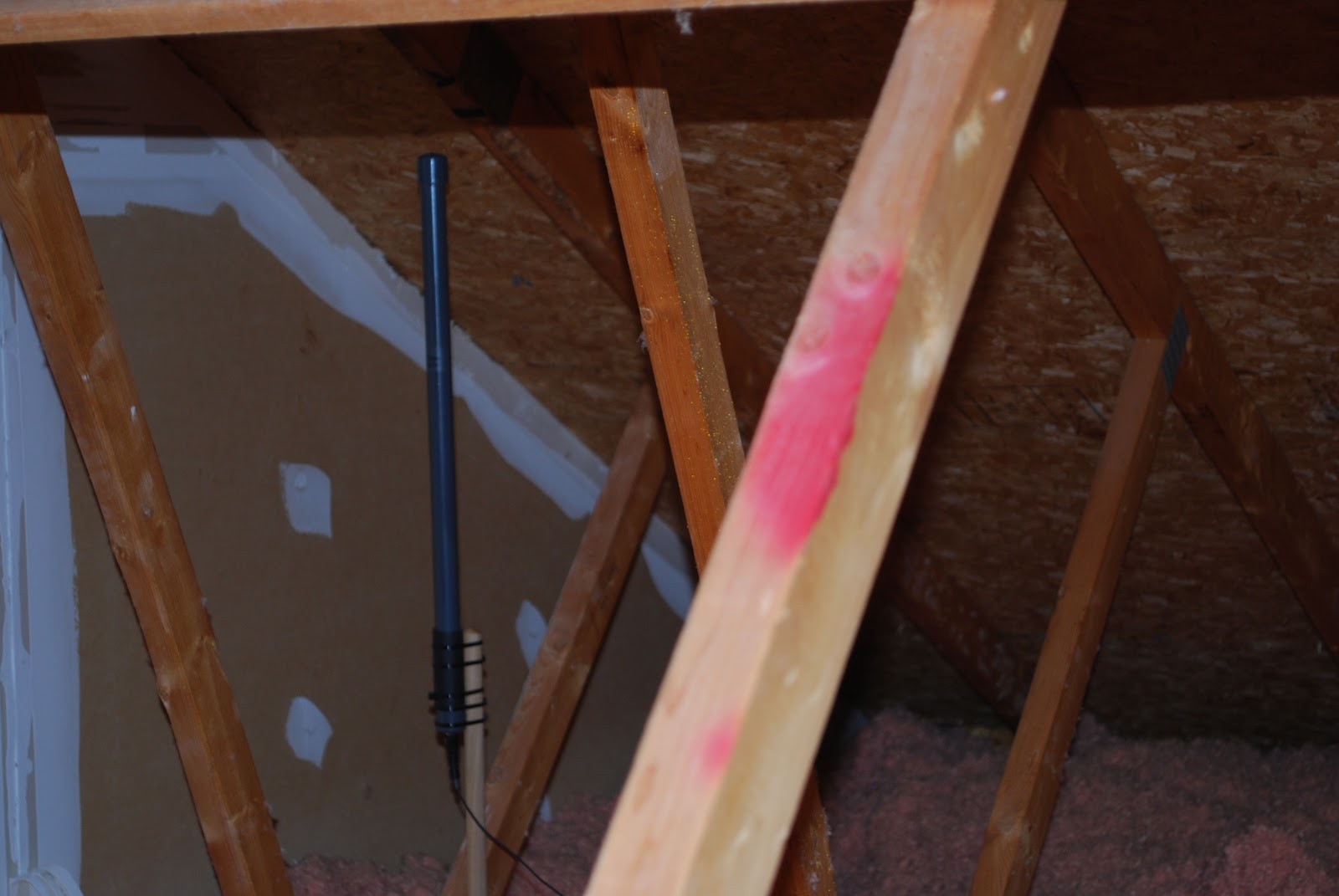 |
| H-900 active antenna |
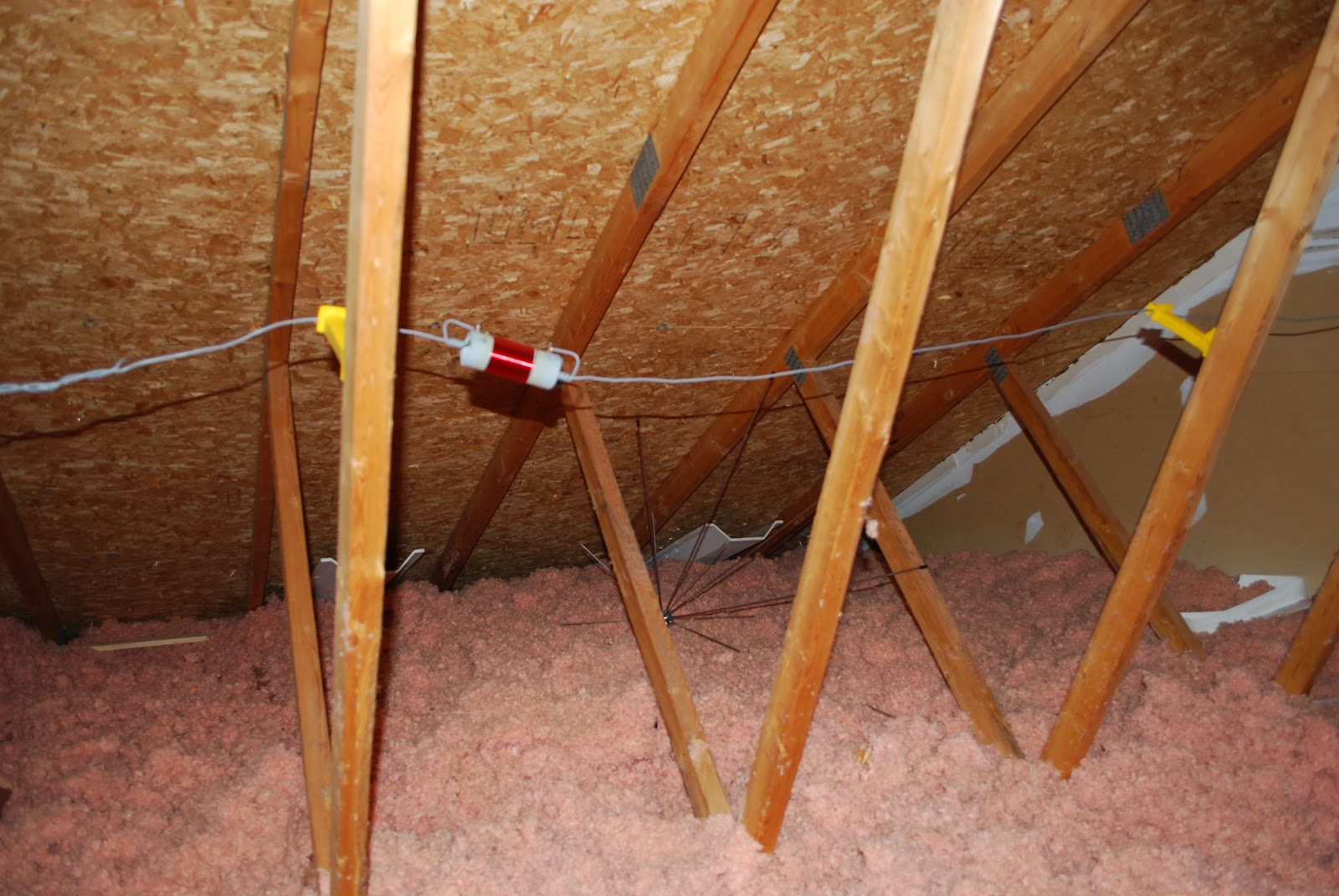 |
| Sagging 40m trap |
Mike Weir, VE9KK, is a regular contributor to AmateurRadio.com and writes from New Brunswick, Canada. Contact him at [email protected].
The New VHF Contest Categories
 The results are in from the 2013 ARRL January VHF Contest, which includes the new Single Operator 3 Band and Single Operator FM Only entry categories.
There were 77 entries in the SO3B category, with Rich KV2R having the high score: 6368 pts. Breaking his contacts out by band reveals 50MHz:92 QSOs/18 Grids; 144MHz:83 QSOs/12 Grids; 432MHz:12 QSOs/2 Grids. I operated in the same category but with a lower score: 1311, broken out by band this way: 50MHz:27/12; 144MHz:24/8; 432MHz:3/3. As I recall, 50 MHz propagation was not really that great, which is going to be the major swing factor for scores in the SO3B category. Scanning through the top SO3B entries reveals a relatively consistent pattern of 50 MHz having the highest number of QSOs, with 144 MHz in the same ballpark and 432 MHz significantly lower in count.
There were only 23 entries in the SOFM category, which is probably not a big surprise. While there are pockets of FM activity during VHF contests, historically the fun mode has not been used that much for contesting. The whole idea behind SOFM is to open up contesting to the FM operator. It remains to be seen how effective this will be but if it does catch on, it will take some time to build momentum. Ev W2EV had the high score of 1080 in the FM category, broken out by band here: 50MHz:19 QSOs/4 Grids; 144MHz:27 QSOs/4 Grids; 222MHz:5 QSOs/4 Grids; 432MHz:8 QSOs/3 Grids. W2EV’s score shows just a few grids per band, indicating shorter distance contacts overall. With only 4 grids on 50 MHz, he probably did not benefit from sporadic-e propagation on that band. The second place entry was from Erich KC9CUK who only worked the 2 Meter band, producing a score of 441 with 63 QSOs and 7 grids. The remaining entries had less than 30 QSOs. Almost everyone had contacts on 144 MHz but the usage of the other bands varied significantly.
I have always been most interested in operating 50 MHz and 144 MHz, sometimes adding in 222 MHz and 432 MHz, so I find SO3B a nice addition to the contest. In this category, I get to operate my favorite bands but my score does not get compared with the guys that have built stations that do 50 MHz through light. I suspect there are plenty of other VHF contesters in this same boat.
I find the FM category very interesting, as I have always tried to encourage FM operating during the contests. Clearly, FM is less effective than SSB and CW, particularly when the signals are weak. I don’t know whether this category will attract new operators or not to VHF contests. FM operation needs to hit critical mass because activity generates activity. That is, if you are the only FM contester in your area, its going to be frustrating. Of course, it will help if the established SSB stations make it a point to also work FM.
Oh, one more thing… we still need to get rid of the rule that says no contacts on 146.52 MHz. This rule is counterproductive. Every time I talk with an FM op about “getting on during the contest” they say “OK, so I should just call on five two, right?” I have to explain that calling on the calling frequency is not allowed during the contest (uh, that’s only for FM, you see) and their minds start to wander to topics that make more logical sense.
73, Bob K0NR
Bob Witte, KØNR, is a regular contributor to AmateurRadio.com and writes from Colorado, USA. Contact him at [email protected].
Under construction
Due to the problem with commenting I am reluctantly moving this blog to a new template. This will probably take a few days – especially as I will be going to hospital on Tuesday – because a lot of trial and error will be involved (more error than trial I dare say.)
Please bear with me while I make changes, try different graphics and so on. Normal service will be restored as soon as possible!
Julian Moss, G4ILO, is a regular contributor to AmateurRadio.com and writes from Cumbria, England. Contact him at [email protected].
K0NR June VHF Contest
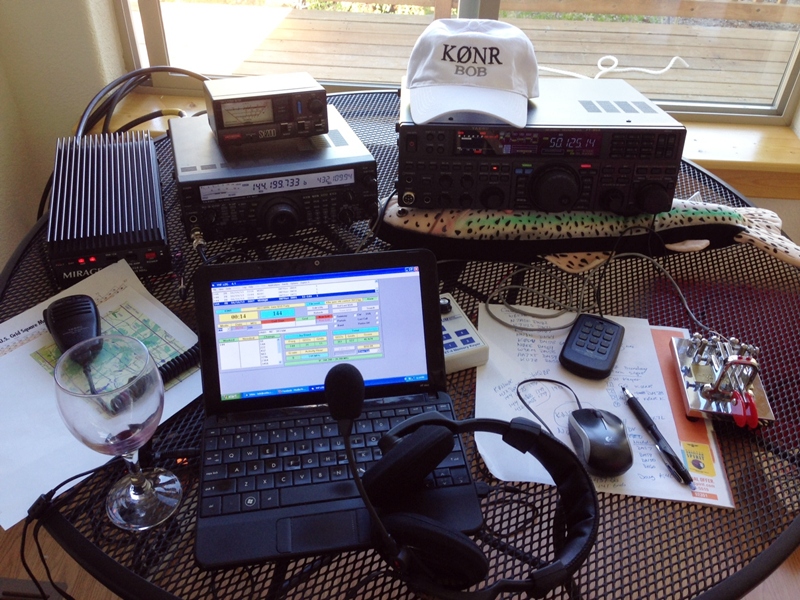
My June VHF Contest operation was at the cabin DM78av, operating in the new 3-band single-op category this year. Usually, I have been a two-band guy just focusing on 2M and 6M. I drug along my 432 MHz antenna and drove it with 50W from my FT-847, picking up a few more QSOs that way.
My score is down from the previous two years, which I think relates to the 50 MHz propagation. I subscribe to the theory that any June contest that has any sporadic-e is a success, so I am not going to complain. However, it did seem like I spend more time digging weak signals out of the noise on 6 Meters this year. It was often just barely open and the QSO rate was slow.
Best DX was XE2WK in EL03 on 50 MHz.
73, Bob K0NR
2013 ARRL June QSO Party K0NR DM78
Band QSOs X pt = QSO pts. X Grids = Points
 ---------------------------------------------------------------
 50 320 1 320 112 35840
 144 34 1 34 11 374
 432 13 2 26 6 156
 ---------------------------------------------------------------
 TOTALS 367 380 129 49020
Claimed score = 49020
Bob Witte, KØNR, is a regular contributor to AmateurRadio.com and writes from Colorado, USA. Contact him at [email protected].
Some Very Good News

Happily, I’ve got some “very good news” to pass along. About two months ago, I started having trouble with my back and have been forced into an inactive lifestyle which has been sort of depressing. This isn’t the first time I’ve had this problem. I experienced the same trouble around five years ago but on the left side of my body instead of the current right side. It involves a disc pressing the sciatic nerve which has left me almost sedentary. It came on gradually in a period of around a week, and it apparently, has left much the same way.
Over the span of about a week now, the pain has finally let up and I’m seeing some real progress in being able to get outside and move around without the wheelchair. Although for only short distances, I’m almost able to move around with the help of a cane. I can walk about a block now. The effect on my attitude is remarkable.
I have an appointment with a physical therapist in about 10 days now and will have a test to determine if there’s been any permanent damage to the nerve. I still have minor cramping in my right leg but hope this will eventually ease up and allow me to get back to a normal life.
My ultimate goal is to be back on my bicycle and enjoy the rest of the summer months.
My radio hobby is always “second” priority when it comes to family and social events. I missed the “window” on the 15th due a family obligation and therefore didn’t make a DX contact on that day. That’s a little bad news; but last night after a monthly game of bridge; I easily worked ES3AX in Estonia.
The band is still there, and I’ve no doubt that DX can be worked “every day” with a modest QRP station and a modest antenna. My list of daily DX contacts has been briefly interrupted at day 146.
Currently in the year 2103, I’ve worked 449 stations, of which 395 have been DX contacts.
Today is Fathers Day here in the United States. I’ll be driving my Dad to dinner with my brother and sister. He’s almost 93 now and still getting around by himself, although moving around a little slowly.
John Smithson, Jr., N8ZYA, is a regular contributor to AmateurRadio.com and writes from West Virginia, USA. Contact him at [email protected].
ICQ Podcast S06 E12 – Antenna Analyzers (16 June 2013)
Series Six Episode Twelve of the ICQ Podcast has been released. News Stories include :-
- Amateur Radio Club to hold emergency exercise
- UK Amateur Radio Consultations
- Raspberry Eye In The Sky
- Radio Sri Lanka to stop using 7190 kHz
- Awareness drive to revive ham radio
- VHF Radio Hams missing
- Fridge knocks out cell-phone network
- Dutch ham radio trio on Jersey
Martin Butler (M1MRB & W9ICQ) discusses Antenna Analyzers and Ed Durrant (VK2JI) reports from the WIA 2013 AGM in Australia.
Colin Butler, M6BOY, is the host of the ICQ Podcast, a weekly radio show about Amateur Radio. Contact him at [email protected].
 Ham Radio Deluxe |
 W5SWL Electronics |
 Ham Radio Prep |
 KB3IFH QSL Cards  Hip Ham Shirts  HamRadioAuctions HamRadioAuctions Reliance Antennas Reliance Antennas Enigma Shop Enigma Shop |  morseDX  Ni4L Antennas  R&L Electronics R&L Electronics antennas.us antennas.us QRV QRV |
- Matt W1MST, Managing Editor
