Archive for the ‘Uncategorized’ Category
 Amateur Radio Weekly – Issue 138
 December 17th, 2016 |
  Author:
Chinese Over-the-horizon radar QRMing 40 meters
IARU reports that one of China’s HF Over-the-Horizon radars has been transmitting on 6.999 MHz.
ARRL
Ham Radio: What are we millennials and younger doing?
We’re being hackers, engineers, leaders, developers, creators, and designers.
N0SSC
Portable antenna options for HF
For all the choices, it’s surprisingly hard to find a portable antenna for HF that is affordable and practical.
Off Grid Ham
GMRS: The other UHF band
GMRS is a licensed radio service but does not require a technical exam so it works great for basic personal communications.
K0NR
Review: WSPRlite WSPR Beacon
A small, light, & super portable WSPR beacon that transmits a WSPR signal on 20 or 30 meters.
K5ACL
Morse Toad, a Morse Code game
Morse Toad is an educational app that teaches you morse code through a series of simple lessons and exercises.
Ham Radio QRP
SSTV images received from MIR space station
April 16, 2000
N7CXI
Tracking down sources of radio noise
Yet another !&*%$! noise source…
The SWLing Post
Video
New UHF ISS Digipeater
Recently, the old VHF Ericsson handheld used for the digipeater on the ISS died and it was replaced with an equivalent UHF one. This is my first time digipeating through it.
YouTube
The Spectrum Monitor — December, 2016
 Stories you’ll find in our December, 2016 issue:
The Coast Guard Cutter Courier: “A Cold War-era Battleship without Guns”
By John Schneider W9FGH
The Voice of America operated a unique shipboard radio broadcasting facility on the medium wave and shortwave bands in the Mediterranean Sea from 1952 to 1964. The US Coast Guard Cutter Courier was a seagoing Cold War shipboard broadcaster, which preceded the famous pirate radio ships of the 1960s and 70s and was the home to the most powerful transmitter ever operated aboard a ship. But, it was not always smooth sailing. There were complications with the 900-foot balloon-tethered medium wave antenna and constant jamming from Russian-based transmitters.
Experiences of a (Relatively) Young Ham with Vintage Radios
By W. Eric McFadden WD8RIF
While the author has been a licensed ham for 38 years, he’s relatively young. And, since most of his operating gear is modern, he’s fairly new to vintage radio. He writes that he wanted to experience what the hobby was like for earlier generations and he felt the contagion of many of his close amateur radio friends who are quite into vacuum tube-era gear. He’s apparently a quick study because now he has some good-looking vintage gear in his shack, including a Heathkit HW-16 and a Drake 2-NT transmitter and 2-C receiver as well as tube-fired 6-meter gear. He’s definitely hooked!
Beware the Mods: Drake 2NT Transmitter
By Rich Post KB8TAD
Longtime vintage radio guru, Rich Post KB8TAD, helps Eric McFadden restore his Drake 2-NT transmitter and shows the rest of us some of the things he does to give vintage radio gear new life. Here’s a hint: It’s not easy and it helps to have good diagnostic equipment, skills to operate that equipment and many decades of understanding the variables of tube-technology.
Shortwave Listening with the “Old-Timers”
By Eric Beheim
Growing up in the 1950s and listening to his grandfather’s 1936 23-tube Scott All-Wave console shortwave radio was a pretty good start for young Eric Beheim. That’s why today, Eric likes to listen to the shortwave bands on number of vintage shortwave radios, including a 1936 Hallicrafters S-20R Sky Champion and a 1942 Zenith model 7G605 Transoceanic “Clipper” among others. Listening is not as easy as you might think. Eric writes, “Most older radios lack the sensitivity, selectivity, and stability that we take for granted in our modern sets. But that’s what makes monitoring with the ‘old timers’ both challenging and exciting.”
A Salute to the Esteemed Regenerative Receiver
By Richard Fisher KI6SN
Fifty years ago, a teenage Richard Fisher, sporting his Novice call, WN1DWL, found he was at loose ends during his high school winter break. What better way to pass the time than to build a regenerative receiver that he could use to cover the ham bands from 160 through 10 meters? It was a project financially within reach of “a broke 16 year-old.” Years later, while he still had the rig, it had fallen victim to the ravages of time and “parts scrounging.” Now, Richard thought, what better way to celebrate the 50th anniversary of that little radio than to restore it to its full regenerative glory?
Scanning America
By Dan Veenaman
Federal Wavelengths
By Chris Parris
Holiday Radio Logs
Utility Planet
By Hugh Stegman NV6H
Russia to Activate Arctic OTH Radar in 2017
Digital HF: Intercept and Analyze
By Mike Chace-Ortiz AB1TZ/G6DHU
What Digital HF Signals can you Hear and Decode Today?
HF Utility Logs
By Mike Chace-Ortiz and Hugh Stegman
Digitally Speaking
By Cory Sickles WA3UVV
Holiday Wish List
VHF and Above
By Joe Lynch N6CL
ARISS: A Brief Flyover and My Experiences with ARISS QSOs
Amateur Radio Insights
By Kirk Kleinschmidt NT0Z
The Hows and Whys of DIY Open-Wire Feed Line
Radio 101
By Ken Reitz KS4ZR
Getting Started with Free-to-Air Satellite TV
Radio Propagation
By Tomas Hood NW7US
Plasma Bullets
The World of Shortwave Listening
By Rob Wagner VK3BVW
On the Road with a Tecsun PL-680
The Shortwave Listener
By Fred Waterer
Christmas Around the World on Shortwave
Amateur Radio Astronomy
By Keith Baker KB1SF/VA3KSF
Amateur Radio Satellite Operating Protocols
The Longwave Zone
By Kevin O’Hern Carey WB2QMY
Resources: What’s On Your Bookshelf?
Adventures in Radio Restoration
By Rich Post KB8TAD
The Heathkit Laboratory-type Signal Generators: LG-1 and IG-42
Antenna Connections
By Dan Farber AC0LW
Sunspot Maybe: Surviving without Upper HF
The Spectrum Monitor is available in PDF format which can be read on any desktop, laptop, iPad®, Kindle® Fire, or other device capable of opening a PDF file. Annual subscription is $24. Individual monthly issues are available for $3 each.
Amateur Radio Weekly – Issue 137
Amateur Radio Parity Act stalled
The legislation will be reintroduced in both houses of Congress after the 115th Session begins in January.
ARRL
Pearl Harbor Attack: Monitoring American radio traffic
IJN beefed up its radio-intelligence coverage of the American military presence in Hawaii. Two more stations, on Saipan and near Tokyo, now covered the communications of the Pacific Fleet and the U.S. Army Air Corps in Hawaii.
U.S. Naval Institute
28MHz high hopes monitoring
This blogpost is about monitoring 28MHz just before the ARRL 10m contest this weekend. It will be updated regularly till the weekend.
PE4BAS
ABC Ditches Shortwave Services
The ABC will end its shortwave transmission service in the Northern Territory and to international audiences from 31 January.
Radio Today
Five common mistakes new Hams make
This short list comes from working with a gaggle of new hams over the years and trying to help them get started in ham radio.
Ham Radio School
Where does 9600 bps come from?
We use serial communication all the time. But why are we using multiples of 300?
SparkFun Electronics
Reverse engineering traffic lights with an RTL-SDR
To reverse engineer these new lights he made a recording of the signals in GQRX and then opened them up in Inspectrum.
RTL-SDR.com
Creating a 2m repeater with a Raspberry Pi and RTL-SDR dongle
I will be using an RTL-SDR dongle to receive an input signal on 70cm. The receiver signal will then be demodulated and retransmitted using a GPIO pin on the Raspberry as a transmitter.
ZR6AIC
An unusual night for CB
For the most part, AM is used on most of the channels but you’ll find LSB activity on Channel 36 (27.365 MHz). And when the band gets busy and crowded, you’ll hear LSB QSOs from Channels 36 – 39 (27.365 – 27.395 MHz).
The SWLing Post
Video
TYT MD-398 power test
It is rated at 10W on high, let’s see if it is true to its claims.
Ham Radio Reviews
Amateur Radio Weekly – Issue 136
SSTV active from ISS December 8-9
The SSTV images will be transmitted as part of the MAI-75 Experiment on 145.800 MHz FM using the Kenwood TM-D710 transceiver located in the Russian ISS Service module.
AMSAT UK
Last call to press for Senate passage of Amateur Radio Parity Act
The House of Representatives approved the bill in September, and the Senate must follow suit if the bill is to succeed.
ARRL
Hurricane Center on air for SKYWARN Recognition Day
WX4NHC at the National Hurricane Center in Miami will participate in SKYWARN Recognition Day (SRD) on Saturday, December 3.
ARRL
Santa Net 2016
Every year on 3916, we give good little boys and girls a chance to talk to Santa Claus at the North Pole!
The 3916 Nets
2 element dual-rectangle beam for 70cm
The antenna described here is a direct-connect dual-rectangle beam for use on 70 cm between 440 and 450 MHz.
jedsoft.org
Easy homemade Outernet antenna
An antenna for less than $1 total cost, doable without power tools and soldering, in less than 30 minutes.
Radio for Everyone
Emergency preparedness on the road
If it is required that I spend the night away from home for whatever the situation, I am prepared, as I carry all the required gear that will keep me safe if I become stranded.
VE6AB
A review of the Elecraft KX2 general coverage QRP transceiver
The KX2 is a feature-rich pocket QRP transceiver. For those who are familiar with the Elecraft product line, it’s like a KX3 (feature rich portable rig) in a KX1-sized (much smaller, handheld/pocket) package.
The SWLing Post
Looking back at Cycle 23
Cycle 23 was a much bigger cycle with higher sunspot numbers than Cycle 24.
NY4G
Disturbing the peace: Can America’s quietest town be saved?
There’s a town in West Virginia where there are tight restrictions on mobile signal, wifi and other parts of what most of us know as simply: modern life.
BBC
Special event
Members of the ‘Battleship Iowa Amateur Radio Association’ (BIARA) will be active as NI6BB between 1600-2359z on Wednesday, December 7th, in memory of the 75th anniversary of the attack on Pearl Harbor in 1941.
Southgate
Video
How to set up an Outernet receiver
Outernet continuously sends out useful data like weather reports, news, APRS data as well as files like Wikipeda pages, images, videos and books.
RTL-SDR.com
Amateur Radio Weekly – Issue 135
Virtual Build-a-thon
Using either Skype or Webex we will present each week for about 30 minutes showing you the next stage of building the project. You can then ask questions and show us how you are getting on.
Chertsey Radio Club
Toyota Tacoma Mobile HF Install
Surprisingly the 590SG is compact enough IMHO for a nice mobile install, however someone with a smaller vehicle might not have the luxury of so much space. I rarely use the access cab except to throw junk in, so why not utilize it better?
K5ACL
Upcoming solar years… Can they be too quiet?
In 2008 there were 265 ‘zero sunspot’ days and the following year saw another 262 days of blank suns!
VE7SL
Should amateur radio be used for military purposes?
If the Border Patrol or Army asked you to listen for potential terrorist communications, would you do so?
KB6NU
Podcast: Foundations of Amateur Radio
A weekly, 4 minute podcast. The building blocks for Amateur Radio, one concept at a time
VK6FLAB
FCC’s Laura Smith – Your Repeater; Your Rules
We haven’t heard a lot from FCC Special Counsel Laura Smith lately, but she spoke at Pacificon.
Southgate/Ham Radio Now
Solar powered Ham Radio for beginners
I am going through the gear one will need to operate with a solar power source, how to use it and a couple of things to avoid.
Ham Radio Reviews
SKYWARN Recognition Day on-the-air event is December 3rd
SKYWARN Recognition Day was developed in 1999 by the National Weather Service and ARRL to honor the contributions that SKYWARN volunteers make to the NWS mission.
ARRL
Special Event K7Z: Zane Grey’s 145th Birthday
Zane Grey was an author and master of the American western novel.
K7Z
Special Event W1T: Mark Twain’s 181st Birthday
ARRL staff will be operating as W1T from November 28 – December 4, in honor of Mark Twain’s 181st birthday.
W1T
Video
D-Star DVmega Raspberry Pi 3 hotspot
This hotspot is using a Raspberry Pi to operate as a full D-star hotspot.
HamRdioConcepts
Compact Homebrew End Fed QRP Antenna
I built this antenna specifically for low wattage QRP use to be compact and inexpensive. It utilizes a 9:1 balun wrapped on a T106-2 torpid and minimal hardware to be lightweight.
KD9EAS
W2LI: Dry Tortugas NPOTA Activation
Rob (K2RWF) and Craig (KD2INN) activate Dry Tortugas National Park in the Gulf of Mexico.
YouTube
Amateur Radio Weekly – Issue 134
Hara Arena items to be auctioned off starting Thanksgiving
The auction will include a limited number of Hara Arena and Cincinnati’s Crosley Field seats, Hara signage, photos, posters, sports and event memorabilia, sports equipment, chandeliers, catering items, tables and chairs.
Dayton Daily News
Simulating JT modes: how low can they get?
In this post I’ll show how one can use the signal generation tools in WSJT-X to do decoding simulations.
Daniel Estévez
Does QRP Really Work?
I have heard the saying so often “Life is Too Short for QRP”. For some reason, many radio amateurs refuse to embrace and even eschew low power.
NY4G
Hams on Strava
Many DXers and Contesters also participate in endurance sports such as running, cycling, and triathlon when not on the radio.
AmateurRadio.com
The Doctor is in: Stealth Antennas
Sometimes the best antenna is the “least” antenna.
ARRL
Amateur radio installation in a 2016 Ford F-150 SuperCrew
Installing in a truck and an evolving digital radiosphere presented some challenges.
Kevin Sanders
Ham Radio 360: ARES; an Introduction
Ham Radio 360 talks to Cecil Higgins (AC0HA) the ARES Section Manager for Missouri.
Ham Radio 360
Field Results for an AS-2259/GS Antenna
Let’s start with the good news first. The antenna worked like a champ. From suburban Chicago, our first contact was Toronto.
N4AE
Video
DEF CON 24: I Amateur Radio And So Can You
Kat Sweet explains how Ham Radio can be incorporated into everyday hacking.
K7FTW
Yaesu FT-817 QRP through a mag mounted Ham Stick
I make a QSO while testing out a 40 meter ham stick in a mag mount configuration.
KD9EAS
Ham Radio 2.0: Unboxing and testing the Yaesu FT-891
Yaesu’s newest HF mobile radio has some cool new features, but leaves out other options.
Ham Radio 2.0
ARRL Webinar: CHIRP Programming
This ARRL webinar offers a brief overview of the free, open-source CHIRP software, which can be used to program most radios.
ARRL
Ham shack kitten
Essex Ham’s Shack Kitten, Splodge, gets his own YouTube video.
Essex Ham
Hams on Strava
Count me amongst those who consider DXpeditioning and radiosport contesting true sports on par with chess, professional poker, America’s Cup sailing, and similar pursuits. Operating SO2R for 48 hours straight in CQ WW, chasing WRTC qualification, and pounding out 160m Qs all night from sub-Antarctic Islands are not for the faint of heart, literally!
No surprise, then, that many DXers and Contesters also participate in endurance sports such as running, cycling, and triathlon when not on the radio. The ‘king’ contester/endurance athlete must be Thomas OZ1AA who spent five years cycling around the world and operated contests from whatever country he happened to be riding through along the way. Thomas’ amazing Cycling The Globe Blog is here:
http://www.cyclingtheglobe.com/
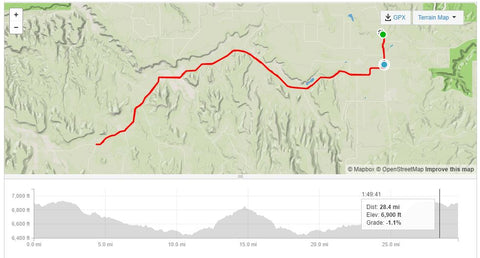
Thomas logged his cycling travels on Strava, a smartphone app that uses GPS to track cycling, running, and other sports, with share/compare social media functionality. Think of Strava as Logbook of the World for cycling and running. Thomas’ Strava feed is here:
https://www.strava.com/athletes/7378076?oq=thomas
Are there other hams on Strava? Yes! At Force 12, yours truly (AA7XT, triathlon) and Jon (KL2A, running) are both active Strava users:
https://www.strava.com/athletes/2467
https://www.strava.com/athletes/15413914
If you look at the Strava users that Jon and I follow, you’ll see many DXers and contesters including Juan TG9AJR, Mark N5OT, Jeff N5TJ (CQ WW World Record Holder and an accomplished bicycle racer), and many more. There are also numerous ham oriented Strava Groups. I’m a member of the “DXCC” and “DX Runners” groups.
If you’re on Strava or are going to sign up (it’s free!), please do connect with Jon and myself. Maybe we can have a meetup at Dayton and go for a morning group run? Or create a combo annual contest points + mileage Strava Challenge?
I should note that Force 12 engineer/builder Jeremy KE0CGU is the best athlete at the company but does not use Strava (Jeremy prefers his time outside to be away from gadgets – purist!). Jeremy commutes to F12 via bike regardless of the weather and also has competed in mountain ultra-running and long distance mountain bike events.