Archive for the ‘Uncategorized’ Category
 Wainwrights On The Air Blog
 April 13th, 2010 |
  Author:
 Just over a year ago I started Wainwrights On The Air (WOTA) as an adventure radio scheme to encourage people like myself to get out of the shack and up in the hills (or fells as they are known locally) of the English Lake District for a bit of fun with radio. You collect points by making contacts from the tops of the fells (which is called activating.) Armchair fellwalkers can also collect points by working stations on the tops of the fells (which is called chasing.) Certificates are awarded when you have made contacts from (or with) all of the fells in each of Alfred Wainwright’s seven Pictorial Guides, and for completing all 214 Wainwright fells.
 WOTA has been more successful at getting other people out on the fells than me. To date, Phil G4OBK has been the most active WOTA activator and has already claimed a certificate for activating all of the fells in the Pictorial Guide to the Eastern Fells. He has stated that he intends to do all the Wainwrights within two years. Now he has started a blog to describe his progress towards completing this challenge.
Called “Wainwrights On The Air”, Phil’s blog has details of the routes taken as well as the people contacted from the fells. It has some great pictures, too, that really capture the flavour of this beautiful part of England.
If you like operating radio from the great outdoors, if you are interested in the English Lake District or if you are thinking about becoming a WOTA activator yourself, I think you’ll enjoy Phil’s Wainwrights On The Air blog.

Charger for the TH-205E
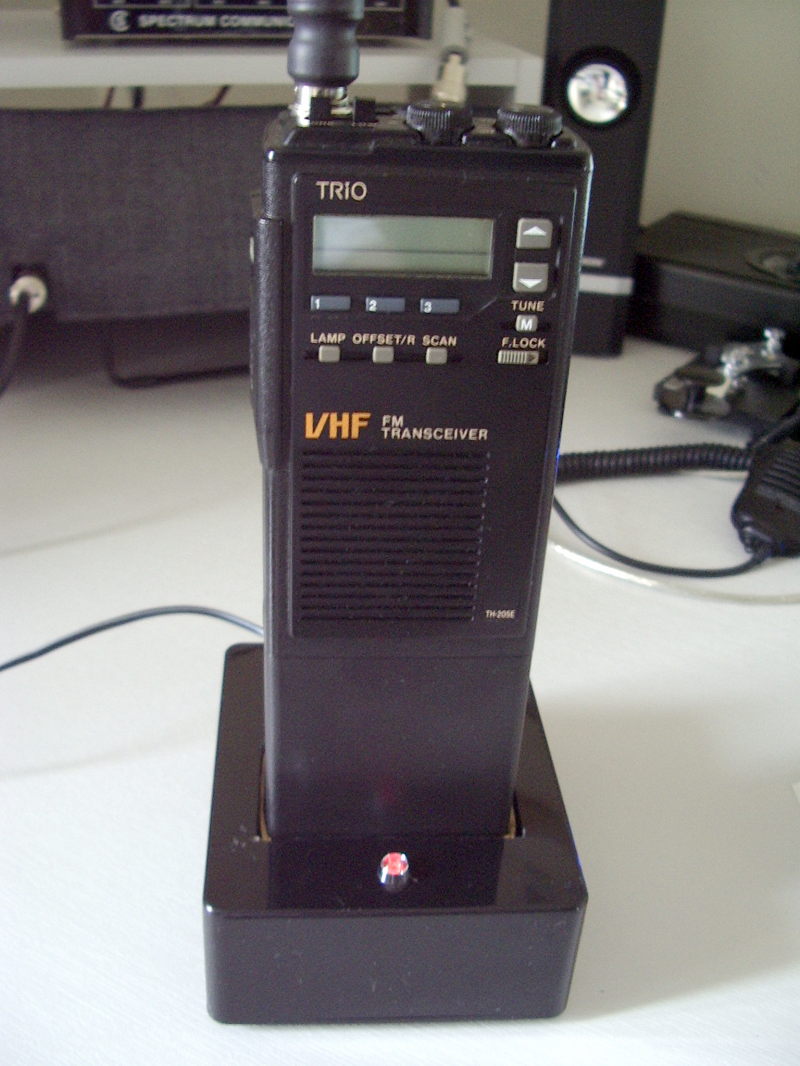 The TH-205E transceiver was finally restored to full working order yesterday. After some thought I finally decided how to fit the 3A diode that was somewhat larger than the recommended part which was unobtainable. I extended the left-over wires from the old fuse using thin wire taken from the leads of a small capacitor. I then shortened to a few millimetres and tinned the leads of the new diode. I wound the thin wires on to the stub leads of the diode and then soldered them whilst using tweezers as a heat sink on the thin wire to prevent the other end coming unsoldered.
The radio now works off its new battery. It made its first QSO with Derek G1GDB via the GB3LA repeater, and received complimentary reports on the audio. I even took it along to the Workington Radio Club meeting in case there was a “largest 2m hand-held” competition!
I also finished up the drop-in battery charger which I built using this circuit using an LM317T voltage regulator. It is simple to make and has an LED to show that it is charging. The hardest part was cutting the rectangular hole in the plastic project box. It’s best not to look too closely or you can see that the edges are not perfectly straight.
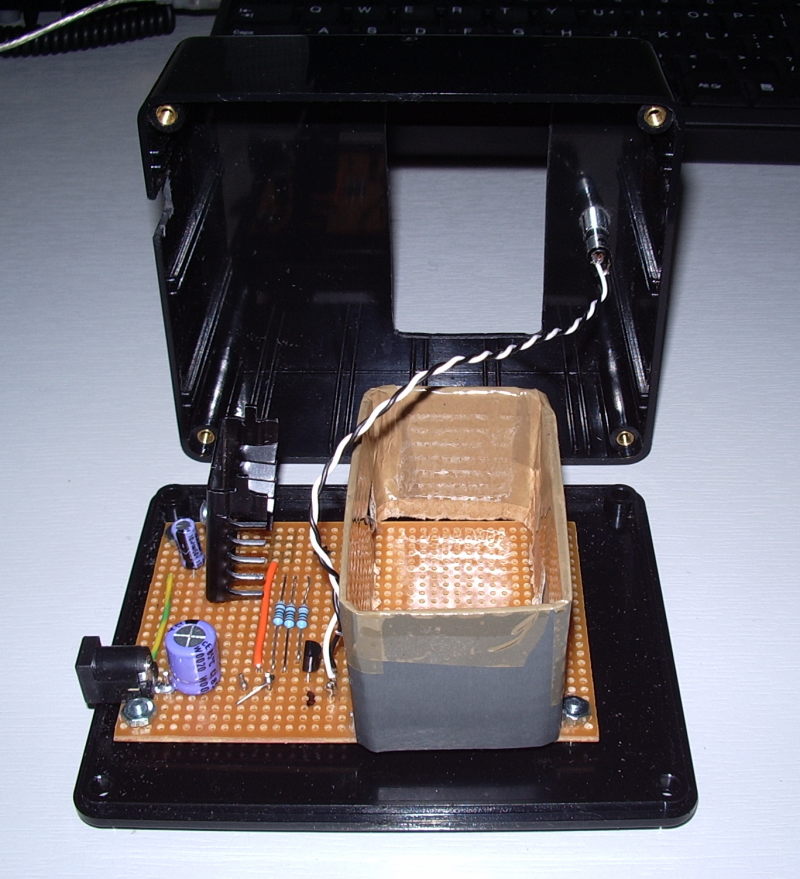 This picture shows an internal view of the charger. It doesn’t show the contacts for the charging tabs on the battery which were made from a paperclip. The sleeve that holds the radio or battery in position was cut from the cardboard box that my UNI-T Oscilloscope Digital Multimeter came in, and is super-glued to Veropins to hold it in place. Hopefully the heat sink for the LM317T will be adequate – the battery hasn’t lost the charge I gave it using the shack power supply so I haven’t yet had the chance to test it for a full 15 hours.


Motorola Radius GP300
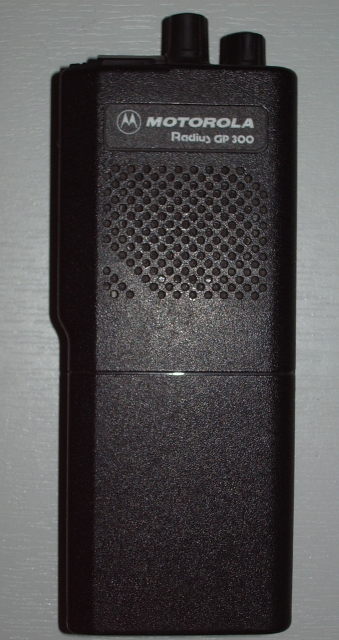 I seem to be collecting VHF handhelds at the moment. This is the Motorola Radius GP300 I bought for £1 at the Blackpool radio exhibition yesterday. The seller had quite a number of shiny new-looking commercial handhelds in a heap on the table, all without batteries, which were being sold for £1 each. He told me they were all UHF. Most were Midland radios, but there was this one Motorola which in the end I decided to get because I thought it might be easier to find information about it. I should have got one of the Midlands as well, after all, it was only a quid!
Today I took a closer look at what I had bought, and tried to find out something about it from the internet. From the model number I was able to find out the capabilities of the radio and I actually have a VHF handheld which can cover 144 – 176MHz in 12.5kHz steps, 8 programmed channels with 5W output. I can’t test if it works because I don’t have an adapter for the strange type of antenna socket, but Motorola to BNC adapters are available on eBay. However for the radio to be any use I will need to program it with some 2m band frequencies.
There is information on the web showing how to build a programming interface, but you can actually buy one ready made from Hong Kong for little more than the cost of the parts. The difficulty appears to be getting hold of the all-important programming software. Apparently it was very expensive and Motorola doesn’t turn a blind eye to free sharing of it among the amateur community so I was unable to find any download link.
None of the sites that give information about programming these radios provide any help about how to get hold of the software and they are obviously fed up with being asked about it. So there probably isn’t much that I am going to be able to do with this radio. A pity, as it seems to be well regarded judging by the reviews on eHam, presumably posted by users who got them from dealers pre-programmed with the channels of their choice.

Blackpool weekend
I hadn’t been to a hamfest (or radio rally as such events are known over here) for several years. On Friday I mentioned to Olga that the Northern Amateur Radio Societies Association Amateur Radio, Computer and Electronics Exhibition was being held at Blackpool on Sunday and it was supposed to be quite a good one and she said “why not go?” I then suggested that we book a hotel for the Saturday night so we could travel down the day before and see some of the sights of Blackpool, which neither of us had been to before. So we did.
The sights of Blackpool served only to help me understand why most Brits these days go to Spain for their holidays, but the NARSA Exhibition lived up to its reputation and was well worth the trip. I spent very little but came back with a large bundle of components most of which I will probably never use, plus an apparently unused Motorola Radius GP 300 handheld, sans battery, which I was unable to resist as the price was £1. It was also nice to meet in person several people I had previously only worked on the air, exchanged emails with or who were readers of my blog.
It’s impossible to give a full picture of an event this size so I’ll just mention a few of the stands that were of particular interest.
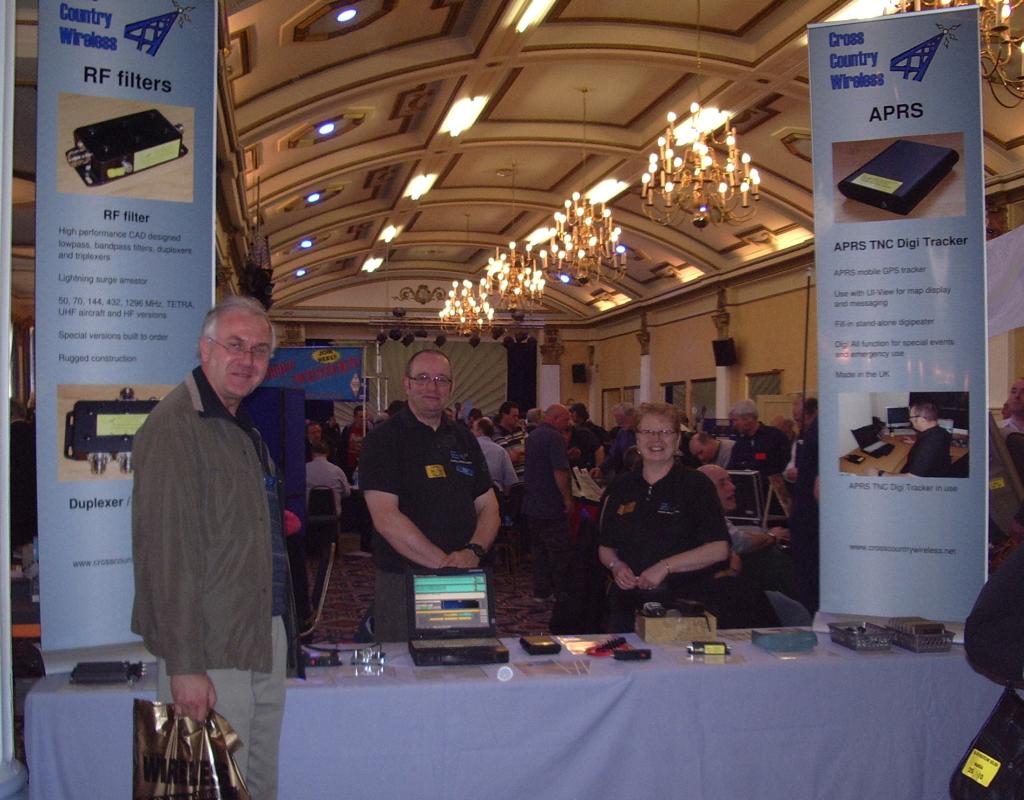 Occupying a prime position right by the entrance was the stand of Cross Country Wireless run by Chris G4HYG and his XYL. He was displaying the new end-fed antennas I mentioned a couple of days ago, as well as his well-established APRS products and the new program APRS Messenger. Chris commented that the number of visits to his site increased noticeably after I’d mentioned the antennas in my blog – hopefully he got some sales as well!
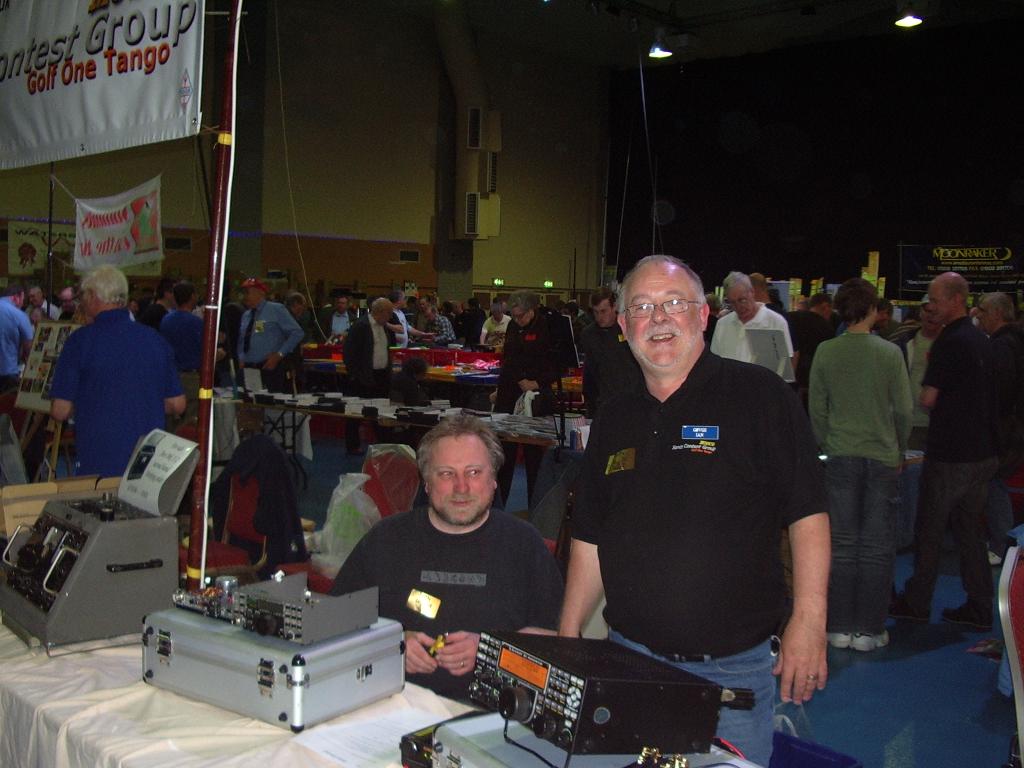 Ian G0VGS and Kev G6FKE were manning the Sands Contest Group stand and also giving visitors a chance to look at the K2 and K3 transceivers by Elecraft.
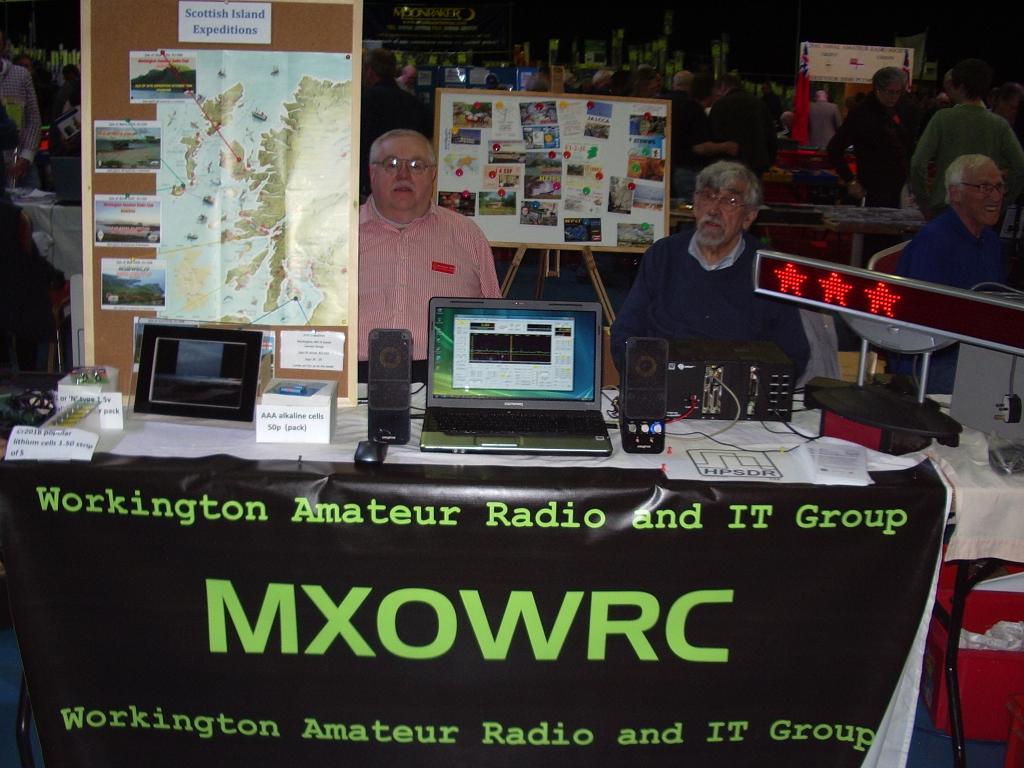 My local club, Workington Radio Club is a NARSA member and had an impressive stand, manned in this picture by Barry G0RZI and Tony G1OAE.
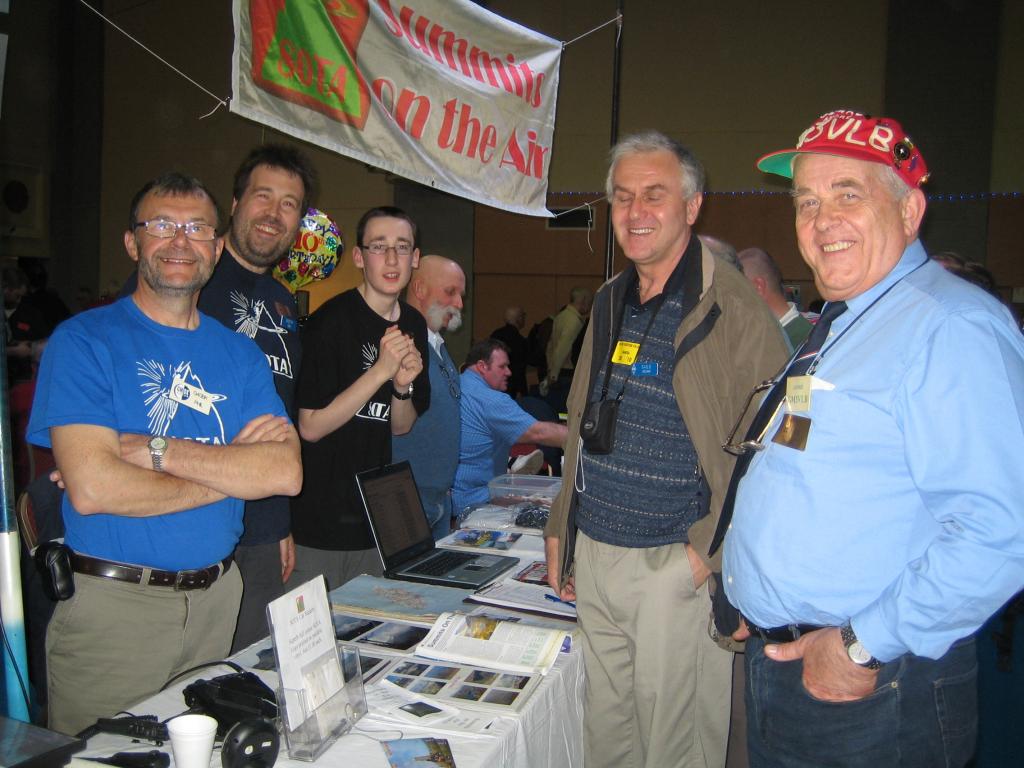 Summits On The Air also had a stand where I was able to chat about WOTA with Tom M1EYP and his son Jimmy M3EYP, and meet Phil G4OBK who is the top activator in the Wainwrights On The Air (WOTA) scheme (and the only one so far to have earned a certificate.) Olga took this picture but unfortunately she caught me just as I blinked!
It was a very enjoyable day, but now you’ll have to excuse me, I have a large bag of components to sort out!

K6MM’s 160m No Excuses Vertical
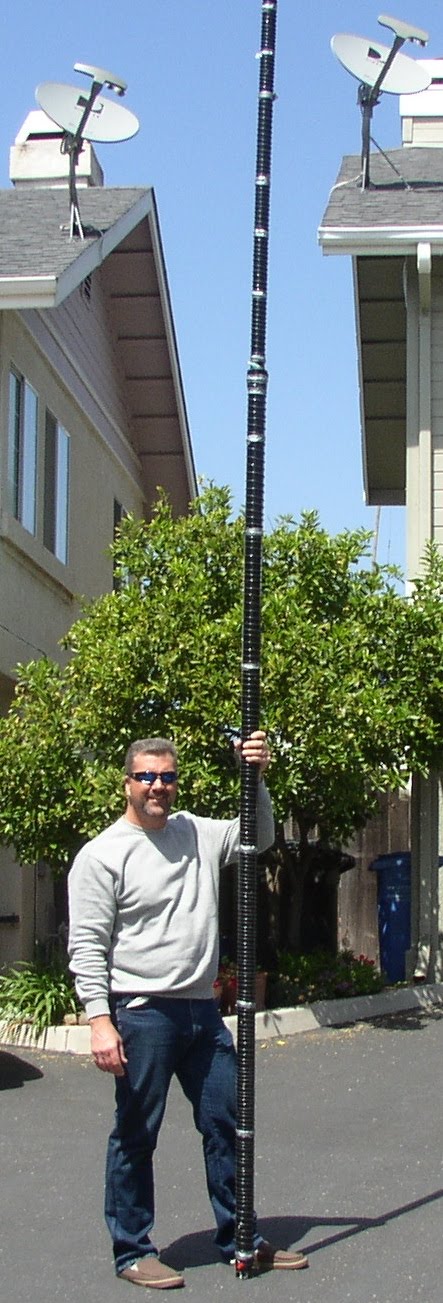 Photograph One illustrates completion of vertical section(s) one and two. I worked my lower back while winding but I’m confident the helical wind itself met my exacting standards. Duct tape used to secure every twelfth or so winding. My plan is glue the helical wind after field testing and final standing wave measurements are taken.
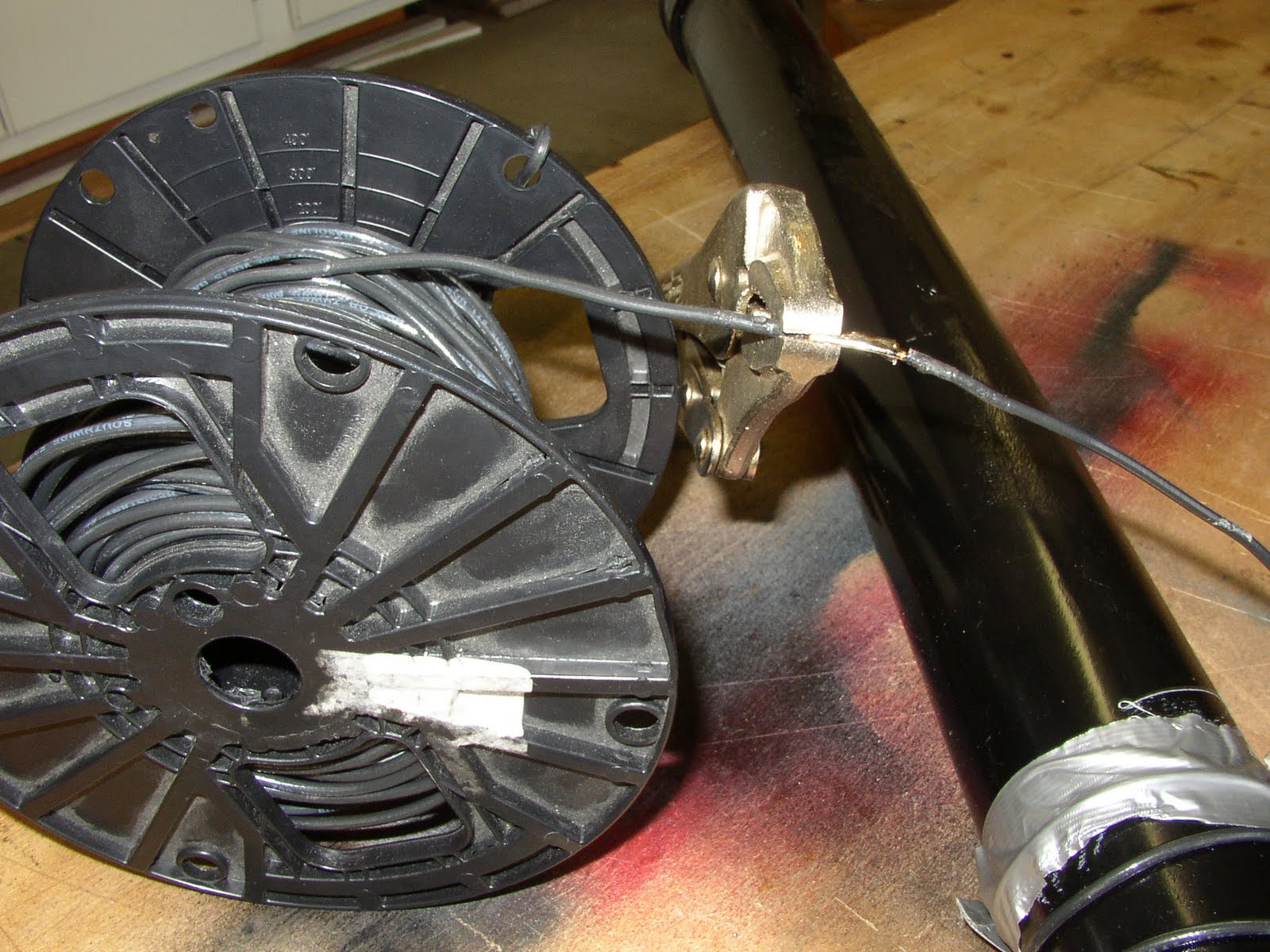 Photograph two taken of third man or a pair of vice grips used to secure first section wire splice. We discussed the wire splice illustration in the ARRL’s Antenna Handbook and concluded its six inch requirement with twist is best for dipole-like tensions. I scraped enamel coating from each AWG #14 solid core wire prior to soldering.
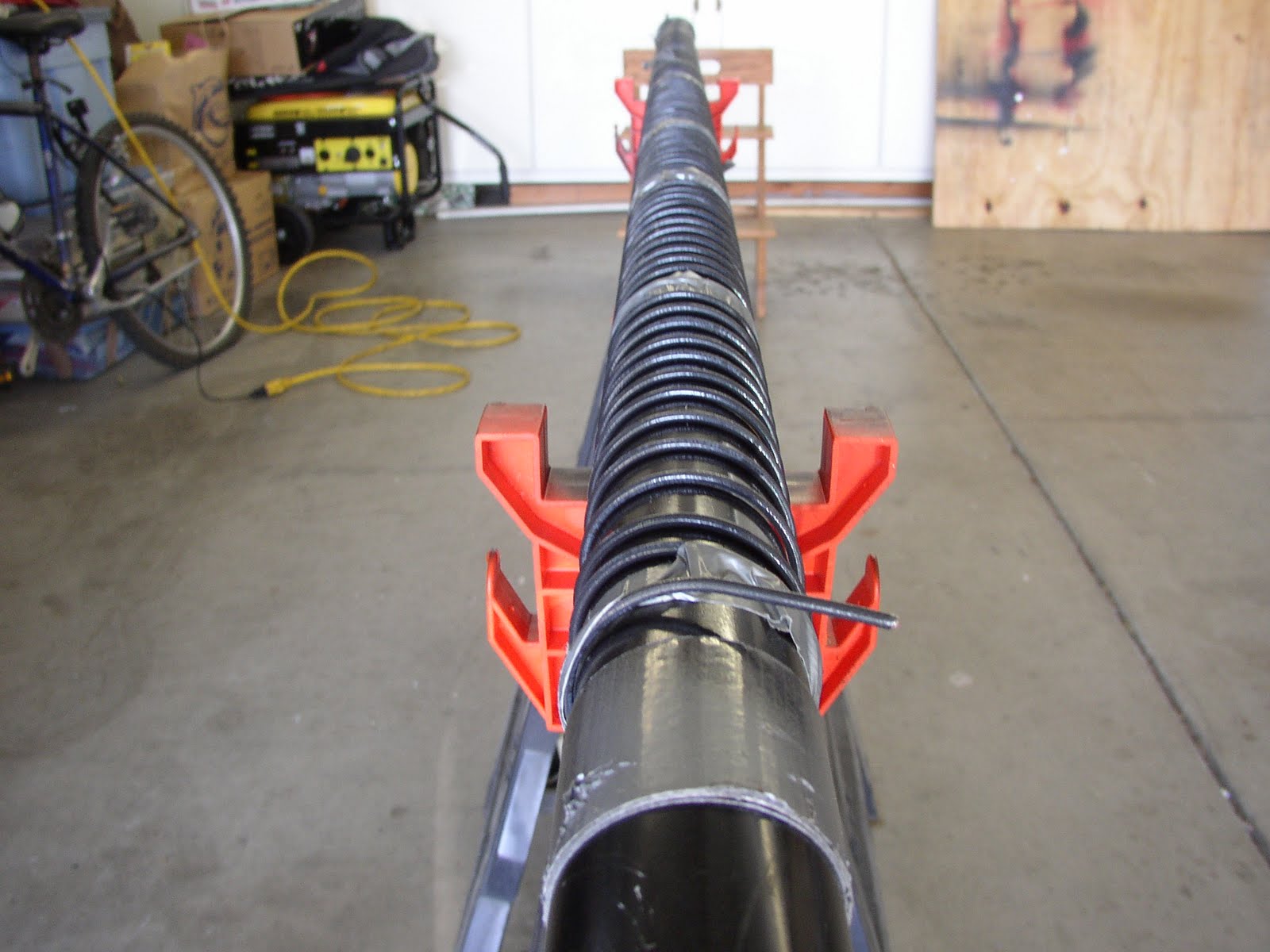 Photograph three depicts section one and two layout after completion of winding using a spool as illustrated in photograph two. The spool facilitated downward and upward motion creating enough necessary tension to wind antenna wire.
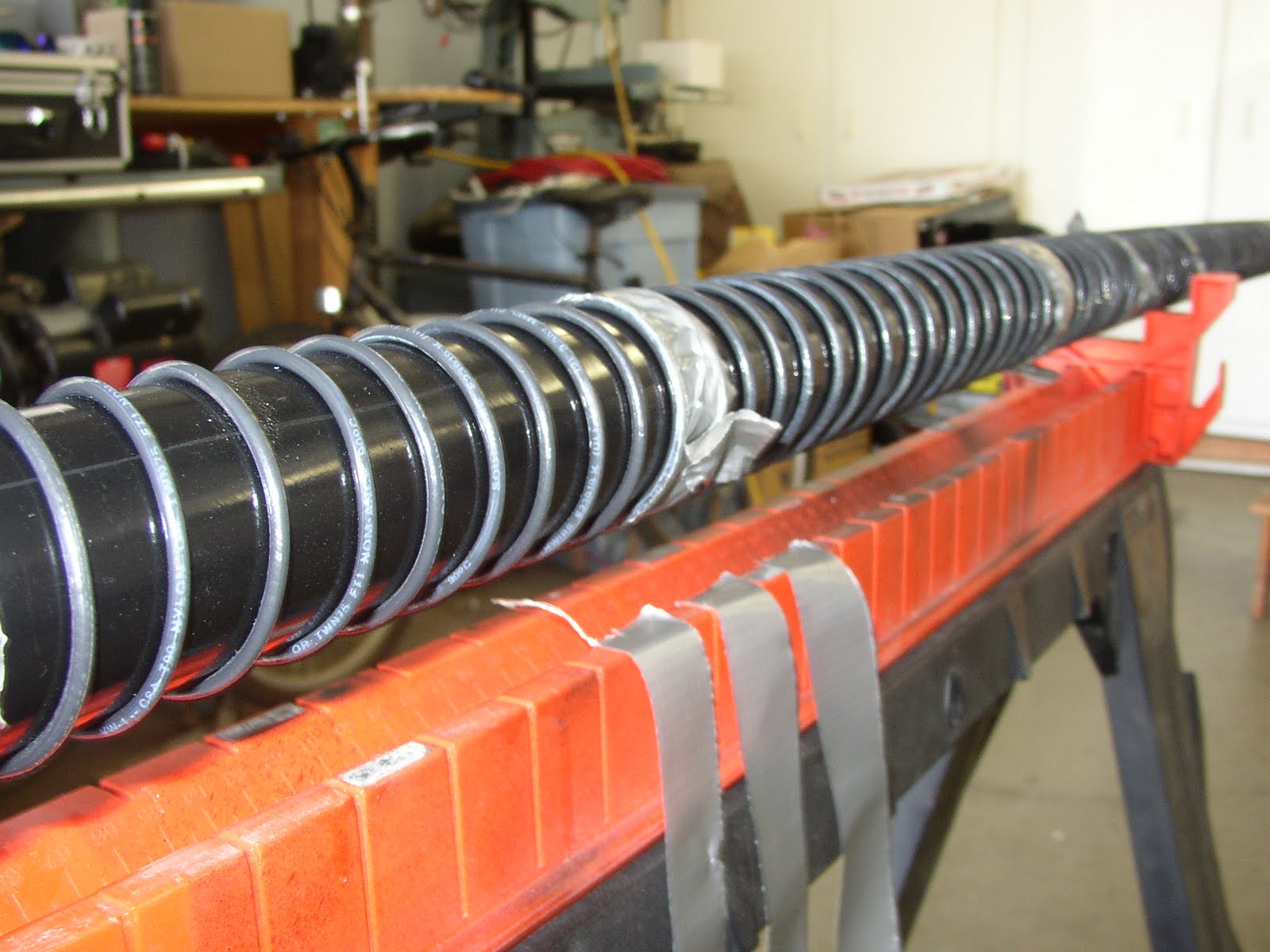 Photograph four captures approximate 1/2 inch winds thus far consuming 201 feet of copper wire between first and second sections.
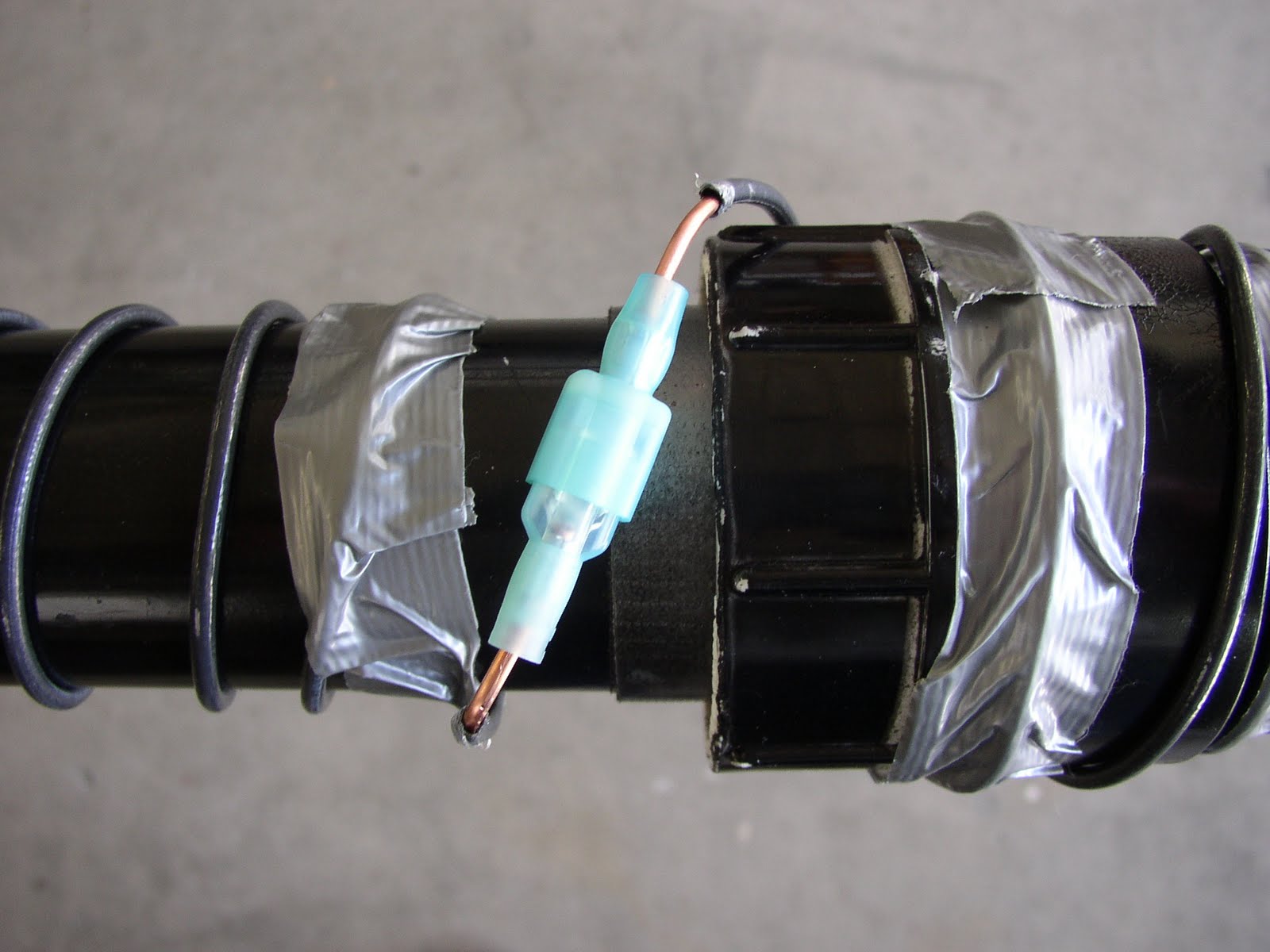 Photograph five taken of a pair of slugs used to connect both sections. I opted for this type of connection as mechanically sound versus alligator clips given the potential for lateral motion. I’m constructing the antenna as a portable type rather than fixed. However I might be corrected on connection terms because I simply forgot after leaving the hardware store.
Remaining Project Objectives.
Section one is 45 percent complete and we’re fast approaching capacitance hat construction in the near future. Likewise, we’re discussing type of feed line for example, coaxial or window line as suggested in K6MM’s instructions. Furthermore, I’m brainstorming how-to fit 1/4 wave radials into the lot in the backyard, any suggestions?
73 from the shack relaxation zone.
P.S. Read K3LR’s method of installing a PL259 connector with photographs (link).

Ham Radio Odyssey | XR0Y’s 21st Century Journal | Part Seven
XR0Y Videoblog part 7 from SQ8X on Vimeo.
Team work leads to success.
Obstacles whatever they maybe either strengthen a team or creates cliquish-like behavior ultimately diminishing team potential. In the previous installment, Stan faced his deepest challenge through the darkest of the night. Instead, when everything from weather to human nature seemed against him, SQ8X followed the team’s mission and goal statement.
Zbig, SP7HOV tied in the entire experience while Stan questioned him about the RTTY swarm on 17 meters, “Beautiful.”
Believe in your signal.














