Archive for the ‘Uncategorized’ Category
 Darnnit!
 April 24th, 2010 |
  Author:
This Weekend In RadioSport | Going Mobile
 RadioSport USA | Florida QSO Party.
This weekend presents a great opportunity to practice, practice, and practice one’s RadioSport skill set. Perhaps, instead of operating from the function keys, give those paddles a good workout — make’em sweat. I’d encourage trading the band map feed for spinning the dial — find’em and log’em but listen first.
State QSO parties are much like a beach club house party. Everyone is a little more relaxed and easy going. This is the time to work on skill development when there is less pressure not to make a mistake.
Rules (link).
 RadioSport USA | Nebraska QSO Party.
We’re in good shape this weekend with Nebraska filling the gap between the coasts. I remember logging W0BH/M during this event and how much fun it was when Robert activated a new county. Likewise, I logged a sense of satisfaction because mobile operators are pushing an envelope using vertically polarized antenna systems and battery power.
I’m going to challenge my station this weekend and log as many mobile stations as possible.
Rules (link).
SFI = 75 | A-index = 9 | K-index = 1 | Sunspot count is 0 @2111UTC.
See Also.
Radio-Sport dot Net | Sunshine State Showdown Looms With 2010 Florida QSO Party.

Detecting Sporadic-E on 2m
We are entering the Sporadic-E season, the favourite time of the year for those who enjoy operating the VHF bands. As Roger G3XBM suggested today, more stations this year will be using WSPR on the 10m and 6m bands, so many openings may be detected that would otherwise be missed. I am WSPRing on 10m at the moment, and will probably move up to 6m later on once 10m starts opening on a regular basis.
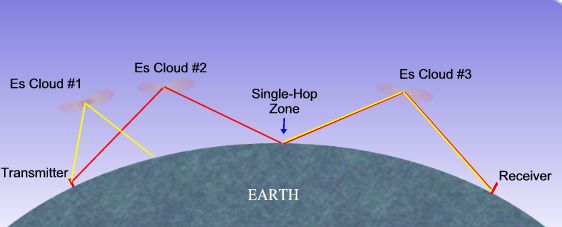 However, my first love will always be 2m. From this QTH surrounded by hills Sporadic-E is the only type of propagation that allows me to work DX on that band. On 2m, Sporadic-E openings are much rarer because much smaller patches of the Sporadic-E clouds are dense enough to reflect signals at this frequency. This makes propagation between two points on 2m much more fleeting. A station can be 59+ one minute and gone the next, which makes it essential to keep QSOs short and sweet: report, locator, and name only if you are sure you have got the time.
Some people are planning to use WSPR on 2m as well, but because of the fleeting nature of propagation I am not convinced that the 2 minute periods of WSPR make it the most appropriate method of detecting propagation on this band. I think it might be more fruitful to monitor 144.8MHz which is the APRS frequency in Europe.
APRS packets take only a second or two to send, so you don’t need propagation to be good for two whole minutes to receive one. Packets do need to be received clearly, but the “strong or gone” nature of Sporadic-E on 2m suits that quite well. The main difficulty is knowing the location of the station that sent the packet you heard, since it could well be a digipeater retransmitting a packet sent from somewhere else.
There used to be a website that displayed a propagation map based on APRS packets received. But in the last few days it appears to have gone QRT, which is rather a shame. But if you are in a location that doesn’t normally hear much APRS activity, even just hearing a number of signals going “braaap” on 144.8MHz could be the alert you need that some unusual propagation is about.
If anyone has any other ideas on how to improve the detection of Sporadic-E on 2m without sitting in front of the receiver listening to band noise for hours on end I’d be interested to hear them. If you aren’t familiar with this mode of propagation and how it works and would like to learn more about it then there is an article about Sporadic-E on my website.

RadioSport History | CQ World Wide DX CW 1979
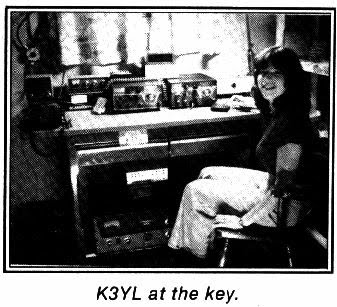 The rise of RadioSport talent begins in earnest and record makers are found throughout the pages of this article. Talent incubates somewhere albeit in the second chair while engaged in building the station that takes one or a team into the Box. They were younger men whose competitive spirit still burns brightly even today.
Operator Skill.
The captains of RadioSport like K3LR, K1AR, and N6RO are positioning themselves for long term success, essentially, as Cox and Brockman (1980) pointed out, “[I]ncreased operating skills were needed to cope with the onslaught…” (p 46)
Skill is an irreplaceable asset in any competitive sport. Technology continues augmenting and/or enhancing the enjoyment of our sport however it cannot diminish the importance of developing one’s RadioSport skill set. Physically sending Morse Code, listening before jumping into the swarm, understanding the vagaries of propagation, constructing antenna systems from one’s hands, are a few examples of skill building activities.
Controversy Rages On.
There is not much distance between 1979 and 2010 when reading about problems that plague competitive sports. RadioSport is not much different neither are we terminally unique when there are those who flagrantly violate the rules. Cox and Brockman cited infractions such as excessive power, unsportsmanlike operating techniques, and violations of the single operator category as problematic (1980).
I particularly like this quote, “When the statement you sign on the summary sheet becomes meaningless, it only serves to diminish the satisfaction of the achievement.” (Cox and Brockman, 1980, p 46).
Technology is now delivering the capacity to enforce rules from software defined receivers to audio recordings. I want the statement that reads I followed the rules to have credibility and meaningfulness at the end of the day.
Multi-Multi Titans in 1979 were K5RC, N4AR, and W3BGN.
Single Operator All Band in the United States was K1AR.
Single Operator All Band World was EA8AK.
Top Three Clubs in the United States were Frankford Radio Club, Yankee Clipper Contest Club, and Potomac Valley Radio Club.
Top Three International Clubs were Rhein Ruhr DX Association, Lithuanian Contest Club, and Voroshilovgrad Radio Club.
I’m still curious if any club west of the Mississippi garnered a top three position in the United States for at least two consecutive years? RadioSport history suggests otherwise and may explain the competitive importance of Sweepstakes for the West Coast.
73 from the shack relaxation zone.
Reference: Cox, B. K3EST, Brockman, L. N6AR (1980, October). CQ Magazine: 1979 CQ World Wide DX Contest: C.W. Results. pp. 46 – 64.

First sporadic-E of 2010
I heard a little bit of sporadic-E propagation on 10m this afternoon. Tuning around the beacon segment I heard the beacon DK0TEN on 28.257.5MHz quite strongly for about a minute before it faded away.
There have even been some contacts made and beacons heard on 6 metres, according to VHFDX.info. Let’s hope for some good openings on VHF this year.

Switcher interference
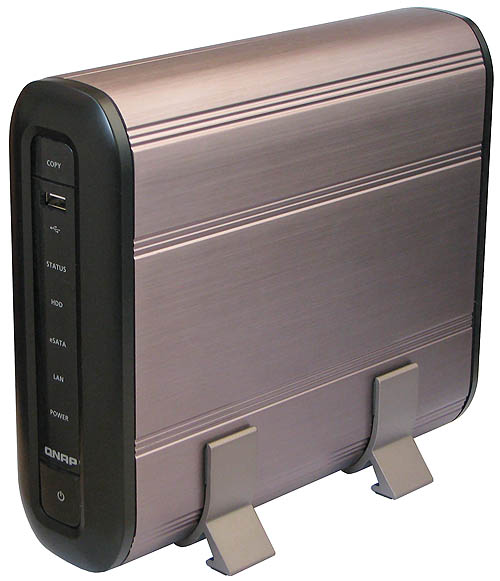 I was tuning around the top end of 10m yesterday and noticed a lot of strong bubbly warbly noises, the unmistakable sound of switched mode power supply interference. It didn’t take long to track this down to the power supply for my QNAP TS-109 Turbo Station.
The TS-109 is a network attached storage device. But it is actually a small computer with a big hard drive, running Linux. I use it mainly as a backup drive for all our PCs, but it also hosts the shared documents folder so that we can easily exchange files from one computer to another. It runs a script that updates DynDNS when our IP address changes, which it does quite often at the moment. I could even run a web server on it if I wanted. So it really needs to run all the time. But the amount of interference it produces isn’t acceptable. I tried adding some clamp-on ferrite suppressors but they didn’t make much of a difference.
The power supply for this device is a plug mounted switched mode supply rated at 12V 3A. This is probably over-generous as the specification for the TS-109 gives the power consumption as 14.4W in operation. There are plenty of alternative 12V switched mode supplies available but I have no way of telling whether they would be better or worse than the manufacturer-supplied one as regards RF interference.
The only transformer based power supplies capable of supplying this sort of power are CB radio power supplies such as those sold by Maplin which have a 13.8V DC output. QNAP doesn’t, unfortunately, specify a voltage range for the Turbo Station so I don’t know if this higher voltage would be permissible. It would be very convenient if I could use the power supply I made for my QRP K2, which these days just keeps the K2’s battery charged up, but the output from that is 14.2V.
Switched mode power supplies really are the bane of the radio amateur’s life. I don’t know how to solve this problem at the moment, except to switch off the TS-109, which is inconvenient.