Archive for the ‘Uncategorized’ Category
 Baffled
 May 27th, 2010 |
  Author:
 I don’t know if it’s just my advancing years but increasingly I find new technology and the direction it is going in completely incomprehensible. Phones are becoming so complicated that they can now only be understood by teenagers. But the topic of today’s rant is computer sound cards.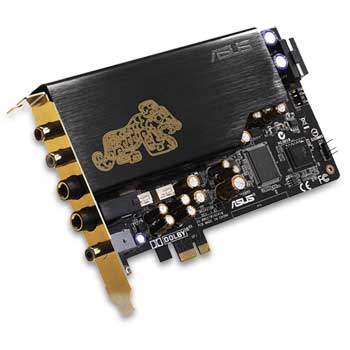 One of the reasons I prefer a desktop or tower PC in the shack is that you can install additional soundcards in them. This allows you to interface with one or more radios for digital modes, EchoLink and so on and still have normal computer sound available. Yes, you could do this with a laptop and external USB soundcards. But it has always seemed to me to be better RF practise to have the digital electronics inside the nice tightly screened metal PC case with only screened cables going from the PC to the radio. USB looks like a radio amateur’s nightmare with these often unscreened cables carrying high speed data and the USB devices usually in completely unscreened plastic cases radiating digital hash everywhere. In fact I would not be surprised to find that the proliferation of USB devices is mainly responsible for the increasing HF noise environment that one day soon will result in my giving up HF altogether.
Once upon a time you could buy a 16-bit soundcard for £15 – £20 ($25 – $30) that was more than good enough for computer sound or amateur digimodes. But one of the advances in computer technology has been the disappearance of PCI slots. The new computer I bought a few months ago, to my surprise, turned out to only have something called PCI Express slots, for which the cheapest sound cards available cost around £70 ($100.)
The specifications of these “bottom end” PCI Express soundcards are way above what I need to either listen to computer sounds and video soundtracks on my PC speakers or decode PSK31 signals. Why do ordinary computer users need 24-bit 96kHz recording or a direct digital input? What on earth is “sound output 7.1” and why do I need three or four different speaker outputs (the presence of which make finding the socket for the PSK31 TX audio by trial and error while groping round the back of the PC in the dark about as likely as winning the lottery?)
I understand that some people might want these features but those who didn’t want them weren’t forced into buying them because more basic products were available. Who decided the simple, stereo 16-bit soundcard without 3D special effects such as computers had for years was no longer needed by anybody?

What frequency standard?
I think the frequency readout of my IC-910H is out by about 400Hz and unfortunately I can’t receive any accurately calibrated beacons like GB3VHF to set it with. I also like to check my K3’s calibration from time to time and would like to take advantage of the option to lock it to a 10MHz frequency standard should Elecraft ever provide it as originally promised. So I decided to have a look on eBay for frequency standards.
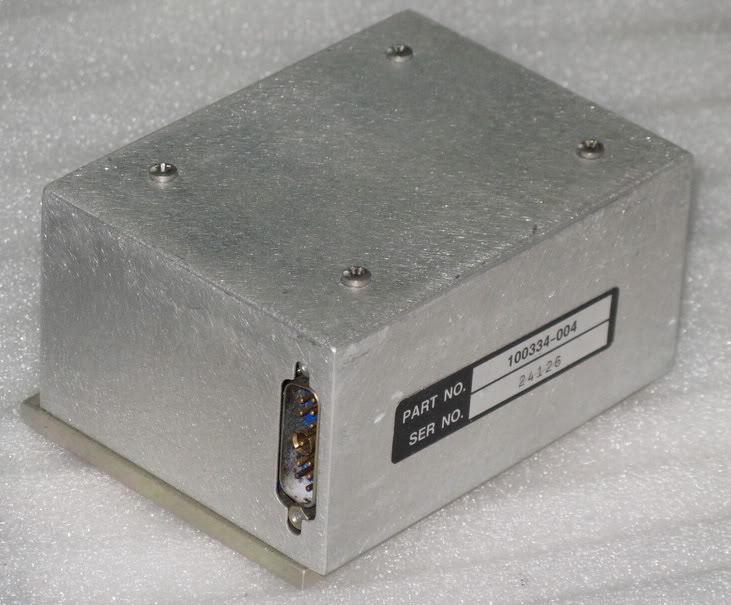 There seem to be a number of ex-equipment 10MHz rubidium frequency standards at prices starting from around £50 – which is about the right level for me – available from China. For a bit more you can have a GPS locked time and frequency standard, though where time is concerned the NTP software is good enough for me. There is also a smart looking Quartzlock off-air frequency standard, though that is a bit outside my price bracket for this and would take up a bit too much space for the G4ILO shack.
I don’t know anything about this equipment and aren’t sure if any of these things would be any use to me. The rubidium frequency standard pictured has a frequency adjustment setting which surely defeats the object. If you need to calibrate it against something else then that’s no use to me. I want something of known accuracy to calibrate my radios against. Perhaps the GPS type would be more useful?
Does anyone know about these things?

USB – the shortsighted interface
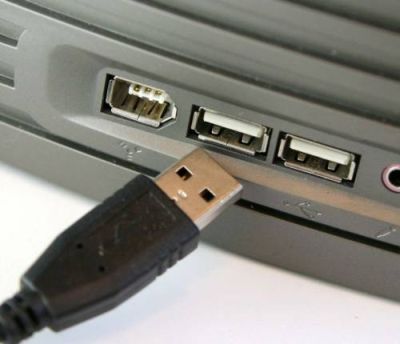 In his review of the Yaesu FTDX5000 in the June 2010 issue of RadCom, Peter Hart G3SJX criticizes Yaesu for not providing a USB interface as Icom does with its IC7600 transceiver. This same criticism is frequently made by new users or prospective users of the Elecraft K3. I think it is an extremely shortsighted view and I’m surprised to hear it from someone of G3SJX’s experience. This seems to be another example of the “it’s newer technology so it must be better” attitude that seems to be taking root in the hobby.
The RS-232 serial port has been around since long before the personal computer. It has not been used for “consumer” equipment since the days when printers and modems came with a serial interface, which is why RS-232 ports are no longer provided with new PCs. But it is nonsense to claim that RS-232 is obsolete because of this. Adding a couple of serial ports to a PC is simply a matter of opening the case and slotting in an RS-232 board. Granted, it isn’t as easy if you are using a laptop, which is why RS-232 to USB adapters exist. But expandable desktop or tower PCs have so many advantages that why anyone would choose to use a laptop for their shack computer beats me.
Icom uses USB not just for computer control but also for audio so the IC7600 doesn’t need the sound card and requires only a single cable to connect it with the PC. This is an innovation that has obvious marketing appeal – which is no doubt why Icom included it. But it’s a benefit that can only be enjoyed by users of specific versions of Windows. If you use Linux, Mac OS, Windows 2000 or earlier or Windows XP 64-bit you’re out of luck. RS-232 on the other hand is supported natively by just about any computer running any OS, by microcontrollers and even by non-computer devices like Ethernet serial port servers. It offers far more choices, even if most of those choices are only of interest to a minority of users.
Buy a device with USB and you are dependent for its continued usability on the willingness of its manufacturer to develop drivers for as yet unreleased operating systems. I’ve had to junk perfectly good printers and scanners in the past because the latest drivers were for Windows 98 or Windows 2000 and the manufacturer did not produce any for Windows XP. Most radios have a life of 20 or 30 years, considerably longer than most computer hardware, so designing into them an interface that itself may have been replaced by something faster and better in the PCs of 10 or 15 years time seems to me very shortsighted.
Icom chose to provide a Windows-only supported USB interface on the IC7600 for purely marketing reasons. Elecraft arguably made the best decision with the K3 by not just providing a true RS-232 interface (not a lame TTL version requiring an extra-cost level converting cable) but also making the DTR and RTS signals optionally usable for PTT control and CW keying. Although separate audio cables and use of a sound card are needed, Elecraft included isolating transformers so no separate interface (RigBlaster etc.) is needed. If Yaesu chose to emulate this aspect of the K3 design as well then it should be commended not criticized.

Intek H-520 battery trials
On my first outing with the Intek H-520 Plus handheld transceiver a week ago I found that the batteries died as soon as I pressed the PTT. It turns out that this is a very common problem with this transceiver. M3XEM has even made a video about it which he has posted on YouTube.
After trying some different NiMH cells, freshly charged, my H-520 seemed to be happy using my longer whip antennas, though it still wouldn’t work with the supplied mini-whip. But after only a little use of the batteries it began cutting out again when using a 2ft centre-loaded whip. The only antenna it would still accept was the 4ft whip with counterpoise. I felt that something wasn’t right, so I decided to investigate.
I measured the battery voltage and current. The batteries were not freshly charged but had been used on Sunday to make numerous calls though no contacts. With the radio turned on and receiving the current drain is 90mA and the battery voltage was 7.71V. This is substantially above the 7.2V nominal voltage which suggests that there should be plenty of life still left in the batteries. This was confirmed by the battery state indicator.
I then transmitted into a dummy load. On the 1W setting (with slightly under 1W output) the current drawn was 750mA. On the 4W setting (with about 3.5W measured output) the current drawn was 1.3A. The voltage across the batteries whilst full power was being transmitted dropped to 6.75V, significantly less than the 7.2V nominal voltage. The current consumption is not excessive in comparison to an FT-817 which is specified to draw up to 2.0A at 5W output. One factor contributing to the voltage drop is the use of separate AA cells. Most handheld radios use battery packs in which the cells are welded together to minimize resistive losses.
The radio still worked fine at 6.75V, but this was transmitting into a dummy load. On most of my 10m antennas – and as observed by M3XEM – the battery voltage would fall away after a couple of seconds and the radio would cut out and restart. I tried to measure the voltage across the batteries when using the two short whips and it fell right away to 3 or 4 volts! This explained why the radio cut out and restarted. It must be drawing a lot of current to cause such a large drop, but I was unable to measure exactly how much as the radio’s voltage sensor cut the power to the TX too quickly for my meter to catch the reading.
My conclusion is that when presented with a load that is something other than 50 ohms, the PA of the H-520 draws an increased current. This effect is significant enough that the radio cuts out even on the 1W setting using the mini-whip antenna. This current draw may be more than rechargeable AA cells are designed to sustain, quickly pulling the voltage below the “low voltage” sensor level.
The transceiver isn’t really “eating the batteries” as some users have claimed, as the cells quickly recover their original voltage when the load is removed. The problem is purely and simply poor design which causes the PA to behave in this way and draw too much current when presented with a mismatch. As can be seen from the schematic (which is included in the manual) there is no SWR protection to back off the power.
It is very unlikely for a whip antenna on a hand held radio to present a perfect match, so the H-520’s performance in this respect is lamentable. As I noted in an earlier post, the supplied whip antenna was found to give its best match at 28.5MHz. It would present a high SWR on the UK and EU CB frequencies that most buyers of this radio would use and I doubt if any buyer of this particular radio would have found it possible to use the highest power setting with this antenna.

Fun on 10m
Another glorious day and Olga and I took a picnic lunch up to Watch Hill. We go there not because it is a SOTA summit but because it is near home, a nice walk, not a steep climb (so Olga is happy to come with me) and one of the easiest operating sites for me to reach when I want to get away from all the electronic QRN I’m plagued with at home. Unfortunately there isn’t a picnic table up there and I haven’t yet found a way to support the MP-1 antenna on a bare hilltop. Using a right-angled PL-259 adapter and a 259 to 3/8 adapter on the back of the FT-817 only works if you have a level surface to put the radio on and no breeze. So despite taking them with me I wasn’t able to get any use out of them. No doubt a photo tripod would do the job but that is too much ironmongery for me.
I did also take the Intek H-520 Plus and a couple of BNC mounted whip antennas but although there clearly was propagation on 10m I didn’t manage to work anything. I did hear something puzzling though. After one call on 29.600 I heard what I’m sure was a native English speaking voice announced something on the lines that this was the EA????? repeater. Unfortunately I’m getting increasingly slow witted these days so I don’t remember the exact announcement nor the full call and I didn’t hear it again. 29.600 is supposed to be the 10m FM calling frequency and not a repeater output so what could it possibly have been?
Back home later in the afternoon and VHFDX.net showed that there was a big Sporadic-E opening on 6m and even 2m in Eastern Europe. I decided to try 10m which seems to be the neglected band and managed to make several contacts including a new country for me, OD5NH in Beirut, Lebanon.

2010 Field Day
The Beach Boys Amateur Radio Club went to work on Saturday morning and rested five hours later after prepping antenna systems. I was tired and a few aches reminded me that taking care of myself is really important. Our team enjoyed its morning and afternoon beneath the solar disc with the blue Pacific over our shoulders. The day was ideal for tackling Field Day logistics and preparation.
We are passionately committed to our project goals such as ham radio fun, operating outdoors, learning, and deploying a competitive signal from our location. The Beach Boys Amateur Radio Club is an informal group letting our enthusiasm for the hobby drive our organizational goals.
Tower.
Our antenna systems arrived to include a 30 foot tower, a tri-bander, a vertical, a VHF quad, and a flat top dipole. The biggest challenge inside the project is the tower. We brainstormed safety principles and focused on the tower base plate. It required 3 foot steel stakes with clips and washers. The team concurred that a stake system in addition to proper guying will maximize our safety.
Our next goal is a practice run at deploying and guying the tower with the tri-bander attached to the rotor mast while keeping safety in mind at all times. Additionally, keeping the rules out in front of us, the entire system is dissembled prior to Field Day operation.
Flat Top Dipole.
Ham radio fun picked up momentum after a pair of operators slung rope into a pair of trees for the flat top dipole. Theoretically, launching rope into tree branches as easy on paper as it seems, is not a straight forward process. It was work and required a few attempts before achieving success. The moment was sweet when we fired up a TS440S on 40m lower sideband and logged a Nevada along with a California station.
The buzz around the work party, “What was the signal report?”
Vertical.
Another team of operators deployed our vertical antenna system for operational testing on the low bands. It’s intentionally positioned at the furthest end of our site to thwart cross band interference. There is nothing more discouraging when stations begin interfering with each other. It is the fast track to frustration.
Counterpoise is everything for a vertical. Pundits may say otherwise, however, I advocate wire beneath one’s vertical. We have the benefit of a large metal-like cage near the feed point surrounding this antenna as an added bonus. The antenna analyzer data suggested reasonable standing wave ratio although I’m learning how-to calculate efficiency.
Additionally, we will deploy a rudiment counterpoise system of quarter wavelength radials or near quarter wavelength given our on-going debate. This system will be above ground but not equal to the height of the feed point.
Conclusion.
The Beach Boys Amateur Radio Club party benefited all those in attendance. We tested two out of three antenna systems, assembled the tower with rotor, improved base plate security, and ended the day exhausted. Everyone enjoyed working outdoors, getting their hands dirty, and learning about antennas in preparation for this year’s Field Day.
73 from the shack relaxation zone.

Announcing HOLeS
We're still finalizing our complete feature list and rate schedule, but here are the basic options and rates so far:
Base Packages:
Basic Service $99.99/month
Deluxe Service (your own URL like www.mydomain.com): $125/month
Options:
QSL Card Printing Capability: $25/month (Lets your users print out cards)
Awards Programs: $50/month (Offer your own awards like WAS and DXCC)
RSA QSL Card Authentication: $25/month
Triple DES QSL Card Authentication: $50/month
Modern Logbook Program Uploading Capability: $75/month
DOS or CP/M Logbook Program Uploading Capability: $250/month
Logger32 Program Uploading Capability: $450/month (Support for Logger32)
Ham Blacklist Feature: $125/month (Lets you block select users)
Rare Country Shopping Cart: $200/month (Lets your users buy rare countries and you make $$$!)
HTML Frames and Notepad Support: $25/month (You can customize your site with Notepad and use frames)
Alternate Fonts: $85/month (Use fonts other than Times New Roman on your site)
As with LOTW, eQSL, and QRZ.com, all online logbook sites hosted on HOLeS will be totally incompatible with other online logbook services and will not interface with them to exchange QSL information. This includes other online logbook services hosted on HOLeS.
Later this summer we're also going to offer a ground-breaking service called Logbook Uploader of the World or LUTW. This service will manage multiple online logbook subscriptions for amateurs, giving them a one-stop-shop to upload and download their logs and QSLs. Users will pay a LUTW subscription fee, and LUTW will pay subscription fees for all the online logbooks the user wants to manage through LUTW. LUTW adds a 40% service fee per managed online logbook, but we feel this will be well worth it to manage tens or hundreds of online logbook subscriptions, potentially savings users hours of frustration uploading and downloading time and having to deal with logbook program compatibility issues.
We're proud at The K3NG Report to support the needs of amateur radio operators and to be on the forefront of technology in this great hobby. Stay tuned for more announcements!














