Archive for the ‘Uncategorized’ Category
 Free grid mapping software for all you VHF’ers (and up!) – WorkedGrids from Bertrand Zauhar, VE2ZAZ
 June 8th, 2010 |
  Author:
  Every now and then, a little gem comes along, something that just works right.
I recently stumbled on a piece of software called “WorkedGrids” by Bertrand Zauhar, VE2ZAZ. This software, of course, is geared towards those of you in the VHF and up crowd. Satellite, VHF/UHF/Microwave sidebanders and such. Bertrand describes it as:
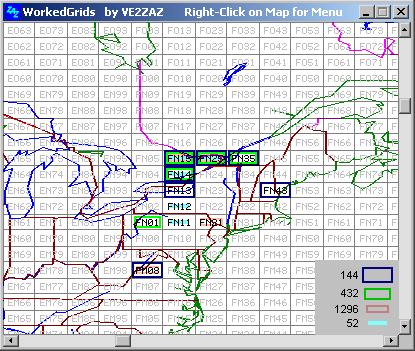
WorkedGrids is a Windows application that displays a map showing the amateur radio grid squares contacted and logged in using a third-party logging program. WorkedGrids uses colors to display information on a per-band basis. Up to four bands can be displayed concurrently.
As you can see by the image on your right, there are plenty of color coded grid squares telling you how you worked a station. Swell stuff really! Being a “1 call”, I thought it was neat that the image he uses on his site was centered right on my area. Some of those spots are indeed hard to work, but I digress…….
The beauty of this software is it’s not “logging” software, it’s really QSO mapping software. You use your logging program of choice. If it doesn’t have a similar feature, you can export your log and then load it into this program and Voila! All set.
System requirements:
Operating System: Any 32-bit version of Windows from Windows 95 to Windows Vista. Most likely 64-bit versions of XP and Vista as well, but untested so far.
Minimum CPU Hardware: Pentium-Class CPU, preferably Pentium-II or faster for quicker map refresh.
Display: 640×480 or higher resolution, 256 colors or more.
Disk usage: 1MB
Typical RAM usage: < 10MB, varies as a function of Map window size.
So why not give this gem a try? You can find it at:
Another K3 panadapter option?
Cross Country Wireless recently introduced a new product, a built, boxed and ready to use SDR receiver that is optimized to work with the bog standard sound card provided with every computer. It covers two 48kHz segments which may be on one or two bands using a switched local oscillator. At £49.95 it looks like something of a bargain.
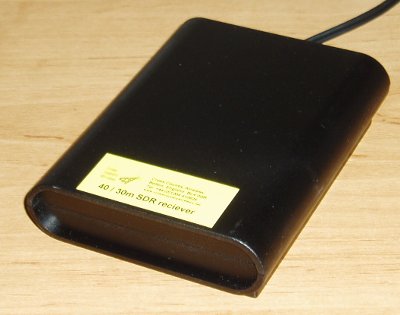 I was looking at the product’s web page this evening and the thought occurred to me that this might make a rather good inexpensive option for a panadapter for the Elecraft K3. It would need a different crystal to cover the K3 IF output frequency which is 8.215MHz, but that shouldn’t be a problem. CCW might even offer this as a stock option if there was a demand for it.
As the receiver covers 40m and 30m everything else should work OK unmodified. The key point would be whether there is adequate isolation to prevent the local oscillator leaking into the K3 IF and desensitizing the receiver – the reason why most people use a buffer amplifier when using SoftRock boards for this purpose.
I don’t have a great urge to have a panadapter display and I already have three sound cards (well, one and two USB sound modules) in use with my shack computer so this isn’t something I’m planning on trying. But I thought it might be worth mentioning the possibility for other K3 users. Even if the idea is a non-runner, the Cross Country Wireless receiver still looks like a very nice product.

QSLing made easy
As regular visitors to the site will know, I’m a big fan of eQSL. I don’t need QSLs for awards because I don’t chase them, and in a hobby that has embraced the internet in just about every other aspect electronic QSLing seems to me to be the most logical way of confirming a contact that saves time and money. And more important than that, for me, is that it relieves me of a tiresome chore.
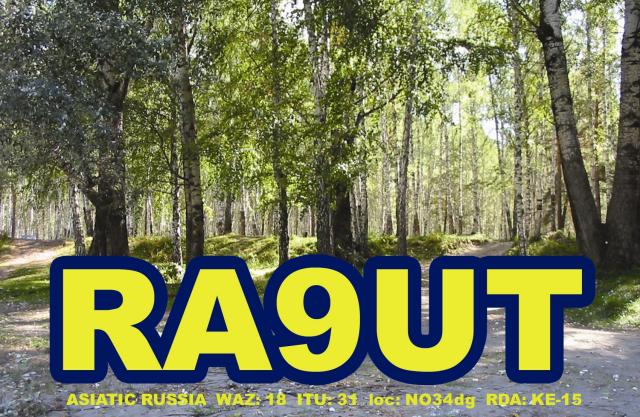 So when I read about GlobalQSL in John Harper AE4X’s blog my immediate thought was: Why haven’t I come across this before? As you’ll see if you follow the links, it’s a service that prints QSLs on demand and sends them to the bureau. You export your log to an ADIF file, upload it to the service, pay, and the job is done. As with regular printing services there is a minimum order of 100 QSLs and the price drops if you send 1,000 or more. You can also order blanks to be sent to yourself for direct QSL requests.
There is a free QSL designer program (for Windows) that you can download from the GlobalQSL site and use to design your card. As you can see from the sample above (and others on the site) the results are very professional and leave nothing to be desired. You can order 10 samples sent to you from your design for $8 to test the quality.
I created an account (it’s free), logged in and found that there were 14 QSLs already printed and sent to me. I think GlobalQSL is a brilliant idea that retains the convenience of electronic QSLing but allows you to satisfy those contacts who prefer to receive real QSL cards.

Beach Boys Amateur Radio Club 2010 Field Day Prep
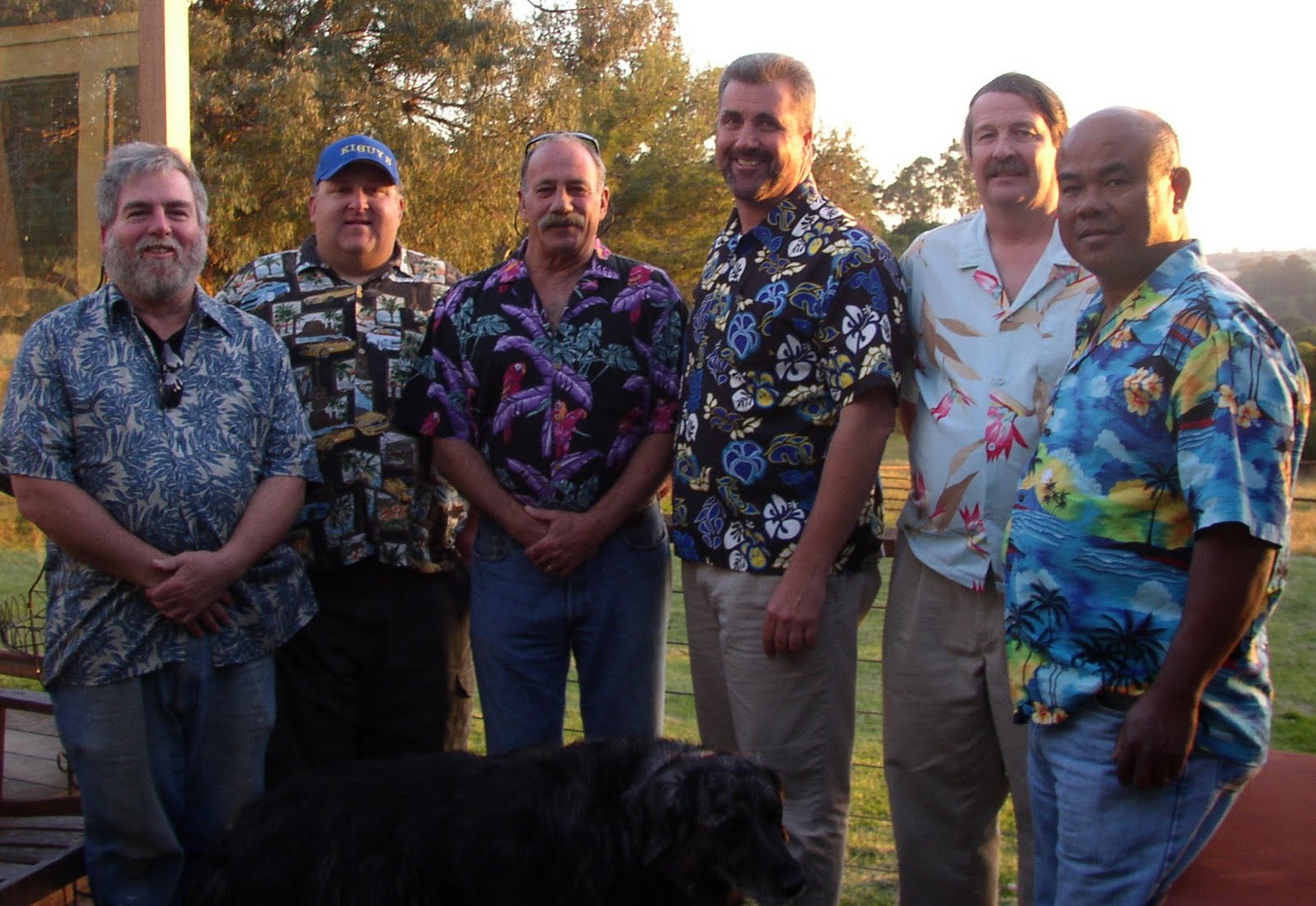 Photograph 1 Beach Boys Amateur Radio Club located near Pismo Beach, California. Our only requirement for membership is a willingness to enjoy ham radio and wear a Hawaiian print shirt.
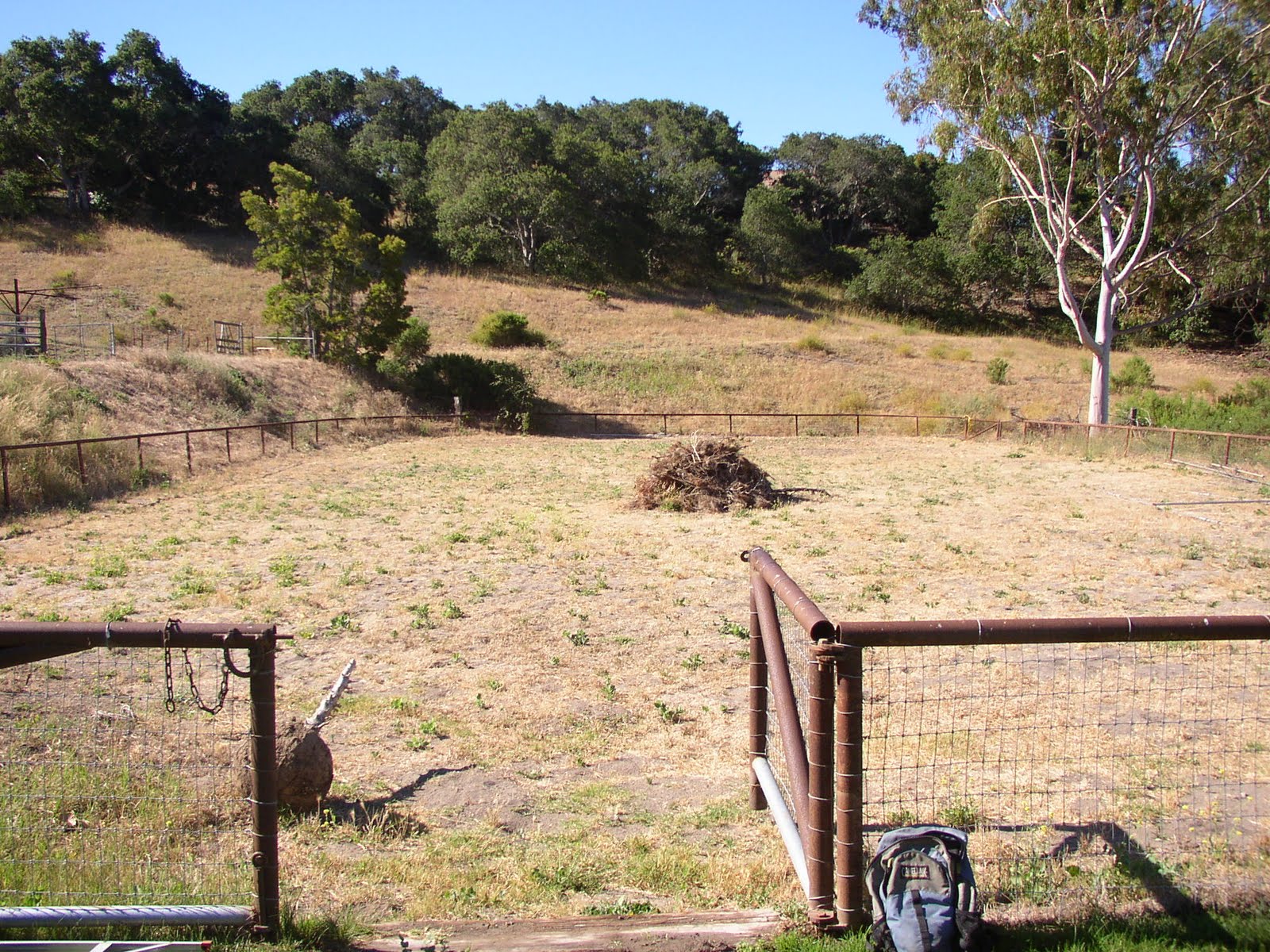 Photograph 2 is our field day site and note the arena’s metal fencing.
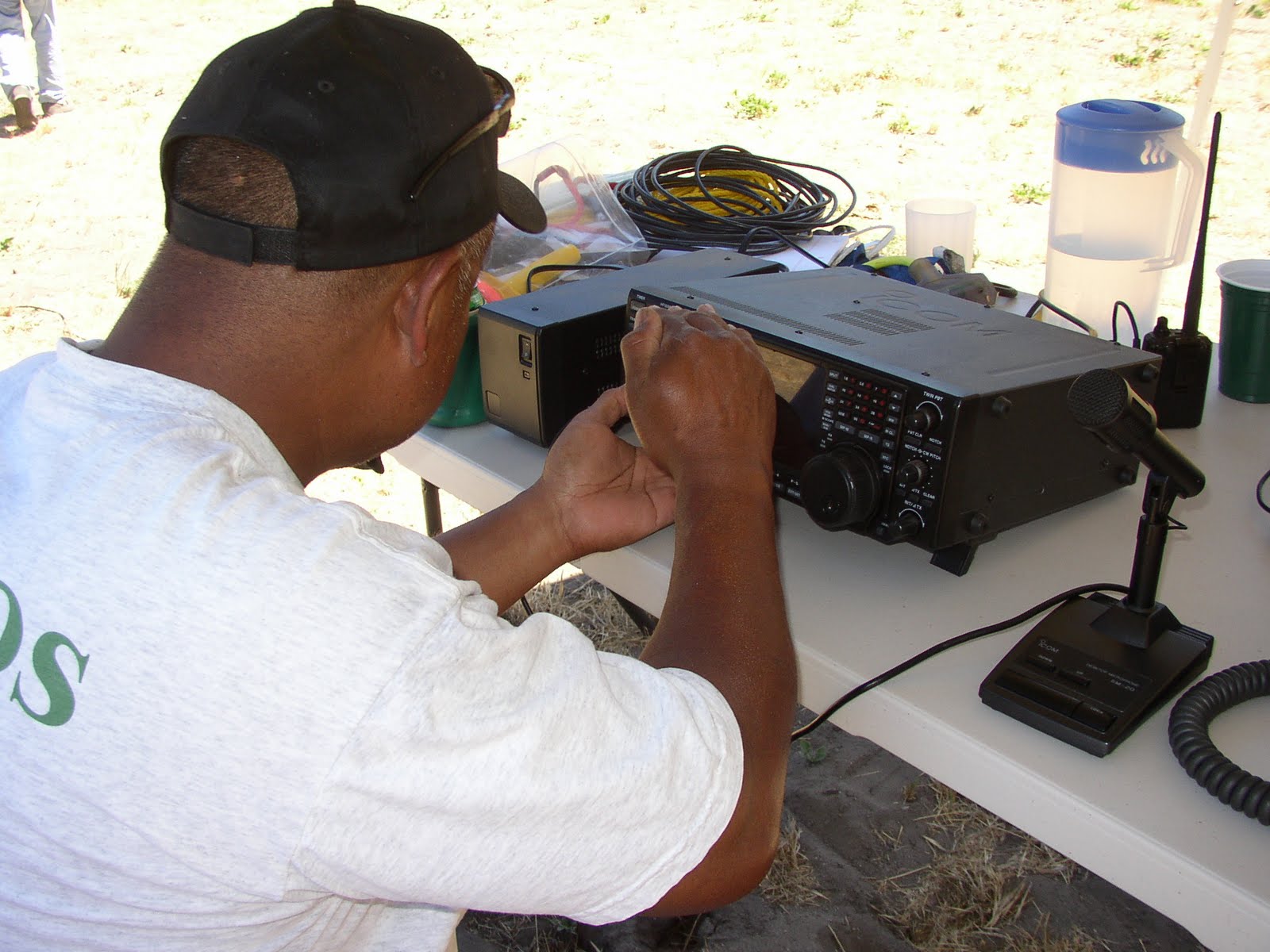 Photograph 3 is Emerito, N6ETO at the controls of an ICOM ProIII — one of two for this year.
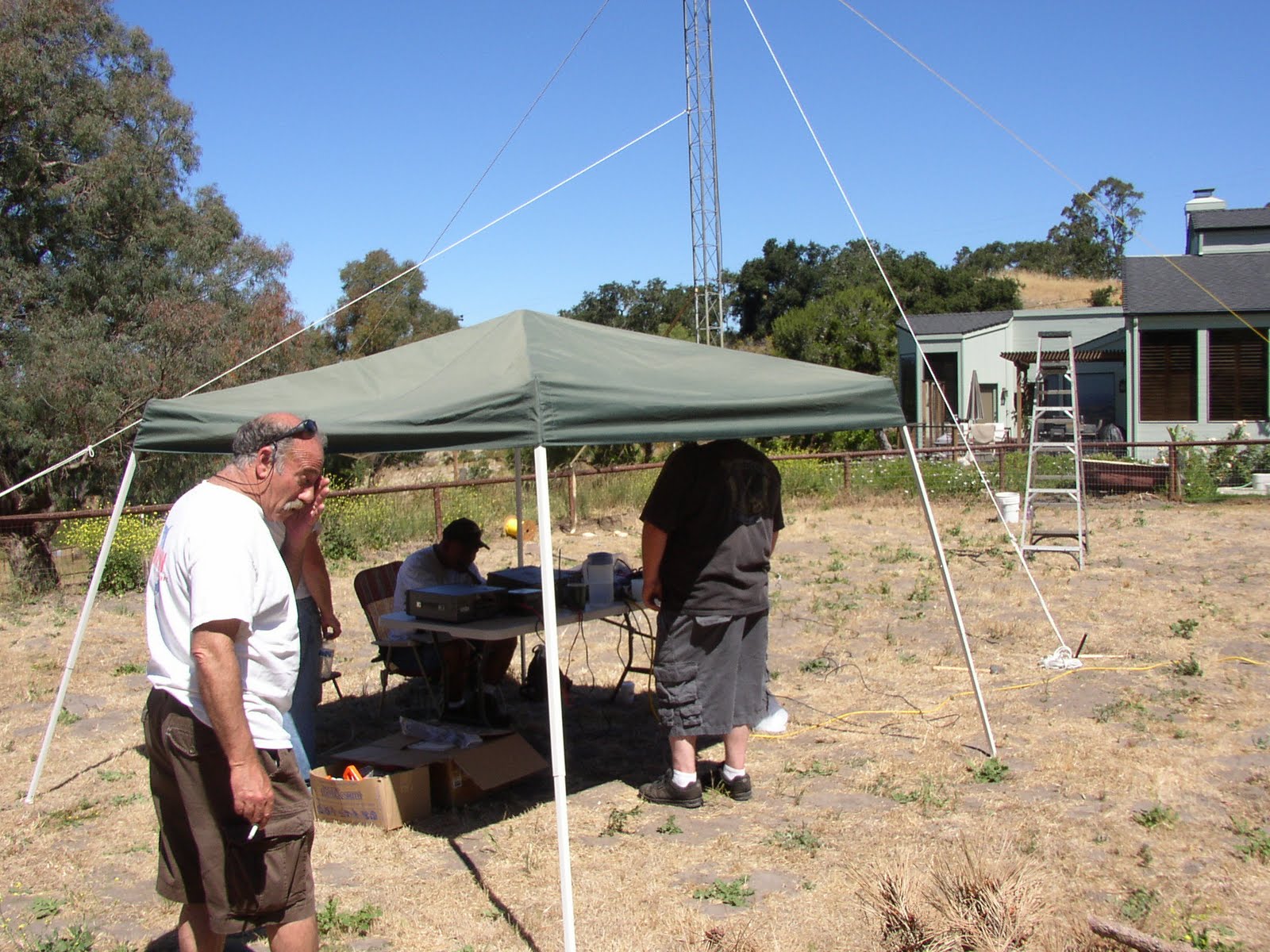 Photograph 4 is Fred, KI6QDH who is our local ham radio motivator and 6 meter grid square chaser.
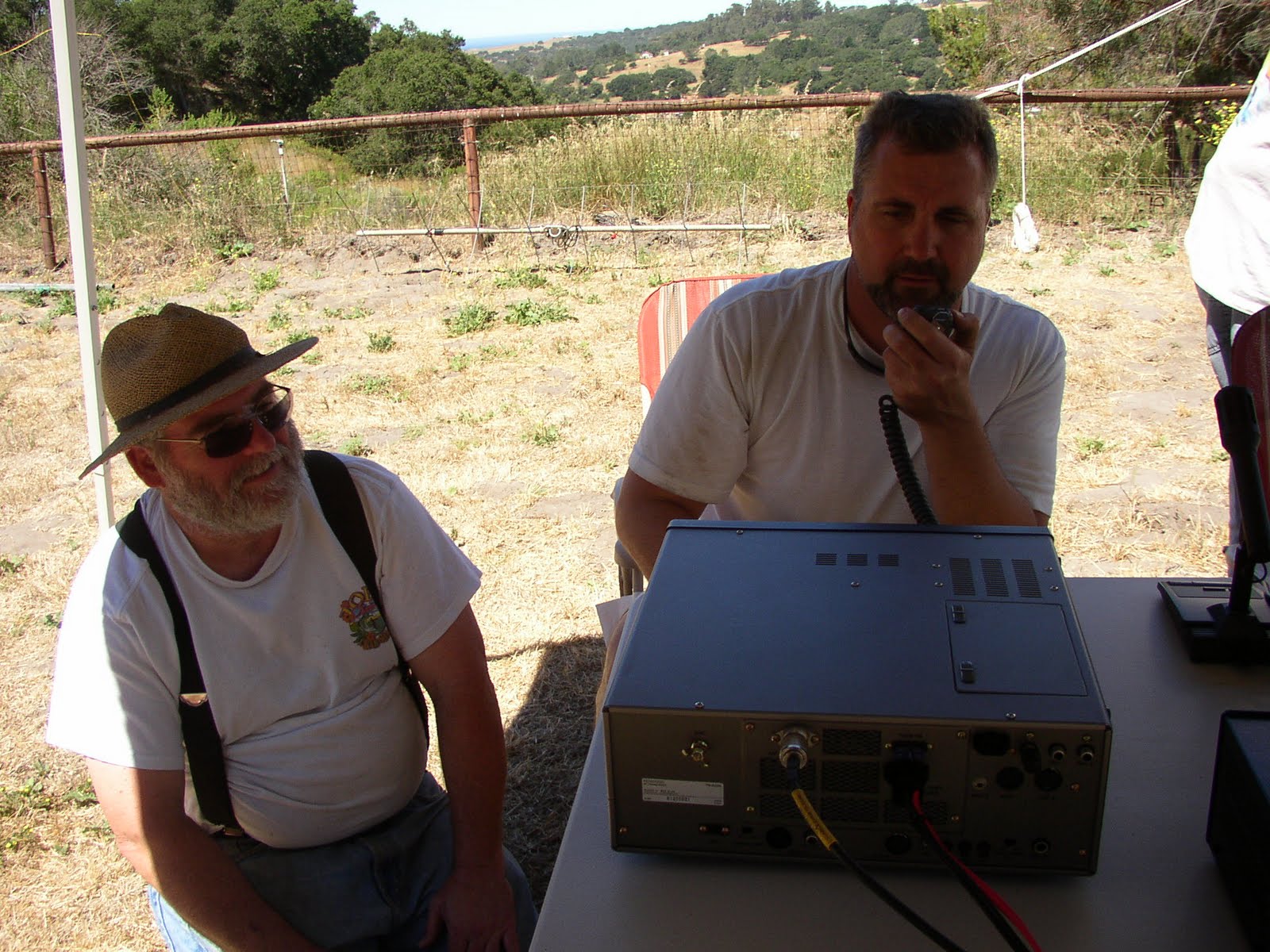 Photograph 5 taken of John, KG6RWF and I while operationally testing our field day equipment to include a Kenwood TS850S.
 Photograph 6 taken while I logged K6D a special event station commemorating donuts in Southern California.
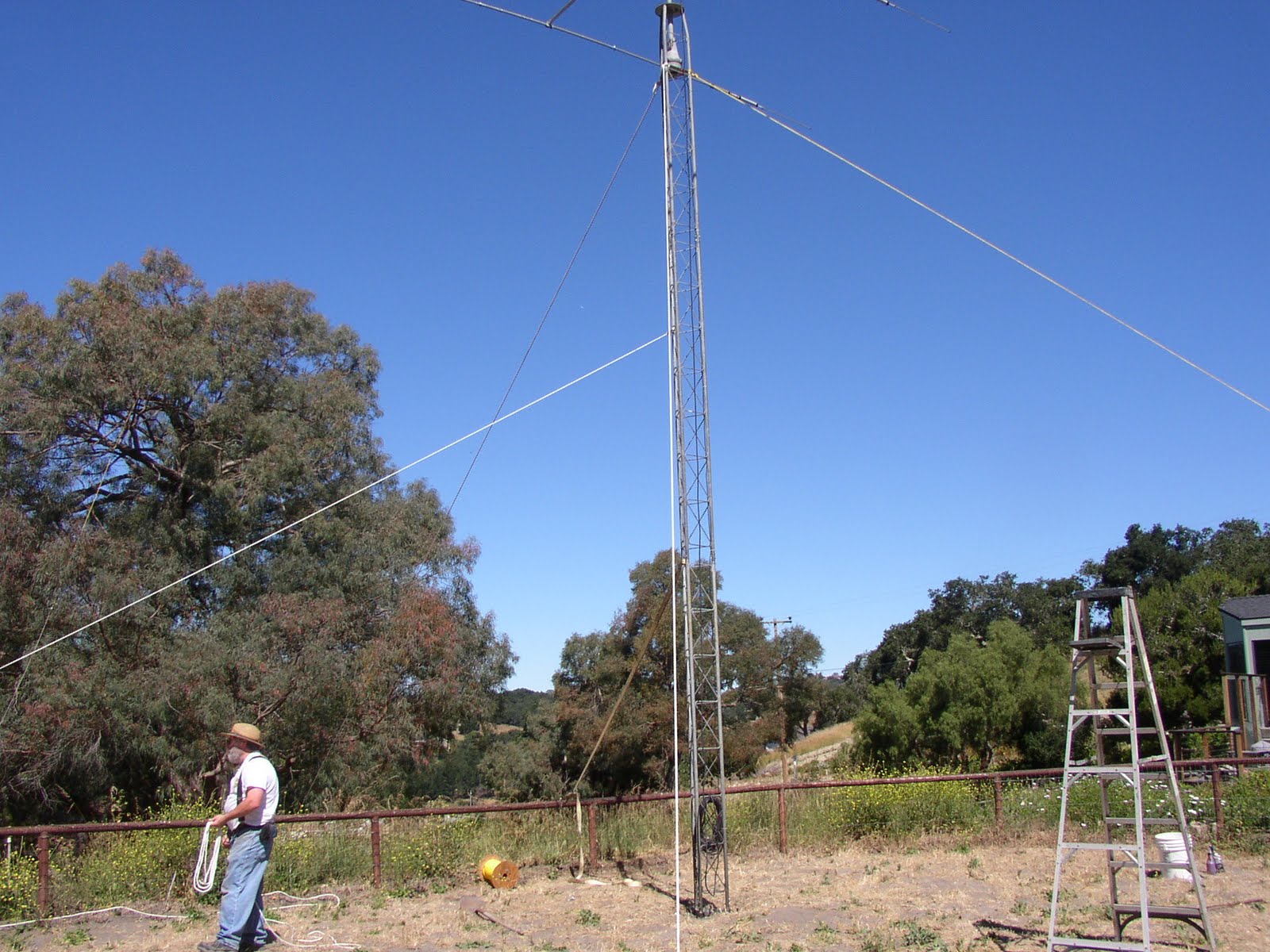 Photograph 7 taken after BBARC successfully deployed our field day tower. It is all about safety when working in and around a tower.
 Photograph 8 is our tri-bander waiting for signals. We heard E4X working a 5 KHz wide swarm on 20m Morse code this morning.
 Photograph 9 taken while we prepared the tower for deployment.
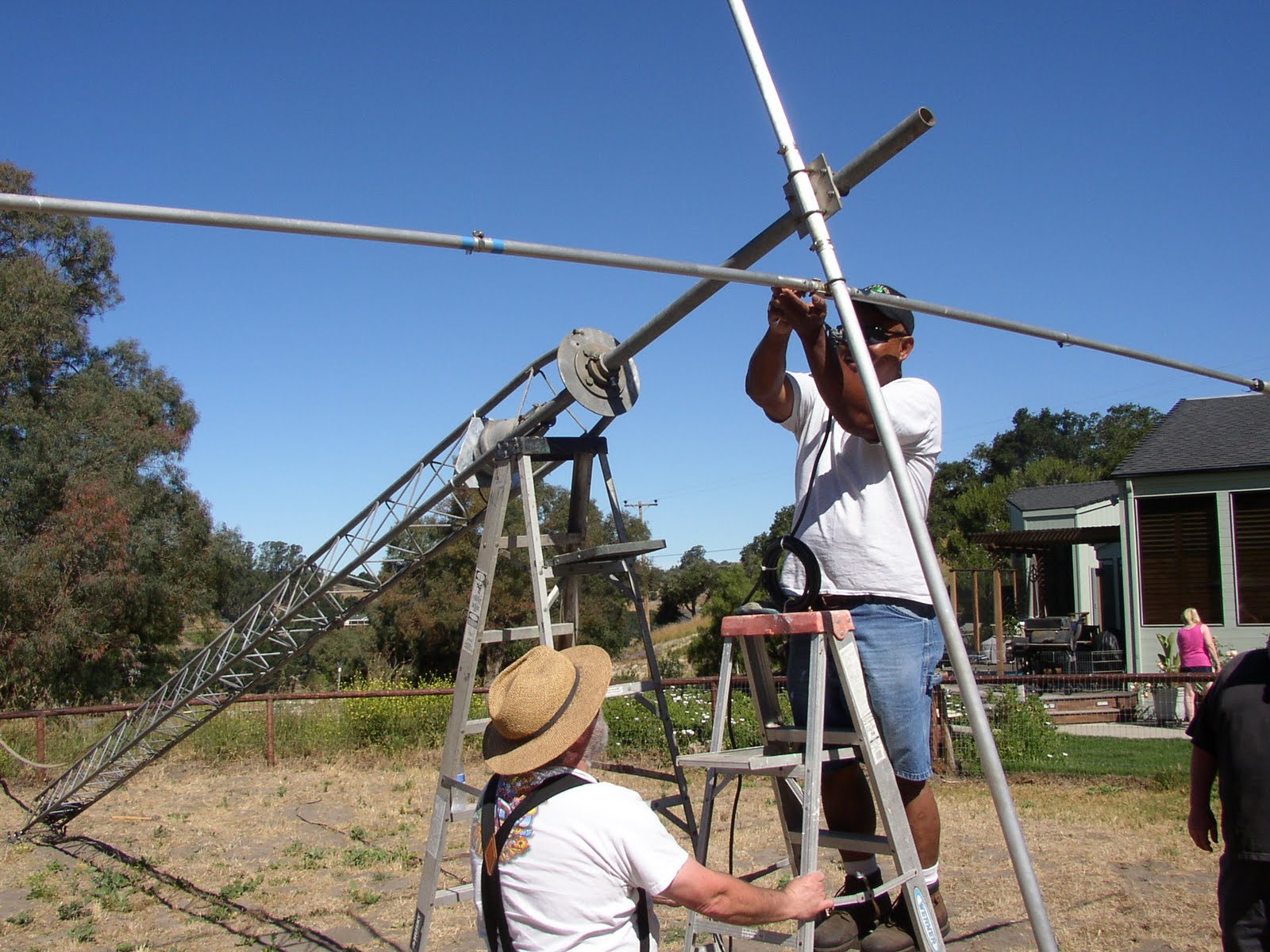 Photograph 10 taken of Emerito, N6ETO making an adjustment to the tri-bander driven element prior to hoisting operations.
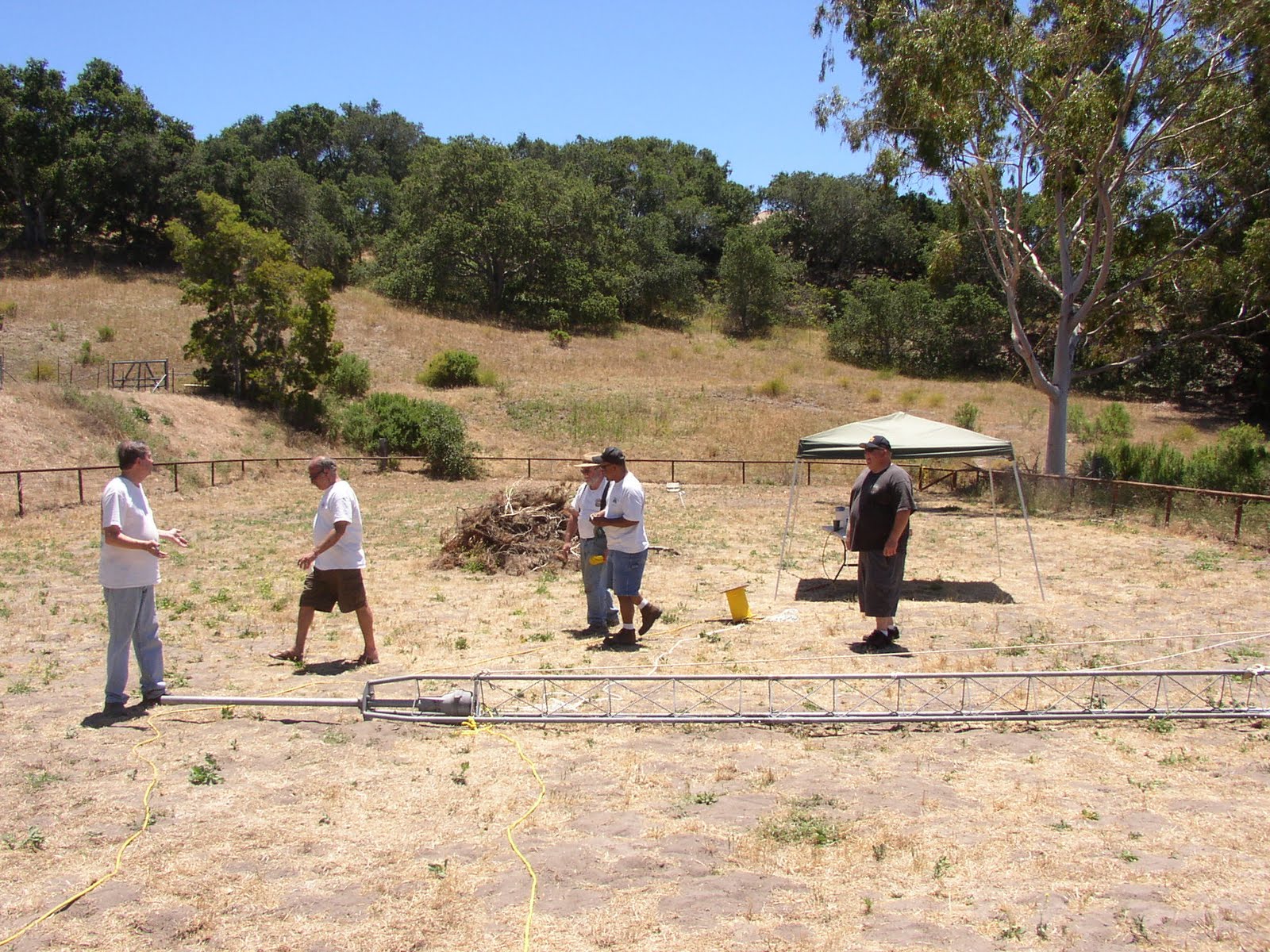 Photograph 11 is the tower after we successfully stowed our tri-bander antenna. Our goal was slow and steady as the tower made its descent. We are planning additional guys at the mid-section as well.
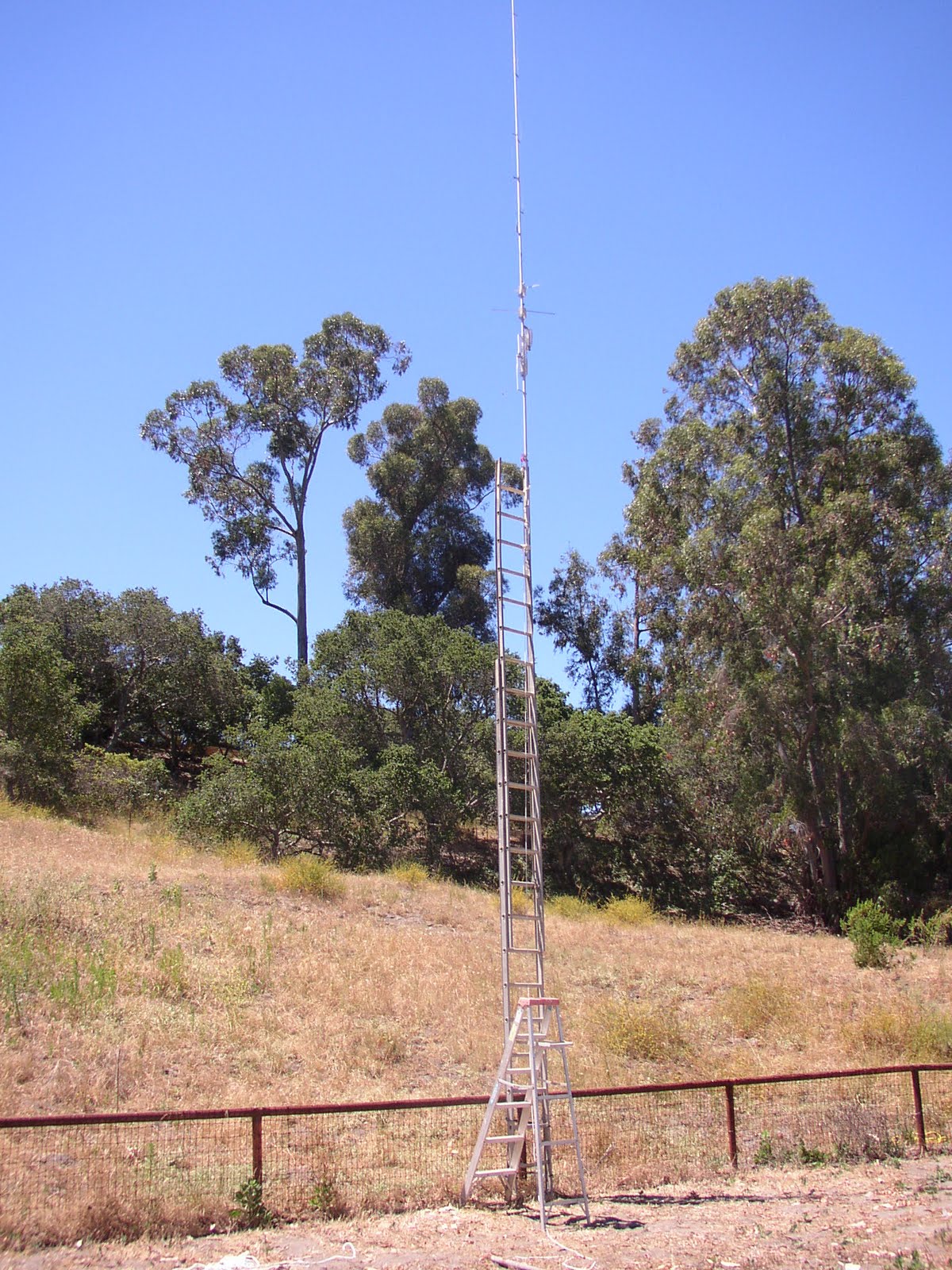 Photograph 12 is the Butternut HF9V at the opposite end of the arena. We will install a counterpoise system and ground to arena fencing prior to official operations.
73 from the shack relaxation zone.

Shack spotlight – W9EVT, George Elm
Ed note: This is a new category for our site and I hope to have future “Shack Showcase” entries. I don’t know how many will be like George below…… but…….
OK, really?
George, why do you have to make us look THIS bad. Really man……. thanks!
I stumbled on George’s website and QRZ bio recently and it took me days to pick my jaw up from the floor. I’ve learned a lot from my elmers, but this guy has it all.
Here’s a little info about George from his QRZ page (which has more lookups than any I’ve seen yet – almost 150,000):
George Ulm, W9EVT was born in the Free City of Danzig in 1930. In the mid-1930s he moved to Chicago with his family. After W.W.II, he produced some of the first convention exhibits for the Radio Parts Show in the Windy City. His business later expanded to world’s fairs and conventions such as the CES in Las Vegas and Chicago. George is a Korean Conflict veteran, taught electronics in the Navy Air Corps, developed and put on air the first two meter amateur repeaters in the mid west.
George has lived in Mexico, Europe, Africa and Australia with ham calls associated with each part of the world. In the early 1960s he purchased an apple and cherry farm on Washington Island, WI. At retirement he decided to raise antennas on the property instead of fruit. He lives there year round with his wife, Susan, his dogs, Ivan and Bosun and a very talkative African Gray Parrot, B.B.
Look at one (trust me….. he has many) of his vintage operating positions:

And, unlike a lot of guys that have been active since before I was even born, let alone licensed…… he’s more than made the jump to modern technology:

Here is just some of the eye candy:


George also has a rental property on the island if you’re looking for a little spot to relax.
George’s information can be found on his QRZ page at:
Or his personal page at:
http://www.greengate-wibb.com/?page_id=5
If you know of any shacks that I should feature (in this new category) feel free to contact me via the contact form or comment below.
More numbers stations/espionage information from Simon Mason
 As mentioned previously, since I was a kid (long before being a radio amateur) I’ve been fascinated by numbers stations. Every now and then I go on a search online to find more sites to satisfy my curiosities – there’s tons of ‘em out there.
This time, let me take you to the URL of Simon Mason, but he has a disclaimer about the material on his site:
The information presented in this section is for entertainment purposes only and does not disclose any information not already in the public domain. No assassination attempts are required! Thank you.
Rather tongue and cheek, but…… one can never be too sure!
His site looks rather old, but don’t let that discourage you – there is a TON of stuff here (and it’s updated). Not only are there plenty of pages devoted to various numbers stations, but a plethora of videos and radio shows devoted to the subject.
Simon has written a small book that is freely downloadable on his website called “Secret Signals: A Euronumbers Mystery” (available in HTML and MS Word format).
I can go on and on about the site, but just go check it out! If you like this sort of thing, you’ll be there for hours!
My 10,000 Hour RadioSport Challenge | 9,803 – 24 = 9,779 Hours To Go
I enjoyed CQ WPX CW despite storm conditions that drove the A-index into double digits. It was a first for my low power, low profile station and I suffered through a deplorable Saturday afternoon. Propagation really matters in the game of RadioSport in addition location, antenna systems, station engineering, operator skill set, and strategy.
There is a lot to learn and accomplish within the art and science of RadioSport.
Friday Night Lights.
I did not settle into the chair until mid-evening after returning home from work then deployed my wire antenna system for the low bands. The south leg of the wire antenna goes up later in the evening after 20m shuts down. I stow the vertical when operating on the low bands in the evening because the wire is too close to the second antenna.
Friday night rocked between 0200 – 0500UTC as 39 -Qs went into the log. I jumped a little early from 20m to 40m and it is a habit of mine. I need to pay attention to the play book knowing 40m is generally noisy at this time of the year.
Storm.
I keep notes on propagation and the receiver floor literally dropped out when the A-index spiked at 28 through Saturday afternoon. I was simply not heard through the noise deciding instead that napping through the day was a better idea. I could not compete against a double digit number.
Sunday Is Different.
I’m noticing a trend that Friday night and all day Sunday really makes a difference in my log. Historically, I have not scored as many -Qs on Saturday however, neither have I experienced a zen-like event when propagation produces epic conditions. It is like surfing, one continues returning to waves time and time again, when all of a sudden the cosmos falls into place.
I know that event is somewhere out there on the time line!
The Bands.
I scored double digits across four bands for the first time ever and called CQ more times than not on the low bands. I did not use memory functions when sending the exchange as well. My biggest surprise was a 10m opening into Oceania and South America late Sunday afternoon. I was thrilled when LU1HF ignited my cans with his stellar signal.
The high bands were fun and 20m produced the best results with 50 -Qs in the log.
I managed a pair of excellent hours on 40m that is 0500UTC (13 -Qs) and 1300UTC (11 -Qs). I was pleasantly surprised on 80m late Sunday morning but my timing on this band was totally off.
Conclusion.
Overall, I logged 116 -Qs and 73 prefixes, totalling 15,549 points effectively beating my score from last year. The storm did not help the low bands where I wanted to log as many JA-stations as possible on Saturday morning. They are excellent operators and the noise was too much for low power, low profile into Asia.
There is more fun work inside the shack relaxation zone and many thanks to all who pulled out my signal through CQ WPX CW weekend!
Contest on.














