Archive for the ‘Uncategorized’ Category
 New England To Host WRTC2014!
 September 12th, 2010 |
  Author:
 Congratulations New England RadioSport enthusiasts for crafting an award winning proposal. Doug Grant, K1DG, Chairman, WRTC2014, Inc. stated in CQ Contest Reflector, “We consider this a great honor, and will work hard to make the event enjoyable and memorable for everyone involved.”
RadioSport Russia set the new standard and raised the bar for competitors and participants. A job well done that benefited the future of ham radio. We have an example of world class competition that speaks to international goodwill and the enduring spirit of wireless communications, nothing less than field day style, for the young at heart.
The task in New England is monumental and I’m hedging the assembled team of passionate volunteers and excellent leadership will produce one for ham radio’s history book. This is an exciting moment for RadioSport USA!
Contest on.
See Also.
World Radio Team Championship 2010 Russia.

Best 73 To N4EMG
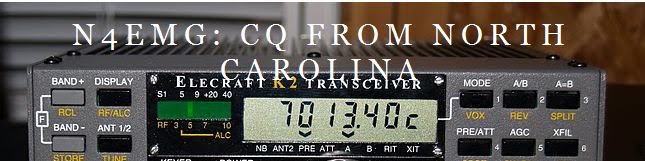 I want to thank Ed, N4EMG who helped bring ham radio blogging to the Internet and for sharing his personal journal as well. There is a season for everything. I’m experiencing that change when the leaves begin morphing while the deep slumber of winter is soon to arrive. I met a friend through the spirit of ham radio blogging and will miss Ed’s contribution.
Ed, please leave your blog, your contribution is part of ham radio’s history. Who knows what one year will bring or for that matter five years from now? We are among the early new media pioneers and now it is reaching ubiquity within our community.
Or, perhaps now is a good time for a vacation from the blog, gather new material without having to journal about what was learned. I’m having fun writing out traditional QSL cards and watching the mailbox. Finally, I’m getting after my basic awards like DXCC, WAS, and WAC as well. Likewise, I’m confirming counties and building up my grid square count. Today, KI6QDH and I worked on his 3-element tri-bander with its new 40 meter add on kit. What a hoot!
There is a season for everything and best 73 to Ed, N4EMG from the shack relaxation zone.

Hard drive failing
Two months ago I got a new Dell Inspiron laptop to use for my work. I have been very pleased with the computer which is quite fast and has a good keyboard and a very nice screen. However this afternoon I switched it on to do a bit of work and was typing away when the hard drive started making a noise like a cat with indigestion – which anyone who has ever done tech support will recognize as the sound of a hard drive attempting to read a bad sector.
Windows froze, there was no way out but to long-press the power switch, losing the work I had been doing. On start-up, Windows insisted on doing a disk check and printed up a lot of messages that appeared to be to do with errors on the hard drive. Eventually I was able to restart, Windows booted up and it seems to be working normally again. But my confidence in the system’s reliability has taken a blow. In my experience hard drives don’t malfunction once and then run perfectly for ever after. But there’s no sign of any fault now, so I have little option but to wait until the next time it starts making funny noises. 🙁

The completed Warbler

Finished Warbler in box
A few weeks ago I finished the box to mount the Warbler. The connectors are all soldered directly to the pcb board so the alignment of holes had to be done carefully. When doing such layout and drilling I am always grateful of the ‘O’level in metalwork that I finished back in high school thirty years ago now. (As a sidenote I am currently reading ‘Shop Class as Soulcraft’ by Matthew Crawford which covers the recent decline of school shop classes).
The box is aluminium (showing my British origin with the spelling) and made by Hammond. To give it a nice finish I spray painted it with a couple of coats of Rustoleum Universal hammered spray paint and it came out rather well.

The painted surface showing the 'hammered' finish.
The box size is 4.5″×3.5″ so it makes quite a nice compact unit.
I need to look at the final output power of my Warbler as I think it is a little low, but it is performing well and I have made 80m PSK31 contacts out in Wisconsin, Illinois and North Carolina. As previously reported I have also used the Warbler for an Olivia contact. A great kit and I am looking forward to using it over the Winter when 80m conditions should be better than they are now. Unfortunately, it looks like Small Wonder Labs have dropped it from their current product line.


Welcome to readers of AmateurRadio.com
I was really pleased last night to hear from Matt Thomas, W1MST who is the Editor at AmateurRadio.com. Matt was kind enough to say that he’d been reading this blog for a while and that he would like to syndicate the posts onto his site.
Naturally, I’m delighted – thank you Matt for your kindness and confidence and I hope that readers will find my posts of interest.
Funnily enough, yesterday, I produced a word cloud based on the last six months of my posts on this site, which gives you an idea of where the emphasis lies at the moment. That’s not to say, of course, that it won’t veer off to somethng very different – as it tends to follow whatever I’m interested in amateur radio wise at the time.


Becoming an Android

A few days ago I came across a forum thread discussing ham radio applications for smartphones in which someone claimed that they were using an HTC Touch Pro (the phone I have) dual booting into Windows Mobile and Google Android. I was interested, but imagined that achieving it would require the ability to follow exactly a lengthy sequence of obscure commands with a high probability of turning the phone into a brick. However I was unable to resist looking into it further and discovered that it should be easier than that. It should be simply a matter of extracting an image of the HTC Android port on to an SD card, copying a configuration file that matches your model of phone into the root folder and then running a program (under Windows Mobile) that reboots the phone into Android. Unfortunately I don’t have an SD card of the type used by the Touch Pro so I haven’t been able to try it yet.
I originally bought a smartphone running Windows Mobile specifically because it would run Lynn KJ4ERJ’s APRSISCE, which is undoubtedly the best APRS client on any smartphone by several hundred miles. However, for me that is really about the only good reason for using that platform. I don’t need the ability to sync with Outlook or use Pocket Office as I don’t use any Microsoft applications on my PCs, and I find Windows Mobile to be too much like Windows itself – complicated to use – and not enough like a phone – easy to make phone calls and text messages. Plus, the fact that running APRSISCE all the time drains the battery in a couple of hours leaving you without a working phone has been a big disincentive to using it in the way I originally envisaged.
Whilst Windows Mobile 6.x is an undoubtedly powerful platform, as you can tell from the range of full-featured applications (not just “apps”) available for it, it is also a dead end. I was surprised to find that Windows Mobile currently has just 5% of the market. Microsoft is hoping to reclaim some of its market share with the upcoming Windows Mobile 7. Personally I think it’s too late and Microsoft has missed the boat on this one. I think Microsoft has an over-inflated opinion of the Windows “brand”. People use Windows on PCs because they don’t have much of an alternative, not because they think it’s great. Smartphone users have lots of choices. People love Google because they are always giving us stuff for free, while Microsoft always makes you pay (and then keeps checking your receipt afterwards). So I think Windows Mobile 7 is doomed even if Microsoft hadn’t decided to make it incompatible with earlier versions so that it won’t run any legacy applications – including APRSISCE.
I really wished in the end I had bought an Android phone. Now this dual boot trick will allow me to try the Google OS out and see whether it is really is as good as the hype. More when I receive the SD card I ordered and am able to try it.
(Update: Just checked the status of my order placed on Wednesday with option for first class next day delivery and it is still shown as Pending. Grr! Clearly it wasn’t a good idea to order from MyMemory.)

September 2010 Prize Drawing
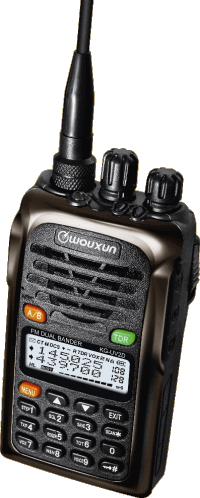
We are very pleased to announce the winner of a
Wouxun Dual-Band HT
from Wouxun.us!
Thanks to Ed at Wouxun.us for sponsoring this month’s drawing.
We had over 750 entries!
We’re giving away another great prize in October.
Stay tuned and get ready to enter.
OK, on to what you’ve all been waiting for!
The winner of our September 2010 prize giveaway is…













