Archive for the ‘Uncategorized’ Category
 Azores on 40 meters with aforementioned random wire
 February 7th, 2013 |
  Author:
 I was poking around on 40 meters last night with the Atlas 210X and my random wire. I spent some time listening to the end

CU7AA
of the Brothers Net, and a bunch of Hams from the middle of the country, and caught someone with a heavy accent using a recorded CQ. The accent was not familiar, and the callsign was CU7AA, which according to QRZ.com is in the Azores. Looking at the picture, I’m guessing that many of you have probably talked to this station, but it’s still a thrill for me, and my bargain-basement setup. I threw my callsign out, and snagged a QSO with him. I love this. Why is it so addicting?
Learning How To Solder

My son is beginning to take a real interest in electronic circuits. As a ham, I should feel uniquely qualified to show him the world of radio and electronics.
But I never really learned how to solder. Not well, at least. Sure, I can solder a PL259 onto the end of some coax and it works OK, but the connector usually hides the sloppiness of my handiwork. Don’t get me wrong, I’m not scared of a soldering iron — I just am not as practiced with it as some of the QRP kit builders that frequent this blog.
I searched online for an interesting kit to build and stumbled upon Elenco’s AmeriKit AK-100 Learn to Solder Kit (about $15). What better opportunity to teach myself teach my son how to solder!

The kit includes a 25-watt soldering iron (Elenco SR-1N), a pair of diagonal cutters (Elenco ST-1), a spool of lead-free solder, and a solder practice kit containing a printed circuit board and various components. Also included is a nice 15-page guide to soldering and very detailed instructions about how to assemble the practice project. (I’ve yet to be disappointed in anything from Elenco. If you have kids or grandkids and they don’t have Elenco’s Snap Circuits Jr. Kit, it’s the best $20 gift you can buy them!)

Copyright by Elenco Electronics, Inc. All Rights Reserved. Reproduced with permission.
This kit was a huge hit with my son. He had a great time placing each component in its clearly labeled place. After doing a few of the practice exercises, I was amazed at how proficient he became! I learned so many tips from the instruction manual about how to create good solder joints and electrical connections. The manual itself is well worth the price — the soldering iron and practice kit are a great bonus!
The included soldering instruction booklet covers general electronics basics like determining resistor and capacitor values, paying attention to polarity, and safety precautions. It also covers specific soldering (and desoldering) techniques for different types of work. There is an in-depth look at the different types of solder (when you would or wouldn’t use them) and many tips and tricks to making your job look more professional. You’ll have to excuse our solder joints in the pictures, however — there was a lot of learning and practicing going on! 🙂

After about an hour and a half, the project was done! We had a working siren with flashing red LEDs. My son couldn’t have been more proud of his work! Although we have done quite a few “tech” projects together, this was the first time we’d really gotten into circuit fabrication. It was time very well spent and I’m very excited to be creating a solid foundation of good habits. It’s always better to learn the right way instead of trying to erase bad habits later!
If you have a son or daughter (or grandchild!) interested in electronics, don’t hesitate to check out Elenco’s Learn To Solder Kit. Like Elenco’s other educational kits, it was well worth its modest price.
Comfy chair
I picked up the office chair that I had ordered from Staples on Saturday. It is their Lockridge Manager’s chair which is currently on special. It normally goes for $89.99, but is $50.00 off for an online price of $39.99.
It is definitely filling the bill. I spent 90 minutes behind the key tonight hunting Foxes on 40 Meters. Not only did I bag two pelts, but when I got out of the chair to head upstairs, my back and hips gave nary a whimper. This sure is a far cry from that folding metal chair that I was using. When I would get out of that thing, I felt like I was ready for either a walker or a chiropractor.
Band conditions were so-so. Both Foxes were loud for a good portion of the hunt, but at times the QSB was tough to deal with. I am also pretty sure both Foxes had high local QRN to deal with as each one was asking for multiple repeats of exchange information. Once again, persistence paid off and both Foxes were worked. Hats off to Paul K4FB and TJ W0EA.
I am going to be placing an order in the next few days with either Mouser or Jameco for some parts. There are plans in the latest Sprat for a rather simple 40 Meter WSPR transmitter. I don’t plan to get too involved with the mode, but it looks like a rather easy build, and I am itching to really homebrew something.
I haven’t built anything in a while that wasn’t pre-kitted. I enjoy the process of buying and gathering the parts. From the looks of the article, this seems to be a project that lends itself well to perf board construction. I already have an ample supply of NE612s, so this will be a purchase of various needed resistors and capacitors, depending on whatever is not already in my junk box.
The final cost should be way under what I have seen some kit prices going for.
73 de Larry W2LJ
QRP – When you care to send the very least!
Antenna modification (with a little help from the wind)
I may have mentioned more than once that we live in a rather small apartment. It’s the upstairs of a cape-cod-style home, which is shoe-horned onto a tiny corner lot. The only trees are 4 old silver maples (often called swamp maples) scattered around the

Silver Maple (from Cornell)
front and side yards. The maple directly opposite the window where my equipment resides is not very healthy. This has both benefits and hindrances. On the negative side, we have to watch the cars, because it rains tree limbs in windstorms. On the plus side however, it makes it easy to shoot wires into the sturdier parts of the tree, and once a year, I get the most amazing crop of maitake mushrooms growing around the base (easily 12-15 pounds of them). I’ve mentioned to the landlord that the whole thing will come down in the next superstorm we get, but he seems content to have it stand there for now, threatening the house and any cars parked in the vicinity. For now, I decided to take advantage of the accessibly to the higher branches.
I threw a length of 16 ga wire up into the tree about a month or so ago, and connected the other end to my MFJ 941-D tuner. I estimate the wire to be around 38 feet. With this setup I have been able to tune up well on 20M and OK on 40M and 10M. My holiday present from KD2CHE this year was an old Atlas 210X, in excellent operating condition. This setup got me contacts in Florida, Michigan, Maine, Manitoba, Missouri, and Puerto Rico. The morning after the crazy windstorm this past week, I was amazed to see that the random wire was still up. That day however, the winds continued, and when I got home I discovered that Mother Nature seems to think that the best type of antenna for me is an inverted-L. One of the smaller limbs that I had managed to throw the chunk of wood I tied the far end of the wire to, had snapped in the storm, but the wire simply dropped through the tangle of remaining branches, and now dangled about 8 feet off of the ground.
I had planned on fixing, and improving on this over this past weekend, but before I did, my son and I fired up the Atlas on Saturday morning. The wind mod seemed to actually improve my performance on 10M, and had no effect on 20M. I made contacts with Belgium, and Serbia on 20M, and started getting lots of 10M contacts from the Southwest, and one from Washington State. Since it was the 10-10 Winter SSB contest weekend, I got my required 10 contacts easily, and joined 10-10 (76641).
I don’t want to put up anything more elaborate at this place. With the resources available, and an antenna-phobic landlord, this is about as far as I can go. Also, if all goes well, we won’t be there much longer. The next place will have to be antenna-friendly. I spent some time Sunday re-stringing the wire (now about 60 feet) through the old maple, and now over to a second maple at the end of our driveway. A quick test showed it was still working, and got 2 more contacts in the Southwest.
Ham Radio on a Shoestring, While Living in a Shoebox. Does that sound like a good book-title?
73 – W2NDG
More of a Shout than a Whisper
 |
| FT-817 and Signalink USB Interface |
 |
| WSPR Control Software |
 10 mins on 17m! |
10 mins on 20m!
A new battery charger……………
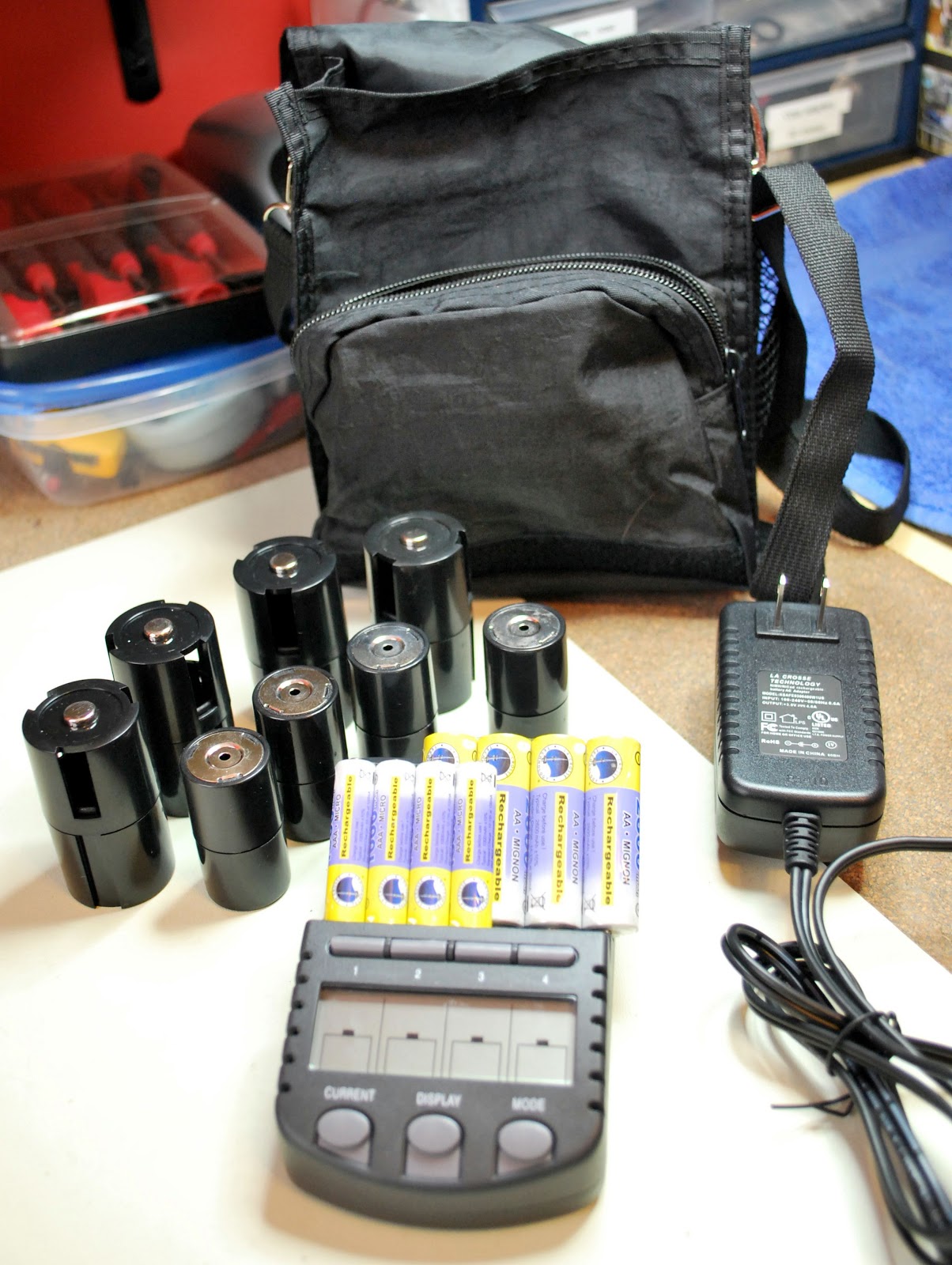 |
| It came with all this |
unit....not bad for 60.00 and 2 day shipping to boot.
So what is so great about this charger, each cell can be charged, discharged/charged, refresh/charge or finally test/charge. Each cell can have it's own custom type of charge done to it. The charging rates can chosen from 200mA to 1800mA and again each cell can have it's own charge rate. The unit will let you
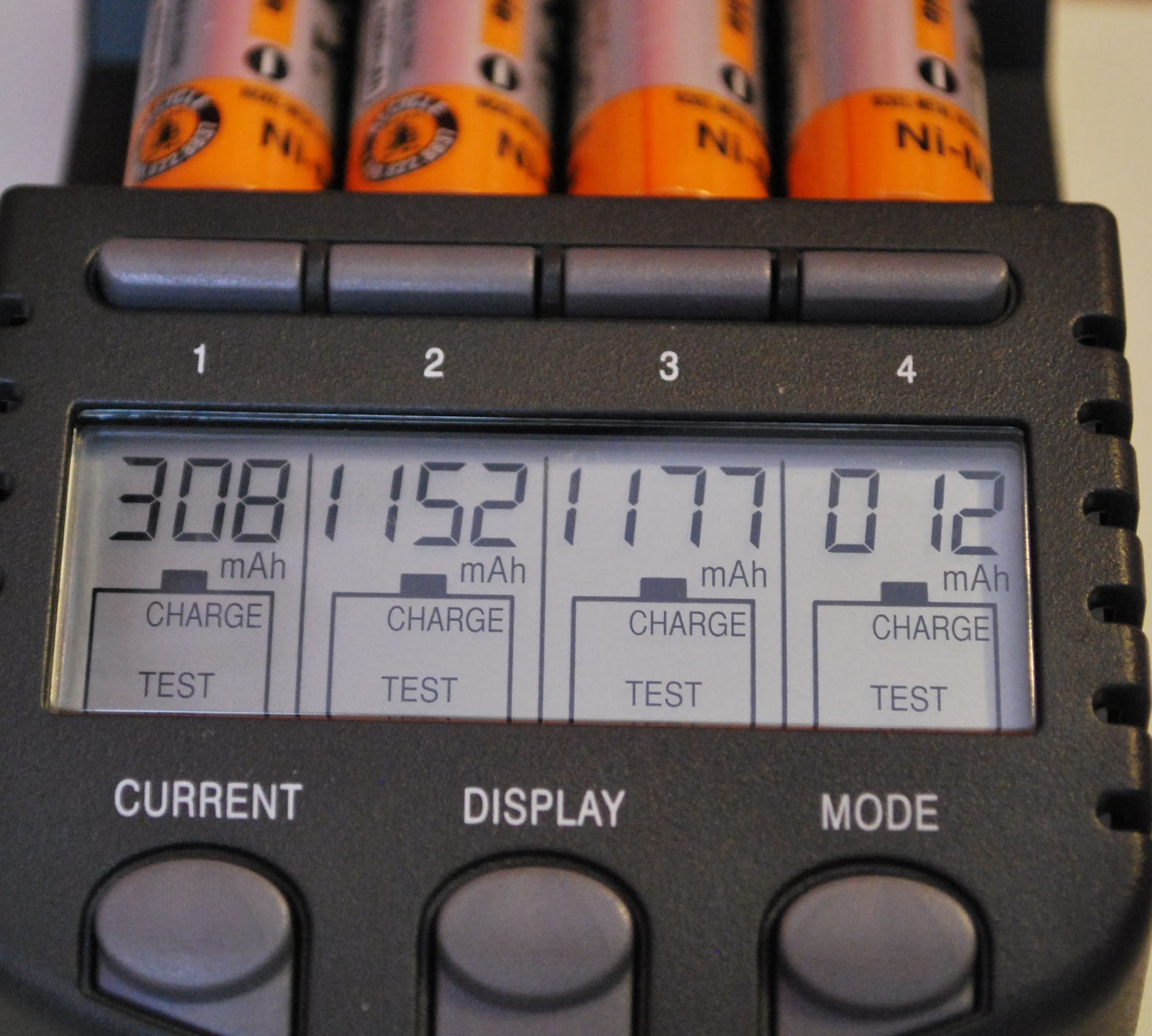 |
| Charge and test mod results |
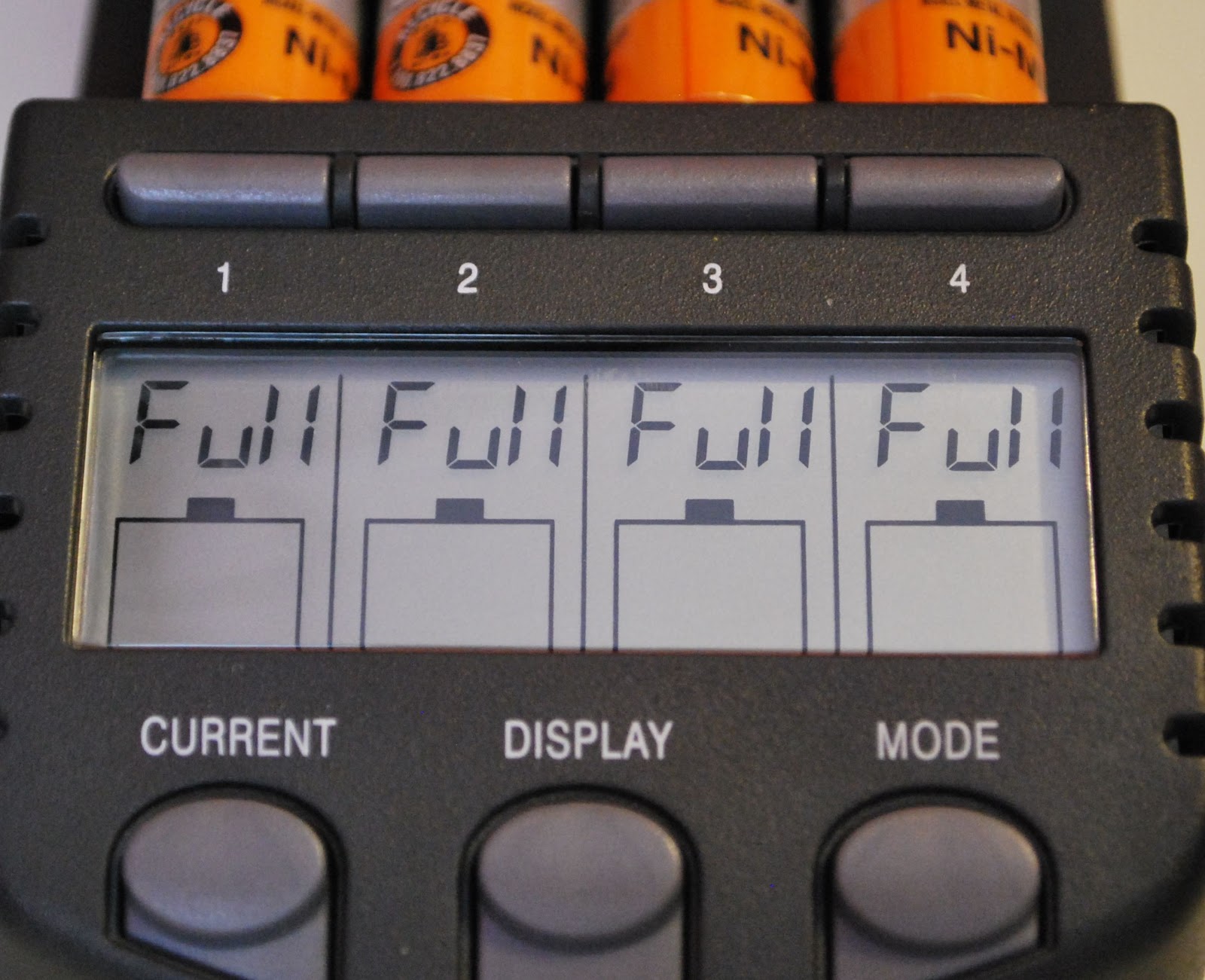 |
| TEST/CHARGE complete |
With this charger you are able to get the most out of your not so cheap rechargeable batteries and make your hard earned money go as far as it can.
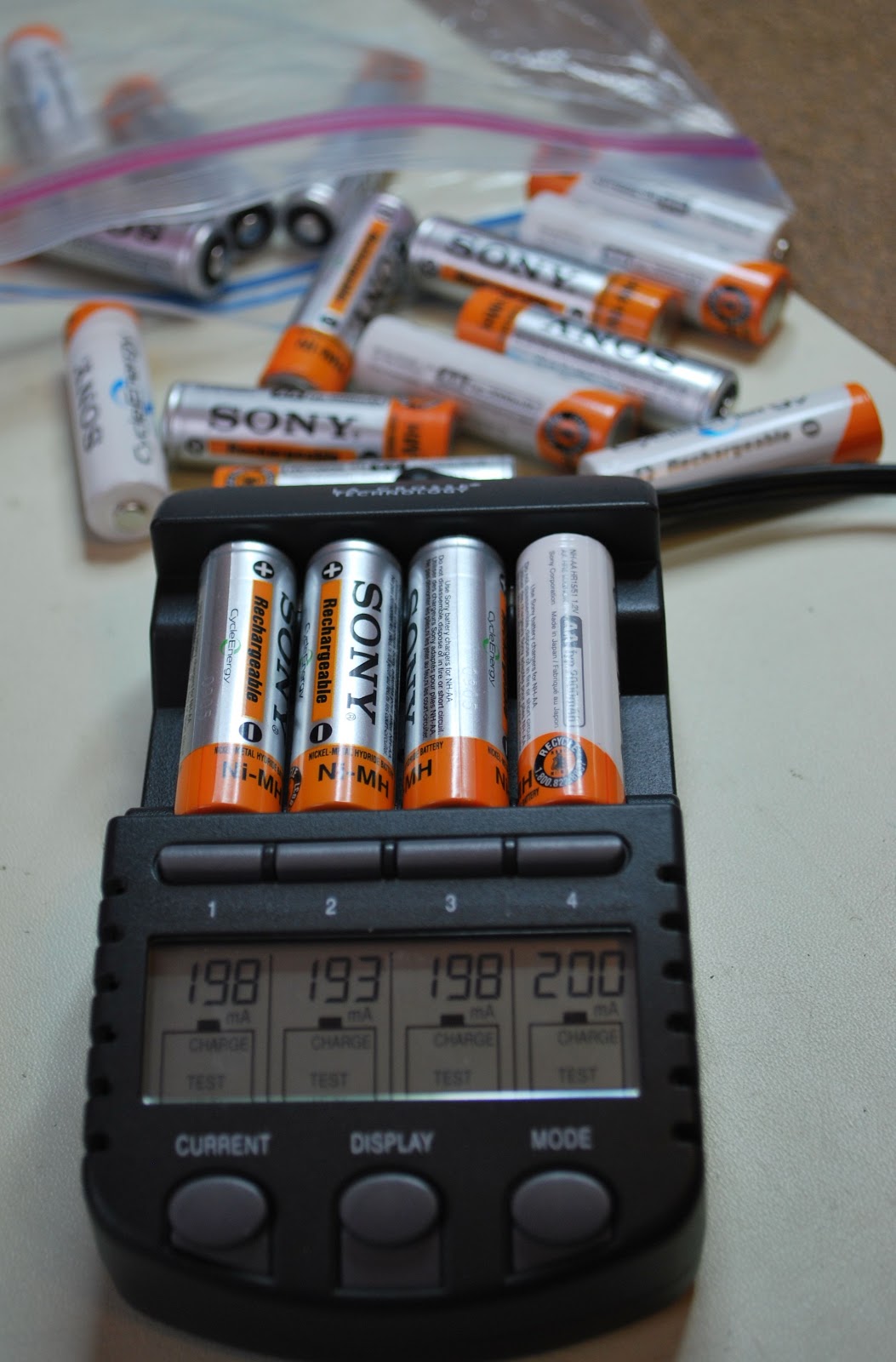 |
| And the testing goes on |
Who was Irving Vermilya?
Randy Dorman, KB3IFH (of KB3IFH QSL Cards) sent me an e-mail last night about a QSL card that he found listed for sale on eBay:

Randy contacted the current owner of the call, Bruce Randall, W1ZE, who shared an amazing bio of the original owner written by Donna Halper, Ph.D. I contacted Dr. Halper and asked if she’d allow me to share it. She replied that it needed some updating, but very graciously allowed me to reprint the original version from 1996 below. I’m sure you will enjoy it… and if you get a chance, check out her book, Boston Radio: 1920-2010, available on Amazon!
Irving Vermilya—America’s #1 Amateur
by Donna Halper, PhD
 If you were alive during the formative years of amateur radio, you knew Irving Vermilya. From the time he was 12 and he traveled with his dad and his family’s minister to Canada to hear Marconi speak, amateur radio was his first love, and he was a life-long ambassador for it. (The story goes that after the talk, which was mainly attended by adults, Marconi came over to the young lad and encouraged him in his interest in wireless. He even gave young Irving a piece of equipment, which became Irv’s first receiving set.)
Born in June of 1890, Vermilya grew up in Mt. Vernon, New York, where he built that first rather primitive set in December of 1901, after returning from his trip to see Marconi (as he later recalled, it looked strange, but it worked). Other more advanced (and more professional-looking) sets followed, and his dedication to wireless increased. His spark transmissions were so frequently heard that he was offered jobs on ships that needed a wireless operator. He became a member of the newly formed Radio Club of America in 1911, using the calls VN. (Later, he would use 1HAA, but he was best known as W1-ZE). In late 1912, the government began to require that all wireless operators be licensed. Irv hurried to the Brooklyn Navy Yard to take the test, and was given Certificate of Skill #1. For the rest of his life, he would be known as America’s Number 1 Amateur—which he truly was.
Irv Vermilya’s involvement with radio continued; at the age of 16, he did in fact go to sea as a wireless operator; a few years later, he was given the important job of running the Marconi Wireless Station, WCC, on Cape Cod. During World War I, he served in the Navy, and then returned to Massachusetts to run the RCA wireless station at Marion. His engineering and wireless skills brought him into contact with such legendary figures as David Sarnoff, Lee DeForest, and Edwin Howard Armstrong.
By 1921, professional radio stations were springing up, and Irv was interested in this new technology too. Using his newly acquired license for a land station, 1ZE, he began doing radio broadcasts in late April (according to the Boston Traveller‘s ham radio column, he got special permission to be on even before he received the official license in May); his plan for 1ZE was to both promote amateur radio and to entertain his neighbours in and around New Bedford and upper Cape Cod with concerts and local information. His work came to the immediate attention of the Slocum and Kilburn Company, which was planning to open a station at their mill (the mill was similar to what we would call a “general store”, since it also sold electrical equipment, tools, and building supplies; the station would be located in the radio department). They hired Irv to build it and run it, and the station went on the air officially the last week of May 1922 as WDAU. (A “cousin” of WDAU still exists, although today, it is known as WNBH; these initials stand for New Bedford Hotel, where its studios once were located. Interestingly, thanks to the consistent link of Irving Vermilya as owner or engineer, WNBH claims to be the 11th station in the US, tracing itself back to 1ZE in mid 1921 and then to WDAU. However, the evidence seems to suggest that while Irv worked at 1ZE, WDAU, amd WBBG, the first two never directly evolved into WNBH. 1ZE remained on the air, in fact, long after he was hired to build WDAU. 1ZE was renamed by the government as W1-ZE, but Irv still owned and operated this well-respected ham station for over 40 years. Slocum & Kilburn kept WDAU on the air briefly even after Irv left to put WBBG on. It was WBBG that really evolved into WNBH; the station first began to broadcast under those calls in early November of 1925. But being the 11th station in the US makes a great story, and it has been repeatedly stated as a fact both by WNBH and by the New Bedford media. Given Irving Vermilya’s many achievements, it doesn’t surprise me that he receives credit for one that may not totally be accurate.)
When financial problems beset Slocum and Kilburn in late 1923, Irving acquired the station’s equipment and moved it to his house (imagine his wife’s surprise) in January of 1924. He began to operate it under the call letters WBBG until mid-1925. (His was one of many small stations that suffered when ASCAP required all stations, no matter what their size, to pay large fees to play ASCAP music; such fees almost drove Irv’s little station off the air, but it made him even more determined to find some financial backers so that he could keep the station operating.) He was finally able, with business partner and fellow ham radio operator, Armand J. Lopez, to move his radio station back to New Bedford in November of 1925, requesting the aforementioned WNBH call letters. It was common in radio’s early days for stations to have studios at hotels, since this provided a studio audience as well as a house dance band, and it certainly gave WNBH a good community image to have the hotel as its location. Irv continued to play a major role in WNBH’s operation, serving as its General Manager, as well as helping to hire the talent and getting the station publicity. His ability as an engineer was well-known, and he frequently kept the station up and running during winter storms or other weather-related problems. In May of 1934, he sold WNBH to the owners of the New Bedford Standard-Times newspaper, but he continued to work there, first as station manager and later as the chief engineer until he retired in 1955.
While Irv Vermilya’s career in professional radio earned him considerable praise, he never stopped being involved with ham radio. In 1921, he was named the New England Manager of the ARRL. He was the mentor to Eunice Randall, the district’s first woman amateur, and at a time when women were not expected to know anything about radio, Irv was totally supportive of Eunice and encouraged other men to give her a chance—Irv and Eunice were friends for many years, participating in various conventions together, and of course, keeping in touch via their ham sets. Irv wrote columns on ham radio for QST and for various newspapers, and won virtually every award a ham could win—it was impossible to read any magazine about ham radio without seeing another country or continent that W1-ZE had received or been received by. (In the early 1920s, amateur ‘tests’ were often held to see how far a transmission could go, and Irv was one of the few whose messages were received as far away as Europe.) And as you might expect, he also put a mobile transmitter in his car, and in the early 1930s, he set up the first police radio station for the New Bedford Police department (WPFN). In fact, whenever he could put his radio skills to a positive use, Irv was right there to volunteer, whether it was relaying messages during a hurricane or attracting some publicity for ham radio by engaging in a “foot-sending” contest with Eunice Randall (Eunice usually won). Years later, he was one of the founding members of the Old Old Timers Club, and served on its board. He was also the first American citizen ever given a permit to operate his mobile station in Canada.
I would like to tell you that such a distinguished career and such a highly respected man lived to a ripe old age, but not every story has a Hollywood ending. Depressed by the death of his wife, in failing health, and perhaps feeling the radio industry no longer had a place for him, in late January 1964, Irv Vermilya committed suicide. His death came as a shock to the many people who had admired him; even the Standard-Times editorialized about what a fine human being he was, and how much he had contributed to broadcasting.
Irving Vermilya elevated the status of ham radio, and was an able spokesperson and emissary, whose outgoing personality made friends wherever he went. If it were not for him, New Bedford and large parts of Cape Cod would not have had a professional radio station until the 1930s, and thousands of people who met him via ham radio would not have known what fun this hobby could be. He was a strong believer in community involvement, and whatever station he ran, be it amateur or profession, it would always do its part to help the community. Perhaps he never invented something major the way Marconi did, perhaps his name is not as famous as Sarnoff’s, but it is radio’s early pioneers who paved the way for the fledgeling industry to grow and succeed. Irving Vermilya devoted his life to radio, and he deserves our thanks for that dedication and his many years of service to the industry he loved so much.
Donna L. Halper is an associate professor of Communication at Lesley University, Cambridge, Mass., and received her Ph.D. in Communication from the University of Massachusetts/Amherst.













