Archive for the ‘qrp’ Category
 My Elecraft KX3 has a ping??
 April 28th, 2013 |
  Author: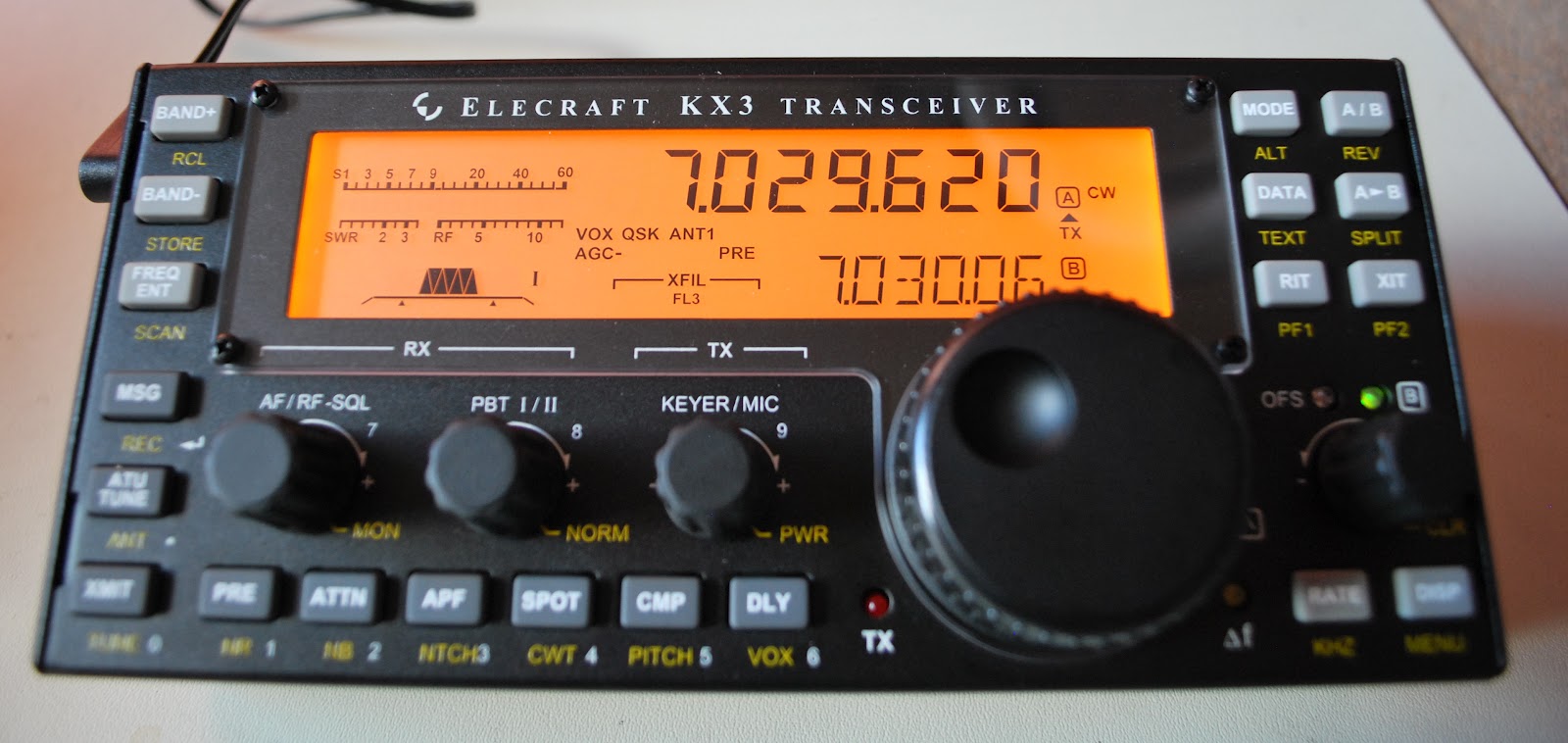
Problem has just been solved seems if I have the rig on dual RX and VFO A and B are very close to each other I am picking up "me" on VFO B. Which makes sense and when in dual mod the head phones are split with VFO A in one ear and VFO B in the other. This would explain why the ping was only heard in one ear!
Have you ever been listening to something that may not be there???

Multi-Band 4 Foot Magnetic Loop with Gamma Match

4 Foot Diameter Magnetic Loop In Operation
As my mag loop projects progress, I’m learning a lot about building them and using them. This antenna works on 17, 20, and 30 meters, with the best bandwidth on 20 meters. The bandwidth on 17 and 30 is quite small but usable. There is a 20 KHz bandwidth on 20 meters. I used a vacuum capacitor to build this particular loop for 100 watt operation. The air capacitors are good for QRP but will arc over using much power over QRP levels.

4 Foot Magnetic Loop Antenna with Gamma Match
This photo was taken before I trimmed the Gamma Match.
I didn’t know how long the Gamma Match should be, so I made it long enough to allow for trimming after the match to 50 Ohms was made.
This is the first mag loop that I made with a Gamma match. I like this match better than the usual Faraday feed loop that is featured in my previous mag loop antennas. Matching is easy and building the Gamma match is not difficult. I’m planning to build other smaller loops that will also feature the Gamma match. The smaller loops will target 10, 12, and 15 meters. Loop size determines which band its best suited too. Although it is possible to get more bands on one loop, the bandwidth is small and the tuning ‘dip’ is very sharp. I found it better to limit the number of bands in favor of wider bandwidth and antenna efficiency.
Please look up my previous posts for more details on parts and plans.

Here is a good close up of the clamp.
(Before Trimming)
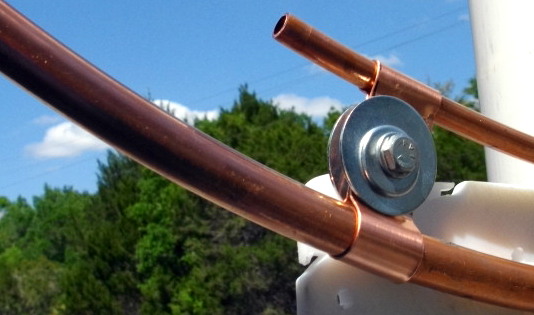
Gamma Match After Trimming. This enables a 50 Ohm Match for all three bands.

Gamma Match on the left, PL 259 in the center and, Tuning Aid Stick (PVC) pipe , on the right.
The vacuum capacitor is ‘tuned’ by twisting the PVC pipe that is attacked to it with a cotter pin.
Tuning the cap to the ‘loudest noise’ on the air will put you in the ball park for operating.
You can also use an antenna analyzer if you want to know the exact SWR, and RR of the antenna.
Tuning with a radio attached is fast and easy.

Making the clamp for the Gamma Match

Soldering The Back Plate and PL 259

Removing The Oxidation Before Soldering
The main loop is 5/8 inch, soft copper tubing.

Close Up of PL 259 to Gamma Match Joint
The center of the PL 259 had a #10 solid copper wire inserted and soldered in place.
The Gamma match is 3/8 inch soft copper tubing.
This part of the job was done with a soldering iron, the rest was done with a plumbers torch.

Handy ‘third hand’. A clamp to hold the Gamma match in place while I soldered it.
My town was going to hire a ‘Mad Scientist’ but it couldn’t afford one, so they settled for a ham radio operator instead. Me!
73 de AA1IK
Ernest Gregoire
The Alexloop vs my attic dipole
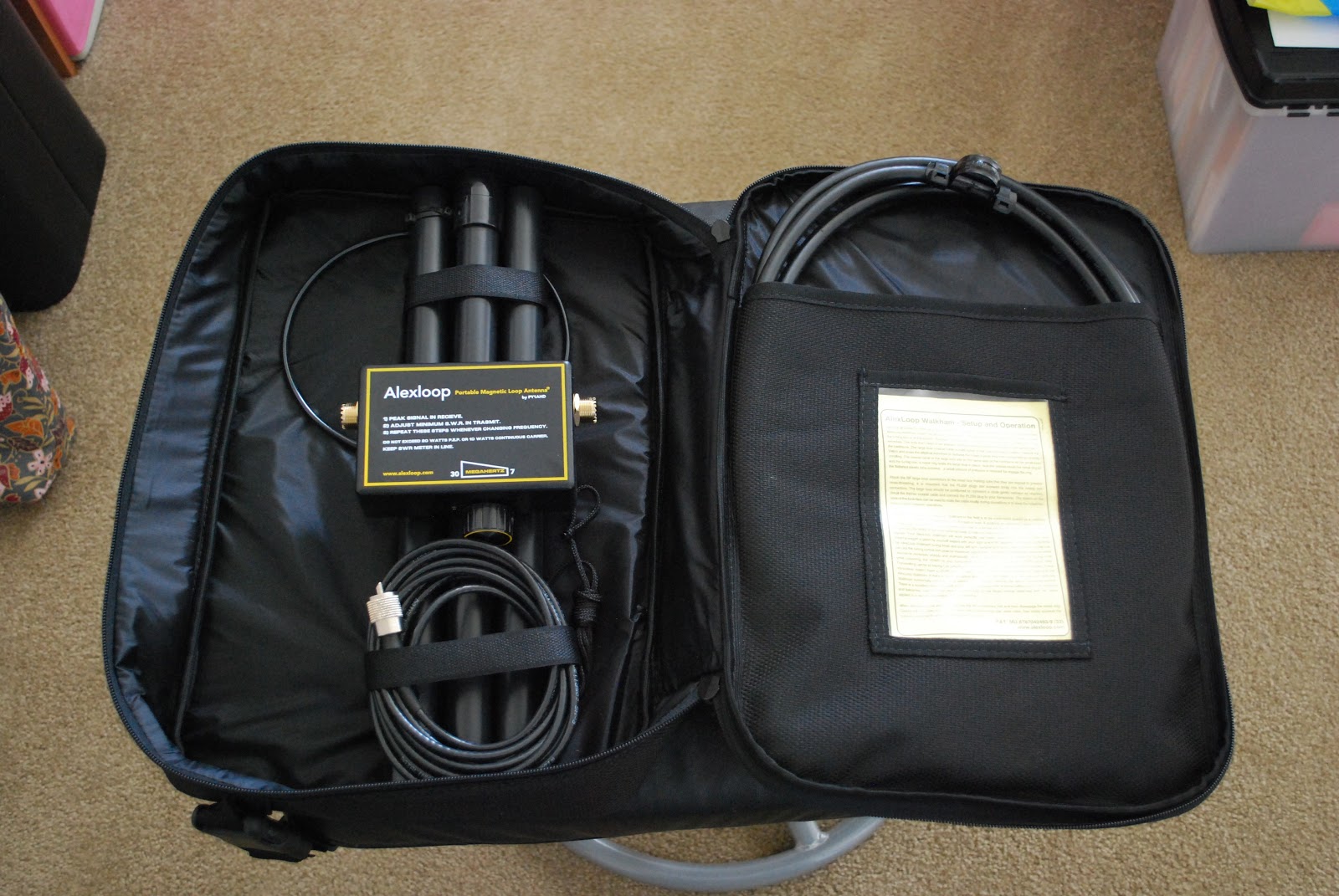 |
| The new Alexloop antenna |
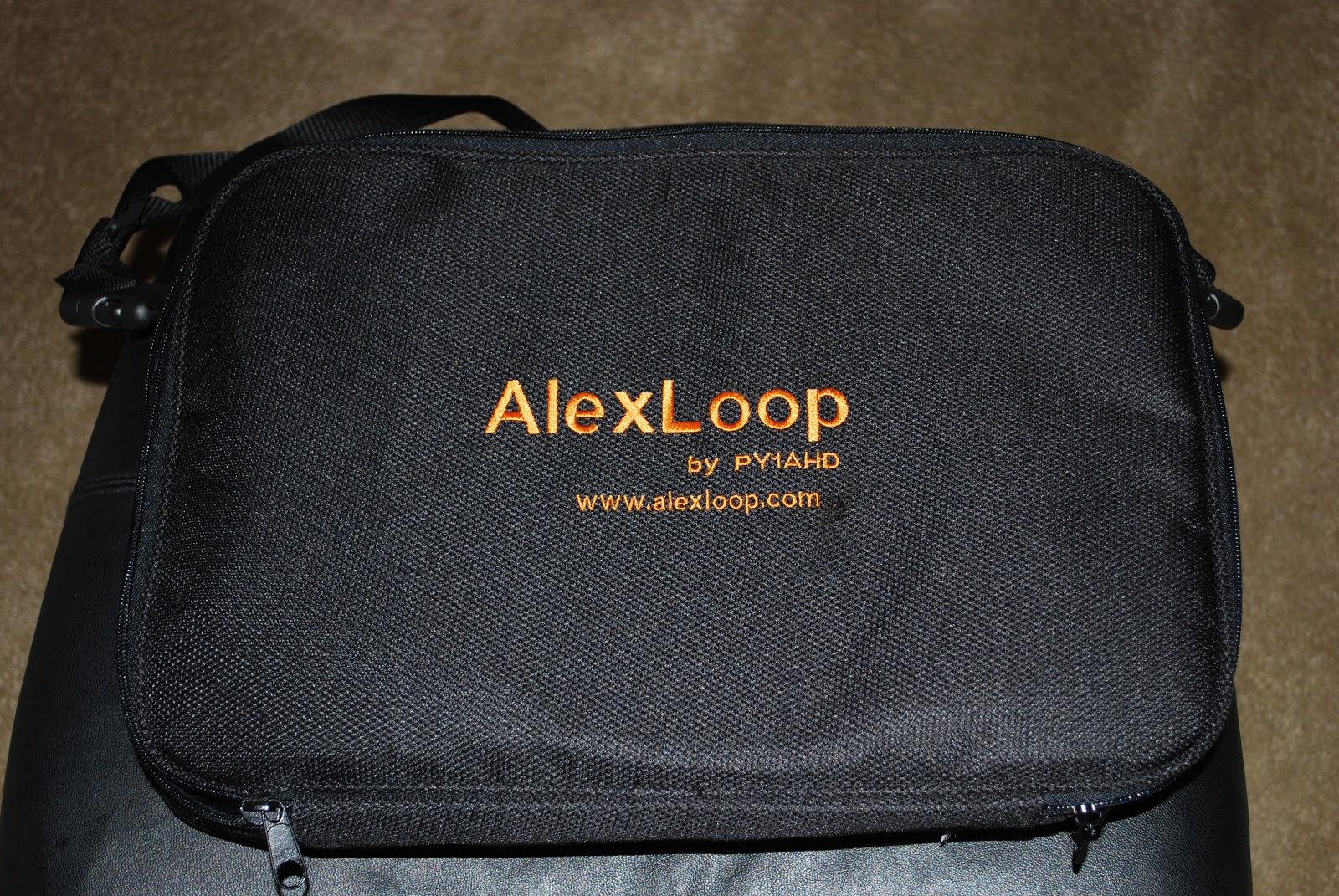 |
| A quality case |
So lets get to the nuts and bolts.....how does it work....sure anyone can say anything about their antenna but the proof is in the radio waves!!
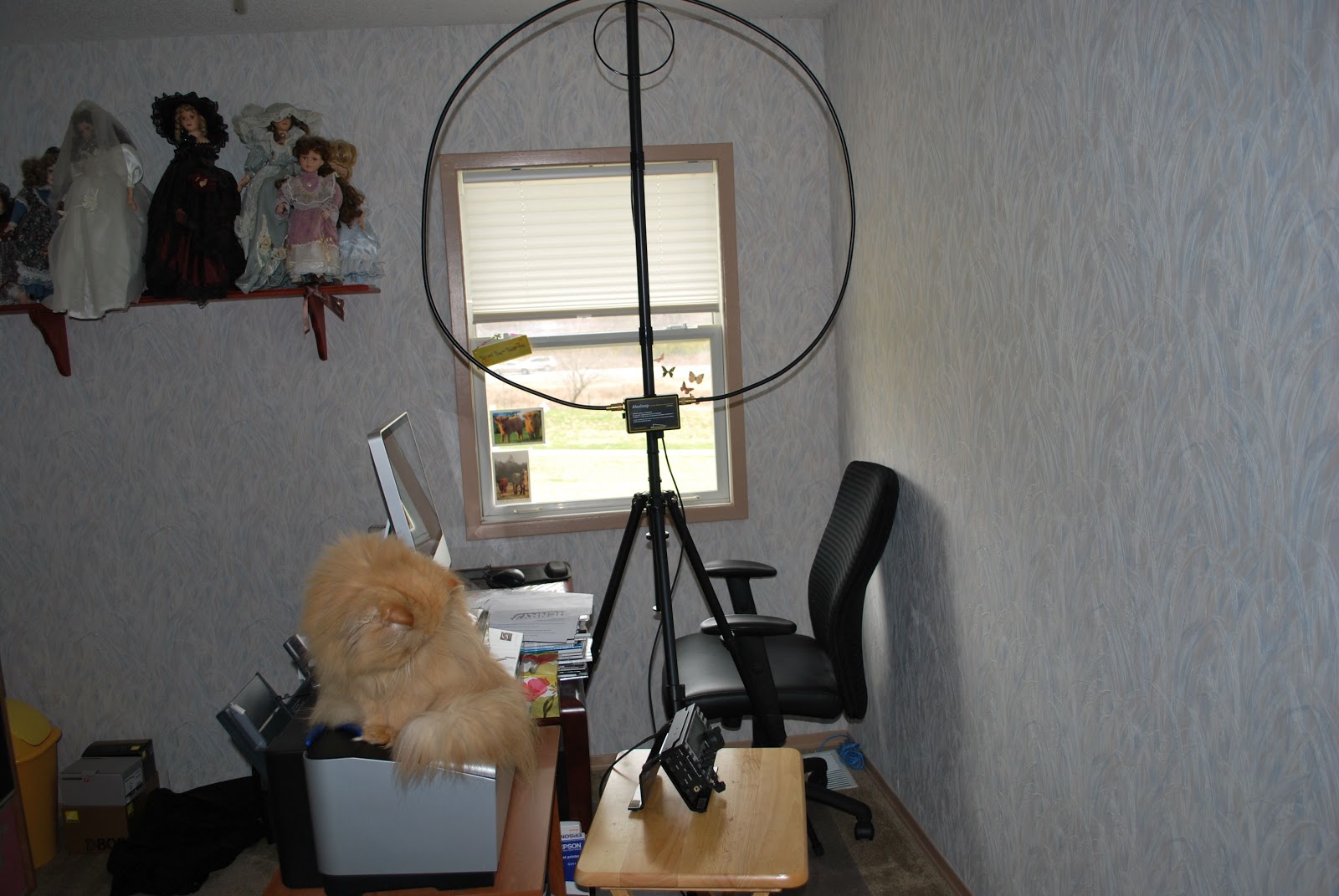 |
| Antenna location..cat standing guard |
I wanted to do a comparison between my attic dipole which is the Alpha Delta DX-EE up about 30 feet in the attic and the Alexloop set up in my XYL's office just opposite my radio room. Let me state that this is not a comparison to see which antenna preforms better as that is not a fair comparison....but I wanted to see how well the loop did compared to my attic dipole. The Alexloop was mounted on a tripod....well ty-wrapped to it as the the Alexloop would not fit over the tripod center pole section. This is something I will have to work out later. Each of these antennas have their disadvantages....the dipole is in the attic, this means a wooden roof above, rafters all over and insulation below. The Alexloop is in a second floor room, it's a small loop antenna and very close to the ceiling. So really both antenna are far from ideal when it comes to location.
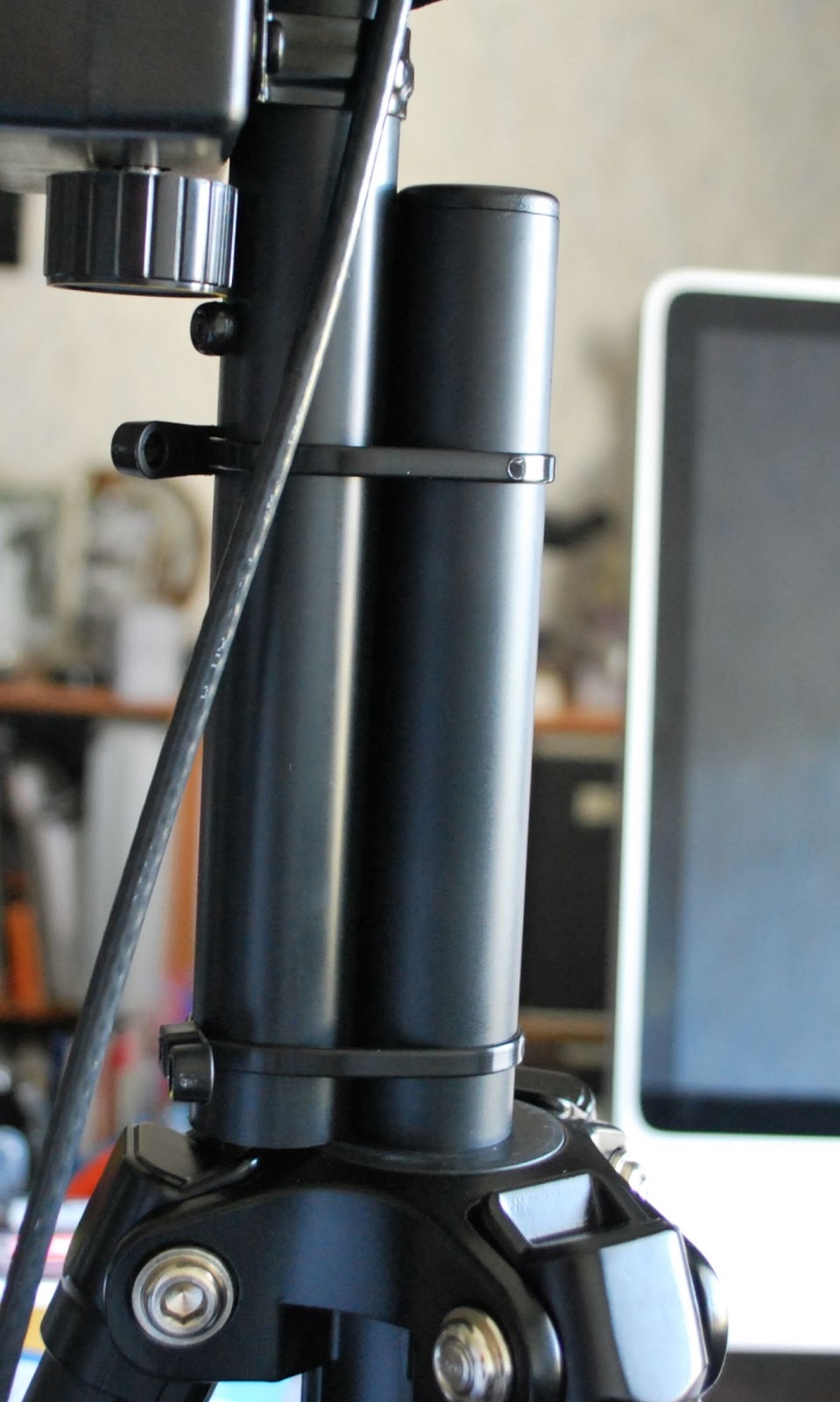 |
| Temp tripod mount |
My overall impressions of the Alexloop are as follows:
1. Shipping was fantastic, this antenna got here from South America faster than products I have ordered from the U.S.
2. The support is great, I had a question about the loop when it arrived and it was answered within 30 minutes!!!!
3. This unit is quality quality quality from the carry case to antenna!!
4. The tuning was a cinch, turn for peak noise and then transmit and tune for lowest SWR....takes about 20 seconds!
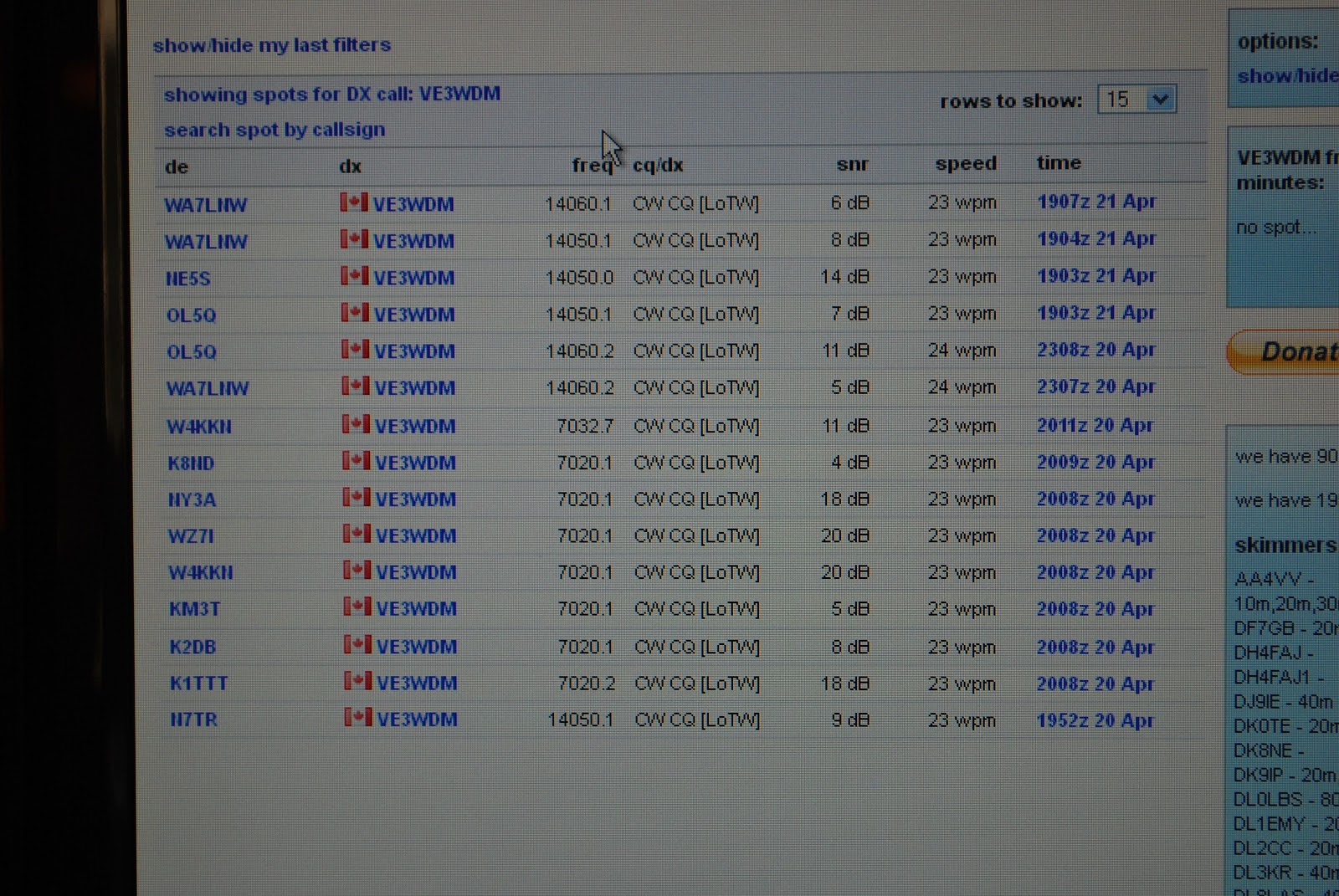 |
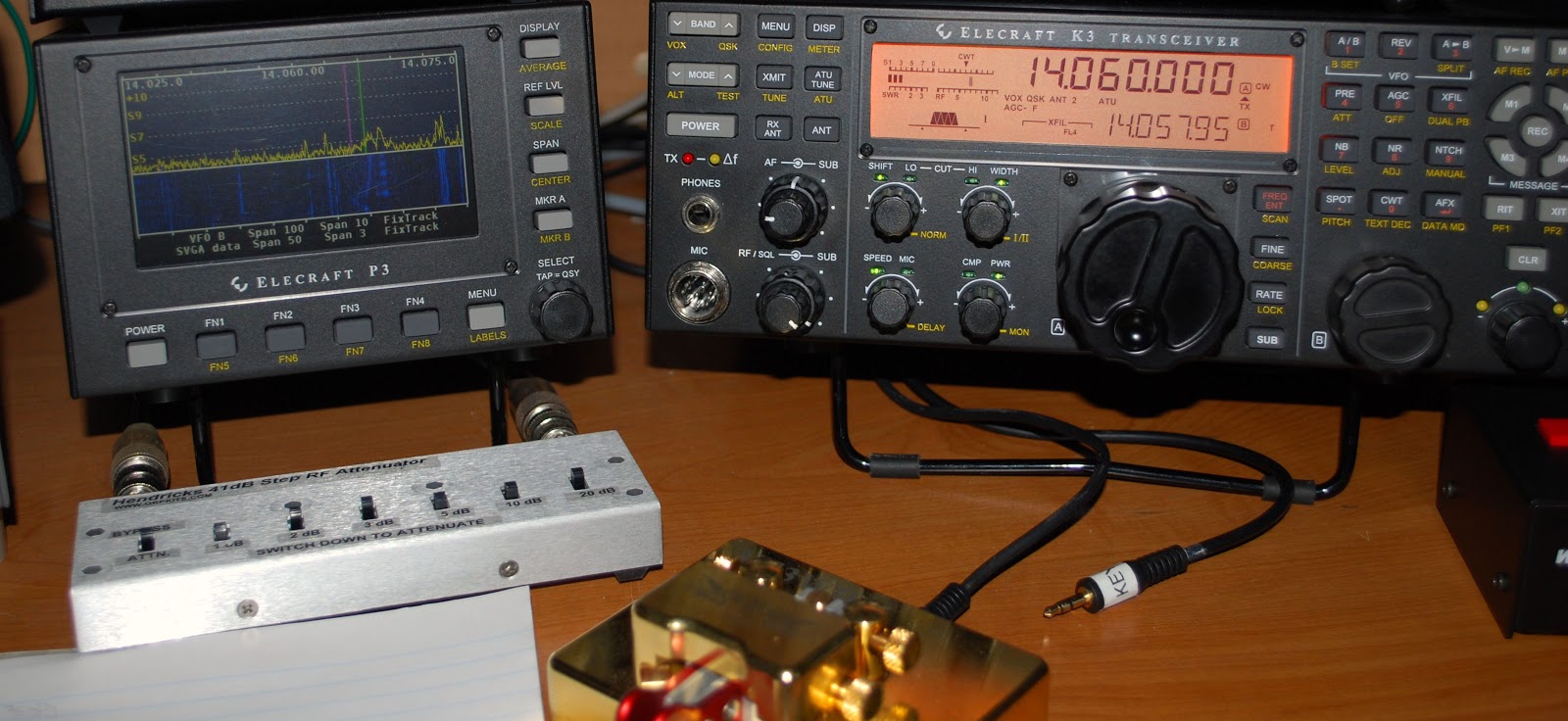
| 14.060, 7.032 Alexloop |
6. Antenna foot print is very low profile and can be used vertical or horizontal.
7. The SWR on 20m and 40m (only bands used so far) was 1.4 at 14.060 and 1.7 at 7.032.
The bottom line is I am very very impressed with this antenna and I will be taking it to the field and updating the blog on how it does. Up to this point would I recommend this antenna.......dam right I would it's support is excellent, quality of the product is way above par and so far the results have been very impressive.
Time to do some kit building
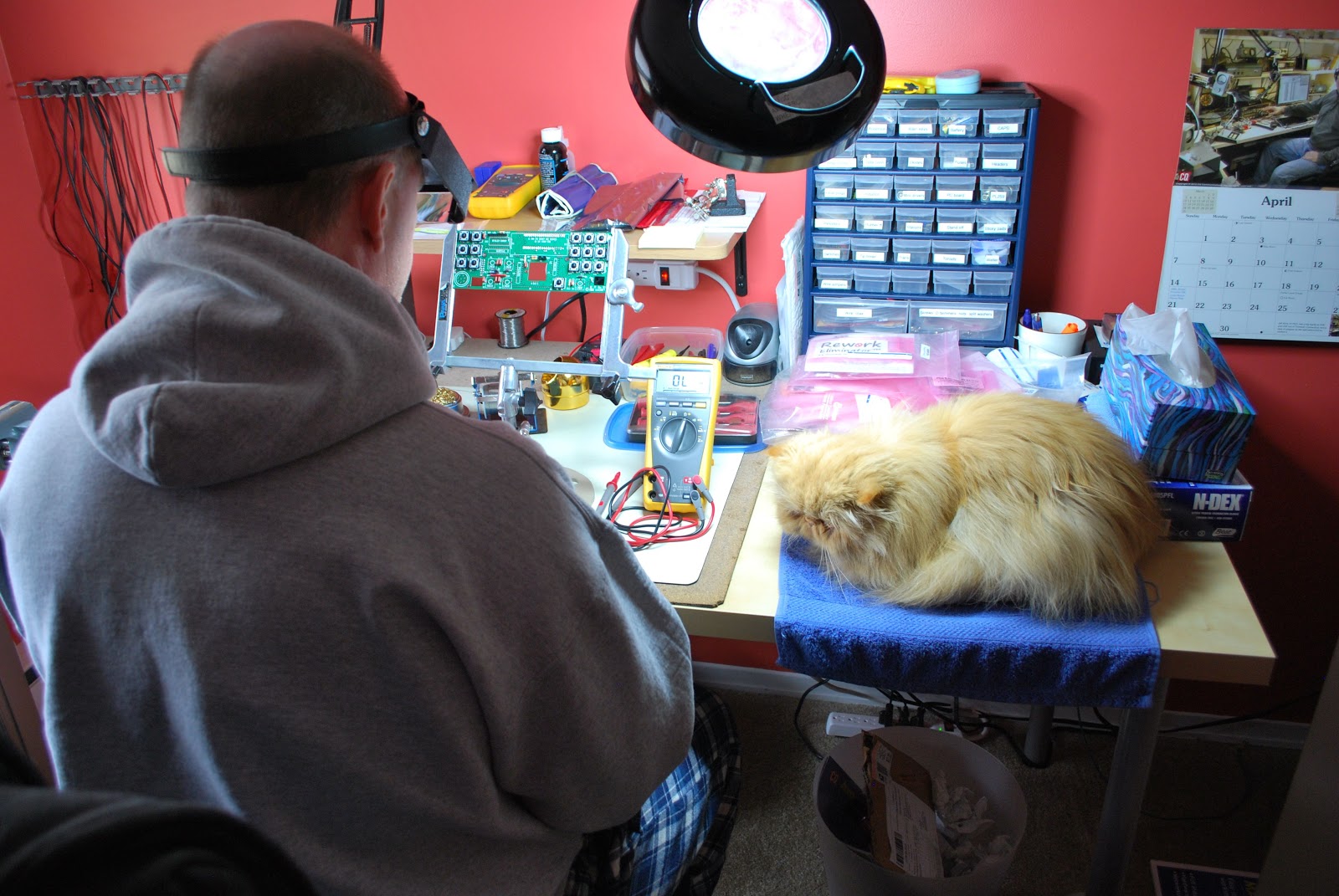 |
| Oliver is keeping an eye on things |
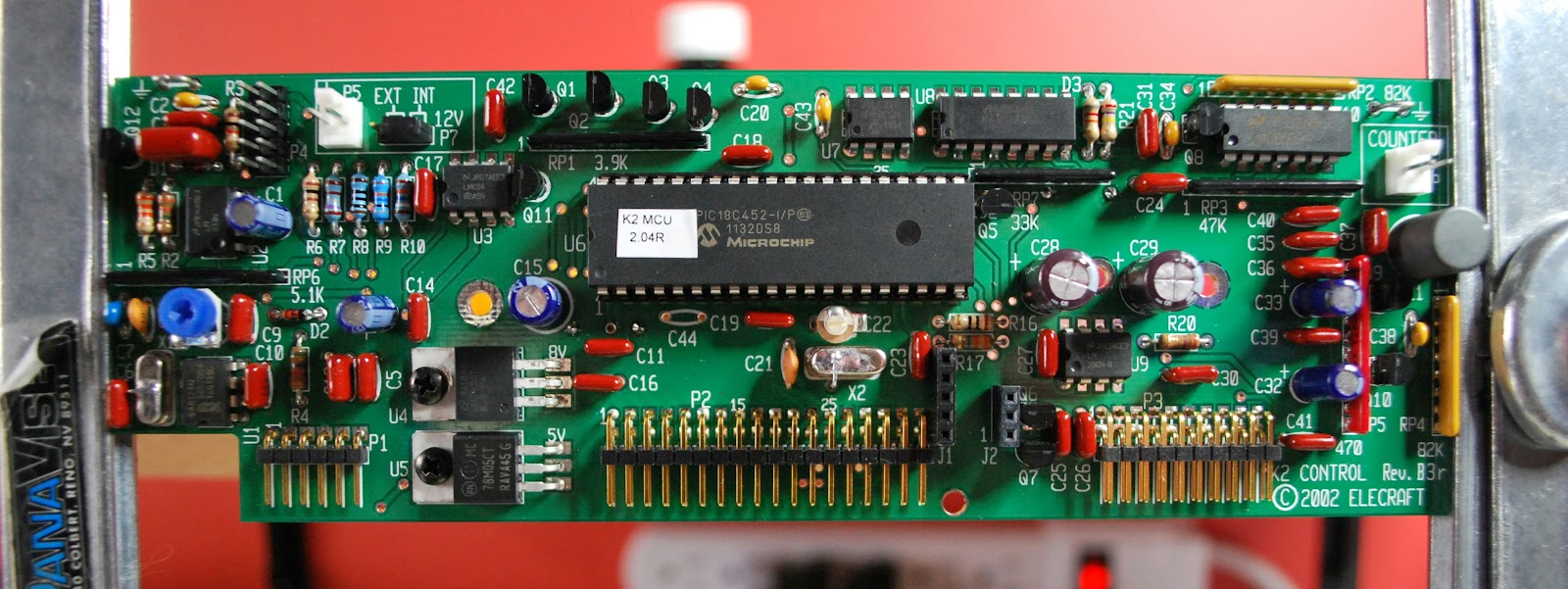 |
Control board completed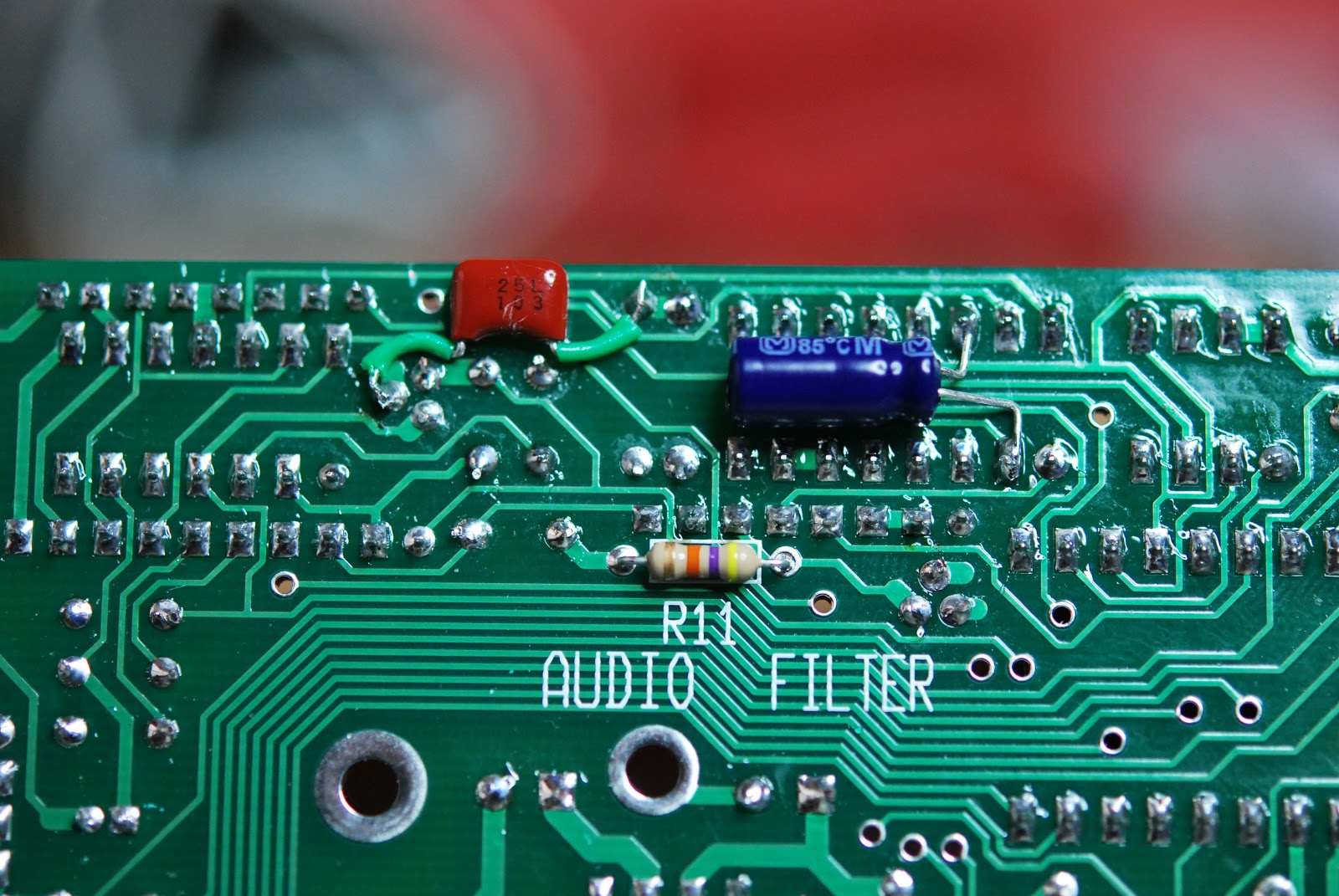 |
As was said I am in the process of building another Elecraft K2 and I have another blog that deals with the build. I wanted to blog the progress but also highlight other areas such as toroid winding, what was needed to be a kit builder and so on. There are specific posts about the K2 build it self making mention of tricky sections of the build and how it was handled. It's now time to see if the bands have come alive!!
A very nice but short evenng on the radio
 |
| No time to do lots |
I then found LZ833MBB...how is that for a call!!! This call is a special event station call and is in honour of Bulgarian Saint Martyr Knyaz Boyan Bylgarski.. I was able to work this Bulgarian club with just 1 watt.
 |
Adding my two cents worth…………