Archive for the ‘ham radio’ Category
 First SOTA Activation: H-44 Benchmark (W0C/SP-130)
 May 14th, 2017 |
  Author:
 With the most recent release of the W0C ARM, there were 61 summits added to the Colorado SOTA list. I noticed that one of the new summits, H-44 Benchmark (W0C/SP-130) was easy to access, easy to climb and was in the vicinity of our mountain cabin. Surely, we needed to check it out and perhaps be the first ones to activate it.
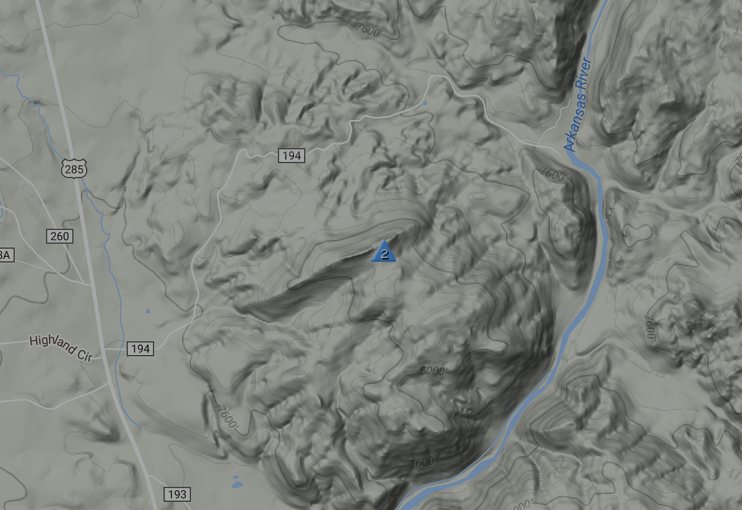 To get there, take Highway 285 south out of Buena Vista (or north from Salida), exiting at County Road 194 clearly marked as Hecla Junction. As you travel east, the road climbs then tops out. Soon after the road started to descend, Joyce K0JJW and I stopped and parked at lat/lon: N38.64998 deg, W106.06747. I don’t think where you park is critical but be aware that this road can get busy during the summer with the many rafting outfitters taking out at Hecla Junction (on the Arkansas River). There are two driveways heading south near where the road crests…we opted to stay to the east of these. One of them appears to be a campsite and the other leads to a house/cabin.
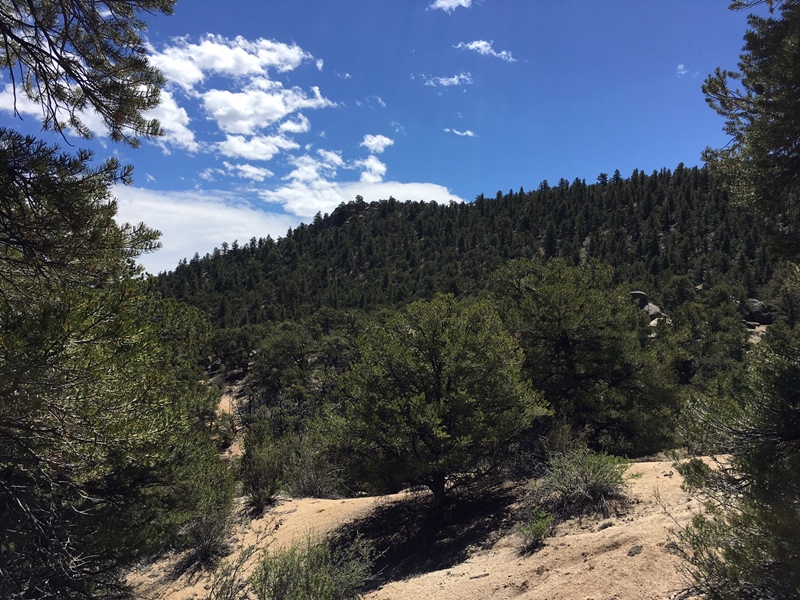
We proceeded south towards the visible summit, looking ahead to find a route that did not have too many ups and downs. There are many options and there was not much downed timber to deal with. We found a nice route that hit the main ridge about 0.2 miles west of the actual summit. We did cross a old logging road which had some recent dirt bike tracks on it, so that may be another option.
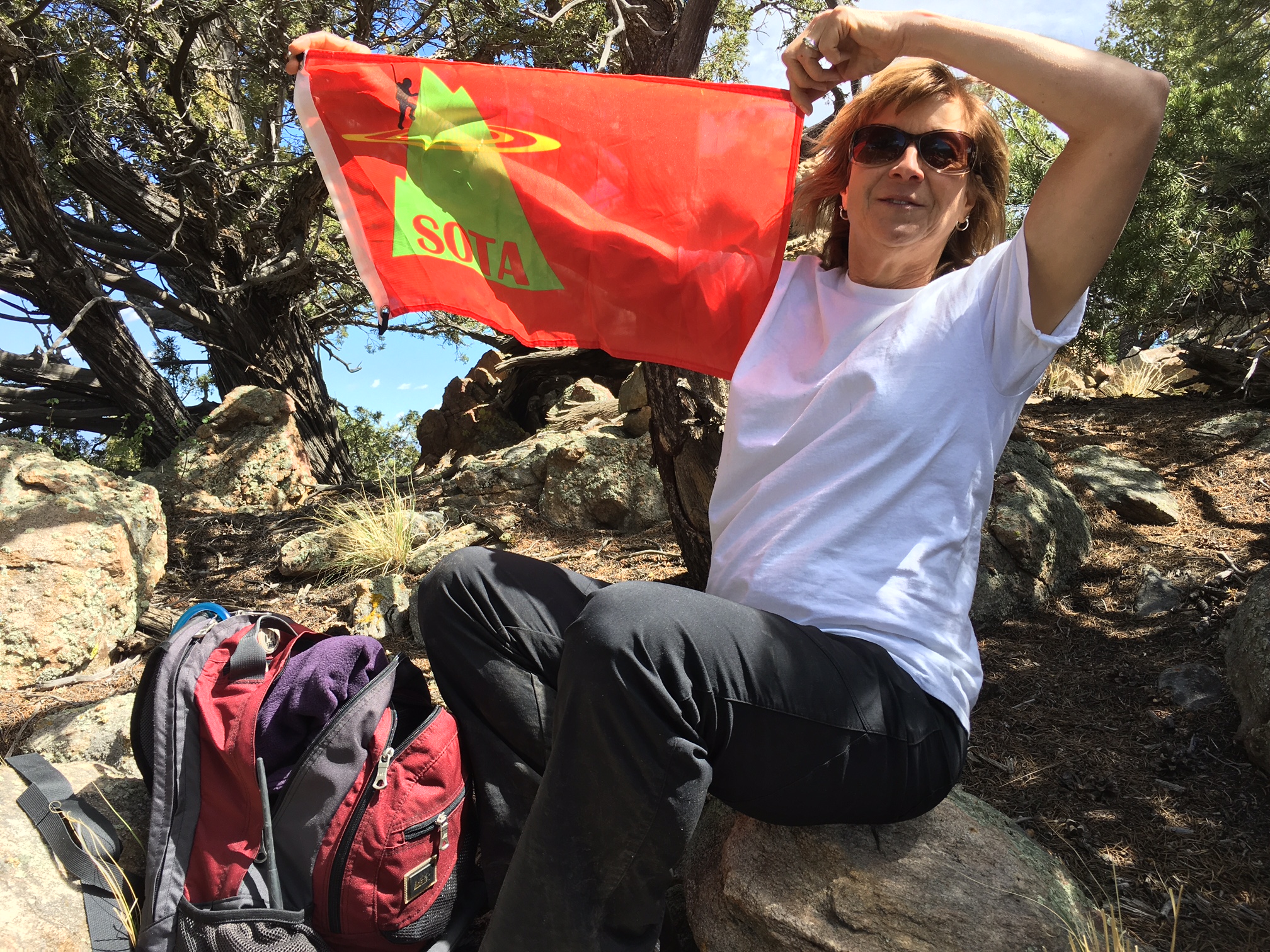
Joyce K0JJW had the honor of activating this SOTA summit for the very first time. As usual, we were working VHF//UHF, mostly 2m FM, but we also made some contacts on 440 MHz and 1.2 GHz. I managed to work Jay W9RM near Olathe, CO on the west side of the state using 2m CW. (We couldn’t quite make the contact on SSB, so we switched to CW to get the job done.)
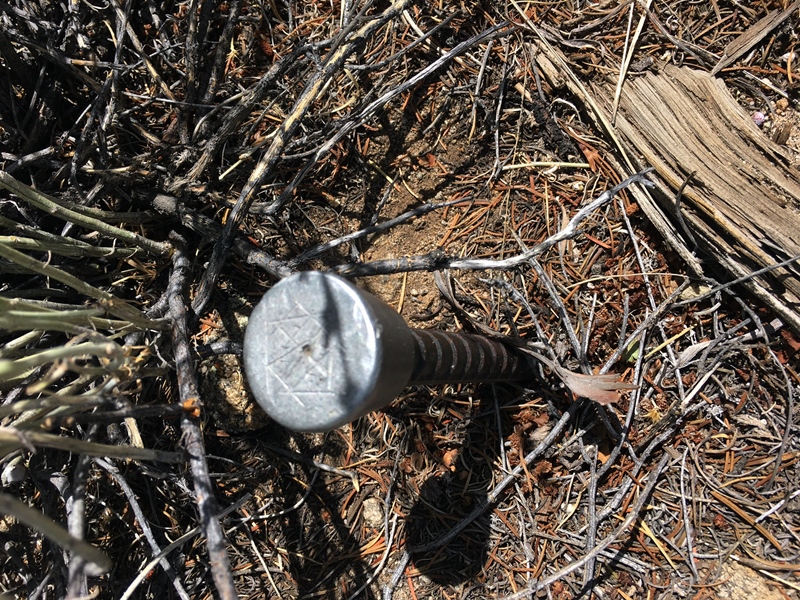
I’ve noticed a few other SOTA peaks are named “something benchmark.” I think that’s essentially an unnamed peak that happens to have a survey benchmark on it. So I looked around for the benchmark and found this marker at the summit:
Of course, like many of the lower summits in the Arkansas Valley, this one has a great view of the Collegiate Peaks to the west.
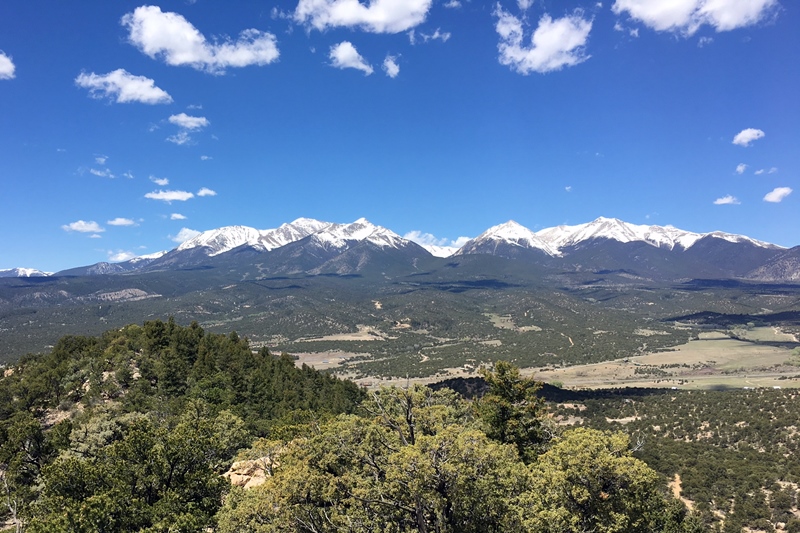
I expect this summit to be a popular SOTA activation because its easy to get to and has a great view. I estimate our total distance traveled as 1.2 miles with an elevation gain of 500 to 600 feet. Sorry, it’s only 2 points.
73, Bob K0NR
The post First SOTA Activation: H-44 Benchmark (W0C/SP-130) appeared first on The KØNR Radio Site.
ETH068 – Are You Weather Aware?

Photo by Curtis Mohr, K5CLM
While having access to your local RADAR wherever you are is great, you shouldn’t depend on it totally. You should be able to look at the sky, feel the wind, and see other clues to have an idea of what could be coming your way.
This brings up the question:
Are You Weather Aware?
In episode 68, we talk about this question and some things that you need to learn and do to help yourself be weather aware. Things like knowing what to look for in the clouds, why the wind suddenly changed directions, what to have in your emergency kit and having a plan with your family in case you need to vacate your home or seek shelter inside.
We dive into several weather events like tornadoes, flash floods, hail and even the event with the highest average of fatalities, which might surprise you.
We talk about W5KUB with the Amateur Radio Roundtable as he does his Hamvention coverage including the drive to and from. We also talk about some other hamfests that are coming up over the next two weeks.
If contesting is you thing, we talk about all the upcoming contests/on-the-air events for the next two weeks as well.
Check out the show notes and listen to the episode at:
2017 Colorado 14er Event with SOTA
 Amateur Radio operators from around Colorado will be climbing many of Colorado’s 14,000-foot mountains and Summits On The Air (SOTA) peaks to set up amateur radio stations in an effort to communicate with other radio amateurs across the state and around the world. Well, last year we celebrated the 25th annual event so this year it must be the 26th. We are continuing the all weekend approach on August 5 and 6. However, many mountaintop activators will hit the trail early in the morning with the goal of being off the summits by noon due to lightning safety concerns.
We still have the very cool 25 Year Anniversary t-shirts (and other great stuff) available at http://www.cafepress.com/wg0at
The 14er event includes Summits On the Air (SOTA) peaks, which add over 1700 now 1805 potential summits! If you aren’t up to climbing a 14er, there are many other summits to choose from (with a wide range of difficulty). See the W0C SOTA web page at w0c-sota.org
Radio operators who plan to activate a summit should post their intent on the ham14er Yahoo Group. To subscribe to the “ham14er” email list, visit the Yahoo groups site at http://groups.yahoo.com/group/ham14er/ . Also, be sure to check out the event information at http://www.ham14er.org It is also a great idea to post an ALERT on the SOTAwatch.org website.
Frequencies used during the event
Activity can occur on any amateur band including HF, VHF and UHF. The 2m fm band plan uses a “primary frequency and move up” approach. The 2m fm primary frequency is 147.42 MHz. At the beginning of the event, operators should try calling on 147.42 MHz. As activity increases on that frequency, move on up the band using the 30 kHz steps. Don’t just hang out on 147.42 MHz…move up! The next standard simplex frequency up from 147.42 MHz is 147.45 MHz, followed by 147.48 and 147.51 MHz. We try to stay off 146.52 MHz, the National Simplex Calling Frequency to avoid overload, but if you need to make a call there, go for it…and be brief.
| Frequency (MHz) | Comments | Frequency (MHz) | Comments |
| 147.42 | Primary 2m FM Frequency, then up in 30 kHz steps | 7.032 | 40m CW Frequency |
| 147.45 | Alternate 2m FM frequency | 7.185 | 40m SSB Frequency |
| 147.48 | Alternate 2m FM frequency | 10.110 | 30m CW Frequency |
| 147.51 | Alternate 2m FM frequency | 14.060 | 20m CW Frequency |
| 446.000 | Primary 70 cm FM frequency | 14.345 | 20m SSB Frequency |
| 446.025 | Alternate 70 cm FM frequency | 18.092 | 17m CW Frequency |
| 144.200 | 2m SSB calling frequency | 18.158 | 17m SSB Frequency |
| 50.125 | 6m SSB calling frequency | 21.060 | 15m CW Frequency |
| 1294.50 | 23 cm FM calling frequency | 21.330 | 15m SSB Frequency |
| Other Bands/Modes | Standard calling frequencies and/or band plans apply. | 28.060 | 10m CW Frequency |
| 28.350 | 10m SSB Frequency |
Warning: Climbing mountains is inherently a dangerous activity.
Do not attempt this without proper training, equipment and preparation.
Sponsored by The Colorado 14er Event Task Force
The post 2017 Colorado 14er Event with SOTA appeared first on The KØNR Radio Site.
We’ve Got Some Explaining to Do
There was a fun interaction on twitter the other day about how we represent amateur radio to the general public. It started with this tweet from @FaradayRF:
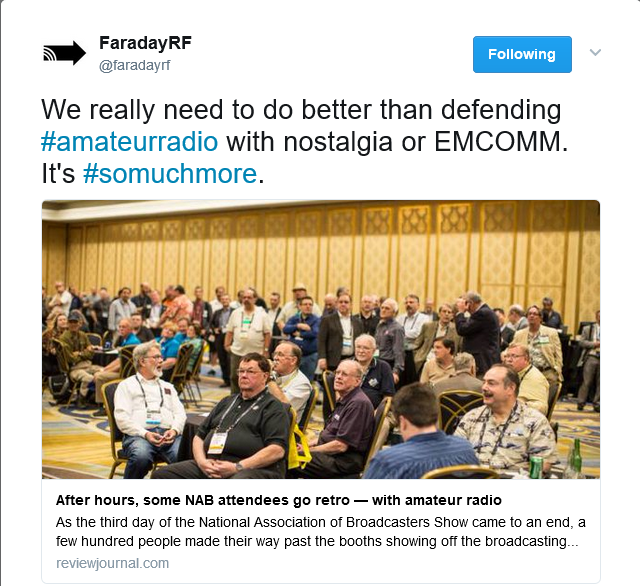 This refers to an article in the Las Vegas Review-Journal newspaper where the author decided to use the theme of “ham radio is retro” to tell the story of a ham radio gathering at NAB. I really hate it when ham radio gets positioned as “old technology” in the world of awesome wireless stuff. Clearly, some of our technology is dated, but the amateur service includes lots of new technology and experimentation. (Actually, the tone of the article was very positive, so we shouldn’t complain too loudly.)
So I replied, along with a few other folks:
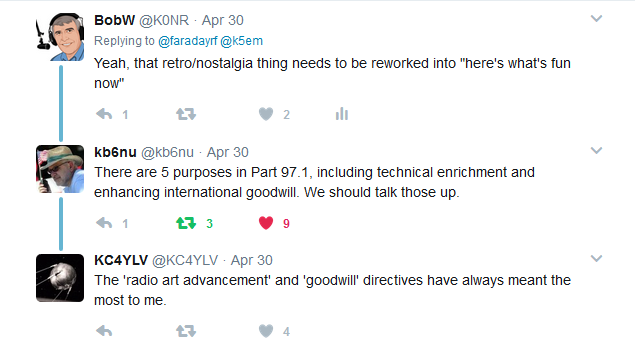 So KB6NU and KC4YLV took the discussion back to good old Part 97 of the FCC rules. (You ever notice how often radio hams like to quote Part 97? It’s right up there with the U.S. Constitution and the Declaration of Independence.) I tried to recall from memory the five things listed in 97.1 as the Basis and Purpose of the Amateur Radio Service, but failed.
I had to look them up, so I’ll save you the trouble and list them here. Actually, I am going to provide the KØNR Abbreviated Version (go here to see the full text):
Part 97.1 Basis and Purpose of Amateur Radio
a) Voluntary public service, including emergency communications
b) Advancement of the radio art
c) Advancement of communication and technical skills
d) Expansion of trained radio/electronics enthusiasts
e) Enhancement of international good will
These five things are still relevant and are being pursued today. Not all radio amateurs contribute to every one of these but as a group we are doing these things. The good news is that many non-hams do understand the When All Else Fails aspect of ham radio…most have had their cellphone become a useless brick during major incidents. Items b, c and d are all about learning new things, building skills and expanding the number of radio hams. We should talk more about that. Enhancing international good will may seem a bit quaint but this crazy world can always use another dose of that.
Part 97 does leave out one thing that is the ultimate attraction and, in fact, the universal purpose of ham radio:
To Have Fun Messing Around with Radios.
73, Bob KØNR
The post We’ve Got Some Explaining to Do appeared first on The KØNR Radio Site.
ETH067 – I Think I Have The PSK31 Bug Thanks to Ian Kahn, KM4IK

Over the past 67 episodes of my podcast, there has been a couple episodes that have really peaked my interest and kind of lit a fire under me to do whatever that topic is myself. Things like APRS back in episode 6, and Broadband Hamnet in episode 29. However, neither of those got me back onto HF. My HF rig has basically gone unused for close to seven years or so and has been in a box for the last three years!!
I honestly have never been big on voice communications on HF. All of the times that I have operated on HF has either been at home calling CQ or looking for someone else calling it or during things like Field Day. At home I rarely got anyone to answer my CQ call; I think I was getting out. During field day it was, basically the exchange and on to the next contact. Neither of these things were very fun to me.
Digital modes, especially thing like PSK31, seem to be right up my alley! So I decided to look for someone that knew something about it, that I could learn from. I finally found Ian Kahn, KM4IK and he agreed to come onto my show and talk to me about it. We had a great conversation and I learned a lot. If you are interested in learning about PSK31, head over to the show notes of the episode, you can listen right on the page, or you can search for Everything Ham Radio on the major podcast directories.
ETH066 – Growing Up A Ham and The Allstar Link Network
 Getting your license at the young age of 14 isn’t all that hard to believe or uncommon anymore. Building a repeater at the age of 16, that is pretty uncommon but with technology the way it is now, again not that hard to believe. Being the chief engineer of a telecommunication company at the age of 17 without a college degree, that is something that you don’t see everyday.
In this episode of the Everything Ham Radio Podcast, we talk with Jim Aspenwall, NO1PC. He did this and went onto do so much more. Jim tells us about what the Allstar Link Network is and what it can do. Later in the episode we talk about an Allstar Link Node that he has built that cost him about $100!
We talk about a blog post syndicated on this site by Andrew MØNRD where he tells about his first SOTA activation.
We wrap up the episode with some upcoming events and contests and some upcoming hamfests for the next two weeks.
Capulin Mountain (W5N/SG-009) VHF SOTA
Joyce (K0JJW) and I were driving back to Colorado from Texas on Highway 87 that goes right past Capulin Mountain in the Capulin Volcano National Monument. Capulin is a dormant volcano with a large crater on top, a great place to visit if you ever in the area. Oh, and it’s a Summits On The Air (SOTA) peak, too (W5N/SG-009). Obviously, I thought it was a great opportunity to activate it for SOTA. There’s only one problem: this summit is out in the middle of nowhere so making some contacts on 2 meters was not going to be easy. (Yeah, I have been doing SOTA activations only on VHF.) In many locations, I just put out a call (or many calls) on 146.52 MHz and I eventually get my 4 QSOs to qualify for SOTA activation points. This works near populated areas and places where there is significant tourist traffic.
Capulin Mountain is in NE New Mexico, about 150 miles from Colorado Springs, 200 miles from Denver and about 190 miles to Albuquerque. These distances are all workable with a decent weak-signal station on 2 meters. But I was going to be operating at QRP power levels and a small 3-element yagi antenna. I concluded that this activation was still possible but it depended on getting some of the weak-signal VHF guys on the air so I had someone to work. So I put the word out to some of the VHF enthusiasts in the Rocky Mountain area asking for help. I received a good response which was encouraging so I published a schedule for Tuesday afternoon, starting at 19:30 UTC, 1:30 pm local.
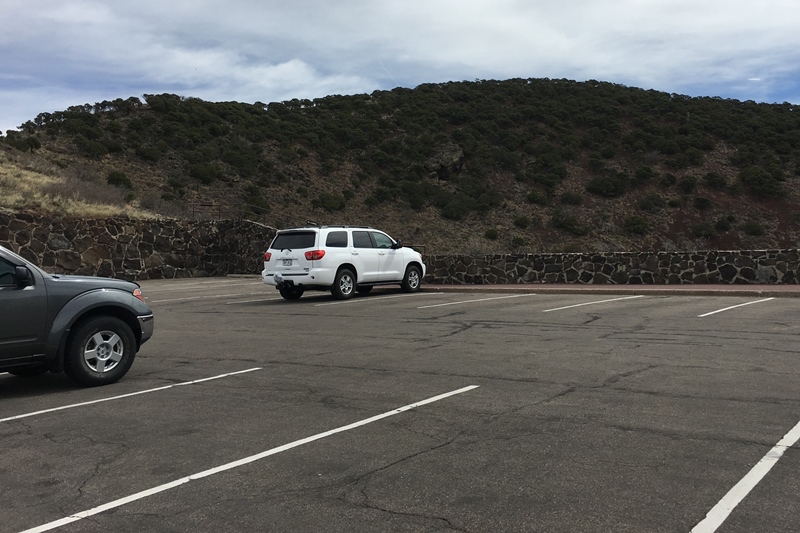
The national monument is easy to access, just a few miles from the highway. I have an annual national parks pass, so we did not have to pay an entrance fee. This satellite photo of the monument, shows the crater and the access road that winds around it. The parking area is visible on the west side of the crater (zoom in).
The parking lot is not within the SOTA activation zone, but an easy hike up the ridge got us to the summit. For VHF, I wanted to be as high as possible anyway with a 360-degree view. There is a trail that goes completely around the crater rim, also crossing the summit. It is a short hike on a paved trail, a bit steep in spots but nothing difficult. We did encounter some extremely annoying gnats that swarmed around us the entire time.
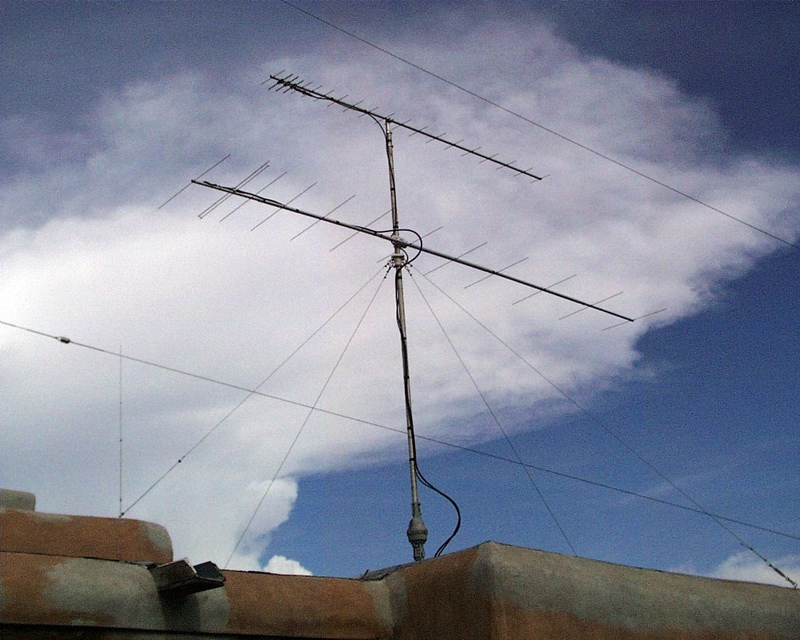
We got to the summit earlier than planned, around 17:30 UTC, started calling on 146.52 fm and 144.200 ssb without much luck. Finally, I caught WE7L in Elizabeth, CO (DM79) on 2m cw at 19:05 utc. He was weak but very readable. I think I was pointing the antenna a little too far east…later he came in stronger when I directed the antenna further west. After that I worked Arne N7KA (DM65) near Albuquerque and K9VSW (DM76) near Taos. Once I got my antenna zero’d in on K9VSW, I was able to work him on ssb. Some time later, I heard Lou K0RI calling from the Colorado Springs area. He was loud enough that I heard him off the side of the antenna, still pointed at Albuquerque. Lou was running 160w to a 17-element 2M5WL yagi at 75 feet.
| Time | Call | Band | Mode | Grid |
|---|---|---|---|---|
| 19:05z | WE7L | 144MHz | CW | DM79 |
| 19:10z | N7KA | 144MHz | CW | DM65 |
| 19:12z | K9VSW | 144MHz | CW | DM76 |
| 19:15z | K9VSW | 144MHz | SSB | DM76 |
| 19:53z | K0RI | 144MHz | SSB | DM78 |
I heard some other stations but was not able to work them. The challenge was quite clear: most VHF enthusiasts are running 150W or more of RF power, while I had the FT-817 max’d out at 5W. This is quite an imbalance, easier for me to hear them than they could hear me. Clearly, cw saved the day, punching through with minimal signal levels.
My best DX for the day was N7KA at 229 miles. Actually, this is an all time best distance for me on 2m while doing a SOTA activation. I recently worked W9RM from Mount Herman at 170 miles and was pretty happy with that. We had signal to spare that day, so I figured I could do better. Also, I had previously worked 160 miles using FM between two Colorado 14ers. See
Pikes Peak to Mt Sneffels – 160 Miles.
I really, really, really appreciate the hams that got on the air to try and work me on Capulin. I could not have activated the summit without those skilled radio operators and their capable VHF stations.
73, Bob K0NR
The post Capulin Mountain (W5N/SG-009) VHF SOTA appeared first on The KØNR Radio Site.













