Archive for the ‘ham radio’ Category
 ARES in a Small Town
 December 13th, 2011 |
  Author:
 I’m afraid I haven’t spend much time on the air lately, because what time I have for ham radio has been devoted to a project that began as an idea for a blog post and has grown . . . and grown . . . and grown! I hope to write it all up when everything comes together, but I don’t want to give it away just yet. For now I’ll just give you a few clues: I’ve been assembling some test equipment, including an inductance-capacitance meter kit and a signal generator kit, and I received a tantalizing shipment in the mail today from a fellow who wrote a stellar article in QST 31 years ago. Stay tuned!
 On another front, I finally got to meet a local ham who is the IT manager at the hospital in our small town (population ~3K) — Mr. Andrew Rosenau, KCØYFY. I’ve been meaning to introduce myself to him ever since moving out here, but when I found out a few days ago that he is our county’s ARES (Amateur Radio Emergency Services) Emergency Coordinator, I sent him an email right away. He replied immediately, and today, after wrapping up a meeting in another part of the hospital, I ambled over and chatted with him for a few minutes in his office.
Behind him on his desk sat an HF rig, a 2M rig, and a TNC. Andy explained that he was a ham before moving here, and he got involved with ARES when the hospital became interested in EmComm. But with so few hams in our area (only 14 in the whole county), there hasn’t been much in the way of ARES activity. I volunteered to do what I could, and he said that for starters I could act as a back-up operator there at his station if he were unavailable in time of need.
It turns out that Minnesota has a huge packet network, and a radio club in a nearby town has even installed an antenna right in our city to extend this network. That was news to me! I’m going to have to dig up my old TNC and see if I can get it running. As much as I prefer CW, I have to admit that it does seem like an excellent way to handle traffic in an emergency.
ARES has always interested me. I’ve never been involved in it before, back when I lived in the Twin Cities, but now I think I owe it to my community. It appears that while there is less opportunity to do much ARES work out here in the sticks, there is also more opportunity for one ham to make a difference. So far Andy has been all alone in his effort — if even one ham chips in, that would double the number of ARES operators in our county.
Andy’s wife is a ham, too! I hope to have them over for dinner one of these days and get to know them better.


ARRL 10 Meter Contest
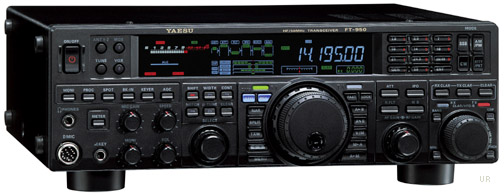 Usually I don’t focus on the ARRL 10 Meter contest, especially when the solar activity has been so low. However, band conditions have really picked up and 10 Meters is alive and kicking. We have quite a few new Technicians that are discovering the wonder of worldwide HF propagation with even a modest station.
I decided to operate from our cabin up in the mountains. I haven’t been happy with the performance of my trap dipole on 10 Meters, so I wanted to try something different. I pulled a twinlead J-pole antenna out of the basement and strung it up in a tall pine tree. This basically gave me a 1/2-wave vertical on 10 Meters and I was pleased with the performance.
I had a great time with the 10 Meter contest, operating for part of Saturday and Sunday.
You’ve got to like a contest that has:
- Only one band, so no fretting about which bands to focus on
- CW or SSB, take your pick or do both
- Lots of DX
- Work anybody anywhere
- You can sleep at night and not miss anything
I mostly searched and pounced around but did manage a few runs with my mighty wire antenna. Not being a real CW operator, I did decide that I would push myself to make 10 CW contacts. Most of those guys are going way too fast for me, but I got it done.
ARRL10M Score Summary Sheet
Start Date : 2011-12-10
    Band Mode QSOs Pts Cty
      28 CW    10   40   8
      28 USB  254  508  72
 Total        264  548  80
Score : 43,840
73, Bob K0NR
Handiham World for 07 December 2011
Welcome to Handiham World!

[email protected]
Handiham Manager

Delta Loop for 10 Meters on a Buddipole

- Vertical Polarization

Horrizonal Polorization of Delta Loop Good for DX
The magic that makes this antenna possible is a TRSB, Triple Ratio Selectable Balun. There is a 2:1 ratio position on this balun that is reversed for a 1:2 ratio to match the coax to the 100 ohm antenna. Any balun with this ratio will work.
-

- Vertical Polorization, Good for Talking to Mobile Ops
-

- Horrizonal Polorization of Delta Loop Good for DX
-

- End of whip burinshed to metal base with Dremel tool
Ten meters is doing pretty good lately. It sure is nice to have this band open again. I worked Alaska and Argentina on 10 meter CW using this antenna. I replied to an Ea7 station on SSB but he didn’t hear me.
The Delta loop is easy to configure and easy to deploy. These photos were taken on the porch of my condo. I’ll take this delta loop to the beach when the WX clears. I needed a rainy day to catch up on things around the house.
For more information on Buddipole Delta Loops; join the Yahoo Buddipole group
Here’s a nice video featuring a Buddipole Delta Loop http://www.youtube.com/watch?v=Ikm-HICGcrI&feature=youtu.be
This antenna can be used on 12 meters also and on 15 and 17 with additional Buddipole Arms and a longer ‘home brew connecting wire’ to close the loop.
I’ll be trying these bands out at the beach, my usual ham radio portable venue.
73
de AA1IK
Ernest Gregoire
Summits On the Air Taking Off in Colorado
 The Summits On The Air (SOTA) program was launched in Europe in 2002 but is just now making its way to the United States. Recently, there has been a surge of activity in Colorado as the program gains traction here.
The basic concept of SOTA is an award program that rewards the radio operators that activate summits and the radio operators that chase summits. For those of us that enjoy the mountains and enjoy ham radio, this is a great fit. I won’t go into all of the rules here (Warning: There Are Lots of Them), so check out the SOTA web site for the complete details.
Steve WG0AT (World Famous Alpha Goat) just published another one of his Rooster and Peanut videos that capture his recent activation of Mount Herman. I managed to work Steve on 2 Meters and I make a cameo appearance in his video below as I make my first official SOTA contact.
Steve has been activating SOTA summits for a while now and others are joining in. Here’s a video from Pikes Peak with Mike, KD9KC and Ron,WT5RZ on North American Summits On the Air weekend.
Recently, Jerry KD0BIK succumbed to the SOTA addiction, activating Mount Herman and Green Mountain (click on the mountain names to see his blog postings). Chris NW5W has also been active…check out his web site here.
There are numerous SOTA videos on youtube from all over the world.
The SOTAWatch web site is dedicated to posting future SOTA operating plans (Alerts) and SOTA activations in progress (Spots). The North American SOTA Yahoo! Group is another great source of information.
See you on a summit soon.
73, Bob K0NR
War of the Worlds, CW Edition
 For some time now I’ve been nibbling away at H. G. Wells’book, War of the Worlds — in CW! It is available along with several other books at the SKCC CW Learning Page. What a blast! It’s an effective way to improve your code speed, and it is so captivating that you want to keep coming back to it to find out what happens next. Somehow the story is all the more gripping as it unfolds slowly, letter by letter, giving you ample time to imagine the scenes that Wells describes.
Each chapter is one word-per-minute faster than the last one. So while it starts at a mere 10 WPM, if you finish the book you’ll be copying 36 WPM!
 A couple other features are helpful, too. For one thing it has punctuation marks that I’ve never learned before. It’s not everyday that you hear hyphens on the air, and the first time you hear an apostrophe or quotation-mark it will throw you for a loop. But you learn them quickly enough.
Another thing I like is that Wells uses some expressions that are a bit antiquated. This helps keep you on your toes. On the air, it can be a help to anticipate the next word, but it can also be a hindrance — if you don’t hear what you expect to hear, it can take just enough milliseconds to get over the surprise that the whole word “rushes by like a freight train” (as my friend Keith describes code when it suddenly becomes opaque). By listening to War of the Worlds on CW, with its occasionally unfamiliar turns of phrase, you learn to temper your expectation so that you’re not thrown off.
All in all it’s a great way to hone your skills, and it’s way more enjoyable than the dry practice tapes I listened to ‘way back when!
Thank you to SKCC and especially to John Dunlap, KF7BYU, for making this book available!
Update: One ham has asked me for help on this. Currently the only way to listen to the files at http://www.skccgroup.com/learn/learn.php is to click on them one at a time, either listening to them one at a time online or right-clicking each one and saving them one at a time to put together in a playlist on your computer (That’s what I did, and it was a bit tedious.). If you would like to download a zipped file of the whole book, send me an email at [email protected] and I’ll give you the link for as long as I can spare the disk space to keep the zipped file online.


Handiham World for 30 November 2011
Welcome to Handiham World!

 | If you own more than one vehicle, consider doing your Christmas shopping with the one that does not have the amateur radio equipment installed in it. This makes it much easier to turn that car into a “plain Jane” that will not attract any attention in the parking lot. |
| If you have accessories like transceivers or a GPS, get them out of sight. The GPS can probably fit comfortably in the glove box, but I recommend taking the transceiver out altogether and either leaving it at home or locking it securely in the trunk of the car while you are at home, not in plain sight in the parking lot of some shopping center where the bad guys can see that you are putting valuables in the trunk. I prefer using magnetic mount antennas that can quickly be pulled off the roof of the car and tossed in the trunk. |
| I have become somewhat of an expert in hiding wires under the passenger side floor mat. After taking out the radio and throwing it into the trunk, I can easily disguise the antenna feed line by simply coiling it up and placing it under the floor mat where it is completely out of sight. Any accessory plugs or wires for the GPS can also go under the floor mat or in the glove box prior to my leaving my own property. |
| Any time you purchase gifts, the time to place them in the trunk of the car is immediately upon leaving the store. Never place them on the passenger seat or anywhere else in the passenger compartment where they can be seen by anyone pretending to park their car nearby. It takes only a few seconds to break into a car and transfer these packages into an adjacent vehicle. Again, the idea is to make your car look as plain and uninviting as possible. |
| Never, ever return to the car and put packages in the trunk or anywhere else in the car and then leave the car in the same place and return to your shopping. The only time you should place packages in the car at all is when you’re getting ready to leave. Anyone can see you putting packages in the car and break into the car, including the trunk, as soon as you are out of sight. If you must unload because you have just too much to carry and it is necessary to make a stop at the car to put packages in the trunk, I recommend that you do so and then drive the car to another part of the parking lot or a different floor on the parking ramp, park it again, and return to your shopping. That lessens the possibility of someone seeing you fill the car with packages and then leave, giving them time to break in. |
| Even if you have placed your antennas out of sight, don’t be tempted to leave radios installed in the front of the car where they can be seen through the windows. Thieves may not know what they are taking, but they probably figure that whatever they get can be sold for a few bucks for drug money. You can’t simply depend on a thief not wanting an amateur radio transceiver because they don’t know what it is! |
| I have heard other amateur radio operators suggest that callsign license plates on a vehicle can attract thieves, but I have never found this to be the case. In fact, I think the general public probably thinks of them more as vanity license plates and I have even run into police officers who aren’t familiar with call letter license plates. Maybe amateur radio operators are such good drivers that they never get pulled over! |
| Generally thieves who break into cars want to be able to do so quickly without being noticed. You can improve your odds of avoiding car break-ins by locating your car in a well lighted, busy part of the parking lot. I don’t like parking next to blank walls or trucks or vans that hide the vehicle enough for someone to break in while remaining out of sight. |
| The name of the game is to avoid drawing attention to your vehicle with anything that looks expensive, flashy, or easy to steal. I can’t emphasize enough how leaving packages or expensive radio equipment in plain sight can attract thieves at this time of year. They are out there looking for easy money, so you really have to be careful to make sure that your vehicle doesn’t stand out as an easy mark. |
| Even when you park your car in your own driveway your radio equipment can be at risk. I recommend parking cars with radio equipment that you want to leave installed in a secured garage. Don’t depend on car alarms to protect your expensive radio equipment. A car parked in the driveway can be burglarized in minutes while you sleep. If you have limited parking space, the car with the radio equipment should be parked inside and the car that must be parked in the driveway should be the “plain Jane” with nothing to attract thieves left in plain sight. |
| Of course no matter how careful you are, you can fall victim to thieves. You may want to consider insurance coverage for your radio equipment. Your existing automobile insurance may provide some coverage, but supplemental insurance is always available. This is a matter to discuss with your insurance agent. Sometimes relatively inexpensive transceivers, such as 2 m only mobile units, may not be worth paying an extra insurance premium. On the other hand, if you have a truck load of expensive radios that operate on multiple bands and that are difficult to remove from the vehicle when you go Christmas shopping, you may want to consider that extra insurance coverage! |
| As they used to say on the old Hill Street Blues TV series, “Let’s be safe out there.” Timely advice for the holidays! |
[email protected]
Handiham Manager
Early Winter Reading: Becoming a Ham (Part 11)

Becoming a Ham – Part 11
By T. A. Benham (SK – formerly W3DD, a callsign which has been reassigned.)
Tom Benham, now a silent key but who most recently held callsign W3DD, was a ham radio pioneer, and being blind didn’t even slow him down! Join us now as W3DD recalls more about satellites in the early days and his experience with a Senate investigation.
The Teletype Episode
We were a very active part of NASA tracking for a couple of years and the teletype was our means of receiving messages about launchings. One night I stayed in the trailer all night because there was to be a launch about five A.M. We had fitted out the front part of the trailer with a couch, a hot-plate, coffee pot and other things for comfort. I was awakened about three in the morning by the teletypewriter coming on and typing something. Of course, I didn’t know what it had written. Perhaps the message required a reply. If so, I would have to use the phone and find out what it was. After thinking about it for a few seconds, I got up, sat down at the machine and wrote, “If what you just sent requires a reply, ring the bell three times. If no reply is required, ring the bell twice.” After a few seconds, the bell went ding ding. I went back to bed until five o’clock. A couple of days later, a man walked into my lab and said, “The office in Philadelphia sent me out here to find out what that monkey business the other night was all about.” “What monkey business?” “That business about ringing the bell three or two times.” When I explained it to him, he got a huge bang out of it saying “Gosh, wait until I get back and tell them that!” and he left. “Voices of the Satellites” got additions made to it during this period. We got the recording of Eisenhower’s Christmas message broadcast from a satellite at Christmas 1959, telemetering signals from many satellites, John Glenn’s flight in which he talked about the ice crystals, Russians talking back and forth between two space vehicles. As a matter of fact, the news people were out several times with cameras and recorders to watch and listen to the signals as we picked them up. We were not able to pick up satellite signals until they got above the horizon, so there was a delay of about two minutes after launch until the satellite was about 100 miles high before we made contact. In about 1963 we were monitoring a launch. We waited for the two minutes and then began to look for the signal. Several minutes passed with no contact so I went to the teletype machine and asked what happened. In two or three minutes the teletype machine wrote a very short message. I asked someone to read it. All it said was “splash.” One time when I thought we would be able to hear the Russian astronauts talking from one ship to another, I invited a member of the University of Pennsylvania Russian Department to come listen. He did and we got a very good signal. Unfortunately, all they talked about was trivia about temperatures in the cabins, how their food was holding out, and such like. But it was interesting to us and he seemed to get a big kick out of it. An interesting but small contribution to the Space effort was made by Ham radio back in 1959. I mentioned that President Eisenhower provided a recorded Christmas message just before December 25th that year. The story has it that the message had not arrived in time for the launch. The vehicle was closed and launch was a few minutes away. A Ham, identity not known, rushed up with a recorder and equipment and said, “Hold it! let me radio the message to the receiver in the “bird”. He set things up and sent the taped message to be stored aboard. I recorded the result when it was transmitted some time later.
The Summons
A rather amusing incident took place early in the satellite project. During the first couple of years, there was much conversation about the fact that the Russians had launched before we did. The project for launching was well under way in this country. Werner Von Braun, the German Physicist who was responsible for the development of the V1 and V2 rockets in Germany, was brought to this country at the end of the war and was making good progress organizing rocket development down in Alabama, but the red tape and time spent arguing delayed our program so that the Russians got ahead of us. There was much talk in the US Senate about why we were behind. There was an article published in one of the popular magazines telling what a good job Russia was doing. A Senate Committee was convened to investigate matters. The author of the article and I were subpoenaed to appear before the Committee. I got a small recorder and a few tapes to take with me to demonstrate what I had been recording and asked Corlies to accompany me. We were shown into the committee room and the other fellow was called first. They gave him a hard time and he did not present his information very coherently. The tenor of his remarks was that the Russians were way ahead of us, that he had been there and seen for himself.
Senator Brooks, the chairman said something like, “Well, you certainly have been given a snow job and what you have said does not seem to mean much.” Then I was called to the witness table and the chairman said in a sarcastic tone of voice, “Now, what’s your story?”
“I don’t have a story, as you put it, sir. You summoned me so I’m here. What do you want of me?”
His attitude changed immediately. He said, “We’ve heard that you have been very active in tracking satellites. We’d like to hear some of your recordings and ask a few questions. Please give us a summary of your activities.”
Things proceeded peacefully and pleasantly after that. I played a few samples of the satellite signals and explained what they meant and the information that could be derived from them, both US and Russian vehicles. They seemed to enjoy what I played and were friendly and interested.
Next week: Moonbounce.
To be continued…














