Archive for the ‘ham radio’ Category
 iOS CW app recommendations?
 April 25th, 2012 |
  Author:
App Store search: "learn morse code"
I would like to use an iPhone app to learn CW. I think that most of my learning and practice will take place on the train each day, so listening to live CW is out of the question. For those of you that may have already done this, I was wondering if you have a favorite CW app. Post your recommendations in the comments.
–Neil W2NDG
The World’s First Disposable HT
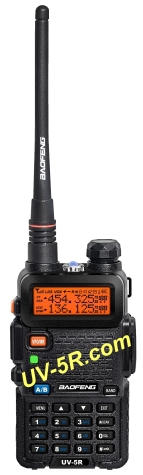 A few weeks back, I was
 wasting time doing important research on the internetz when I came across the Baofeng UV-5R Dualband Handheld Transceiver. This radio seemed to have a boat load of features but the sale price was $65. So I am thinking to myself, just how good is a $65 radio?
The last time I went out to a nice restaurant, I blew through $65 pretty quickly so this was not going to be a large purchase. In fact, I realized that we now have HT’s priced low enough to be an impulse buy. As one of my ham buds told me, “filling up the gas tank of my truck costs more than this radio!”
So, of course, I soon broke down and ordered one and it showed up on my doorstep a few days later. I’ve been using it off and on for a few weeks now. I’ve also noticed that there is a real buzz on the interwebz about this little radio. There is usual Yahoo Group (baofeng_uv5r) and youtube videos.
Here’s the short story:
While not perfect, for $65, this radio is impressive.
Besides using the radio and receiving good signal reports, I did check the receive sensitivity, transmit power and frequency — all good. There are quite a few reviews out there, so take a look at articles by W0HC, PD0AC and OE1RFC. Also, there have been quite a few reports of quality problems with this radio…probably more defects than equipment from the more established ham equipment vendors. See the Yahoo Group discussion to understand this better.
Similar to other radios from China, this radio has a quirky user interface…not as easy to use as my Yaesu FT-60. This means that the programming software is a necessity to get the radio set up correctly, which is the major downfall of the rig. The free software program is crapware, with many people reporting a variety of problems with installation and operation. I did finally get it to work, but it was very frustrating.
I find myself grabbing this HT when I head out the door and leaving my other radios sitting in the desk charger. Someone pointed out to me that the low price of this radio makes it an easy choice — if it gets dropped, broken, lost or stolen, I am only out a tank of gas. While I am kidding about the “disposable radio” idea, the low cost does affect how I use it.
73, Bob K0NR
Handiham World for 25 April 2012

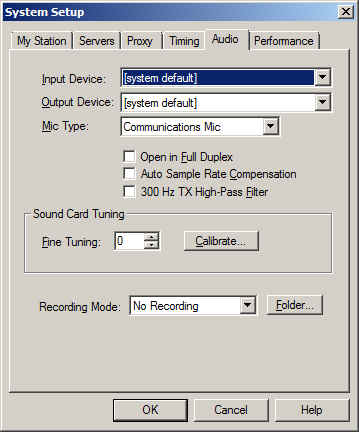
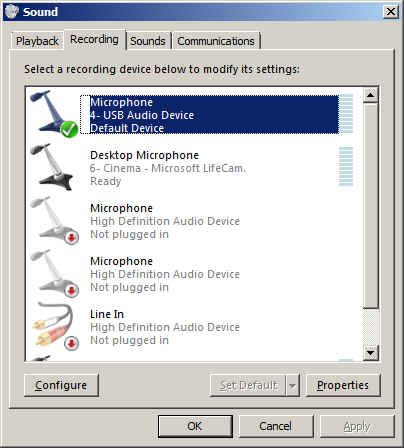
So why do we recommend using “default device” instead of one of the other selections? It is because selecting the recording device via the Echolink pull down does not always result in the correct device actually being used for audio input. This is a real mine field for users who have lots of audio devices. A computer could have a TV tuner, more than one microphone, a webcam with a built-in microphone, a line in device, and even a USB audio line to a transceiver. Don’t laugh – I have had all of these things, and sometimes Echolink reported one microphone being the input when instead the audio was coming from the HF rig connected via USB. It is safer to set your preferred microphone up as the default device in Windows, then always choose the default device as the Echolink input via the Setup menu.
Patrick Tice, WA0TDA
Handiham Manager

Amateur Radio Kit Roundup
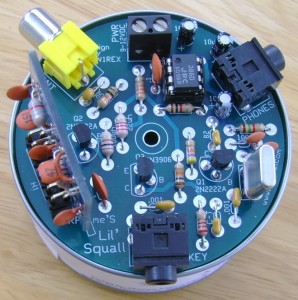
QRPme.com Lil' Squall Transceiver
Kit building appears to be on the rise again. With so many people talking about it on the club’s repeater lately I decided to put together a good list of sources for kits that are currently available. Many of these are for QRP operation, but a few are full-featured professional transceivers (Elecraft, DZ). On the beginners side there are a few sources that stand out: Hendricks has a great assortment of kits, including some SSB QRP equipment. QRPme offers the inexpensive, easy-to-build tuna-can products, and I would like to make special mention of the Four State QRP Group NS-40 which has the coils etched right into the PC board! What a great idea! I’ve covered trasmitters, transceivers, and some receivers here. Some accessories are mentioned in the source descriptions.
Revised 4/25/2012 Added Zao.jp. and AmateurRadioKits.in
-Hendricks QRP Kits http://www.qrpkits.com/
- BitX20A/17A SSB Transceiver. The BitX20A and BitX17A are complete SSB kits with board, all parts, digital display and custom powder coated and punched case that is based on the BitX20 that was designed by Ashlan Farhan. Output is about 10 Watts. $180.00 + S&H
- PFR-3a 3-Band Portable Field Radio. Bands : 40 meters, 30 meters and 20 meters. Tuning range: Full band coverage. Mode: CW only. $240.00 + S&H
- NADC30/40 CW Transceiver. Nearly All Discrete Component CW Transceiver for either 30m or 40m. Tuning range ~ 60 kHz. Power output: 3.5 watts. Full Kit: $130.00 + S&H
- Ft Tuthill 15 Meter CW Transceiver. Two 60 KHz tuning ranges, ~ 21.000 – 21.060 and 21.075 – 21.135 MHz. Power Output: 5 Watts. Complete Kit (w/ case and digital dial) $130.00 + S&H
- Red Hot 40 Meter Transceiver. A high performance QRP CW transceiver kit for the 40m band. It has been designed to operate well in the presence of large out-of-band (shortwave broadcast) and in-band (contest station just down the road) unwanted signals. Frequency range is a (nominal) 70KHz segment of the CW end of 40m. Output power 0 to 5 Watts nominal (7 Watts typical). Full Kit: $250.00 + S&H
- MMR-40 CW/SSB Transceiver. The MMR-40 features both CW and SSB operation, the first rig kit in this price class to do so. Transmitter power out: 6 watts CW/pep typical at 13.8V supply. Typical tuning range: SSB: 7.280 to 7.150 MHz CW: 7.100 to 6.700 MHz. Full Kit: $225.00 + S&H
- TwoFer Plus CW Transmitter. The TwoFer Plus is a simple transmitter that will be offered on 40, 30, and 20 meters. The kits come with crystals in the qrp region of the band. It will put out approximately 1 Watt using a 2N3053 transistor for the final. It has a crystal based VXO that will give about 1.5kHz on 40, and 3kHz on 20. It also has a built in T-R switch on the board that mutes the receiver during transmit. We have upgraded the kit with a custom prepunched case that was designed by Ken LoCasale, WA4MNT. The kit comes complete, with all parts, connectors, case, knobs, wire, and our usual commercial quality double sided, plated through, silkscreened solder masked board. $35.00 + S&H
- DCxxB Board Only Trasceiver Kit. These radios are the next generation of the popular DC40 transceiver that was also designed by Steve Weber. The kit will come with 1 crystal for the band specified. 7.040 for DC40, 10.120 for DC30, 14.060 for DC20. Board-Only kit with decals: $30.00 + S&H
- Scout Regen Receiver. A simple 2 band regenerative radio receiver that is capable of receiving signals from 3.5 to 11 MHz. A complete kit with L shaped aluminum chassis, quality doublesided silkscreened soldermasked board, all parts, hookup wire, board mounted battery holder. This kit is ideal for the first time builder. $50.00 + S&H
-YouKits http://youkits.com/. YouKits seems to be working on several new projects. Watch the website for new additions.
- TJ2A 2 Band SSB / CW Handheld Transceiver. Can be set to operate on 2 bands from 160m – 10m. Output power 3.5 – 4 Watts. Rechargeable. Many band combinations available. $169.00 + S&H
- TJ4A 4 Band Backpack HF Trasceiver. Available in 2 TX models: 80,40,20,15, or 40,20,15,10. New general coverage receiver capability. 20 Watts output (adjustable), SSB, CW, AM. Full Kit: $399.00 + S&H
-MFJ http://www.mfjenterprises.com/
- MFJ-8100K World Band SWL Receiver Kit. Regenerative general coverage receiver covering 3.51 – 4.31 MHz, 5.95 – 7.40 MHz, 9.56 – 12.05 MHz, 13.21 – 16.4 MHz, and 17.6-22 MHz. $79.95 + S&H
- MFJ-93xxK QRP Cub Transceiver Kits. QRP Transceiver available in 80, 40, 30, 20, 17, or 15. Output 2 Watts (except 1 Watt on 17 and 15).
-Vectronics (MFJ) http://www.vectronics.com/Categories.php?sec=209.
- Too many kits to list here. They sell several different Transmitter, Receiver, and Transceiver kits, as well as shortwave converters for the car. A couple of the items seem to be kit versions of MFJ products.
-Ramsey Electronics. http://www.ramseyelectronics.com/
- Similar assortment to Vectronics above, with several transmitter, transceiver and receiver projects.
-Genesis Radio (Australia). http://www.genesisradio.com.au/order.html not all kits are available. Many are listed as sold out, but I assume will become available again. Prices are in Australian dollars. This is the only one currently available:
- G11 5 band SDR Transceiver Kit. Power output 10 W. SMT components factory pre-assembled, buyer to assemble only large through hole components. Price in AUS$: $299.00 + S&H
-Tony Parks, KB9YIG. http://www.kb9yig.com/ Although everytime I look at this page, the kits are listed as “Check back soon” I have been told that if you email Tony he has kits available. These are the kits that the GSB ARC was building. 2 are currently available:
- SoftRock RX Ensemble II Receiver Kit. The SoftRock RX Ensemble II Receiver Kit includes the components for building the kit for LF, 180kHz through 3.0 MHz, operation or for HF, 1.8 MHz through 30 MHz. $56.00
- SoftRock RXTX Ensemble Transceiver Kit. The SoftRock RXTX Ensemble Transceiver Kit provides a 1 watt SDR transceiver that can be built for one of the following four band groups: 160m, 80m/40m, 30m/20m/17m or 15m/12m/10m. $74.00
-Ten-Tec. http://www.tentec.com/categories/Products-by-Area-of-Interest/Kit-Building/ Ten-Tec has 8 Radio kits available.
- QRP Transceiver Kits (20,30,40, or 80 meters). 3 watts power output. covers a 50 kHz segment determined by you at the time of construction. With pre-labeled and painted case. $124.00 + S&H
- 9 Band Regenerative Receiver. 1.760 – 1.990 MHz, 3.3 – 4.150 MHz, 5.5 – 6.9 MHz, 6.9 – 8.5 MHz, 8.5 – 11 MHz, 10.1 – 13.2 MHz, 12.5 – 16 MHz, 14.7 – 18.5 MHz, 18.5 – 21.5 MHz Integrated audio amp IC for clean robust audio from internal speaker or headphones. includes parts, circuit board, assembly manual, battery holder, speaker, complete enclosure, and knobs. $93.00 + S&H
- 4 Band Regenerative Receiver. 5.9 – 6.4 Mhz, 6.9 – 7.4 Mhz, 8.5 – 10.2 Mhz, 11.5 – 16.5 Mhz. Comes with finished front panel. No knobs or case. $41.95 + S&H
- Digital Readout Superhet Receiver. 100 Khz to 20 Mhz coverage. This is the radio that Jay, KC2YSK built and wrote about in the Log previously. Several option available to improve performance from 3rd parties. $205.00 + S&H
- Any Band Direct Conversion Receiver Kit. Includes all of the parts and instructions to let you build the receiver (or change it to) ANY band of your choice (160, 80, 75, 40, 30, 20, 17, 15, 12 or 10 meters). $39.00 + S&H
-Elecraft. http://www.elecraft.com/
- K3 Modular Kit. The K3 is Elecraft’s top of the line. Available in 10 and 100 watt versions and with a multitude of options. The modular kit comes with mostly pre-assembled boards that need to be plugged in. The K3 kit starts at $1549.95 and increases depending on what options you choose.
- KX3 Modular Kit. The KX3 is Elecraft’s newest transceiver. Similar to the K3 in features, but in a compact portable package. This is a modular kit like the K3 that requires you to assemble the pre-soldered boards. Many options available. Starts at $899.95
- K2 Kit. The K2 is available only as a full kit. This is not a modular kit like the two above, but a full kit for the advanced kit builder. The K2 is a full-featured transceiver available in 10 and 100 watt versions, and with many options. Basic kit starts at $739.95
- K1 Kit. The K1 is a small portable CW transceiver available as either a 2 or 4 band rig. You choose which bands you want at the end of the kit build. Adjustable output from 0 to 5 watts. The 2 band model starts at $299.95
- KX1 Kit. The KX1 is an ultra-portable CW transceiver. Available with 2 bands in the basic model, and upgradeable to 4. ! to 4 watt output. Starting at $299.95
-Hamtronics. http://www.hamtronics.com/menu_products.htm
- Hamtronics offers a variety of VHF and UHF receiver and exciter kits as well as many other interesting items.
-Emtech. http://emtech.steadynet.com/index.shtml
- Emtech is currently out of stock on their NW-series radios. Check back. In the meantime, they have the excellent ZM-2 QRP tuner kit.\
-JUMA. http://www.jumaradio.com/juma/ All prices are in EUROS €
- Series one kits. Three kits available. All DDS controlled, covering 80, and 40 meters. RX1 Receiver, 74.80€, TX1 Transmitter, 80.33€, and TRX1 Transceiver, 169.00€.\
- Series two kits. Two kits available. Both are high dynamic range, 10W output, SSB and CW transceiver kits, using quadrature sampling techniques for demodulation and modulation with low noise phasing. VFO is DDS controlled for a good frequency stability. TRX2 2-band model (80 and 40) 395.00€, and TRX2A 80 thru 10 model with general coverage receiver, 499.00€
- R1 Code Practice Receiver. High quality fixed frequency CW receivers designed for simple operation. Standard models are available for W1AW frequencies in the 80, 40 and 20 meter bands. $29.95 + S&H
-Small Wonder Labs. http://www.smallwonderlabs.com/
- Rock Mite CW Transceiver. The Rock-Mite is a crystal-controlled direct-conversion transceiver available for 80M, 40M, 30M or 20M. $29 + S&H some accessories available.
- The Retro 75. This is a nostalgic kit. A crystal controlled AM Transceiver with 2 watts carrier, 8 watts peak. $69 + S&H
-Wilderness Radio. http://www.fix.net/~jparker/wild.html
- Simple Superhet Receiver (SST). The SST is an optimized, superhet rig with an extremely low parts count . This may be the easiest to build superhet ever, and it comes with a miniature custom enclosure. 2 Watts output. $90 + S&H
- Nor Cal 40a. The revision B NorCal 40A is a third-generation 40-meter QRP transceiver kit, designed by Wayne Burdick, N6KR. The rig covers any 40KHz portion of the CW band, with a very stable VFO operating in the 2MHz range. The receiver is a superhet with crystal filter, AGC, and RIT. 3 Watts output. $145 + S&H
- Sierra. The Sierra is the only compact, low-current, multiband transceiver kit available. Designed by N6KR and extensively field-tested by the NorCal QRP Club, the Sierra has been completely upgraded for Wilderness Radio–including a painted and silk-screened enclosure and improved performance on both transmit and receive. Uses plug-in band modules for 80, 40, 30, 20, 17 and 15 meters. 1.5 to 3 watts depending on band. LCD display. Starts at $245 + S&H with 1 band module.
-Four State QRP Group. http://www.wa0itp.com/4sqrpkitindex.html
- Ham Can Transceiver. A crystal-controlled CW transceiver, delivering 1/2 to 1 watts. Easy thru-hole kit. Crystal for 7122 included. $30 includes shipping.
- NS-40 Transmitter. Ideal first kit. There are only 14 electronic components, and NO TOROIDS or COILS of any kind to wind – NONE! All inductors are incorporated directly on the PC board as etched spirals. 5 watts at 13.6 volts. $30 includes shipping.
-Kanga US. http://www.kangaus.com/products_by_type.htm
- Several inexpensive kits for the radio hobbyist.
-Electronics USA. http://electronicsusa.com/productsham.html
- A nice collection of kits including keys, keyers, and clocks.
- Little Joe Transmitter Kit. A small kit with board and parts from the book QRP Classics. Available for 80, 40, 20, and 10/15. Does not include crystals. $19.95 + S&H
- Cubic Incher Transmitter Kit. A small kit available for 40 or 80 meters. Crystals not included. Currently on closeout for $6.50 + S&H
-DZ Kit. http://www.dzkit.com/
- Sienna Transceiver Kit. This is a high end, full-featured transceiver with many options. The Sienna can be a full-control stand-alone rig, or a computer-controlled-only rig. Available in 10 and 100 watt version. Kits start at $2098 + S&H for the computer-only 10 watt model.
- HT-7 7Meter AM Walkie Talkie. The HT-7 is a simple AM handie-talkie that operates on the 40M AM calling frequency. $149.99 + S&H
- OHR 100A single band CW transceiver kit. Offered in 80, 40, 30, 20, and 15 Meter versions. Each can be aligned to cover 70-80Khz. 5 Watt output. $149.95 + S&H
-QRPme. http://www.qrpme.com/ Several kits and accessories here. They also have an intriguing kit of the month club” delivering kits to you every month.
- Micro 80D. Small tunable 80 meter CW transceiver kit. $35 + S&H
- Lil Squall Transceiver. A version of the Pixie Transceiver. A tinkerers delight. It fits in a small tuna can. Includes a socket for the FINAL transistor for easy experimenting with output power. Likewise, the feedback caps in the oscillator circuit also have sockets making it easy to experiment with new bands. The crystal also has a socket for easily moving the operating frequency about a band. Comes will ALL the parts necessary to complete the transceiver and a 7122 crystal for operating the Lil’ Squall ][ in an area where other minimalist rigs hang out, AND the ‘officially unofficial’ TUNA NET frequency for tuna can gatherings. $35 + S&H
- Super Tuna II+. A version of the Sudden Transmitter from the GQRP Club. Transmitter section is comprised of an oscillator, buffer and final driver transistor. Produces 2 watts at 12.6 volts. Frequency dependent components are mounted on an easily changed band module. The basic kit comes with a band module for 40 meter operation. $40 + S&H
- Tuna Tin 2 30th Anniversary Isuue. A re-issue of the original TT2 transmitter. Parts are laid out on the board in the exact same way the schematic is drawn. Simple, and easy to build. Comes with crystal for 7.030. $25 + S&H
- EZ Build Two-Tinned-Tuna Transmitter. EZ build version with no toroids to wind. Several socketed parts for experimenting and comes with 2 crystals for 40 meters. $30 + S&H
- Sudden Storm Receiver Kit. Great companion to any of the tuna can transmitters. Comes with components for 40 meters but can be operated on 80, 30, and 20 using the upgrade kit. $35 + S&H
- Reggie II Transceiver Kit. A lesson in minimalist design. The Reggie uses the Limerick construction technique. Output is about 100mW. $40 + S&H
- MKARS80 SSB Transceiver. This kit is based on the same design that is used in the BITX20 from Hendricks, but modified for 80 meter use. Main changes from Ashhar’s original design are the inclusion of a frequency counter and a Huff and Puff frequency stabilizer. Covers from 3.5 to 3.8 Mhz with about 5 Watts output. This kit is a bargain! Ranging from a basic no-case kit for £55.00 shipped to the USA, to full kit with connectors, knobs, and an undrilled case for £68.50
- Hunter SDR Receiver / Panadapter. This looks like an interesting and economical SDR kit, that can also be controlled by an existing rig for use as a panadapter. £87.00 shipped to the USA
-Radi0shop (eBay store). http://stores.ebay.com/radi0shop This eBay store is selling a couple versions of the Pixie II transceiver. They currently have the 80 meter version in stock, and claim to also supply the 40 meter one. Looks like a very simple build. $39.00 free shipping.
–Zao.jp. http://zao.jp/radio/order/ Zao has one kit currently available. He is also the source for the pre-built Soft66 SDR radios (currently selling new version LC4) which is one of the lowest-priced pre-built SDR receivers on the market. Getting it running is a challenge I hear, but performs well for the money once you do.
- Soft66Lite. Small monoband SDR that can be built for different ranges depending on the bandpass components installed. Easily switchable by plugging in homemade bp modules setup on IC sockets. $18 shipped to USA
–Amateur Radio Kits.in. http://cqbitx.blogspot.com/
- BITX Kits. I won’t list the kits individually because the website is a bit confusing. They seem to have several different options from a basic kit with just the board and specialty components only for $18 to a deluxe complete kit with digital readout for $85
- AVALA SDR board only. There are a few sites supporting this SDR. Not sure if I’m ready to tackle something like this, but it does look interesting. Board only: $10
Allow me to introduce myself
Hello AmateurRadio.com readers! I am Neil, W2NDG, a resident of the North Shore of Long Island in New York. I am a recent ham (August 2011), but a life-long techie and a shortwave listener since 1973. I will be posting from time-to-time here and wanted you to know a little about me first. I write mostly on my own sites, which can all be reached through the landing page at neilgoldstein.com.
I will be taking a look at the hobby from a newcomer’s point of view, but also covering the areas where computers and amateur radio cross over. I intend to learn code and build some QRP equipment by the end of the summer, so follow along, and we’ll have some fun with all of this. I also have some interesting plans involving SDR that I hope to be able to share in the months to come. I want to try to appeal to those of you out there on a limited budget, and help you find what you need without breaking the bank. These are tough times for many of us, but it shouldn’t keep us from having a great time with amateur radio. I also have 3 (possibly more) family members currently studying for their Technician licenses, which should make things interesting. My first post is a research piece I did for my club (LIMARC) here on Long Island about kit sources for amateur radio. So, 73s for now. See everyone soon.
Neil, W2NDG
Loving My Alinco DJ-G7
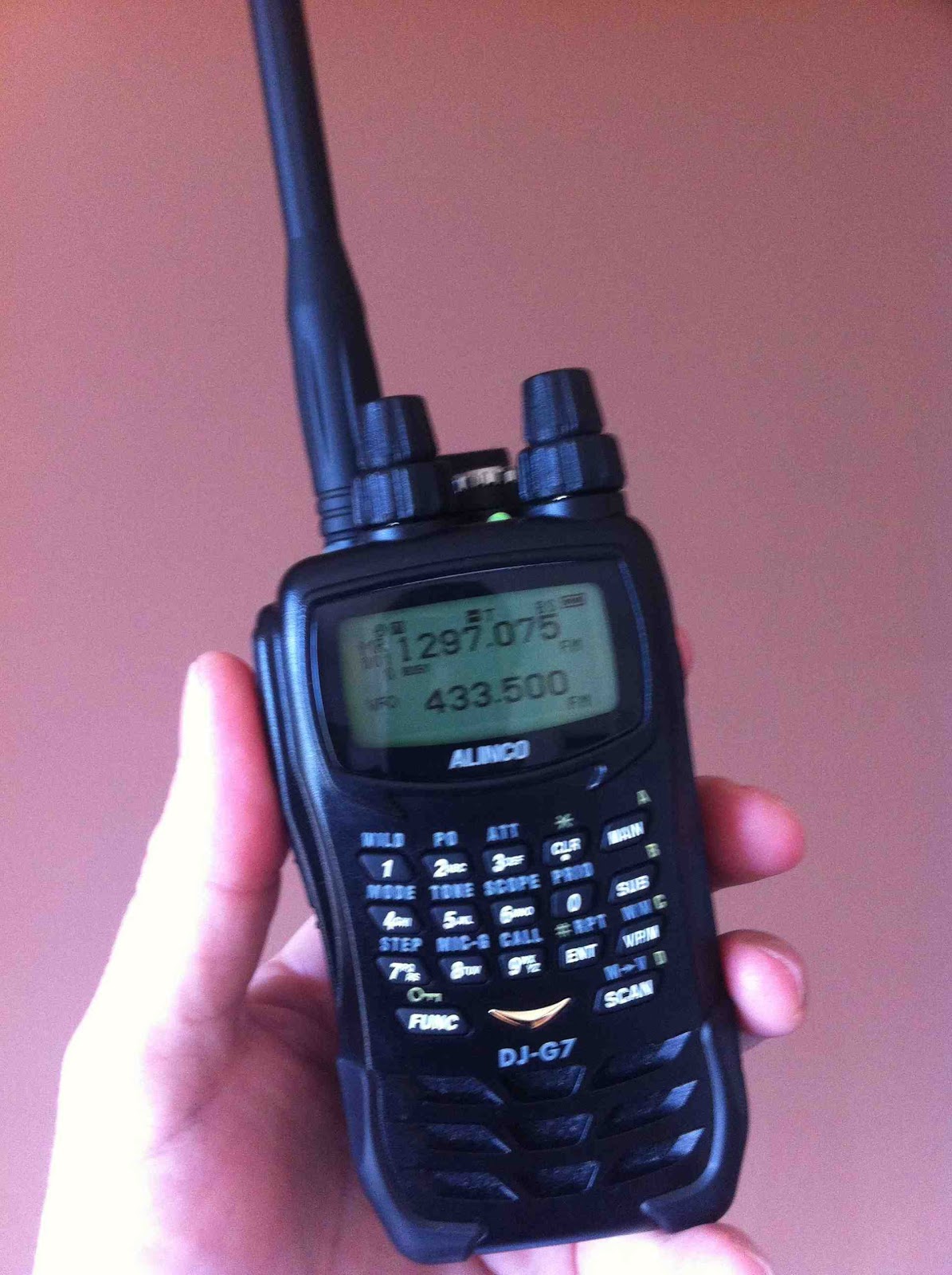 |
| Alinco DJ-G7 |
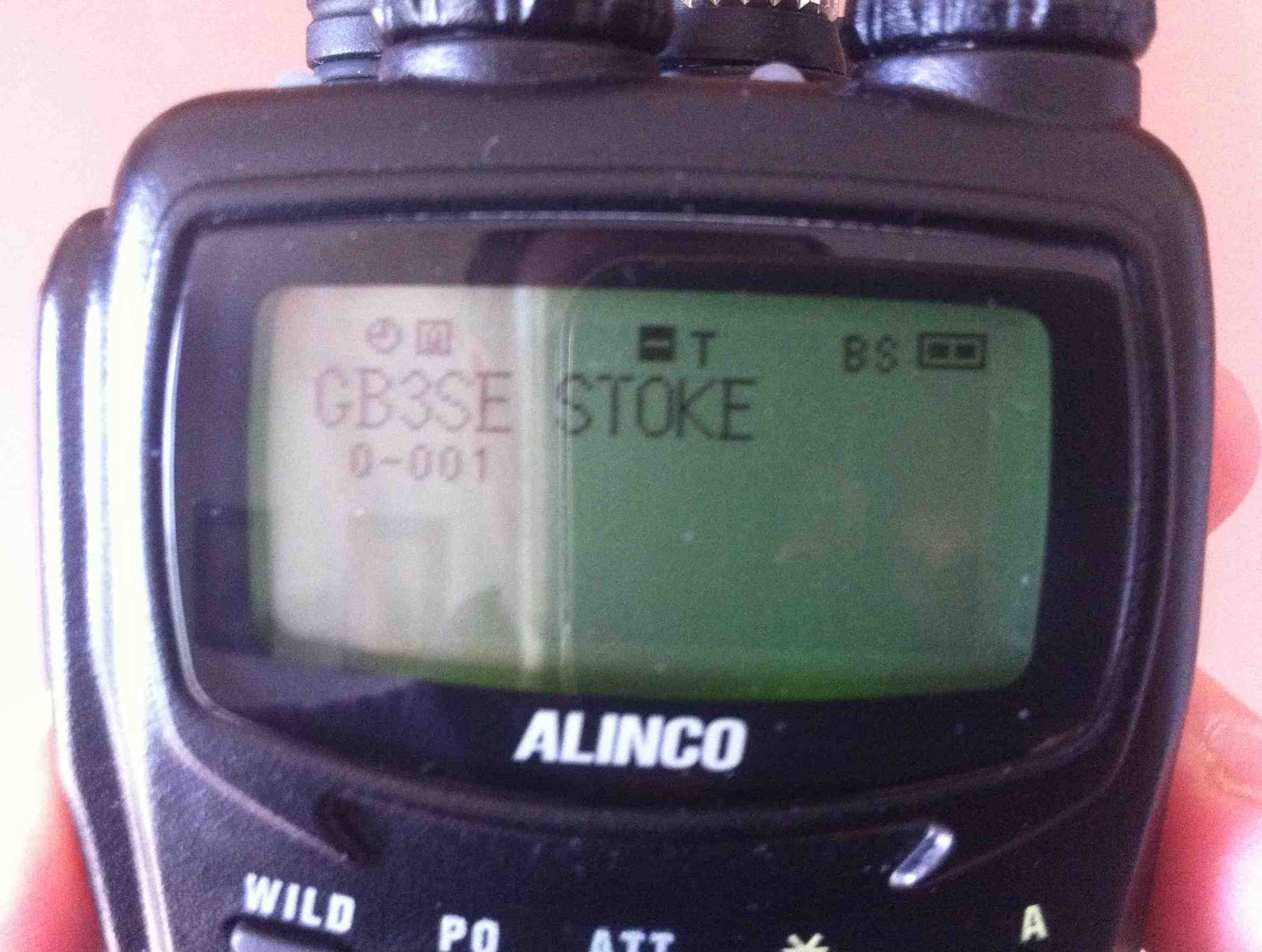 |
| Alphanumeric display |
Read Ross G6GVI's excellent review here: G6GVI Alinco DJ-G7
Update - here's a list of stations worked in my first week QRV on 23cm:
| GW4ZPL | John | Caernarfon |
| G7IEI | Shaun | Bolton |
| G6AOS | Steve | Blackpool |
| G6ODU | Bob | Ormskirk |
| 2E0DDD | Rob | Stoke |
| 2E0XYL | Karen | Wirral |

D-STAR Makeover
No longer will your beautiful, eloquent, flowing QSO be 'bumped' abruptly and permanently off the air by a random mobile station the other side of the world 'pinging' his local repeater for a few milliseconds. You can now even QSY to a 'chat' module and not hog the repeaters of an entire nation while you discuss your passion for North Korean tractor parts for three hours.
The advent of DCS reflectors, hand-in-hand with the German DV-RPTR boards shipped all over the world, is going to save the mode from extinction, no less. Witness the used D-STAR radios in the graveyard of Ebay as testament to the disillusioned DPlus users.
If only they'd have waited.
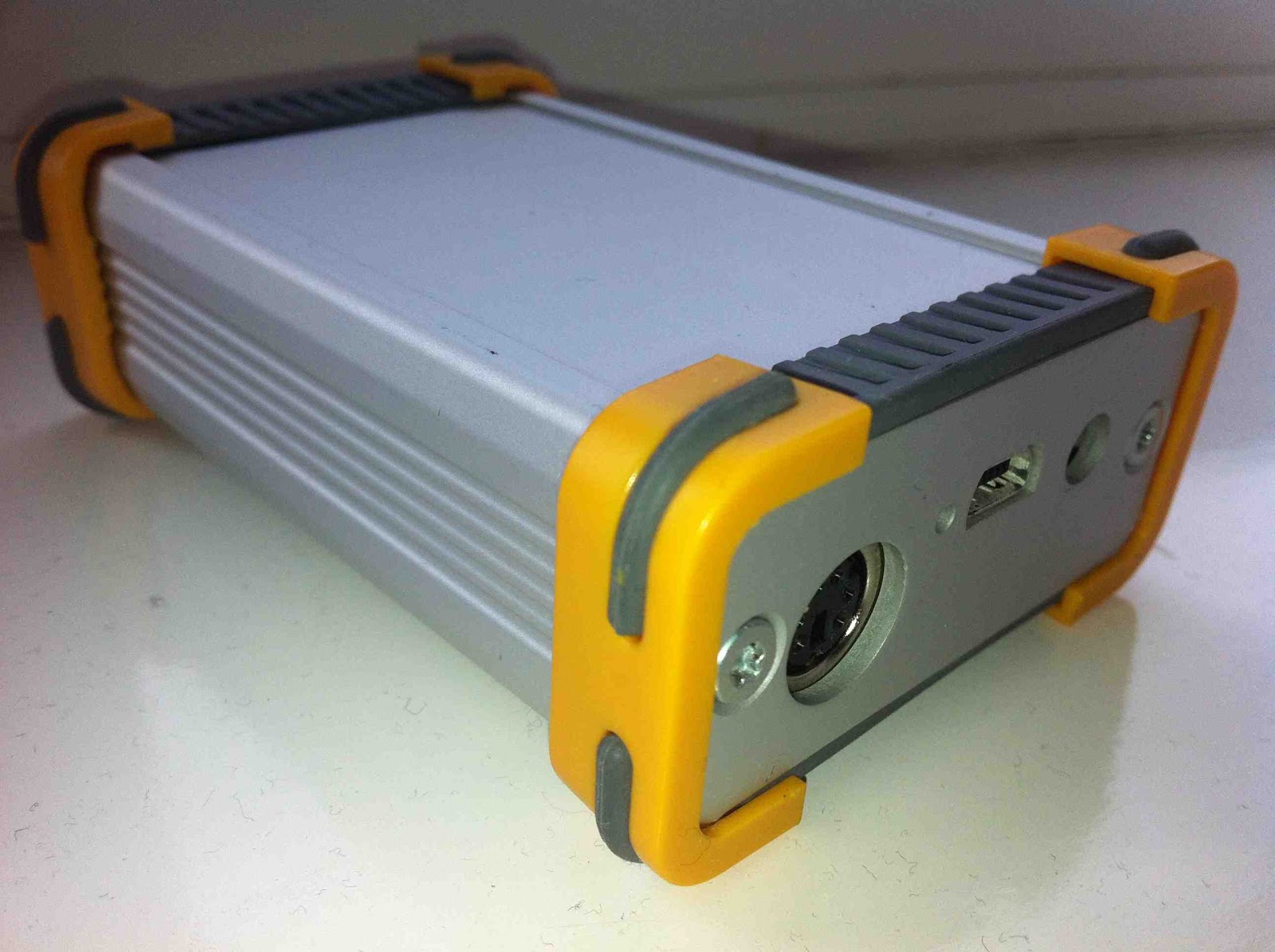 |
| The DV-RPTR unit in its housing |
*UPDATE 24th April 2012: Looks like the Dplus system has been suddenly revamped to include the routing information with the voice packets in the same way as DCS. Shame it took seven years of dysfunctional communications and a rival system to prompt this. I'll be staying on the DCS system - but enjoy whichever system you use and enjoy the mode!














