Archive for the ‘ham radio’ Category
 Pizza Box Computer Screen Sunshade
 July 10th, 2013 |
 Author:
Its always difficult to see a computer screen in bright daylight. Here in Florida, there are numerous pavilions with roofs over them and that helps a lot. Something extra is usually needed on a bright sunny day. I had a pizza today and while I was waiting for it to come out of the oven at the Pizza shop, I asked the cook if I could buy a couple of extra boxes. I told her what they were for and she gladly gave them to me. The $4 tip didn’t hurt that situation I’m sure!

I’ll make the next one look prettier.
I’m sure that I’m not the first one to come up with this idea. But here is my version of the Pizza Box Sunshade.

The interior of the box is pretty dark. Note the clear packing tape holding the sunshade together.

I did this job by myself, so I didn’t have anyone to hold the box in place while I applied the tape.
Using ordinary paper staples was a mistake, they leave sharp places to stab your fingers with.

Cheap and workable, the Sunshade should last a while. I’ll collect pizza boxes to keep me supplied.

It took 3 Pizza boxes to make up this sunshade, and it was worth every bite of Pizza!
I took this photo with a flash to show the interior of the sunshade.
73 de AA1IK
Ernest Gregoire
The WG0AT List of SOTA Resources
Here’s a great set of Summits On The Air (SOTA) links from Steve WG0AT:
| Name: | Medium: | Source: | Description: |
|---|---|---|---|
| Official SOTA Site | Web | SOTA UK | Gateway to all official SOTA resources |
| Rules & Guidelines | SOTA UK | General Rules & Guidelines for SOTA | |
| WØ SOTA Site | Web | WØ Assoc.Mgr | A good place to start for SOTA info for the WØ region |
| WØ Association Reference Manual (ARM) | WØ Assoc.Mgr. | Defines all summits and rules for the WØ Association | |
| SOTA Activator Guidelines | SOTA UK | The rules summarized on one page  | |
| SOTAwatch: Alerts | Web | SOTA UK | Create activation alerts for the world to see (You have to sign-up for a free account) |
| NA SOTA (Yahoo Group) | Web | 3rd party: Yahoo | The NA-SOTA Group on Yahoo is a great place to meet fellow Chasers/Activators, announce activations and share experiences. You have to submit a ‘join’ request before getting access |
| Results & Summits Database | Web | SOTA UK | Submit activation logs, search for summits, view results etc. |
| Adventure Radio: Mapview | Web | 3rd party: Mario/DC7CCC | Google map overlay. Allows to search for SOTA summits based on Assoc./Region or grid locator. |
| How to Activate a SOTA Peak | 3rd party: Guy/N7UN | Guy/N7UN’s helpful 4-page summary of the steps involved from planning, posting an activation Alert, conducting the activation itself and post-activation activities. | |
| WØ Summits | Web | WØ Assoc.Mgr. | Find a summit in your WØ region |
| Colorado 14er Event | Web | 14er Event | The web site for the Colorado 14er Event (includes SOTA activations) |
| SMS Gateway | Phone | SOTA UK: Andy | SMS gateway for selfspotting. You have to register with Andy: mm0fmf_sota (at) intermoose dot com |
| SOTA Goat iPhone appy | iTunes | iTunes | Spotting app for your iOS device at the iTunes store |
| SOTA Spot Monitor App | web | Eric KU6J | SOTA spotting app for Windows PCs |
New Colorado 14er Event Shirt
 Thanks to Steve WG0AT, we now have a new design for the Colorado 14er Event Shirt. Steve gen’d up a new logo that has the Colorado 14er Event blended with Summits On The Air (SOTA), that is available on a variety of t-shirts, a coffee mug and maybe a few other items. The logo, shown to the left, is a fantastic graphic featuring Ham Radio at Altitude.
Go to Cafepress to view and purchase the items that are available.
73, Bob K0NR
FCC Considers Encryption on Amateur Bands
 Just when things were terminally boring on the amateur radio regulatory front, the ARRL reports that “The FCC is inviting public comments on a proposal from a Massachusetts ham to amend the Part 97 Amateur Service rules to permit the encryption of certain amateur communications during emergency operations or related training exercises.” The FCC is seeking comments on the Petition for Rulemaking RM-11699, submitted by Don Rolph (AB1PH). My email and twitter feed started filling up with passionate pleas to either support this petition or to kill it.
This idea has been around for a while but I don’t recall the FCC considering action on it. The issue is that “messages encoded for the purpose of obscuring their meaning” are prohibited by Part 97 rules for the Amateur Radio Service. (Actually, that is not completely true since an exception exists for control of stations in space and radio-controlled models.) This rule has a very important role in enabling the “self policing nature” of the amateur radio service. That is, everyone can listen to the content of all radio communications, allowing improper use of the spectrum to be exposed. (Note to self: file a petition to require encryption when using 14.313 MHz.)
This rule can be a barrier when ham radio Emcomm organizations are providing communications for served agencies (e.g., the Red Cross, fire departments, medical response, law enforcement, etc.) These served agencies do not want sensitive information passed over the radio “in the clear.” Sensitive information includes items such as medical/patient information, location of emergency responders and supplies, damage assessments, door or gate access codes, etc.
A few weeks ago, I volunteered my time to help with communications for the Black Forest wildfire here in Colorado. So count me as someone that sees emergency communications as a key part of amateur radio. (Gosh, I think Part 97 even mentions this. See Part 97.1a) I also see that the prohibition against encryption is a does get in the way during some incidents.
But I am also worried about opening the door to significant use of encryption on the ham bands. The problem with encrypted messages is that…wait for it…you can’t decode the messages. So how do we maintain that self-policing thing? The fear seems to be that if we open the door at all to encryption, it will enable virtually anyone (amateur license or not) to transmit encrypted messages for unknown and inappropriate purposes.
The challenge is to figure out what limits could be put on encrypted operation to retain the self-policing nature of ham radio while enabling more effective emergency communications. Here are some ideas:
- Limit the use of encryption to actual emergencies and training exercises. (This is already in RM-11699.)
- Require that radio transmissions are properly identified “in the clear”, with no encryption. That way if encryption is used on a regular basis, steps can be taken to investigate further. (This may already be assumed by RM-11699 but I did not see an explicit statement.)
- Require additional information to be sent in the clear with the station ID when sending encrypted messages. For example, the name of the served agency, the nature of the emergency or drill, or anything else that would help a random listener to judge whether it is an appropriate use of encryption.
- Require archiving of encrypted messages (in unencrypted form) for some period time, available for FCC inspection.
- [Added 28 June]: Avoid international regulation issues by limiting encrypted messages to US stations only.
- <insert your idea here>
Still pondering this issue…what do you think?
73, Bob K0NR
Update 1 July 2013: See the article by Bruce Perens K6BP
Update 8 July 2013: See comments by N5FDL
The ARRL says “no”.
W5MPZ Field Day!
Our station was active for almost 24 hours, minus a lull at about 1:10 am Sunday morning. Our backup arrived at around 2 am, which included Brian (N5ZGT, Rocky Mtn Division Director), who just got back from a Turks and Caicos island vacation (or DXPedition, you might say), and Scott (N5SQR) who worked PSK and SSB.
Setup and Operation
Beam
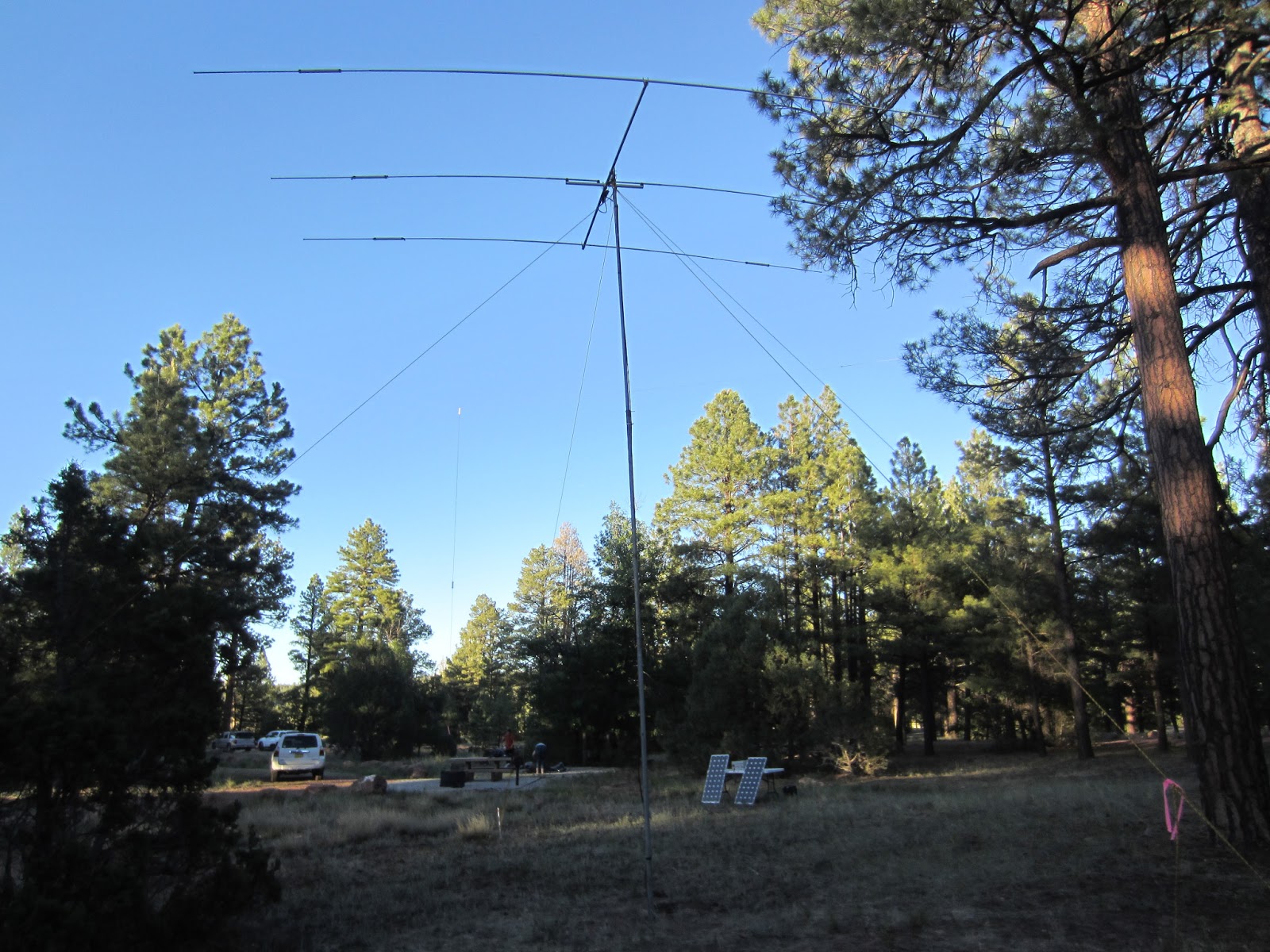 |
| TA-33 with the 80m windom in the background |
Dipoles
On my first shot, I got over this tree and the line sat perfectly on the brown number post.
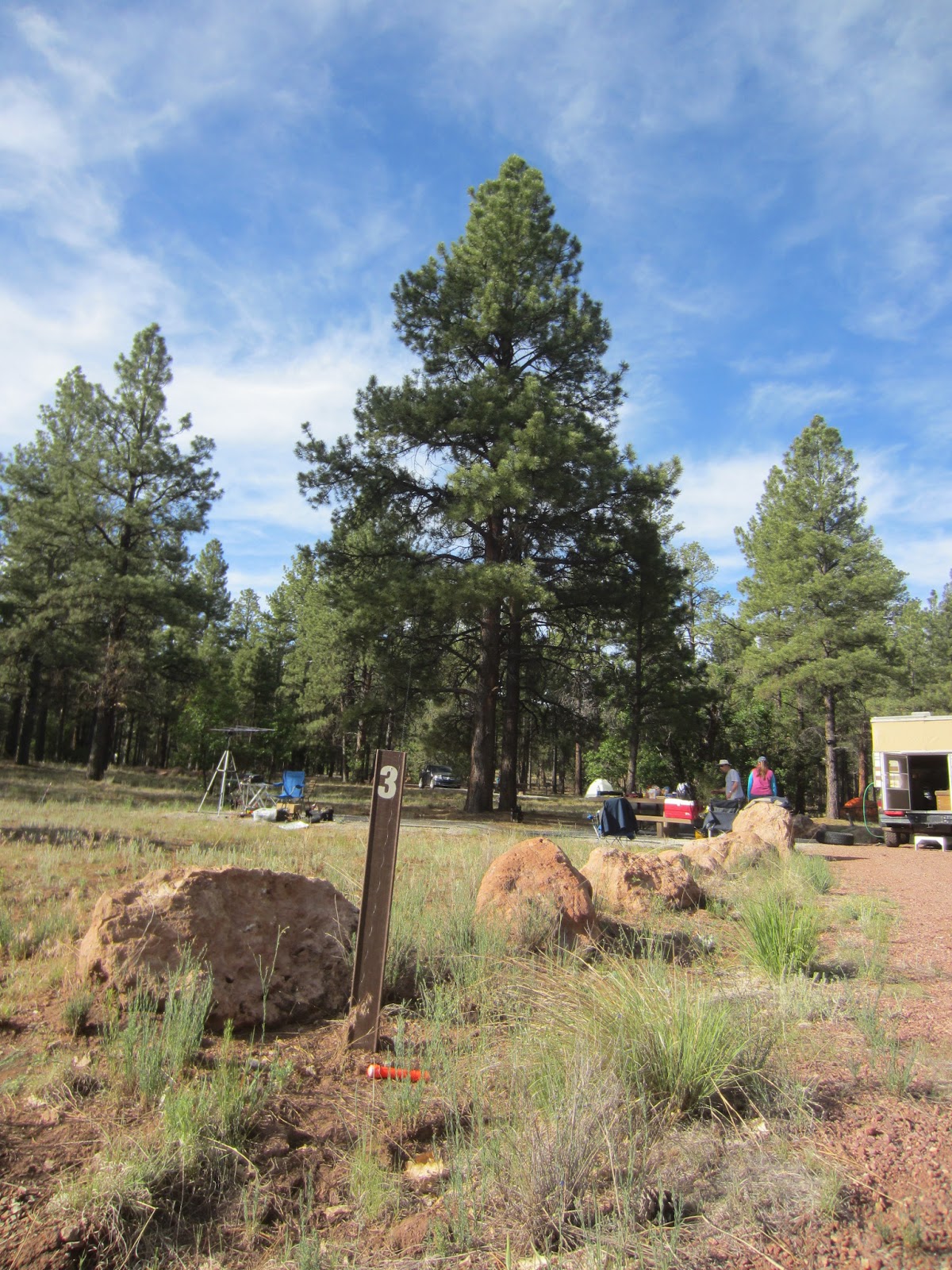 |
| The perfect shot. |
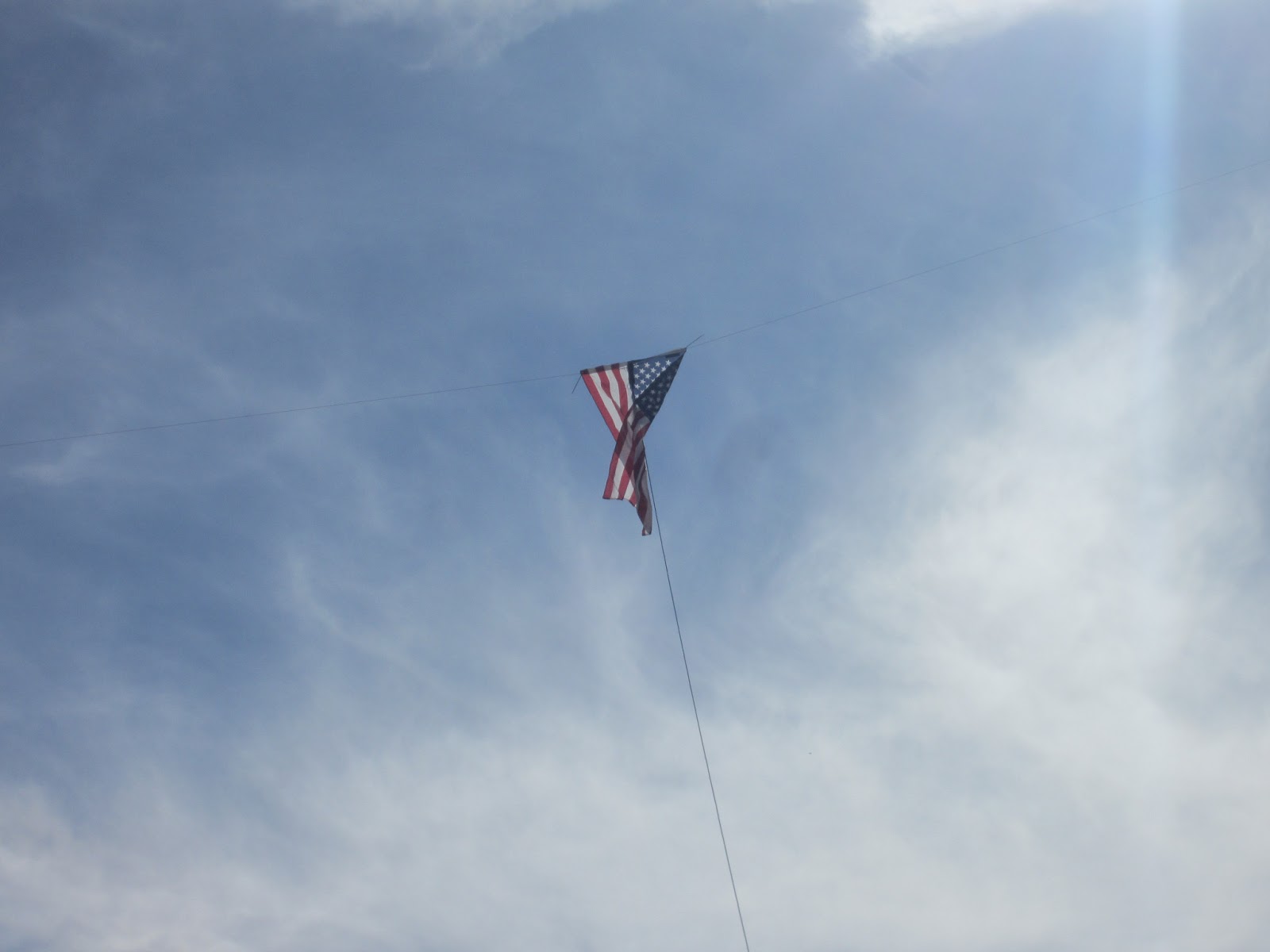 | ||
| Old Glory on our 80/40 trap dipole |
RPi camera
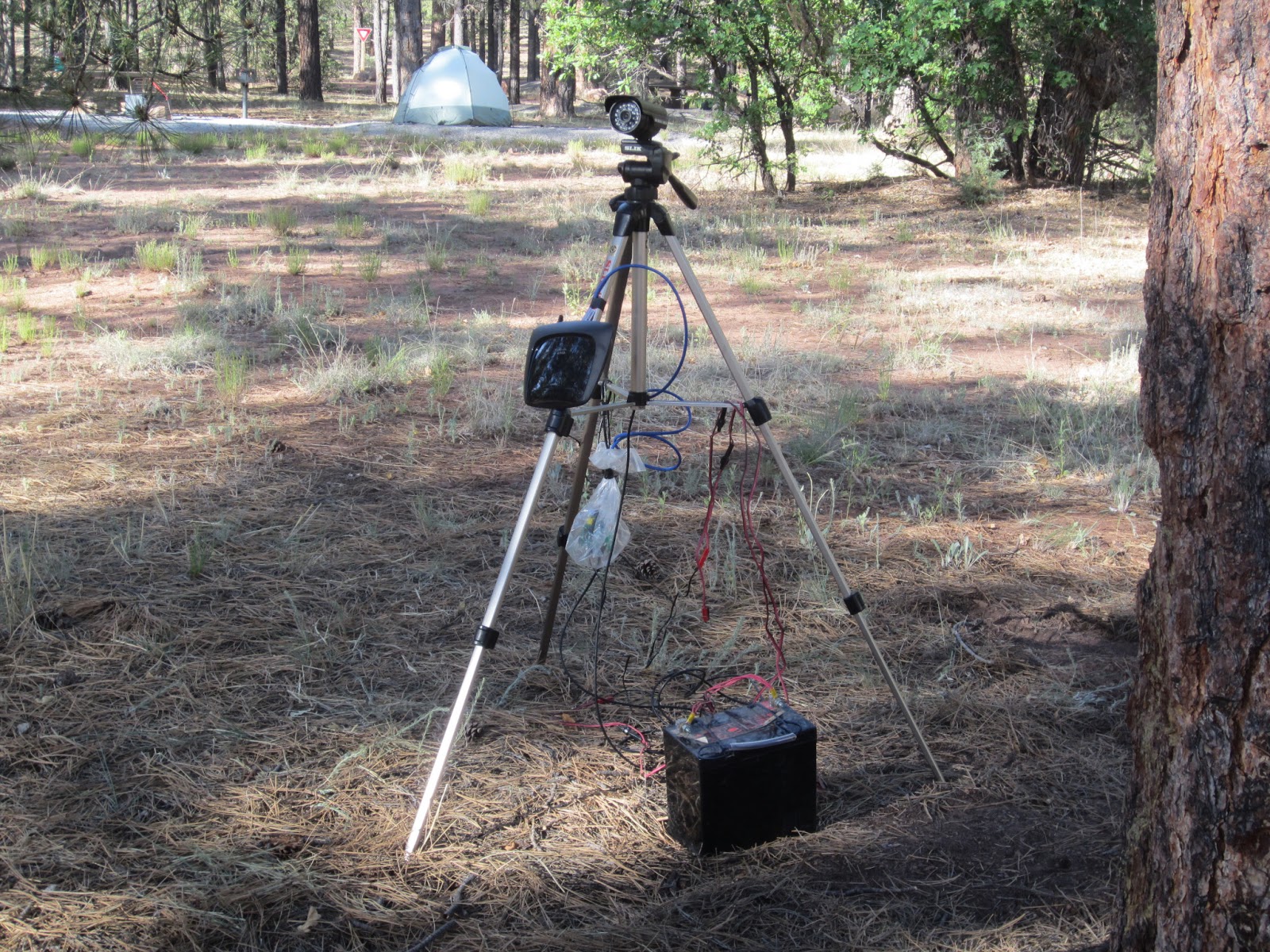
Operation
We were 2A, so we had 2 stations on the air, all supported by batteries. We operated SSB, CW and PSK31.
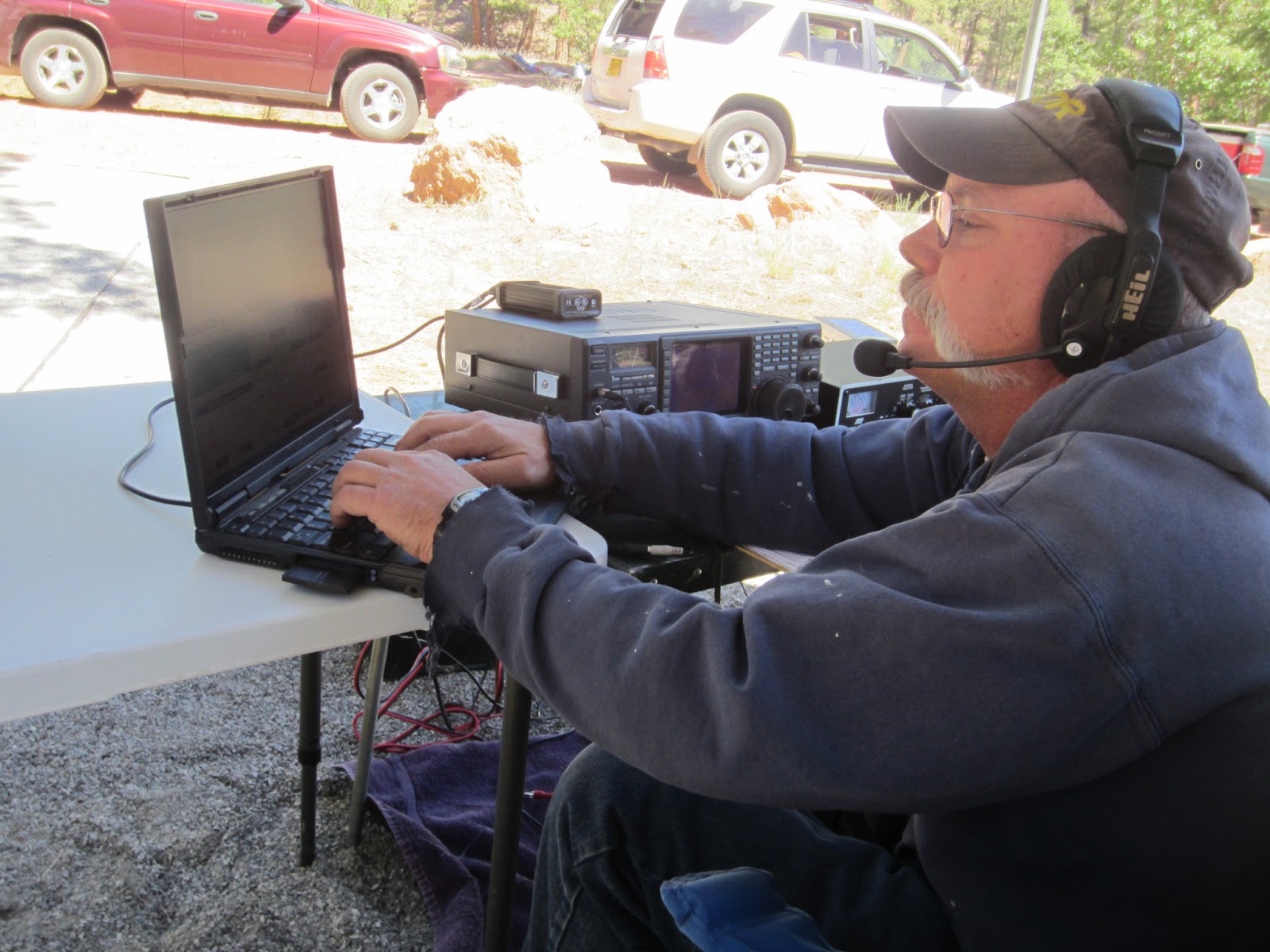 |
| Scott, N5SQR working SSB |
No field day station is without its problems. We were lucky to only have minor issues, like the logs not syncing or the digital station computer interface not working. These were easily and promptly fixed. Everything else (except for the band conditions) was perfect.
Our ops came from all areas of the hobby. Brian, for example, just got back from Turks & Caicos, and worked hordes of stations from VP5-land, while Seth never worked a contest before being a technician.
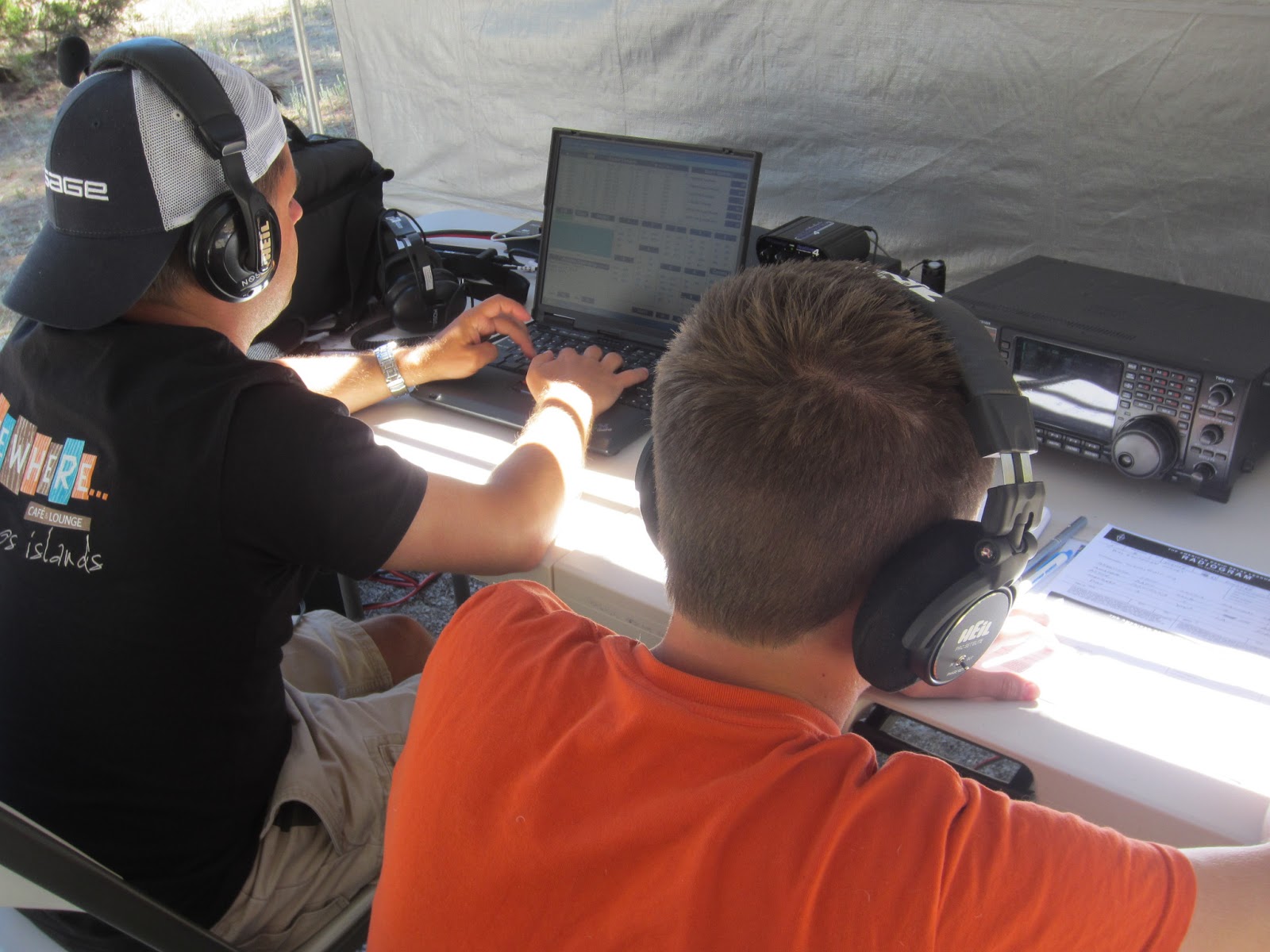 |
| Brian and Seth teaming up to send Radiograms for bonus points |
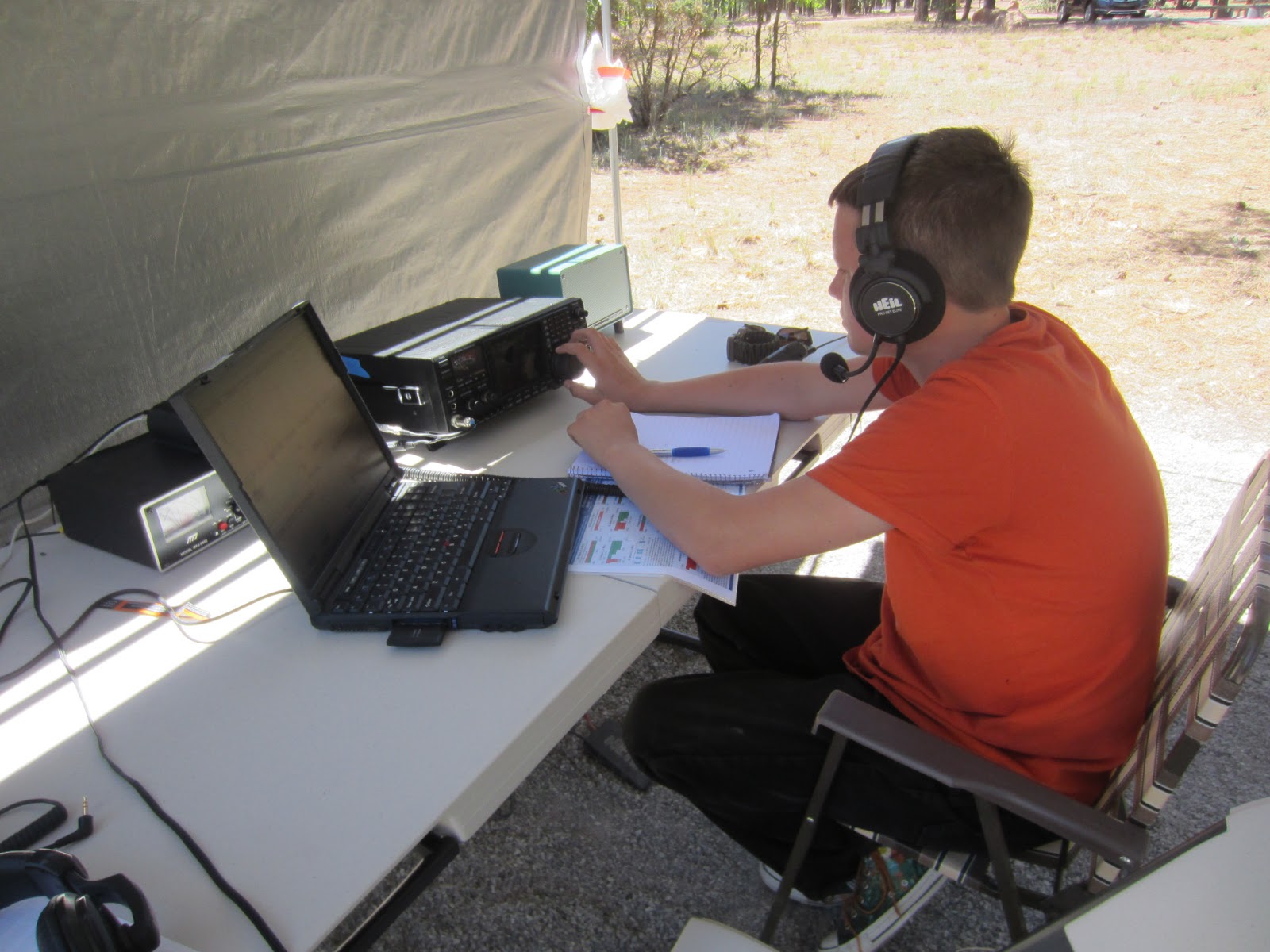 |
| Seth taking names and gettign mults on the voice station |
Seth quickly caught the Field Day bug and worked the 12-1am shift by storm, and eventually took both working and logging on the voice station on solo.
It was very cool to see him warm up to the air and get excited to work stations. It reminds me of my first Field Day, where I was thrown into the action and started racking up QSOs as fast as any other operator after only having a few hours to figure it out.
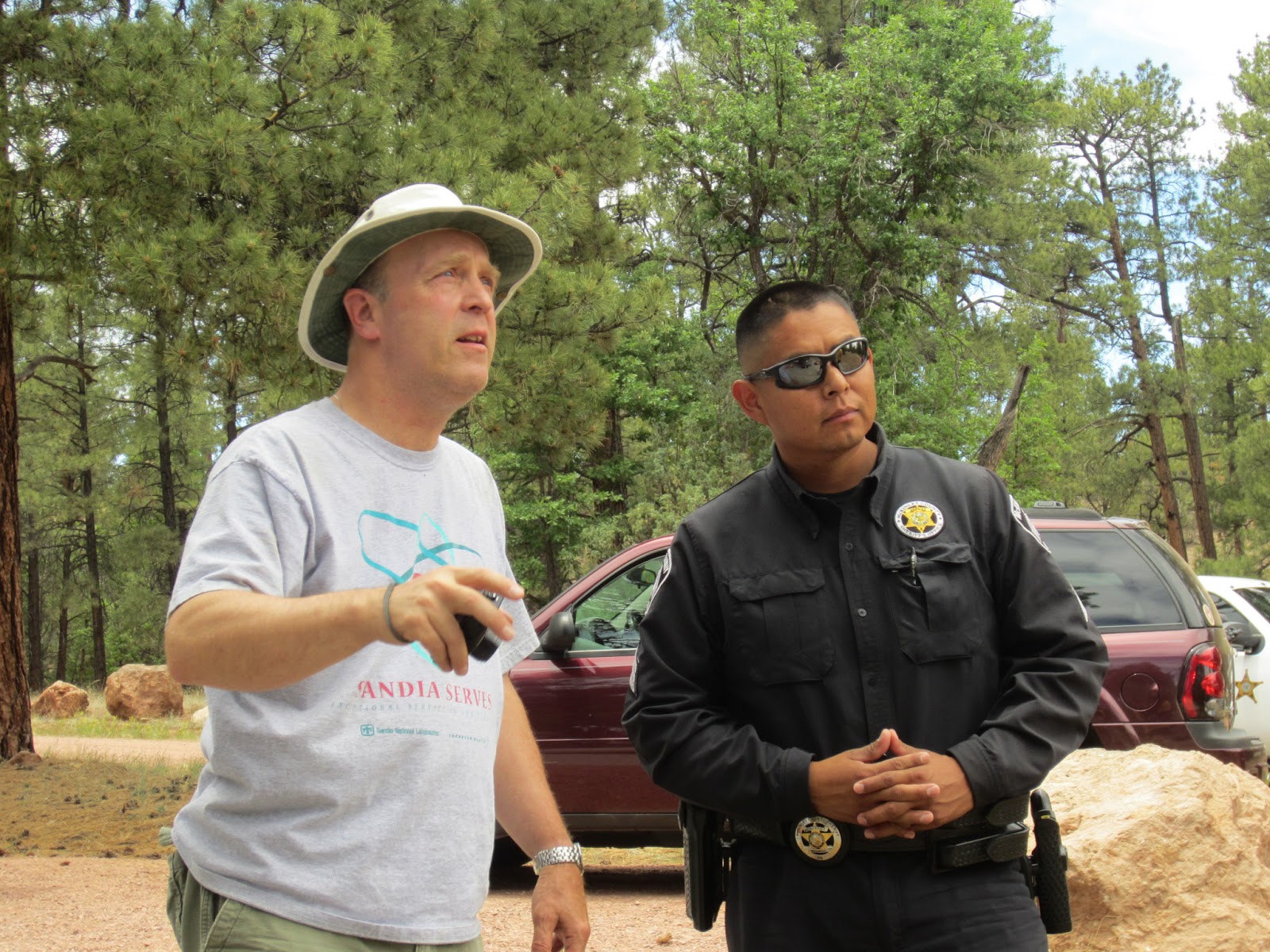 | |
| A visitation by the local sheriff |
Satellites
 |
| The Arrow LEO-SAT yagi and other antennas in the background |
 |
| Sat Station Setup — FT-817 for RX and an 897 for TX |
My job at W5MPZ was to bring a satellite QSO to the log for an extra 100 points. Unfortunately, this didn’t happen.
I had several attempts at SO-51 (the only FM satellite), VO-52, FO-29 and the zombie AO-7 (all SSB/CW transponders). I had most luck with the SSB satellites but had problems in being able to hear myself.
To work the SSB satellites (all but SO-51) you need to know where your signal ends up after it gets translated to the other band. For example, FO-29’s uplink band is 145.8-145.9 MHz, while the downlink is 435.9-436.0 MHz. One would think the 100 kHz passband would be linearly related, e.g. I transmit on 145.85, and hear myself on 435.95, but this isn’t the case. The doppler effect causes the frequency to differ by up to 500 kHz on UHF, so you need a way of calculating doppler, or simply finding yourself.
My technique was to spin a carrier through the passband until I heard it on the downlink, and switch to SSB to call CQ and tune into myself. Upon the switch, I lost myself.
I figured out the solution on the last pass of the weekend. The FT-897 has a feature in SSB mode that allows you to send CW at your tone frequency. So if I’m on 145.000 and have a 700 HZ CW pitch, it would send it at 145.000.70 MHz. Therefore, if you were tuned into 145 MHz on another rig, you’d hear that same pitch. All I had to do was zerobeat on the flipped bandpass, and call away. I finally heard myself repeated by the satellite, but didn’t have any replies within the last 5 minutes of the pass.
It was worth the effort (and in hindsight I should have just worked the ISS’s message system via packet)!
Summary
The underlying point of Field Day (aside from preparedness) is to have fun. W5MPZ did exactly that. Our support team of family members kept us well fed, watered, sheltered, and our batteries charged. One could not ask for a better place to set up and operate from, and the weather (despite being cold in the mornings) was amazing – not having wind and the 100°F temperatures to contend with was a huge relief.
I’m not sure of the final QSO count or score, but we only missed a few sections in Canada – NT, MAR, and ONN I believe — like we expected. Field Day isn’t a contest, so the score isn’t important to me or any of the operators aside from personal club goals and whatnot, so that wasn’t a worry. What matters is the coming together of like-minded people to getaway from the daily grind, have a ton of fun, share stories, and work stations.
Get Ready For Field Day
 Attention all radio amateurs, this weekend is ARRL Field Day! Don’t forget to get on the air.
Field Day is a flexible event, so it can be anything you want it to be: camping weekend, stay at home, participate with your club, go mobile, whatever you desire. Remember to season to taste.
One more thing: Field Day is not a contest. But you can still keep score.
Oh, remember that the national simplex FM calling frequency of 146.52 MHz should not be used for making Field Day contacts. Like all contests…wait Field Day is not a contest. Whatever.
- 73, Bob K0NR
Revitalized Jamesburg dish Now Sending Texts to…aliens?
The once famous Jamesburg dish (wikipedia link), located in Carmel Valley, California, was restored and used by hams to do EME experiments and events after its prime mission to capture and relay communications from Apollo 11, Tiananmen Square, and Intelsat came to an end.
 |
| The massive 30m wide by 100ft tall Jamesburg Dish |
A private company calling themselves Jamesburg Earth Station Technologies, LLC bought the site. This company spawned another, called Lone Signal, LLC. The executives come from diverse backgrounds — entrepreneurs, fashion design, and hospitality execs — along with a team of PhDs and engineers. No hams that I know of, though.
Anyway, the idea behind LoneSignal is to allow people to send texts and photos to star systems with potentially habitable planets. The current one is pointed at Gliese 526, a red giant star 17.6 light years away that’s believed to have a planet inside it’s habitable zone.
The first text is free, but the rest are about $1 a piece. You can buy bulk credits for a discount.
The 30m wide Jamesburg dish will be using a 2KW C-Band transmitter (6700-6875MHz) and will send the coded texts in CW and FM formats. Interestingly, in the FCC-OET Program Description, they’ll be using an Icom ID-1 to modulate the FM signal. I’m sure the aliens are going to have a tough time demodulating D-STAR. 😀
Their experimental license application is located here.
Using some quick math, the dish should provide about 64 dB of gain, and with 2 kW input, that translates into an EIRP of 5,931,547,041 watts.
That’s 6 gigawatts.
TL:DR: In 17.6 years, the Gileseans may get my CQ. I hope they QSL via the bureau.