Archive for the ‘dx’ Category
 There are various ways to work a DX contest
 February 20th, 2012 |
  Author:
 You can meet up with a whole bunch of buds and combine to form one of those multi-multi teams. Or you can go solo and operate from your shack in a variety of categories. You can even go and BE the DX, like some friends that I know – Bob N4BP and John K4BAI come to mind.
OR, you can take a portable rig, a hunk o’ wire, a battery and a tuner and head out to the great outdoors to enjoy some sunshine and some plain ol’ fashioned fun.
Any ideas who that might be, showing us the way?
Sure enough – Jim W1PID – enjoying the DX Contest from the banks of the Winnipesaukee River.
72 de Larry W2LJ
QRP – When you care to send the very least!

ARRL DX Contest – 2012
Since 0000 UTC Saturday morning (Friday night here) the bands were absolutely humming. Hard to find spectrum that wasn’t occupied by someone calling ‘CQ TEST” or with two stations engaging in an exchange. It’s now 0000 UTC Monday morning here, and the bands are eerily quiet.
The weekend was like all the others around here – super busy. I did not get to spend nearly as much time on the air as I wanted to; but I did get a couple of hours last night and then a couple more this afternoon. I added quite a few new countries to my Diamond DXCC tally. Not as many as I would have liked; but I should be well on my way now.
The bands seemed to be in good shape and I even heard some activity on 10 Meters and joined in the fun there. My plan of action was to “cherry pick” and work the louder stations I was hearing, thinking that would give my QRP: signal the best chance of being heard. I didn’t stick with that strategy, however and ended up working quite a few weak ones, too. It pretty much turned out that I was able to work anyone that I called. I even got a new one that I have never worked before – QRP or QRO. I worked ZD8Z on Ascension Island for the first time ever. Unfortunately, the only station that wasn’t able to pick me out of the din was OA4SS down in Peru. I tried for quite a while, but in the end was not successful.
I have tomorrow off for the long President’s Day weekend. I am so tired right now that I am going to turn in early and I will get my QSO for the 20th, tomorrow.
72 de Larry W2LJ
QRP – When you care to send the very least!

I need to follow my own advice
I went downstairs and flipped the K2 on and tuned around 40 Meters – WOW !!!!!!
After a long and full day of work, my brain is simply not ready to wrap around 40 WPM code. I worked HG3R who was cruising at about 35 WPM and called it a night. Tomorrow, after a good night’s sleep and after the opening hours pandemonium is over, I will be ready to jump into the fray. Also, during the daylight hours, stations will be spread out more as other bands open. Seems like right now, everyone is crammed into 40 and 80 Meters.
I’ve been at this Morse game for over 30 years now; and I really admire these guys who can while away at 40 – 50 WPM. I would love to be able to attain that kind of speed; but right now, it sounds more like a buzz saw than Morse Code. God bless them, you have to admire and respect that kind of ability.
72 de Larry W2LJ
QRP – When you care to send the very least!

ARRL DX Contest this weekend
This has been a bad week for me as far as the QRP Fox hunts go. On Tuesday night, I was only able to hear both Foxes at ESP levels. I “knew” where they were; but they were much too weak to even bother calling – no way they would have heard me. Tonight is a rare QRN free night on 40 Meters, but alas, same problem as Tuesday night. I can’t hear the Foxes for anything.
So instead, I headed down the lower part of the band and was picking off Caribbean stations that are flexing their CW muscles for this weekend’s big DX contest. I got Curacao, and Bonaire and Aruba among others. And I even got a “brandy-new” entity for me via QRP. I worked PZ5RO in Suriname on 40 Meters. I heard him call “QRL?” and he gave out his call and I nabbed him on my first shot. Sweet!
If you’re new to QRP and you’re hesitant about jumping into this contest, don’t be. Have no fear, jump in and have fun. But (there’s always a “but”, isn’t there?) you have to be sensible about it. For the first half or so of the contest, don’t get frustrated if you don’t get the results that you want. Remember at the beginning, you will be competing with a ton of QRO stations. As a beginner, you might want to stay with “hunting and pouncing” and working the loudest stations. If you try and try; but can’t get an answer within a reasonable amount of time – move on. Work what you can. As Kenny Rogers sang, “You have to know when to hold ’em, and when to fold ’em”. Contests like this will really help you learn the capabilities and strong points of your station.
QRPers stand a better chance during the last half of the contest, if my experience means anything. Towards the end, stations that are still hungry for points seem to hear sharper as they eke out those weaker signals in order to inflate their point totals. On Sunday afternoon, I would try working just about anyone that you can hear. At this point, even the weaker stations without super antenna arrays seem to respond to QRPers.
Don’t be surprised when you find out you can work a lot of DX with low power and modest antennas. A few years ago, as a personal experiment, I decided to get on Saturday night and work the loudest DX stations that I was hearing, while the K2 was turned down to 1 Watt. I think I earned the “1000 Mile per Watt” award about thirty times over that evening – and that was when we were in the middle of the sunspot doldrums.
And speaking of the “1000 Mile per Watt” award – you should be able to earn that this weekend without breaking a sweat. And if you’re working on your DXCC – just starting, in the middle, or near the finish line, this is always a great event for that. Also keep in mind Diamond DXCC for this year. I am hoping to inflate my country total big time towards that award.
The contest is also a good way to increase your code speed a bit. Don’t get frustrated with the guys who seem to be sending at 50 WPM,that sound like a buzz saw. Pay them no attention – move on. But don’t fall into the trap of only working slower speed guys either. Work the ones who are a bit faster than you’re comfortable with. It may take you eight or nine times to get their call correct; but what they hey – it’s not like you’re in this to take the whole shebang, right?
Bottom line is to have fun – be a “Giver of Points”, relax and have a good time.
On quite a different; but sad note ……. I heard on the radio, on the way home from work today, that Gary Carter passed away, losing his battle with cancerous brain tumors. Gary “Kid” Carter, along with Johnny Bench may arguably have been two of the greatest catchers the National League has ever seen. His coming to the NY Mets in 1985 was a catalyst that started a series of winning seasons that lasted until the early 90s. I had the great fortune to meet him at a baseball card show after he had retired from the game. Not only was he a great baseball player, totally worthy of his induction into the Baseball Hall of Fame, he was also a total gentleman. The world of baseball (and NY Met fans) is poorer today for Gary’s passing. But I’m sure he’s being more than welcomed on Heaven’s All Star Team.
72 de Larry W2LJ
QRP – When you care to send the very least!

Thanks!
Thanks to all of you here and on AmateurRadio.com who were so kind as to express condolences and kind words upon our Sadie’s passing.
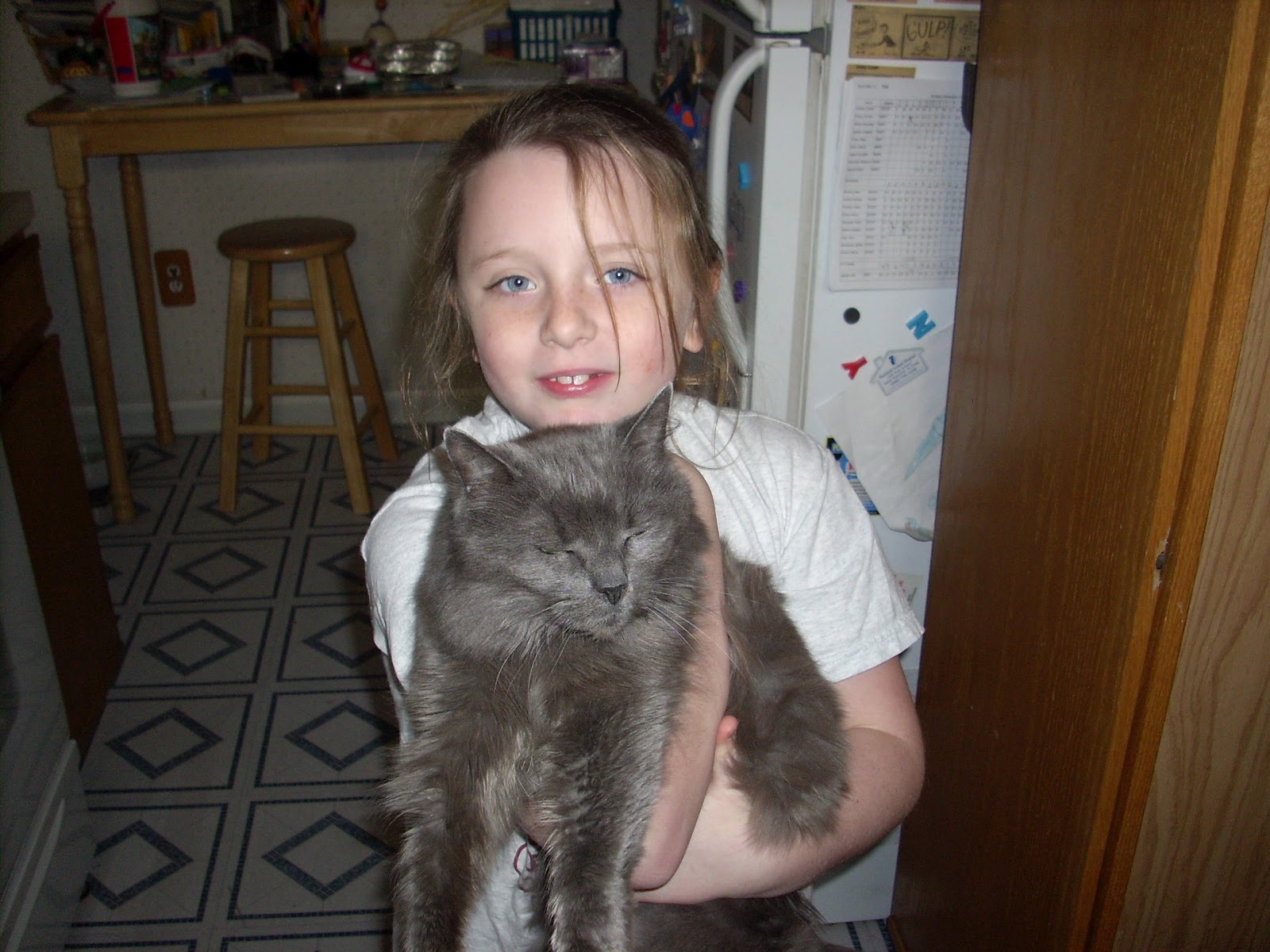
This is going to take a while to get over – but life does go on.
So …… on an Amateur Radio note, the bands did not seem to be active at all today. For a few brief minutes this afternoon, I was able to get on and listen. I heard and worked EI4AA on 12 Meters and was surprised by the fact.
Bernard was pretty weak hear – 569 or there abouts, maybe a little louder – 589 on QSB peaks, maybe? As I called him, I thought to myself, “There’s no way I am going to get an answer here.” But sure enough, I did and on my first call – and I received a 559 report for my efforts. And I was very happy to receive that. Then I went down to 20 Meters and worked a station in Texas who was working the SKCC Weekend Sprint.
After that, I had to QRT as my daughter Cara (holding Sadie above), who is a member of the children’s choir at Church, was part of a free concert this afternoon. The theme was “A Night on Broadway” and the children’s choir, the adult choir, the hand bell and hand chime choirs all participated, performing various Broadway tunes. It was a very enjoyable two hour event.
Today was very windy and cold – winter has come back to New Jersey with a vengeance. Yesterday, the forecast was for 1-3″ of snow, but that forecast was a bust. We barely got a dusting – and please don’t misunderstand – I am in no way complaining!
As soon as it turns to 2/13 UTC, I am going to head downstairs to see if I can get a daily QSO or two in and then off to bed.
72 de Larry W2LJ
QRP – When you care to send the very least!

Brave and Hearty Souls
Now this is REALLY Freeze Your Buns Off / Polar Bear Moonlight Madness !!!
QRP’ers – are we dedicated or just plain crazy?
Gatineau Park and the Wolf Trail sure look beautiful! Thanks Martin, for sharing, you have shown us the quintessential FYBO / PBMME effort.
FYI, the HK0NA DXpedition ended today. Thanks to the crew and its supporters for their efforts. I got them exactly once and that’s plenty for me. According to the Team, even after 190,000 +++ QSOs, the pileups were still very deep. Hope all of you were lucky enough to have worked them, if you were trying.
72 de Larry W2LJ
QRP – When you care to send the very least!

Must be date night
Since it’s Friday, it must be date night. 20, 30 and 40 Meters are spectacular! Not a bit of local neighborhood QRN – the local Plasma TV watchers must be out to dinner or a movie.
The FOC is all over lower 40 Meters with their contest, so I switch over to 30 Meters and while quickly scanning, I hear a pileup. I have no idea who it is, but by listening carefully, I can tell that they are listening up 2 kHz. Abiding by the rule, “Work first, worry later”, I nabbed them on my third try.
They eventually gave their call and it turns out to be the HU2DX DXpedition down in El Salvador. The fact that they were able to dig me out of the pileup is no wonder. Here’s what they’re using:

For SSB and CW, two K3s and a K2. Digimodes will be done through a Yaesu FT-840. The antenna on 30 Meters is a Spiderbeam.
Not only did I snag a DXpedition, but I score another country for DDXCC!
Sweet!
72 de Larry W2LJ
QRP – When you care to send the very least!














