Archive for the ‘dx’ Category
 Short Demonstration of Using Ham Radio Deluxe with WSJT-X and FT8 Digital Mode
 April 1st, 2018 |
  Author:
 Ham Radio Deluxe can log your WSJT-X FT8, JT65A, and JT9 QSOs, via the JT-Alert software. This is a demonstration of my use of HRD and Logbook, during an FT8 QSO,today.
As some of you know, I have had some differences of opinion regarding the selection of frequencies chosen by the FT8 creators and advocates. Regardless, I do still use the mode. Here is proof:
Go ahead and share, if you would. And, please subscribe to my YouTube channel, as I will be creating many how-to videos in the near future.
Thanks and 73 … de NW7US
ZF2NR: Another Slacker DXpedition
Operating from countries outside the US can be a lot of fun. I just completed another another Slacker DXpedition, this time to the Cayman Islands. The formula for this type of operation is simple: identify an interesting vacation spot that is also considered DX, travel there with friends & family, take along some compact radio gear and get on the air. A key point is to not overdo the radio operating or the friends & family will veto any radio activity on future trips.
 Licensing for the Cayman Islands is relatively easy if you hold a US FCC amateur radio license. Complete info can be found on the Ofreq web site. Licensing for the Caymans is typical of many Caribbean countries: fill out the application form, send it to Ofreq by email along with a copy of your US license, passport and $25US. Visitor call signs have the prefix ZF2 and you can request your favorite two-letter suffix. That’s how I got ZF2NR.
I was issued a Class A license which has all operating privileges. My spouse Joyce/K0JJW holds a US General Class license and was issued a Cayman Class B license, which has limited HF privileges (no phone on 40m, 20m, or 17m). So keep that in mind if you have a General Class license.
Grand Cayman is in grid EK-99 and is IOTA NA-016.
My equipment strategy was the same as my V29RW operation on Antigua (see V29RW: Slacker DXpedition to Antigua). The basic kit is a Yaesu FT-991 driving a end-fed halfwave (EFHW) wire antenna for the band of interest. Never underestimate the power of getting a halfwave antenna up into the air. The FT-991 fits in my carry-on bag and it covers all bands from HF through 70cm.
There is a 2m repeater (146.76 MHz) on Grand Cayman that works quite well. We received a friendly welcome on the repeater from Phil ZF1PB and several other Cayman hams.
Vacation Home
Our group rented a nice vacation home near Rum Point on the north side of Grand Cayman. This place is right on the water with an excellent sand beach. Denny KB9PDF/ZF2PF and I put up the EFHW 20m antenna supported by my SOTAbeams pole strapped to a palm tree. This setup worked quite well and we soon had a nice pileup of stations calling us on 20m. We did have some issues with local noise sources, the worst of which was traced to some dimmer switches in the house. This is one of the problems with a portable setup like this…you never know what RFI problems you’ll encounter. Later in the week, we put up a 40m EFHW and made a few contacts on that band, too.


ZF1A
Bruce/K0BJ suggested that I check into using the Cayman Amateur Radio Society club station (ZF1A) which they make available to visiting hams. I connected with Eden/ZF1EJ who confirmed that the station was available later in the week. Again, I did not want to overdo the radio thing, so we settled on operating at ZF1A during the middle of the day on Wednesday.

This turned out to be a great move. ZF1A has multiple towers with some very capable antennas. Like I always say: Never underestimate the power of using a large directional antenna on top of a big tower. Eden/ZF1EJ met us at the station (it is literally in his backyard) and helped us get situated. Our operating strategy was simple: use the highest HF phone band that had good propagation and work as many stations as possible. We were also prepared to use FT8 if things were really bad but that was not needed. It turned out that 15m was dead but 17m was open into North America and Europe, so we did most of our operating there.

Here’s a short video to give you a taste of the pileup.
I did work some of the folks back home, which was a treat: K0AV, W0CP, K0BJ, W0RLY, W0GAS, WG0AT, KD0RQU. I had noticed that Steve/WG0AT was doing a Summits On The Air (SOTA) activation on Crooked Top Mountain (W0C/SP-090) and I gave him a call. Being QRP, his signal was very weak at my location but he could hear me with no problem.
Here’s the QSO audio that Steve recorded on his end:
Satellites
We worked two OSCAR satellite passes (AO-91, AO-92) using a pair of handheld radios and an Arrow 2m/70cm yagi antenna. The pair of handhelds gave us full-duplex capability: I ran the 70cm uplink on my HT while Denny ran the downlink on 2m. No surprise to find the FM satellites quite busy and a bit frustrating to work. I logged these stations from ZF2NR: KI0G, K3SV, TI2CDA, TI4DJ, HP2VX.
Results
My ZF2NR log shows 376 HF QSOs, most of them made by me. Joyce K0JJW/ZF2JW braved the pileup to make a few contacts. Denny/KB9DPF had some additional contacts as ZF2PF. QSL to our home callsigns.
I’ve loaded the ZF2NR log into Logbook of The World.
Band Mode QSOs
   7 LSB    5
  14 USB   65
  18 USB  306
 Total    376
In retrospect, I realized that we had the antenna pointed north most of the time and we probably should have looked in other directions. In particular, we only worked a few South American stations.
Most important is that a good time was had by all. Thanks to everyone that worked us while we were in the Cayman Islands.
73, Bob K0NR/ZF2NR
The post ZF2NR: Another Slacker DXpedition appeared first on The KØNR Radio Site.
VK9AR A Wonderful IOTA Expedition Experience
Going to Australia was a bucket list item for me and to check it off with such an adventure as the VK9AR expedition was a wonderful treat.
What? ARRL Petitions FCC to Expand Privileges of Technician-Class Amateur Radio Operators
I have my opinion on ARRL asking FCC to grant more HF privileges to Technician-class licensees.
I verbalize them in this video:
[embedyt]https://www.youtube.com/watch?v=BWSAvDWE3Js[/embedyt]
After you hear my comments, please leave your comments.
Thanks, 73 de NW7US dit dit
Ham Radio Deluxe 6.4.0.794 Released
I just received some good news from Mike, WA9PIE. He writes in an email:
The first release of Ham Radio Deluxe for 2018 (Ham Radio Deluxe version 6.4.0.794) is now available for download. Please download it from the Download pages on our website at:
https://www.hamradiodeluxe.com
This release includes a number of important changes including the addition of the Icom IC-7610, resolves a Logbook exit problem, resolves “sort on LOTW date”, API for QSO Forwarding now populates Logbook with My Station data, a number of fixes for the Kenwood TS-480, applications remember screen position, enable CI-V address to be entered directly, and a number of stability enhancements.
The full release notes can be found here:
http://ReleaseNotes.hamradiodeluxe.com
I would like to acknowledge and thank Mike Blaszczak (K7ZCZ) and our beta team on their hard work in getting this release out.
All those who have purchased Ham Radio Deluxe at any time in the past should download and install this version in order to benefit from all bug fixes. You are entitled to them. Our clients who are covered by an active Software Maintenance and Support period are entitled to Feature Enhancements.
As announced previously, we expect to release as many as 9 releases in 2018. There will be no releases between 1-Nov and 1-Jan. We continue to focus on reducing our development backlog with five developers dedicated to all applications in the suite.
Please watch these newsletters for updates. Pass these updates along to your friends. Newsletters will also be posted on our website’s blog at:
https://www.hamradiodeluxe.com/blog
Thank you es 73 de Mike, WA9PIE
HRD Software, LLC
Condo Hamming, The NRR and Ron’s Logs
 |
| courtesy: K4VRC Group |
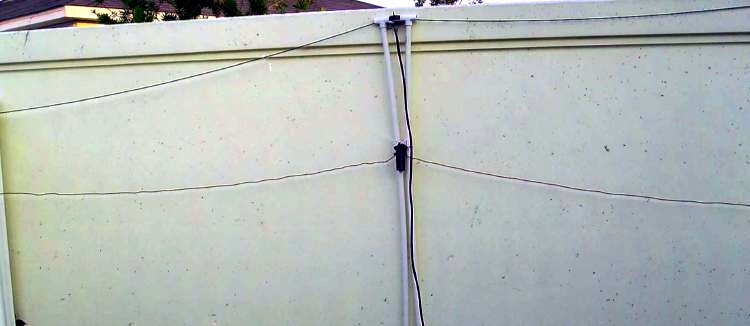
Rick, KB2NAT, describes the learning curve in his 'How To Overcome Some Condo Issues' post.
Amateurs contemplating downsizing to a restricted development or those finding themselves in a similar situation to Rick will likely soon be subjected to more noise, less space, more neighbours and an abundance of rules. Hopefully the comments of Rick and others will be helpful if this is your situation.
For many restricted hams, Mag loops appear to be a popular choice and one of the comments points to a good deal of information on building one for yourself. The Villages Amateur Radio Club (K4VRC) group's 'resources' link will provide some interesting ideas for restricted antenna builders. As well, they have put together an informational presentation, full of great antenna ideas for those contemplating ways to get on the air from antenna-restricted locations.
If you live in the USA, the 'Freedom to Display the American Flag Act of 2005' has been used by many antenna-restricted hams, to legally erect their own 'antenna flagpole'! It may be an easy route for a nice antenna system for you as well.
The 'Novice Rig Roundup' Starts Tomorrow!
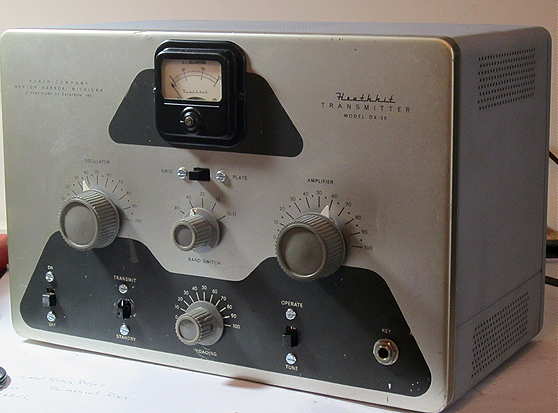
Just a reminder that 9 days of CW operating fun begins tomorrow afternoon. After last year's most enjoyable event, the NRR is now one of my 'must do' operating activities. You can read all about it here.
Ron's Logs
 |
| courtesy: California State Parks |
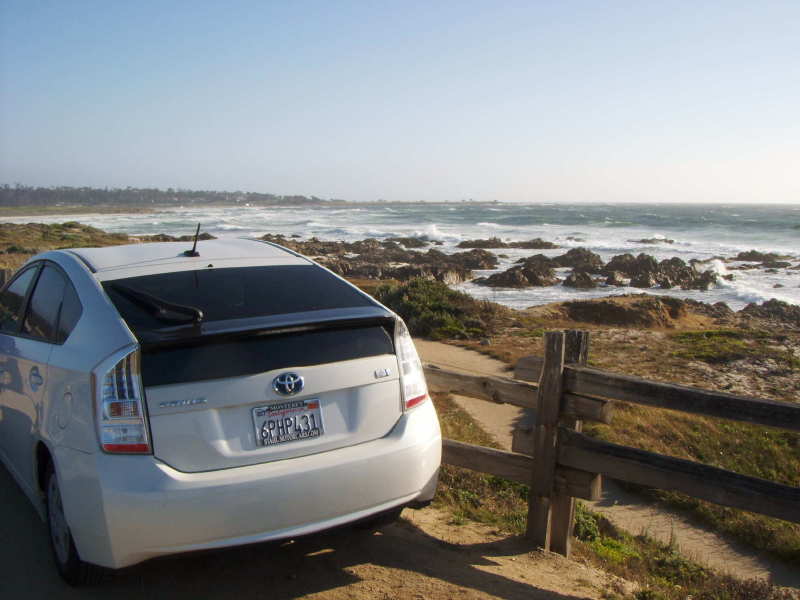
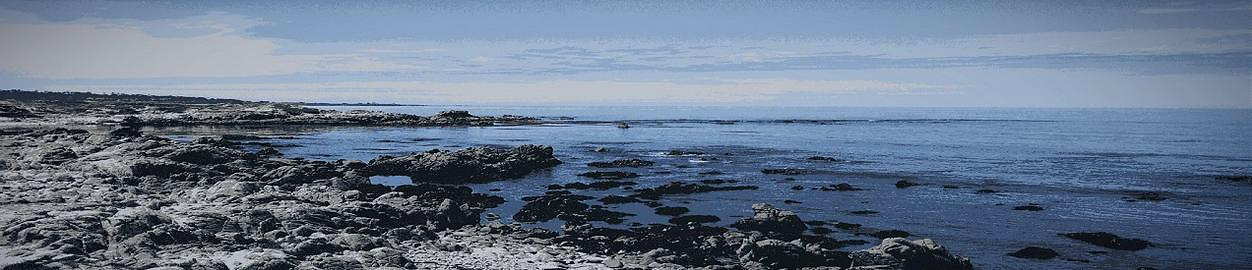
Ron lives in the seaside city of Monterey (CA) and on most mornings he makes the short pre-dawn drive to Asilomar State Beach (CA), a spectacular location on the coast.
After stringing out his 100' wire antenna on the nearby fence posts, Ron proceeds to log and record some truly exotic stuff before heading home.
Early last Fall, before being aware of Ron's daily regime, I had visited his exact location and after watching the big sea lions playing in the surf, had drooled over the location's great DX potential, little knowing that Ron had likely packed his gear up a headed home just a few hours before my arrival! I'm sure you'll be inspired to tune around the SW broadcast bands after checking out theses Group's daily posts.
Travel Footage: 3Y0Z Antarctic Bouvet Island DXpedition 2018 Expedition (by EY8MM)
Here is video footage of the journey to Antarctic Bouvet Island, made by the 3Y0Z amateur ham radio team. This footage caught a few moments on the deck of M/V Betanzos.
As you can see in the last moments of this footage, the weather conditions contributed to the decision to abort the DXpedition, as it was far too dangerous to continue this expedition.
As reported by ARRL:
“Our captain has decided that it is in the best interest of safety and expediency to proceed directly to Capetown, South Africa, rather than Punta Arenas, Chile. We are now heading north to avoid the possibility of encountering ice. Currently, there is no ice in sight or on radar. In due time, we will head easterly toward Capetown. Our entire team is safe. Most are resting in their bunks and in good spirits. We will keep the amateur radio community and our families informed, as we continue our journey.”
In a huge disappointment for the DX community and the members of the 3Y0Z Bouvet Island team, the DXpedition’s leaders announced at 2000 UTC today (February 3) that a decision had been made to abort the DXpedition and head back to Chile.
“During the last 72 hours, we continued to experience the high winds, low clouds, fog and rough seas that have prevented helicopter operations since our arrival at Bouvet,” said an announcement on the 3Y0Z Bouvet Island website. “No improvement was predicted in the weather forecast for the next 4 days. Then, last night, an issue developed in one of the ship’s engines. This morning, the captain of the vessel declared it unsafe to continue with our project and aborted the DXpedition. We are now on our long voyage back to Punta Arenas. As you might imagine, the team is deeply disappointed, but safe. There is already talk about rescheduling the DXpedition.”
Bouvet Island currently is the third most-wanted DXCC entity, behind Kosovo and North Korea. The 3Y0Z DXpedition, comprised of top operators with considerable DXpedition experience, has been in the planning stages for 2 years and had attracted contributions from clubs and individuals around the world.
A dependency of Norway, Bouvet is a subantarctic island in the South Atlantic. The last Bouvet activation was 3Y0E, during a scientific expedition over the winter of 2007-2008.
Video Author: Nodir Tursun Zade, EY8MM
This copy is used BY PERMISSION from EY8MM, given in writing on 23 February 2018













