Archive for the ‘antennas’ Category
 Amateur Radio …. sort of
 April 30th, 2017 |
  Author:
 Today was a busy day with a lot of commitments and a lot of chores and not much time for Amateur Radio. So what does an intrepid Amateur Radio op do? Put his tail between his legs and slink off into the distance? No, he does the next best thing - he engages in related activities.
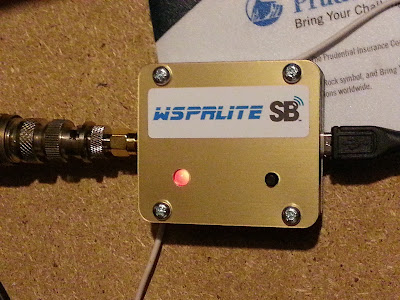
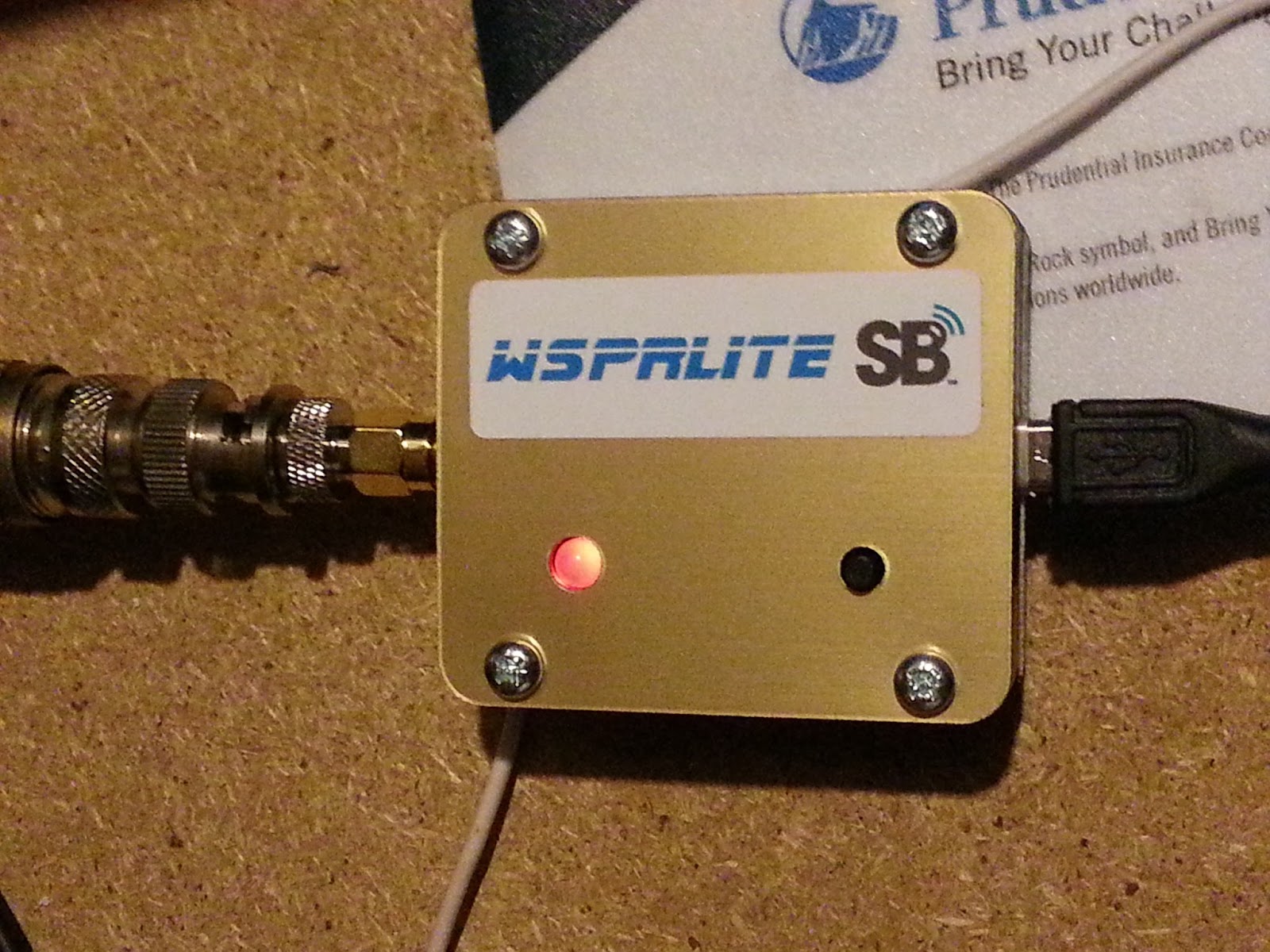
I had a class this morning that meets one Saturday a month. It started last September and ends next month, and it runs from 9:00 AM to 1:00 PM. You can see that that's a good chunk of the day. So it was SOTABEAMS WSPRLite to the rescue! It's kind of like a Ronco counter top oven - "set it and forget it". So I hooked up my WSPRLite to my W3EDP, set it up for 200 milliWatts on 20 Meters and let it go to town!
I figured that I'd let it run, see how the W3EDP gets out and still do the things I had to do today.
This WSPRLite is so cool! It's a software defined WSPR beacon in a package about half the size of an Altoids tin. It's powered by the USB port of your computer. You pick the band and power output and hook it up to your antenna. You wait until 2 seconds past any even minute and you press the little black button on the right to kick things off. The beacon transmits for 110 seconds and then waits for the next opportunity when the frequency is clear. I set it so that it would randomly transmit about 20% of the time; and you can let it run for up to three days if you want.
In the meantime, yesterday, while checking my e-mail, I saw that Joe Everhart N2CX co-founder of the NJQRP Club was going to be activating Edison State Park for Parks on the Air. It's designator is KFF-1615 and it's all of about 15 minutes from my house. So I e-mailed Joe back with my cell phone number and told him to text me when he got there; and I would come out and meet him.
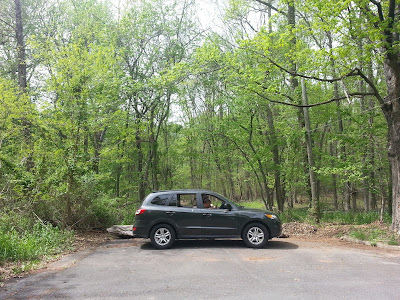
After class I came home and broke out the lawnmower and got the front yard done. As I was walking to the backyard, I felt my pocket buzz. I whipped out my phone and read a text that Joe was on site and setting up. I dropped the lawnmower like a hot potato and high tailed it to the park. After all, what QRPer in his right mind would miss the opportunity to talk with a QRP Legend, right? When I got there, I saw Joe had finished setting up and was operating from his car.
It was getting out all right! Into the midwest USA and into Europe on 200 milliWatts! The W3EDP seems to be doing OK!
It turned out to be a good day, after all. I got to attend my class, got my chores done and got to hob-nob with a QRP giant - while giving my wire antenna a check out at the same time!
And here I thought the day would be a bust, Amateur Radio-wise!
72 de Larry W2LJ
QRP - When you care to send the very least!
I had a class this morning that meets one Saturday a month. It started last September and ends next month, and it runs from 9:00 AM to 1:00 PM. You can see that that's a good chunk of the day. So it was SOTABEAMS WSPRLite to the rescue! It's kind of like a Ronco counter top oven - "set it and forget it". So I hooked up my WSPRLite to my W3EDP, set it up for 200 milliWatts on 20 Meters and let it go to town!
I figured that I'd let it run, see how the W3EDP gets out and still do the things I had to do today.
This WSPRLite is so cool! It's a software defined WSPR beacon in a package about half the size of an Altoids tin. It's powered by the USB port of your computer. You pick the band and power output and hook it up to your antenna. You wait until 2 seconds past any even minute and you press the little black button on the right to kick things off. The beacon transmits for 110 seconds and then waits for the next opportunity when the frequency is clear. I set it so that it would randomly transmit about 20% of the time; and you can let it run for up to three days if you want.
In the meantime, yesterday, while checking my e-mail, I saw that Joe Everhart N2CX co-founder of the NJQRP Club was going to be activating Edison State Park for Parks on the Air. It's designator is KFF-1615 and it's all of about 15 minutes from my house. So I e-mailed Joe back with my cell phone number and told him to text me when he got there; and I would come out and meet him.
After class I came home and broke out the lawnmower and got the front yard done. As I was walking to the backyard, I felt my pocket buzz. I whipped out my phone and read a text that Joe was on site and setting up. I dropped the lawnmower like a hot potato and high tailed it to the park. After all, what QRPer in his right mind would miss the opportunity to talk with a QRP Legend, right? When I got there, I saw Joe had finished setting up and was operating from his car.
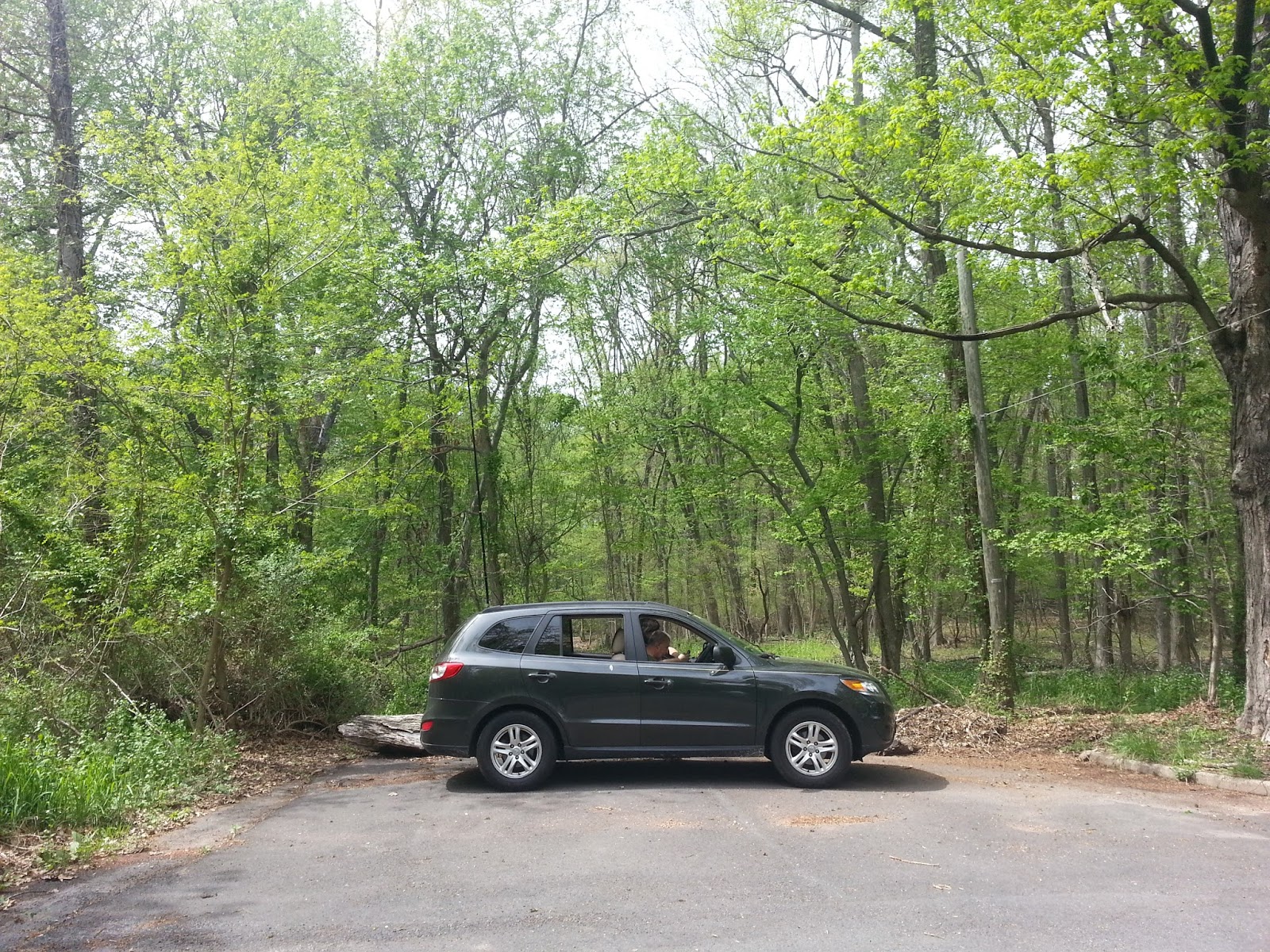
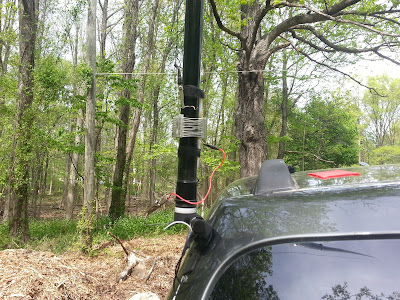
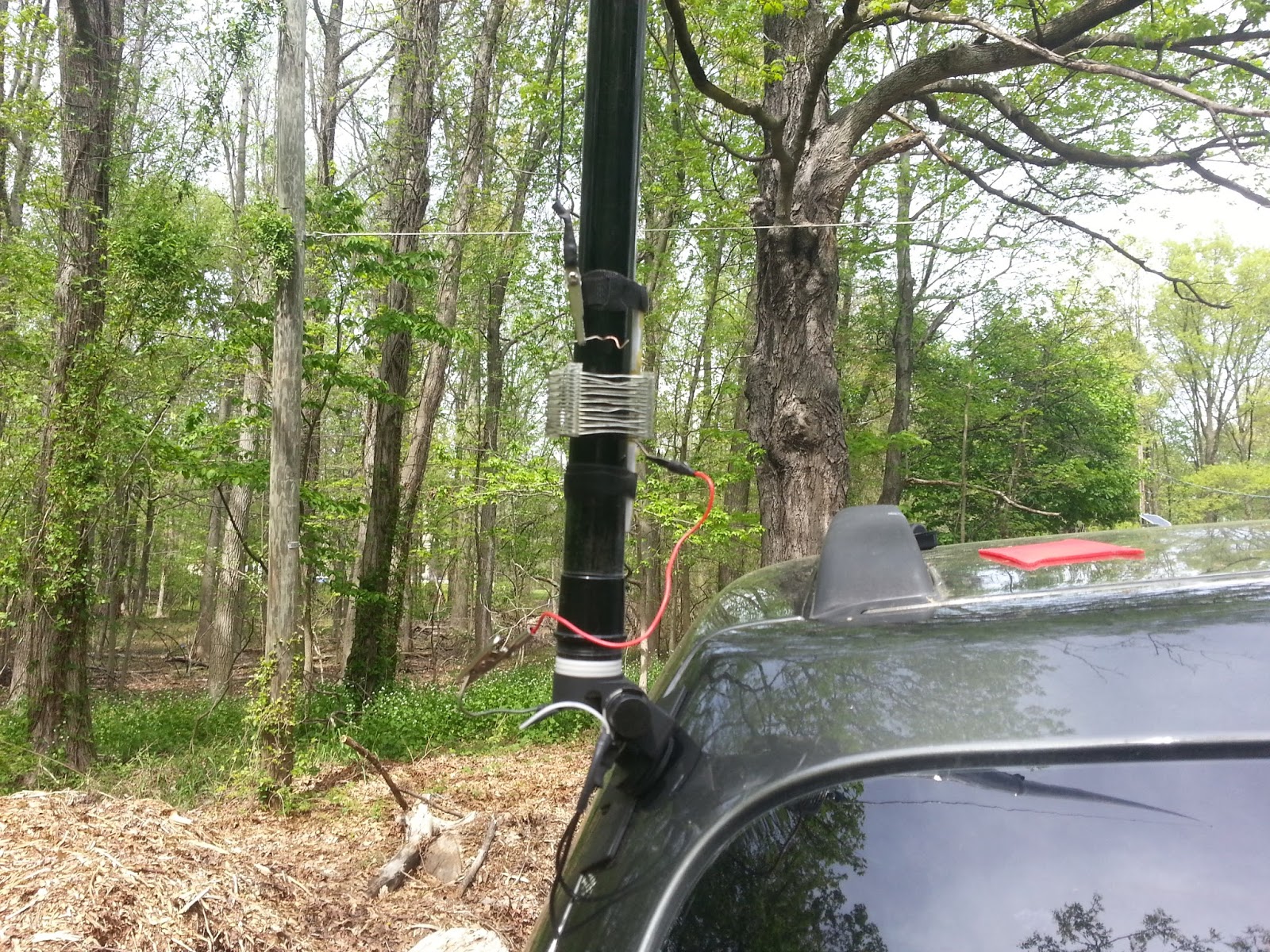
If you click on the picture to get a better view, you will notice that mounted at the rear of the car was Joe's 16 foot crappie pole. He had a loading coil attached and ran wire to the top. He told me that this arrangement seems to work for him as well as a full blown 31 foot mast secured via a drive on mast support. And who am I not to take him at his word? Joe is quite the QRP innovator. It seems that not an issue of "QRP Quarterly" goes by without some kind of juicy tidbit from Joe. And if N2CX says it works, then by golly, you can be assured that it works!
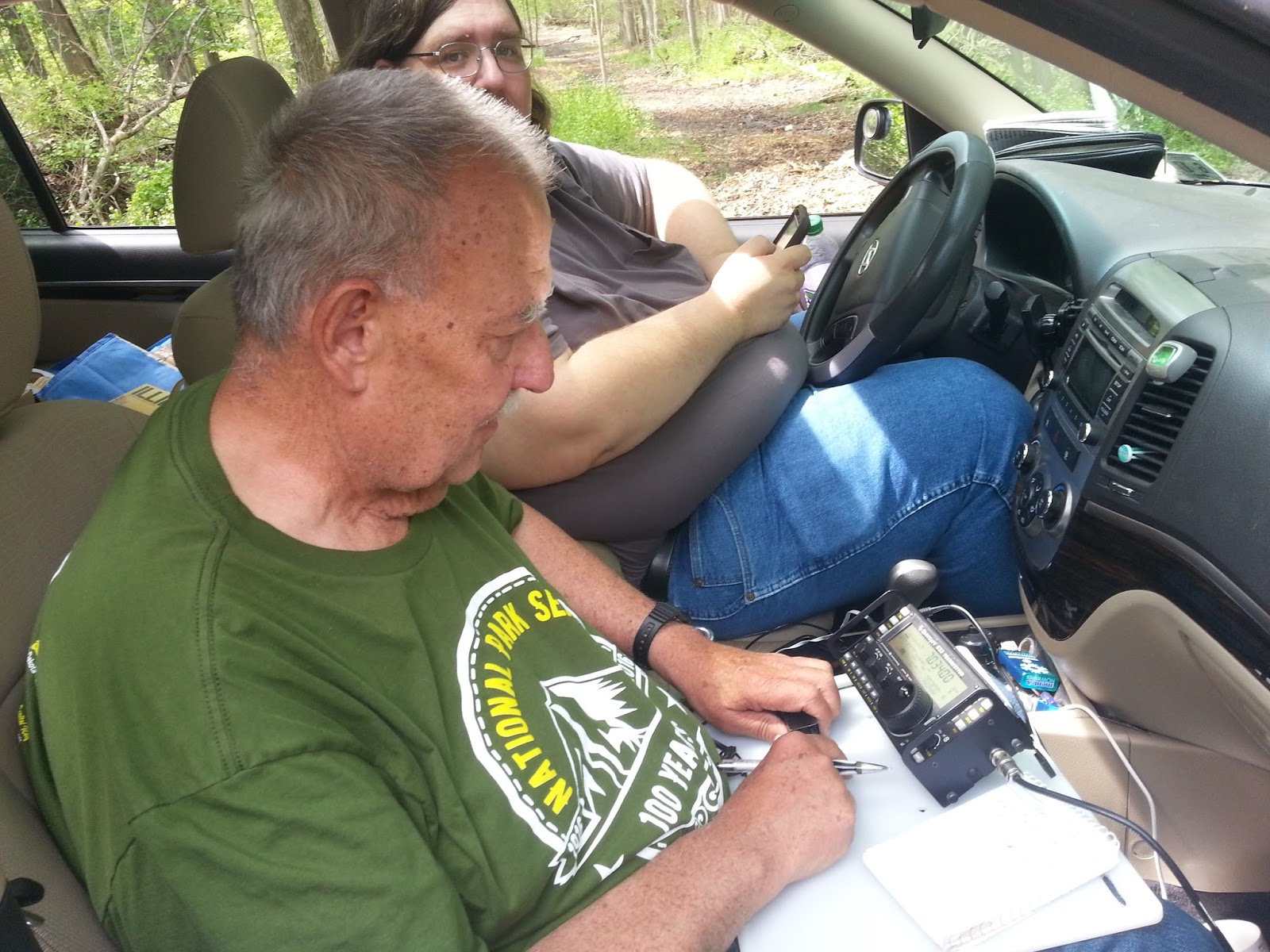
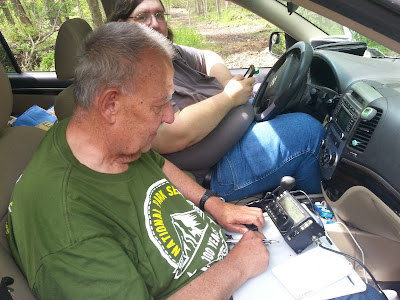
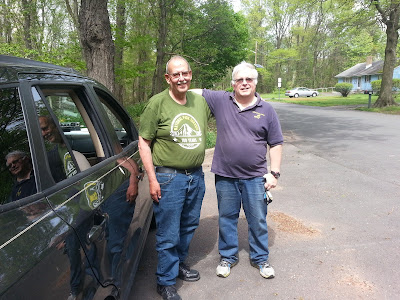
When I got there, Joe was making contacts on 40 Meters with his KX3. He noticed the same thing that I think we're all keenly aware of, that 20 Meters seems to stink, lately. Anyway, we kibbitzed for a few minutes and then I took my leave after Joe's son Kevin took a few photos of us together. After all, he came all the way to Edison from his home to make QSOs and put KFF-1615 on the air, not shoot the breeze with W2LJ!

When I got home, before I started on the back yard, I raced downstairs to the shack and hooked up the KX3 to the HF9V and went looking for Joe. I listened on 7.034 MHz, where I saw him operating from during our visit, only to hear not a peep. Figuring that he changed bands, I checked both 30 Meters and then 20 Meters, Bingo on 14.062 MHz (goundwave)! I got Joe in my log and helped him towards making the minimum number of contacts he needed to qualify for an activation.
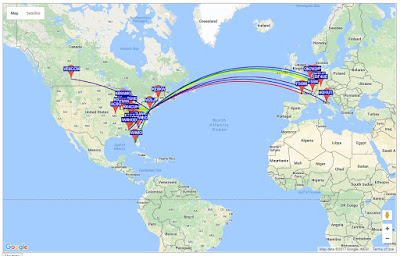
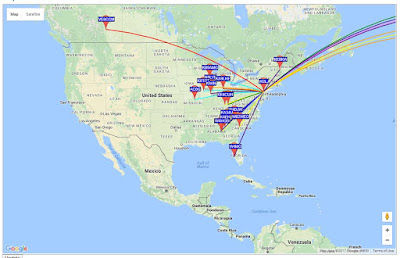
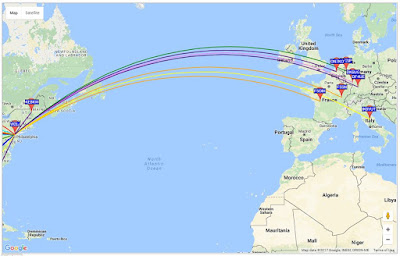
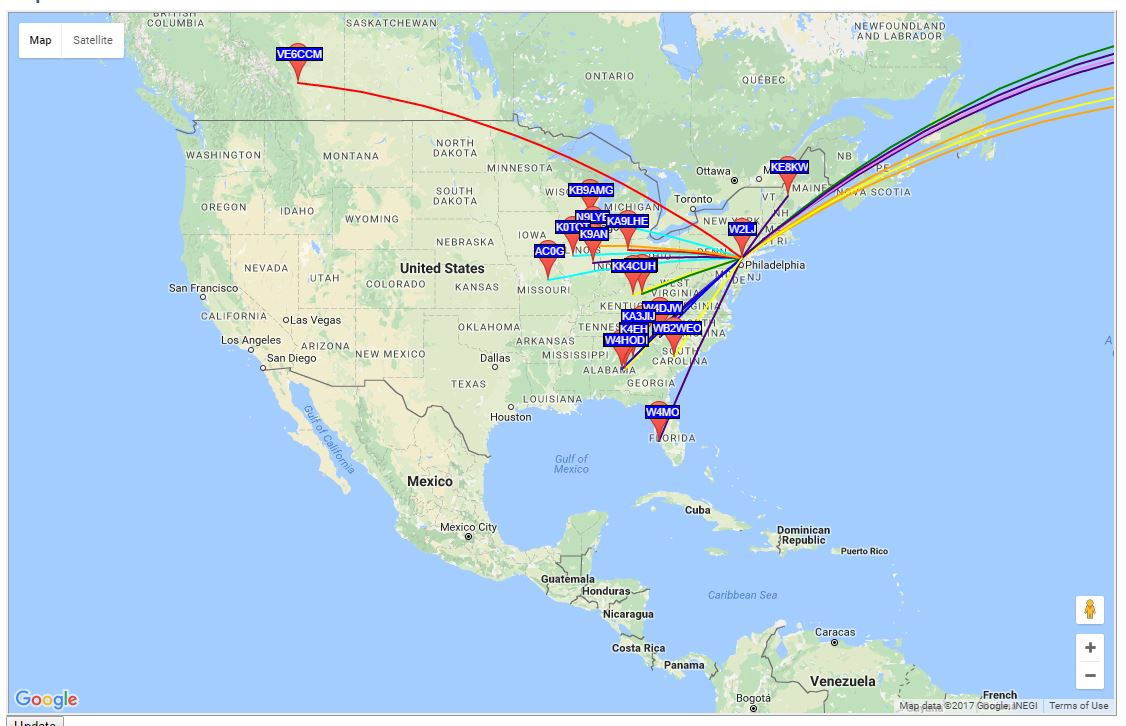
Before resuming lawn duty, I decided to check WSPRNet, to see how the WSPRLite was getting out.

It was getting out all right! Into the midwest USA and into Europe on 200 milliWatts! The W3EDP seems to be doing OK!

It turned out to be a good day, after all. I got to attend my class, got my chores done and got to hob-nob with a QRP giant - while giving my wire antenna a check out at the same time!
And here I thought the day would be a bust, Amateur Radio-wise!
72 de Larry W2LJ
QRP - When you care to send the very least!
Amateur Radio …. sort of
Today was a busy day with a lot of commitments and a lot of chores and not much time for Amateur Radio. So what does an intrepid Amateur Radio op do? Put his tail between his legs and slink off into the distance? No, he does the next best thing - he engages in related activities.
I had a class this morning that meets one Saturday a month. It started last September and ends next month, and it runs from 9:00 AM to 1:00 PM. You can see that that's a good chunk of the day. So it was SOTABEAMS WSPRLite to the rescue! It's kind of like a Ronco counter top oven - "set it and forget it". So I hooked up my WSPRLite to my W3EDP, set it up for 200 milliWatts on 20 Meters and let it go to town!
I figured that I'd let it run, see how the W3EDP gets out and still do the things I had to do today.
This WSPRLite is so cool! It's a software defined WSPR beacon in a package about half the size of an Altoids tin. It's powered by the USB port of your computer. You pick the band and power output and hook it up to your antenna. You wait until 2 seconds past any even minute and you press the little black button on the right to kick things off. The beacon transmits for 110 seconds and then waits for the next opportunity when the frequency is clear. I set it so that it would randomly transmit about 20% of the time; and you can let it run for up to three days if you want.
In the meantime, yesterday, while checking my e-mail, I saw that Joe Everhart N2CX co-founder of the NJQRP Club was going to be activating Edison State Park for Parks on the Air. It's designator is KFF-1615 and it's all of about 15 minutes from my house. So I e-mailed Joe back with my cell phone number and told him to text me when he got there; and I would come out and meet him.
After class I came home and broke out the lawnmower and got the front yard done. As I was walking to the backyard, I felt my pocket buzz. I whipped out my phone and read a text that Joe was on site and setting up. I dropped the lawnmower like a hot potato and high tailed it to the park. After all, what QRPer in his right mind would miss the opportunity to talk with a QRP Legend, right? When I got there, I saw Joe had finished setting up and was operating from his car.
It was getting out all right! Into the midwest USA and into Europe on 200 milliWatts! The W3EDP seems to be doing OK!
It turned out to be a good day, after all. I got to attend my class, got my chores done and got to hob-nob with a QRP giant - while giving my wire antenna a check out at the same time!
And here I thought the day would be a bust, Amateur Radio-wise!
72 de Larry W2LJ
QRP - When you care to send the very least!
I had a class this morning that meets one Saturday a month. It started last September and ends next month, and it runs from 9:00 AM to 1:00 PM. You can see that that's a good chunk of the day. So it was SOTABEAMS WSPRLite to the rescue! It's kind of like a Ronco counter top oven - "set it and forget it". So I hooked up my WSPRLite to my W3EDP, set it up for 200 milliWatts on 20 Meters and let it go to town!
I figured that I'd let it run, see how the W3EDP gets out and still do the things I had to do today.
This WSPRLite is so cool! It's a software defined WSPR beacon in a package about half the size of an Altoids tin. It's powered by the USB port of your computer. You pick the band and power output and hook it up to your antenna. You wait until 2 seconds past any even minute and you press the little black button on the right to kick things off. The beacon transmits for 110 seconds and then waits for the next opportunity when the frequency is clear. I set it so that it would randomly transmit about 20% of the time; and you can let it run for up to three days if you want.
In the meantime, yesterday, while checking my e-mail, I saw that Joe Everhart N2CX co-founder of the NJQRP Club was going to be activating Edison State Park for Parks on the Air. It's designator is KFF-1615 and it's all of about 15 minutes from my house. So I e-mailed Joe back with my cell phone number and told him to text me when he got there; and I would come out and meet him.
After class I came home and broke out the lawnmower and got the front yard done. As I was walking to the backyard, I felt my pocket buzz. I whipped out my phone and read a text that Joe was on site and setting up. I dropped the lawnmower like a hot potato and high tailed it to the park. After all, what QRPer in his right mind would miss the opportunity to talk with a QRP Legend, right? When I got there, I saw Joe had finished setting up and was operating from his car.
If you click on the picture to get a better view, you will notice that mounted at the rear of the car was Joe's 16 foot crappie pole. He had a loading coil attached and ran wire to the top. He told me that this arrangement seems to work for him as well as a full blown 31 foot mast secured via a drive on mast support. And who am I not to take him at his word? Joe is quite the QRP innovator. It seems that not an issue of "QRP Quarterly" goes by without some kind of juicy tidbit from Joe. And if N2CX says it works, then by golly, you can be assured that it works!
When I got there, Joe was making contacts on 40 Meters with his KX3. He noticed the same thing that I think we're all keenly aware of, that 20 Meters seems to stink, lately. Anyway, we kibbitzed for a few minutes and then I took my leave after Joe's son Kevin took a few photos of us together. After all, he came all the way to Edison from his home to make QSOs and put KFF-1615 on the air, not shoot the breeze with W2LJ!
When I got home, before I started on the back yard, I raced downstairs to the shack and hooked up the KX3 to the HF9V and went looking for Joe. I listened on 7.034 MHz, where I saw him operating from during our visit, only to hear not a peep. Figuring that he changed bands, I checked both 30 Meters and then 20 Meters, Bingo on 14.062 MHz (goundwave)! I got Joe in my log and helped him towards making the minimum number of contacts he needed to qualify for an activation.
Before resuming lawn duty, I decided to check WSPRNet, to see how the WSPRLite was getting out.
It was getting out all right! Into the midwest USA and into Europe on 200 milliWatts! The W3EDP seems to be doing OK!
It turned out to be a good day, after all. I got to attend my class, got my chores done and got to hob-nob with a QRP giant - while giving my wire antenna a check out at the same time!
And here I thought the day would be a bust, Amateur Radio-wise!
72 de Larry W2LJ
QRP - When you care to send the very least!
LF / MF Antenna Planning
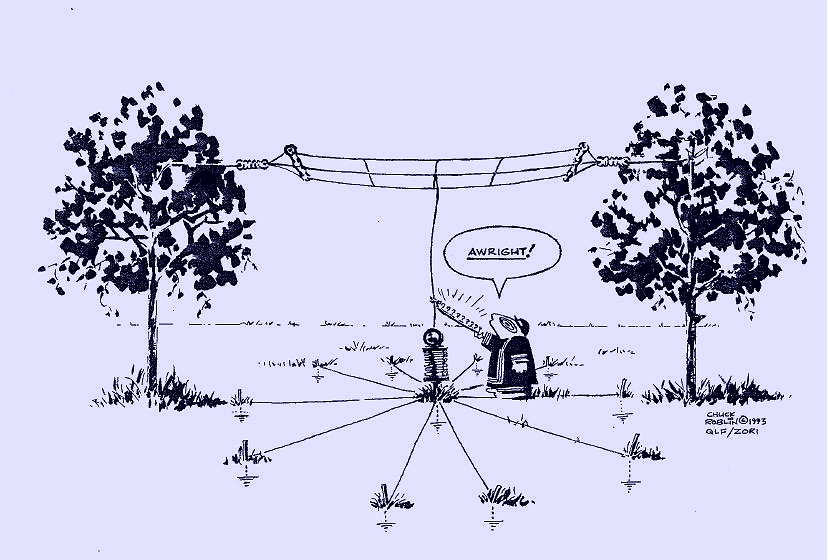 |
| courtesy: Chuck Roblin |
For U.S. amateurs, the 2200 and 630m bands will soon be a reality and I have no doubt that there will be an accompanying surge in interest among large numbers of homebrewers and low band diehards.
It should be an exciting time as new stations gradually start to populate the band from coast to coast.
High on the 'to do' list will be the planning and building (or modifying) of a suitable antenna system for the band(s) of choice. For most, this will be new territory, but the reality is that there has been a long tradition of operation in the LF and MF bands in the U.S. for many years ... all under the Part 15 'Lowfer' and 'Medfer' service.
Although activity in this category has fallen off over the years due to the availability of the much less-restrictive Part 5 experimental licences, there is still a great legacy of literature and information left behind that is every bit as useful today as it was back in the golden years of Lowfer operations.
Here is one such document from Stephen McGreevy's Natural ELF-VLF Radio website that many newcomers to these bands may find very helpful as it covers a wide variety of LF antenna-related basics in a down-to-earth manner.
An even more detailed treatise on virtually all aspects of LF and MF antenna topics is that found on Rik, ON7YD's website. His antenna pages can be found here. Although originally developed for the 2200m band, the principles are equally applicable to 630m as well.
Hopefully both of these sources will help you decide how to get a working antenna system up and running on the new bands. And as always, much help is available via the Internet on the Lowfer Reflector, the RSGB LF reflector or on the 600MRG Reflector.
LF / MF Antenna Planning
|
| courtesy: Chuck Roblin |
For U.S. amateurs, the 2200 and 630m bands will soon be a reality and I have no doubt that there will be an accompanying surge in interest among large numbers of homebrewers and low band diehards.
It should be an exciting time as new stations gradually start to populate the band from coast to coast.
High on the 'to do' list will be the planning and building (or modifying) of a suitable antenna system for the band(s) of choice. For most, this will be new territory, but the reality is that there has been a long tradition of operation in the LF and MF bands in the U.S. for many years ... all under the Part 15 'Lowfer' and 'Medfer' service.
Although activity in this category has fallen off over the years due to the availability of the much less-restrictive Part 5 experimental licences, there is still a great legacy of literature and information left behind that is every bit as useful today as it was back in the golden years of Lowfer operations.
Here is one such document from Stephen McGreevy's Natural ELF-VLF Radio website that many newcomers to these bands may find very helpful as it covers a wide variety of LF antenna-related basics in a down-to-earth manner.
An even more detailed treatise on virtually all aspects of LF and MF antenna topics is that found on Rik, ON7YD's website. His antenna pages can be found here. Although originally developed for the 2200m band, the principles are equally applicable to 630m as well.
Hopefully both of these sources will help you decide how to get a working antenna system up and running on the new bands. And as always, much help is available via the Internet on the Lowfer Reflector, the RSGB LF reflector or on the 600MRG Reflector.
The JK BevFlex-4 Antenna
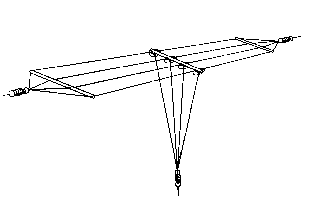
This past week, comments regarding an interesting new low-noise directionally-switched receive antenna popped-up on both the Topband reflector and the IRCA (BCB DXers) reflector.
The new JK BevFlex-4 is reported to work very well without requiring a lot of real estate for deployment. The antenna was designed by Geoff Mendenhall, W8GNM, and Ned Mountain, WC4X.
There are several things that make this package a little different. The antenna can be configured in four basic forms: CLASSIC BEVERAGE, BEVERAGE ON GROUND (BOG) / BEVERAGE IN SOD (BIS), INVERTED EWE, or as a FLAG. What is quite different however is its flexible feedpoint allowing the antenna to be fed at any point along its length when used in the BOG or BEVERAGE configuration. The antenna is completely passive and requires no preamplification although, in some configurations, it is suggested for use above 7MHz.
Full details can be found at the JK Antennas website, as well as the manual and a FAQ page.
The FAQ sheet indicates that it will perform from LW through to 10m but the most dramatic improvement in reception from users has been noted on the lower bands. It sounds like it might make an interesting antenna for NDB DXing as well.
In the BOG form, the antenna can lay right on the ground or be buried (BIS) just below the surface using RG-6 for the actual antenna element. Other configurations allow much smaller, stealth-sized wire to be employed.
An interesting YouTube video of the antenna in action as well as an in-depth description may be viewed here:
Here is one comment from an east coast topbander:
I also bought one this year....deployed it as an EWE, as that’s all the room
I have, small lot in a subdivision.....in order to work them you need to
hear them, and once I put that up, I could hear !!! first put up as EU/VK-ZL
and worked several in the DX contest, but when the african dxpedetions were on, moved it to due east/west., and worked all of them, S01, etc.....front to back is remarkable on 160, it works ok on 80, (mine was 10ft high and 38 ft long) but really rocks on 160 !!!!, and really cuts down the line noise/static I normally hear on my transmit Inv L.
Perhaps this may be your answer for a small effective receive antenna for LW and above but even if not, their website description makes for interesting reading.
The JK BevFlex-4 Antenna
This past week, comments regarding an interesting new low-noise directionally-switched receive antenna popped-up on both the Topband reflector and the IRCA (BCB DXers) reflector.
The new JK BevFlex-4 is reported to work very well without requiring a lot of real estate for deployment. The antenna was designed by Geoff Mendenhall, W8GNM, and Ned Mountain, WC4X.
There are several things that make this package a little different. The antenna can be configured in four basic forms: CLASSIC BEVERAGE, BEVERAGE ON GROUND (BOG) / BEVERAGE IN SOD (BIS), INVERTED EWE, or as a FLAG. What is quite different however is its flexible feedpoint allowing the antenna to be fed at any point along its length when used in the BOG or BEVERAGE configuration. The antenna is completely passive and requires no preamplification although, in some configurations, it is suggested for use above 7MHz.
Full details can be found at the JK Antennas website, as well as the manual and a FAQ page.
The FAQ sheet indicates that it will perform from LW through to 10m but the most dramatic improvement in reception from users has been noted on the lower bands. It sounds like it might make an interesting antenna for NDB DXing as well.
In the BOG form, the antenna can lay right on the ground or be buried (BIS) just below the surface using RG-6 for the actual antenna element. Other configurations allow much smaller, stealth-sized wire to be employed.
An interesting YouTube video of the antenna in action as well as an in-depth description may be viewed here:
Here is one comment from an east coast topbander:
I also bought one this year....deployed it as an EWE, as that’s all the room
I have, small lot in a subdivision.....in order to work them you need to
hear them, and once I put that up, I could hear !!! first put up as EU/VK-ZL
and worked several in the DX contest, but when the african dxpedetions were on, moved it to due east/west., and worked all of them, S01, etc.....front to back is remarkable on 160, it works ok on 80, (mine was 10ft high and 38 ft long) but really rocks on 160 !!!!, and really cuts down the line noise/static I normally hear on my transmit Inv L.
Perhaps this may be your answer for a small effective receive antenna for LW and above but even if not, their website description makes for interesting reading.
EME In The ’80s
 |
| VE7SL - my original 2m EME antenna. |
Unlike today's widespread JT65B usage on eme, where signals can be many db into the noise and inaudible by ear, eme contacts could only be completed by actually copying signals that you could hear with your ears. This usually required big antennas and lots of power.
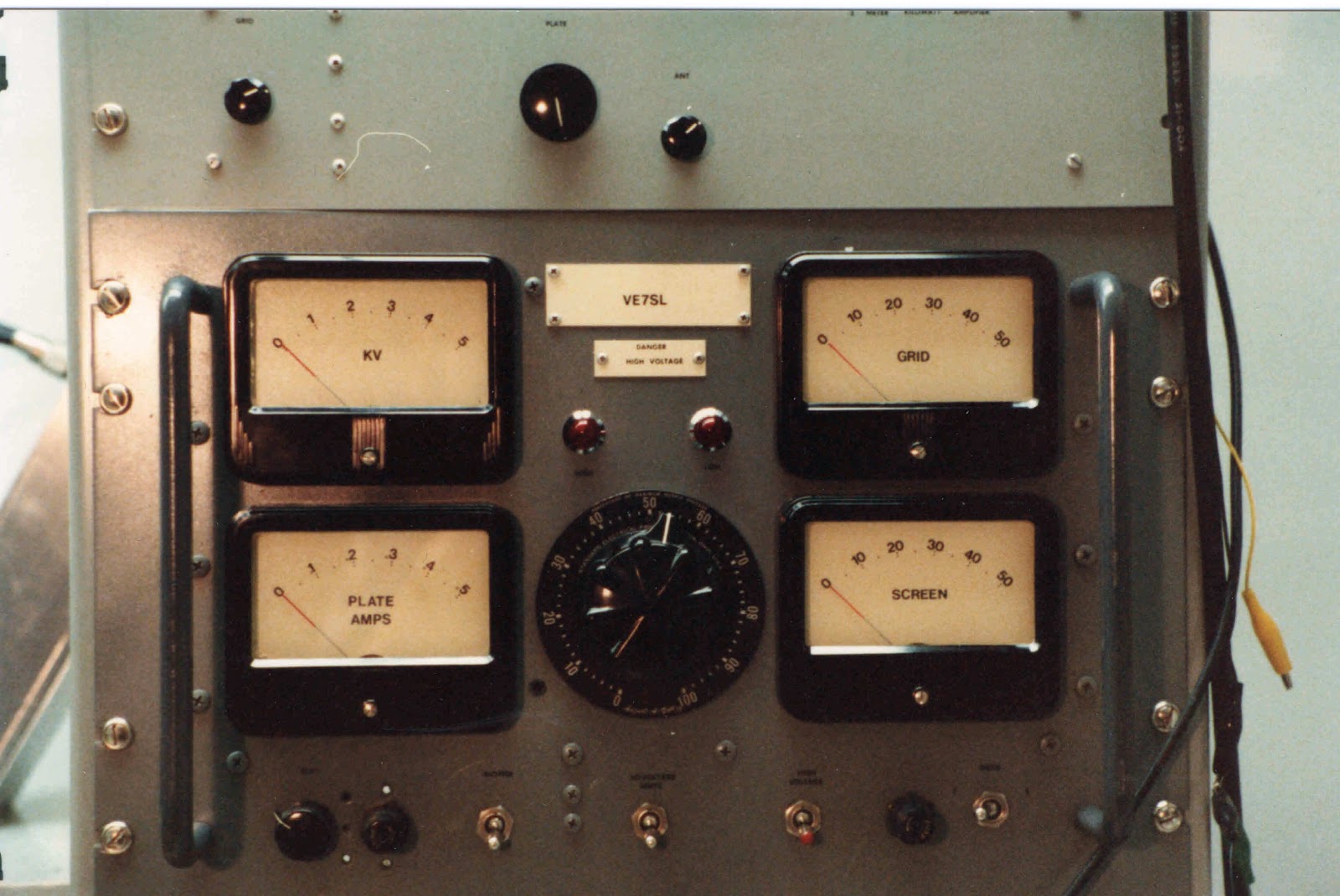
After a year and a half of evening work in my basement shop, my system was pretty much ready to go. I built a kilowatt amplifier, from the ARRL's VHF Handbook, along with its plate and screen power supplies.
 |
| 2m 'Plumbers Delight' handbook amp. |
My antennas (see above), as well as the large H-frame support, were also built in the basement and used all scrap aluminum from one of the numerous scrap yards that were in Vancouver at the time. The system consisted of sixteen separate 6 element NBS-styled yagis, all phased. Many of the two-dozen plus N connectors were bought at Boeing Surplus near Seattle, another interesting source of parts, also now long gone. Keeping water out of the phasing lines and connectors was a real challenge here in the rain forest and if one connector was not done exactly right, would create a lot of headaches.
The antenna took up a large portion of my small, 33'-wide suburban backyard. Pointing was all done by hand, using homemade scales to indicate elevation and azimuth angles, so that it could be pointed accurately even on cloud covered days and nights. A hand-cranked boat winch took care of elevation. I had a switch-box full of surplus VHF relays out at the antenna that protected my JFET preamp and also allowed me to compare sky and sun noise against a 50 ohm load.
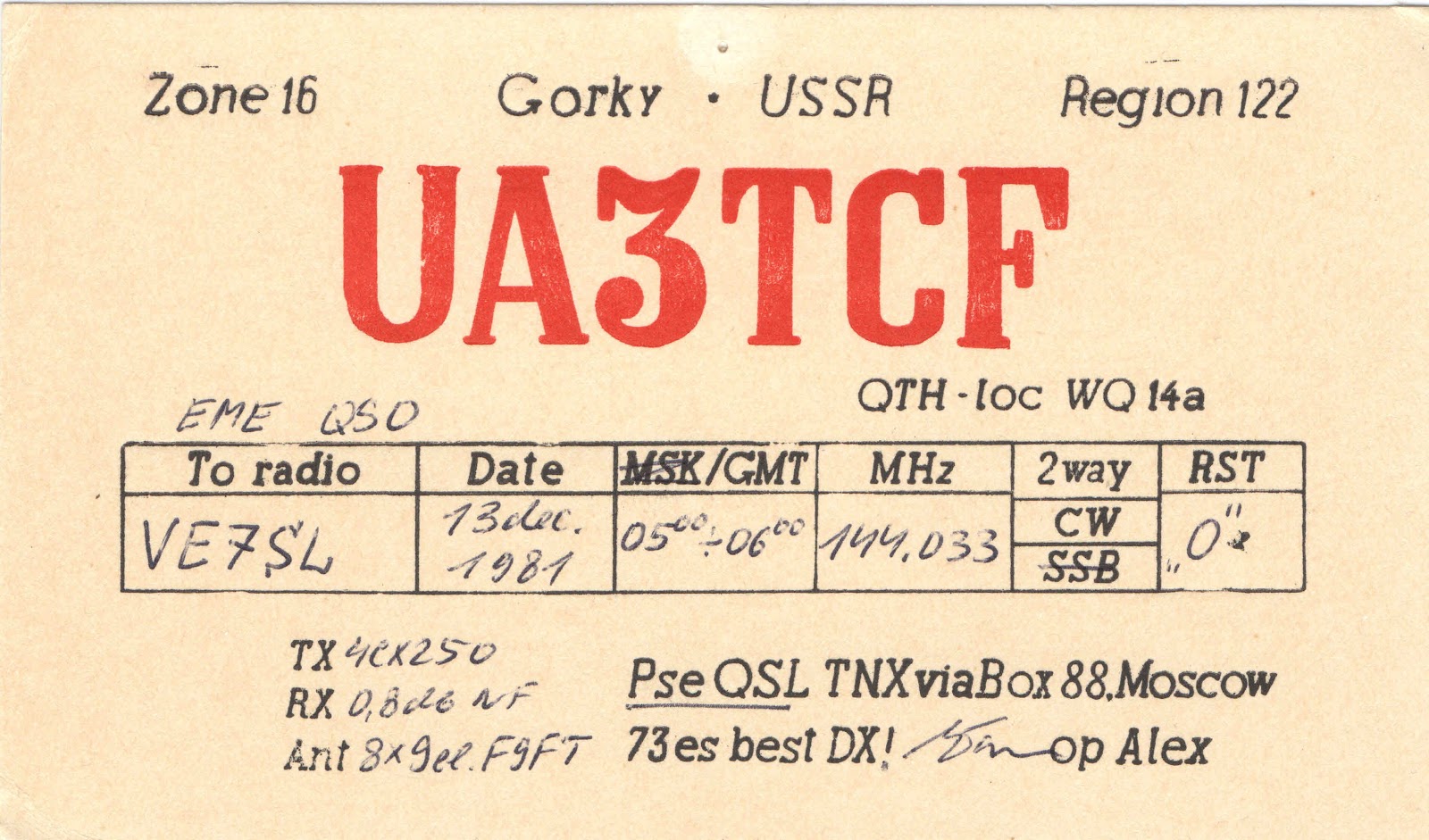
Over the course of a few years, the system was employed to work many Europeans as well as North American VEs' and Ws'. The one contact that stands out memorable for me, was with UA3TCF, east of Moscow. This was because I had to aim the array directly into my two-story house, located about 20' away! The moon was very low as well, so that not much elevation was required.
I eventually found that trying to hold down a full-time high school teaching job and running sked requests at 0300 were not very compatible! It also became a lot of work just to maintain the system properly. I had met and completed my original goals and it became time to move on.
Eventually the array was broken down into smaller sections and sold to local 2m guys, along with the amplifier ... but it was a huge learning experience for me and the fact that I survived building and playing with a 2,000 volt power supply, still scares the heck out of me!
 |
| Plate & screen supply for the 2m amp. |
 |
| The VHF rack with xvrtrs and amps 50mHz-432mHz. |
 |
| My gal Sal adorning the 2m tower on a snowy Sunday morning. |













