Archive for the ‘antenna’ Category
 QRM busting
 September 23rd, 2010 |
  Author:
 Mads LA1TPA recently visited Julian G4ILO’s shack and was so impressed by his approach to cutting through the QRM using an MFJ-1026 Noise canceler and a pa0rdt-Mini-Whip active broadband RX antenna, he’s replicating the solution at his own QTH.
His post links to info on both the MFJ-1026 and the pa0rdt Mini-Whip.

MFJ-1026 noise canceler
Julian G4ILO’s site has an extensive description of the MFJ-1026 explaining that it’s a noise canceler, not a noise blanker or a noise reducer – as well as a ‘look under the bonnet’. It’s most effective when the noise is coming from a single point source, not multiple sources. So the canceler can reduce noise from a neighbour’s switch mode power supply, TV or computer it may be less successful dealing with general powerline noise.
For Julian’s station it did the trick and as he concludes,
“The MFJ-1026 is expensive for what it contains and quite poorly made, so I don’t feel any pride of ownership of it. It’s also a hassle having to tweak its controls whenever I change bands. But pressing the button to take it out of circuit quickly reminds me just why I have it.
I’d probably had sold my equipment and quit the hobby if it wasn’t for the MFJ-1026.”
You can also preview the MFJ-1026 manual here.

pa0rdt mini whip
The English-Dutch-Italian pdf about the pa0rdt Mini Whip explains,
“After several fruitless attempts to make an active loop work in a city environment, it was found that the electric field from local noise sources was contained within the house. The magnetic field of local noise sources was not contained inside the house, making weak signal reception at LF impossible.
Hence an electric field antenna was called for. Tests were performed using an active whip antenna, designed by G4COL. Results were encouraging and the whip length could be reduced from 100 cm to 30 cm without loss of performance. It became clear that at LF an active whip is a capacitance coupled to the electric field.
If it is accepted that a whip is a capacitance coupled to the electric field, shape becomes irrelevant, as long as the required capacitance is available. In practice the “whip” can be e.g. a small piece of copper clad printed circuit board.”
October WorldRadio Online highlights
The October edition of WorldRadio Online magazine is available now.
Highlights include:
* An End-Fed Dipole That’s Easy to Build and Great for the Field – a trail-friendly design inspired by Kurt N. Sterba’s Aerials column in the August edition of WorldRadio Online, where four stacked F114-61A toroids are the secret weapon along with one-quarter wave of RG-174U coax…
* Seeing What Others Are Hearing: A DX Cluster Primer – How to tap into the information flowing through the DX Cluster network
* Radio & Relaxation = The Great Family Vacation – One ham’s adventures combining radio fun with family holidays.
Dual band rectangular loop antenna for 15m and 10m

The loop and the off-centre fed dipole at Field Day
This is the second article describing the two antennas that were used by the Carleton University Amateur Radio Club (CUARC) at Field Day 2010. The first post described an off-centre fed dipole with a 200 ohm feedpoint impedance. This post describes the second antenna a loop antenna that worked on two bands, 15m and 10m.
I like loop antennas. I have built large loops for amateur bands, as well as small loops for receiving (which are quite different to their bigger cousins) and have found both types perform well. They are less sensitive to local noise, so often giving good signal to noise ratios. As CUARC was to operate on 10m and 15m at the Field Day site I was considering a loop for one of these bands, however, which one? 10m could be fun if there was an opening, plus the antenna would be smaller than 15m. However, 15m would be more likely to be open. In searching the internet I came across a potential solution as KT4QW’s website who describes a 17m and 10m hanging loop antenna. The idea was simple and elegant, two vertical and rectangular loops fed from the same point, similar as to how multi-band dipoles can be fed from the same feedpoint (sometimes called a fan dipole).
I went about calculating the basic design. A full-wave loop’s total perimeter length is calculated by:
Length (in feet) = 1005 / f,
where f is the intended frequency of operation in MHz.
So for 21.3 MHz that would be a total loop length of 47.2ft and for 28.5MHz it would be 35.3ft.
To attain a 50Ω feedpoint the loop needs to be rectangular, with the longer length vertical. Studying J. Carr’s Loop Antenna Handbook and KT4QW’s dimensions the sides were close to being 1/3 of the total loop length for a vertical side and 1/6 for the horizontal side. So this then gave a design as shown below.

Dual band loop antenna for 15m and 10m.
To support the wire I bought two 10ft lengths of PVC piping. The inner support for the upper part of the 10m antenna was some thin wood. Both the wood and PVC were drilled with holes prior to Field Day. The wire was cut from a single 100ft roll and the whole antenna was built by CUARC members at the Field Day site on the day. At the feed point a 1:1 balun was used, an Elecraft BL2. The intention was to suspend the antenna from a single central point so the loop(s) could be rotated, using a line tied to one lower corner. However, we could not get enough height and clearance from tree branches, so we mounted it between two trees and it keep it static with the signal projecting in South-West and North-East directions.

The loops being connected to the balun by Gerry, VA3GLT (left) and Maria, VA3MMI, (right). (Photograph and copyright of Chris Weisner, VA3SM)
After construction the SWR was measured and found to be nicely below 2:1 for both bands (at least the lower part of 10m which is quite a wide band). As mentioned in the earlier post Maria, VA3MMI, brought a portable analyzer to the site on Sunday morning and the trace of the SWR profile is shown below. You can see the antenna has two nice dips in the SWR within the two bands. In an effort to see the usable bandwidth (below 2:1 SWR) the max SWR on the Y axis has be limited to 2.0:1.

10m and 15m dual band loop antenna SWR plot
To further examine the bandwidth of the two dips in SWR Maria, VA3MMI, set markers at the 2:1 points of the SWR curves. These are shown in the next two traces (one for each band). Both show good usable portions of the bands for phone, see the tables on the right of the trace. (Thanks to VA3MMI for the measurements and traces).

Bandwidth for 15m is 467kHz, starting at 21.1MHz

Bandwidth for 10m is 767kHz, starting at 28MHz
So, with the off-centre fed dipole and this dual loop antenna, CUARC constructed two antennas for Field Day that worked on 15m and 10m without the need of an antenna tuner unit. Performance was good on both antennas and I heard at least one comment that that we had a strong signal (we used 100W). During Field Day we made over 100 contacts on 15m and 16 contacts on 10m. Not bad, as for many of the CUARC members this was their first chance at operating on HF. It was enjoyable for the newly licensed CUARC members to build and then use the two antennas and to find both worked successfully. For me that was perhaps the highlight of 2010 Field Day.


200 Ohm Feed Point Off-centre Fed Dipole

The off-centre dipole installed on Field Day 2010 (photograph and copyright of Chris Weisner, VA3SM)
As I mentioned in the earlier Field Day 2010 report, the CUARC group built two antennas for the event. In this post I will describe the first one of these, an off-centre fed dipole.
The common place for the feed point of the off-centre fed dipole is at a 1/3 : 2/3 split in the arms. This has the advantage of providing low SWR (with a 4:1 balun) at even harmonic frequencies, such as 20m and 10m for an antenna cut for the fundamental frequency of 40m (around 66ft). Whereas a centre-fed dipole will only have the odd harmonics which for a 40m (7MHz) dipole is 15m (21MHz).
Rather than use the traditional off-centre length split of 1/3 : 2/3 for our Field Day antenna, it was decided to follow the design proposed by Richard Formato, K1POO, in two technical correspondences published in QST 1,2 and followed up with further article with by Dale Gaudier, 3. In this design the feed point is moved closer to the 1/6 point on the short arm, the advantage being stated in the articles that you should get a 200Ω feedpoint there and so a low SWR on 40m, 20m, 15m and 10m bands when using a 4:1 balun, with no need for an antenna tuner unit. The emphasis on the 15m band is intentional as a low SWR on that band is not usually possible with an off-centre fed dipole with the feed at 1/3 : 2/3 and a 4:1 balun. Four bands on one 69 foot wire antenna with no tuner looked very attractive for Field Day.
The antenna was cut carefully prior to Field Day and the end insulators were added. When cutting the antenna the length measurement included the ‘pig-tail’ connections that I have on the 4:1 balun. The diagram below shows the arrangement of the antenna.

The off-centre fed dipole for 40m, 20m, 15m and 10m
On the day the antenna was installed between two trees at about 35ft off the ground. While the second antenna was being constructed (to be featured in a later post) its SWR was measured with my Autek RF-1 antenna analyzer. The results were taken by Maria, VA3MMI and Gil, VE3JRY and are tabulated below.
_______________________________________________
Band (m) 2:1 VSWR Range (MHz) Minimum VSWR
40 3.1 : 1 (at 7.38 MHz)
20 13.29 – 14.65 1.4 : 1
15 21.20 – 22.31 1.5 : 1
10 27.78 – 29.25 1.7 : 1
_______________________________________________

Maria, VA3MMI and Gil, VE3JRY record the SWR (photograph and copyright of David Scott, VE3ZZU)
The overall results were very pleasing, although the 40m band was a little disappointing. This higher than expected SWR on 40m was also encountered by Dale, M0AOP/K4DG, and was reported 3 by him to be due to the severe imbalance in the antenna, so requiring a choke balun to remove the stray RF on the coax. We did not try a choke balun, since we were unlikely to operate on 40m, that was another station’s band of operation. However we had an antenna tuner unit if we needed to try and tame the SWR. It was very good to see the SWR profile observed in reference 3 was repeatable.
On Sunday morning Maria, VA3MMI, returned with a portable analyzer borrowed from work and did a sweep analysis. The response is below and markers have been inserted to show the minimum SWR associated with the bands. Thanks goes to Maria for the measurement and the plot.

Off-centre fed dipole SWR plot, with markers.
It would be interesting to remeasure the SWR response again with a choke balun in place. I expect the SWR will drop below 2:1 within the 40m band as found by the author of reference 3. If this does happen then four bands and no tuner needed makes this antenna one for serious consideration on HF. Even without a low SWR on 40m the antenna offers three bands and it performed well on 15m and 10m for us on Field Day.
As a final note, I should reiterate the warning by Dean Straw, N6BV, at the end of reference 1 where he warns about using the antenna on 30m, 17m or 24m, as a very high SWR could damage the balun at the feedpoint.
References
1. “Improved Feed for the Off-Centre-Fed Dipole” R. A. Formato, K1POO, Technical Correspondance, QST, May 1996 p76.
2. “Off-Centre-Fed Dipole Comments, Part 2″, R. A. Formato, K1POO, Technical Correspondance, QST, October 1996 pp72-73.
3. “Choke the OCFD” D Gaudier, M0AOP/K4DG, Technical Correspondance, QST, September 1997, pp82-83.
Note: all three of the above papers are collected together in “More Wire Antenna Classics Volume 2″ ARRL, (1999).
The Field Day photographs above are from the Ottawa Valley Mobile Radio Club’s photo gallery.


LHS Episode #040: HF in the Mobile Shack
 It’s a couple of days since the end of the 2010 Dayton Hamvention. Cheryl and I would like to send out a special thank you to everyone who stopped by our booth while we were there. We met a lot of interesting folks and had a great many thought provoking conversations. It was our first time so we didn’t know we’d be out in the sticks, so to speak, but we still had a lot of traffic and a lot of fun.
Now that I’m home and most of the work that piled up on me while I was away has been tackled, I got the podcast we recorded before the event finished and here it is. There’s no Dayton content this time around. That will come next time. The drawing for the Alinco radio and the other Linux in the Ham Shack swag will happen on Friday and we’ll announce all the winners in the next show and on the Web site so stay tuned for that. In the meantime, enjoy some interesting feedback from listeners and some insight into Richard’s latest mobile rig install. Keep the feedback coming, visit our Printfection and Cafe Press stores and pick up an item or two, and get ready for next year in Dayton. Linux in the Ham Shack will be back.
73 de The LHS Guys
LHS Episode #028: The Art of Listening
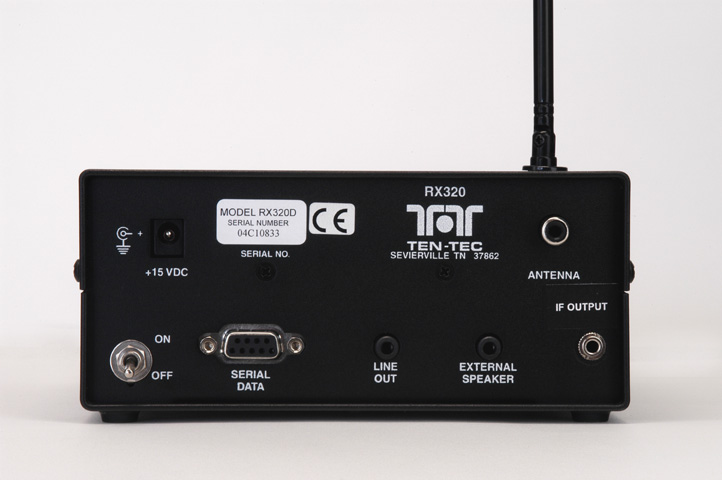 It's the holiday season, and our gift to our listeners is a brand new podcast. During my time at Ohio Linux Fest back in September, several of the participants who visited the Linux in the HAM Shack booth provided topic ideas for the program. I recently dug those topics up and Richard and I will be tackling them over the next few episodes. In Episode #026, the topic we decide to visit is shortwave listening, including hardware and Open Source software for that very purpose. SWL is a way for non-hams to approach the hobby without encountering mic fright, and a way for existing hams and non-hams alike to explore the world of radio frequency communication, whether it be foreign broadcasts, pirate radio, amateur radio or time beacons. With several manufacturers of equipment still in business, SWL is by no means a lost art, and may be an interesting extension to the amateur radio hobby for those who don't currently participate in it.
Several thank yous go out to those who donated to the Dayton Hamvention 2010 fund. With my upcoming matching contributions we'll be about halfway to our goal. Please keep those donations coming, even after we've met our goal, so we can continue to improve our equipment, our hosting and our program. As always, thank you for downloading Linux in the HAM Shack. Please send us your feedback and questions, and please tell everyone you know about us--through word of mouth, blogging, social networking, whatever it takes. Our listenership continues to grow, and we hope that trend continues for years to come.
73 de Russ, K5TUX













