Author Archive
 CLE 199 Results
 October 28th, 2015 |
  Author:
 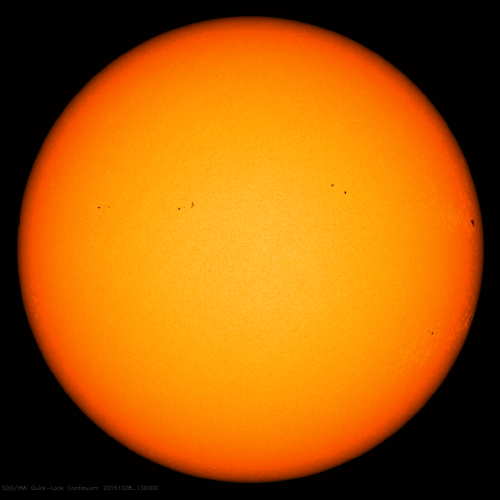 |
| courtesy: http://sdo.gsfc.nasa.gov/ |
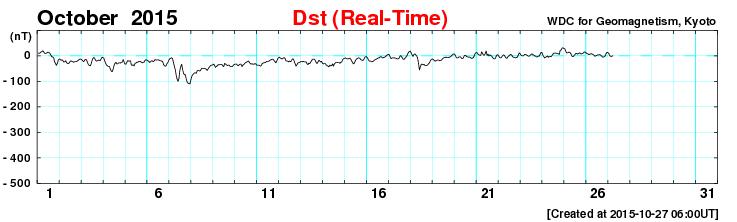 |
| courtesy: http://wdc.kugi.kyoto-u.ac.jp/dst_realtime/presentmonth/index.html |
:Issued: 2015 Oct 27 0010 UTC
# Prepared by the US Dept. of Commerce, NOAA, Space Weather Prediction Center
#
# Geophysical Alert Message
#
Solar-terrestrial indices for 26 October follow.
Solar flux 106 and estimated planetary A-index 3.
The estimated planetary K-index at 0000 UTC on 27 October was 0.
No space weather storms were observed for the past 24 hours.
No space weather storms are predicted for the next 24 hours.
=-=-=-=- Trends -=-=-=-=-=--
Date 25 25 25 25 25 26 26 26 26 26 26 26 26 27
UTC 0900 1200 1500 1800 2100 0000 0300 0600 0900 1200 1500 1800 2100 0000
SFlx 106 106 106 106 106 106 106 106 106 106 106 106 106 106
A-in 11 11 11 11 9 8 8 8 8 8 8 8 3 3
K-in 3 2 3 2 1 1 1 0 1 1 0 0 0 0
Current Solar information
available at http://www.am-dx.com/wwv.htm
**************************************
The following NDB stations were logged here using the Perseus SDR along with my inverted-L and 10' x 20' loop. CLE 199 was an 'A-B-C' event, calling only for countries or states / provinces beginning with those letters.
Time Freq ID Location
24 13:00 209 CYT Yakataga Apt, ALS
24 13:00 212 CGL Coghlan Island - Juneau, ALS
24 13:00 223 AFE Kake Apt, ALS
24 13:00 229 AKW Klawock Apt, ALS
24 13:00 233 ALJ Hinchinbrook Island, ALS
24 13:00 245 HNS Haines, ALS
26 12:00 251 OSE Bethel Apt, ALS
24 13:00 266 ICK Annette Island, ALS
26 13:00 275 CZF Cape Romanzof LRRS Apt, ALS
24 14:00 281 CRN Sparrevohn LRRS, ALS
26 14:00 338 CMQ Campbell Lake (Anchorage), ALS
26 13:00 341 ELF Cold Bay, ALS
24 13:00 350 VTR McGrath, ALS
26 13:00 355 AUB King Salmon, ALS
24 13:00 358 SIT Sitka, ALS
24 13:00 372 FPN Petersburg, ALS
24 13:00 376 PVQ Deadhorse, ALS
26 14:00 379 IWW Kenai, ALS
24 13:00 382 JNR Unalakleet, ALS
24 11:00 385 OCC Yakutat, ALS
24 13:00 390 HBT Sand Point, ALS
24 13:00 390 AES Northway, ALS
24 13:00 391 EEF Sisters Island, ALS
24 13:00 394 RWO Kodiak, ALS
24 13:00 396 CMJ Ketchikan IAP, ALS
24 14:00 404 GCR Cordova, ALS
24 13:00 414 IME Sitka Apt, ALS
24 13:00 429 BTS Dillingham, ALS
24 14:00 525 ICW Nenana, ALS
24 13:00 529 SQM Big Level Isl, ALS
24 04:00 207 PY Fort Chipewyan, AB, CAN
24 04:00 215 ZAB Edmonton (Intl Apt), AB, CAN
24 14:00 221 QU Grande Prairie, AB, CAN
26 12:00 225 X5 Vegreville, AB, CAN
26 00:20 227 9X Brooks Apt, AB, CAN
24 04:00 230 VG Vermilion, AB, CAN
26 12:00 234 3Y Donnelly, AB, CAN
24 04:00 239 OJ Footner Lake, AB, CAN
24 04:00 241 YLL Lloydminster, AB, CAN
24 04:00 248 QL Lethbridge, AB, CAN
24 04:00 254 ZYC Calgary, AB, CAN
24 04:00 266 XD Edmonton, AB, CAN
26 09:00 272 YLB Lac La Biche, AB, CAN
24 04:00 287 PE Peace River, AB, CAN
24 04:00 292 ZET Edmonton, AB, CAN
24 04:00 295 8C Fairview, AB, CAN
24 04:00 299 TV Turner Valley, AB, CAN
24 04:00 304 FH Mc Leod, AB, CAN
24 04:00 305 Z1 Three Hills, AB, CAN
26 12:00 307 M5 Manning, AB, CAN
24 04:00 308 ZZD Edmonton, AB, CAN
24 04:00 311 9Y Pincher Creek, AB, CAN
24 04:00 328 5J Coronation, AB, CAN
24 04:00 329 X2 Athabasca, AB, CAN
24 04:00 332 XH Medicine Hat, AB, CAN
24 04:00 334 P2 Wetaskiwin, AB, CAN
24 04:00 338 ZU Whitecourt, AB, CAN
24 04:00 343 YZH Slave Lake, AB, CAN
26 04:00 344 YOP Rainbow Lake, AB, CAN
26 00:29 344 YC Calgary, AB, CAN
24 04:00 353 5F Chevron, AB, CAN
26 05:00 361 E3 Wabasca, AB, CAN
24 04:00 362 6T Foremost, AB, CAN
24 04:00 379 ZEG Edmonton Intl, AB, CAN
24 04:00 385 3M Drayton Valley, AB, CAN
24 04:00 388 MM Fort Mc Murray, AB, CAN
24 04:00 388 JW Jumping Pound Creek, AB, CAN
24 04:00 398 YOD Cold Lake, AB, CAN
24 04:00 405 9G Sundre, AB, CAN
24 04:00 405 2K Camrose, AB, CAN
24 04:00 408 Z7 Claresholm, AB, CAN
26 08:00 414 8M Elk Point, AB, CAN
24 13:00 206 SOW Show Low, AZ, USA
24 12:00 338 RYN Tucson, AZ, USA
24 13:00 403 AZC Colorado City, AZ, USA
24 11:00 410 DAO Sierra Vista, AZ, USA
26 04:00 376 ZIN Matthew Town, BAH
24 04:00 200 YJ Sidney Island, BC, CAN
26 08:00 200 YDL Dease Lake, BC, CAN
24 04:00 200 UAB Anahim Lake, BC, CAN
24 04:00 203 ZKI Kitimat, BC, CAN
24 04:00 203 YBL Campbell River, BC, CAN
24 04:00 206 EF Castlegar, BC, CAN
24 04:00 214 LU Abbotsford, BC, CAN
24 20:38 218 PR Prince Rupert, BC, CAN
24 04:00 223 YKA Kamloops, BC, CAN
24 04:00 227 CG Castlegar, BC, CAN
26 00:33 230 YD Smithers, BC, CAN
24 04:00 236 YZA Ashcroft, BC, CAN
24 04:00 242 ZT Port Hardy, BC, CAN
24 20:42 242 XC Cranbrook, BC, CAN
26 00:34 246 ZXJ Fort St. John, BC, CAN
24 20:46 248 ZZP Queen Charlotte Is, BC, CAN
24 04:00 250 2J Grand Forks, BC, CAN
24 04:00 251 YCD Nanaimo, BC, CAN
24 04:00 257 LW Kelowna, BC, CAN
24 04:00 260 ZXS Prince George, BC, CAN
24 04:00 260 YSQ Atlin, BC, CAN
24 04:00 261 D6 Fairmont Hot Springs, BC, CAN
26 00:15 266 VR Vancouver, BC, CAN
24 04:00 269 YK Castlegar, BC, CAN
24 04:00 272 XS Prince George, BC, CAN
26 13:00 278 1U Masset, BC, CAN
24 04:00 290 YYF Penticton, BC, CAN
24 04:00 293 MB Mill Bay, BC, CAN
24 04:00 302 6K Vernon, BC, CAN
24 04:00 312 UNT Naramata, BC, CAN
24 04:00 325 YJQ Bella Bella, BC, CAN
24 04:00 326 XJ Fort St. John, BC, CAN
24 04:00 326 DC Princeton, BC, CAN
24 04:00 332 XT Terrace, BC, CAN
24 04:00 332 WC White Rock, BC, CAN
24 04:00 344 XX Abbotsford, BC, CAN
24 04:00 350 NY Enderby, BC, CAN
24 04:00 356 ON Penticton, BC, CAN
24 04:00 359 YQZ Quesnel, BC, CAN
24 04:00 359 YAZ Tofino, BC, CAN
24 04:00 364 4D Helmet, BC, CAN
24 04:00 368 ZP Sandspit, BC, CAN
24 04:00 368 SX Cranbrook, BC, CAN
24 04:00 374 EX Rutland, BC, CAN
24 04:00 378 AP Mayne Island, BC, CAN
24 04:00 382 YPW Powell River, BC, CAN
24 04:00 382 YE Fort Nelson, BC, CAN
24 04:00 385 WL Williams Lake, BC, CAN
24 04:00 389 YWB Kelowna, BC, CAN
24 04:00 394 DQ Dawson Creek, BC, CAN
24 04:00 400 QQ Comox, BC, CAN
24 04:00 414 YZK Harper Ranch, BC, CAN
24 13:00 203 TCY Tracy, CA, USA
24 13:00 205 COR Corcoran, CA, USA
24 13:00 209 HGT Hunter Liggett - Tusi AHP, CA, USA
24 13:00 233 LG Seal Beach, CA, USA
24 13:00 335 CC Concord, CA, USA
24 13:00 344 FCH Chandler, CA, USA
24 10:00 370 PAI Pacoima - Whiteman Apt, CA, USA
24 11:00 374 LV Livermore, CA, USA
24 11:00 385 MR Pacific Grove, CA, USA
24 11:00 397 SB San Bernardino, CA, USA
24 11:00 404 MOG Montegue, CA, USA
24 04:00 415 CBC Cayman Brac, CYM
24 13:00 209 ITR Burlington, CO, USA
24 07:00 260 AP Sedalia, CO, USA
24 07:00 329 TAD Trinidad, CO, USA
26 11:00 373 TF Pueblo, CO, USA
24 11:00 392 BAJ Sterling, CO, USA
24 11:00 400 FN Fort Collins, CO, USA
24 11:00 407 CO Fountain, CO, USA
West Coast 630m Growth

The Canadian west coast contingent of stations on 630m continues to slowly expand, with Mark, VA7MM and Toby, VE7CNF now operational at 'DX capable' power levels.
Both Mark and Toby have been refining their antenna systems with an eye towards the upcoming winter season as well as the November 'crossband' activity weekend ... both stations were heard testing this week and are sounding very strong at my Mayne Island location.
Toby has sent a picture of his antenna loading coil and variometer scheme, shown below.
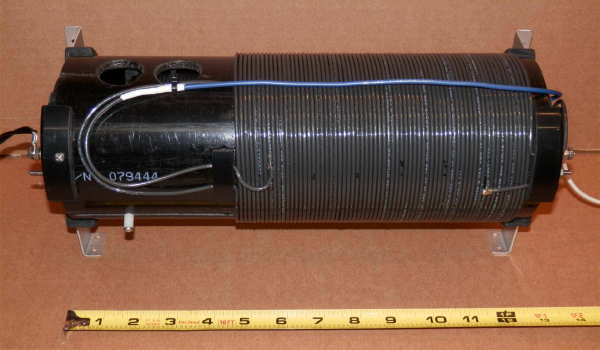
"You can see the white slider knob at the lower left, which goes through a slot in the outer pipe and screws into the end of the inner pipe. The white wire at the right goes to the matching transformer, and the black high-voltage wire at the left goes to the antenna. The coil is wound with #14 so it can handle some power. There are ventilation holes around the pipe and at the ends, but at 200W I did not notice any warming. A regular rotating variometer may have slightly lower losses, but it would be larger and I wanted to make my tuner box small so I can hide it near the trees."
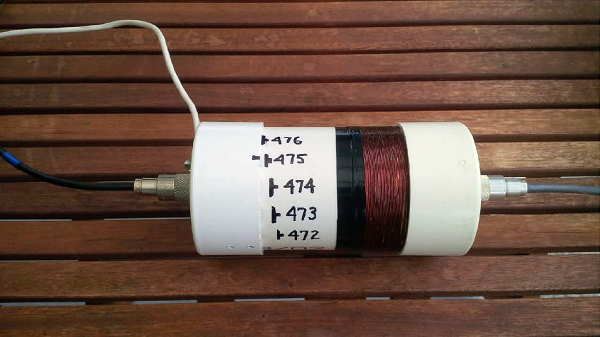 Mark also sent some pictures of his recent handiwork, showing the simple loading coil and tuning system presently in use at his station. His present plans call for something capable of handling power in the 100 watt range and, although using smaller gauge wire, the loading coil seems to handle it just fine. Like Toby, he is using a 'sliding variometer' and a toroidal autotransformer for impedance matching to 50 ohms. Mark will be running ~ 100 watts into a 100' vertical wire with top-loading.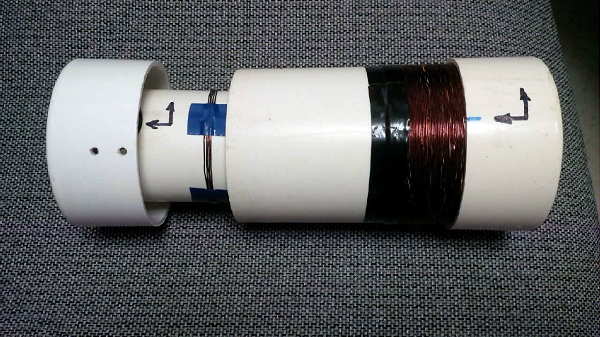
It is wonderful to see more new stations arriving on the band but the new activity seems to be coming from VE7 only ... how interesting it would be to have stations in VE6, the prairies and especially from Ontario, which has many more hams than any of the other provinces. The opportunities presented to Canadian amateurs by the new band are both boundless and challenging and there is so much that can be learned by 'jumping in'!
Another western amateur has caught the 630m bug, this one from the U.S.A. Steve, KK7UV, in Montana, has been busy building new antennas as well as a new GW3UEP transmitter. Operating with an experimental licence, WH2XNV, Steve has been putting a nice CW signal up this way during the evenings and is all set for the winter and, hopefully, for the fast-approaching day when the boys on the other side of the border get full access to 630m as a ham band. All of us up here very much look forward to working our U.S. counterparts very soon.
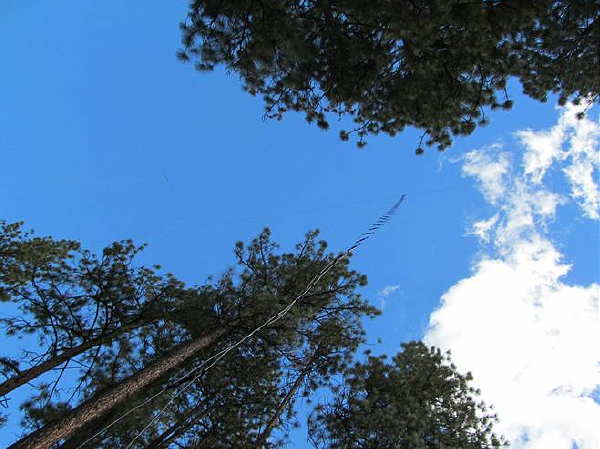
Steve's new antenna consists of an 81' vertical wire, top-loaded with a 3-wire 68' x 8' tophat. His ground system now has over 4,000' of radials, ranging in size from 40'-130'.

Steve also reports modifying his dual-FET (parallelled) GW3UEP transmitter from the original solenoid-wound coils to toroidal cores, increasing efficiency from 74% to 77%.

As well, he also went to a single-FET (per the original design) and garnered a further increase in efficiency, now at 86% and 82 watts out ... plenty of power to do some useful work on the band. It's wonderful to see how 630 meters brings out the 'experimenter' in all of us. He also reports that he's "having a bunch of fun at this ... "!
If homebrewing is your main interest, all of the 630m stations that I'm familiar with are using home-built transmitters. Maybe you like tinkering with antennas? This band is perfect for the design and development of small, yet effective, backyard antennas ... most will be surprised at how little is needed to radiate a usable signal on 630m. Perhaps propagation is your main interest? There is still much to be learned about the capabilities of our stations, operating at amateur radio power levels, in the MF band.
As mentioned before, we are really very fortunate here in Canada, to have this amazingly interesting part of the radio spectrum made available to us ... let's try and use it, from coast to coast and everywhere in between.
VE6, VE5, VE4, VE3, VE2 and VE1 ... the band needs you!
Hunting For NDBs In CLE 199
 |
| 'ZVR-368kHz' at Vancouver International |
It's time for another CLE (Co-ordinated Listening Event) once again! For you low-frequency buffs, another challenge awaits. This month's activity covers the range of 190 - 1740 kHz.
CLE 199 is an 'A-B-C' activity ... a little different from the norm, and listeners are requested to report NDB's from countries, states or provinces, beginning with the letter A, B & C only. Listeners in western NA will find plenty of targets but it might be a challenge for those on the eastern side.
A list of eligible 'A-B-C' entities can be found at the bottom. Additionally, a list of all of the North American targets in this frequency range can be found in the RNA database, while targets for European DXers will be found here ... either chose the 'Seeklist' button or search for the desired state, province or country for detailed frequency information.
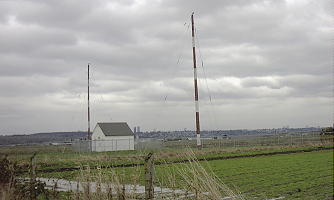
A nice target for this CLE is 'ZVR' (368kHz) shown above. The 20W locator from Vancouver International, has been heard from Hawaii to North Carolina. It is located a little east of YVR, in a boggy farmland region.
From CLE coordinator Brian Keyte (G3SIA) comes the following reminder:
Hello all
Almost time for our 11th 'Countries' Listening Event. Whether you are a
regular, or have never sent a CLE log before, your log will be very welcome.
Days: Friday 23 October - Monday 26 October
Times: Start and end at midday, your local time.
Targets: 'Normal' NDBs (190 - 1740 kHz) - not DGPS, Navtex
or Amateur - located in the Radio Countries whose
codes start with A, B or C.
These are our 2-letter codes for the Provinces/States of Canada and USA
and our 3-letter codes elsewhere, including AUS (Australia) -all its States.
The full list of all qualifying countries is given at the end of this email.
Detailed seeklists are available from the Rxx database - just select
SEEKLIST on the CLE page, http://www.ndblist.info/cle.htm
Martin has also added a 'Seeklist Map' facility there too.
If you are in the east of N. America it may be quite a tough challenge.
Most other listeners should be in luck this time, including several who
usually have a hard time.
Please send your CLE log to the List (no attachments and a plain text email
if possible) with CLE199 at the start of its title. Show on each log line:
# The Date (or Day No. 23 to 26)
# The Time in UTC** (the day changes at 00:00 UTC).
# kHz - the nominal published frequency, if known.
# The Call Ident.
**Many of us will be changing our clocks by one hour this weekend
but UTC time continues without any change.
Please show the above main items FIRST on each line of your log.
Any other optional details such as Country, Location, Distance, etc.
go LATER in the same line.
If you send any interim logs, please also send a 'Final' (complete) log.
Always tell us your own location and brief details of the equipment
that you were using.
Do make sure that your log has arrived by 09:00 UTC on
Wednesday 28 October at the very latest.
I hope to complete making the combined results on that day.
Good listening.
Enjoy the hunt!
Brian
----------------------------------------------------------
From: Brian Keyte G3SIA ndbcle'at'gmail.com
Location: Surrey, SE England (CLE co-ordinator)
----------------------------------------------------------
(Reminder: You could use any one remote receiver for your loggings,
stating its location and owner - with their permission if required.
A remote listener may NOT also use another receiver, whether local
or remote, to obtain further loggings for the same CLE)
These listening events serve several purposes. They:
- determine, worldwide, which beacons are actually in service and on-the-air so the online database can be kept up-to-date
- determine, worldwide, which beacons are out-of-service or have gone silent since the last CLE covering this range
- will indicate the state of propagation conditions at the various participant locations
- will give you an indication of how well your LF/MF receiving system is working
- give participants a fun yet challenging activity to keep their listening skills honed
Final details can be found at the NDB List website, and worldwide results, for every participant, will be posted there a few days after the event. If you are a member of the ndblist Group, results will also be e-mailed and posted there.
The very active Yahoo ndblist Group is a great place to learn more about the 'Art of NDB DXing' or to meet other listeners in your region. There is a lot of good information available there and new members are always very welcome.
If you are contemplating getting started on 630m, listening for NDBs is an excellent way to test out your receive capabilities as there are several NDBs located near this part of the spectrum.
You need not be an ndblist member to participate in the CLEs and all reports, no matter how small, are of much value to the organizers. 'First-time' logs are always VERY welcome!
Reports may be sent to the ndblist or e-mailed to either myself or CLE co-ordinator, Brian Keyte (G3SIA), whose address appears above.
Please ... give the CLE a try ... then let us know what NDB's can be heard from your location! Your report can then be added to the worldwide database to help keep it up-to-date.
EXTRACTS FROM OUR COUNTRY LIST Last revised: 23 Oct 2006
( http://www.ndblist.info/ndbinfo/countrylist.pdf )
SHOWING ALL THE QUALIFYING COUNTRIES FOR THE CLE
NORTH AMERICA:
ALS ALASKA (US state)
BER BERMUDA (UK)
AB Alberta, Canada
BC British Columbia, Canada
AL Alabama, USA
AZ Arizona, USA
AR Arkansas, USA
CA California, USA
CO Colorado, USA
CT Connecticut, USA
CENTRAL AMERICA/CARIBBEAN:
AIA ANGUILLA
ATG ANTIGUA & BARBUDA
ABW ARUBA
BAH BAHAMAS
BRB BARBADOS
BLZ BELIZE
CYM CAYMAN ISLANDS
CTR COSTA RICA
CUB CUBA
ATN NETHERLANDS ANTILLES
BAR ST BARTHELEMY
SOUTH AMERICA:
ARG ARGENTINA
BOL BOLIVIA
BRA BRAZIL
CHL CHILE
CLM COLOMBIA
EUROPE:
ALB ALBANIA
AND ANDORRA
AUT AUSTRIA
AZR AZORES (PORTUGAL)
BRI REAR ISLAND / BJORNOYA (NORWAY)
BLR BELARUS
BEL BELGIUM
BAL BALEARIC ISLANDS (SPAIN)
BIH BOSNIA-HERCEGOVINA
BUL BULGARIA
COR CORSICA (FRANCE)
CZE CZECH REPUBLIC
CVA VATICAN STATE
AFRICA:
ALG ALGERIA
AGL ANGOLA
ASC ASCENSION ISLAND (UK)
BEN BENIN
BOT BOTSWANA
BFA BURKINA FASO
BDI BURUNDI
CAB CABINDA (ANGOLA)
CME CAMEROON
CNR CANARY ISLANDS (SPAIN)
CPV CAPE VERDE
CAF CENTRAL AFRICAN REPUBLIC
CEU CEUTA (SPAIN)
COM COMOROS
COG CONGO-BRAZZAVILLE
COD CONGO-KINSHASA
CTI IVORY COAST
AFS SOUTH AFRICA
AOE WESTERN SAHARA
ASIA:
AFG AFGHANISTAN
ANI ANDAMAN & NICOBAR ISLANDS (INDIA)
ARM ARMENIA
AZE AZERBAIJAN
BHR BAHRAIN
BGD BANGLADESH
BTN BHUTAN
BRU BRUNEI
CBG CAMBODIA
CHN CHINA (PRC)
CHR CHRISTMAS ISLAND (AUSTRALIA)
CYP CYPRUS
BRM MYANMAR (BURMA)
ARS SAUDI ARABIA
CLN SRI LANKA
OCEANIA:
AUI AUSTRAL ISLANDS (FRANCE)
AUS AUSTRALIA ( all States: AT, NW, NN, QD, SA, TA, VI, WE )
CLI CLIPPERTON (FRANCE)
CKH COOK ISLANDS (NORTHERN)
CKS COOK ISLANDS (SOUTHERN)
ANTARCTICA:
ATA ANTARCTICA MAINLAND
Challenging Topband
 |
| The 'Half-Sloper' |
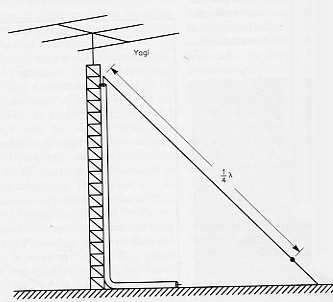
When I purchased my first house in the suburbs in '74, I was finally able to put up a real antenna ... a 'half-sloper', fed from the top of my new 48' tower, along with an extensive set of radials running along the perimeters of my yard. I also hung both 80 and 40m half-slopers from the same feedpoint, giving me coverage on all three of the low bands.
Once the Japanese manufacturers started adding 160m coverage to the various lines of transceivers, the band really started to get popular, as up until that time, very few commercial transmitters covered 160m. Most of the E.F. Johnsons, the DX-100, and some of the late Drake radios were doing the heavy-lifting unless one was enterprising enough to homebrew or modify a rig for 160.
I immediately set out to work all 50 states from my suburban location, running a pair of 6146's at around 150 watts input. It took me a few winters to get them all, with Rhode Island being the most difficult, at #50.
My 160m W.A.S. certificate was #264.
Conditions always varied with the solar cycle but a surprising amount of DX was worked at my low power level. A couple of the more memorable contacts from those days were with H44IA in the Solomons and with VK9NS, on Norfolk Island.
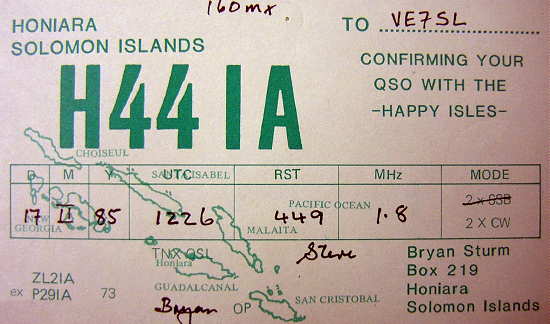
H44IA was worked at 0426 local time in February. I recall calling several JA stations that morning with no response (I always found difficulty working JA on 160) and was more than surprised when the H44 came right back to my response to his CQ.
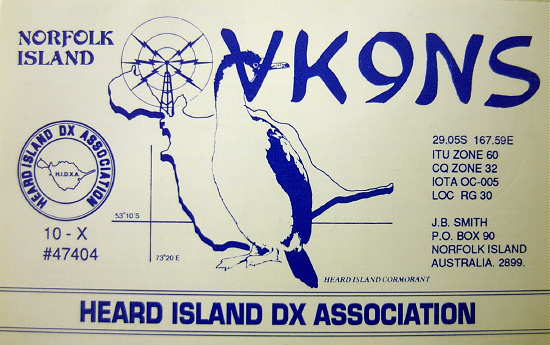
Jim Smith, VK9NS (SK), seemingly spent more time at various exotic locations than at home. Over the years I was able to work him on a number of his Pacific-island expeditions, but it was gratifying to finally catch him from another rare spot ... his home! This contact was in mid-July, right at sunrise.
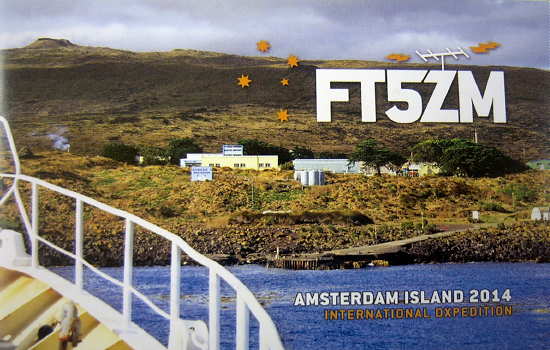
I've worked a number of island expeditions over the years on topband, but one of the rarest was in the mid-Indian Ocean, FT5ZM, on Amsterdam Island ... also right at sunrise.
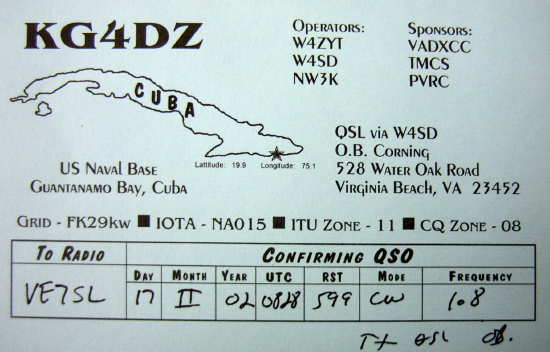
Another 'closer' island has always been a bit rare on 160, Guantanamo Bay, Cuba ... worked in mid- February, just after midnight.
In all of my years in the suburbs, I was never able to hear Europe on topband. It seemed that the noise-curtain surrounding my reasonably quiet location was still just too high for such 'over the pole' west coast treats. It wasn't until I moved to Mayne Island, off the SW coast of B.C., and re-installed my half-sloper, that the Europeans finally began to fill my log. Some nights, during solar-low years, the Europeans were workable before sunset ... on other nights, there were no signals other than Europeans, filling the band from 1800-1830, at times making the topband sound like 20m CW ... definitely not like the city.
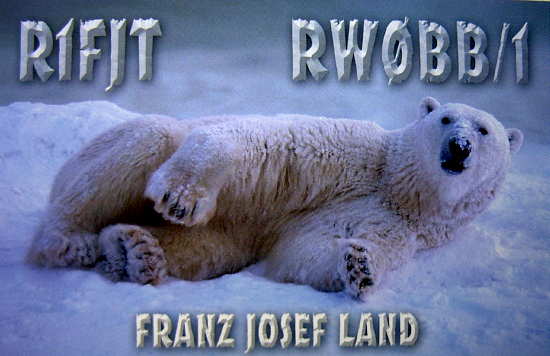
4Z1UF was worked in February, just after 8PM local time while R1FJT in Franz Josef Land was worked right at sunset in late October.

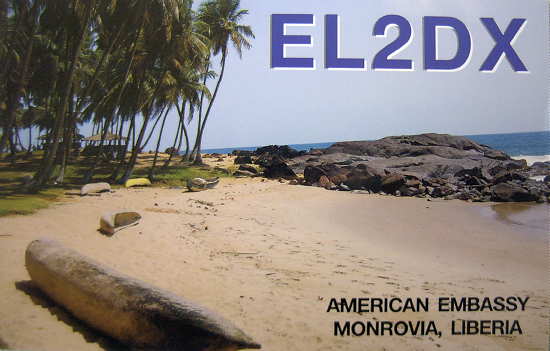
Africa is always tough on the low bands but the solar-low years of Cycle 23 brought some amazingly good conditions to the west coast. The two new ones, below, were both worked in November of '08 at around 10PM local time, right at sunrise in Africa.
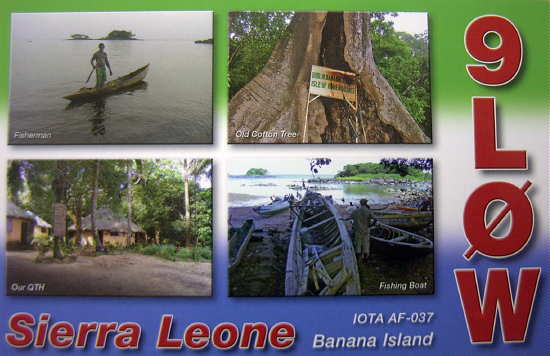
Learning the quirks of topband propagation is still an ongoing project but over the years, 160m has been my favorite wintertime hangout. With T2GC on Tuvalu Island, worked last week, my present 160m DXCC total stands at 156 worked and 155 confirmed.
If you're looking for something different, some new fun... a bit of an operating challenge ... I know you'll find it on topband!
The ‘Stew’
 Last night saw the October 'pre-Stew' 160 m CW contest. Technically, it's supposed to be a bit of a warm-up for the real 'Stew Perry Contest' (SP) in late December but it 's really just an excuse for 160m diehards to get back on their favorite winter-time band a bit earlier than normal. After a noisy summer with few DX opportunities, most topbanders are chomping at the bit for any kind of 160m action!
The 'Stew' is my favorite contest of the year and is probably one of the fairest in terms of scoring ... unlike many contests that favor location and ham density, everyone is on a level playing field in the SP. The contest exchange consists of Grid Locators only, and the number of points collected for each QSO is based upon the calculated distance between the two respective grids ... nothing could be fairer and it would be wonderful to see other contests adopt this scoring format.
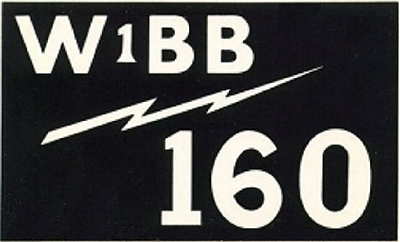
Stew Perry, W1BB, was a very early proponent of the 'gentleman's' band and was instrumental in popularizing its recognition as a challenging part of the spectrum ... a part very capable of DX opportunities for those that liked to work for their reward. He organized regular Trans-Atlantic DX tests back in the 30's when few saw any merit in the 'topband' other than as a local ragchew band for phone operators. He produced a regular 'DX Bulletin', mailed free-of-charge to interested 160m operators, providing news and information on 160m activities around the world. He had a wonderful QTH, with his 160m station set up at a local lighthouse on the edge of the Atlantic ocean. Those that knew W1BB described him as a true 'gentleman', always willing to help out newcomers and share his vast knowledge of topband quirks with others. In 1976, W1BB was awarded 160m DXCC #1 ... proof that 160m was more than just a band for late night ragchewers.
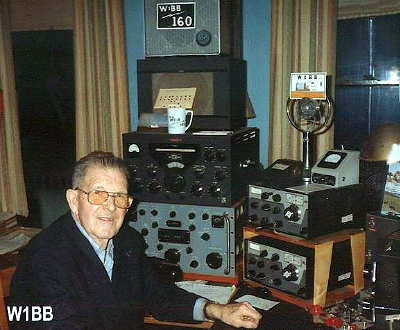 |
| courtesy: http://www.k1zm.com/w1bb |
If you've not tried 160m, the winter months offer several wonderful contesting opportunities ... the ARRL 160m CW test in December, followed by the real Stew Perry at the end of the month. To keep things rolling, January brings CQ's 160m CW weekend.
So there's still time to throw up an antenna and get your feet wet on the coming topband action. Perhaps a start on your 160m W.A.S. award ... a challenging place to begin and one that would likely bring a broad smile to 'Mr. 160' himself, Stew Perry.
630m Crossband Schedule
 |
| VO1NA Torbay, Newfoundland |
There are now five Canadian amateurs slated to operate over the course of the two-night event (Friday & Saturday) and they will be looking for two-way crossband contacts with amateurs in the U.S. and Canada. Here is the schedule of frequencies and times:
Station: VO1NA (Joe) GN37 Torbay, Newfoundland
Time: 2130Z - 0130Z both Friday night (Nov 13-14Z) / Saturday night (Nov 14-15Z)
TX Frequency: 477.7 kHz
RX (QSX) Frequency: 3562 kHz
Station: VE7SL (Steve) CN88 Mayne Island, B.C.
Time: 0200Z - 0700Z both Friday night (Nov 14Z) / Saturday night (Nov 15Z)
TX Frequency: 473.0 kHz
RX (QSX) Frequency: 3566 / 7066 kHz
Station: VE7BDQ (John) CN89 Delta, B.C.
Time: 0430Z - 0700Z both Friday night (Nov 14Z) / Saturday night (Nov 15Z)
TX Frequency: 474.0 kHz
RX (QSX) Frequency: 3536 kHz
Station: VA7MM (Mark) CN89 Coquitlam, B.C.
Time: 0500Z - 0700Z Friday (Nov 14Z)
0400Z - 0800Z Saturday (Nov 15Z)
TX Frequency: 475.0 kHz
RX (QSX) Frequency: 3570 kHz
Station: VE7CNF (Toby) CN89 Burnaby, B.C.
Time: 0300Z - 0700Z both Friday night (Nov 14Z) / Saturday night (Nov 15Z)
TX Frequency: 476.0 kHz
RX (QSX) Frequency: 3558 kHz / 7062 kHz
These stations will be calling CQ on CW at regular intervals throughout the evening, and listening for answers on the allocated HF call-back (QSX) frequency. The sequence that I will be using (and others in a similar fashion) is:
"CQ CQ CQ de VE7SL VE7SL VE7SL QSX 3566 and 7066kHz K". After listening for callers on either QSX frequency for approximately 30 seconds, the CQ will be repeated if no callers are heard.
With good conditions, propagation can often span the continent, so please consider taking part in the activity from wherever you might be located in North America. Last year, crossband contacts were made between here and W3 / W5 and many points in between.
For eastern stations, VO1NA, in Newfoundland, should be a tantalizing target with coverage throughout the eastern states while the four VE7 stations should prove workable for central and western North American amateurs.
Those that might wonder about the 'legality' of crossband contacts need not worry. Canadian amateurs have had legal access to 630m for almost two years now and crossband contacts with any stations in the amateur radio service are the same as a two-way QSO on any other band. Unfortunately, amateurs are not allowed to contact any of the experimentally-licenced stations ... they are permitted to work each other only.
Hopefully you will print out the operating schedule and consider participating in the November crossband activity weekend ... the more the merrier! It would be great to see even more contacts than last year, which was a great start, considering the less than optimum conditions. I will post more details as the event weekend draws closer. We hope to see you there!
Another 630m Crossband Weekend
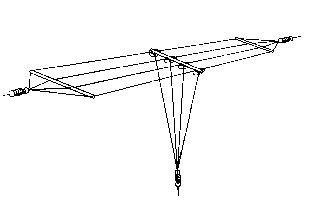 Fritz Raab (W1FR), the ARRL's 600m Experiment Coordinator, has indicated that this year's '630m Special Operating Event' will be held on the weekend of November 13 / 14. Mark your calendars if you plan to participate as it looks as though, once again, along with the numerous U.S. experimental stations beaconing and coastal maritime stations, several Canadian 630m stations will be active and looking for realtime CW 'crossband' contacts! Canadian stations will 'CQ' on specific frequencies and will listen for calling stations on designated HF (80/40m) answering (QRSS) frequencies.
Unlike last year, the Canadian stations will be operating for several hours on both nights, since there will be no conflict with the ARRL's CW Sweepstakes Contest as in 2014. Please stay tuned as there will be further details to follow regarding specific stations, frequencies and times ... notifications will be published on both the ARRL and RAC web 'news' pages as well as on numerous ham radio reflectors.
There's still lots of time to tweak up your 630m receiving capabilities ... it should be an interesting weekend, especially if the mid-November propagation cooperates.
A summary of last year's Friday night crossband activity can be found here.













