Author Archive
 See You In The ‘Linc’!
 January 8th, 2017 |
  Author:
  |
| courtesy: WØVLZ |
The Antique Wireless Association's (AWA) annual roll-out of the Linc Cundall (W2LC) Memorial CW Contest takes place this coming Wednesday and Saturday. Activity starts at 2300Z on both days and continues for 24 hours. Linc Cundall was one of the the three founders of the AWA, back in 1952, along with Bruce Kelley (W2ICE) and George Batterson (W2GB).
Over the decades, the AWA has been one of the chief proponents for the preservation of radio history, in all of its forms ... including the restoration and active use of vintage radio equipment. The AWA celebrates vintage amateur radio with several 'on-air' events each year including the premier event, the '1929 Bruce Kelley Contest'.
The annual 'Linc' CW party encourages all amateurs, including non-AWA members, to utilize their pre-1950 radios ... those designed and built before 1950 as well as homebrew reproductions of popular pre-'50's designs. Participants are encouraged to call 'CQ AWA AWA' on 160, 80 or 40m CW... suggested 'window frequencies' are outlined in the rules page which can be found here. Active discussion and promotion regarding the upcoming event may be found on Yahoo's AWAGroup reflector.
If you have an older radio (receiver or transmitter) that qualifies ... this includes any of your WWII surplus! ... hopefully you can spark-up for the event.
No older gear? Don't let that stop you from getting in on the fun, as modern rigs can be used as well, with the object of working as many AWA vintage stations as possible ... no excuses!
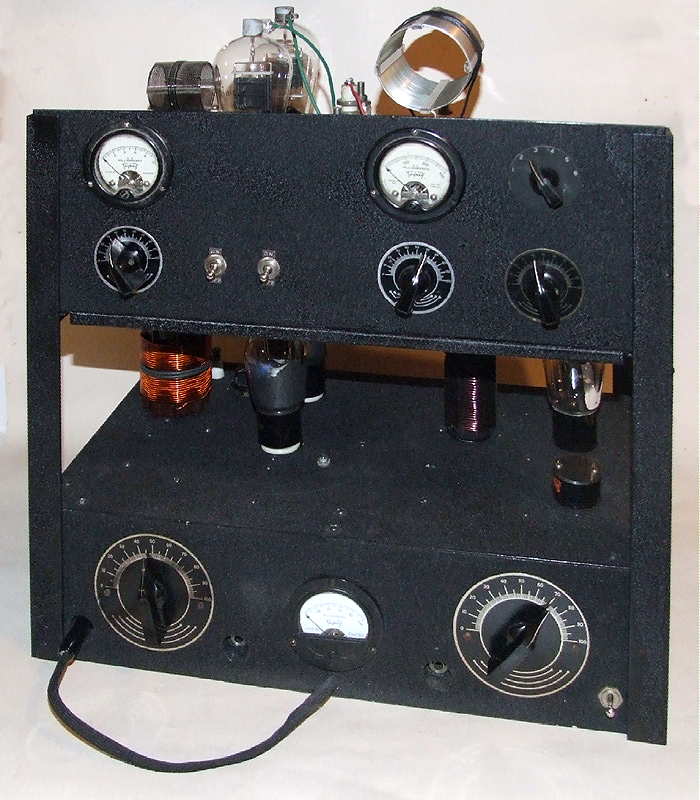
The above photo illustrates some of the beautiful homebrew work being done by Neil, WØVLZ, who was the chief inspiration for my own involvement in '29 activity. It will be hard to visit his amazing pages without getting hooked, so you have been warned!
My present 'vintage on-air' shelf beside the main operating table has been occupied now for several years by my Tri-Tet-Ten but with the likely demise of further 10m work, it's time to exchange it with something that I can use more often.
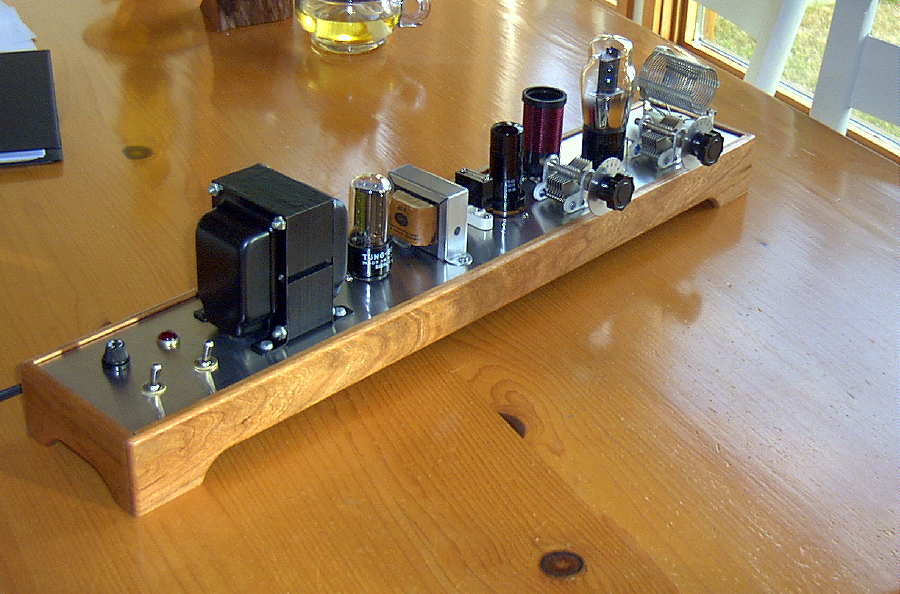
I hope to set up my homebrew 'Longfeller', shown below, inspired by the original design published in July, 1946 QST. My Longfeller operates on all bands from 160-10m, and should be ideal for the upcoming activity nights.
Please do consider getting on the air for this annual event, no matter what radios that you have ... it's especially nice to hear the sounds of these old radios that are fast disappearing. Events like this keep these great sounds alive.
See you in the 'Linc'!
See You In The ‘Linc’!
|
| courtesy: WØVLZ |
The Antique Wireless Association's (AWA) annual roll-out of the Linc Cundall (W2LC) Memorial CW Contest takes place this coming Wednesday and Saturday. Activity starts at 2300Z on both days and continues for 24 hours. Linc Cundall was one of the the three founders of the AWA, back in 1952, along with Bruce Kelley (W2ICE) and George Batterson (W2GB).
Over the decades, the AWA has been one of the chief proponents for the preservation of radio history, in all of its forms ... including the restoration and active use of vintage radio equipment. The AWA celebrates vintage amateur radio with several 'on-air' events each year including the premier event, the '1929 Bruce Kelley Contest'.
The annual 'Linc' CW party encourages all amateurs, including non-AWA members, to utilize their pre-1950 radios ... those designed and built before 1950 as well as homebrew reproductions of popular pre-'50's designs. Participants are encouraged to call 'CQ AWA AWA' on 160, 80 or 40m CW... suggested 'window frequencies' are outlined in the rules page which can be found here. Active discussion and promotion regarding the upcoming event may be found on Yahoo's AWAGroup reflector.
If you have an older radio (receiver or transmitter) that qualifies ... this includes any of your WWII surplus! ... hopefully you can spark-up for the event.
No older gear? Don't let that stop you from getting in on the fun, as modern rigs can be used as well, with the object of working as many AWA vintage stations as possible ... no excuses!
The above photo illustrates some of the beautiful homebrew work being done by Neil, WØVLZ, who was the chief inspiration for my own involvement in '29 activity. It will be hard to visit his amazing pages without getting hooked, so you have been warned!
My present 'vintage on-air' shelf beside the main operating table has been occupied now for several years by my Tri-Tet-Ten but with the likely demise of further 10m work, it's time to exchange it with something that I can use more often.
I hope to set up my homebrew 'Longfeller', shown below, inspired by the original design published in July, 1946 QST. My Longfeller operates on all bands from 160-10m, and should be ideal for the upcoming activity nights.
Please do consider getting on the air for this annual event, no matter what radios that you have ... it's especially nice to hear the sounds of these old radios that are fast disappearing. Events like this keep these great sounds alive.
See you in the 'Linc'!
David’s Time Machine
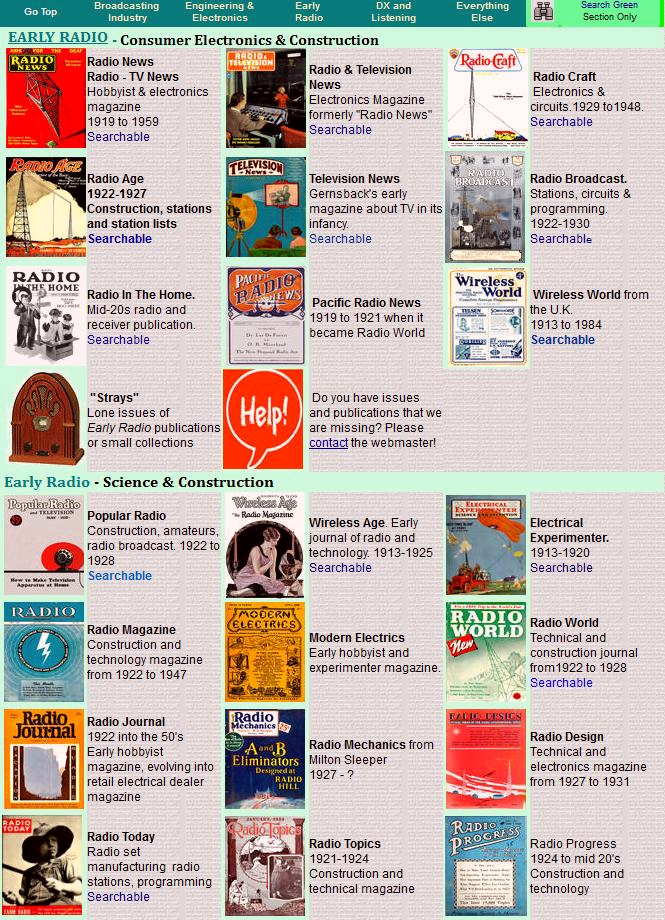
A quick read of the latest postings on the excellent "The RadioBoard Forums" revealed a recent donation, by RadioBoard regular Graeme Zimmer, of his extensive collection of scanned vintage radio books to The American Radio History website. For those not familiar with this site, it is a superb and extensive archive of radio-related magazines and publications developed and maintained by the very dedicated David Gleason. There are probably very few radio or electronic magazines of the past that you could name that won't be found on David's website.
Graeme's donation was extensive enough to garner its own page listing and many of the book titles will ring-nostalgic to a lot of us baby-boomers that were grabbed by the magic of radio while still in our formative years.
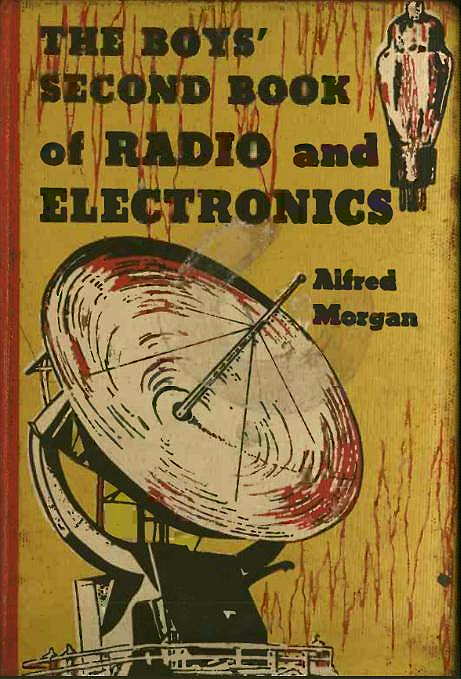
I was delighted to see one particular author's name in the list of publications, Alfred P. Morgan ... a name that many of you might recall with fond memories. I remember checking out many of his 'Radio For Boys' series of books from the top-floor school library when still in elementary school. I longed to construct some of the simple radios but at the time I was really too young to gather the needed resources and components to put something together. I had yet to develop any of the needed skills, other than the yearning desire to learn as much as I could about these complex-looking one-tube receivers ... but it was already too late I think, and like thousands of other young 'radio boys', Alfred Morgan had planted the seed that continues to flourish some sixty years later. Thanks to Zimmer's donation of over 100 different titles from various authors, many of those hypnotic publications can now be found on David Gleason's amazing time machine!
 |
| courtesy: http://www.americanradiohistory.com/ |
David’s Time Machine
A quick read of the latest postings on the excellent "The RadioBoard Forums" revealed a recent donation, by RadioBoard regular Graeme Zimmer, of his extensive collection of scanned vintage radio books to The American Radio History website. For those not familiar with this site, it is a superb and extensive archive of radio-related magazines and publications developed and maintained by the very dedicated David Gleason. There are probably very few radio or electronic magazines of the past that you could name that won't be found on David's website.
Graeme's donation was extensive enough to garner its own page listing and many of the book titles will ring-nostalgic to a lot of us baby-boomers that were grabbed by the magic of radio while still in our formative years.
I was delighted to see one particular author's name in the list of publications, Alfred P. Morgan ... a name that many of you might recall with fond memories. I remember checking out many of his 'Radio For Boys' series of books from the top-floor school library when still in elementary school. I longed to construct some of the simple radios but at the time I was really too young to gather the needed resources and components to put something together. I had yet to develop any of the needed skills, other than the yearning desire to learn as much as I could about these complex-looking one-tube receivers ... but it was already too late I think, and like thousands of other young 'radio boys', Alfred Morgan had planted the seed that continues to flourish some sixty years later. Thanks to Zimmer's donation of over 100 different titles from various authors, many of those hypnotic publications can now be found on David Gleason's amazing time machine!
|
| courtesy: http://www.americanradiohistory.com/ |
CQ – 630m Crossband Anyone?

A very beautiful QSL arrived in the mail last week, confirming my 630m crossband contact with Harry, WØLS, in Minnesota.
According to Harry's card, this was the first time he had ever listened on 630m and was very surprised to hear me, let alone complete the two-way contact.
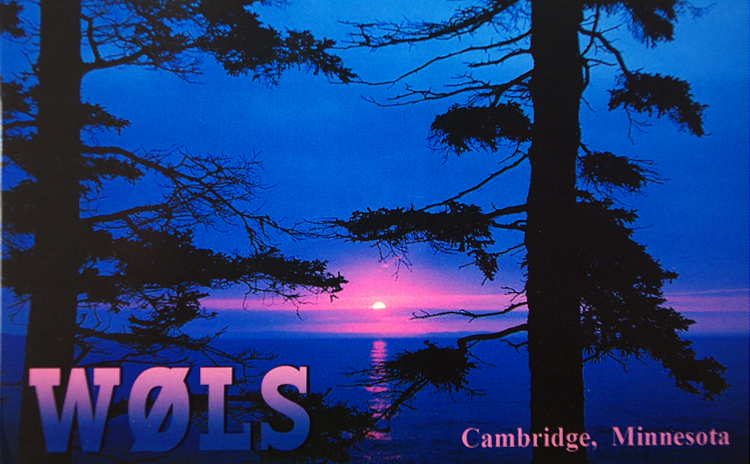
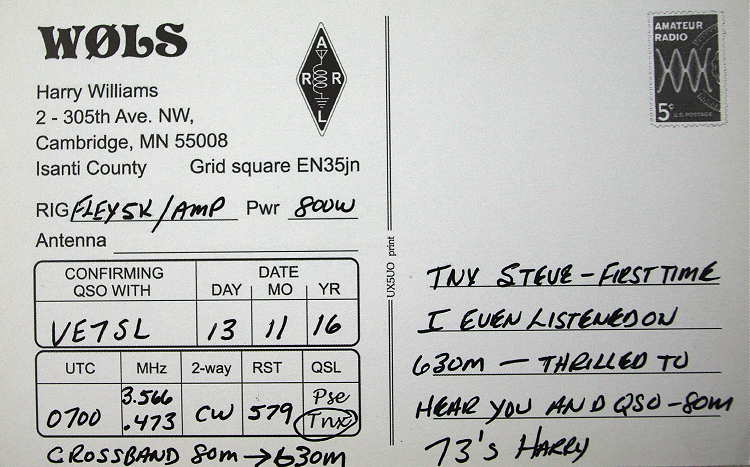
Harry was transmitting on 80m CW while I was transmitting on 630m, on 473.00 kHz. It really does not take too much to be able to hear signals on 630m, especially if you are not overwhelmed with a high noise floor ... most low band wire antennas will hear pretty well down there, when pressed into service.
This week, the card from Jeffrey, KGØVL in Iowa arrived. This one also confirmed a 630m crossband contact. Both of these QSO's were made during the November's 630m activity night.
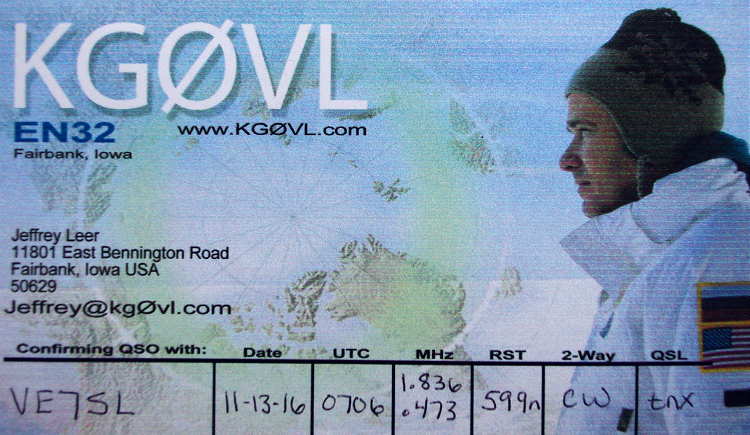
Jeffrey was transmitting on 160m while listening to my signal on 473.00 kHz with his 160m inverted-L.
It's not really necessary to wait for another activity night to have some fun, so ... if you would be interested in trying a crossband CW contact, I would be more than excited to give it a shot.
I can listen on 160, 80 or 40m for you, if you can listen on 630m for me! If we can arrange a sked, I could probably talk a few of the other local 630m VE7's into tagging-along so that you end up with a double or triple-header of VE7's in the logbook.
Please e-mail if you would like to try... ve7sl at shaw.ca
CQ – 630m Crossband Anyone?
A very beautiful QSL arrived in the mail last week, confirming my 630m crossband contact with Harry, WØLS, in Minnesota.
According to Harry's card, this was the first time he had ever listened on 630m and was very surprised to hear me, let alone complete the two-way contact.
Harry was transmitting on 80m CW while I was transmitting on 630m, on 473.00 kHz. It really does not take too much to be able to hear signals on 630m, especially if you are not overwhelmed with a high noise floor ... most low band wire antennas will hear pretty well down there, when pressed into service.
This week, the card from Jeffrey, KGØVL in Iowa arrived. This one also confirmed a 630m crossband contact. Both of these QSO's were made during the November's 630m activity night.
Jeffrey was transmitting on 160m while listening to my signal on 473.00 kHz with his 160m inverted-L.
It's not really necessary to wait for another activity night to have some fun, so ... if you would be interested in trying a crossband CW contact, I would be more than excited to give it a shot.
I can listen on 160, 80 or 40m for you, if you can listen on 630m for me! If we can arrange a sked, I could probably talk a few of the other local 630m VE7's into tagging-along so that you end up with a double or triple-header of VE7's in the logbook.
Please e-mail if you would like to try... ve7sl at shaw.ca
Christmas Memories
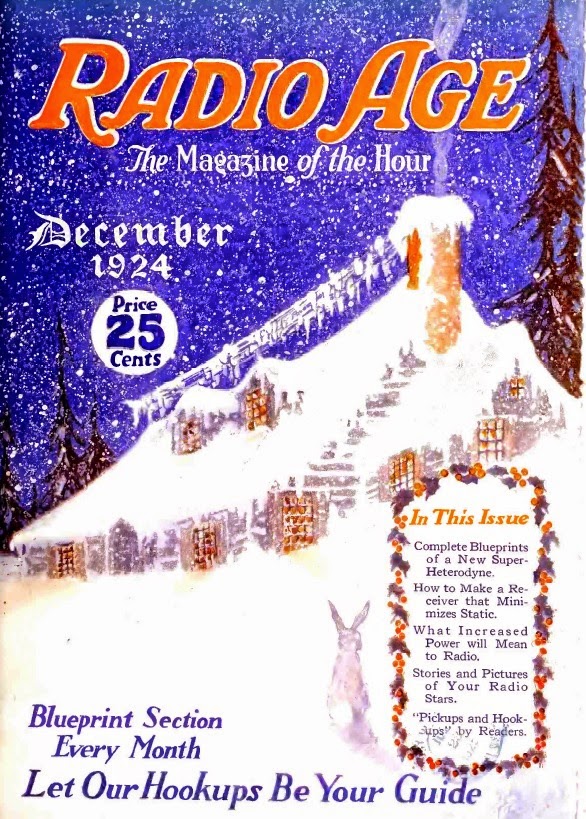
As the cold days of December dragged on, like most high school kids, I always looked forward to the arrival of the Christmas holidays ... even more so once I had discovered the magic of radio.
For me, it meant being able to stay up as late as I wanted, listening for shortwave and broadcast band DX on my big old GE cathedral-style radio.
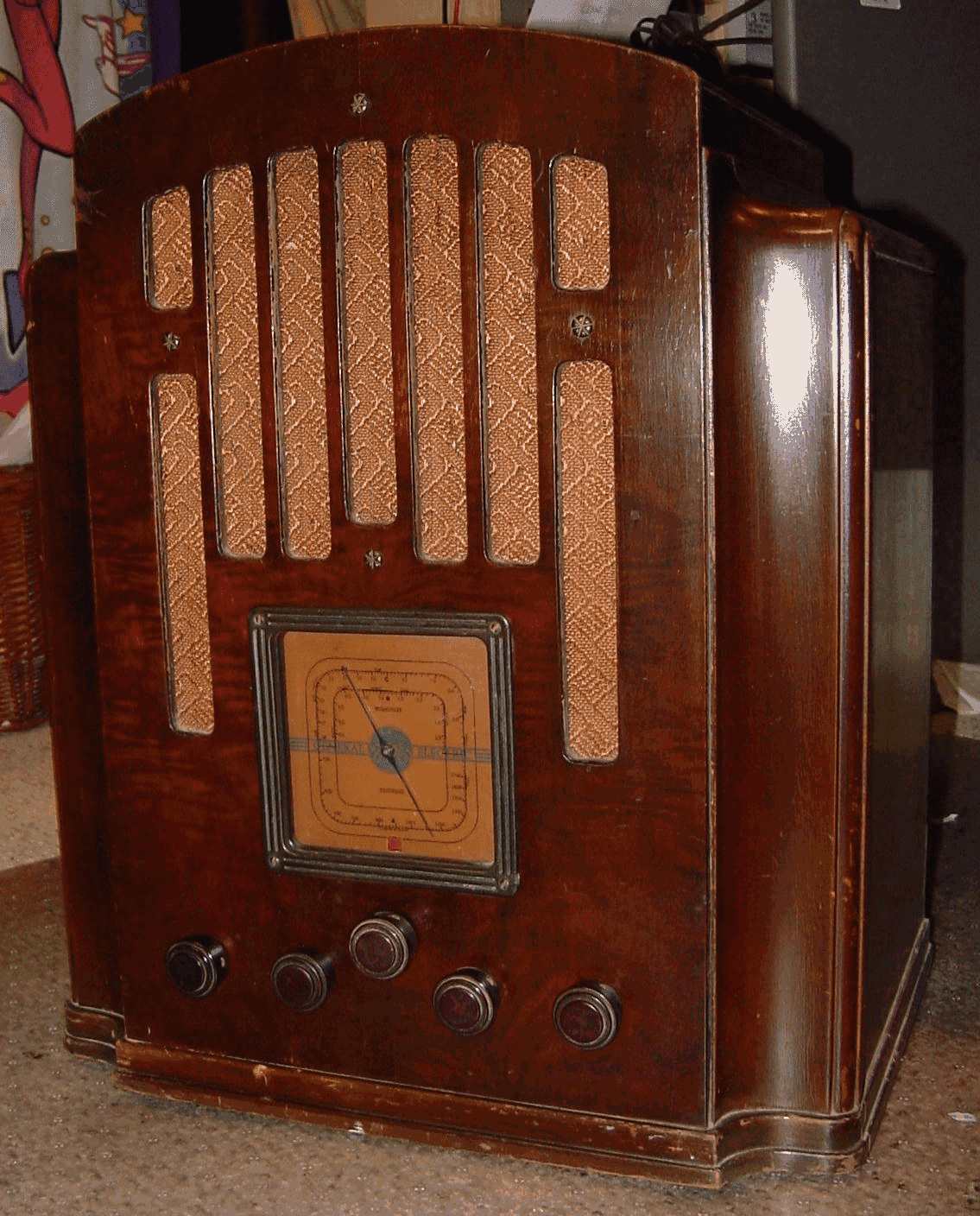
My radio shack was located high in a cozy attic bedroom, on the top level of our old three-story house in the middle of Vancouver. I can never recall having any kind of noise-related problem back then, in the pre-digital age. It seemed that even the power lines were quiet!
One particular Christmas holiday stands out above many others ... December '64. By then, I was licenced and on-the-air as VE7ANP. I was using a Heathkit DX-20 (30 watts out) along with the Heathkit VF-1 VFO ... the one with the mesmerizing green dial (it was the sight of one of these dials a few years earlier that tweaked my interest in amateur radio ... but that's another story!).
One particular Christmas holiday stands out above many others ... December '64. By then, I was licenced and on-the-air as VE7ANP. I was using a Heathkit DX-20 (30 watts out) along with the Heathkit VF-1 VFO ... the one with the mesmerizing green dial (it was the sight of one of these dials a few years earlier that tweaked my interest in amateur radio ... but that's another story!).
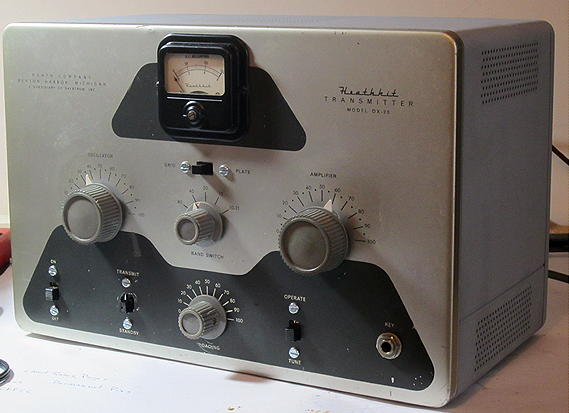 |
| courtesy: http://www.transistor-repairs.com |

My receiver was an aging but lovely BC-779 Hammarlund Super-Pro.
 |
| courtesy: http://rigreference.com |
On the peaked porch roof just outside of my upstairs attic window, was the base of my new 40m antenna ... a full-sized 40m vertical groundplane. It was made from 33' of galvanized eavesdrop drain pipe, reinforced with an inner 2x2 and guyed in three places. The ground counterpoise system consisted of just three bell-wire radials, each a quarter-wavelength long ... one to the boulevard tree and the other two wrapped around the sides of the house, just under the eaves. The antenna was fed with about 10' of RG-58 coax. Switching was handled via a footswitch-controlled 'clunky' relay that also switched the VFO on for a better sounding note. The highly affordable VF-1 was not known for its great stability but by finding just the 'right' 6AU6, and keeping the switch contacts clean, it could do a pretty good impression of a real VFO.
This particular holiday stands out because I was intent on trying to work some JA stations on 40m, in the pre-dawn hours. I had worked several JA's on 20m CW earlier in the fall but working Japan on 7mc with my previous low wire antennas had proven to be very challenging. I hoped things would be different with my new 40m vertical.
I recall rising the first morning of the holidays to find that we had received a huge overnight snowfall, about a foot in total. This seemed to happen a lot more often back then than it does now. The peaked roof supporting the groundplane was piled high with fresh snow and completely covered the vertical's feedpoint and the radial wire junction. I pulled-up the wooden window's bottom sash and reached far enough out to clean all of the snow from the antenna's base while the rig, preparing itself for the impending assault of 40m's low end, warmed-up just beside me.
A careful tune across the band brought a plethora of signals sounding as clean and crisp as the morning air ... it was the perfect 'DX-morning'! I managed to work several JA's that morning and throughout the Christmas break. Several of the contacts stretched well past my local sunrise, as 40m revealed some of her DX secrets to me for the first time.
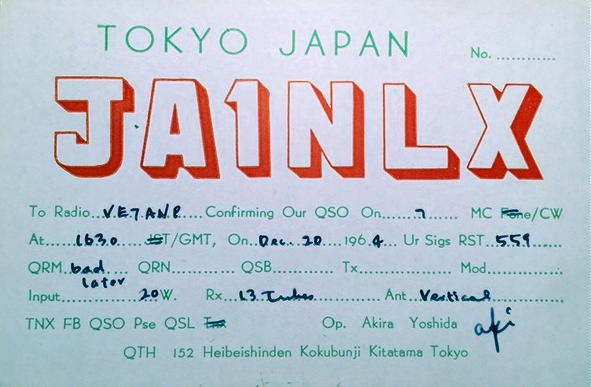
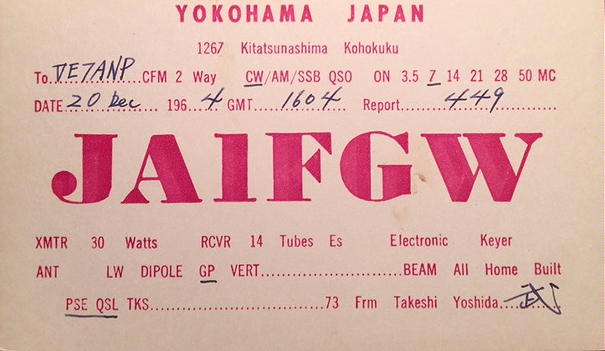
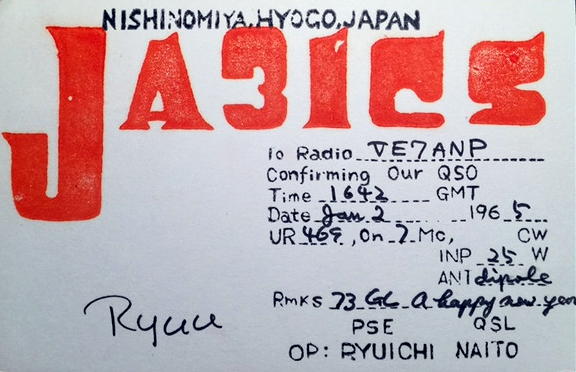
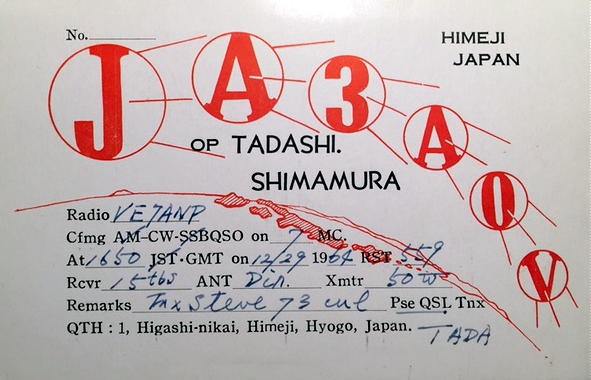
Like so many Christmases past, the memories of my Christmas '64 radio experiences are as vivid as if they had happened yesterday. I hope that your Christmas of 2016 is as joyous and memorable as well.













