Author Archive
 For the Shefford Club (ISS video details and SDR notes)
 November 10th, 2012 |
  Author: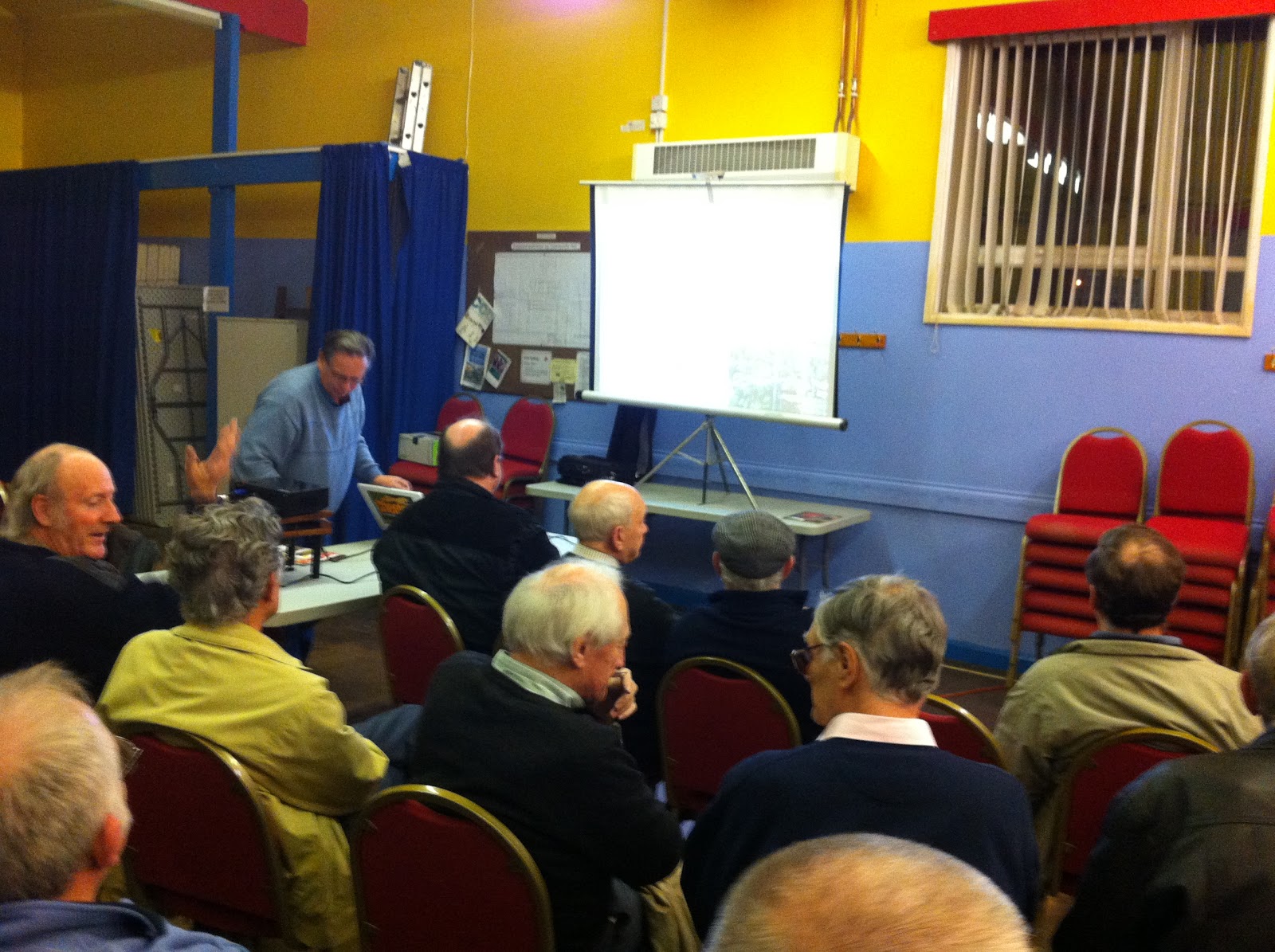
Thanks very much for coming along to the ‘My World of VHF’ talk on Thursday evening. You were a more HF-orientated audience than I sometimes get, which actually made it a lot of fun! Thanks for your kind comments about the presentation and I hope there was at least something of interest to try on VHF/UHF.
I promised a couple of links:
Here is the link to the video of
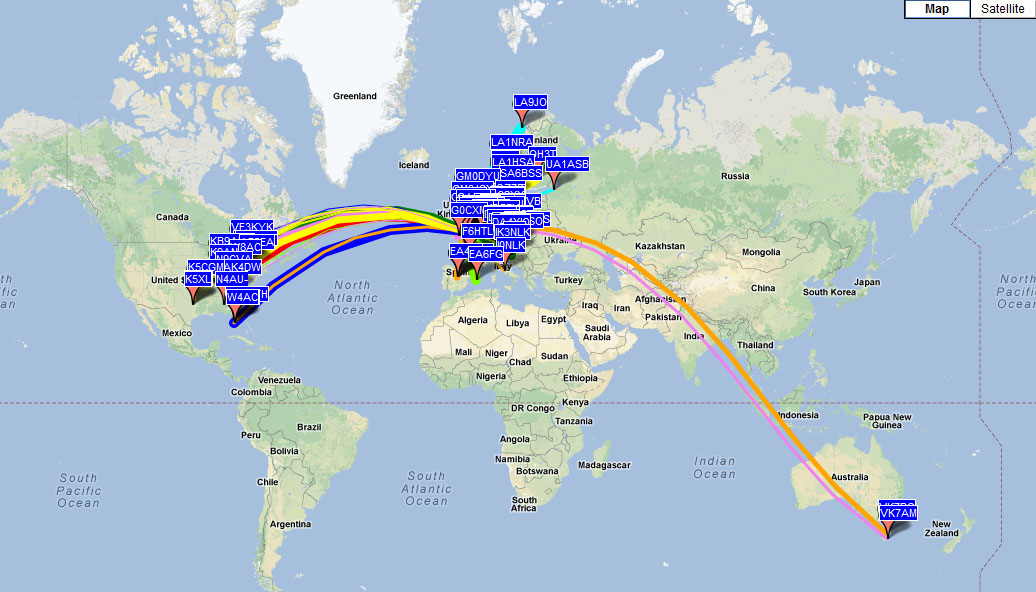
7MHz WSPR overnight
A watt of forlorn hope
Those of you familiar with Rob, MW0DNK’s blog, may have an idea of what’s coming!
Over the years I’ve been lucky enough to play with lots of rigs, many of which I have sold when the time came to move onto something ‘better’. Most of the time that’s good – and after all, you can’t keep everything (so I believe). However, some of the time, you regret it.
The Yaesu FT790 that I had was always a favourite. I used it on FM for the local repeaters and simplex contacts on SU8 (433.200) with friends like Mark G4MEM, Graham G8XRS and Mark G6CMG. Connected up to a 21ele beam, I was thrilled when the 1W of SSB reached West Wales and on one notable occasion, the Isle of Man. I can’t remember when I sold the FT790 or who had it! I think it went when I got my Trio TS780 144/432MHz base station.
But I always remember the FT790 fondly – for being a solid portable rig that was fun to have around.
And so it was that yesterday, I spotted one on eBay. Mislabelled and not getting much attention. There was only one thing to do wasn’t there, really. One surprisingly low bid later and there is one on the way.
They say you should never look back – but it will be fun to see what I can do with a watt of forlorn hope! Let’s hope the rig is in reasonable condition. I shall report back when it arrives.
28MHz WSPR today and WSPR/WSJT on Raspberry Pi news
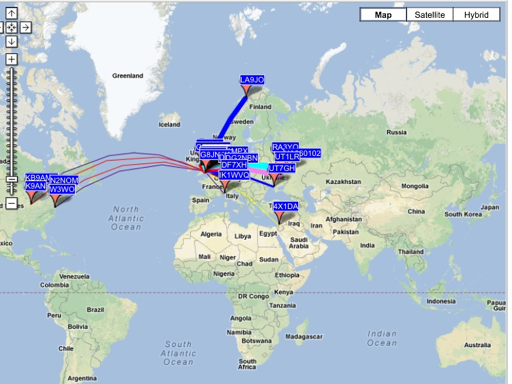
First thing this morning I played some 28MHz JT65A and was pleased to work ZS2I. After that I got on with a few other things so left the WSPR gear running.
There was an interruption to WSPR service this afternoon whilst Dave G4FRE and I did some interesting JT65B tests on 70MHz. Dave had got WSJT (as well as WSPR) running on his Raspberry Pi computer.
Nice to get a couple of reports, back on 28MHz WSPR from the east coast of the US, just before the band faded.
WSJT-X for LF: Now I really will have to look at a top band antenna…
A couple of days ago, I read a post that the wonderful Joe Taylor, K1JT was working on a new mode for use on LF. It wasn’t until this evening that I read up a little more.
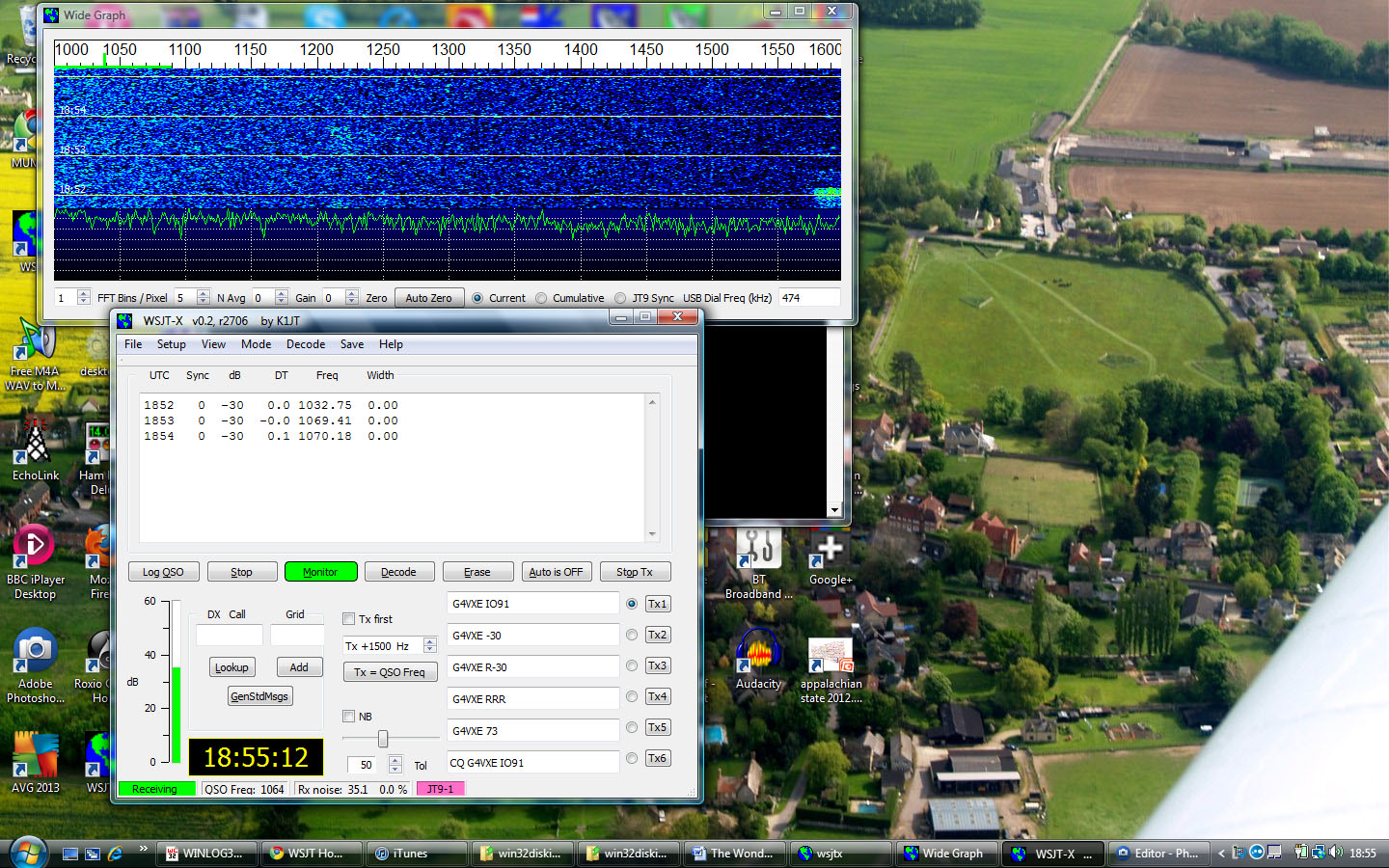
Joe says, on wsprnet.org
“If you are on 160 meters, or perhaps on 472 or 137 kHz, you may be interested in a new mode called JT9, designed especially for making QSOs on these bands. JT9 uses the structured messages introduced in 2003 for the JT65 mode, now widely used for EME and for QRP operations at HF. JT9 can operate at signal levels as low as -27 dB (in a 2500 Hz reference bandwidth), with one-minute timed transmissions. It also offers slower transmissions of 2, 5, 10 and 30 minutes duration, and the slowest mode can decode signals as weak as -40 dB. With one-minute transmissions, submode JT9-1 has a total bandwidth of 15.6 Hz — less than one-tenth the bandwidth of a JT65A signal. The other submodes are narrower still: a JT9-30 signal occupies about 0.4 Hz total bandwidth.
http://www.physics.princeton.edu/pulsar/K1JT/WSJT-X_Quick_Start_Guide.pdf ,
and an early version of WSJT-X can be downloaded from
http://physics.princeton.edu/pulsar/K1JT/WSJTX_01r2695.exe .
28MHz WSPR 29th October 2012 – or ‘How does Julian hear all those W6s?’
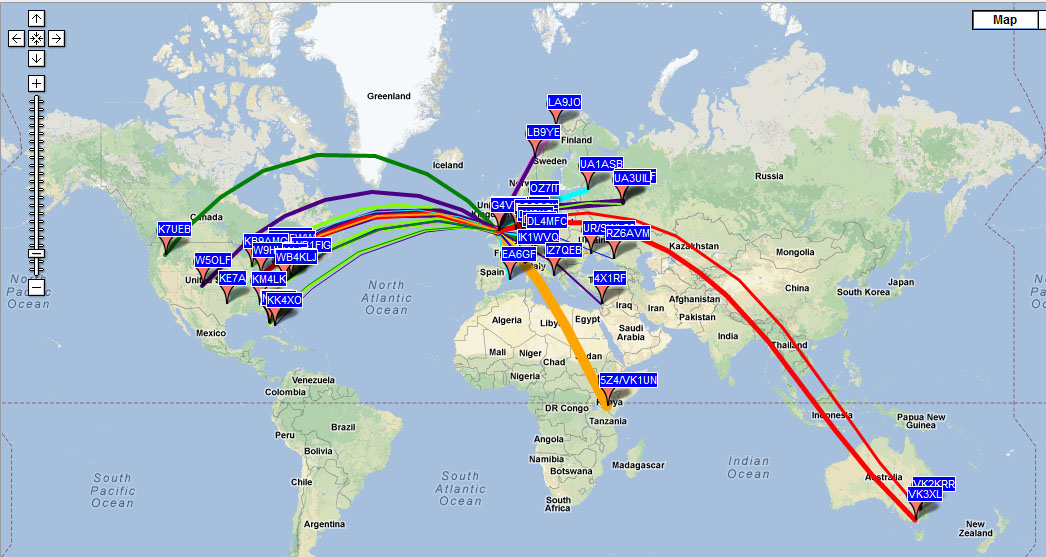
Unexpectedly I was at home today so I ran the 1W 28MHz WSPR again. As ever, conditions were a bit different. VK3XL was a very prominent path this morning, but my 1W didn’t get there! Nevertheless, some interesting conditions. 5Z4/VK1UN was a consistently good signal for most of the morning and heard me, which was very pleasing.
The US opening was pretty good to and I was pleased to be heard at K7UEB. Shortly after the band closed to North America, once again, there were some very strong signals from southern Germany, with DK6UG once again being excellent copy.
Looking at the difference between Julian G4ILO’s results and my own, I am tempted to take down the Butternut and use a loft dipole! Of course, the difference could be down to all sorts of things, I have a long feeder run of not very nice coax, which could be making a difference. Julian’s receiver is probably better than mine! I’m starting to wonder whether the lime tree, immediately behind the antenna in the direction of the west coast of the US isn’t shielding some of the weak signals. Who knows! It’s fascinating to contrast the results and in any event, I am amazed that 1W is getting as far as it is. But well done, Julian!
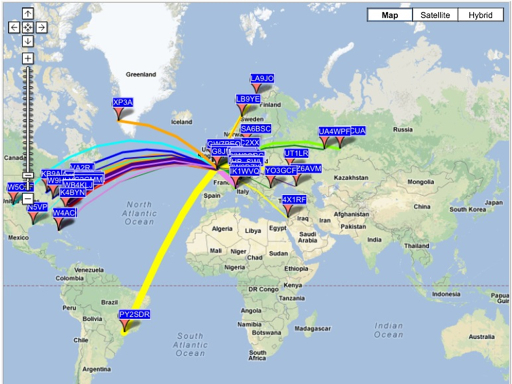
WSPR Sunday 28th October
I ran the 1W WSPR system again today. Pretty similar results to yesterday although less good to South America for me. XP3A from Greenland was a nice surprise and there’s some solid propagation into Germany and Italy that’s going on quite late this evening. I’m assuming it’s Es – as some of the distances are down as low as 600km. Could be backscatter, but it seems unlikely with the low ERP.













