Author Archive
 Pearl Harbor Day
 December 7th, 2012 |
  Author:
 December 7th, 1941, “A date which will live in infamy”. These words were uttered by Franklin Delano Roosevelt, the 32nd President of the United States, after the Imperial Japanese Navy attacked Pearl Harbor. Eight US Naval battleships were damaged, four of them were sunk. In addition, three cruisers, three destroyers, a mine layer and one anti-aircraft training ship were all destroyed or sunk. 2,402 Americans lost their lives, and 1,282 were wounded.

The very next day, The Congress of the United States declared a state of war with Japan, and three days later declared a state of war with the Axis powers of Europe.
World War II, which was to last until 1945, was a period of time where electronics and electronic innovations blossomed. Because of the war effort, radios became smaller, lighter, tougher and were built to withstand all kinds of battle conditions.
The Amateur Radio Service in the United States was shut down for the duration of the war, with the exception of drills and excersizes conducted by the Radio Amateur Civil Emergency Service, or RACES as we still know it today. Many Hams, young and old alike, volunteered for duty in the Armed Forces, serving in the Signal Corp in the Army and as radiomen in the Navy.
But there were other operators, too.
These were clandestine radio operators, who put their lives in peril. Some lived behind enemy lines. Others parachuted into or otherwise secretly gained access to territory that was behind the enemy lines in the European Theater of Operations. They volunteered their radio skills to get critical information from behind those lines to the Commanders of the Allied Forces. The average lifetime of one of these brave radio ops was about six months. They were either extricated, or lost their lives as they were ruthlessly hunted by the German and other Axis armies.
These were the original QRPers, operating tiny little radios, often putting out less power than we QRPers are accustomed to today. Because of their mission, their antennas were also stealthy, and not because they were worried of upsetting their neighbors. No, these antennas were stealthy because if they were discovered, it cost the operators their lives. The “go kits” of these valiant operators often included cyanide or other poison pills, as while discovery meant death, it also meant a period of gruesome torture before that end.
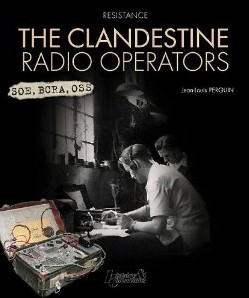
Some of the stories of these clandestine radio operators, as well as the equipment they used were chronicled in a book called, fittingly enough, “The Clandestine Radio Operators” by Jean-Louis Perquin. It is still available at Amazon.
So the next time you’re operating your “flea power” radio, whether it be from the comfort of your shack, or in the grandeur of the great outdoors, say a silent prayer for those who went before us – on a mission that had life and death consequences. Their valiant efforts helped to preserve the freedoms that allow us to continue operating our “clandestine radios” today.
72 de Larry W2LJ
QRP – When you care to send the very least!
Tough 80 Meter QRP Fox hunt tonight
It was a tough go on the 80 Meter QRP Fox hunt tonight.
First off, I never heard TJ WØEA in Iowa at all. This was not a surprise; as Iowa is a tough haul for 80 Meters. I really wasn’t expecting to hear TJ at all. What did surprise me was that I didn’t hear any of his pursuing Hounds, either.
I did manage to get into Lee AA4GA’s log. A QSO between Georgia and New Jersey is way more realistic for 80 Meters. But there was a ton of QRM and some pretty loud QRN which made it a bit tougher than it should have been. I got in Lee’s log with 11 minutes to go – these hunts last 90 minutes. So there was 79 minutes of trying to figure out Lee’s listening sequence, dealing with QRM, etc.
One thing that made it a lot easier was using the KX3 tonight and making use of the “Dual Watch” function. For those of you who don’t have a KX3, this is where you use both the main receiver and the sub-receiver together. You turn on the Dual Watch function and plug in a pair of stereo headphones. The main receiver goes to one ear while the sub-receiver goes to the other ear. This makes it a breeze to find where the last successful Hound was transmitting, tune the sub-receiver there and then go to town with operating split. As long as the two frequencies do not exceed a 15 kHz split, the Dual Watch function takes a lot of the guess work out of operating split.
The W3EDP served me in good stead again tonight, getting me a “one-fer” – one out of two Fox pelts. Hey, if I was a Major Leaguer, a .500 batting average would make me a very wealthy man!
72 de Larry W2LJ
QRP – When you care to send the very least!
Morse Express 2012 Christmas Key
Have you been a good little Ham this year? Maybe Santa will leave one of these in your stocking!

The 2012 Morse Express Christmas Key
In Celebration of the Season… Morse Express has commissioned its twelfth annual Christmas Key.
Our 2012 Christmas Key is a fully functional miniature telegraph key made by GHD Telegraph Key in Sendai City Japan. It incorporates traditional Japanese craftsmanship with GHD’s impeccable engineering and finish.
In keeping with GHD’s larger keys, the Morse Express 2012 Christmas Key is fully adjustable, with precision pin bearings at the trunnion, miniature binding posts, comfortable knob, and perfect balance. The contacts are hard-silver and the distinctive oval base is finished in satin chrome. The knob is hand-turned mahogany, and there are four small anti-skid rubber feet on the bottom. GHD’s Toshihiko Ujiie uses both modern and traditional techniques to produce a miniature key that will be equally at home in the radio shack, in the field, or decorating a Christmas tree.
According to Marshall Emm (N1FN), “the Christmas keys have always been a labor of love for me, and my first priority has always been usability. GHD has brought considerable expertise to the manufacture of the Christmas keys, and the 2012 key is a little gem.” The 2012 Christmas Key measures 2″ by 1-1/8″ at the base and it weighs two and a half ounces. Each key has a label with “Christmas 2012” and a unique serial number in the limited edition of 150 keys. The 2012 Christmas key will add something special to straight key operations through the Holiday Season and on Straight Key Night.
LT-MX12 Morse Express 2012 Christmas Key available at http://www.MTechnologies.com/xmas
Ho, Ho, Ho!
72 de Larry W2LJ
QRP – When you care to send the very least!
W3EDP success – part 2
At the urging of my friend Bob W3BBO during our weekly Saturday Echolink BS session, after we were done, I went down the basement shack and removed the Butternut from my K3. In “Antenna 1”, I hooked up the 88′ EDZ and in “Antenna 2” I hooked up the W3EDP.
I then proceeded to go to 160 Meters to go listen to the contest traffic there.
Switching between “Antenna 1” and “Antenna 2”, I was able to make some comparisons between the two. First off, there was virtually no noticeable difference in the receive quality of any of the signals I heard. Both antennas gave me loud, strong signals to listen to. Neither was noticeably weaker or quieter than the other, and switching back and forth was instantaneous. The comparison in reception was easy to make.
On transmit, it was a different story. The best match I was able to get with the EDZ on 160 Meters was between 2:1 to about 1.6:1. And to get that match, the K3’s autotuner took it’s good sweet time – I’d say about 5 seconds or longer to achieve that match (seems like much longer while those relays are chattering away!). The W3EDP? A quick little “brrp” lasting about a second or two at the most, and a match that was 1.0:1.
In the space of a matter of a few minutes, I made contest QSOs with K8NVL in Ohio, WA1BXY in Rhode Island and NX2X in New York. All of them with the W3EDP.
Is this the solution I am looking for for 160 Meters? No, I’m not that stupid. But it will allow me to have some 160 Meter fun this winter until I get something dedicated built. Of course, that project has been on my radio project horizon for two years now. Next spring/summer I am really going to have to follow through. But for now, this will do.
72 de Larry W2LJ
QRP – When you care to send the very least!
QRP Fox Hunting thoughts
I haven’t been a Fox in a couple of years now. But in going through the logs that our current crew of Foxes have been posting after the hunts, I am seeing a lot of new calls compared to the logs that I had posted in the past.
Now this could mean one of two things:
1) Guys are changing their calls through the Vanity system, or:
2) We’re attracting a nice group of newer hounds.
I think it’s the latter and that’s a really good thing to see. The news of how fun this is, is getting out to people just getting into QRP. And as a bonus, I am still seeing a lot of the familiar calls that you would expect to see, so obviously retention is high. Just goes to show how addictive that QRP Fox hunting can be.
If you’re a QRPer and you’ve never tried this before, you are in for a world of fun. The entire concept and the rules can be found here: http://www.qrpfoxhunt.org/
It’s not hard and there’s nothing to be afraid of – it’s all about a bunch of wacky QRPers getting onto the air and causing our own, friendly melee’. Nobody bites and nobody gets hurt – even the Foxes. (For the PETA crowd – NO actual Foxes were hurt or killed in the process of the QRP Fox Hunts!) About the only bad thing that can happen is getting your ears blown out by a strong signal; but if you keep your AGC on …
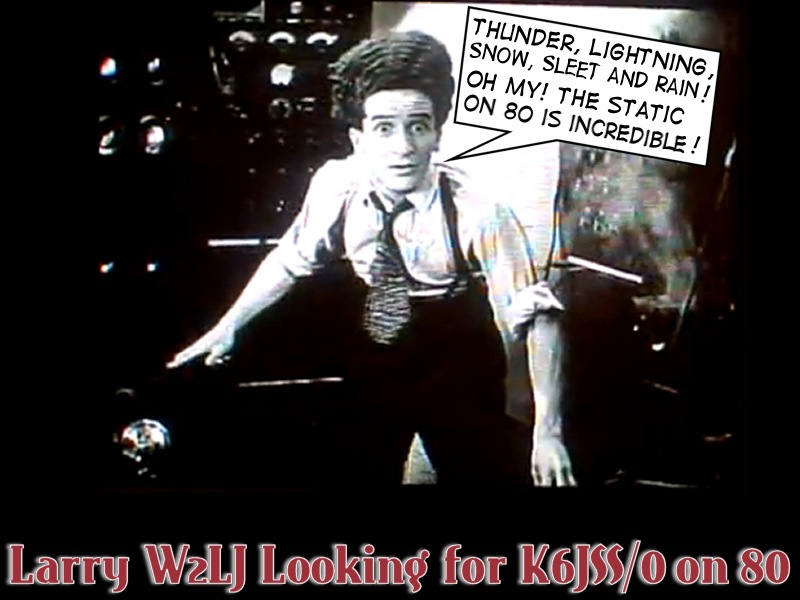
then nobody gets hurt.
So ….. what are the benefits of participating in “The Hunts”?
A) You get to know your equipment better. The ins and out of it – what works and what doesn’t. Pardon the over done cliche’, but you really do “become one with your rig”.
B) You get schooled in several virtues – patience, humility, persistence being among them.
C) You have fun
D) You learn the proper way to operate in a pileup (as well as the NOT proper ways) – and if you choose to volunteer to be a Fox, you learn this from BOTH sides, in a microcosm sort of way. I really have to attribute the experience I gained through the Fox hunts as a major help in allowing me to successfully navigate several DXpedition pileups with only QRP power.
E) You have fun.
F) You learn about propagation and your antennas and what works compared to what you THOUGHT would work. You learn that conventional wisdom isn’t always so …… conventional.
G) You have fun.
H) You can make some really great, long lasting friendships with some outstanding folks – who you might never meet face to face. But these friendships can end up becoming your most valued ones.
Did I mention that you have fun?
Now a thought had come to me – a question really …….
I know the QRP Fox Hunts were the brainchild of Chuck Adams K7QO – I was actually there, in the beginning, participating as N2ELW. But has this caught on in other countries besides here? I don’t see it mentioned on any of the major QRP e-mail lists and I know there are a ton of you dedicated QRPers out there that read this blog that are not from this side of The Pond. Is there a European or UK or other (Russian, VU ……. ) version of this going on? If there’s not, there should be! It’s so much fun and in addition to that, the friendships that are forged because of the hunts are just priceless. Heck, the friendships made are more valuable than the hunts themselves!
Just sayin’
All that said – the QRP Fox Hunt Committee, the Foxes, and yes, even the Hounds do such a great job, keeping this fun (there’s THAT word again) and exciting. A big tip o’ the hat and a hearty “Thank You” to all of them.
72 de Larry W2LJ
QRP – When you care to send the very least!
Skeeter Hunt Update
After some delays and setbacks, certificates for the 2012 NJQRP Skeeter Hunt have gone out this week.

The top five finishers; as well as the high scorer for each state and province that participated will be seeing something in their mailbox within the next few days to a week, hopefully.
Also, those of you who home brewed a key for the event will be receiving a special certificate of appreciation. Those of you who home brewed, but qualified for a high score certificate, will receive the score certificate instead.
Thanks again for your participation and please be on the lookout for the announcement for the 2013 NJQRP Skeeter Hunt somewhere around the beginning of May 2013.
72 de Larry W2LJ
QRP – When you care to send the very least!
A Work in Progress
I was visiting AmateurRadio.com today and happened to see Tim G4VXE’s post about a new logging program, called PZT Log.
I’m a sucker for logging programs and my search for the “perfect” one continues. I do not have the knowledge or expertise to write one that would 100% suit my needs, so I go from logging program to logging program, like Diogenes. He searched the world for an honest man – I am looking for my ideal logging program.
This one by Charlie MØPZT looks like it has the potential to be a winner in my book. Not overly complicated – not too many unnecessary bells and whistles; but it might have to wait before I try it out in earnest. So far, there is no ability to import ADIF files, so I cannot load my current logbook into it. Once Charlie comes up with that fix, I am more than willing to give his program serious consideration as my primary logging program.
Currently, I am using AC Log by N3FJP. I really don’t have many complaints with it; but there are a few things in Charlie’s program that I like. Here’s what I would like in an “ideal” logging program – and yes, if wishes were nickels I would be a rich man.
Easy to use – very intuitive, with no encyclopedia needed to use it – if a logging program requires its own Yahoo group, that’s more than likely more software than I need (I can be quite the dunce, at times).
Should include the following:
Capability to monitor TelNet Clusters
WWV information
Capability to interface with Google Earth
Import/Export capability of ADIF files
A world map with current day/night grayline display would be nice.
Be able to import QSL information from QRZ or some other such source.
Other than that, my needs are few. Computer control of the rig, Digital Mode capability, and all the other fluffy type things are not required by me. At the same time, I want the program to “look good” on my computer – I got tired of Win-EQF’s UNIX look and that’s why I switched to AC Log. I was using Ham Radio Deluxe for a while and liked it; but when they decided to charge for future upgrades (none of which I would probably be using) I decided to switch back.
Free is not a priority, but I have to admit that the concept is nice.
I am not technically savvy enough to fully describe my “prefect” logging program; but I would know it if I saw it!
72 de Larry W2LJ
QRP – When you care to send the very least!













