Author Archive
 More Operatics
 January 9th, 2012 |
  Author:
 Paul PC4T may be taking a rest from blogging but he is still active. Yesterday evening I spotted him using the new Opera mode.
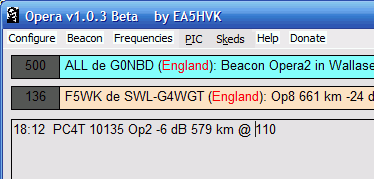
Andy K3UK has prepared a quick guide to using Opera which some may find helpful. As he points out, Opera is not a QSO mode. The only information that is sent in a beacon transmission is your callsign. Other information that is displayed in the software such as QTH, distance and bearing is sent over the internet back-channel by connected software clients.
Eldon WA0UWH has taken the Parallax Propeller code from my previous post and tried it out on the air. He has already received several reception reports.
Before I can do the same I will need to build a small PA / LPF with an output in the range 200mW to 500mW. Hopefully I can find a suitable circuit that uses standard components such as 2N3904 or 2N2222 which I have in my parts box. Suggestions welcome.

Operatic triumph
A new version of the Opera software has just been released which can output the bit code of a beacon signal so it can be programmed into a microcontroller such as a PIC or a Parallax Propeller chip. (You can find the download via the Links page of the Opera Yahoo group.)
I modified Eldon Brown WA0UWH’s QRSS program code to send the bit code generated by the Opera software and it was received by my K3 on 30m and successfully decoded. Not bad for 5 minutes’ work! You can download the code here.
Just as Eldon did I will have to build an amplifier to raise the output of the Propeller from a couple of milliwatts to something with a better chance of being received. Before it is worth doing that people will have to start using the Opera mode on the HF bands because with my antenna restrictions I have no hope of receiving or radiating a signal on LF or VLF. But I am quite excited at the possibility of building simple standalone beacon transmitters for this new weak signal mode which is much easier to generate than WSPR or QRSS.
Stop press: Just decoded G0NBD on 10.135MHz +1500Hz for my first real over-the-air Opera spot. And it appears my first transmission (using the PC software and my K3 at 5W) has been received by OM5NA at -21dB. This is fun!

Operatic debut
Nothing to do with Verdi or Rossini, nor the web browser of the same name. OPERA is a new weak signal digital mode that has been developed for use on the amateur LF (500kHz) and VLF (136kHz) bands.
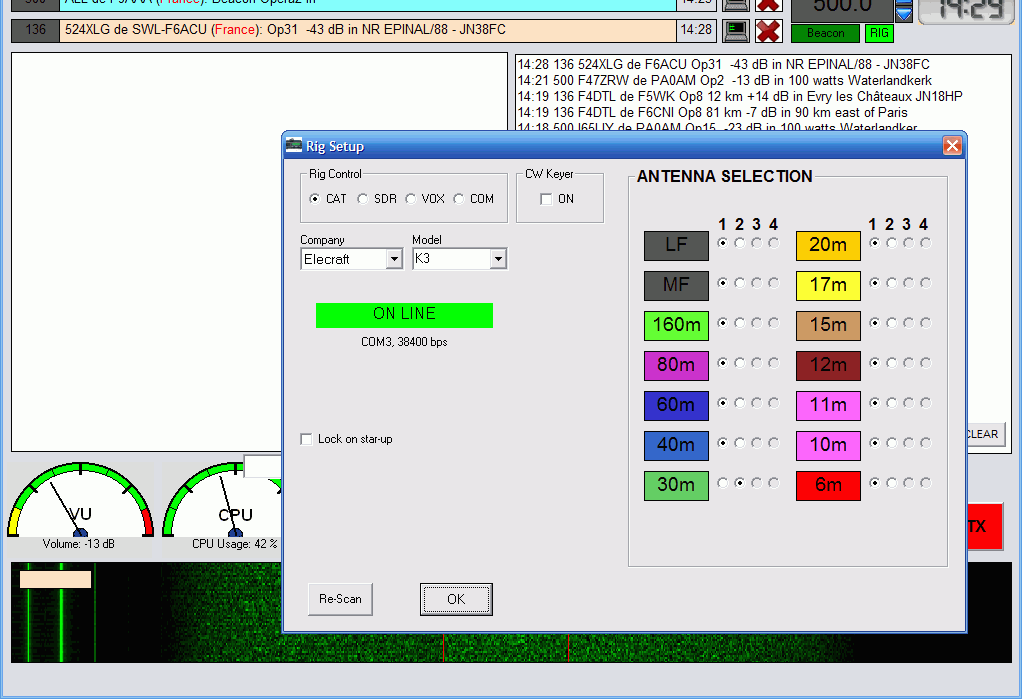
Information about it seems to be a bit hard to come by, but there is an OPERA Yahoo group from where I presume you can download the latest version of the software. I managed to find a copy and was surprised at the sophistication of the program. It already has working CAT support for many transceivers including my Elecraft K2 and K3. It also has a built-in chat system showing reported signals from other users.
Although the new mode is apparently the invention of Graham, G0NBD, the program has been written by Jose Alberto Ros, EA5HVK, author of the ROS digital mode, and there are clear similarities in the user interface. The program supports all amateur bands from VLF to 6m but currently you can only select the frequencies 136kHz and 500kHz.
There are actually two OPERA modes, one of which is claimed to be even better (i.e. work with even weaker signals) than the WSPR mode. What is particularly interesting about OPERA though is that it does not need to use a sound card to send a transmission. Although the sound card is an option – and a convenient one for users already set up for data modes – OPERA actually (if I understand correctly) uses on/off keying, in other words CW (though not Morse code.) This offers the potential for long distance contacts to be made using ultra-simple QRPP (very low power) transmitters designed for QRP CW use – though I imagine that success depends on use of a very narrow bandwidth so you might need to pay more attention to transmitter stability than you would need for Morse code.) If the digital encoding scheme is published then it would also be simple to build microcontroller based beacon transmitters.
As I am not equipped to operate on the 500kHz or 136kHz bands I have been unable to try OPERA out on the air myself. But it certainly looks an interesting mode, especially if it is opened up to allow use on the HF bands where it could be used as an alternative to WSPR and QRSS CW modes.

First spin of the propeller
A new toy dropped through the letterbox today. It is a Gadget Gangster Propeller Platform USB demo board for experimenting with the Parallax Propeller microcontroller. If you haven’t heard of the Parallax Propeller before then it is an inexpensive micro chip that contains eight processors called cogs (as in gear wheels) that can run independently in parallel. It’s quite a bit different from the Microchip PIC or Atmel devices which have a single processor architecture similar to an ordinary computer.
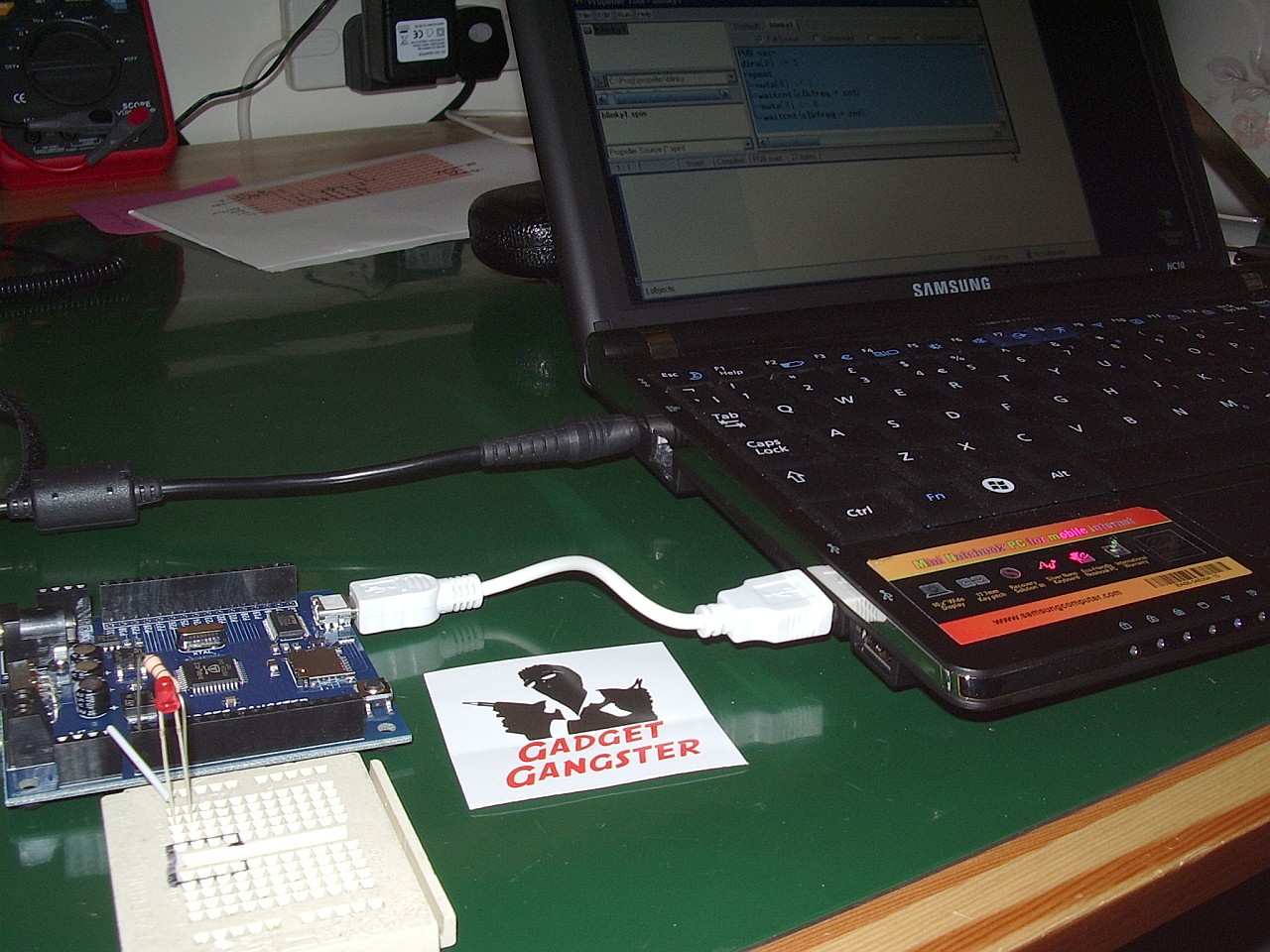
I sent off for the board just after Christmas, after reading about it in Eldon Brown WA0UWH’s blog. Eldon posted code showing how the board could be used as a QRSS beacon. I was quite excited by the idea of a device that with simple programs even I could understand could be made to emit RF.
I sent off for the board on 27th December choosing the low cost untracked USPS air mail shipping option and it arrived today, 4 January – much quicker than expected. What’s more, there were no nasty customs charges! Gadget Gangster still has a special offer of $10 off for the board, so if you fancy getting one of these to play with now is the time to do something about it.
I was very impressed at the speed with which Gadget Gangster processed my order. What you get, though, is just the board. You will need to provide a power supply (7.5 – 12V with a 2.1mm barrel connector, centre positive) and a USB cable with a mini-USB jack at one end. These seem to breed in my junk box so that was not a problem. You will also find useful a small breadboard and some hookup wire to attach components to the board and test your programs.
I installed the Propeller Tool – a free download from the Parallax website, connected the board to my Samsung NC10 netbook. I then tried the Blinky Light tutorial from the Gadget Gangster site. It didn’t work – until I connected the LED the correct way round (stupid newbie error!)
Over the next few days I’ll be working through the tutorials to get the hang of the system. Then I’ll take a look at Eldon’s QRSS beacon code and adapt it to send my own call. I’d like to make a WSPR beacon. I don’t know yet if that will be possible, but I’m looking forward to playing with this Propeller chip and using it in some radio-related project. Watch this space!

Fun on 10m and a call from the past
I checked WSPRnet.org this morning and found quite a lot of activity on 10m so I fired up the K2 and joined the fun with a 1 watt signal. By late afternoon I’d had well over 40 unique call / spotter combinations including good reports from FR1, VK6, VE and the USA.
At lunch time I switched to the K3 (which has a mic attached) to make some SSB QSOs. This was not especially productive. Several US stations running high power to multi-element beams were huge signals over here, but they had huge numbers of European stations calling them and my 100W to an attic dipole had trouble being heard over them. Actually I was only using 80W as I found going up to 100W on 10m caused my homebrew digimodes interface to disconnect itself from the computer. When I was heard, I received good reports from N2JF and NU1O. Perhaps I’d have made more contacts if I’d called CQ.
During my WSPR session I saw that my signal had been spotted by a callsign that rang a bell: G4HBA. A quick look at qrz.com confirmed that my memory was correct: G4HBA was Roger who had also been G8KRT some 35 years ago. During the long hot summer of 1976 when I was G8ILO and only allowed to use 2m and up I was home from university and using an Icom IC-202. Roger was portable from near his place of work in south east Essex and working strings of Continental stations during the endless tropo openings. As I had no antenna at the parental QTH I drove out to find him and on several days I joined Roger and made some contacts under my own call.
One evening I drove out to the site and Roger was not there, so I went to the top of the hill and started operating using my IC-202 and a small beam I made that was supported by the car door. After about half an hour it was getting dark and I noticed torches moving about and closing in on the car. Suddenly I was surrounded by police in uniform! Apparently my car interior light had been spotted from several miles away (as I was on top of a hill) and as I was right next to a radar station someone had wondered what I was up to. That was the end of my operating from that particular site, but I will always remember the amazing VHF propagation of that summer and regret that I never experience such conditions on 2m here.

DV Wars in 2012?
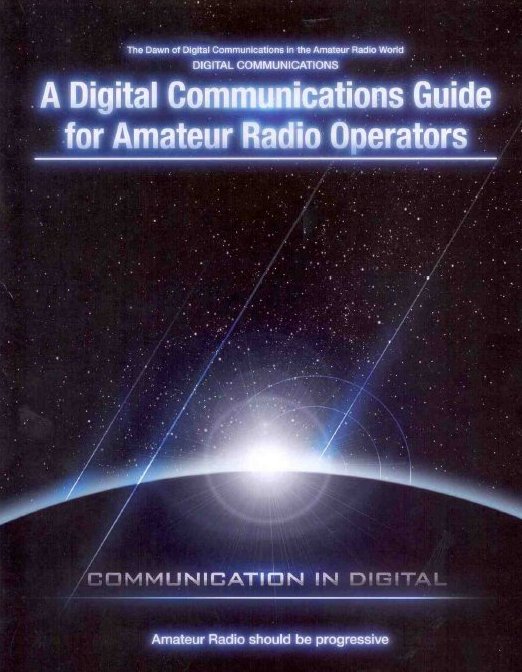
In 2012 Yaesu will introduce a range of digital voice radios to the amateur market. They have published a Digital Communications Guide for Amateur Radio Operators that describes their new system and answers some questions about it. Yaesu’s offering seems to be compatible with Motorola’s professional digital mobile radio system, which offers hams the possibility of a second source of compatible equipment on the surplus market – not that used professional Motorola radios have ever been cheap. But the Yaesu system will not be compatible with D-Star. No surprise there, then.
I have always believed it was a foolish move for ham radio organizations like our RSGB to allow themselves to be bamboozled by Icom into permitting the creation of a digital network that gave one supplier a monopoly. Repeater groups and their members who have made substantial investments in D-Star technology are not going to want to switch to a different digital mode that makes existing hardware obsolete. On the other hand, D-Star itself is becoming an outmoded technology in digital terms. Hams who have been sitting on the fence looking for an up to date alternative that doesn’t involve buying Icom are not going to plump for one system or the other while the future looks like being fragmented into rival factions. It will be like the video war between VHS and Betamax.
I think Yaesu’s announcement will kill the already lame duck of D-Star and ensure that analogue FM remains the dominant mode on the amateur VHF bands and up for years to come.

2011: Annus Horribilus
Well, what a year 2011 turned out to be! As I write this it will be six months since I learned that I have incurable brain cancer.
Let me tell you, nothing prepares you for the shock of being told you have a terminal illness. One day I was a reasonably fit 58-year-old who had never been seriously ill in my life, enjoyed long walks in the outdoors, didn’t eat junk food, never smoked and drank only in moderation. I fully expected to live until my 80s – the average expectancy of people in Britain.
A week later and our world had been turned upside down. Within hours of being referred to hospital after complaining of a persistent slight headache and fuzzy vision I had been give a CT scan and told that there was something in my brain that shouldn’t be there, something that might be a tumour.
Then I was told that whatever it was, I would need brain surgery, and asked to sign a form to show it had been explained to me that I might never recover from the operation, I might be left in a coma, or unable to speak or recognize my wife. The thought of brain surgery was scary but with no time to even think about alternatives I signed. A couple of hours after that and I was being whisked by ambulance across the breadth of the country in the middle of the night to the Royal Victoria Infirmary in Newcastle. There, they made an MRI scan and then performed the brain surgery to remove as much as they could of the tumour without harming normal brain function.
A few days later I was recovering in hospital from the operation, feeling better by the day and fully expecting that I would be home soon and in a few weeks life would get back to normal. Then a grave-faced hospital registrar accompanied by a nurse drew the curtains round my bed, sat down and informed us that the material taken from my brain had been analyzed. It was a brain tumour, and not just any old brain tumour but the worst sort possible (glioblastoma multiforme grade 4) that only one in 40,000 people are unlucky enough to get. I’d hit the brain tumour jackpot. The prognosis was from a few months to a year, but I would receive treatment to “prolong quality of life as far as possible.”
The news was like being punched in the stomach. Nothing in our life would ever be the same from that moment on. And Olga and I, stunned and numb, were left to find our way home to Cockermouth from Newcastle.
Since then, we have been through a whole gamut of emotions. At first, I felt that nothing I did before I knew I had a tumour mattered as much as making the best of whatever time was left to myself and Olga. In that frame of mind I felt that ham radio was a fairly pointless activity and posted in this blog what I thought would be The Final Over.
But I soon came to realize that life wasn’t over yet. Because of the need for rest and treatment, Olga and I couldn’t just take ourselves off on a world cruise anyway. I needed to be available to see the doctors and go to the hospital. So I regained my interest in my hobby and was soon very thankful for it as gave me something to do during the weeks spent at home, something that took my mind off the darker thoughts I often had.
Learning that I had a brain tumour and that my life was likely to be shorter than I had hitherto expected has made me a different person. I now live from day to day and try to be grateful for whatever each day brings me. I used to be the archetypal “grumpy old man” ranting about the government or other people. I haven’t altered my opinions about bankers, politicians and the EU but now I don’t waste precious time grumbling about things I can’t change.
After I began writing my brain tumour diary one or two people pointed out that it wasn’t just me, we are all mortal and we all die eventually. Some people go off to work and die in car accidents or suddenly drop dead of a heart attack giving their loved ones no opportunity even to say goodbye to them. Others die after long and painful illnesses with months in hospital. We don’t know for how long the treatment will keep my tumour at bay. At the moment I’m feeling no pain, just frustration sometimes at not being able to do things I could when I was fit. But I’m at home with my wife and expecting that I will eventually get back to something more akin to normal.
The realization that time is precious means that Olga and I will do things that we otherwise would probably never have got around to. I am lucky that I have been able to give up work and devote my energy exclusively to recovery and recreation. We are both savers not borrowers so we are fortunate not to have money worries – well, not apart from the possibility of a world economic collapse making all of our savings worthless! Being diagnosed with a terminal illness has even allowed me to fulfil a goal I thought I never would – that of retiring before I was 60. Every cloud has a silver lining.
Most of all, I am so fortunate to be married to my wife and soulmate Olga. She has never once complained about the stresses and strains of suddenly finding her husband has brain cancer. She is always there for me, making sure I take all the right pills at the right time and helping me keep my strength up with lots of tasty home-cooked food, fruit and vegetables.
My situation has been harder for Olga to bear than for me. I have always had a bit of a fatalistic view of life – that what will be will be – and a tendency to look for dark humour in a situation. But I only have to imagine how I would feel if the situation was reversed to know how Olga must be feeling. I would be heartbroken to lose her and it won’t be easy for her if she loses me.
For Olga, even more than for myself, I need to beat this tumour. I need to prove the doctors wrong and show that you can survive a glioblastoma. I’m optimistic about it. So my one and only resolution for 2012 is to beat the bugger and still be here in a year’s time to write about all the things we have done despite my having a brain tumour.
Thank you for reading my blog and for all the messages and cards of support sent by many of you. They have all made a difference and helped us both to feel better about the situation. I hope that 2012 will be a great year for you and not spring any nasty surprises like 2011 did for us.














