Posts Tagged ‘Propagation’
 Which antenna is better?
 December 20th, 2015 |
  Author:
 Real world antenna comparisons
I don't have many choices for my antenna at my residential QTH. I have an 80m OCF Dipole (aka Windom) hung from the peak of my roof at about 25ft and a ladder line fed 40m Doublet folded around in my attic at about the same height.
Generally I've been using my 80m Windom for most contacts because it is resonant on 7 bands and I don't have to tune it. I've had a number of on-air ragchews where I switch antennas and ask for signal reports but it is often a hassle and I don't like to interrupt a ragchew to ask for that sort of comparison.
So how do I know which antenna is better for certain bands and directions?
The RBN
The Reverse Beacon Network offers an objective and patient antenna tester. I just recently learned about this resource and it's a fabulous tool. When my CQ isn't being answered I'll often bring up the RBN and check my signal reports and then switch antennas to see how they compare.
It has been very interesting to learn that the Doublet in the attic often outperforms my Windom usually by 12db and sometimes by as much as 20db especially on the higher bands. I'm guessing that part of it is the greater efficiency in the ladder line but that doesn't tell the whole story because the Windom offers a low SWR on most bands and shouldn't be eating up much power in the coax through SWR losses. Antennas are magic.
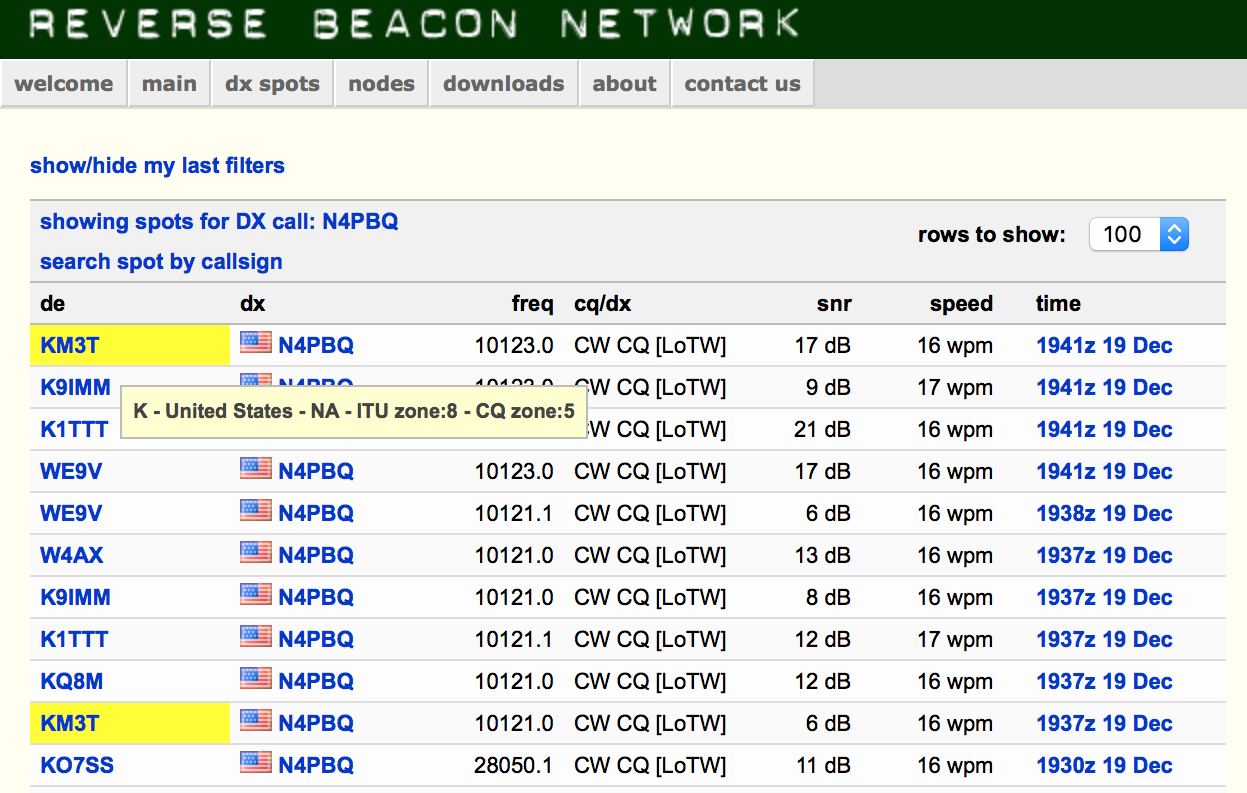 |
| Two highlighted records show the difference when I switched antennas and moved the transmit frequency slightly to cause a new report to be sent |
Process
Ok so here's what I do... The RBN stations will report only when they see a new frequency or it's been 15 minutes since the last report for a given station, so when I switch antennas I will move frequency slightly to trigger the new report. Now admittedly QSB or other conditions may change between the reports so you'll need to do this a bunch of times over the course of days and compile some records to get a clear idea of how each antenna is performing in certain directions. This isn't hard science but it's more real-world than a smith chart or the occasional signal report from a station or two.
If you make use of the RBN I encourage you to donate on their site.
That's all for now...
So lower your power and raise your expectations
72/73
Richard N4PBQ
Chasing NDB’s In The Haida Gwaii
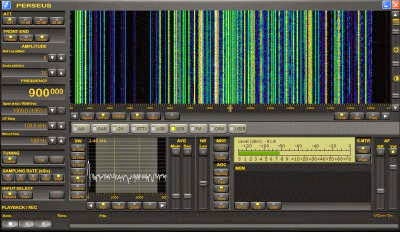
Over the past two weeks, I have spent some time reviewing several Perseus SDR recordings sent to me by Walter Salminaw in Victoria, B.C.
Walter is a hard core, mainly BCB DXer, who has a winterized vacation home in the remote Haida Gwaii Archipelago region of north west British Columbia, formerly known as the Queen Charlotte Islands.
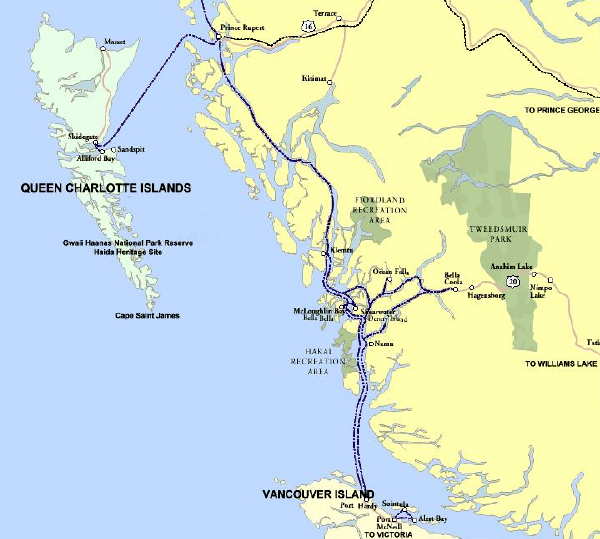
He has built several permanent antennas, including loops and various beverages, mainly favoring Asia, the Pacific and over-the-pole. Some of his BCB recordings reveal mind-numbing signals from all parts of Asia ... not S9, but S9+++ and simply amazing.
I had asked Walter for some of his files that covered the NDB band, during periods of good propagation, so that I might be able to determine if my selected list of Alaskan beacons were actually on-the-air or not. There are several NDBs in Alaska that seem to be active, according to FAA information, but have never been heard by NDB DXers. Using Walt's recordings, along with his NW-pointed beverage, allowed my to have a deep listen into Alaska and finally get some answers.
It was exciting to tune through the very quiet band, from a northern perspective, and to hear many of the more 'difficult' (normally weak here) Alaskan targets at S9 levels. Unfortunately, going through my list of suspects, turned-up no sign of activity from any of them and explains why I have never been able to hear them from here! Like so many regions around the world, it seems that the once huge network of Alaskan NDBs is quickly being phased out up there as well.
An unexpected side benefit of going through Walt's files, turned up several instances of beacons in the Canadian north, that had been reported shut down, several years ago. It was surprising to hear them still as active as ever. Additionally, one NDB in Alaska, unheard here for two years and thought to be gone for some time, was found to be still happily keying away.
I've sent these findings to the RNA database for updating ... but it would have been nice to hear some of my long-sought after Alaskan 'ghosts', which seem likely to have been off-the-air for several years.
I would like to thank Walter for taking the time to share his Perseus files with me and for his unexpected contribution to the RNA database. Here are a few of the log's highlights:
DD UTC kHz Call mi New Location
--------------------------------------------------------------------------------------------------
22 14:07 214 DA Dawson, YT, CAN ... RNA shows QRT as of 2008 ...0 deg bev best
22 14:07 214 DA Dawson, YT, CAN ... RNA shows QRT as of 2008 ...0 deg bev best
22 14:07 236 JB 'Laberge' Whitehorse, YT, CAN ... RNA shows QRT in 2011 ... 0 deg bev
22 14:07 245 CB Cambridge Bay, NU, CAN ... 0 deg bev best but betterr on ALA on 19th
22 14:07 245 CB Cambridge Bay, NU, CAN ... 0 deg bev best but betterr on ALA on 19th
22 05:35 266 GH Fort Good Hope, YT, CAN ... RNA shows QRT in 2006 ... 0 deg bev
22 05:35 269 ZW Teslin, YT, CAN ... RNA show QRT early 2015 ... 0 deg bev
22 14:07 277 YLC Kimmirut, NU, CAN ... 0 deg bev
22 05:35 284 YOC Old Crow, YT, CAN ... only heard in AK, YT and Scandinavia ... 0 deg bev
22 14:07 287 WJ Deline, NT, CAN ... RNA shows QRT as of 2011 ... 0 deg bev
22 05:35 290 YYH Taloyoak, NU, CAN ... 0 deg bev
22 05:35 326 VQ Norman Wells, NT, CAN ... RNA shows QRT as of 2012 ... 0 deg bev
22 05:35 338 YPX Puvirnituq, QC, CAN ... the only PQ heard on your files ... 0 deg bev
22 14:57 346 N9 Tumbler Ridge Municipal Apt, BC, CAN ... RNA shows QRT as of 2014 ... nw bog
22 05:35 350 RB Resolute Bay, NU, CAN ... 0 deg bev
21 13:56 352 RG Nikau - Rarotonga IAP, CKS ... nw bog
19 13:47 359 NDJ Bucholz AAF - Kwajalein, MHL ... nw bog but ALA NE/SW best
21 13:56 360 OX Iwo Jima, VOI ... nw bog
22 05:35 362 YZS Coral Harbour, NU, CAN ... 0 deg bev
22 05:35 378 UX Hall Beach, NU, CAN ... 0 deg bev
22 05:35 417 GBH Galbraith Lake, ALS ... RNA shows QRT as of 2013 ... 0 deg bev
--------------------------------------------------------------------------------------------------
--------------------------------------------------------------------------------------------------
 |
| courtesy: http://www.noaa.gov/ |
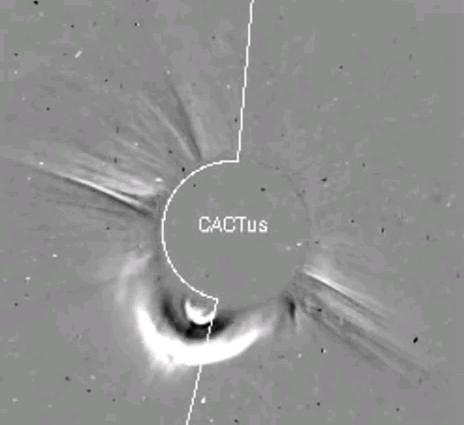
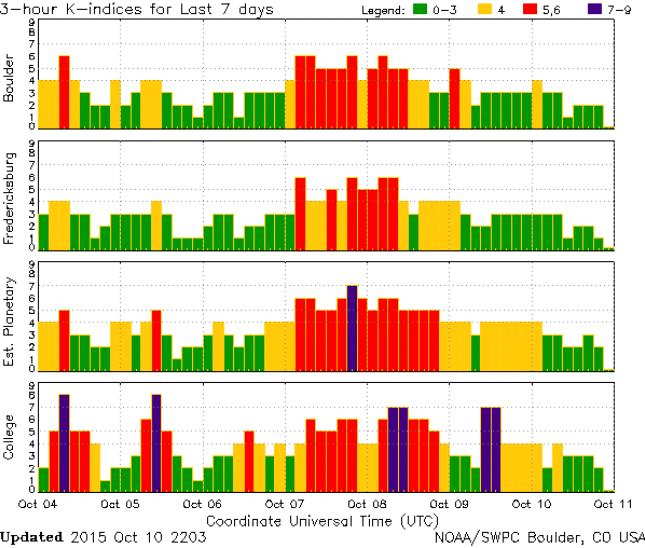
In the meantime, it looks like our planet is due for two more CME hits later tonight or early Saturday morning and the relatively quiet conditions of the past few nights will likely be badly disturbed on LF for the next few days ... something that has been happening far too much this winter as it seems that most of the prime time DX season has been one continual blast from the sun after another.
Solar Cycle Trends and The Gleissberg Cycle
 |
| courtesy: http://sdo.gsfc.nasa.gov/data/ |
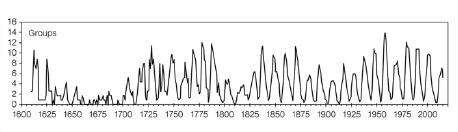
This month's Sky & Telescope magazine mentions an interesting study presented in a press release from the International Astronomical Union's 29th General Assembly held this past summer.
Frederic Clette (Royal Observatory of Belgium) and colleagues analyzed the past 400 years of sunspot records and found that the (previously believed) upward trend in solar activity is really a calibration error. They found instead, that solar activity has been relatively stable since the 1700s.
The IAU's summer press release goes on to say ...
" The Sunspot Number, the longest scientific experiment still ongoing, is a crucial tool used to study the solar dynamo, space weather and climate change. It has now been recalibrated and shows a consistent history of solar activity over the past few centuries. The new record has no significant long-term upward trend in solar activity since 1700, as was previously indicated. This suggests that rising global temperatures since the industrial revolution cannot be attributed to increased solar activity.
The results ... make it difficult to explain the observed changes in the climate that started in the 18th century and extended through the industrial revolution to the 20th century as being significantly influenced by natural solar trends.
The apparent upward trend of solar activity between the 18th century and the late 20th century has now been identified as a major calibration error in the Group Sunspot Number. Now that this error has been corrected, solar activity appears to have remained relatively stable since the 1700s
The newly corrected sunspot numbers now provide a homogeneous record of solar activity dating back some 400 years. Existing climate evolution models will need to be reevaluated given this entirely new picture of the long-term evolution of solar activity. This work will stimulate new studies both in solar physics (solar cycle modelling and predictions) and climatology, and can be used to unlock tens of millennia of solar records encoded in cosmogenic nuclides found in ice cores and tree rings. This could reveal more clearly the role the Sun plays in climate change over much longer timescales. "
 |
| courtesy: World Data Center - SILSO |
I found this graph particularly interesting with regards to long-term affects on propagation as it illustrates the upcoming predicted Gleissberg Cycle, the 'cycle within the Cycle' ... a period of several weak 11-year cycles in a row and lasting from 80-90 years ... great news for low-frequency fans but not so good for 6m diehards.
Maybe we'll get one more humdinger before it arrives!
Aurora On The Move
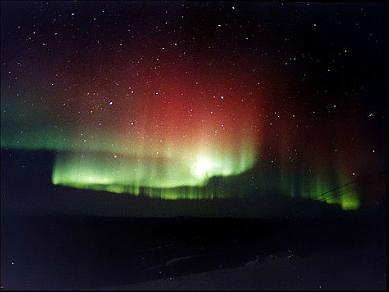
A recent posting to the Pacific Northwest VHF Society's reflector brought my attention to an interesting article describing the southward migration of the auroral zone.
According to the research paper published in the Proceedings of the National Academy of Sciences, the earth's magnetic field is gradually growing weaker, thus affecting its interaction with the solar wind.
The paper indicates that our present, abnormally high magnetic field, forces this interaction (auroras) to higher latitudes and as the field strength gradually weakens to more long-term average levels, auroras will be seen further south than we have been used to. The field has already weakened by about 10% over the past two hundred years and will continue to do so. Apparently it's all related to the regular 'flipping' of our magnetic field, with the most 'recent' flip taking place about 780,000 years ago.
So what does this mean for radio amateurs? Probably not a lot, in the immediate future but the unwanted effects to disturbances in the geomagnetic field will eventually be felt further and further to the south. Radio propagation in southern British Columbia has always been particularly sensitive to even very small disturbances in the field, particularly on the LF and MF bands. I am constantly amazed at how regions only 150 miles to the south or southeast of me are so much less affected than here, in the southern fringes of the auroral zone. VE7's don't claim to be in radio's 'black hole' without good reason.
Rock ‘N Radio — QRP Style
Operating QRP
Can mean operating from a "Quiet Restful Place"
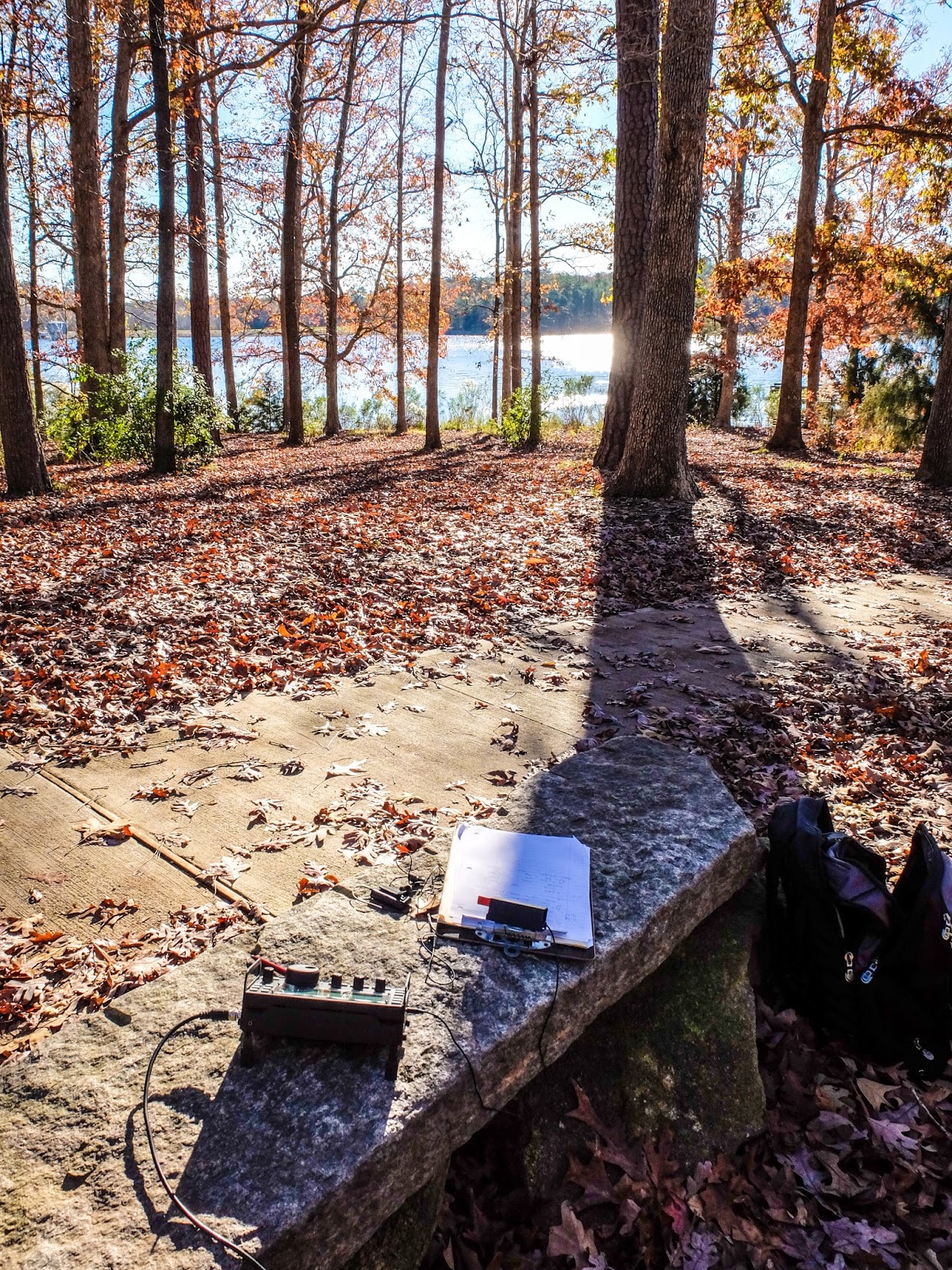
I had the day off today and it was a beautiful morning. I decided to spend part of it at Lake Wheeler Park in Raleigh, NC operating QRP from a stone bench under a tall oak tree. |
| rock 'n radio |
I threw a line over a tree using a throwing weight. I hit my mark the first time, untied the weight, tied on the end of the antenna, and hoisted the 31 foot end-fed up exactly where I wanted it with the feed point a couple of feet off the ground.
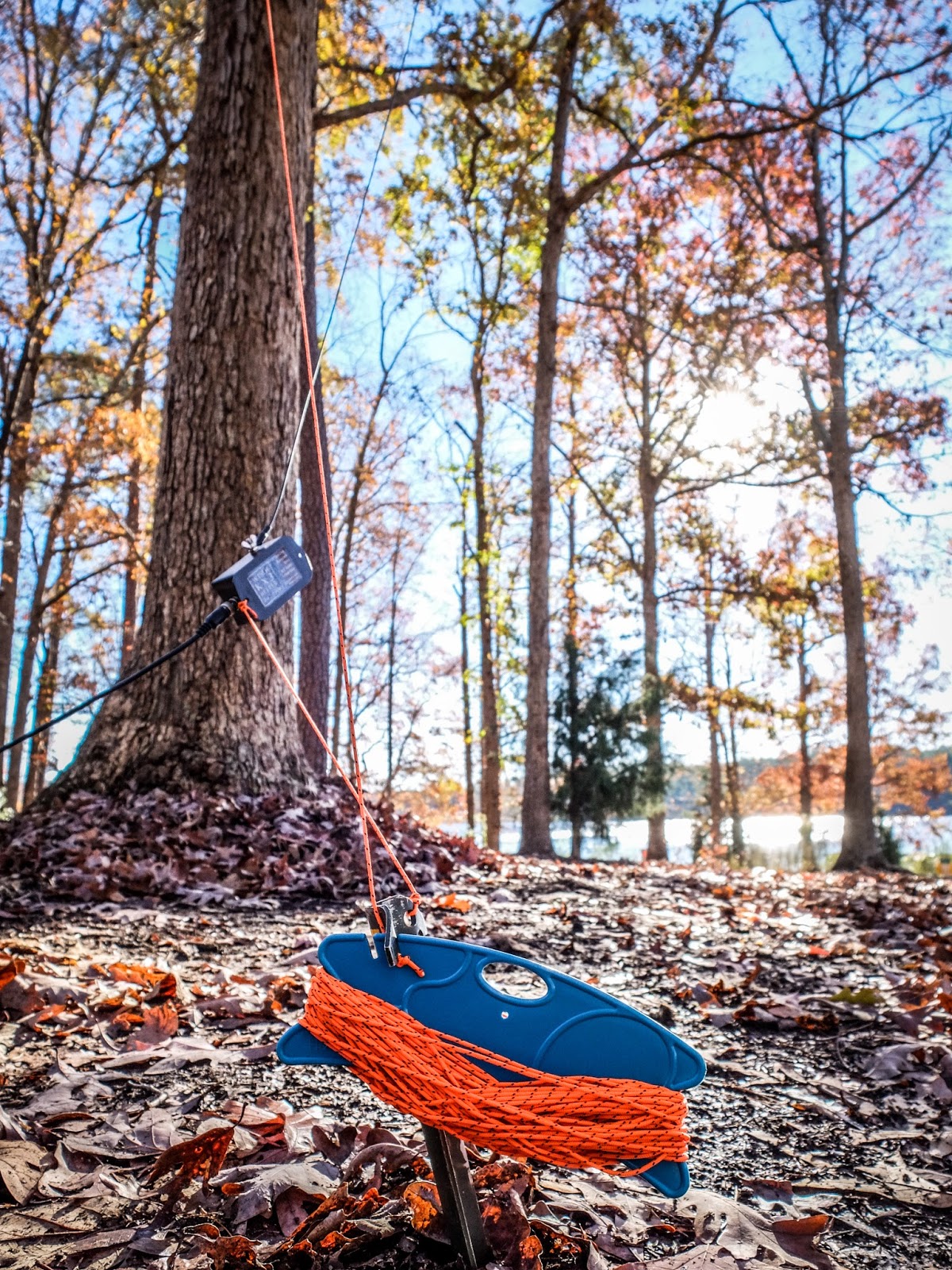 |
| 31 feet of wire end-fed by a 9:1 balun. A kite string winder holds the throwing line A metal stake with a bit of rope anchors the balun and the other end of the rope |
 |
| Another view of the end-fed with 9:1 balun, stake and coax |
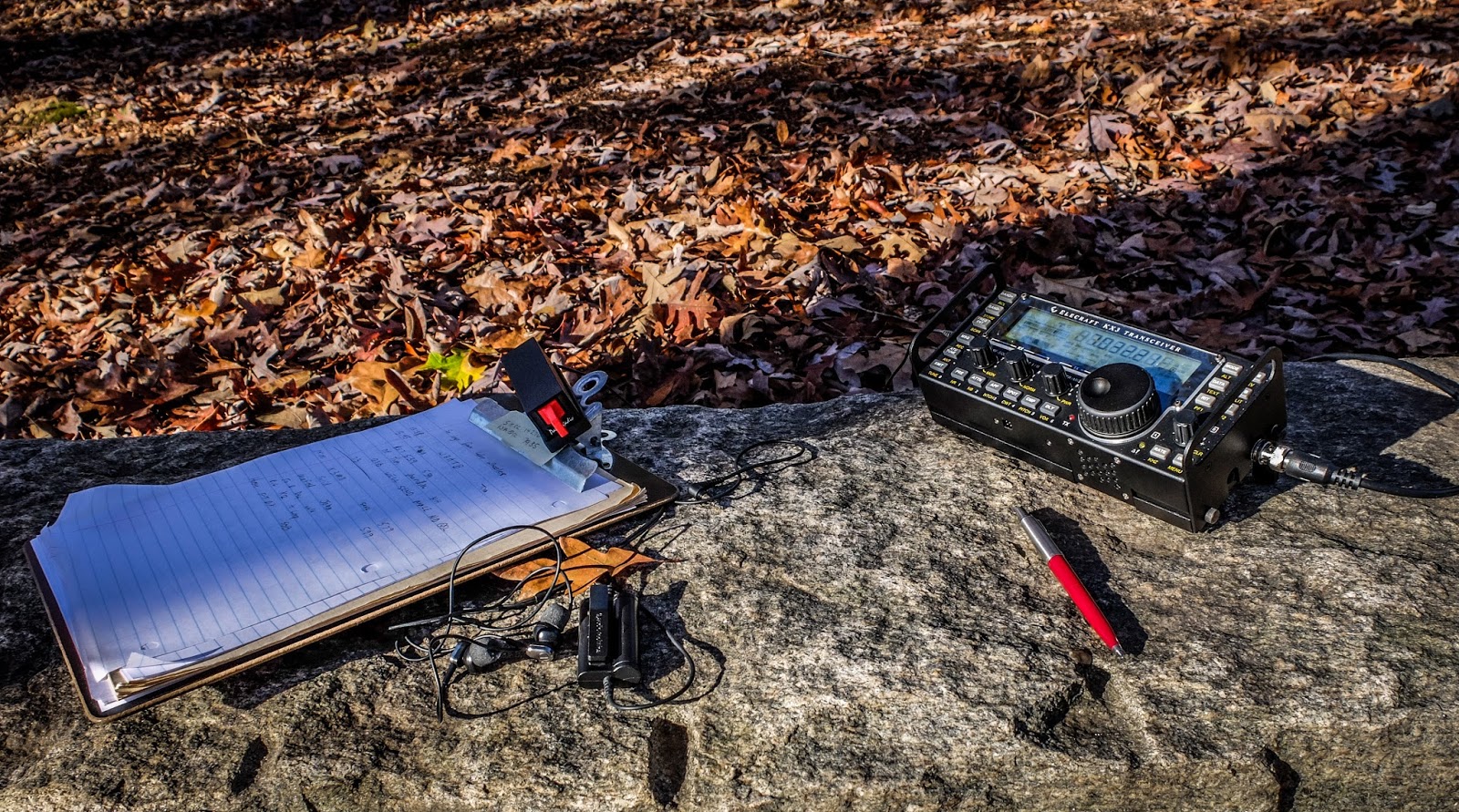 |
| QRP operating position |
The KX3 will match the end-fed wire on about any band other than 160m but on 80m you could likely throw the radio farther than the signal travels. The KX3 auto tuner is pretty amazing and I believe it could tune a piano if you hooked it up correctly.
I worked stations on 20m, 40m and 30m.
I called CQ on the 20m QRP calling frequency (14.060) and had a brief QSO with a lot of QSB (fading). I didn't hear much activity that early in the morning on 20m so I dropped down to 40m and worked the QRP calling frequency (7.030) and had my call answered right away. After that QSO another station jumped in there calling for a specific station so I moved on. 40m was busy. Every time I thought I'd found an open frequency someone would jump back in or if I called QRL? I'd get an R R.
I called CQ on the 20m QRP calling frequency (14.060) and had a brief QSO with a lot of QSB (fading). I didn't hear much activity that early in the morning on 20m so I dropped down to 40m and worked the QRP calling frequency (7.030) and had my call answered right away. After that QSO another station jumped in there calling for a specific station so I moved on. 40m was busy. Every time I thought I'd found an open frequency someone would jump back in or if I called QRL? I'd get an R R.
So I went up to 30m, and had a very nice long ragchew that lasted nearly an hour. The internal AA batteries on the KX3 were getting a workout operating at 5w for that entire time but I never saw the transmit wattage drop below 5w and when I finished up the internal batteries still showed 9.8 V The cutoff is 8.5 V so there was plenty of juice left. I may just stop carrying the external battery on these brief jaunts.
My long ragchew was with a station in GA about 400 miles away and he gave me a report of 599 so I was thrilled with 30m this morning. Coincidentally, this end-fed antenna, balun, coax-counterpoise combo is nearly resonant on 30m and I've had some of my best reports when operating this portable antenna on 30m.
Key wise, I was using the Palm Single Paddle. It is a great little key when you don't have a table to operate from and you don't want to strap something to your leg. I get strange enough looks from passer-by's without them wondering why I have some mechanism strapped to my thigh and the Palm Single is very inconspicuous.
The Palm key has a clip-on, magnetic base which I use to temporarily attach it to my clipboard when I'm not sending. When I'm ready to send I simply pull it off the clipboard and hold it in my left hand. As I noted in an earlier review of the Palm Single Paddle it can be used as a straight key if you turn it on its side. The long ragchew I had on 30m was with a gentlemen who sent me his SKCC number in the first exchange so I quickly turned off the electronic keyer in the KX3's and turned the Palm Single on its side. That station sent me a nice compliment on my straight key FIST; so the little Palm Single key can serve duty as a paddle into a keyer or (in a pinch) as a straight key. I far prefer to use my Kent Hand Key if I'm operating manual key but it's too big to bring along for portable operations and I can't quite picture myself trying to hold onto the giant Kent Hand Key with one hand whilst operating it with the other like I can the Palm Single.
The Palm key has a clip-on, magnetic base which I use to temporarily attach it to my clipboard when I'm not sending. When I'm ready to send I simply pull it off the clipboard and hold it in my left hand. As I noted in an earlier review of the Palm Single Paddle it can be used as a straight key if you turn it on its side. The long ragchew I had on 30m was with a gentlemen who sent me his SKCC number in the first exchange so I quickly turned off the electronic keyer in the KX3's and turned the Palm Single on its side. That station sent me a nice compliment on my straight key FIST; so the little Palm Single key can serve duty as a paddle into a keyer or (in a pinch) as a straight key. I far prefer to use my Kent Hand Key if I'm operating manual key but it's too big to bring along for portable operations and I can't quite picture myself trying to hold onto the giant Kent Hand Key with one hand whilst operating it with the other like I can the Palm Single.
 |
| The Palm Single Paddle works great in portable operating positions |
I made a silly little video of my trip to the park...
So enjoy some nice fall weather if you still have it and have a Rock 'N Radio adventure.
 |
| What could be finer than to be in Carolina in the Mooo-oor-ning |
 |
| Enjoying the last nice days of our Fall... birds singing and morse code beeping |
That's all for now...
So Lower your power and raise your expectations
73/72
Richard N4PBQ
Challenging Topband
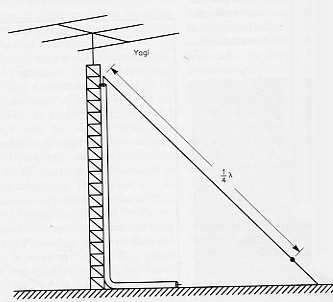 |
| The 'Half-Sloper' |
When I purchased my first house in the suburbs in '74, I was finally able to put up a real antenna ... a 'half-sloper', fed from the top of my new 48' tower, along with an extensive set of radials running along the perimeters of my yard. I also hung both 80 and 40m half-slopers from the same feedpoint, giving me coverage on all three of the low bands.
Once the Japanese manufacturers started adding 160m coverage to the various lines of transceivers, the band really started to get popular, as up until that time, very few commercial transmitters covered 160m. Most of the E.F. Johnsons, the DX-100, and some of the late Drake radios were doing the heavy-lifting unless one was enterprising enough to homebrew or modify a rig for 160.
I immediately set out to work all 50 states from my suburban location, running a pair of 6146's at around 150 watts input. It took me a few winters to get them all, with Rhode Island being the most difficult, at #50.
My 160m W.A.S. certificate was #264.
Conditions always varied with the solar cycle but a surprising amount of DX was worked at my low power level. A couple of the more memorable contacts from those days were with H44IA in the Solomons and with VK9NS, on Norfolk Island.
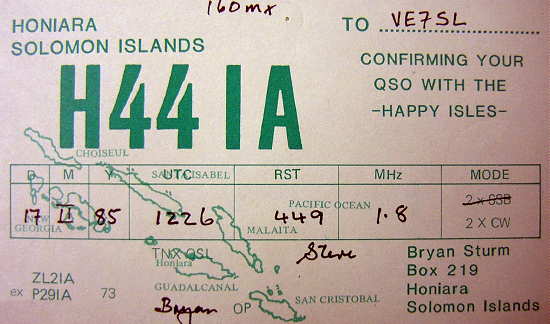
H44IA was worked at 0426 local time in February. I recall calling several JA stations that morning with no response (I always found difficulty working JA on 160) and was more than surprised when the H44 came right back to my response to his CQ.
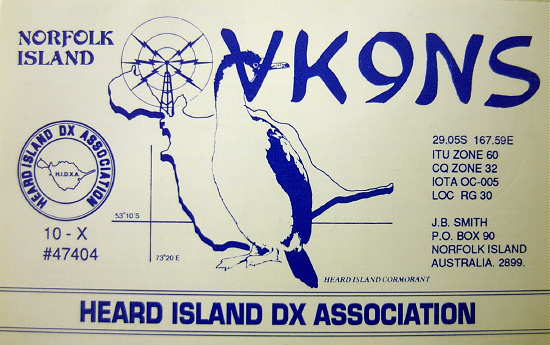
Jim Smith, VK9NS (SK), seemingly spent more time at various exotic locations than at home. Over the years I was able to work him on a number of his Pacific-island expeditions, but it was gratifying to finally catch him from another rare spot ... his home! This contact was in mid-July, right at sunrise.
I've worked a number of island expeditions over the years on topband, but one of the rarest was in the mid-Indian Ocean, FT5ZM, on Amsterdam Island ... also right at sunrise.

Another 'closer' island has always been a bit rare on 160, Guantanamo Bay, Cuba ... worked in mid- February, just after midnight.
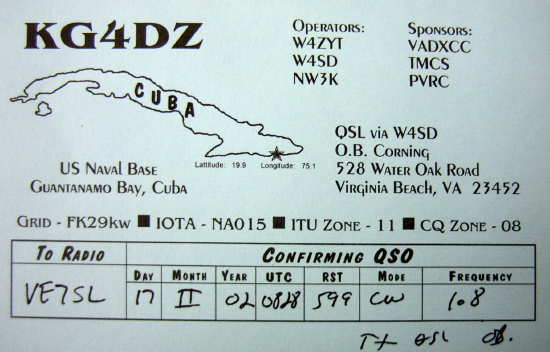
In all of my years in the suburbs, I was never able to hear Europe on topband. It seemed that the noise-curtain surrounding my reasonably quiet location was still just too high for such 'over the pole' west coast treats. It wasn't until I moved to Mayne Island, off the SW coast of B.C., and re-installed my half-sloper, that the Europeans finally began to fill my log. Some nights, during solar-low years, the Europeans were workable before sunset ... on other nights, there were no signals other than Europeans, filling the band from 1800-1830, at times making the topband sound like 20m CW ... definitely not like the city.
4Z1UF was worked in February, just after 8PM local time while R1FJT in Franz Josef Land was worked right at sunset in late October.


Africa is always tough on the low bands but the solar-low years of Cycle 23 brought some amazingly good conditions to the west coast. The two new ones, below, were both worked in November of '08 at around 10PM local time, right at sunrise in Africa.


Learning the quirks of topband propagation is still an ongoing project but over the years, 160m has been my favorite wintertime hangout. With T2GC on Tuvalu Island, worked last week, my present 160m DXCC total stands at 156 worked and 155 confirmed.
If you're looking for something different, some new fun... a bit of an operating challenge ... I know you'll find it on topband!
LF Improving
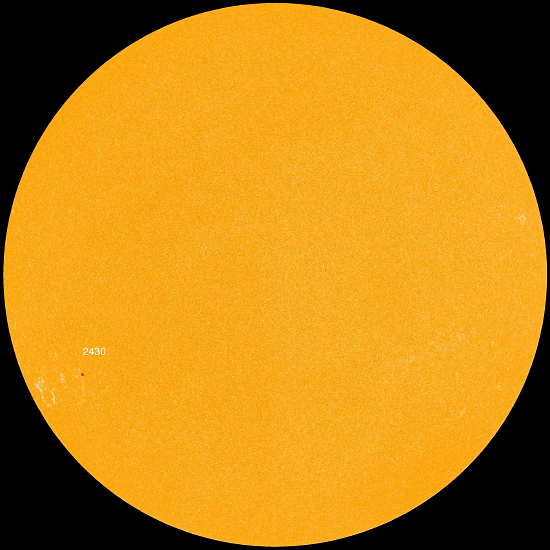 |
| courtesy: http://sdo.gsfc.nasa.gov/ |
After more than a week of horrendous geomagnetic activity, due mainly to coronal-hole streaming, it looks as if things are starting to settle down once again. One would never know it from looking at the sun's image as the source of the streaming is largely invisible in the visible light spectrum. Viewing at a different wavelength however, reveals the source of the disruption, now about to rotate out of view for a few weeks.
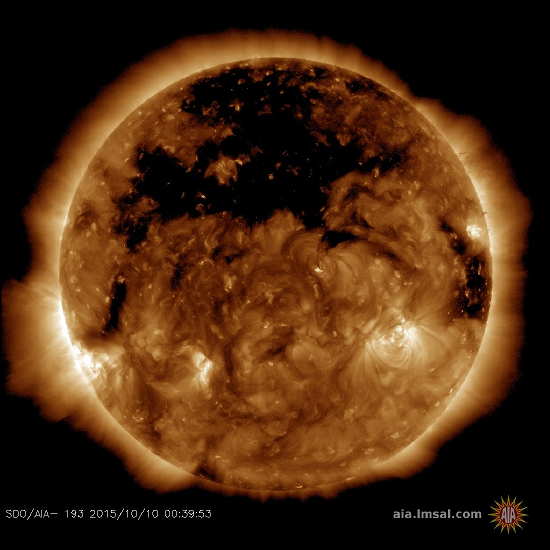 |
| courtesy: http://sdo.gsfc.nasa.gov/ |
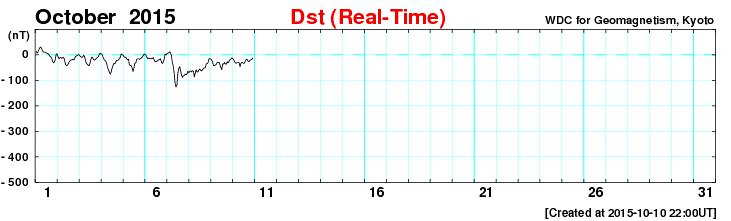 |
| courtesy: http://wdc.kugi.kyoto-u.ac.jp/dst_realtime/presentmonth/index.html |
 |
| courtesy: http://www.noaa.gov/ |













