Posts Tagged ‘portable ops’
 Well deserved
 January 14th, 2013 |
  Author:
 Reading the January 2013 edition of WorldRadio Online, I was happy to see that Rich Fisher KI6SN, featured Jim Cluett W1PID in his “Trail-Friendly Radio” Column (WorldRadio Online, January 2013, pp 23-25). In his column, Rich recalls one of Jim’s many hikes to Knox Mountain, this one occurring in the Winter months of 2011. Jim and his neighbor Hans, W1JSB cross country skied to the mountain and back; and did their usual QRP operating while they were at their cabin refuge.
If you’re a regular reader of this blog, you know how much I enjoy QRP. For me, it is the hallmark of my Amateur Radio experience. Every QSO, whether it be with a Ham across town, or with a Ham across the world is a unique and enjoyable experience. I am constantly and consistently amazed at the ability of a few Watts of RF energy and how it can travel the world. Fortunately, I never take the phenomena for granted and QRP continues to be a delight, even after all these years.
However, when you operate QRP from the outdoors, you take that enjoyment and multiply it many fold. Indeed, as if the experience can’t become even better – it can. In my most humble opinion, there is nothing finer and more rewarding than taking a radio, a piece of wire and a battery to someplace “remote” and making contact with someone, somewhere – all the time enjoying the beauty of nature that surrounds you.
And while that may mean going to a mountain top ala’ Jim W1PID, Hans W1JSB, Steve WG0AT, Guy N7UN, Martin VA3SIE or a host of others, it doesn’t need to be so “grand” a proposition. While your ideal QRP portable dream may be to operate from the rim of the Grand Canyon, or while overlooking the majesty of the Smokey Mountains or the Grand Tetons, it can be also be as simple as going to a local park, or even your own back yard. The sun on your arms and the breeze in your face, while simultaneously wearing a set of ear buds and pounding out Morse, or talking into a microphone isn’t as incongruous as the uninitiated might first suppose. For some the “minimalist approach” doesn’t necessarily mean using the simplest of transmitters and receivers, so much as it means enjoying the challenge of setting up an effective station in the most simple of settings.
Perhaps this is the reason that QRPers have so many outdoor events to choose from during the year. Whether it be FYBO, QRP to the Field, QRP Afield, The Flight of the Bumblebees, the Skeeter hunt, or whatever your favorite QRP outdoor operating event happens to be – it seems the QRP community has “gotten it” and as a whole, enjoys the experience of getting out of the shack and communing with nature, if even for just a bit.
I am so happy that this aspect of Amateur Radio is so closely associated with the QRP community. While your average every day “Joe Ham” might get out into nature for Field Day or a DXpediton or perhaps a Special Event station, QRPers in general take delight (and pains) in making the uncommon a very commonplace event. And that’s why, when I see articles like KI6SN’s series on Trail-Friendly Radio, or videos posted to YouTube like Steve WGØAT and Martin VA3SIE do, it really makes me smile – and gets my juices flowing.
72 de Larry W2LJ
QRP – When you care to send the very least!
Never too early – less than a month away!
Happy Three Kings or Epiphany – and to our Orthodox brothers and sisters, Merry Christmas!
Now that the Christmas season is approaching its end (next weekend for Roman Catholics), it’s not too early to start to think about the inaugural outdoor QRP event for 2013 ……..
Freeze Your Buns (or Butt, if you prefer) Off – which should be held the first Saturday of February – the 2nd, which is also Groundhog Day. So you can freeze your body parts off operating in the Arizona ScQRPions QRP sprint, while simultaneously keeping an eye peeled for groundhogs!
There hasn’t been any official notice of any rule changes for 2013; so if you’d like a refresher on the rules that were used last year, click here.
Last year I made 11 contacts using my PFR3A and the Buddistick on top of the car, and the temperature when I started was 45F (7C). Accuweather is predicting colder than normal temperatures for the second half of January and all of February. That would be good for a better multipler; but not so great, comfort wise.
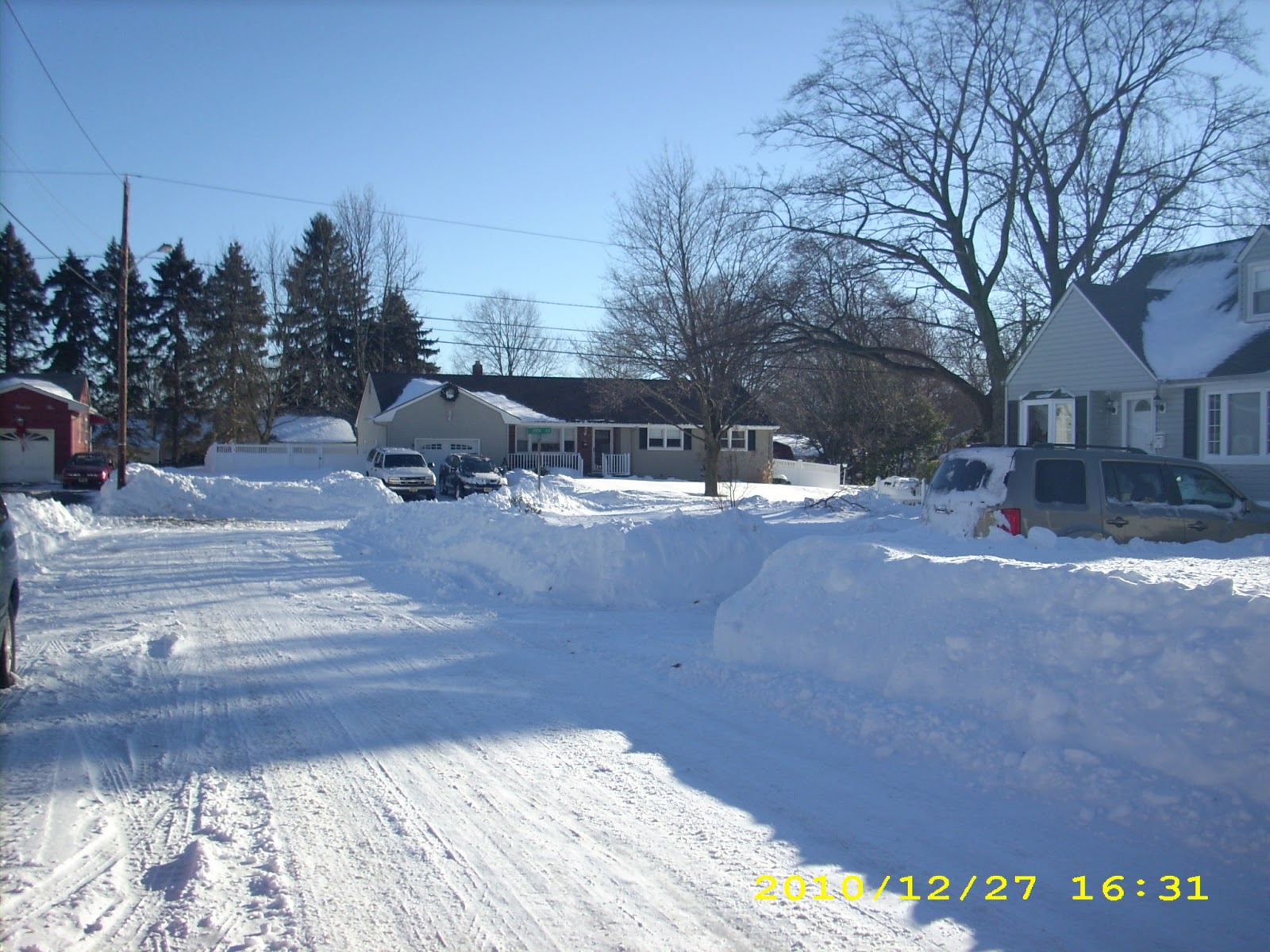
Let’s hope that it’s not like THIS, that day! Or worse yet …. like it was the day before!
72 de Larry W2LJ
QRP – When you care to send the very least!
More portable QRP antenna thoughts
Harry K7ZOV left this comment on AmateurRadio.com – thought I would re-post it here (for those of you who might not visit that fine site).
“I was in TX for the holidays. I brought 2 antennas. But used only one with both my TenTec Eagle and my KX3. No counterpoise. No Ground. 20 ft of coax. Worked 80-6 with the KX3 internal ATU. Worked Cuba, South America to Canada. The West coast from the far east side of Texas and lots of States.
Check out the link for more detail. Oh and the “wire” part was only a bit over 50 ft and hanging from a tree at about 30 ft at the highest point and 10 feet at the lowest point. My favorite antenna now.. LINK: http://www.earchi.org/92011endfedfiles/Endfed6_40.pdf
For a 40 meter and 20 meter only… Here is a second link:
http://www.earchi.org/proj_homebrew.html
Have fun and 73 one and all
Harry K7ZOV”
Thanks, Harry – great links to EFHW antennas that you can buy or build.
And here’s another thought – although I have never used them, I do have friends who have had great success with small magnetic loop antennas. Not only are they great for portable ops (WGØAT uses one) but they are also great for those of you who are antenna restricted. A friend of mine here in NJ thought his Hamming days were over when he moved into an apartment that was constructed from materials that in essence, created a live-in Faraday shield. He started using magnetic loops and was shortly working DX again at QRP power levels from inside the apartment! http://www.alexloop.com/
You might also want to check out the Yo-Yo-tennas that Bill WA8MEA sells – they look pretty good for taking out to the field – http://hamradiofun.com/, if you’re not inclined to “roll your own”.
72 de Larry W2LJ
QRP – When you care to send the very least!
Antennas for portable QRP ops
I seem to get requests from time to time, to bring up this topic on the blog. I can only speak for what has worked well for me. There are as many number of solutions to this as there are QRPers who like to go out into the field, and I have only tried a relatively minor few.
The first thing to consider is what kind of portable operator are you? Some of us are “Time is precious! Let’s get on the air and operate!” If you’re one of these (like me!) then you are interested in ease and quickness of deployment. The faster up, the faster I can get on the air. Although antenna efficiency is important to you, it is not your primary concern. You don’t want to be pumping RF into a string of wet pasta; but you want to spend your day outdoors operating – not finagling with antennas.
For this type of operator (and I belong to this species) I have two recommendations:
1 – EFHW antennas. Basically, a piece of wire that is a half wavelength of the band you intend to operate. A matching device or counterpoise is needed. There are oodles of articles on EFHW antennas. The best seem to be treatises by Steve Yates AA5TB and Joe Everhardt N2CX. Google “EFHW” along with their call signs and you will get there. If rolling your own doesn’t appeal to you, you can also purchase commercial versions. LNR Precision markets perhaps the best known models, the PAR ENDFEDZ series.
http://www.aa5tb.com/efha.html
http://www.njqrp.org/n2cxantennas/halfer/halfer.html
http://www.parelectronics.com/end-fedz.php
The name says it all – “End fed” – meaning needing only one support. Basically, you throw a bottle (or some other weighted object) into a tree to get a hoist line over a branch, attach one end of the wire to the hoist line and pull it up. The other end connects to the matching device or your radio and you are good to go. It’s simple, uncomplicated, and works well. If you read any of Jim W1PID’s blog posts on AmateurRadio.com, you will see the resounding success that this type of antenna can provide.
Personally, I use the PAR ENDFEDZ 10/20/40, which will allow me to operate on those three bands without changing radiators. If you want to operate on a different band, you can change the radiator wire. The PAR comes with a chart that tells you, for each band, how long a piece of wire to use with their match box
2 – Compact verticals. What do you do if there are no supports? A Buddistick or a PAC12 antenna could be the solution for you. Both of these are basically the same idea. A compact vertical which uses a tapped coil to make up for the fact that you are not deploying a full sized vertical. You will have to bring a ground spike or small tripod or some other self improvised arrangement to deploy one of these. You will need to use either radials (as recommended for the PAC12) or a counterpoise wire (as provided with the Buddistick). This is not a true counterpoise, per se, but is more the “other half” of the vertical dipole that you are using.
Set up is relatively quick; but not as quick as the EFHW, especially if you are good in tossing bottles over tree branches! It takes time to deploy the radials in the case of the PAC12 and the amount of “counterpoise wire” used with the Buddistick is critical. The length will affect the SWR of your installation. For both of these, it is handy to bring along a small antenna analyzer along (such as one of the Auteks) to help you tune the antenna rather quickly.
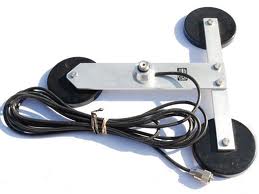
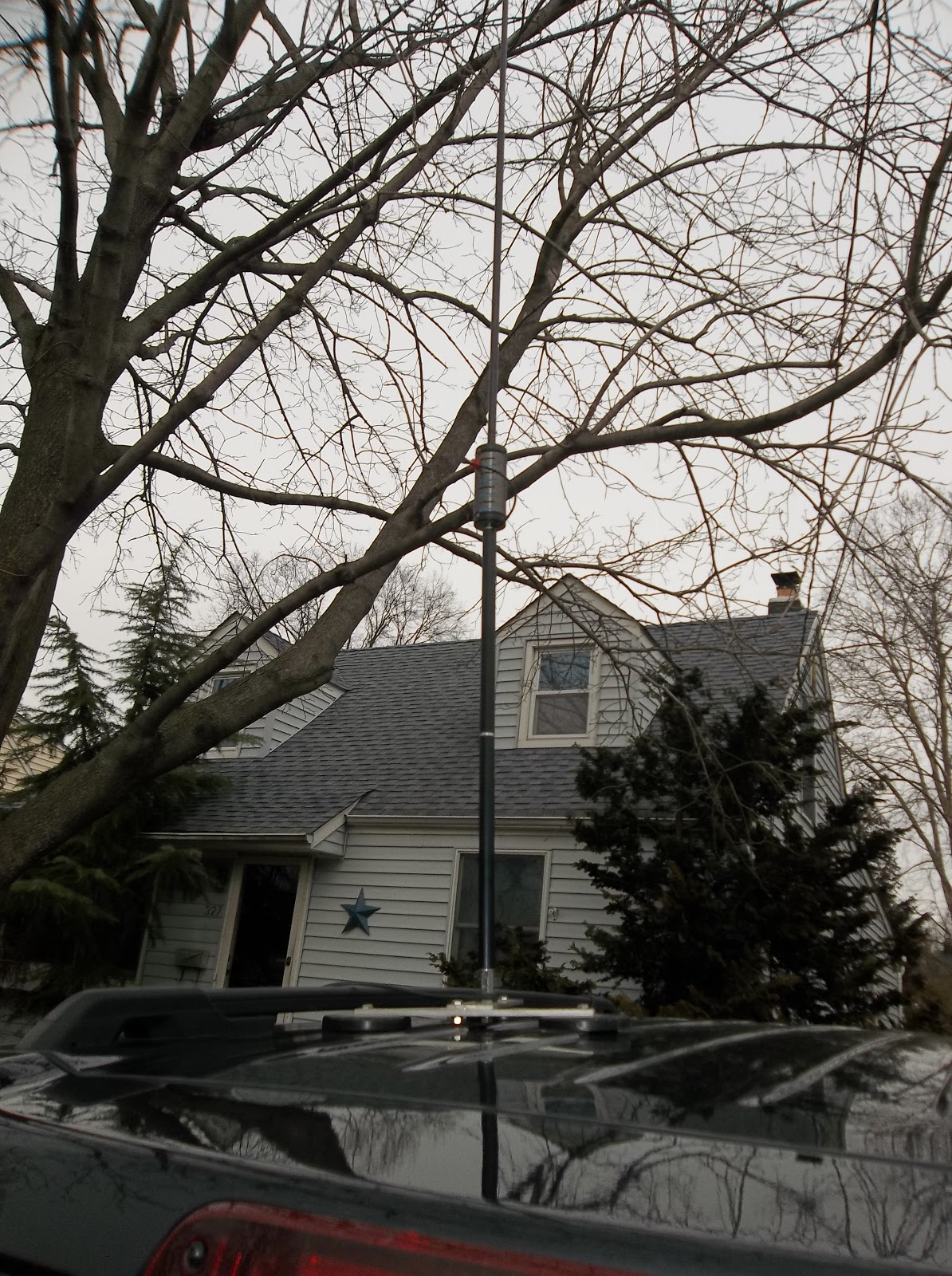
There is another way to deploy one of these compact verticals, which was brought to my attention by Bob W3BBO. It worked well for him when he was living in an apartment for a while, and I used it and in turn, discovered that it worked well for me, too. Instead of using a tripod, painter’s pole, ground spike, or whatever as a support for these compact verticals, you can instead attach the vertical to some kind of mount and attach it to your car. I use one of those Lakeview tri-mag mounts. Attach the vertical to that, pop it on the top of the car and go to town. Yes, you have to find the best place to tap the coil, but the car acts as a great groundplane and there’s no need to fuss with counterpoises or radials. It has worked well enough to garner DXCC and WAS for W3BBO while he was apartment living. I have used this arrangement during outdoor QRP sprints and while on vacation and have had surprisingly good results. This is NOT to be used while your vehicle is in motion however – strictly stationery mobile!
As a side note, I have used Hamsticks which are kind of related to this. They are quicker to deploy than either a Buddistick or PAC12 plunked on your car. However, you have to have a different radiator for each band that you intend to operate on. And my feeling (and I have no empirical proof to back this claim up, so take it with a grain of salt) is that Hamsticks are less efficient and even more of a compromise than a Buddistick or PAC12.
Now if you have a lot of time to operate, or if maximum efficiency is a concern to you, you have other solutions that you can pick from. In instances like these, you might want to use a dipole or doublet, made from lighter weight materials. Say you’re going camping for a week and there are plenty of tall trees available – why not? Even if you decide to use one of these as a sloper, you’ll need to keep the low end roughly six feet off the ground for safety reasons. You don’t want any unaware pedestrians walking into your wires! So you will need TWO supports – if you use heavier materials – then maybe even three.
I have made 44 and 88 foot versions of the Norcal Doublet. I have made them both out of ribbon cable and speaker wire. The ribbon cable is way lighter; but the speaker wire seems hardier. I have used the speaker wire just like the ribbon cable – that is, as feeder and radiator all-in-one. What can I tell you? They work well. Not as efficient as a dipole fed by open line wire or coax; but well enough for temporary operations. The only thing is that you need two trees, ideally, and you need to get the wire up as high as you can. Other than that, they will get you one the air.
http://www.norcalqrp.org/norcaldoublet.htm
There’s a good series on YouTube, by GB Hoyt on deploying W3EDP antennas. I have one of these as one of my permanent station antennas. There’s absolutely no reason that one can’t be made from light weight materials and taken out in the field. It is a great multiband antenna and requires a balun and a tuner; but it is an option.
http://www.youtube.com/watch?v=FGYqRJCNmuY&list=PL4131B8B79AA5C84F
This is by no means an exhaustive or authoritative list. I am sure there are many, many more options available to you – limited perhaps, only by your imagination. But what I have listed here is what I have tried and they have worked well for me.
Here is a good resource:
http://home.frognet.net/~mcfadden/wd8rif/field-antennas.htm
72 de Larry W2LJ
QRP – When you care to send the very least!
Talk about dedication, Man !!
Another reason why Steve WGØAT is one of my Ham Radio QRP heroes …….. imagine hiking up to a mountain top in the pre-dawn darkness, just so you can activate a SOTA mountaintop as the sun rises.
That is dedication, my friends!
72 de Larry W2LJ
QRP – When you care to send the very least!
My Ham Radio Heroes
Sounds silly, doesn’t it? But yes, I do have Ham Radio heroes. They include the ones who Elmered me; and the ones who have mentored and motivated me.
But tonight, I’d like to concentrate on the ones who have inspired me, in a very particular way.
My big dream as a QRPer is to someday be in the position where I can operate from the “Great Outdoors” on a regular basis. Whether it be SOTA or a far away DXpedition like Steve WG0AT and Guy N7UN. Or day hikes like Jim W1PID or Ron WB3AAL. Or even perhaps, someday, serious trail hiking like Steve KD1JV. And then there are always the pedestrian mobile exploits of Paul W0RW and Ed WA3WSJ to enjoy. There are also the adventures of Martin VA3SIE to admire. He always seems to be able to get to a good location for the outdoor QRP events – or just a fun day out.
For now, I will have to settle for trips to the local parks and even the back yard to fulfill my outdoor “fix”. But someday …….. someday ………. (the dreaming continues).
72 de Larry W2LJ
QRP – When you care to send the very least!

Big Brutus
If you are a regular reader of this blog, you know how much I love Amateur Radio. Two of my “passions within a passion” are operating QRP and taking QRP to the great outdoors and operating portable.
As you can see, this was a well coordinated group event. But it doesn’t necessarily have to be. Whether you’re like our buds from Kansas, here; or whether you’re like Jim W1PID, taking day hikes and making contacts – it’s all good! I know we’re coming up on colder weather here in North America as we travel farther into Autumn towards Winter …… but it’s never too early for even just thinking about treating yourself to some fun outdoor QRP outings in 2013.














