Posts Tagged ‘ndb’
 Hunting For NDBs In CLE 222
 August 23rd, 2017 |
  Author:
 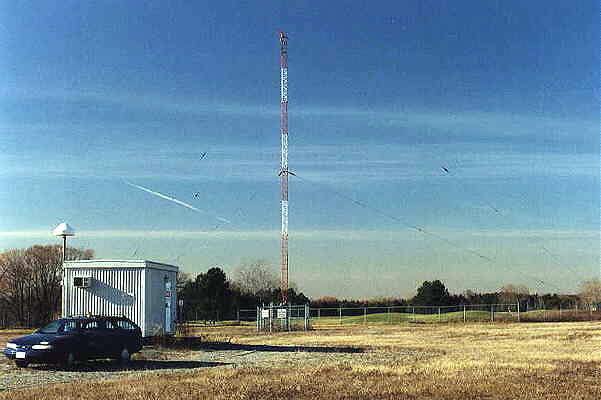 |
| HM - 221 kHz Hamilton, Ontario |
This coming weekend will see another CLE challenge. This time the hunting grounds will be all inclusive: 190-1740 kHz. As well, there are two options, HOME and DX as explained below.
For those unfamiliar with this monthly activity, a 'CLE' is a 'Co-ordinated Listening Event', as NDB DXers around the world focus their listening time (usually) on one small slice of the NDB spectrum.
Summertime CLEs can often be challenging, not because of poor propagation but more likely, summer lightning storms ... hopefully it will be quiet for your location.
When tuning for NDBs, put your receiver in the CW mode and listen for the NDB's CW identifier, repeated every few seconds. Listen for U.S. NDB identifiers approximately 1 kHz higher or lower than the published transmitted frequency since these beacons are modulated with a 1020 Hz tone approximately.
For example, 'AA' (Fargo - ND) transmits on 365 kHz and its upper sideband CW identifier is tuned at 366.025 kHz while its lower sideband CW ident can be tuned at 363.946 kHz. Its USB tone is actually 1025 Hz while its LSB tone is 1054 Hz.
Often, one sideband will be much stronger than the other so if you don't hear the first one, try listening on the other sideband.
Canadian NDBs normally have an USB tone only, usually very close to 400 Hz. They also have a long dash (keydown) following the CW identifier.
All NDBs heard in North America will be listed in the RNA database (updated daily) while those heard in Europe may be found in the REU database. Beacons heard outside of these regions will be found in the RWW database.
From CLE organizer Brian Keyte, G3SIA, comes the usual 'heads-up':
Hi all
Our 222nd Co-ordinated Listening Event, 'DX and HOME', starts on Friday
and runs for an extra day. First-time CLE logs will also be very welcome
of course.
Days: Friday 25th August - TUESDAY 29th August
Times: Midday on Friday to Midday on Tuesday, your LOCAL time
QRG: Normal LF/MF frequencies (190 - 1740 kHz)
NDBs: Normal DX and 'HOME' ones (not DGPS, Navtex or Amateur)
There are two parts (you can listen for either or both of them):
DX:
Please try to log NDBs that are over 2,000 km / 1,250 miles from you.
(If you don't have details of the distances of NDBs from you, please see
the end of this email)
HOME:
If you have any, please log the NDBs in YOUR OWN radio country.
For listeners in AUS, CAN and USA, that means your State or Province.
Our full list of radio countries can be found at:
http://www.ndblist.info/ndbinfo/countrylist.pdf
(If you also mention any of your home regulars NOT heard, it will help
others to know about NDBs, maybe DX to them, that may not be active)
Please post your CLE log to the List in a plain text email if possible,
with 'CLE222' at the start of its title and showing on each log line:
The full Date ( e.g. 2017-08-25 or just the day number 25 )
UTC (the day changes at 00:00 UTC).
kHz - the nominal published frequency
The Call Ident.
Please put those four main log items FIRST, with any other optional
details such as location and distance LATER in the same line.
Your log will be more interesting if you keep the two parts, DX and HOME,
separate in it. Any UNIDs that you come across will also be of interest -
in a separate, third, part of your log please.
If you send interim logs, please make sure that you also send a 'Final' log
showing ALL your loggings for the CLE.
I will send the usual 'Any More Logs?' email at about 17:00 UTC on
WEDNESDAY so you can check that your log has been found OK.
Do make sure that your Final log has arrived on the list by 08:00 UTC
on Friday 1st September at the very latest.
Joachim hopes to complete the combined results on the Saturday.
Good listening
Brian
----------------------------------------------------------
From: Brian Keyte G3SIA ndbcle'at'gmail.com
Location: Surrey, SE England (CLE coordinator)
----------------------------------------------------------
(If you wish you could use a remote receiver for your loggings,
stating its location and owner - with permission if required.
A remote listener may NOT also use another receiver, whether
local or remote, to obtain further loggings for the same CLE.
The HOME radio country and the distances would be based on
where the receiving equipment is located)
DISTANCES TO NDBs FROM YOUR LOCATION
The Great Circle program GcmWin by SM3GSJ can produce a nice great circle
map centred on your location - see http://www.qsl.net/sm3gsj/
Users of Michael's NDB Handbooks will already have their distances and
bearings to the NDBs.
Alex's WWSU program has a facility to create a map showing the areas
inside the 2000 km circle.
To create this,
click on 'Tools'
click on 'Station Radar'
select Range from “2000” to “10000” km
select “show NDB stations”
click on “Generate Image”
click on “Save To File”
That will create a text-file containing information on the selected NDBs.
The REU/RNA/RWW Database provides a powerful way of finding which
NDBs to search for:
1) Go to the signals screen using -
http://www.classaxe.com/dx/ndb/reu?mode=signals
If you are in North America, replace the reu above with rna
If you are not in Europe or North America, replace the reu with rww
2) On the Range line, put your *Locator in the 'From GSQ' box (e.g. mine
is IO91tg) The DX fields become enabled when a GSQ is entered.
3) Enter 2000 in the first DX field, leave the second blank and leave the
units as 'km' (or use 1250 and 'miles', if you prefer)
4) Select 'Only Active' and press 'Go'.
Now you only see NDBs that are over 2000 km from you.
Change 'Show' in the top line to 'All Results'.
The other fields are also active - e.g. you could enter specific States or
Countries in the Location line to limit the search to the NDBs there.
And/or you could click on 'Map', then on 'Go' and uncheck 'Clustering'
*If you do not know your Locator you can quickly find it from your
Latitude/Longitude (and vice versa) by using:
wingrid.exe V4.1 - freeware from W4SM
These listening events serve several purposes. They:
- determine, worldwide, which beacons are actually in service and on-the-air so the online database can be kept up-to-date
- determine, worldwide, which beacons are out-of-service or have gone silent since the last CLE covering this range
- will indicate the state of propagation conditions at the various participant locations
- will give you an indication of how well your LF/MF receiving system is working
- give participants a fun yet challenging activity to keep their listening skills honed
Final details can be found at the NDB List website, and worldwide results, for every participant, will be posted there a few days after the event. If you are a member of the ndblist Group, results will also be e-mailed and posted there.
The very active Yahoo ndblist Group is a great place to learn more about the 'Art of NDB DXing' or to meet other listeners in your region. There is a lot of good information available there and new members are always very welcome. As well, you can follow the results of other CLE participants from night to night as propagation is always an active topic of discussion.
If you are contemplating getting started on 630m, listening for NDBs is an excellent way to test out your receive capabilities as there are several NDBs located near this part of the spectrum.
You need not be an ndblist member to participate in the CLEs and all reports, no matter how small, are of much value to the organizers.
'First-time' logs are always VERY welcome!
Reports may be sent to the ndblist or e-mailed to either myself or CLE co-ordinator, Brian Keyte (G3SIA), whose address appears above.
Please ... give the CLE a try ... then let us know what NDB's can be heard from your location! Your report can then be added to the worldwide database to help keep it up-to-date.
Good hunting!
Hunting For NDBs In CLE 221
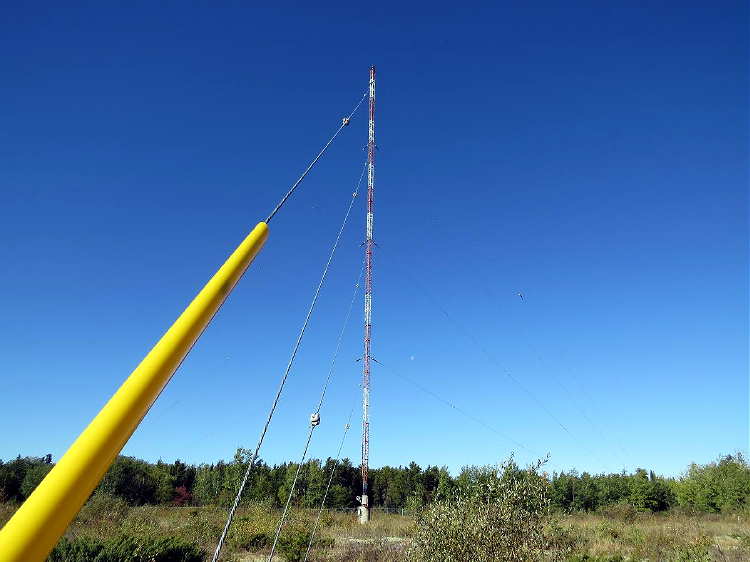 |
| YBV - 370kHz (VE3GOP) |
This coming weekend will see another CLE challenge. This time the hunting grounds will be: 370.0 - 384.9 kHz.
For those unfamiliar with this monthly activity, a 'CLE' is a 'Co-ordinated Listening Event', as NDB DXers around the world focus their listening time on one small slice of the NDB spectrum.
A nice challenge in this one is to hear the Berens River (Manitoba) NDB, 'YBV', on 370 kHz. 'YBV' is a 25-watter and is well heard, having been logged from coast-to-coast as well as in Europe. Look for 'YBV's CW identifier, repeated every 10.4 seconds, on 370.373 kHz with your receiver in the CW mode.
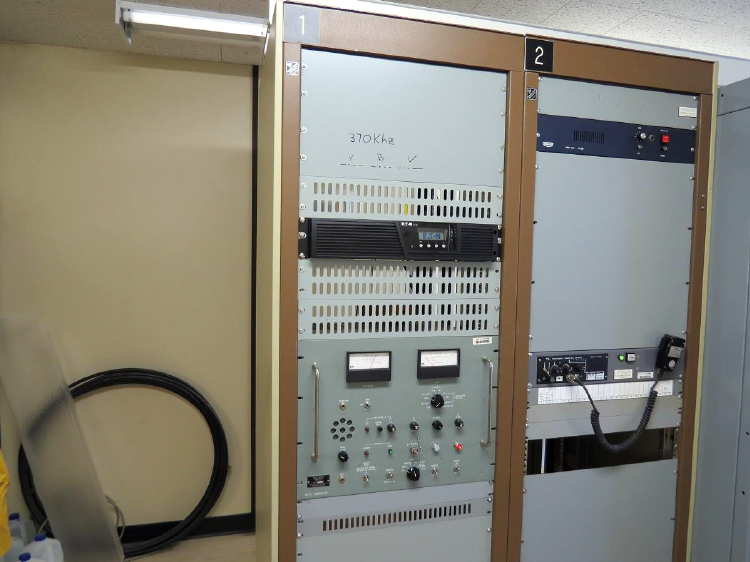 |
| YBV's 25W TX Rack (VE3GOP) |
When tuning for NDBs, put your receiver in the CW mode and listen for the NDB's CW identifier, repeated every few seconds. Listen for U.S. NDB identifiers approximately 1 kHz higher or lower than the published transmitted frequency since these beacons are modulated with a 1020 Hz tone approximately.
For example, 'AA' in Fargo transmits on 365 kHz and its upper sideband CW identifier is tuned at 366.025 kHz while its lower sideband CW ident can be tuned at 363.946 kHz. Its USB tone is actually 1025 Hz while its LSB tone is 1054 Hz.
Often, one sideband will be much stronger than the other so if you don't hear the first one, try listening on the other sideband.
Canadian NDBs normally have an USB tone only, usually very close to 400 Hz. They also have a long dash (keydown) following the CW identifier.
All NDBs heard in North America will be listed in the RNA database (updated daily) while those heard in Europe may be found in the REU database. Beacons heard outside of these regions will be found in the RWW database.
From CLE organizer Brian Keyte, G3SIA, comes the usual 'heads-up':
Hi all,
Please join us in our 221st coordinated Listening Event which starts
this Friday. All are very welcome.
Please join us in our 221st coordinated Listening Event which starts
this Friday. All are very welcome.
CLEs are not contests - if you enjoy taking part you will be a winner!
54 of us sent logs for CLE204 back in February 2016 when we
listened on these same frequencies.
It will certainly be tougher for most of us at this time of year.
Days: Friday 28 July - Monday 31 July
Times: Start and end at midday, your LOCAL TIME
Range: 370 - 384.9 kHz
Just log all the NDBs that you can identify with their nominal (listed)
frequencies in the range (it includes 370 kHz, but not 385 kHz)
plus any UNIDs that you come across there.
Please send your CLE log to the List in a plain text email if possible
(not in an attachment) with 'CLE221' at the start of its title.
Show on each log line:
# The date (e.g. 2017-07-29, etc., or just 29) and UTC.
(the date changes at 00:00 UTC)
# kHz (the nominal published frequency, if known)
# The Call Ident.
Show those main items FIRST - other optional details such as Location
and Distance go LATER in the same line.
If you send interim logs, please also send a 'Final' (complete) log.
As always, tell us your own location and brief details of the equipment
that you were using during the weekend.
I'll send the usual 'Any More Logs?' email at about 17:00 UTC on
Tuesday - you can check from it that your log has been found OK.
All logs must arrive on the list by 08:00 UTC on Wednesday 2nd
August at the very latest.
Joachim has again offered to make the combined results which he
Range: 370 - 384.9 kHz
Just log all the NDBs that you can identify with their nominal (listed)
frequencies in the range (it includes 370 kHz, but not 385 kHz)
plus any UNIDs that you come across there.
Please send your CLE log to the List in a plain text email if possible
(not in an attachment) with 'CLE221' at the start of its title.
Show on each log line:
# The date (e.g. 2017-07-29, etc., or just 29) and UTC.
(the date changes at 00:00 UTC)
# kHz (the nominal published frequency, if known)
# The Call Ident.
Show those main items FIRST - other optional details such as Location
and Distance go LATER in the same line.
If you send interim logs, please also send a 'Final' (complete) log.
As always, tell us your own location and brief details of the equipment
that you were using during the weekend.
I'll send the usual 'Any More Logs?' email at about 17:00 UTC on
Tuesday - you can check from it that your log has been found OK.
All logs must arrive on the list by 08:00 UTC on Wednesday 2nd
August at the very latest.
Joachim has again offered to make the combined results which he
hopes to complete on that day.
To help your listening, seeklists and maps for your part of the World
To help your listening, seeklists and maps for your part of the World
are available via the CLE page http://www.ndblist.info/cle.htm
Good listening - enjoy the CLE
Brian
----------------------------------------------------------
From: Brian Keyte G3SIA ndbcle'at'gmail.com
Location: Surrey, SE England (CLE coordinator)
----------------------------------------------------------
Good listening - enjoy the CLE
Brian
----------------------------------------------------------
From: Brian Keyte G3SIA ndbcle'at'gmail.com
Location: Surrey, SE England (CLE coordinator)
----------------------------------------------------------
These listening events serve several purposes. They:
- determine, worldwide, which beacons are actually in service and on-the-air so the online database can be kept up-to-date
- determine, worldwide, which beacons are out-of-service or have gone silent since the last CLE covering this range
- will indicate the state of propagation conditions at the various participant locations
- will give you an indication of how well your LF/MF receiving system is working
- give participants a fun yet challenging activity to keep their listening skills honed
Final details can be found at the NDB List website, and worldwide results, for every participant, will be posted there a few days after the event. If you are a member of the ndblist Group, results will also be e-mailed and posted there.
The very active Yahoo ndblist Group is a great place to learn more about the 'Art of NDB DXing' or to meet other listeners in your region. There is a lot of good information available there and new members are always very welcome. As well, you can follow the results of other CLE participants from night to night as propagation is always an active topic of discussion.
If you are contemplating getting started on 630m, listening for NDBs is an excellent way to test out your receive capabilities as there are several NDBs located near this part of the spectrum.
You need not be an ndblist member to participate in the CLEs and all reports, no matter how small, are of much value to the organizers.
'First-time' logs are always VERY welcome!
Reports may be sent to the ndblist or e-mailed to either myself or CLE co-ordinator, Brian Keyte (G3SIA), whose address appears above.
Please ... give the CLE a try ... then let us know what NDB's can be heard from your location! Your report can then be added to the worldwide database to help keep it up-to-date.
Good hunting!
Hunting For NDBs In CLE 221
|
| YBV - 370kHz (VE3GOP) |
This coming weekend will see another CLE challenge. This time the hunting grounds will be: 370.0 - 384.9 kHz.
For those unfamiliar with this monthly activity, a 'CLE' is a 'Co-ordinated Listening Event', as NDB DXers around the world focus their listening time on one small slice of the NDB spectrum.
A nice challenge in this one is to hear the Berens River (Manitoba) NDB, 'YBV', on 370 kHz. 'YBV' is a 25-watter and is well heard, having been logged from coast-to-coast as well as in Europe. Look for 'YBV's CW identifier, repeated every 10.4 seconds, on 370.373 kHz with your receiver in the CW mode.
|
| YBV's 25W TX Rack (VE3GOP) |
When tuning for NDBs, put your receiver in the CW mode and listen for the NDB's CW identifier, repeated every few seconds. Listen for U.S. NDB identifiers approximately 1 kHz higher or lower than the published transmitted frequency since these beacons are modulated with a 1020 Hz tone approximately.
For example, 'AA' in Fargo transmits on 365 kHz and its upper sideband CW identifier is tuned at 366.025 kHz while its lower sideband CW ident can be tuned at 363.946 kHz. Its USB tone is actually 1025 Hz while its LSB tone is 1054 Hz.
Often, one sideband will be much stronger than the other so if you don't hear the first one, try listening on the other sideband.
Canadian NDBs normally have an USB tone only, usually very close to 400 Hz. They also have a long dash (keydown) following the CW identifier.
All NDBs heard in North America will be listed in the RNA database (updated daily) while those heard in Europe may be found in the REU database. Beacons heard outside of these regions will be found in the RWW database.
From CLE organizer Brian Keyte, G3SIA, comes the usual 'heads-up':
Hi all,
Please join us in our 221st coordinated Listening Event which starts
this Friday. All are very welcome.
Please join us in our 221st coordinated Listening Event which starts
this Friday. All are very welcome.
CLEs are not contests - if you enjoy taking part you will be a winner!
54 of us sent logs for CLE204 back in February 2016 when we
listened on these same frequencies.
It will certainly be tougher for most of us at this time of year.
Days: Friday 28 July - Monday 31 July
Times: Start and end at midday, your LOCAL TIME
Range: 370 - 384.9 kHz
Just log all the NDBs that you can identify with their nominal (listed)
frequencies in the range (it includes 370 kHz, but not 385 kHz)
plus any UNIDs that you come across there.
Please send your CLE log to the List in a plain text email if possible
(not in an attachment) with 'CLE221' at the start of its title.
Show on each log line:
# The date (e.g. 2017-07-29, etc., or just 29) and UTC.
(the date changes at 00:00 UTC)
# kHz (the nominal published frequency, if known)
# The Call Ident.
Show those main items FIRST - other optional details such as Location
and Distance go LATER in the same line.
If you send interim logs, please also send a 'Final' (complete) log.
As always, tell us your own location and brief details of the equipment
that you were using during the weekend.
I'll send the usual 'Any More Logs?' email at about 17:00 UTC on
Tuesday - you can check from it that your log has been found OK.
All logs must arrive on the list by 08:00 UTC on Wednesday 2nd
August at the very latest.
Joachim has again offered to make the combined results which he
Range: 370 - 384.9 kHz
Just log all the NDBs that you can identify with their nominal (listed)
frequencies in the range (it includes 370 kHz, but not 385 kHz)
plus any UNIDs that you come across there.
Please send your CLE log to the List in a plain text email if possible
(not in an attachment) with 'CLE221' at the start of its title.
Show on each log line:
# The date (e.g. 2017-07-29, etc., or just 29) and UTC.
(the date changes at 00:00 UTC)
# kHz (the nominal published frequency, if known)
# The Call Ident.
Show those main items FIRST - other optional details such as Location
and Distance go LATER in the same line.
If you send interim logs, please also send a 'Final' (complete) log.
As always, tell us your own location and brief details of the equipment
that you were using during the weekend.
I'll send the usual 'Any More Logs?' email at about 17:00 UTC on
Tuesday - you can check from it that your log has been found OK.
All logs must arrive on the list by 08:00 UTC on Wednesday 2nd
August at the very latest.
Joachim has again offered to make the combined results which he
hopes to complete on that day.
To help your listening, seeklists and maps for your part of the World
To help your listening, seeklists and maps for your part of the World
are available via the CLE page http://www.ndblist.info/cle.htm
Good listening - enjoy the CLE
Brian
----------------------------------------------------------
From: Brian Keyte G3SIA ndbcle'at'gmail.com
Location: Surrey, SE England (CLE coordinator)
----------------------------------------------------------
Good listening - enjoy the CLE
Brian
----------------------------------------------------------
From: Brian Keyte G3SIA ndbcle'at'gmail.com
Location: Surrey, SE England (CLE coordinator)
----------------------------------------------------------
These listening events serve several purposes. They:
- determine, worldwide, which beacons are actually in service and on-the-air so the online database can be kept up-to-date
- determine, worldwide, which beacons are out-of-service or have gone silent since the last CLE covering this range
- will indicate the state of propagation conditions at the various participant locations
- will give you an indication of how well your LF/MF receiving system is working
- give participants a fun yet challenging activity to keep their listening skills honed
Final details can be found at the NDB List website, and worldwide results, for every participant, will be posted there a few days after the event. If you are a member of the ndblist Group, results will also be e-mailed and posted there.
The very active Yahoo ndblist Group is a great place to learn more about the 'Art of NDB DXing' or to meet other listeners in your region. There is a lot of good information available there and new members are always very welcome. As well, you can follow the results of other CLE participants from night to night as propagation is always an active topic of discussion.
If you are contemplating getting started on 630m, listening for NDBs is an excellent way to test out your receive capabilities as there are several NDBs located near this part of the spectrum.
You need not be an ndblist member to participate in the CLEs and all reports, no matter how small, are of much value to the organizers.
'First-time' logs are always VERY welcome!
Reports may be sent to the ndblist or e-mailed to either myself or CLE co-ordinator, Brian Keyte (G3SIA), whose address appears above.
Please ... give the CLE a try ... then let us know what NDB's can be heard from your location! Your report can then be added to the worldwide database to help keep it up-to-date.
Good hunting!
CLE 220 Results
Last weekend's midday CLE seems to have drawn a lot of interest for a summer event.
Perhaps it was because listeners could participate without having to burn the midnight oil as is usually the case when listening 'live' and not recording with an SDR.
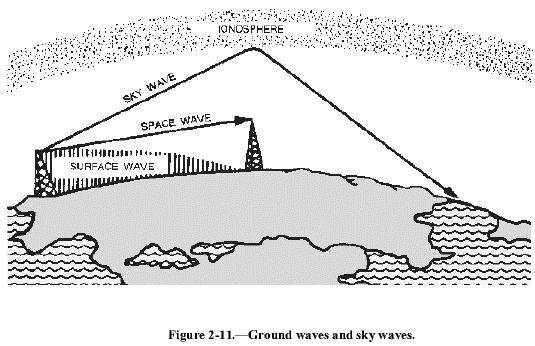
Listening time was restricted to between 1100 and 1500 hours local time, to see what could be heard via daytime groundwave.
In spite of having a low noise seaside listening location, I was surprised to only hear beacons in B.C. and Washington state, with not as much as a whisper from Oregon, Alberta, Idaho, Montana or lower Alaska. The furthest beacon I heard was ZZP-248 in the Queen Charlottes, at 486 miles. I would have wagered that most regions would see similar results, with groundwave distances being fairly constant throughout North America, but this was not the case.
Participants in the central states seemed to enjoy much greater groundwave coverage than here on the west coast. It seems that the rugged Coastal ranges and the Rockies do have a pronounced effect on daylight propagation when skywave is not involved. Beacon ERP cannot be ignored as well as location and ground system efficiency ... some definitely get out much better than others even though output powers may be the same.
Anthony Casorso, ADØVC, listening near Denver, Colorado with an Elad SDR and a 17' Low Noise Vertical (LNV), managed several +500 mile catches but all N-S or to the east.
Bill Riches, WA2DVU, in Cape May, NJ, found SJ-212 in Saint John, New Brunswick, 635 miles to the north with his Perseus and Wellbrook loop.
Dave Tomasko, K9QU, in Galena, Illinois, caught OKS-233 in Oshkosh, NE at 625 miles and FOR-236 in Forsyth, Montana, at a whopping 845 miles with his R-75 and Wellbrook ALA100 loop.
These were heard here at 11 a.m. local time using my Perseus SDR and inverted-L tuned to 300kHz:
24 18:00 200.0 YJ Victoria - Sidney Island, BC, CAN
24 18:00 203.0 YBL Campbell River, BC, CAN
24 18:00 214.0 LU 'Cultus' Abbotsford, BC, CAN
24 18:00 216.0 GRF GRAYE - Fort Lewis, WA, USA
24 18:00 223.0 YKA Kamloops, BC, CAN
24 18:00 227.0 CG Castlegar, BC, CAN
24 18:00 236.0 YZA Ashcroft, BC, CAN
24 18:00 240.0 BVS Skagit/Bay View - Burlington, WA, USA
24 18:00 242.0 ZT Port Hardy, BC, CAN
24 18:00 248.0 ZZP Dead Tree - Queen Charlotte Is, BC, CAN
24 18:00 251.0 YCD Nanaimo, BC, CAN
24 18:00 257.0 LW Kelowna - Wood Lake, BC, CAN
24 18:00 266.0 VR Vancouver - Lulu Island, BC, CAN
24 18:00 269.0 YK 'Brilliant' Castlegar, BC, CAN
24 18:00 272.0 XS Prince George, BC, CAN
24 18:00 284.0 FHR Friday Harbor Apt, WA, USA
24 18:00 290.0 YYF Penticton, BC, CAN
24 18:00 293.0 MB Mill Bay - Sidney, BC, CAN
24 18:00 312.0 UNT Naramata, BC, CAN
24 18:00 325.0 YJQ Bella Bella (Campbell Island), BC, CAN
24 18:00 326.0 DC Princeton Municipal Apt, BC, CAN
24 18:00 328.0 LAC 'Lacomas' Fort Lewis, WA, USA
24 18:00 332.0 WC White Rock (Abbotsford), BC, CAN
24 18:00 338.0 K Ediz Hook - Port Angeles, WA, USA
24 18:00 344.0 XX Abbotsford, BC, CAN
24 18:00 348.0 MNC 'Mason Co' Shelton, WA, USA
24 18:00 350.0 NY Enderby, BC, CAN
24 18:00 353.0 RNT Renton Municipal Apt, WA, USA
24 18:00 356.0 ON 'Okanagan' Penticton, BC, CAN
24 18:00 359.0 YQZ Quesnel, BC, CAN
24 18:00 359.0 YAZ Tofino - Vancouver Island, BC, CAN
24 18:00 362.0 BF 'Nolla' Seattle, WA, USA
24 18:00 368.0 ZP Sandspit - Moresby Island, BC, CAN
24 18:00 371.0 YK 'Donny' Yakima, WA, USA
24 18:00 374.0 EX Rutland (Kelowna), BC, CAN
24 18:00 378.0 AP Active Pass (Mayne Island), BC, CAN
24 18:00 382.0 YPW Powell River, BC, CAN
24 18:00 382.0 AW WATON - Marysville, WA, USA
24 18:00 385.0 WL Williams Lake, BC, CAN
24 18:00 389.0 YWB Kelowna, BC, CAN
24 18:00 400.0 QQ Comox, BC, CAN
24 18:00 408.0 MW PELLY - Moses Lake, WA, USA
24 18:00 414.0 YZK Harper Ranch, BC, CAN
24 18:00 515.0 CL ELWHA - Cresent Beach, WA, USA
CLE 220 Results
Last weekend's midday CLE seems to have drawn a lot of interest for a summer event.
Perhaps it was because listeners could participate without having to burn the midnight oil as is usually the case when listening 'live' and not recording with an SDR.
Listening time was restricted to between 1100 and 1500 hours local time, to see what could be heard via daytime groundwave.
In spite of having a low noise seaside listening location, I was surprised to only hear beacons in B.C. and Washington state, with not as much as a whisper from Oregon, Alberta, Idaho, Montana or lower Alaska. The furthest beacon I heard was ZZP-248 in the Queen Charlottes, at 486 miles. I would have wagered that most regions would see similar results, with groundwave distances being fairly constant throughout North America, but this was not the case.
Participants in the central states seemed to enjoy much greater groundwave coverage than here on the west coast. It seems that the rugged Coastal ranges and the Rockies do have a pronounced effect on daylight propagation when skywave is not involved. Beacon ERP cannot be ignored as well as location and ground system efficiency ... some definitely get out much better than others even though output powers may be the same.
Anthony Casorso, ADØVC, listening near Denver, Colorado with an Elad SDR and a 17' Low Noise Vertical (LNV), managed several +500 mile catches but all N-S or to the east.
Bill Riches, WA2DVU, in Cape May, NJ, found SJ-212 in Saint John, New Brunswick, 635 miles to the north with his Perseus and Wellbrook loop.
Dave Tomasko, K9QU, in Galena, Illinois, caught OKS-233 in Oshkosh, NE at 625 miles and FOR-236 in Forsyth, Montana, at a whopping 845 miles with his R-75 and Wellbrook ALA100 loop.
These were heard here at 11 a.m. local time using my Perseus SDR and inverted-L tuned to 300kHz:
24 18:00 200.0 YJ Victoria - Sidney Island, BC, CAN
24 18:00 203.0 YBL Campbell River, BC, CAN
24 18:00 214.0 LU 'Cultus' Abbotsford, BC, CAN
24 18:00 216.0 GRF GRAYE - Fort Lewis, WA, USA
24 18:00 223.0 YKA Kamloops, BC, CAN
24 18:00 227.0 CG Castlegar, BC, CAN
24 18:00 236.0 YZA Ashcroft, BC, CAN
24 18:00 240.0 BVS Skagit/Bay View - Burlington, WA, USA
24 18:00 242.0 ZT Port Hardy, BC, CAN
24 18:00 248.0 ZZP Dead Tree - Queen Charlotte Is, BC, CAN
24 18:00 251.0 YCD Nanaimo, BC, CAN
24 18:00 257.0 LW Kelowna - Wood Lake, BC, CAN
24 18:00 266.0 VR Vancouver - Lulu Island, BC, CAN
24 18:00 269.0 YK 'Brilliant' Castlegar, BC, CAN
24 18:00 272.0 XS Prince George, BC, CAN
24 18:00 284.0 FHR Friday Harbor Apt, WA, USA
24 18:00 290.0 YYF Penticton, BC, CAN
24 18:00 293.0 MB Mill Bay - Sidney, BC, CAN
24 18:00 312.0 UNT Naramata, BC, CAN
24 18:00 325.0 YJQ Bella Bella (Campbell Island), BC, CAN
24 18:00 326.0 DC Princeton Municipal Apt, BC, CAN
24 18:00 328.0 LAC 'Lacomas' Fort Lewis, WA, USA
24 18:00 332.0 WC White Rock (Abbotsford), BC, CAN
24 18:00 338.0 K Ediz Hook - Port Angeles, WA, USA
24 18:00 344.0 XX Abbotsford, BC, CAN
24 18:00 348.0 MNC 'Mason Co' Shelton, WA, USA
24 18:00 350.0 NY Enderby, BC, CAN
24 18:00 353.0 RNT Renton Municipal Apt, WA, USA
24 18:00 356.0 ON 'Okanagan' Penticton, BC, CAN
24 18:00 359.0 YQZ Quesnel, BC, CAN
24 18:00 359.0 YAZ Tofino - Vancouver Island, BC, CAN
24 18:00 362.0 BF 'Nolla' Seattle, WA, USA
24 18:00 368.0 ZP Sandspit - Moresby Island, BC, CAN
24 18:00 371.0 YK 'Donny' Yakima, WA, USA
24 18:00 374.0 EX Rutland (Kelowna), BC, CAN
24 18:00 378.0 AP Active Pass (Mayne Island), BC, CAN
24 18:00 382.0 YPW Powell River, BC, CAN
24 18:00 382.0 AW WATON - Marysville, WA, USA
24 18:00 385.0 WL Williams Lake, BC, CAN
24 18:00 389.0 YWB Kelowna, BC, CAN
24 18:00 400.0 QQ Comox, BC, CAN
24 18:00 408.0 MW PELLY - Moses Lake, WA, USA
24 18:00 414.0 YZK Harper Ranch, BC, CAN
24 18:00 515.0 CL ELWHA - Cresent Beach, WA, USA
Hunting For Daytime NDBs In CLE 220
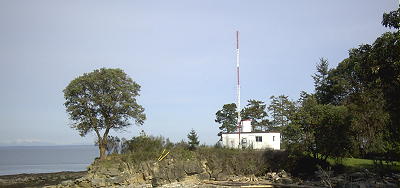 |
| AP-378 Mayne Island, BC |
It's hard to believe but this coming weekend will see another CLE challenge!
No need however, to stay up until the wee hours for this one, as CLE220 is a mid-day affair ... just log what you are able to hear during the day from your location. The entire band is fair-game as well, from 190 - 1740kHz.
Everyone is encouraged to send their logs (see below) so the RNA / REU NDB databases can be kept as up-to-date as possible.
I know that I won't have any trouble hearing AP-378 shown above since it's only about 3/4 mile from my antenna! I'm always curious just how far it can be heard during the day and would encourage listeners on the west coast to have a good listen for it and please let me know if you can hear it.
For those unfamiliar with this monthly activity, a 'CLE' is a 'Co-ordinated Listening Event', as NDB DXers around the world focus their listening time usually on one small slice of the NDB spectrum.
When tuning for NDBs, put your receiver in the CW mode and listen for the NDB's CW identifier, repeated every few seconds. With your receiver in the CW mode, listen for U.S. NDB identifiers approximately 1 kHz higher or lower than the published transmitted frequency since these beacons are tone-modulated with a 1020 Hz tone approximately.
For example, 'AA' near Fargo, ND, transmits on 365 kHz and its upper sideband CW identifier is tuned at 366.025 kHz while its lower sideband CW ident can be tuned at 363.946 kHz. Its USB tone is actually 1025 Hz while its LSB tone is 1054 Hz.
Often, one sideband will be much stronger than the other so if you don't hear the first one, try listening on the other sideband.
Canadian NDBs normally have an USB tone only, usually very close to 400 Hz. They also have a long dash (keydown) following the CW identifier.
All NDBs heard in North America will be listed in the RNA database (updated daily) while those heard in Europe may be found in the REU database. Beacons heard outside of these regions will be found in the RWW database.
From CLE organizer Brian Keyte, G3SIA, comes the usual 'heads-up':
Hi all
SUMMER MIDDAY EVENT
How many normal NDBs can you log around midday?
In this event we can probably cheat the QRN and hardly hear any (but if
you do have a midday storm coming overhead, disconnect and switch off
immediately of course)
Listening around midday is a good way to check our listening stations and
to find out if changes really have made improvements in reception.
Or maybe you could try the CLE listening from a 'field' location instead of
(please, NOT as well as) from home?
Days: Fri. 23 June - Mon. 26 June
Times: Within 2 hours of ‘real’ Midday (see below)
QRG: 190 - 1740 kHz
NDBs Normal NDBs only, plus any UNIDs
(not DGPS, NAVTEX or Amateur)
### IMPORTANT ## If your house clocks have moved one hour
forward for 'summer time' (or 'daylight saving'), your listening
times each day will be BETWEEN 11 IN THE MORNING
and 3 IN THE AFTERNOON (15:00) on your LOCAL clocks.
If your clocks were NOT changed, maybe in Arizona (?), or
in the Southern Hemisphere where it is now mid-winter,
your times each day will be from 10 a.m. to 2 p.m. LOCAL.
(The above matches our agreed definition for daytime listening)
Of course, all our logs will show UTC times, as always.
Our usual simple log-making 'rules' apply:
Post your CLE log to the List in a plain text email if possible please,
with CLE220 at the start of its title, showing on each log line:
# The Day No.(e.g. ‘23’) or the full date (e.g. ‘2017-06-23’)
and UTC (the day changes at 00:00 UTC).
# kHz - the nominal published frequency, if known.
# The Call Ident.
Please show those main log items FIRST, with any other details such as
location and distance LATER in the same line.
Don't forget to give your own location and brief details of your equipment.
It also makes good reading if you add your thoughts on the CLE and any
amusing events that happened during it.
I will send the usual 'Any More Logs?' email at about 17:00 UTC on Tuesday
so you can check that your log has been found OK. Do make sure that your
log has arrived on the list by 08:00 UTC on Wednesday 28th June at the
very latest.
I’m so grateful to Joachim who will again be making the combined results for
us.
As usual, you can get further helpful information about this and past CLEs
via Alan's CLE Information Section, http://www.ndblist.info/cle.htm
CLE107 was our last CLE rather like this one - way back in July 2008!
Good listening
Brian
----------------------------------------------------------
From: Brian Keyte G3SIA [email protected]
Location: Surrey, SE England (CLE coordinator)
----------------------------------------------------------
(Reminder: If you wish you can use a remote receiver for your loggings,
stating its location and owner - with their permission if required.
NB: THAT RECEIVER must be located within 2 hours of ‘real’ midday.
A remote listener may NOT also use another receiver, whether local or
remote, to obtain further loggings for the same CLE).
SUMMER MIDDAY EVENT
How many normal NDBs can you log around midday?
In this event we can probably cheat the QRN and hardly hear any (but if
you do have a midday storm coming overhead, disconnect and switch off
immediately of course)
Listening around midday is a good way to check our listening stations and
to find out if changes really have made improvements in reception.
Or maybe you could try the CLE listening from a 'field' location instead of
(please, NOT as well as) from home?
Days: Fri. 23 June - Mon. 26 June
Times: Within 2 hours of ‘real’ Midday (see below)
QRG: 190 - 1740 kHz
NDBs Normal NDBs only, plus any UNIDs
(not DGPS, NAVTEX or Amateur)
### IMPORTANT ## If your house clocks have moved one hour
forward for 'summer time' (or 'daylight saving'), your listening
times each day will be BETWEEN 11 IN THE MORNING
and 3 IN THE AFTERNOON (15:00) on your LOCAL clocks.
If your clocks were NOT changed, maybe in Arizona (?), or
in the Southern Hemisphere where it is now mid-winter,
your times each day will be from 10 a.m. to 2 p.m. LOCAL.
(The above matches our agreed definition for daytime listening)
Of course, all our logs will show UTC times, as always.
Our usual simple log-making 'rules' apply:
Post your CLE log to the List in a plain text email if possible please,
with CLE220 at the start of its title, showing on each log line:
# The Day No.(e.g. ‘23’) or the full date (e.g. ‘2017-06-23’)
and UTC (the day changes at 00:00 UTC).
# kHz - the nominal published frequency, if known.
# The Call Ident.
Please show those main log items FIRST, with any other details such as
location and distance LATER in the same line.
Don't forget to give your own location and brief details of your equipment.
It also makes good reading if you add your thoughts on the CLE and any
amusing events that happened during it.
I will send the usual 'Any More Logs?' email at about 17:00 UTC on Tuesday
so you can check that your log has been found OK. Do make sure that your
log has arrived on the list by 08:00 UTC on Wednesday 28th June at the
very latest.
I’m so grateful to Joachim who will again be making the combined results for
us.
As usual, you can get further helpful information about this and past CLEs
via Alan's CLE Information Section, http://www.ndblist.info/cle.htm
CLE107 was our last CLE rather like this one - way back in July 2008!
Good listening
Brian
----------------------------------------------------------
From: Brian Keyte G3SIA [email protected]
Location: Surrey, SE England (CLE coordinator)
----------------------------------------------------------
(Reminder: If you wish you can use a remote receiver for your loggings,
stating its location and owner - with their permission if required.
NB: THAT RECEIVER must be located within 2 hours of ‘real’ midday.
A remote listener may NOT also use another receiver, whether local or
remote, to obtain further loggings for the same CLE).
These listening events serve several purposes. They:
- determine, worldwide, which beacons are actually in service and on-the-air so the online database can be kept up-to-date
- determine, worldwide, which beacons are out-of-service or have gone silent since the last CLE covering this range
- will indicate the state of propagation conditions at the various participant locations
- will give you an indication of how well your LF/MF receiving system is working
- give participants a fun yet challenging activity to keep their listening skills honed
Final details can be found at the NDB List website, and worldwide results, for every participant, will be posted there a few days after the event. If you are a member of the ndblist Group, results will also be e-mailed and posted there.
The very active Yahoo ndblist Group is a great place to learn more about the 'Art of NDB DXing' or to meet other listeners in your region. It's also a good place to submit your CLE log! There is a lot of good information available there and new members are always very welcome. As well, you can follow the results of other CLE participants from night to night as propagation is always an active topic of discussion.
If you are contemplating getting started on 630m, listening for NDBs is an excellent way to test out your receive capabilities as there are several NDBs located near this part of the spectrum.
You need not be an ndblist member to participate in the CLEs and all reports, no matter how small, are of much value to the organizers.
'First-time' logs are always VERY welcome!
Reports may be sent to the ndblist or e-mailed to either myself or CLE co-ordinator, Brian Keyte (G3SIA), whose address appears above.
Please ... give the CLE a try ... then let us know what NDB's can be heard from your location! Your report can then be added to the worldwide database to help keep it up-to-date.
Good hunting!
Hunting For Daytime NDBs In CLE 220
|
| AP-378 Mayne Island, BC |
It's hard to believe but this coming weekend will see another CLE challenge!
No need however, to stay up until the wee hours for this one, as CLE220 is a mid-day affair ... just log what you are able to hear during the day from your location. The entire band is fair-game as well, from 190 - 1740kHz.
Everyone is encouraged to send their logs (see below) so the RNA / REU NDB databases can be kept as up-to-date as possible.
I know that I won't have any trouble hearing AP-378 shown above since it's only about 3/4 mile from my antenna! I'm always curious just how far it can be heard during the day and would encourage listeners on the west coast to have a good listen for it and please let me know if you can hear it.
For those unfamiliar with this monthly activity, a 'CLE' is a 'Co-ordinated Listening Event', as NDB DXers around the world focus their listening time usually on one small slice of the NDB spectrum.
When tuning for NDBs, put your receiver in the CW mode and listen for the NDB's CW identifier, repeated every few seconds. With your receiver in the CW mode, listen for U.S. NDB identifiers approximately 1 kHz higher or lower than the published transmitted frequency since these beacons are tone-modulated with a 1020 Hz tone approximately.
For example, 'AA' near Fargo, ND, transmits on 365 kHz and its upper sideband CW identifier is tuned at 366.025 kHz while its lower sideband CW ident can be tuned at 363.946 kHz. Its USB tone is actually 1025 Hz while its LSB tone is 1054 Hz.
Often, one sideband will be much stronger than the other so if you don't hear the first one, try listening on the other sideband.
Canadian NDBs normally have an USB tone only, usually very close to 400 Hz. They also have a long dash (keydown) following the CW identifier.
All NDBs heard in North America will be listed in the RNA database (updated daily) while those heard in Europe may be found in the REU database. Beacons heard outside of these regions will be found in the RWW database.
From CLE organizer Brian Keyte, G3SIA, comes the usual 'heads-up':
Hi all
SUMMER MIDDAY EVENT
How many normal NDBs can you log around midday?
In this event we can probably cheat the QRN and hardly hear any (but if
you do have a midday storm coming overhead, disconnect and switch off
immediately of course)
Listening around midday is a good way to check our listening stations and
to find out if changes really have made improvements in reception.
Or maybe you could try the CLE listening from a 'field' location instead of
(please, NOT as well as) from home?
Days: Fri. 23 June - Mon. 26 June
Times: Within 2 hours of ‘real’ Midday (see below)
QRG: 190 - 1740 kHz
NDBs Normal NDBs only, plus any UNIDs
(not DGPS, NAVTEX or Amateur)
### IMPORTANT ## If your house clocks have moved one hour
forward for 'summer time' (or 'daylight saving'), your listening
times each day will be BETWEEN 11 IN THE MORNING
and 3 IN THE AFTERNOON (15:00) on your LOCAL clocks.
If your clocks were NOT changed, maybe in Arizona (?), or
in the Southern Hemisphere where it is now mid-winter,
your times each day will be from 10 a.m. to 2 p.m. LOCAL.
(The above matches our agreed definition for daytime listening)
Of course, all our logs will show UTC times, as always.
Our usual simple log-making 'rules' apply:
Post your CLE log to the List in a plain text email if possible please,
with CLE220 at the start of its title, showing on each log line:
# The Day No.(e.g. ‘23’) or the full date (e.g. ‘2017-06-23’)
and UTC (the day changes at 00:00 UTC).
# kHz - the nominal published frequency, if known.
# The Call Ident.
Please show those main log items FIRST, with any other details such as
location and distance LATER in the same line.
Don't forget to give your own location and brief details of your equipment.
It also makes good reading if you add your thoughts on the CLE and any
amusing events that happened during it.
I will send the usual 'Any More Logs?' email at about 17:00 UTC on Tuesday
so you can check that your log has been found OK. Do make sure that your
log has arrived on the list by 08:00 UTC on Wednesday 28th June at the
very latest.
I’m so grateful to Joachim who will again be making the combined results for
us.
As usual, you can get further helpful information about this and past CLEs
via Alan's CLE Information Section, http://www.ndblist.info/cle.htm
CLE107 was our last CLE rather like this one - way back in July 2008!
Good listening
Brian
----------------------------------------------------------
From: Brian Keyte G3SIA [email protected]
Location: Surrey, SE England (CLE coordinator)
----------------------------------------------------------
(Reminder: If you wish you can use a remote receiver for your loggings,
stating its location and owner - with their permission if required.
NB: THAT RECEIVER must be located within 2 hours of ‘real’ midday.
A remote listener may NOT also use another receiver, whether local or
remote, to obtain further loggings for the same CLE).
SUMMER MIDDAY EVENT
How many normal NDBs can you log around midday?
In this event we can probably cheat the QRN and hardly hear any (but if
you do have a midday storm coming overhead, disconnect and switch off
immediately of course)
Listening around midday is a good way to check our listening stations and
to find out if changes really have made improvements in reception.
Or maybe you could try the CLE listening from a 'field' location instead of
(please, NOT as well as) from home?
Days: Fri. 23 June - Mon. 26 June
Times: Within 2 hours of ‘real’ Midday (see below)
QRG: 190 - 1740 kHz
NDBs Normal NDBs only, plus any UNIDs
(not DGPS, NAVTEX or Amateur)
### IMPORTANT ## If your house clocks have moved one hour
forward for 'summer time' (or 'daylight saving'), your listening
times each day will be BETWEEN 11 IN THE MORNING
and 3 IN THE AFTERNOON (15:00) on your LOCAL clocks.
If your clocks were NOT changed, maybe in Arizona (?), or
in the Southern Hemisphere where it is now mid-winter,
your times each day will be from 10 a.m. to 2 p.m. LOCAL.
(The above matches our agreed definition for daytime listening)
Of course, all our logs will show UTC times, as always.
Our usual simple log-making 'rules' apply:
Post your CLE log to the List in a plain text email if possible please,
with CLE220 at the start of its title, showing on each log line:
# The Day No.(e.g. ‘23’) or the full date (e.g. ‘2017-06-23’)
and UTC (the day changes at 00:00 UTC).
# kHz - the nominal published frequency, if known.
# The Call Ident.
Please show those main log items FIRST, with any other details such as
location and distance LATER in the same line.
Don't forget to give your own location and brief details of your equipment.
It also makes good reading if you add your thoughts on the CLE and any
amusing events that happened during it.
I will send the usual 'Any More Logs?' email at about 17:00 UTC on Tuesday
so you can check that your log has been found OK. Do make sure that your
log has arrived on the list by 08:00 UTC on Wednesday 28th June at the
very latest.
I’m so grateful to Joachim who will again be making the combined results for
us.
As usual, you can get further helpful information about this and past CLEs
via Alan's CLE Information Section, http://www.ndblist.info/cle.htm
CLE107 was our last CLE rather like this one - way back in July 2008!
Good listening
Brian
----------------------------------------------------------
From: Brian Keyte G3SIA [email protected]
Location: Surrey, SE England (CLE coordinator)
----------------------------------------------------------
(Reminder: If you wish you can use a remote receiver for your loggings,
stating its location and owner - with their permission if required.
NB: THAT RECEIVER must be located within 2 hours of ‘real’ midday.
A remote listener may NOT also use another receiver, whether local or
remote, to obtain further loggings for the same CLE).
These listening events serve several purposes. They:
- determine, worldwide, which beacons are actually in service and on-the-air so the online database can be kept up-to-date
- determine, worldwide, which beacons are out-of-service or have gone silent since the last CLE covering this range
- will indicate the state of propagation conditions at the various participant locations
- will give you an indication of how well your LF/MF receiving system is working
- give participants a fun yet challenging activity to keep their listening skills honed
Final details can be found at the NDB List website, and worldwide results, for every participant, will be posted there a few days after the event. If you are a member of the ndblist Group, results will also be e-mailed and posted there.
The very active Yahoo ndblist Group is a great place to learn more about the 'Art of NDB DXing' or to meet other listeners in your region. It's also a good place to submit your CLE log! There is a lot of good information available there and new members are always very welcome. As well, you can follow the results of other CLE participants from night to night as propagation is always an active topic of discussion.
If you are contemplating getting started on 630m, listening for NDBs is an excellent way to test out your receive capabilities as there are several NDBs located near this part of the spectrum.
You need not be an ndblist member to participate in the CLEs and all reports, no matter how small, are of much value to the organizers.
'First-time' logs are always VERY welcome!
Reports may be sent to the ndblist or e-mailed to either myself or CLE co-ordinator, Brian Keyte (G3SIA), whose address appears above.
Please ... give the CLE a try ... then let us know what NDB's can be heard from your location! Your report can then be added to the worldwide database to help keep it up-to-date.
Good hunting!













