Posts Tagged ‘ndb’
 Hunting For NDBs in CLE195
 June 16th, 2015 |
  Author:
 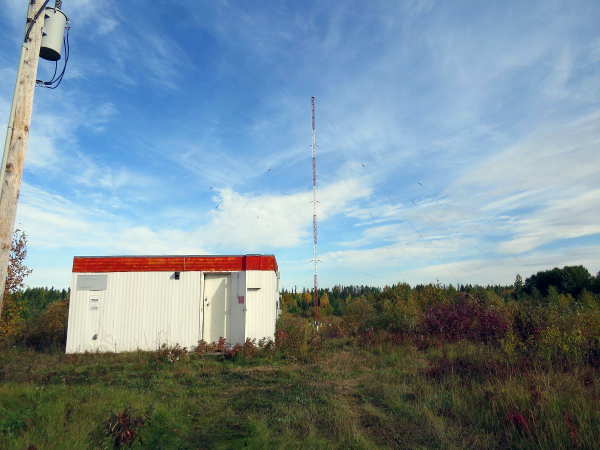 |
| 'YPM' - 274kHz courtesy: Alex - VE3GOP |
A list of all of the North American targets in this range can be found in the RNA database, while targets for European DXers will be found here... specify the frequency range wanted and check 'show all results'.
An excellent target for this CLE is 'YPM' in Pikangikum, Ontario, on 274kHz. Its 25 watts and big antenna are heard well throughout North America
From CLE coordinator Brian Keyte (G3SIA) comes the following reminder:
Hi all.
Have you tried one of our Co-ordinated Listening Events yet?
CLEs are NOT contests - they allow us to share the same listening
challenge and in the process to learn more about our great hobby.
Short logs or long ones, everyone who enjoys taking part is a winner!
Since early in 2001 over 250 different NDB List members have taken
part in a CLE for the first time - and over four in every five came back
for more.
Fourteen members have come back over 100 times, 44 over 50 times.
Our 195th Co-ordinated Listening Event, coming in a few days, will be
rather a challenge (we like those, don't we?)!
Days: Friday 19 June - Monday 22 June (a week early)
Times: Start and end at midday, your LOCAL time
Range: 270.0 - 319.9 kHz (NOT DGPS beacons)
Yes - it does include most of the DGPS frequencies, but it is 50 kHz wide,
about three times more than usual. We shall be listening only for the
'NORMAL' NDBs.
We last searched for NDBs on these frequencies in CLE180 (March 2014).
We shall all have at least one end of the range for some comfortable
listening, but the main challenge will be to find the Morse signals among
all the DGPS noises. REU and RNA show that, since the start of last year,
about 270 and 200 normal NDBs respectively have been reported there.
There are several to be heard by our members 'down under' as well.
Please look out for the 'Final Details', which as usual will follow about
two days before the start.
73
Brian
----------------------------------------------------------
From: Brian Keyte G3SIA ndbcle'at'gmail.com
Location: Surrey, SE England (CLE co-ordinator)
----------------------------------------------------------
These listening events serve several purposes. They:
Final details can be found at the NDB List website, and worldwide results, for every participant, will be posted there a few days after the event. If you are a member of the ndblist Group, results will also be e-mailed and posted there.
The very active Yahoo ndblist Group is a great place to learn more about the 'Art of NDB DXing' or to meet other listeners in your region. There is a lot of good information available there and new members are always very welcome.
If you are contemplating getting started on 630m, listening for NDBs is an excellent way to test out your receive capabilities as there are several NDBs located near this part of the spectrum.
You need not be an ndblist member to participate in the CLEs and all reports, no matter how small, are of much value to the organizers. 'First-time' logs are always VERY welcome!
Reports may be sent to the ndblist or e-mailed to either myself or CLE co- ordinator, Brian Keyte (G3SIA), whose address appears above.
Please...do give the CLE a try....then let us know what NDB's can be heard from your location! Your report can then be added to the worldwide database to help keep it up-to-date.
Have you tried one of our Co-ordinated Listening Events yet?
CLEs are NOT contests - they allow us to share the same listening
challenge and in the process to learn more about our great hobby.
Short logs or long ones, everyone who enjoys taking part is a winner!
Since early in 2001 over 250 different NDB List members have taken
part in a CLE for the first time - and over four in every five came back
for more.
Fourteen members have come back over 100 times, 44 over 50 times.
Our 195th Co-ordinated Listening Event, coming in a few days, will be
rather a challenge (we like those, don't we?)!
Days: Friday 19 June - Monday 22 June (a week early)
Times: Start and end at midday, your LOCAL time
Range: 270.0 - 319.9 kHz (NOT DGPS beacons)
Yes - it does include most of the DGPS frequencies, but it is 50 kHz wide,
about three times more than usual. We shall be listening only for the
'NORMAL' NDBs.
We last searched for NDBs on these frequencies in CLE180 (March 2014).
We shall all have at least one end of the range for some comfortable
listening, but the main challenge will be to find the Morse signals among
all the DGPS noises. REU and RNA show that, since the start of last year,
about 270 and 200 normal NDBs respectively have been reported there.
There are several to be heard by our members 'down under' as well.
Please look out for the 'Final Details', which as usual will follow about
two days before the start.
73
Brian
----------------------------------------------------------
From: Brian Keyte G3SIA ndbcle'at'gmail.com
Location: Surrey, SE England (CLE co-ordinator)
----------------------------------------------------------
These listening events serve several purposes. They:
- determine, worldwide, which beacons are actually in service and on-the-air so the online database can be kept up-to-date
- determine, worldwide, which beacons are out-of-service or have gone silent since the last CLE covering this range
- will indicate the state of propagation conditions at the various participant locations
- will give you an indication of how well your LF/MF receiving system is working
- give participants a fun yet challenging activity to keep their listening skills honed
Final details can be found at the NDB List website, and worldwide results, for every participant, will be posted there a few days after the event. If you are a member of the ndblist Group, results will also be e-mailed and posted there.
The very active Yahoo ndblist Group is a great place to learn more about the 'Art of NDB DXing' or to meet other listeners in your region. There is a lot of good information available there and new members are always very welcome.
If you are contemplating getting started on 630m, listening for NDBs is an excellent way to test out your receive capabilities as there are several NDBs located near this part of the spectrum.
You need not be an ndblist member to participate in the CLEs and all reports, no matter how small, are of much value to the organizers. 'First-time' logs are always VERY welcome!
Reports may be sent to the ndblist or e-mailed to either myself or CLE co- ordinator, Brian Keyte (G3SIA), whose address appears above.
Please...do give the CLE a try....then let us know what NDB's can be heard from your location! Your report can then be added to the worldwide database to help keep it up-to-date.
Hunting For NDBs In CLE194
It's CLE time once again! For you low-frequency buffs, another challenge awaits. This month's frequency range covers the high end, 385.0 - 399.9 kHz. A list of all of the North American targets in this range can be found in the RNA database, while targets for European DXers will be found here... specify the frequency range wanted and check 'show all results'.
An excellent target for North Americans is little 'OO' on 390kHz. It gets out well at just 7.5watts and was heard here on Mayne Island earlier this year.
From CLE coordinator Brian Keyte (G3SIA) comes the following reminder:
Hi all,
Have you tried one of our Co-ordinated Listening Events yet?
CLEs are NOT contests - they allow us to share the same listening
challenge and in the process to learn more about our great hobby.
Short logs or long ones, everyone who enjoys taking part is a winner!
Since early in 2001 over 250 different NDB List members have taken
part in a CLE for the first time - and over four in every five came back
for more.
Fourteen members have come back over 100 times, 44 over 50 times.
End of the Commercial!
Our 194th CLE is almost here:
Days: Friday 22 May - Monday 25 May
Times: Start and end at midday LOCAL TIME
Range: 385.0 - 399.9 kHz
Just log all the NDBs that you can identify with their nominal (listed)
frequencies in the range - it includes 385 kHz, but not 400 kHz -
plus any UNIDs that you come across there.
Please send your CLE log in a plain text email if possible (not in
an attachment) and to the List, not direct to me.
Show on each line of your log:
# The Date (e.g. 2015-05-dd or just the day-of-the-month, dd)
# The Time in UTC (the day changes at 00:00 UTC).
# kHz - the beacon's nominal published frequency, if known.
# The Call Ident.
Show those main items FIRST - any other details such as location,
distance, offsets, etc., go LATER in the same line (or in footnotes).
Please always include your own location and brief details of the
equipment that you were using.
It is important to put 'CLE194' at the start of the email subject.
If you send any interim logs, please also send a 'Final' (complete)
log showing all your loggings for the event.
I will send the usual 'Any More Logs?' email at about 1700 UTC on
Tuesday so that you can check that your log has been found OK.
It is a good idea to meet that deadline if you can, but make sure that
your log has arrived on the list by 0800 UTC on Wednesday at the
very latest. The combined results should be completed on that day.
You can find full information by going to the CLE Information Page
http://www.ndblist.info/cle.htm It also has a link to the seeklists
for this Event at REU/RNA/RWW.
Good listening
Brian
----------------------------------------------------------
From: Brian Keyte G3SIA ndbcle'at'gmail.com
Location: Surrey, SE England (CLE co-ordinator)
----------------------------------------------------------
( If you would like to listen remotely you could use any one remote
receiver, such as http://websdr.ewi.utwente.nl:8901/ for your
loggings, stating its location and owner and with their permission
if required. A remote listener may NOT also use another receiver,
local or remote, to make further loggings for the same CLE )
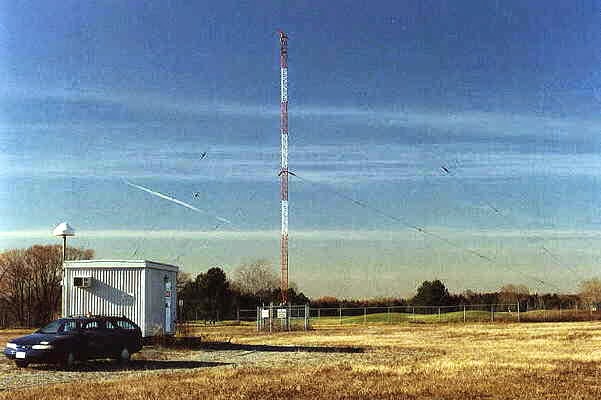 |
| OO-390 kHz courtesy: ve3gop.com |
It's CLE time once again! For you low-frequency buffs, another challenge awaits. This month's frequency range covers the high end, 385.0 - 399.9 kHz. A list of all of the North American targets in this range can be found in the RNA database, while targets for European DXers will be found here... specify the frequency range wanted and check 'show all results'.
An excellent target for North Americans is little 'OO' on 390kHz. It gets out well at just 7.5watts and was heard here on Mayne Island earlier this year.
From CLE coordinator Brian Keyte (G3SIA) comes the following reminder:
Hi all,
Have you tried one of our Co-ordinated Listening Events yet?
CLEs are NOT contests - they allow us to share the same listening
challenge and in the process to learn more about our great hobby.
Short logs or long ones, everyone who enjoys taking part is a winner!
Since early in 2001 over 250 different NDB List members have taken
part in a CLE for the first time - and over four in every five came back
for more.
Fourteen members have come back over 100 times, 44 over 50 times.
End of the Commercial!
Our 194th CLE is almost here:
Days: Friday 22 May - Monday 25 May
Times: Start and end at midday LOCAL TIME
Range: 385.0 - 399.9 kHz
Just log all the NDBs that you can identify with their nominal (listed)
frequencies in the range - it includes 385 kHz, but not 400 kHz -
plus any UNIDs that you come across there.
Please send your CLE log in a plain text email if possible (not in
an attachment) and to the List, not direct to me.
Show on each line of your log:
# The Date (e.g. 2015-05-dd or just the day-of-the-month, dd)
# The Time in UTC (the day changes at 00:00 UTC).
# kHz - the beacon's nominal published frequency, if known.
# The Call Ident.
Show those main items FIRST - any other details such as location,
distance, offsets, etc., go LATER in the same line (or in footnotes).
Please always include your own location and brief details of the
equipment that you were using.
It is important to put 'CLE194' at the start of the email subject.
If you send any interim logs, please also send a 'Final' (complete)
log showing all your loggings for the event.
I will send the usual 'Any More Logs?' email at about 1700 UTC on
Tuesday so that you can check that your log has been found OK.
It is a good idea to meet that deadline if you can, but make sure that
your log has arrived on the list by 0800 UTC on Wednesday at the
very latest. The combined results should be completed on that day.
You can find full information by going to the CLE Information Page
http://www.ndblist.info/cle.htm It also has a link to the seeklists
for this Event at REU/RNA/RWW.
Good listening
Brian
----------------------------------------------------------
From: Brian Keyte G3SIA ndbcle'at'gmail.com
Location: Surrey, SE England (CLE co-ordinator)
----------------------------------------------------------
( If you would like to listen remotely you could use any one remote
receiver, such as http://websdr.ewi.utwente.nl:8901/ for your
loggings, stating its location and owner and with their permission
if required. A remote listener may NOT also use another receiver,
local or remote, to make further loggings for the same CLE )
These listening events serve several purposes. They:
- determine, worldwide, which beacons are actually in service and on-the-air so the online database can be kept up-to-date
- determine, worldwide, which beacons are out-of-service or have gone silent since the last CLE covering this range
- will indicate the state of propagation conditions at the various participant locations
- will give you an indication of how well your LF/MF receiving system is working
- give participants a fun yet challenging activity to keep their listening skills honed
Final details can be found at the NDB List website, and worldwide results, for every participant, will be posted there a few days after the event. If you are a member of the ndblist Group, results will also be e-mailed and posted there.
The very active Yahoo ndblist Group is a great place to learn more about the 'Art of NDB DXing' or to meet other listeners in your region. There is a lot of good information available there and new members are always very welcome.
If you are contemplating getting started on 630m, listening for NDBs is an excellent way to test out your receive capabilities as there are several NDBs located near this part of the spectrum.
You need not be an ndblist member to participate in the CLEs and all reports, no matter how small, are of much value to the organizers. 'First-time' logs are always VERY welcome!
Reports may be sent to the ndblist or e-mailed to either myself or CLE co- ordinator, Brian Keyte (G3SIA), whose address appears above.
Please...do give the CLE a try....then let us know what NDB's can be heard from your location! Your report can then be added to the worldwide database to help keep it up-to-date.
Hunting For NDB’s In CLE193
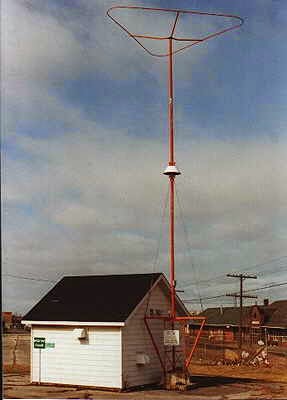 |
| SN-408 courtesy: Alex Wiecek |
It's CLE time once again! For you low-frequency buffs, another challenge awaits. This months frequency range covers the high end, 400-419.9 kHz. Perhaps you can log little 13-watt SN (St. Catherines, Ontario) on 408kHz, last logged here in February 2014.
Conditions have been up and down so lets keep our fingers crossed for some good propagation.
From CLE coordinator Brian Keyte (G3SIA) comes the following reminder:
"Our 193rd co-ordinated listening event starts on Friday. After the Navtex
CLE last month, this is a gentle return for us to normal NDB listening.
Do join in even if you only have an hour or so to spare over the weekend.
Days: Friday 24 - Monday 27 April 2015
Times: Start and end at midday your LOCAL time
Range: 400 - 419.9 kHz
Just log all the NDBs you can identify with nominal (listed)
frequencies in the range - it includes 400 kHz, but not 420 kHz -
plus any UNIDs that you come across there.
Please send your CLE log to the List (no attachments and ideally in a
plain text email) with CLE193 at the start of its title. Show on each line:
# The Date (or Day No: 24 to 27)
# The Time in UTC (the day changes at 00:00 UTC).
# kHz - the nominal published frequency, if known.
# The Call Ident.
Please show those main items FIRST. Any other optional details such
as Location and Distance go LATER in the same line.
If you send any interim logs, please also send a 'Final' (complete) one.
And, of course, tell us your own location and brief details of the
equipment that you were using during the Event.
I will send the usual 'Any More Logs?' email soon after 17:00 UTC
on Tuesday so that you can check that your log has been found OK.
Do make sure that your log has arrived on the List by 08:00 UTC
on Wednesday 29 April at the very latest.
The combined results should be completed on that day.
You can find full details about current and past CLEs from the CLE page
http://www.ndblist.info/cle.htm including access to the CLE193 seeklists
for your part of the World prepared from the loggings on Rxx.
Good listening - enjoy the CLE.
Brian
----------------------------------------------------------
From: Brian Keyte G3SIA: <ndbcle'at'gmail.com>
Location: Surrey, SE England (CLE co-ordinator)
----------------------------------------------------------
(If you would like to listen remotely you could use any one remote
receiver such as http://websdr.ewi.utwente.nl:8901/ for your
loggings, stating its location and owner and with their permission
if required. A remote listener may NOT also use another receiver,
local or remote, to make further loggings for the same CLE)"
Do join in even if you only have an hour or so to spare over the weekend.
Days: Friday 24 - Monday 27 April 2015
Times: Start and end at midday your LOCAL time
Range: 400 - 419.9 kHz
Just log all the NDBs you can identify with nominal (listed)
frequencies in the range - it includes 400 kHz, but not 420 kHz -
plus any UNIDs that you come across there.
Please send your CLE log to the List (no attachments and ideally in a
plain text email) with CLE193 at the start of its title. Show on each line:
# The Date (or Day No: 24 to 27)
# The Time in UTC (the day changes at 00:00 UTC).
# kHz - the nominal published frequency, if known.
# The Call Ident.
Please show those main items FIRST. Any other optional details such
as Location and Distance go LATER in the same line.
If you send any interim logs, please also send a 'Final' (complete) one.
And, of course, tell us your own location and brief details of the
equipment that you were using during the Event.
I will send the usual 'Any More Logs?' email soon after 17:00 UTC
on Tuesday so that you can check that your log has been found OK.
Do make sure that your log has arrived on the List by 08:00 UTC
on Wednesday 29 April at the very latest.
The combined results should be completed on that day.
You can find full details about current and past CLEs from the CLE page
http://www.ndblist.info/cle.htm including access to the CLE193 seeklists
for your part of the World prepared from the loggings on Rxx.
Good listening - enjoy the CLE.
Brian
----------------------------------------------------------
From: Brian Keyte G3SIA: <ndbcle'at'gmail.com>
Location: Surrey, SE England (CLE co-ordinator)
----------------------------------------------------------
(If you would like to listen remotely you could use any one remote
receiver such as http://websdr.ewi.utwente.nl:8901/ for your
loggings, stating its location and owner and with their permission
if required. A remote listener may NOT also use another receiver,
local or remote, to make further loggings for the same CLE)"
__._,_.___
These listening events serve several purposes. They:
- determine, worldwide, which beacons are actually in service and on-the-air so the online database can be kept up-to-date
- determine, worldwide, which beacons are out-of-service or have gone silent since the last CLE covering this range
- will indicate the state of propagation conditions at the various participant locations
- will give you an indication of how well your LF/MF receiving system is working
- give participants a fun yet challenging activity to keep their listening skills honed
Final details can be found at the NDB List website, and worldwide results, for every participant, will be posted there a few days after the event. If you are a member of the ndblist Group, results will also be e-mailed and posted there.
The very active Yahoo ndblist Group is a great place to learn more about the 'Art of NDB DXing' or to meet other listeners in your region. There is a lot of good information available there and new members are always very welcome.
If you are contemplating getting started on 630m, listening for NDBs is an excellent way to test out your receive capabilities as there are several NDBs located near this part of the spectrum.
You need not be an ndblist member to participate in the CLEs and all reports, no matter how small, are of much value to the organizers. 'First-time' logs are always VERY welcome!
Reports may be sent to the ndblist or e-mailed to either myself or CLE co- ordinator, Brian Keyte (G3SIA), whose address appears above.
Please...do give the CLE a try....then let us know what NDB's can be heard from your location! Your report can then be added to the worldwide database to help keep it up-to-date.
VE7SKA’s New Skywire
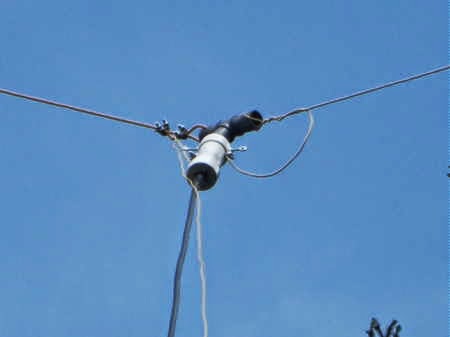
Mike, VE7SKA, AM/FM DXer from Saltspring Island, a nearby island here in the oceans of south-west BC, has sent me a description of his latest doings. Mike took advantage of the recent warm sunny weather to do some antenna work.
Mike calls his new antenna the SDSS (Super Drooper Sleuther Sloper)! It is 110' long, made of #18 wire and hangs from near the top of his 48' tower, drooping to a low sturdy Fir branch, about 10' high.
Using a section of Belden 9913 that was already on the tower (it used to feed his 6m array), Mike feeds the 'drooper' via a 9:1 balun / matching transformer... with the antenna feeding one leg of the transformer and the other side going to a section of #18 wire dropping straight down and terminated in a small ground system at the base of the tower.
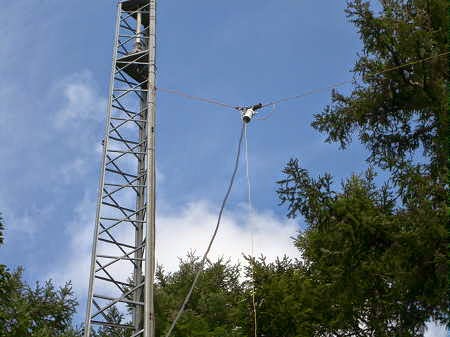
The antenna runs ESE at 112 degrees by WNW at 292 degrees ... the bread and butter direction from SW Canada. For phasing and comparison, Mike uses a much lower wire, 30' long x 7' above ground level, running SE at 140 degrees by 320 degrees NW.
Mike reports: "An immediate test done after launch at 3pm logged a new 10 watt TIS on 1630kHz from just north of Marysville, WA on I-5 freeway. Little daytimer KBRD 680 Lacey, WA with 250 watts wasn't even audible on the Quantum QX Pro v3 amplified loop ... recent MW condx have been favorable ... a sunset tentative of 1460 KLTC N.Dakota (5kW); logging rarity 930 KTKN AK (1kW) on a very busy frequency ... new logging 1580 KKTS WY at 220 watts, phasing out pests KGAL and KMIK."
Mike goes on to say that phasing the new antenna against its smaller and lower little cousin allowed him to log several of the stations noted above, although the lower antenna picks up more noise.
This is really the key to any antenna system and one of the reasons we were always taught to get antennas as high as possible ... to get away from those nasty noise sources in or near the house.
With several antennas to play with now, Mike is looking forward to some interesting work on both the BCB, the beacon band and the lower SW bands but plans to get the antenna up much higher in some of his tall Firs before too long. As well, a high Low Noise Vertical is also on the 'to build' list.
So far the SDSS is proving the old myth wrong ... that antennas put up in anything less than the foulest of weather just don't work.
‘OO’ Oshawa NDB
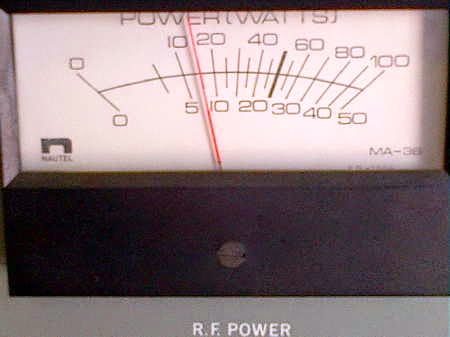
You may recall my blog describing the recent reception of the Oshawa Municipal Airport's NDB, "OO" on 391KHz. The Nav Canada beacon maintenance man, Alex, (VE3GOP) also a Yahoo Group NDBlist member was able to pay a visit to the beacon on Friday and confirm the reported output power is indeed just 7.5 watts! He even snapped a picture of the power meter ... talk about service!
Little "OO" has also been reported in Europe by none other than Roelof, PAØRDT, while using one of his own small active whips. I think this illustrates the remarkable propagation that can, and often does, take place below the broadcast band, even with a less than optimum antenna system ... good news for those planning a 630m backyard antenna installation!
 |
| courtesy: A. Wiecek, VE3GOP |
Little "OO" has also been reported in Europe by none other than Roelof, PAØRDT, while using one of his own small active whips. I think this illustrates the remarkable propagation that can, and often does, take place below the broadcast band, even with a less than optimum antenna system ... good news for those planning a 630m backyard antenna installation!
Low Noise Vertical Follow Up
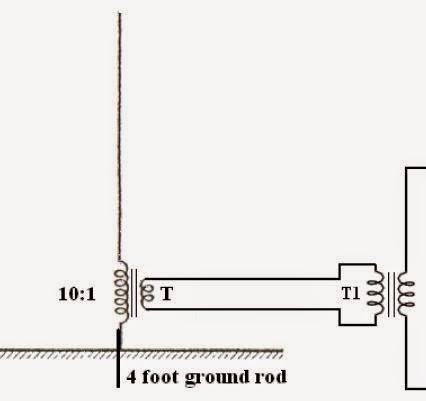 The recent posting by BCB / NDB DXer, Steve Ratzlaff (AA7U in OR), describing the poor performance of his initial LNV, prompted another round of valuable discourse on the Yahoo NDBlist Group. Steve indicated that his new 40' LNV was virtually deaf compared to his loop and active whip. ... until he rewound the transformers.
"I've fixed the very low sensitivity of my 40 foot LNV. The transformer
needed more turns for my particular setup--that made all the difference
in the world. I'm also using coax cable, not twin lead--that apparently
makes a big difference in the proper transformer turns ratio too. But
the LNV with preamp is now about the same sensitivity as the active whip.
My transformer primary uses 110 turns, to give good reactance at
the low end of the NDB band. I started with 21 turns on the secondary,
tuned to my local beacon LGD on 296 and looked at the signal level,
removing two turns each time until I got to 8 turns. A broad peak was
with 16 turns which is what I used for the final secondary turns. That's
a turns ratio of 110/16 = 6.875.
Total coax run from the mast to the middle of the home is about
135 feet where it enters the home.
I did some ground rod checks for signal level too. I have 3 ground rods
installed at the LNV--6 foot, 4 foot and a short 2 foot. I started out
with all three connected and took a reference signal reading, then just
the 6 foot; then just the 4 foot and then just the 2 foot. Signal level
dropped several tenths of a decibel for the 2 foot rod and was the same
for the 4 and 6 foot rods by themselves and for all 3 rods connected. So
my particular setup likes something a little longer than 2 feet for the
ground rod. I'll leave all three rods connected for now since they're
already in place.
The LNV being in a different location is now quieter on some lower end
signals where the active whip is noisy due to the whip being closer to
AC power--a nice thing. The low end 195-205 kHz especially are often
unusable due to noise; the LNV is much quieter for those, apparently due
to it being 100 feet farther from the AC power at the home.
So, the bottom line is my LNV is now working like it should, I believe.
I'll continue to use it and do more comparison checks since I can switch
my antennas instantly."
From Roelof, PAØRDT:
" ... I believe the term low noise vertical is a bit misleading. These verticals are only suffering less from local noise compared to loop antennas when
located close to the house.
The reason is that the vertical is receiving the electric field and
the electric field of local noise sources located in the house fall
off very quickly outside the house, especially at LF and MW.
A loop antenna does receive the magnetic field of local noise
sources and this field does not fall off close to the house.
I can demonstrate this effect here any time with my modified ALA1530
and mini-whip antenna.
"Matching" this type of vertical to the 50 ohm input of a receiver
is interesting. Connecting it directly to the receiver input, will
load the antenna too much and the voltage across the antenna
terminals will collapse.
This problem can be solved by using a high input buffer amplifier as
used in active whips or by a voltage step down transformer.
Due to imperfections in the step down transformer, e.g.
inter-winding capacitance and insufficient inductance of the
receiver tap / secondary winding, signal output will be way down
compared to an active whip of the same length, using a high input
impedance buffer amplifier.
You can use a tuned vertical to overcome this, however doing so the
broad band nature of the antenna is lost.
Living close to strong broadcast stations, which prevent the use of
active antennas, this particular type of E-probe is an excellent
alternative."
And from Anthony Casorso in CO:
"Motivated by your posts, I build a new transformer using an FT140J with 100 turns on the antenna side and a 10 tap secondary with a rotary switch to select the tap. The taps were from 8 turns to 26 turns in 2 turn increments.
After playing with it for a while, I am leaving it at 10 turns which matches the original 10 to 1 ratio. This is a tradeoff for me because I do get more output as I increase the secondary turns. The problem is that it also starts pushing my FDM-s2 SDR into overload unless I use the MW band reject filter. At the higher settings, I even get some overload with the filter, probably from strong stations near the filter edges.
Overall, the switch is much like having an adjustable attenuator. At 8 turns, the lower parts of the NDB band are just below the receiver noise floor with the resolution bandwidth I normally use so 10 seems about right.
Now that I have the switch, I can play around with it and see if there are situations where other settings work better (like on shortwave maybe)."
And finally Don, in California:
"Well, with 50% more turns (12T) on the secondary winding there is alot
more output. Around 520 kHz I was running the Perseus volume almost all
the way up - now it is about half.
I'm using ~33m 75 oHm coax from the LNV to the Perseus - no RF amp -
plenty of signal. My LNV output is about 15 - 20 dbm less according to
the Perseus than the PA0RDT and Wellbrook ALA-100 but I don't seem to be
missing any signals because of the lower "S" reading. I'm amazed that it
seems to work well so I'm trying not get tangled up in numbers. I don't
think it is possible to have a perfect match with hard wired components
and changing frequencies.
The secondary seems to need at least 8T with a 80T primary in my little
LNV experiment and 12T is better. When I get the 28ga wire I will wind a
primary of 110T to match Steve R's LNV coil with a secondary of 12T to
start with."
Of interest to note is the use by both Steve and Roelof of the RPA-1 preamp.
 |
| courtesy: www.dxengineering.com/ |
From Steve:
" I'm using a DXE RPA-1 preamp that I've modified for flat LF response. It
has about +18 dB gain. The stock preamp rolls off gain below about 300
kHz; mine is flat down to VLF. (The input transformer needs more turns,
that's all that's needed.) "
has about +18 dB gain. The stock preamp rolls off gain below about 300
kHz; mine is flat down to VLF. (The input transformer needs more turns,
that's all that's needed.) "
All good information if you are contemplating your own LNV installation.
NDB Band Wakes Up
The LF NDB band was alive with signals from the east on Tuesday evening ... not the best I have heard but one of the better openings this winter. Nothing over the past few years can compare with the unbelievably good propagation of the last Solar Cycle minimum, so there should be some great LF propagation in the upcoming years. Remember also that listening for NDB's in the 400Khz range can be a good test of your 630m receiving system.
My nightly "go to" propagation indicators to the east are YLJ-406, in Meadow Lake, Saskatchewan and AA-365, in Fargo, on the ND/MN border. Their reported powers are 15W and 100W respectively.
YLJ's signal was a solid S9 as heard here, while AA, further to the south was also doing well, heard here.
Further to the east, 25W ZHD-399, in Dryden, Ontario, revealed itself here.
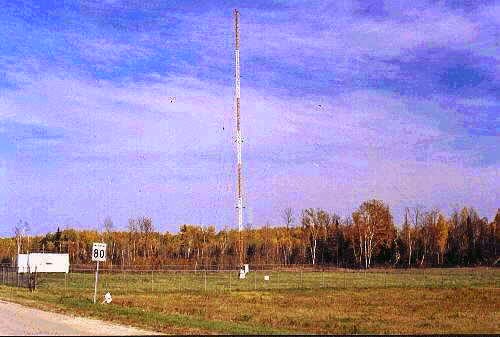
From near Montreal, ZHU-407, at 95W, made a rare appearance here, along with YMW-366, a 500-watter from Maniwaki, Quebec here.
By far the highlight of the evening (and a new catch for me) was little OO-391, at the Ottawa Municipal Airport, Ontario ... last reported to be at just 7W output! Listen here carefully for the long dash followed by the 'OO'.
Yahoo Group's NDBlist member, VE3GOP, is the beacon maintenance man for OO and many others, and will check the power tomorrow.
All of these signals were heard at ~ 9PM local time, in a 6Hz filter using the Perseus SDR and my 10' x 20' active loop.
The previous morning had some of the year's best propagation to Alaska so far ... that direction has been dismal ... with the following NDB's heard (mostly 25-watters) in the pre-dawn hours:
03 10 1300 529 SQM Level Island AK CO36
03 10 1300 396 CMJ Ketchikan AK CO45
03 10 1300 391 EEF Sisters Island AK CO28
03 10 1300 372 FPN Fredericks Point AK CO36
03 10 1300 266 ICK Annette Island AK CO45
03 10 1300 414 IME Mt. Edgecumbe AK CO27
03 10 1300 394 RWO Kodiak AK BO37
03 10 1300 209 CYT Yakataga AK BP80
03 10 1300 390 HBT Sand Point AK AO95
03 10 1300 358 SIT Sitka AK CO26
03 10 1300 350 VTR McGrath AK BP22
03 10 1100 338 CMQ Campbell Lake AK BP41
03 10 1100 233 ALJ Johnstone Point AK BP60
03 10 1100 212 CGL Coghlan Island AK CO28
03 10 1100 223 AFE Kake AK CO36
03 10 1100 229 AKW Klawock AK CO35
03 10 1100 283 DUT Dutch Harbor AK AO63
03 10 1100 245 HNS Haines AK CO29
03 10 1300 347 DJN Delta Junction AK BP74
03 10 1100 411 ILI Iliama AK BO29
03 10 1100 277 ACE Homer AK BO49
03 10 1100 355 AUB King Salmon AK BO18
03 10 1100 524 MNL Valdez AK BP61
03 10 1300 382 JNR Unalakleet AK AP93
03 10 1100 281 CRN Cairn Mountain AK BP21
03 10 1100 385 EHM Cape Newenham AK AO88
03 10 1100 385 OCC Yakutat AK CO09
03 10 1300 390 AES Northway AK BP29
03 10 1100 404 GCR Cordova AK BP70
03 10 1100 525 ICW Nenana AK BP54
03 10 1300 251 OSE Bethel AK AP90
03 10 1100 341 ELF Cold Bay AK AO85
03 10 1300 248 GLA Gulkana AK BP72
03 10 1100 379 IWW Kenai AK BP40
03 10 1300 399 SRI St. George AK AO56
03 10 1300 393 TOG Togiak, AK AO99
03 10 1300 429 BTS Dillingham, AK BO08
03 10 1300 227 MHM Minchumina AK BP33
Unfortunately it looks like LF prop will be deteriorating rapidly, with the recent round of flares expecting to stir up absorption levels over the next several days ... however, HF should see the benefits of the increased sunspot activity ... maybe all is not lost after all!
My nightly "go to" propagation indicators to the east are YLJ-406, in Meadow Lake, Saskatchewan and AA-365, in Fargo, on the ND/MN border. Their reported powers are 15W and 100W respectively.
YLJ's signal was a solid S9 as heard here, while AA, further to the south was also doing well, heard here.
Further to the east, 25W ZHD-399, in Dryden, Ontario, revealed itself here.
From near Montreal, ZHU-407, at 95W, made a rare appearance here, along with YMW-366, a 500-watter from Maniwaki, Quebec here.
 |
| YMW-366KHz Maniwaki, QC courtesy: http://www.ve3gop.com/pict.htm |
By far the highlight of the evening (and a new catch for me) was little OO-391, at the Ottawa Municipal Airport, Ontario ... last reported to be at just 7W output! Listen here carefully for the long dash followed by the 'OO'.
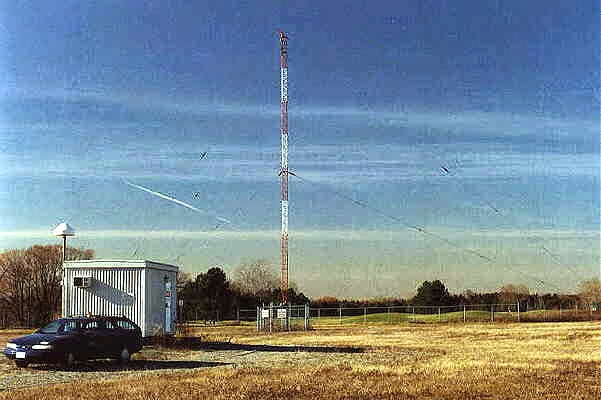 | ||
| OO-391KHz Oshawa, ON courtesy: http://www.ve3gop.com/pict.htm |
Yahoo Group's NDBlist member, VE3GOP, is the beacon maintenance man for OO and many others, and will check the power tomorrow.
All of these signals were heard at ~ 9PM local time, in a 6Hz filter using the Perseus SDR and my 10' x 20' active loop.
The previous morning had some of the year's best propagation to Alaska so far ... that direction has been dismal ... with the following NDB's heard (mostly 25-watters) in the pre-dawn hours:
03 10 1300 529 SQM Level Island AK CO36
03 10 1300 396 CMJ Ketchikan AK CO45
03 10 1300 391 EEF Sisters Island AK CO28
03 10 1300 372 FPN Fredericks Point AK CO36
03 10 1300 266 ICK Annette Island AK CO45
03 10 1300 414 IME Mt. Edgecumbe AK CO27
03 10 1300 394 RWO Kodiak AK BO37
03 10 1300 209 CYT Yakataga AK BP80
03 10 1300 390 HBT Sand Point AK AO95
03 10 1300 358 SIT Sitka AK CO26
03 10 1300 350 VTR McGrath AK BP22
03 10 1100 338 CMQ Campbell Lake AK BP41
03 10 1100 233 ALJ Johnstone Point AK BP60
03 10 1100 212 CGL Coghlan Island AK CO28
03 10 1100 223 AFE Kake AK CO36
03 10 1100 229 AKW Klawock AK CO35
03 10 1100 283 DUT Dutch Harbor AK AO63
03 10 1100 245 HNS Haines AK CO29
03 10 1300 347 DJN Delta Junction AK BP74
03 10 1100 411 ILI Iliama AK BO29
03 10 1100 277 ACE Homer AK BO49
03 10 1100 355 AUB King Salmon AK BO18
03 10 1100 524 MNL Valdez AK BP61
03 10 1300 382 JNR Unalakleet AK AP93
03 10 1100 281 CRN Cairn Mountain AK BP21
03 10 1100 385 EHM Cape Newenham AK AO88
03 10 1100 385 OCC Yakutat AK CO09
03 10 1300 390 AES Northway AK BP29
03 10 1100 404 GCR Cordova AK BP70
03 10 1100 525 ICW Nenana AK BP54
03 10 1300 251 OSE Bethel AK AP90
03 10 1100 341 ELF Cold Bay AK AO85
03 10 1300 248 GLA Gulkana AK BP72
03 10 1100 379 IWW Kenai AK BP40
03 10 1300 399 SRI St. George AK AO56
03 10 1300 393 TOG Togiak, AK AO99
03 10 1300 429 BTS Dillingham, AK BO08
03 10 1300 227 MHM Minchumina AK BP33
Unfortunately it looks like LF prop will be deteriorating rapidly, with the recent round of flares expecting to stir up absorption levels over the next several days ... however, HF should see the benefits of the increased sunspot activity ... maybe all is not lost after all!













