Posts Tagged ‘field day’
 200 Ohm Feed Point Off-centre Fed Dipole
 July 27th, 2010 |
  Author:
The off-centre dipole installed on Field Day 2010 (photograph and copyright of Chris Weisner, VA3SM)
As I mentioned in the earlier Field Day 2010 report, the CUARC group built two antennas for the event. In this post I will describe the first one of these, an off-centre fed dipole.
The common place for the feed point of the off-centre fed dipole is at a 1/3 : 2/3 split in the arms. This has the advantage of providing low SWR (with a 4:1 balun) at even harmonic frequencies, such as 20m and 10m for an antenna cut for the fundamental frequency of 40m (around 66ft). Whereas a centre-fed dipole will only have the odd harmonics which for a 40m (7MHz) dipole is 15m (21MHz).
Rather than use the traditional off-centre length split of 1/3 : 2/3 for our Field Day antenna, it was decided to follow the design proposed by Richard Formato, K1POO, in two technical correspondences published in QST 1,2 and followed up with further article with by Dale Gaudier, 3. In this design the feed point is moved closer to the 1/6 point on the short arm, the advantage being stated in the articles that you should get a 200Ω feedpoint there and so a low SWR on 40m, 20m, 15m and 10m bands when using a 4:1 balun, with no need for an antenna tuner unit. The emphasis on the 15m band is intentional as a low SWR on that band is not usually possible with an off-centre fed dipole with the feed at 1/3 : 2/3 and a 4:1 balun. Four bands on one 69 foot wire antenna with no tuner looked very attractive for Field Day.
The antenna was cut carefully prior to Field Day and the end insulators were added. When cutting the antenna the length measurement included the ‘pig-tail’ connections that I have on the 4:1 balun. The diagram below shows the arrangement of the antenna.

The off-centre fed dipole for 40m, 20m, 15m and 10m
On the day the antenna was installed between two trees at about 35ft off the ground. While the second antenna was being constructed (to be featured in a later post) its SWR was measured with my Autek RF-1 antenna analyzer. The results were taken by Maria, VA3MMI and Gil, VE3JRY and are tabulated below.
_______________________________________________
Band (m) 2:1 VSWR Range (MHz) Minimum VSWR
40 3.1 : 1 (at 7.38 MHz)
20 13.29 – 14.65 1.4 : 1
15 21.20 – 22.31 1.5 : 1
10 27.78 – 29.25 1.7 : 1
_______________________________________________

Maria, VA3MMI and Gil, VE3JRY record the SWR (photograph and copyright of David Scott, VE3ZZU)
The overall results were very pleasing, although the 40m band was a little disappointing. This higher than expected SWR on 40m was also encountered by Dale, M0AOP/K4DG, and was reported 3 by him to be due to the severe imbalance in the antenna, so requiring a choke balun to remove the stray RF on the coax. We did not try a choke balun, since we were unlikely to operate on 40m, that was another station’s band of operation. However we had an antenna tuner unit if we needed to try and tame the SWR. It was very good to see the SWR profile observed in reference 3 was repeatable.
On Sunday morning Maria, VA3MMI, returned with a portable analyzer borrowed from work and did a sweep analysis. The response is below and markers have been inserted to show the minimum SWR associated with the bands. Thanks goes to Maria for the measurement and the plot.

Off-centre fed dipole SWR plot, with markers.
It would be interesting to remeasure the SWR response again with a choke balun in place. I expect the SWR will drop below 2:1 within the 40m band as found by the author of reference 3. If this does happen then four bands and no tuner needed makes this antenna one for serious consideration on HF. Even without a low SWR on 40m the antenna offers three bands and it performed well on 15m and 10m for us on Field Day.
As a final note, I should reiterate the warning by Dean Straw, N6BV, at the end of reference 1 where he warns about using the antenna on 30m, 17m or 24m, as a very high SWR could damage the balun at the feedpoint.
References
1. “Improved Feed for the Off-Centre-Fed Dipole” R. A. Formato, K1POO, Technical Correspondance, QST, May 1996 p76.
2. “Off-Centre-Fed Dipole Comments, Part 2″, R. A. Formato, K1POO, Technical Correspondance, QST, October 1996 pp72-73.
3. “Choke the OCFD” D Gaudier, M0AOP/K4DG, Technical Correspondance, QST, September 1997, pp82-83.
Note: all three of the above papers are collected together in “More Wire Antenna Classics Volume 2″ ARRL, (1999).
The Field Day photographs above are from the Ottawa Valley Mobile Radio Club’s photo gallery.


A Tale of Three Field Day Weekends
Since becoming licensed in the Fall of 2007, I’ve participated in every ARRL Field Day event since becoming licensed (2008, 2009 and 2010) and can honestly say I’ve had fun each and every year.
Let me explain, my three field day weekends mention above are not my only field day weekends. As a child I attended at least one FD with my Uncle, K5SOR perhaps more…But one I remember really well.
Anyway, in 2008 I was honored to have the opportunity to spend my first field day as a licensed ham with my Uncle. He and I went down to his childhood home of Cleveland, Texas and participated with the SHARK (Sam Houston Amateur Radio Club). Many of my Uncles friends belong to this club and just about all have been licensed for over 50 years. The 2008 FD event with the SHARK club was a lot of fun. We operated as N5AF, a 1A station in STX.
Last year in 2009 I spent Field Day weekend with my local club here in Denver. We operated as W0TX, a 6A station in CO. We setup out near Hudson, CO at an old AT&T site. The site is literally in the middle of nowhere. It was hot, it was dusty and dry. The Rocky Mountains just west of Denver teased us with every glance. But…it was fun.
As I began thinking about what I wanted to do for Field Day 2010, the thought of a hot, dusty location just didn’t appeal to me. After all, I live in one of the most beautiful states in the lower 48. I kept thinking of all the advantages to having Field Day in the mountains. First, the daytime temps could be anywhere from 10-20 degrees cooler than those down in the city. Second, the elevation difference sure wouldn’t hurt from an operating position. Third, the smell of pine is just incredible. It was decided….my third Field Day….Field Day 2010 would be in the mountains.
I discussed the idea with a few friends and back in the March/April timeframe all thought it was a great idea and everyone was in. At that time there would be three operators. Our number one goal was to have fun. We weren’t out to win anything…just have fun and prove to ourselves we could pull something like this off. We stayed in touch via email and every couple of weeks we would update logistics and add more to the overall planning checklist. We would keep things simple and operate as a class 1 station. The decision of power was yet to be determined.
As we got closer and closer to Field Day weekend, more and more issues began popping up for the three of us. It was pretty clear we would only be able to operate on Saturday as we all started having scheduling issues with Sunday. But that was OK. We planned to operate for 6 hours or so and break down our operation and be back home before dark. Remember, our number one goal was to have fun.
Just a few days prior to Field Day I got the call. One friend had to bail on the plans. And then there were two. But….no sooner as I even thought that….the second friend sent me an email saying he would be unavailable. And then there was one…..ME! Well I wasn’t going to let this ruin my plans and I wasn’t going to change my plans either. I wanted to operate Field Day in the mountains….I wanted to have fun and I wanted to smell pine trees while doing all this.
Now my wife is THE BEST wife a ham can have. She supports me and my hobby and all that goes along with it. She agreed to go with me. Give her a picnic lunch, a comfy chair and a good book and she’s very happy. We’ve gone on picnics before where I take my Yaesu FT-817 and Buddipole and she takes a book and we’re both happy doing what we enjoy for 2-3 hours. I figured the same could be true for Field Day.
All was set, the car was loaded and it was time to head up the hill. We have a favorite little park just up from Evergreen, Colorado. It’s a great site because there is almost no one there and it sits up overlooking the town of Evergreen. We arrived just before 11 AM local time (1700 UTC) and I had an hour to get my station setup. Field Day would start at High Noon.
My wife the day before encouraged me to leave the generator at home and try operating “green” for field day. Now understand, we’re not tree huggers or anything like that. By the way….there is nothing wrong with being a tree hugger. Yes we care about the environment and we do our part to make a difference. I have batteries and I have solar panels. What else do I need?
So we arrived and I began setting up. The forecast was calling for a beautiful day. Of course, I checked the forecast the day before and didn’t bother checking again that morning. Like other places….In Colorado, wait 5 minutes…the weather is sure to change and change it did. We quickly had our meal just before noon and I was setup. About 5 minutes before noon the clouds began to roll in. Hmmmmm, solar panels not working. No worries….this will blow over and as long as it doesn’t rain……
I managed to work about 5 stations and then I felt it. Yep….one single, tiny little rain drop. But you know….where there’s one. Possibly the one piece of equipment I did not take with me (other than a portable sun) was a canopy. So the rain drops turned from one to many and so the gear needed to be packed away. Saint Maximilan Kolbe (the Patron Saint of ham radio operators) was truly looking out for me because no sooner did I close the back of the Ford Escape, the bottom fell out. It rained and it rained some more. Knowing the weather would not clear up for the next few hours, we decided to start heading back to Denver. I finished out my Field Day fun for Saturday afternoon and even a few hours on Sunday morning from a local park with just my buddipole and my Yaesu FT-897.
So….do I have a favorite Field Day weekend from the three? Well…certainly nothing will ever top sharing field day with my Uncle. But I still managed to have fun and as with the two years previous, I did learn a few things. As for Field Day 2011, I’m not sure where or how it will turn out. Field Day in the Rocky Mountains??? It will happen some day.
Until next time,
73 de KD0BIK
Jerry
CUARC’s First Field Day

Field Day 2010 site viewed from the CUARC tent early Sunday morning
Well it has been a week since Field Day (FD) and so it is time I gave a report on how it went.
As previously mentioned I have been involved in establishing an amateur radio club at the university where I work. For this FD, the first one for the club, the Carleton University Amateur Radio Club (CUARC) teamed up with the Ottawa Valley Mobile Radio Club (OVMRC). Since February there have been 14 new amateurs licensed through CUARC so here was a chance for these newcomers to gain some operational experience and to mix with some very experienced amateurs in the OVMRC.

Ernie, VE3EJJ, talking to CUARC members (copyright Ziad El-Khatibi)
The site was the very front of the grounds of the Canada Science and Technology Museum, by the lighthouse. We ran a 4A operation as VA3RAM and the CUARC contribution was a 100W SSB station on 10m and 15m. CUARC used two antennas, an off-centre fed dipole and two nested full-wave vertical loops for 15m and 10m. These were built by the students, the dipole prior to FD and the loops on the day. The antenna building was a good exercise, translating theory into practice and the antennas had low SWRs on the required bands of 10m and 15m when checked with my Autek antenna analyzer. There was quite a lot of interest in the antennas from other amateurs and I will describe these in detail in a later post.
On Saturday 10m was open so operations started on that and it was great to see the thrill the CUARC members had when making contacts on the antennas they had built. As the afternoon wore on there was a move to 15m. CUARC members mixed with the OVMRC members and were given the opportunity to run the other stations. A great report on this is given in a post on Bob’s, VA3QV, blog.

Gerry, VA3GLT, (left) and Campbell, VA3CNS, (right) working 10m (copyright Ziad El-Khatib)
Field Day is a good time to get operating experience and some of the CUARC members took this opportunity, others were a little ‘mic shy’. One notable operator was Campbell, VA3CNS, who did an excellent job at calling CQ on 15m and logging stations one after another. He was almost running a pile-up for a while. Another highlight was Maria, VA3MMI, working 80m with Bob, VA3QV, and receiving some NTS for the International Space Station. This is detailed in Bob’s blog post. One contact that I made that pleased me was when I was manning Ernie’s, VE3EJJ, 40m station and I logged W1AW. Nice to work a station I had heard so often on CW.
The weather was a little damp and not too hot. Overall, not unpleasant weather which helped to make the 24 hours manageable, even on only three hours sleep.

The busy CUARC tent (copyright Ziad El-Khatib)
Overall a great FD and very enjoyable.
Special thanks to Ziad El-Khatib,VA3ZEK, for most of the photographs.


2010 Field Day Beach Boys Amateur Radio Club Photographs
 Beach Boys Amateur Radio Club | 2 Alpha | Santa Barbara.
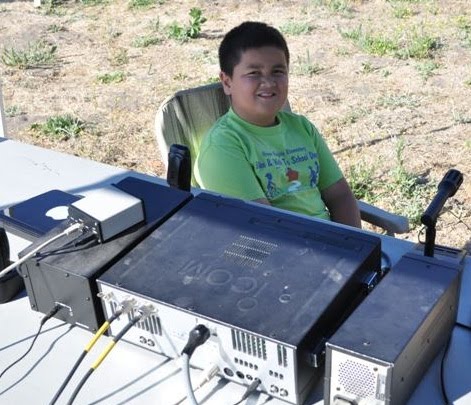 Emerito, N6ETO’s son Vinnie taking a tour of the ionosphere despite closed out conditions.
 Phil, KK6PE working on the laptop prior to official start while Brian and Frank troubleshoot our rotor control box.
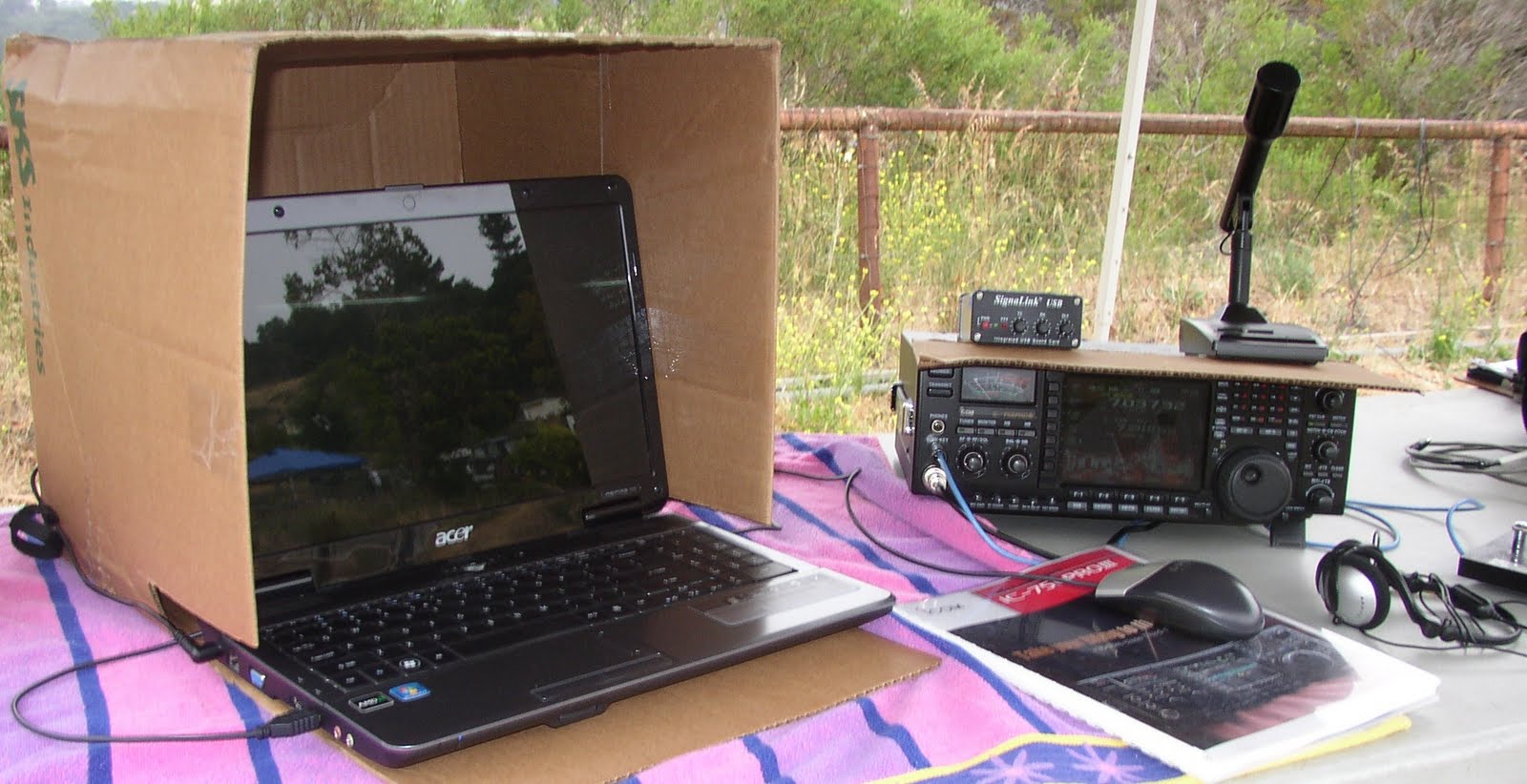
 Phil, KK6PE is downloading N1MM Logger for use over the weekend. The club operated from the dialogue box while inputting mode, frequency, and callsign.
 Fred, KI6QDH and John, KG6RFW logging Saturday afternoon 20m contacts.
 Fred, KI6QDH in the pilot’s chair and a box provided screen shading otherwise it was impossible to see one’s input.
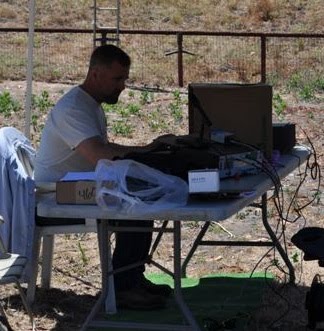 Operating our low band station. I’ve never forgotten field day in Western Pennsylvania as a novice. The low bands were always hot and fun!
 Phil, KK6PE, Ricky, and John, KG6RFW manning our high band station through Saturday evening. Ricky totally dug high frequency operations.
 Saturday night pumps on the low bands and I’m having a blast working both short and long skip. The evening cooled off significantly enough to warrant a North Face sleeping bag and skull cap.
 Ernie, AE6ZE who hosted our first ever field day event in the pilot’s chair on Sunday morning.
 Riding a few hours sleep and back in the chair on 40m early Sunday morning.
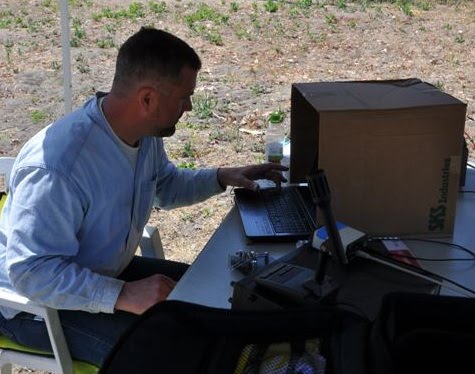 Activity shifted on Sunday as many operators went into the log as 1 Deltas and I imagine it will be an on-going, persistent trend in the forthcoming years.
 KI6QDH and KI6UYB logging contacts either on 15 or 10m because 20m was not as productive as the team had hoped for through the weekend.
 Kord, KI6UYB hitting his groove on the high bands mid-Sunday morning.
 John, KG6RFW summed up our weekend beneath the warmth of Cycle 24 during the final hours of field day.
 73 from the Beach Boys Amateur Radio Club and stay tuned for our next adventure!

2010 Field Day | Beach Boys Amateur Radio Club
 Was it a week ago when ham radio operators across the nation gathered together for a weekend of emergency wireless communications and socializing?
Gratitude.
I want to thank Ernie, AE6ZV for his magnificent effort as the Beach Boys Amateur Radio Club successfully executed its first ever field day. He magnified the definition of ham radio spirit while Honda generators hummed, Morse code sang into the starry night, and operators shouted into microphones.
Many thanks to Emerito, N6ETO, Fred, KI6QDH, John, KG6RFW, and Kord, KI6UYB for their inspiration, hard work, and dedication to the Beach Boys Amateur Radio Club mission — ham radio is a lot of fun!
I believe our club is reinvigorating ham radio in our local area as participants chatted up the excitement of logging their first ever HF contacts, the flush of our accomplishment, and their passion for a wonderful hobby. Our local 2m repeater will never be the same after last weekend.
Reward Is In The Effort.
We are a band of like minded with varying degrees of expertise. Our antenna systems for the weekend included an elevated Butternut HF9V with 5 quarter wave radials on the low bands (40 & 80m), a 3 element tribander at 35 feet (10, 15, and 20m), a G5RV (80m LSB), and a 40m dipole.
Propagation really depressed conditions on the high bands with a Sunday morning sporadic-e exception. Literally, 20m was gridlocked and 100 watts was not sufficient enough to conquer both conditions and signal jam when 15 and 10m are virtually shut down however; Beach Boys Amateur Radio Club logged over 200 contacts on the high bands.
A job well done for Kord, KI6UYB who logged his first ever HF contact!
Low Bands Play On.
The low bands performed beyond expectation and we were more than pleased with the performance of the elevated vertical with counterpoise. The concentration of 6 land stations on 40m had an enormous positive impact on our log statistics. Their signals ranged from barely above receiver noise floor to an astounding 20dB on the s-meter.
Forty meters made up the difference for our low power operation especially when 20m was gridlocked.
Fred, KI6QDH fired up our G5RV on 80m LSB beneath a sky ablaze with full moon light and thin, wispy tendrils of fog. His effort spiked our overall total while I logged Morse code contacts on the same band. I enjoyed listening to him as contact after contact went into the log. On the other hand, we are in need of an 80m operator who is a night owl because my brain stopped processing Morse code around 1 o’clock in the morning.
The Beach Boys Amateur Radio Club logged over 500 contacts on the low bands.
Locally Reinvigorating Ham Radio.
Our preparations paid dividends especially in terms of having a lot of ham radio fun. We had lots of visitors throughout Saturday afternoon and, hopefully, our band of passionate operators inspired individuals to look again at ham radio in addition high frequency (HF) operating.
We were wiped out when the buzzer concluded our first ever field day operation. Our team effort scored over 700 contacts in the log and we are targeting over 1,000 for next year.
Next Project?
The Beach Boys Amateur Radio Club is looking at its next project, perhaps, UHF/VHF operations near the beach with our beams pointed north/south toward San Francisco and Los Angeles. There are digital modes yet to be conquered and lots of space on HF for ham radio fun. Six meters is all the rage in the area trending Hawaiian print shirt popular along the central coast of California.
Stay tuned for the next adventure and 73 from the shack relaxation zone.
P.S. Working on my radial system this afternoon, antenna lab gets a 6m beam, and I renewed my ARRL membership.

Beach Boys Amateur Radio Club 2010 Field Day Prep
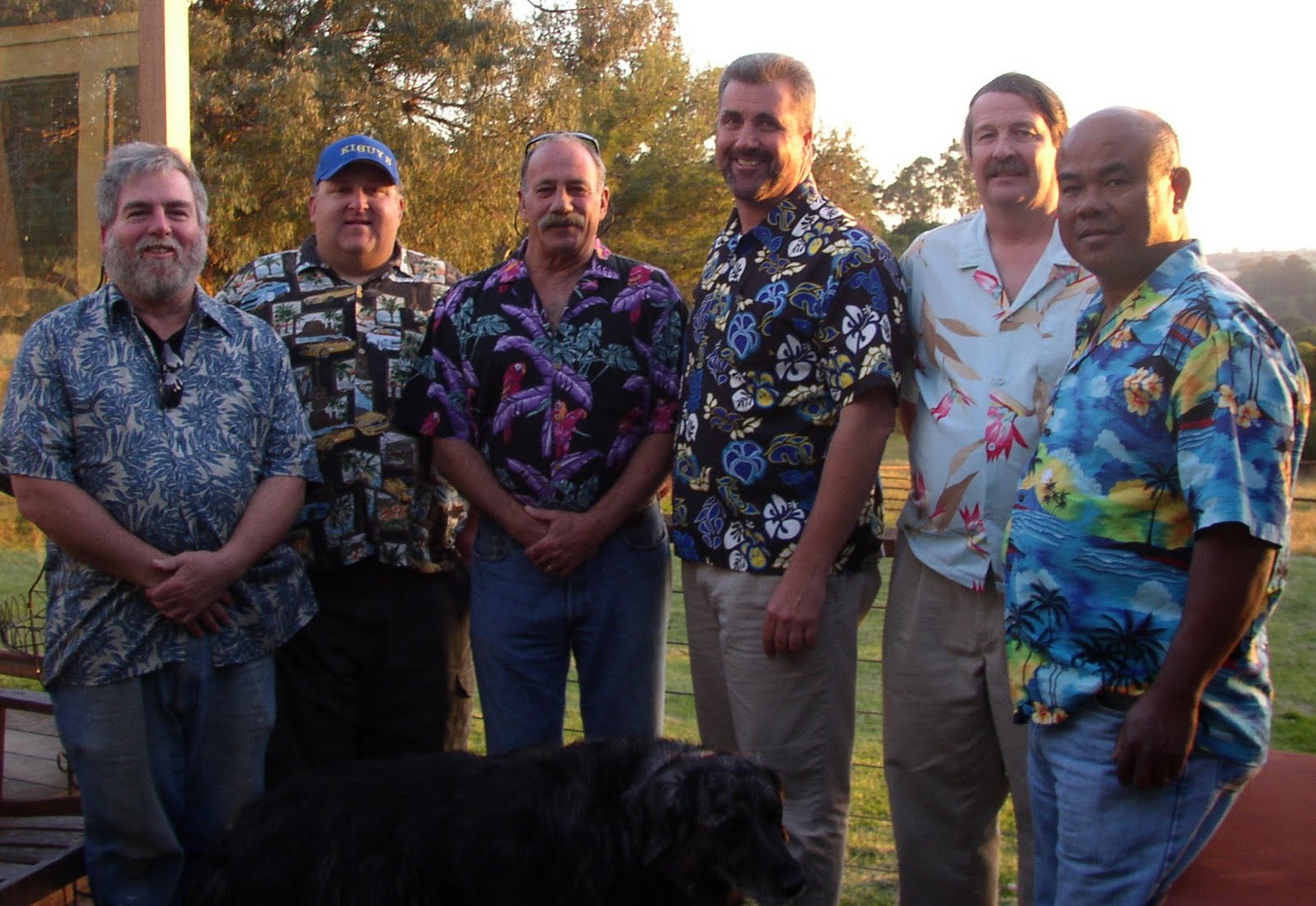 Photograph 1 Beach Boys Amateur Radio Club located near Pismo Beach, California. Our only requirement for membership is a willingness to enjoy ham radio and wear a Hawaiian print shirt.
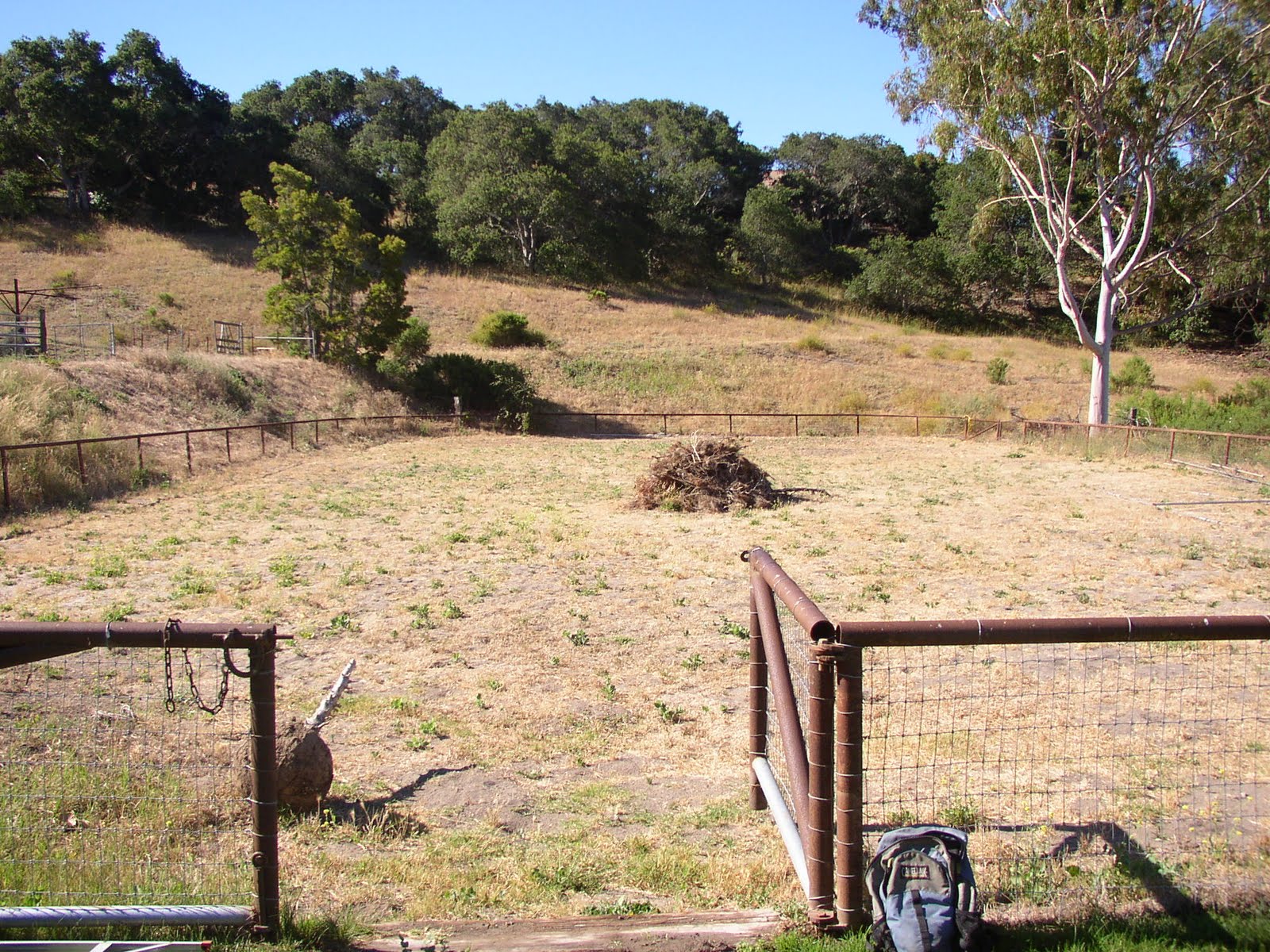 Photograph 2 is our field day site and note the arena’s metal fencing.
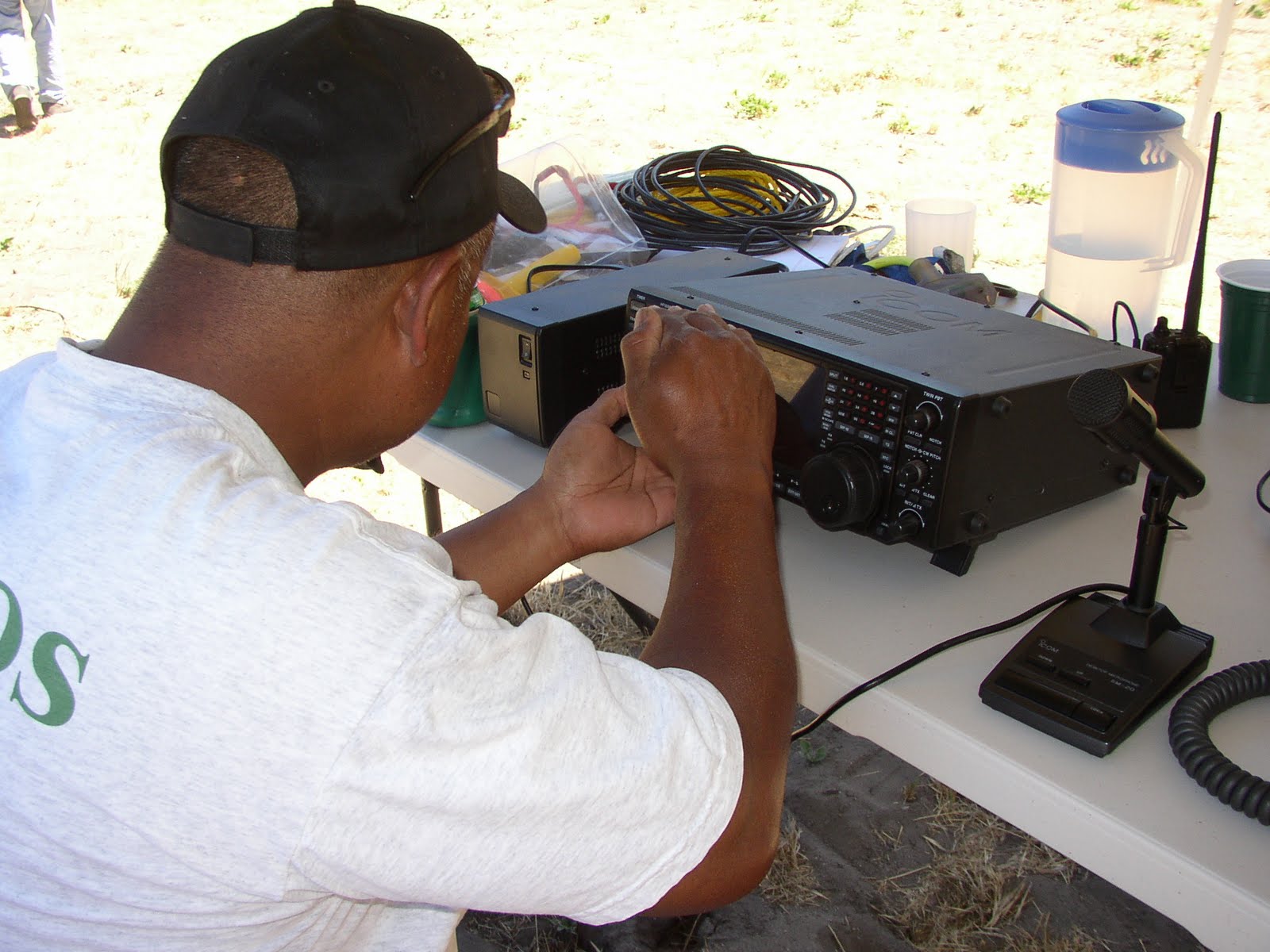 Photograph 3 is Emerito, N6ETO at the controls of an ICOM ProIII — one of two for this year.
 Photograph 4 is Fred, KI6QDH who is our local ham radio motivator and 6 meter grid square chaser.
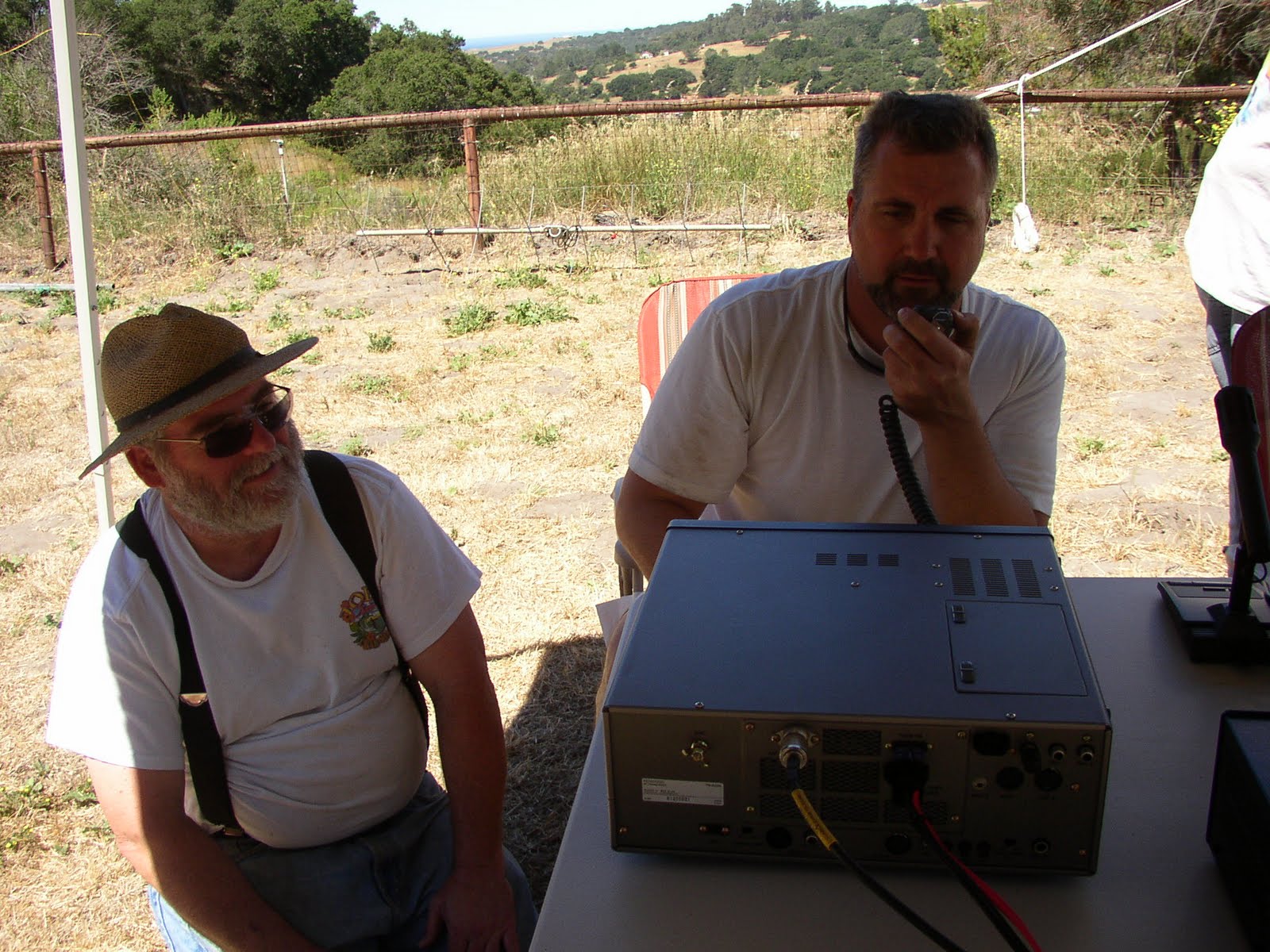 Photograph 5 taken of John, KG6RWF and I while operationally testing our field day equipment to include a Kenwood TS850S.
 Photograph 6 taken while I logged K6D a special event station commemorating donuts in Southern California.
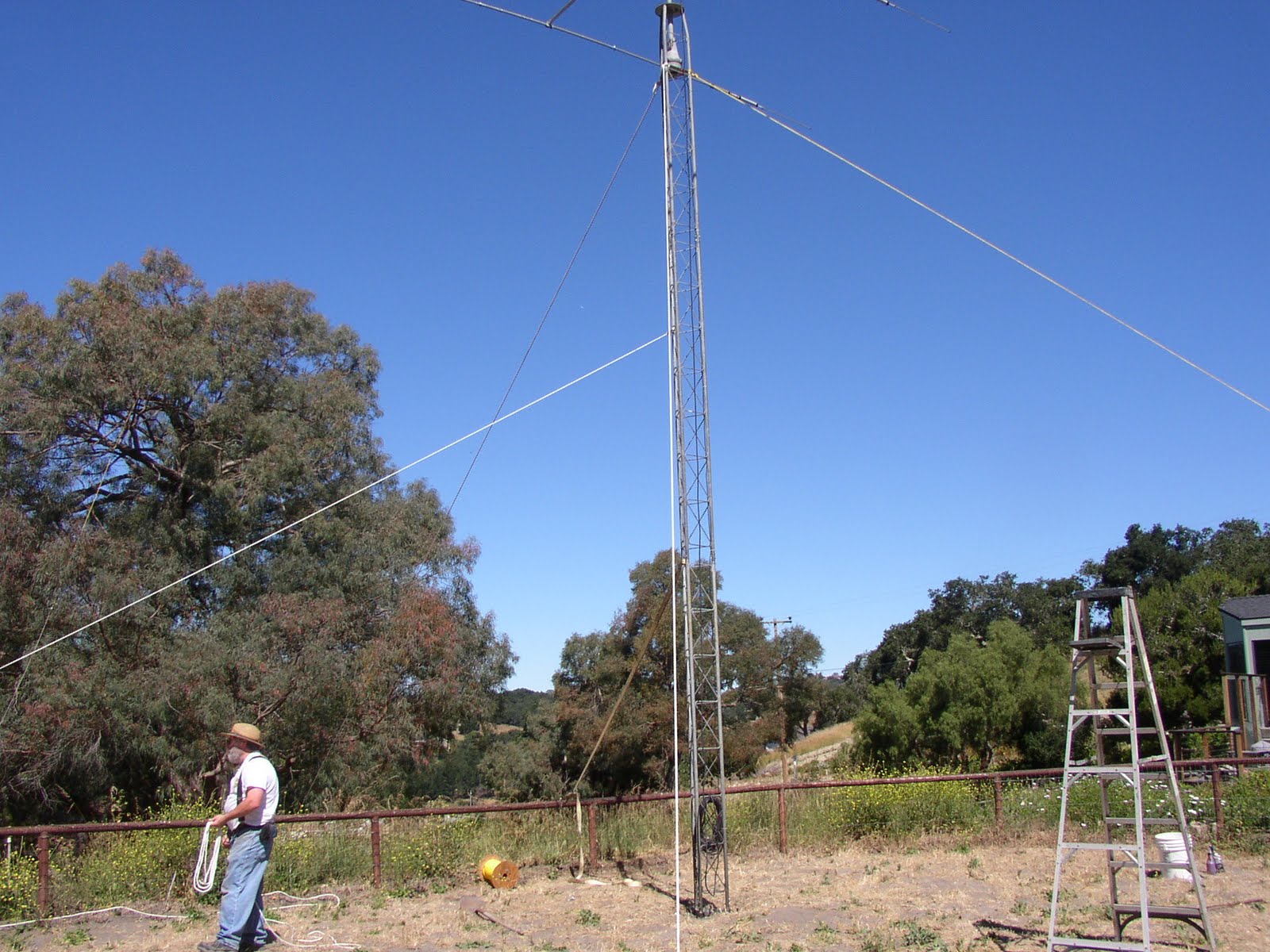 Photograph 7 taken after BBARC successfully deployed our field day tower. It is all about safety when working in and around a tower.
 Photograph 8 is our tri-bander waiting for signals. We heard E4X working a 5 KHz wide swarm on 20m Morse code this morning.
 Photograph 9 taken while we prepared the tower for deployment.
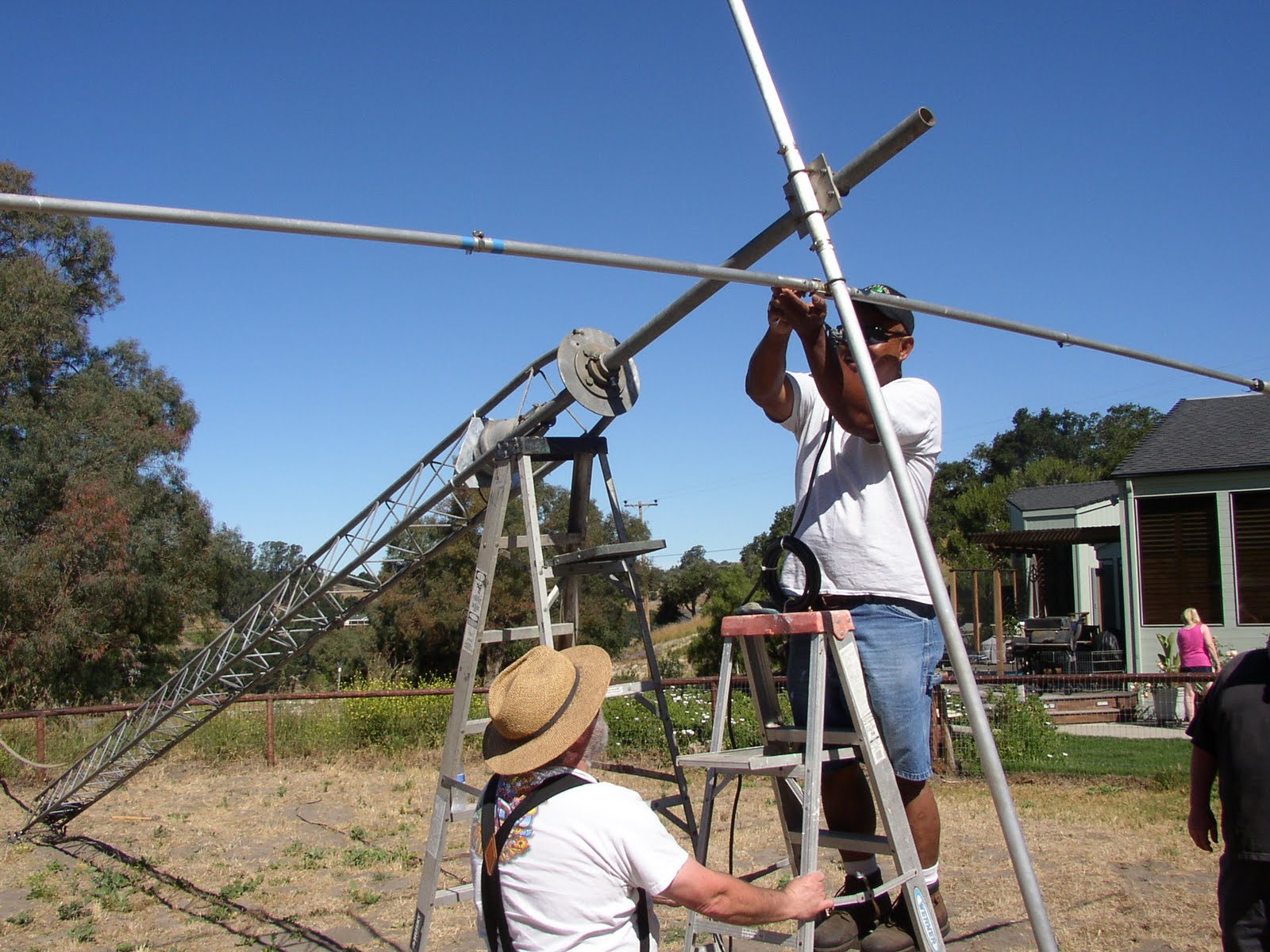 Photograph 10 taken of Emerito, N6ETO making an adjustment to the tri-bander driven element prior to hoisting operations.
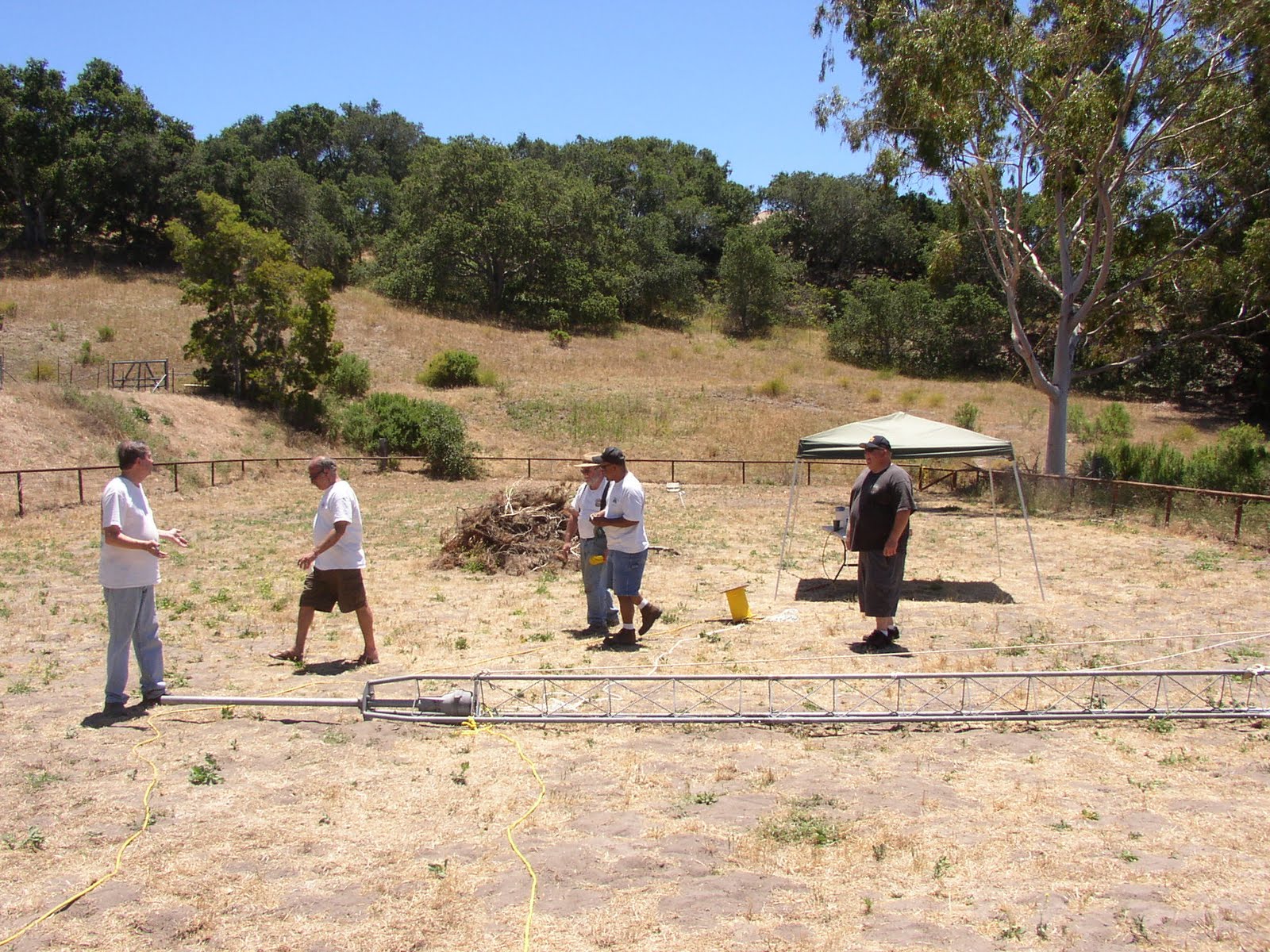 Photograph 11 is the tower after we successfully stowed our tri-bander antenna. Our goal was slow and steady as the tower made its descent. We are planning additional guys at the mid-section as well.
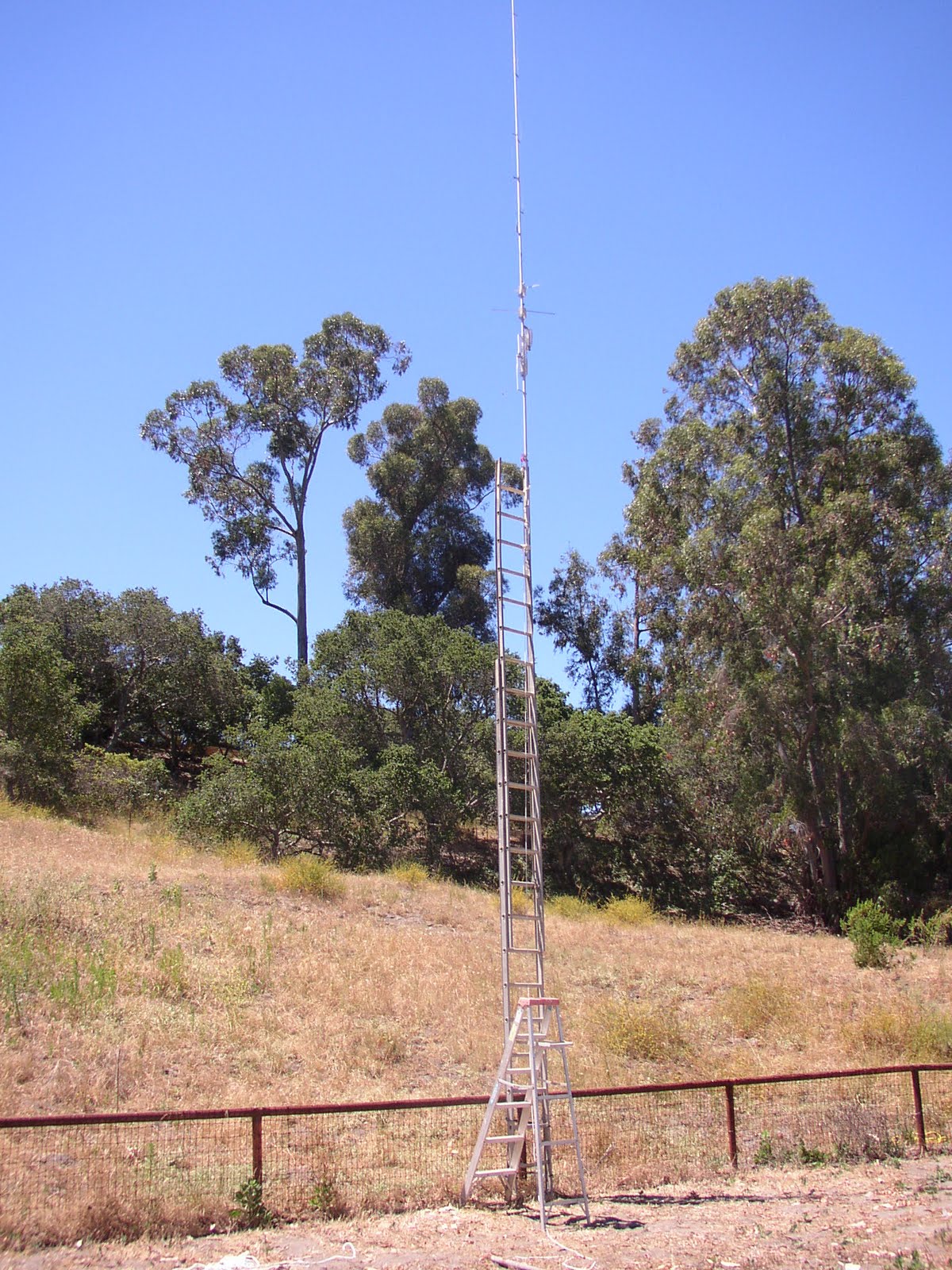 Photograph 12 is the Butternut HF9V at the opposite end of the arena. We will install a counterpoise system and ground to arena fencing prior to official operations.
73 from the shack relaxation zone.

2010 Field Day
The Beach Boys Amateur Radio Club went to work on Saturday morning and rested five hours later after prepping antenna systems. I was tired and a few aches reminded me that taking care of myself is really important. Our team enjoyed its morning and afternoon beneath the solar disc with the blue Pacific over our shoulders. The day was ideal for tackling Field Day logistics and preparation.
We are passionately committed to our project goals such as ham radio fun, operating outdoors, learning, and deploying a competitive signal from our location. The Beach Boys Amateur Radio Club is an informal group letting our enthusiasm for the hobby drive our organizational goals.
Tower.
Our antenna systems arrived to include a 30 foot tower, a tri-bander, a vertical, a VHF quad, and a flat top dipole. The biggest challenge inside the project is the tower. We brainstormed safety principles and focused on the tower base plate. It required 3 foot steel stakes with clips and washers. The team concurred that a stake system in addition to proper guying will maximize our safety.
Our next goal is a practice run at deploying and guying the tower with the tri-bander attached to the rotor mast while keeping safety in mind at all times. Additionally, keeping the rules out in front of us, the entire system is dissembled prior to Field Day operation.
Flat Top Dipole.
Ham radio fun picked up momentum after a pair of operators slung rope into a pair of trees for the flat top dipole. Theoretically, launching rope into tree branches as easy on paper as it seems, is not a straight forward process. It was work and required a few attempts before achieving success. The moment was sweet when we fired up a TS440S on 40m lower sideband and logged a Nevada along with a California station.
The buzz around the work party, “What was the signal report?”
Vertical.
Another team of operators deployed our vertical antenna system for operational testing on the low bands. It’s intentionally positioned at the furthest end of our site to thwart cross band interference. There is nothing more discouraging when stations begin interfering with each other. It is the fast track to frustration.
Counterpoise is everything for a vertical. Pundits may say otherwise, however, I advocate wire beneath one’s vertical. We have the benefit of a large metal-like cage near the feed point surrounding this antenna as an added bonus. The antenna analyzer data suggested reasonable standing wave ratio although I’m learning how-to calculate efficiency.
Additionally, we will deploy a rudiment counterpoise system of quarter wavelength radials or near quarter wavelength given our on-going debate. This system will be above ground but not equal to the height of the feed point.
Conclusion.
The Beach Boys Amateur Radio Club party benefited all those in attendance. We tested two out of three antenna systems, assembled the tower with rotor, improved base plate security, and ended the day exhausted. Everyone enjoyed working outdoors, getting their hands dirty, and learning about antennas in preparation for this year’s Field Day.
73 from the shack relaxation zone.














