Posts Tagged ‘Contesting’
 160 Meter fun
 January 24th, 2013 |
  Author:
 Instead of chasing 80 Meter Foxes, I decided to make an effort in the NAQCC 160 Meter Sprint that was held tonight. Boy, am I glad I did!
Up until now, I really haven’t had anything that loaded up well on 160 Meters. When I had my G5RV, it would load on 160 Meters; but barely and you could sure tell the radio wasn’t happy about it.
The 88′ EDZ is about the same. It will load up on 160 Meters; but the autotuner in the K3 takes a painfully long time to achieve a match. And then, if you decide to change frequency – even just a hair, the autotuner begs to be re-tuned.
The W3EDP, however? I hit the autotune button and within what seems to be about a second and a half, I get a tiny little “BRRRRP” and a 1.1:1 match. And I can tune around quite a bit without the radio complaining. I know it’s not the ideal solution for 160 Meters; but it has allowed me to make more 160 Meter contacts in one night than I have in all my 34 years of operating combined. Seriously, before tonight, I think my total QSO count on 160 Meters was maybe 3 …. 4 – maybe 5 at most?
I made 17 contacts tonight, my best DX being North Carolina, Illinois, Indiana and Ontario. Not bad for 5 Watts to a compromise antenna, eh? OK, so the W3EDP won’t earn me WAS or DXCC on 160 Meters, but at least now I have another band I can go to when other bands seem dead.
And my good friend Charles W2SH sent me an e-mail the other day, informing me about a book soon to come out from the ARRL on 160 Meter antennas, specifically for those of us who are real estate challenged. That is a must buy for me once the NJ Hamfest season starts back up again in March.
73 de Larry W2LJ
QRP – When you care to send the very least!
Never too early – less than a month away!
Happy Three Kings or Epiphany – and to our Orthodox brothers and sisters, Merry Christmas!
Now that the Christmas season is approaching its end (next weekend for Roman Catholics), it’s not too early to start to think about the inaugural outdoor QRP event for 2013 ……..
Freeze Your Buns (or Butt, if you prefer) Off – which should be held the first Saturday of February – the 2nd, which is also Groundhog Day. So you can freeze your body parts off operating in the Arizona ScQRPions QRP sprint, while simultaneously keeping an eye peeled for groundhogs!
There hasn’t been any official notice of any rule changes for 2013; so if you’d like a refresher on the rules that were used last year, click here.
Last year I made 11 contacts using my PFR3A and the Buddistick on top of the car, and the temperature when I started was 45F (7C). Accuweather is predicting colder than normal temperatures for the second half of January and all of February. That would be good for a better multipler; but not so great, comfort wise.
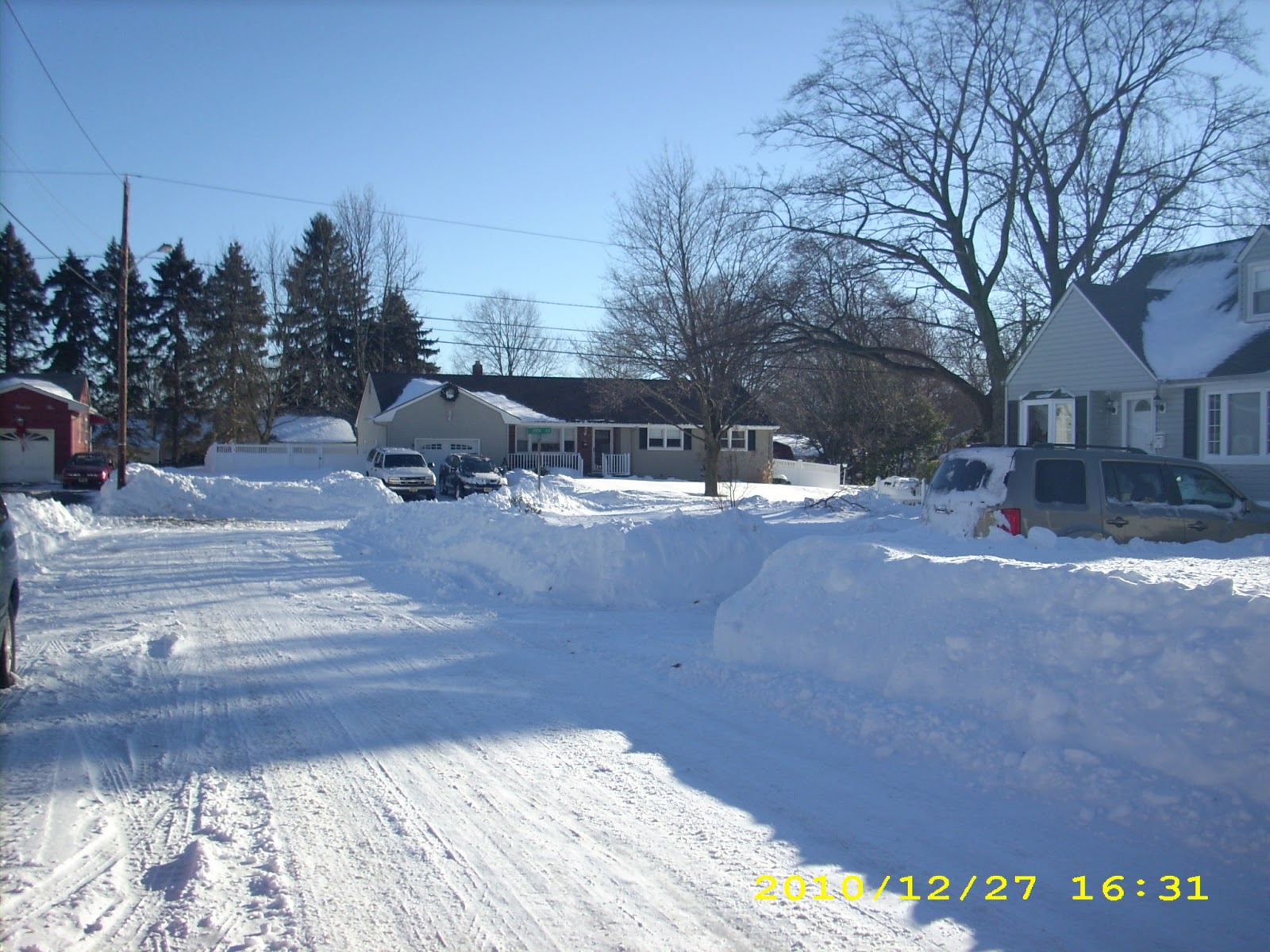
Let’s hope that it’s not like THIS, that day! Or worse yet …. like it was the day before!
72 de Larry W2LJ
QRP – When you care to send the very least!
Interesting blog post
News from friendly sources tonight:
As pointed out to me by my friend Drew W2OU – this was posted Sunday on the “DC to White Light” blog:
http://scopefocus.blogspot.com/2012/12/theres-group-of-people-out-there-men.html
The following was posted to QRP-L by Hank N8XX today:
The Stew Perry Top Band Challenge is this coming Weekend. It starts at 1500Z December 29 and ends at 1500Z December 30. One may operate a maximum of 14 hours during the 24 hour period.
The call 160 meters “Top Band” but I figure this will need adjusting, since we will soon have an allocation around 500 KHz, or 600 meters. But, for now, let’s let sleeping lies dog (or some converse thereof).
Details of this event may be found at
http://www.kkn.net/stew/stew.rules.txt
The scoring is a bit convoluted, and the scoring team does all the scoring, so I’m not worrying about how this is done.
BUT, it DOES have a QRP category, and one gets a multiplier for operating with <5 considerably.=”considerably.” even=”even” may=”may” p=”p” platform=”platform” scoring=”scoring” the=”the” watts=”watts” which=”which”>
So, why not crank up the wavelength to about 166.666 ⅔ and give it “ye olde college try.”
72/73 de n8xx Hg
QRP >99.44% of the time
Thanks to both Drew and Hank for some interesting stuff.
72 de Larry W2LJ
QRP – When you care to send the very least!
Planning My New QTH (Ham Radio Station) Part II Of III: Modern Contesting Tools
I’ll be writing a lot in future postings about how FlexRadio’s new 6000 series transceiver technology has influenced my new station’s design. Today’s post will focus on these rigs’ ‘Slice Receiver’ capabilities.
First, however, allow me a digression on 21st Century Radio-Sport a/k/a “Contesting.” There are hundreds of radio-sport events spread across the calendar each year from state QSO (QSO = radio contact) parties to major global events such as the CQ World Wide DX Contests (CQ WW DX, ‘DX’ = long distance radio contact) held across two weekends – one for CW (Morse code) and one for Phone (Signal Sideband = voice) – in the northern hemisphere autumn. The smaller events have a friendly ‘small town’ vibe. On the other end of the scale, the big DX contests are hard fought struggles that test technology, skill and endurance (you try averaging two international contacts via morse code per minute for 48 hours straight!).
The big contests have a multitude of classes to parse the competitors. Single operator, multiple operators with one transmitter, multiple operators with multiple transmitters, high power, low power, really low power (also known as ‘QRP’), assisted and unassisted. You compete against others in your class in your country and in your class on a regional and global scale depending on your ambition.
I mentioned ‘assisted’ and ‘unassisted’ classes in the previous paragraph. This can mean various things but the major source of assistance during a contest is the so-called ‘cluster’, Internet resources that reports what stations are active and on what frequencies. These networks started in the ’80s with hams transmitting short reports of the distant stations they were hearing, generally on the HF (short wave) bands, via the amateur VHF digital networks which were generally local, within a city or region. These were know as ‘DX Packetclusters’ back then and I used to operate a node in Tiffany, Colorado in the ’90s.
These networks later migrated to the Internet, became interconnected and are now global in scope passing literally millions of ‘spots’ (as each report of a station and its frequency is called). DX Summit, based in Finland but with visitors from around the world, has reported over 23 million such spots since it launched in 1997!
One of the challenges of big data is finding actionable useful information shooting out of the digital firehose. The cluster networks go bonkers during the big contests with several spots per second streaming by. This is not always helpful. An operator can be overwhelmed by choice; which station do I try to contact? It’s like getting a restaurant menu with a thousand choices. And with spots being reported from all corners of the planet much of the data is not actionable. A station being heard in say Mongolia might not be making it to your shack in Peoria at that time of day on that particular frequency.
I will manage this onslaught of data by disconnecting from the Internet clusters and generating my own spots distilled from radio signals actually being detected at my station in real time. The data will thus become relevant and actionable. Many stations are already doing this to supplement the Internet spots that every assisted class station sees. K3LR and W3LPL, two giants of multi-operator contesting, are doing this effectively using CW Skimmer software written by Alex Shovkoplyas, VE3NEA. CW Skimmer uses ‘sensitive CW decoding algorithm based on the methods of Bayesian statistics’; in other words your computer listens for Morse code on your radio and tells you who is transmitting and on what frequency. CW Skimmer, of course, is not much use in Phone (voice) contests.
There are several challenges to using CW Skimmer effectively. The first challenge at most stations is receiver bandwidth. Most ham radios can only listen to relatively small segments of radio spectrum at any one time limiting the size of the net CW Skimmer can cast. If a particular contest has its competitors spread out over say 70-kHz and your radio can only monitor 2.8-kHz you are going to miss a lot of the action. So called SDRs (Software Defined Receivers) overcome this limitation and can look at much larger chunks of spectrum at once. An operator using one of these radios (older generation FlexRadios for example) can actually look at a visual spectral display showing where signals are and indicate their relative strength; a CW Skimmer software working with one of these radios can decode and report on the activity of dozens of stations with this set up.
That hurdle jumped, another one looms ahead. If you are monitoring stations on one band how do you know what’s happening on other bands? Most contests are spread across several of the amateur radio bands. Some bands are good during the day, some are good during the night and propagation on all the bands is always changing. Europe might be good in the morning on a particular band , say the 21-MHz (15m) band, Africa in midday and Japan in the afternoon. The general propagation trends are predictable but there are large daily variations in propagation that are not predictable (in other words, what signals are being refracted back to earth and where). Some stations (K3LR, for example) have separate SDRs for each amateur contest band. Other stations (W3LPL for one) uses the QS1R receiver which can listen to several bands at once.
The Flex 6000 series radios listen (via direct sampling, more on that in a future posting) to 77-MHz of spectrum at the same time. That is truly spectacular! With my multiple Flex-6700s (I have two on order and plan on ordering a third unit later in 2013) i will be able to assign ‘Slice’ receivers (each Flex-6700 can have up to eight of these, created in software and 384-kHz) to each amateur band from 1.8-MHz (160m) to 144-MHz (2m) and let them run all the time, during contests and in between. I will have live, actionable intel on what CW (Morse) signals are propagating to Glade Park, Colorado at any given time on all the amateur bands. I will be feeding this data out to the Reverse Beacon Network (RBN) and using it for my own contesting and day-to-day DXing operation. (More on the RBN in a future Blog posting.)
How I plan to keep transmissions on one frequency from overloading and possibly damaging receivers listening – and running CW Skimmer software – on other frequencies on co-located (and sometimes the same) antenna will be covered in a future posting. The Flex 6000 series radios are full-duplex (in other words, they can transmit and receive at the same time) so the listening on the same band I’m transmitting on becomes a possibility but one with significant challenges.
I should point out here that many hams operate without any kind of assistance in contests whatsoever. These are some of the world’s most skilled and motivated amateur radio operators and I admire this type of contesting. However, my personal current motivation is to see where I can go with technology in contesting and amateur radio in general. Assisted, in so many words, but seeking innovation.
That was fun!
Surprise! The world did NOT end yesterday …….. and seriously, did you think for even the tiniest bit that it would?
But it was the shortest day of the year and Winter has officially arrived in the Northern Hemisphere (Happy Summer to you folks lucky enough to enjoy it in the Southern half!). So for once, I looked towards the dark hours, because at sunset the 2012 Zombie Shuffle commenced. I made one QSO on 20 Meters with John K4BAI before being called to dinner. After that, the family went for a drive to go view some Chrsitmas lights.
When we got home, I jumped on the radio – about 9:30 PM and stayed on for a little over two hours. Much to my surprise, I heard not a Zombie soul on 40 Meters. Even though I know that 40 Meters goes long, I expected to hear something there – but no dice.
For me, all the action was confined to 80 Meters. When all was said and done, 16 Zombies were nabbed including 4 Maya Kings. Not great; but not as terrible as I thought it was going to be with 40 Meters out of the picture.
Thanks to all the Zombies and Maya Kings that made it into my log – and special thanks to Paul NA5N for running the event.
This afternoon, I went grocery shopping and you would have thought I went to a regular shopping mall! There was traffic everywhere and a close parking spot was not to be found. What is it about the Saturday before Christmas that makes seasoned motorists drive like they’ve never been before the wheel before? Traffic and crowds were a nightmare – glad I have all my Christmas shopping done. Now …. onto wrapping!
As Advent draws to a close and Christmas draws ever closer, I leave you today with a beautiful Advent hymn – “Oh Come, Oh Come Emmanuel” which is being sung in the original Latin (it started out as a Gregorian chant) by Hayley Westenra who has an absolutely angelic voice.
72 de Larry W2LJ
QRP – When you care to send the very least!
Zombie Shuffle updates
Paul NA5N – Head Zombie and Maya King posted this today:
“I have some exciting news updates regarding the End-of-the-World Zombie Shuffle Friday (tomorrow) night.
First, I was contacted by a ham in Belize who heard about our special event and asked to participate in the Shuffle from the real Maya empire. Of course I asked him to be a Maya King!
He has agreed and thus will be our real, authentic “High Maya King” on the air, and some nice DX. (Turns out, his wife is Mayan). He was assigned Zombie number 1010, so he will be worth 1010+666 = 1676 points. So listen for a Mayan Zombie who’s calls start with “V31.” He will be operating QRP. He said he lives about 150 yards from the ocean … so we’ll be the first to know when the Mayan Empire slides into the sea!!!
Jan passed 1,000 zombie numbers last night.
# 999 was assigned to Terry K9DXA
#1000 was assigned to Steve W1SGC
#1015 was just assigned.
So there will be a few “4-digit” Zombie numbers on the air.
Our friend Ed, W1RFI (who will be in the Shuffle) asked why working Maya Kings aren’t worth “2012” points vs. 666? All I can say is: “Dang! Why didn’t I think of that?” Good going, Ed. However, I am hesitant to change the scoring rules only one day before the event. My apologies for missing such an obvious good idea.
And, the Central Connecticut QRP Club will be on the Shuffle using their famous club call of W1FB. This, of course, was the call of legendary QRP ham Doug DeMaw (SK), who authored numerous ARRL QRP related books and articles, and designer of the Tuna Tin 2 and other legacy QRP rigs. What a great tribute to Doug (who is now a Maya King).
So we’ve added two more Maya Kings to the rolls … W1FB and our V31 High King in Belize. You’ll just have to find out who the others are.
It’s almost criminal to have this much fun in the face of the entire destruction of the human race in just hours! Are we QRPers and Zombies, or what?
72, Paul NA5N
Zombie NR 04
Zombie Shuffle rules and summary sheet at:
http://www.zianet.com/qrp/ZOMBIE/zombie.htm“
Thanks, Paul! I am looking forward to this tomorrow evening! And since tomorrow is the Winter Solstice and we have the least amount of daylight, it gives us extra operating time for the Shuffle this year.
72 de Larry W2LJ – For tomorrow night at least – Maya King #858
QRP – When you care to send the very least!
It’s the end of the world as we know it
was the title of a catchy tune a few years back. I am one of those who takes no stock in ancient Mayan prophecies – BUT …….. if there are any Hams out there who are like that that guy in Hong Kong who sold all his stuff thinking that the world is ending Friday – don’t go through the trouble of selling. I’ll be willing to take your Ham gear off your hands for free!
Seriously, though …… don’t forget the Zombie Shuffle is this Friday night, to poke a little fun at those nasty ol’ Mayans, Here’s a little reminder from Paul NA5N:
Zombies and Maya Kings, Gosh. Where has the time gone? Seems it was just summer, then Thanksgiving, Christmas next week … oh yeah, and the end of the world thing this Friday. Hate it when doomsday sneaks up on you like that! 🙂
So a reminder that our special 2012 “End of the World” Zombie Shuffle will be THIS FRIDAY, famous December 21, from local sundown (considered 5pm local) to midnight. Just as the Maya calendar runs out of rock. Early enough to get a little 20M in there before resorting to 40M. Solar flux is 115-120, quiet geomagnetic field, and no big competing contests which should provide fairly decent evening bands.
Rules and other ramblings at: http://www.zianet.com/qrp/ZOMBIE/zombie.htm
NEW TO QRP OR CONTESTING? This is for you. A contest that serves no purpose whatsoever except get on the air and have fun no matter what your code speed or how rusty your fist may be. We all know Zombies can’t crack out 35 wpm in those old blood soaked rags, right? Scoring is based more on serendipity (recording those Zombie numbers) than operating skill. Over the years, we’ve had quite a few new QRPers who accomplished their first real CW QSOs during the Zombie Shuffle. That’s what it’s all about … to give everyone a chance to get on the air and pound some brass.
ZOMBIE NUMBERS can be obtained from Jan
ZOMBIE BADGE: It was reported by several that the Zombie badge link wasn’t working on the above Zombie page. I have repaired the link for those who wish to print out their own Zombie/Area 51 badge.
MAYA KINGS: We have 13 Maya Kings willing to serve you this year fairly evenly scattered across the empire. Plenty of chances to work some bonus points.
For their name, they will be sending MAYA KING, MAYA, KING, or even KING JOE or KING RON (or whatever their name is) as they decide. We even have a special KING ELVIS. Each Maya King worked is worth an additional 666 points.
I’m sure between sending CQ BOO and KING ELVIS, we’ll drive the QRO folks nuts trying to figure this thing out!
Whether you get on for 2-3 QSOs, or work several hours, you’ll have fun. And, thanks for participating. After all, the end of the world only comes along every so often. I think the last one was Y2K.
I was listening to Coast to Coast AM radio show this weekend, and one doomsday believer claimed that “every major observatory is tracking the collision course of planet Nibiru with Earth on Dec. 21 – and all observatory employees have been sworn to secrecy.” At the VLA (merely the world’s largest radio telescope), I must have missed that inter-office email! With the internet, Twitter, and Facebook, how on Earth could you keep something like that secret these days?
However, I do feel there’s a chance of a minor earthquake or a volcano might blow its top. Not because the Mayan Calendar says so … but just to prove God has a sense of humor. He can’t wait to drive those doomsdayers nuts! 🙂
72, Paul NA5N
72 de Larry W2LJ
QRP – When you care to send the very least!













