Posts Tagged ‘blind’
 Handiham World for 30 March 2011
 March 30th, 2011 |
  Author:
 Welcome to Handiham World!
Troubleshooting 101 continued: “My antenna is generating electricity and giving me shocks!”

Recap: Last week we presented the following scenario and invited comments:
We are going back in time to when I worked at an antenna company, a job that often involved talking directly to customers on the phone. I would answer questions and make suggestions about installation and troubleshooting. One fine day we got a call from a fellow who had installed one of our vertical antennas. He had ground mounted it, carefully following the instructions in the manual. This antenna came with an aluminum mounting post that was dug into the ground and usually secured with a bag of do-it-yourself concrete mix. A fiberglass dowel in the exposed end of the mounting post served as an insulator and supported the vertical element of the antenna. The center conductor of an included length of a matching section of 75 Ohm coaxial cable was connected with a stainless steel bolt to the main radiating element and the braid was connected to another stainless bolt on the grounded mounting post as well as to a ground rod within inches of the antenna base. The customer had to supply the remaining run of 50 Ohm coax from the ham shack out to the antenna and connect it to the already installed matching section with a barrel connector. When the customer called us, he complained that his antenna was generating electricity and giving him shocks. He noticed this as he was trying to connect the two pieces of coax together.
Can you guess what was wrong and suggest what questions I might have asked the customer to verify my theory? For bonus points, what did I have to tell him to resolve the problem?
I got some good comments back from you, so it’s time to share your brilliance in troubleshooting with our readers and listeners:
| From Tom, WA6IVG: Unless he’d driven the antenna’s mounting rod into a buried power cable, (unlikely) the problem just about has to be bad station ground. Ask exactly what the coax run is connected to, and how said equipment is grounded. If the station isn’t closely connected, with heavy wire or braid, to the electrical service ground, or better yet to a separate ground rod and said service ground, then that’s what to do. Also check that power main connections are two standard 3 prong grounded outlet boxes. In a totally desperate situation, of 2 prong power, maybe reversing 2 prong cords could provide a temporary, unorthodox solution but bad idea. If all is claimed to be as it should be, then his station and antenna must be on 2 different continents. | |
| From Mike, KJ6CBW: The customer was getting shocked when connecting the long run of coax to the 75-ohm run from the ground-mounted vertical that has its coax braid connected to ground rods. The two coax cables are at different ground potentials. I think the most likely cause is that the station is not grounded because the power line isn’t grounded or a 2-wire plug is being used where a 3-wire plug is appropriate. Another possibility it that the ground rods at the antenna intercepted a buried telephone line or cable-company cable, which make the antenna ground different from that of the long coax. Please don’t shoot me, I’m new at this. ..! | |
| And fasten your seatbelt for this one from Kevin, [formerly: N1PKE ]: I have been pondering your *Troubleshooting 101, query, supra, and have attempted to extrapolate a scenario that would lead to such a conclusion as that of getting poked with an electrical current while I was hooking-up my antenna feed-line connections; wherein initially, I would cast basic common-sense to the literal wind, and just to make sure that things were to be a little more interesting, I would wait until the middle of the frigid winter season, for a night when there was very little light and there was then, e.g., currently, a frozen sleet / snow storm with full-gale winds occurring; just to make sure that Mr. Murphy would have all of the available advantages to be had, at his disposal; oh, and I would purposely plug-in and turn-on, e.g., charge my electrical circuitry with an electrical current, just to make sure that if anything went horribly wrong, that it would be the last time that I would ever have to address such a problematic situation. After all, why would I want to abrasively clean-up & ‘tin’ any of my integral and important electrical connections? I simply would refuse to apply any dielectric dope-grease and/or silicon caulk to any of my in-line electrical components and/or fixtures; and, as a matter of establishing a ground, I would first, have several-hundred yards of my fertile, composted soil removed, and then replaced with several hundred yards of coarse beach sand, just to make sure that I had an earthen environment that promoted instability of antenna constructive support and near zero ohms of conductivity. In this way, I would have assured myself, of having an almost completely isolated radiating antenna element, that I could then have used to have my soaked, limpid corpse hung-up on, as an object lesson for folks whom mistakenly believed that incessant adherence to safety considerations were foolhardy ruminations to be utilized by keenly sensitive brainiacs, wherein, I would think that I would in the future, be included in a list of: “DO NOT TRY THIS AT HOME or ANYWHERE ELSE Listings”, those listed, right next and/or near to, my newspaper obituary listing! I think I got it right? |
Wow, those are all great comments. Of course the antenna didn’t “generate” electricity. Our wise readers and listeners know that the difference in potential exists when all pieces of equipment in the station and out at the antenna are not at the same ground potential. One of the first questions I asked the customer (knowing about the possibility of that ground potential problem) was whether he had unplugged the station equipment in the ham shack from the AC power mains. He had not, and because the station was not properly grounded, there was a potentially dangerous voltage difference between the plugged-in radio and the grounded antenna. I felt that he was lucky not to have been electrocuted! Kevin’s “Do not try this at home” applies here for sure. Always disconnect equipment from the AC mains before doing any service on your antennas and feedlines. This is especially important to remember as we get warmer weather and our thoughts turn toward doing some of that antenna work we have been putting off during the cold winter months. And I mustn’t forget: Although I do ground my station equipment, I never trust the ground to protect me. I always disconnect the power before working on the antenna system, because I know that a grounding system might fail. There is no sense taking unnecessary risks when you are working around any kind of electrical equipment.
Another thought that was brought up is the possibility of a ground rod hitting a buried power cable. The way to avoid that problem is to be sure that your antenna site is clear of underground utilities. Find out from your utility company what number to call to set up a free inspection and marking of your property so that you will know where underground lines are buried. Here in my area we have a single number to call and they send out a worker to mark underground lines like gas and electric with spray paint right on the ground over the lines. “Gopher State One Call” is our system, but you will have a similar service in your area. Be aware, though, that such services will not let you know about things like the location of underground lawn sprinkling systems that are not part of the utility system.
Since the antenna in question was a vertical, one has to be especially careful assembling it on the ground and then swinging it up into place on the mounting post. You have yourself a 26 foot long aluminum stick and you are holding it with both hands, so you most definitely do not want to swing it up into a power line! Since my caller was in fact alive to call and tell me that his antenna was “generating electricity”, I pretty much assumed that he didn’t make that particular mistake. Direct contact with even a household power line in such a situation is often deadly because the current will flow from power line to antenna through the victim’s arms and through the chest cavity, where it will likely cause the heart to stop or go into arrhythmia.
Anyway, when you are answering customer complaints like this one, the most likely cause usually turns out to be the right one. He had indeed left the rig plugged into the AC mains and was getting a shock because of some fault in his equipment or station ground.
Stay safe and out of the obituaries!

Handiham World for 30 March 2011
Welcome to Handiham World!
Troubleshooting 101 continued: “My antenna is generating electricity and giving me shocks!”
Recap: Last week we presented the following scenario and invited comments:
We are going back in time to when I worked at an antenna company, a job that often involved talking directly to customers on the phone. I would answer questions and make suggestions about installation and troubleshooting. One fine day we got a call from a fellow who had installed one of our vertical antennas. He had ground mounted it, carefully following the instructions in the manual. This antenna came with an aluminum mounting post that was dug into the ground and usually secured with a bag of do-it-yourself concrete mix. A fiberglass dowel in the exposed end of the mounting post served as an insulator and supported the vertical element of the antenna. The center conductor of an included length of a matching section of 75 Ohm coaxial cable was connected with a stainless steel bolt to the main radiating element and the braid was connected to another stainless bolt on the grounded mounting post as well as to a ground rod within inches of the antenna base. The customer had to supply the remaining run of 50 Ohm coax from the ham shack out to the antenna and connect it to the already installed matching section with a barrel connector. When the customer called us, he complained that his antenna was generating electricity and giving him shocks. He noticed this as he was trying to connect the two pieces of coax together.
Can you guess what was wrong and suggest what questions I might have asked the customer to verify my theory? For bonus points, what did I have to tell him to resolve the problem?
I got some good comments back from you, so it’s time to share your brilliance in troubleshooting with our readers and listeners:
| From Tom, WA6IVG: Unless he’d driven the antenna’s mounting rod into a buried power cable, (unlikely) the problem just about has to be bad station ground. Ask exactly what the coax run is connected to, and how said equipment is grounded. If the station isn’t closely connected, with heavy wire or braid, to the electrical service ground, or better yet to a separate ground rod and said service ground, then that’s what to do. Also check that power main connections are two standard 3 prong grounded outlet boxes. In a totally desperate situation, of 2 prong power, maybe reversing 2 prong cords could provide a temporary, unorthodox solution but bad idea. If all is claimed to be as it should be, then his station and antenna must be on 2 different continents. | |
| From Mike, KJ6CBW: The customer was getting shocked when connecting the long run of coax to the 75-ohm run from the ground-mounted vertical that has its coax braid connected to ground rods. The two coax cables are at different ground potentials. I think the most likely cause is that the station is not grounded because the power line isn’t grounded or a 2-wire plug is being used where a 3-wire plug is appropriate. Another possibility it that the ground rods at the antenna intercepted a buried telephone line or cable-company cable, which make the antenna ground different from that of the long coax. Please don’t shoot me, I’m new at this. ..! | |
| And fasten your seatbelt for this one from Kevin, [formerly: N1PKE ]: I have been pondering your *Troubleshooting 101, query, supra, and have attempted to extrapolate a scenario that would lead to such a conclusion as that of getting poked with an electrical current while I was hooking-up my antenna feed-line connections; wherein initially, I would cast basic common-sense to the literal wind, and just to make sure that things were to be a little more interesting, I would wait until the middle of the frigid winter season, for a night when there was very little light and there was then, e.g., currently, a frozen sleet / snow storm with full-gale winds occurring; just to make sure that Mr. Murphy would have all of the available advantages to be had, at his disposal; oh, and I would purposely plug-in and turn-on, e.g., charge my electrical circuitry with an electrical current, just to make sure that if anything went horribly wrong, that it would be the last time that I would ever have to address such a problematic situation. After all, why would I want to abrasively clean-up & ‘tin’ any of my integral and important electrical connections? I simply would refuse to apply any dielectric dope-grease and/or silicon caulk to any of my in-line electrical components and/or fixtures; and, as a matter of establishing a ground, I would first, have several-hundred yards of my fertile, composted soil removed, and then replaced with several hundred yards of coarse beach sand, just to make sure that I had an earthen environment that promoted instability of antenna constructive support and near zero ohms of conductivity. In this way, I would have assured myself, of having an almost completely isolated radiating antenna element, that I could then have used to have my soaked, limpid corpse hung-up on, as an object lesson for folks whom mistakenly believed that incessant adherence to safety considerations were foolhardy ruminations to be utilized by keenly sensitive brainiacs, wherein, I would think that I would in the future, be included in a list of: “DO NOT TRY THIS AT HOME or ANYWHERE ELSE Listings”, those listed, right next and/or near to, my newspaper obituary listing! I think I got it right? |
Wow, those are all great comments. Of course the antenna didn’t “generate” electricity. Our wise readers and listeners know that the difference in potential exists when all pieces of equipment in the station and out at the antenna are not at the same ground potential. One of the first questions I asked the customer (knowing about the possibility of that ground potential problem) was whether he had unplugged the station equipment in the ham shack from the AC power mains. He had not, and because the station was not properly grounded, there was a potentially dangerous voltage difference between the plugged-in radio and the grounded antenna. I felt that he was lucky not to have been electrocuted! Kevin’s “Do not try this at home” applies here for sure. Always disconnect equipment from the AC mains before doing any service on your antennas and feedlines. This is especially important to remember as we get warmer weather and our thoughts turn toward doing some of that antenna work we have been putting off during the cold winter months. And I mustn’t forget: Although I do ground my station equipment, I never trust the ground to protect me. I always disconnect the power before working on the antenna system, because I know that a grounding system might fail. There is no sense taking unnecessary risks when you are working around any kind of electrical equipment.
Another thought that was brought up is the possibility of a ground rod hitting a buried power cable. The way to avoid that problem is to be sure that your antenna site is clear of underground utilities. Find out from your utility company what number to call to set up a free inspection and marking of your property so that you will know where underground lines are buried. Here in my area we have a single number to call and they send out a worker to mark underground lines like gas and electric with spray paint right on the ground over the lines. “Gopher State One Call” is our system, but you will have a similar service in your area. Be aware, though, that such services will not let you know about things like the location of underground lawn sprinkling systems that are not part of the utility system.
Since the antenna in question was a vertical, one has to be especially careful assembling it on the ground and then swinging it up into place on the mounting post. You have yourself a 26 foot long aluminum stick and you are holding it with both hands, so you most definitely do not want to swing it up into a power line! Since my caller was in fact alive to call and tell me that his antenna was “generating electricity”, I pretty much assumed that he didn’t make that particular mistake. Direct contact with even a household power line in such a situation is often deadly because the current will flow from power line to antenna through the victim’s arms and through the chest cavity, where it will likely cause the heart to stop or go into arrhythmia.
Anyway, when you are answering customer complaints like this one, the most likely cause usually turns out to be the right one. He had indeed left the rig plugged into the AC mains and was getting a shock because of some fault in his equipment or station ground.
Stay safe and out of the obituaries!
LHS Episode #059: Orca and Outtakes
 Welcome to Episode #059 of Linux in the Ham Shack. On this edition, we talk with Jonathan Nadeau of Frostbite Systems about Linux for the sight impaired. Jonathan, being a blind Linux user, has overcome many challenges when it comes to using his favorite operating system and he shares with us the ins and outs of accessibility on Linux systems. There is a Linux distribution dedicated to blind users called Vinux, along with an accessible version of Arch called Talking Arch. Even newer versions of Slackware are jumping on the bandwagon with a Speakup enabled installation kernel.
This is also the first episode of LHS with a blooper reel left in at the end. Listen all the way to the last so you don’t miss out on any of the fun. Many thanks to Jonathan for his time and expertise, and many thanks to our listeners for making our show so fun to do.
73 de The LHS Guys
Handiham World for 23 March 2011
Welcome to Handiham World!
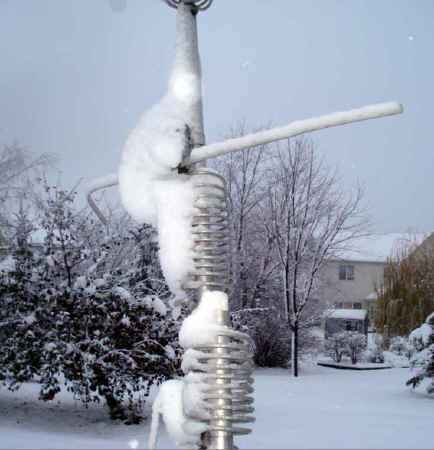
The power of ice combined with wind is evident once again! As those of us whose antennas have had to weather many winters can tell you, there is little worse for an antenna system than ice combined with wind. I was reminded of this earlier today when I opened my email and found a message from AA9BB in Lacrosse, Wisconsin. It had a link to a story about the 2,000 foot WEAU TV transmitting tower that collapsed near Fairchild, WI during the ice and wind storm that moved through last night. We are still having a pretty terrible Spring blizzard from the same weather system here in the Twin Cities. Fortunately no one was hurt in the tower collapse, which was only discovered when the station engineer paid a call to the transmitter site to determine why the station had gone off the air. While there will obviously need to be an investigation into exactly why this tall tower fell, my money would be on the wind and ice combination causing the design limits to be exceeded.
When the wind blows, most amateur radio antennas will not be damaged. Wire antennas have little wind loading area, and beam antennas are made to flex in the wind. The problem comes when weather conditions are just exactly right to allow freezing rain to fall and turn to ice upon hitting the ground or your ham radio antenna. The extra weight of the ice can be several times the weight of the antenna itself, putting considerable strain on the supporting system components like insulators, guy wires, masts, and towers. This is bad enough, but then suppose that the wind picks up. As storm fronts move through, the weather conditions will change. There can be periods of regular rain followed by freezing rain as the temperature plummets, and then the wind can shift and pick up as the freezing rain picks up or turns to snow. Imagine the terrible wind load and strain on the supports as the antenna whips in the wind, pushed all the more by the greater wind loading due to the coating of ice. When the design limits are reached, the antenna or its supporting structure will fail.
What can you do about ice and wind? My feeling is that moving to someplace with a better climate might be the only sure-fire answer. Some places are more prone to ice storms than others, though, and about all you can do is build your wire antennas to withstand greater loads by using compression-style insulators instead of the “dog bone” style. Compression insulators are much less likely to break because more pull on the wires actually compresses the insulators instead of pulling them apart. Better quality wire can help, too, as can good, heavy-duty hardware at all supporting points. Antenna towers that telescope down during high wind conditions can help protect your antenna investment. At least the antenna will be closer to the ground where the wind may be less, and the entire structure presents less of a wind load when telescoped in the down position.
My wire antennas are not that great. One is a commercial Windom about 125 feet long and the other is an end-fed wire, also about 125 feet. Neither one was mounted with heavy-duty hardware, so if they come down in an ice storm with lots of wind, I wouldn’t be surprised. What I am doing is sort of playing the odds, since we don’t get those conditions together too often here. My Butternut vertical can pretty much take care of itself because it has almost no horizontal surfaces to collect heavy ice. Flexing in the wind just breaks the ice off and it falls harmlessly to the ground around the base. It is really the horizontal surfaces that you have to protect the most from icing. How much is an airline ticket to Florida? Can’t afford that? Try getting some compression insulators – they’re a lot cheaper.
Patrick Tice, WA0TDA
Handiham System Manager
[email protected]

Handiham World for 23 March 2011
Welcome to Handiham World!
The power of ice combined with wind is evident once again! As those of us whose antennas have had to weather many winters can tell you, there is little worse for an antenna system than ice combined with wind. I was reminded of this earlier today when I opened my email and found a message from AA9BB in Lacrosse, Wisconsin. It had a link to a story about the 2,000 foot WEAU TV transmitting tower that collapsed near Fairchild, WI during the ice and wind storm that moved through last night. We are still having a pretty terrible Spring blizzard from the same weather system here in the Twin Cities. Fortunately no one was hurt in the tower collapse, which was only discovered when the station engineer paid a call to the transmitter site to determine why the station had gone off the air. While there will obviously need to be an investigation into exactly why this tall tower fell, my money would be on the wind and ice combination causing the design limits to be exceeded.
When the wind blows, most amateur radio antennas will not be damaged. Wire antennas have little wind loading area, and beam antennas are made to flex in the wind. The problem comes when weather conditions are just exactly right to allow freezing rain to fall and turn to ice upon hitting the ground or your ham radio antenna. The extra weight of the ice can be several times the weight of the antenna itself, putting considerable strain on the supporting system components like insulators, guy wires, masts, and towers. This is bad enough, but then suppose that the wind picks up. As storm fronts move through, the weather conditions will change. There can be periods of regular rain followed by freezing rain as the temperature plummets, and then the wind can shift and pick up as the freezing rain picks up or turns to snow. Imagine the terrible wind load and strain on the supports as the antenna whips in the wind, pushed all the more by the greater wind loading due to the coating of ice. When the design limits are reached, the antenna or its supporting structure will fail.
What can you do about ice and wind? My feeling is that moving to someplace with a better climate might be the only sure-fire answer. Some places are more prone to ice storms than others, though, and about all you can do is build your wire antennas to withstand greater loads by using compression-style insulators instead of the “dog bone” style. Compression insulators are much less likely to break because more pull on the wires actually compresses the insulators instead of pulling them apart. Better quality wire can help, too, as can good, heavy-duty hardware at all supporting points. Antenna towers that telescope down during high wind conditions can help protect your antenna investment. At least the antenna will be closer to the ground where the wind may be less, and the entire structure presents less of a wind load when telescoped in the down position.
My wire antennas are not that great. One is a commercial Windom about 125 feet long and the other is an end-fed wire, also about 125 feet. Neither one was mounted with heavy-duty hardware, so if they come down in an ice storm with lots of wind, I wouldn’t be surprised. What I am doing is sort of playing the odds, since we don’t get those conditions together too often here. My Butternut vertical can pretty much take care of itself because it has almost no horizontal surfaces to collect heavy ice. Flexing in the wind just breaks the ice off and it falls harmlessly to the ground around the base. It is really the horizontal surfaces that you have to protect the most from icing. How much is an airline ticket to Florida? Can’t afford that? Try getting some compression insulators – they’re a lot cheaper.
Patrick Tice, WA0TDA Handiham System Manager [email protected]
Handiham World for 16 March 2011
Welcome to Handiham World!

Photo: Fukushima nuclear plant near Okuma, Japan before the earthquake and tsunami damage. View shows three cooling towers and one of the reactor buildings with ocean and docks to the right of the picture. Image courtesy Wikimedia Commons, from Wikipedia.
The unfolding tragedy in Japan is front and center in our minds this week. I talked with long-time Handiham volunteer Mark Booth, WA0PYN, earlier this week. He had already handled a couple pieces of health & welfare traffic on 20 meters. ARRL is keeping us up to date on its website, so there is no need to go into detail on events that are already being covered at ARRL.org. Rick Palm K1CE, edits the ARRL ARES E-Letter, which refers amateurs to the ARRL.org story “Japan Asks Radio Amateurs to Keep Frequencies Clear As Country Goes into Recovery Mode after Devastating Earthquake”. Information about the operations of the JARL HQ station JA1RL and the list of frequencies are found in that ARRL story. We suggest checking ARRL.org periodically for updates.
Some of our members who check into the daily Handiham net have been asking about Shinji, JA7QHM. I have not heard from him and would appreciate any news if anyone else has contacted him recently. Shinji had regularly checked into the Handiham net, but usually in the summertime when Daylight Saving Time is in effect. This makes the timing a bit easier as he doesn’t have to stay up so late. I called him on Skype this morning but there was no answer or voicemail message.
As long as I mentioned DST, I might as well remind everyone that the Handiham net stays true to local time. That means the difference between GMT and Minnesota time becomes 5 hours instead of 6. Since we are west of Greenwich about 1/4 of the way around the globe, GMT is always ahead of us. By the time the Handiham net is getting underway in the late morning in Minnesota, it is already late afternoon in Europe. You might think that it would be easier to stick to UTC, or “Coordinated Universal Time”, which is the same as what us older guys refer to as “GMT”. We tried that years ago, but the confusion about the net made the “tech support” just about impossible. We gave up on that and returned to keeping the net at local time, which means that it shifts one hour relative to UTC (GMT).
Since today is Wednesday, that means we also have the evening net to think about. We meet once again at 19:30 hours Minnesota time (7:30 PM), which is at 00:30 hours GMT, or just after midnight in Universal Time. If you are in Europe, that makes it slightly easier to check in because you don’t have to stay up quite as late.
All of this reminds me that we are such a worldwide system, email remains the tried and true way to touch base for many of us. It’s a great way to work around all of these time shifting issues. I’m not sure if all of you knew about it, but my son Will, KC0LJL, spent a semester studying in Japan last year and made many friends there. We also had quite a parade of Japanese exchange students though our home over the past year, so obviously we have an interest in keeping track of how they are doing. Facebook has been a great contact tool and, as ARRL points out, internet connectivity has remained good in most of Japan. We are considering a Handiham group under the wing of Courage Center’s Facebook page. Although I prefer email to using Facebook for individual messages, I know that this new media is more and more in the news these days and sometimes general interest stories in ham radio might be better covered in a Facebook forum. ARRL is on Facebook, as are many ARRL and Handiham members. It’s something to think about for sure!
Finally, the Japanese situation includes a nuclear reactor emergency. This is bound to create a new awareness of communications preparedness related to ARES training. Some time back, a local ARES group here trained with other emergency services personnel in a mock nuclear plant scenario. It will be interesting to see what new procedures might come about as we learn more from following the news and response to the Fukushima nuclear plant damage. Communications technology and procedures are always changing to meet new and different challenges.
ARRL members who wish to receive the ARRL ARES E-Letter may manage their mailing lists directly from the member section of ARRL.org.
Patrick Tice, WA0TDA
Handiham System Manager
[email protected]

ADA Changes in Effect

Revised regulations implementing the Americans with Disabilities Act (ADA) took effect yesterday, March 15, 2011, the Department of Justice announced. The revised rules are the department’s first major revision of its guidance on accessibility in 20 years.
The regulations apply to the activities of more than 80,000 units of state and local government and more than seven million places of public accommodation, including stores, restaurants, shopping malls, libraries, museums, sporting arenas, movie theaters, doctors’ and dentists’ offices, hotels, jails and prisons, polling places, and emergency preparedness shelters. The rules were signed by Attorney General Eric Holder on July 23, 2010, and the official text was published in the Federal Register on September 15, 2010.

Handiham World for 16 March 2011
Welcome to Handiham World!
Photo: Fukushima nuclear plant near Okuma, Japan before the earthquake and tsunami damage. View shows three cooling towers and one of the reactor buildings with ocean and docks to the right of the picture. Image courtesy Wikimedia Commons, from Wikipedia.
The unfolding tragedy in Japan is front and center in our minds this week. I talked with long-time Handiham volunteer Mark Booth, WA0PYN, earlier this week. He had already handled a couple pieces of health & welfare traffic on 20 meters. ARRL is keeping us up to date on its website, so there is no need to go into detail on events that are already being covered at ARRL.org. Rick Palm K1CE, edits the ARRL ARES E-Letter, which refers amateurs to the ARRL.org story “Japan Asks Radio Amateurs to Keep Frequencies Clear As Country Goes into Recovery Mode after Devastating Earthquake”. Information about the operations of the JARL HQ station JA1RL and the list of frequencies are found in that ARRL story. We suggest checking ARRL.org periodically for updates.
Some of our members who check into the daily Handiham net have been asking about Shinji, JA7QHM. I have not heard from him and would appreciate any news if anyone else has contacted him recently. Shinji had regularly checked into the Handiham net, but usually in the summertime when Daylight Saving Time is in effect. This makes the timing a bit easier as he doesn’t have to stay up so late. I called him on Skype this morning but there was no answer or voicemail message.
As long as I mentioned DST, I might as well remind everyone that the Handiham net stays true to local time. That means the difference between GMT and Minnesota time becomes 5 hours instead of 6. Since we are west of Greenwich about 1/4 of the way around the globe, GMT is always ahead of us. By the time the Handiham net is getting underway in the late morning in Minnesota, it is already late afternoon in Europe. You might think that it would be easier to stick to UTC, or “Coordinated Universal Time”, which is the same as what us older guys refer to as “GMT”. We tried that years ago, but the confusion about the net made the “tech support” just about impossible. We gave up on that and returned to keeping the net at local time, which means that it shifts one hour relative to UTC (GMT).
Since today is Wednesday, that means we also have the evening net to think about. We meet once again at 19:30 hours Minnesota time (7:30 PM), which is at 00:30 hours GMT, or just after midnight in Universal Time. If you are in Europe, that makes it slightly easier to check in because you don’t have to stay up quite as late.
All of this reminds me that we are such a worldwide system, email remains the tried and true way to touch base for many of us. It’s a great way to work around all of these time shifting issues. I’m not sure if all of you knew about it, but my son Will, KC0LJL, spent a semester studying in Japan last year and made many friends there. We also had quite a parade of Japanese exchange students though our home over the past year, so obviously we have an interest in keeping track of how they are doing. Facebook has been a great contact tool and, as ARRL points out, internet connectivity has remained good in most of Japan. We are considering a Handiham group under the wing of Courage Center’s Facebook page. Although I prefer email to using Facebook for individual messages, I know that this new media is more and more in the news these days and sometimes general interest stories in ham radio might be better covered in a Facebook forum. ARRL is on Facebook, as are many ARRL and Handiham members. It’s something to think about for sure!
Finally, the Japanese situation includes a nuclear reactor emergency. This is bound to create a new awareness of communications preparedness related to ARES training. Some time back, a local ARES group here trained with other emergency services personnel in a mock nuclear plant scenario. It will be interesting to see what new procedures might come about as we learn more from following the news and response to the Fukushima nuclear plant damage. Communications technology and procedures are always changing to meet new and different challenges.
ARRL members who wish to receive the ARRL ARES E-Letter may manage their mailing lists directly from the member section of ARRL.org.
Patrick Tice, WA0TDA Handiham System Manager [email protected]
ADA Changes in Effect
Revised regulations implementing the Americans with Disabilities Act (ADA) took effect yesterday, March 15, 2011, the Department of Justice announced. The revised rules are the department’s first major revision of its guidance on accessibility in 20 years.
The regulations apply to the activities of more than 80,000 units of state and local government and more than seven million places of public accommodation, including stores, restaurants, shopping malls, libraries, museums, sporting arenas, movie theaters, doctors’ and dentists’ offices, hotels, jails and prisons, polling places, and emergency preparedness shelters. The rules were signed by Attorney General Eric Holder on July 23, 2010, and the official text was published in the Federal Register on September 15, 2010.













