Posts Tagged ‘amateurradio.com’
 Ham Radio and Mesh Networks
 March 21st, 2012 |
  Author:
 Lately I’ve been fascinated by the capabilities of mesh networks. The ability to quickly create ad-hock computer networks could be an invaluable resource for amateur radio operators in general and particularly for emergency communications (EMCOM)
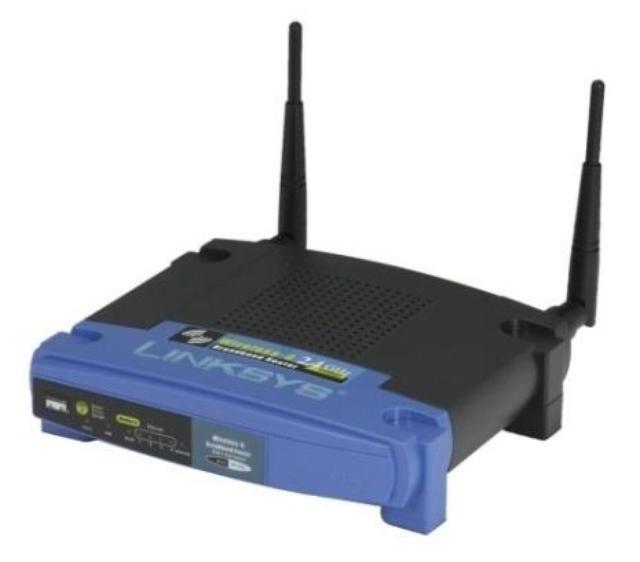
The particular device and software I have been experimenting with is the Linksys WRT54G router and HSMM-MESH firmware from http://hsmm-mesh.org/.
Installing the HSMM-MESH firmware changes the way the Linksys router functions and allows it to automatically connect to other HSMM routers in a mesh network. No special configuration is required after setting your callsign. All TCP/IP configuration is pre-configured, even down to automatically assigning addresses to connecting clients.

Mesh networks are highly fault tolerant. Every router in the network is aware of every other router and has the ability to move network packets through from one unit to another provided there is a link, or chain of linked routers, between them.
In the diagram to the right each router is represented by a numbered circle. If router number 6 were to fail then network packets that needed to move between router 1 and 7 would travel through routers 2 & 3 or 5 & 10 until 6 was repaired. All this happens automatically and quickly enough so that there is no disruption to the traffic.
Anything you can access on a normal computer network can be made to work on a mesh network. Some of the services that have been demonstrated include email, voice over IP (VOIP), video conferencing, file sharing, web servers & groupware applications.
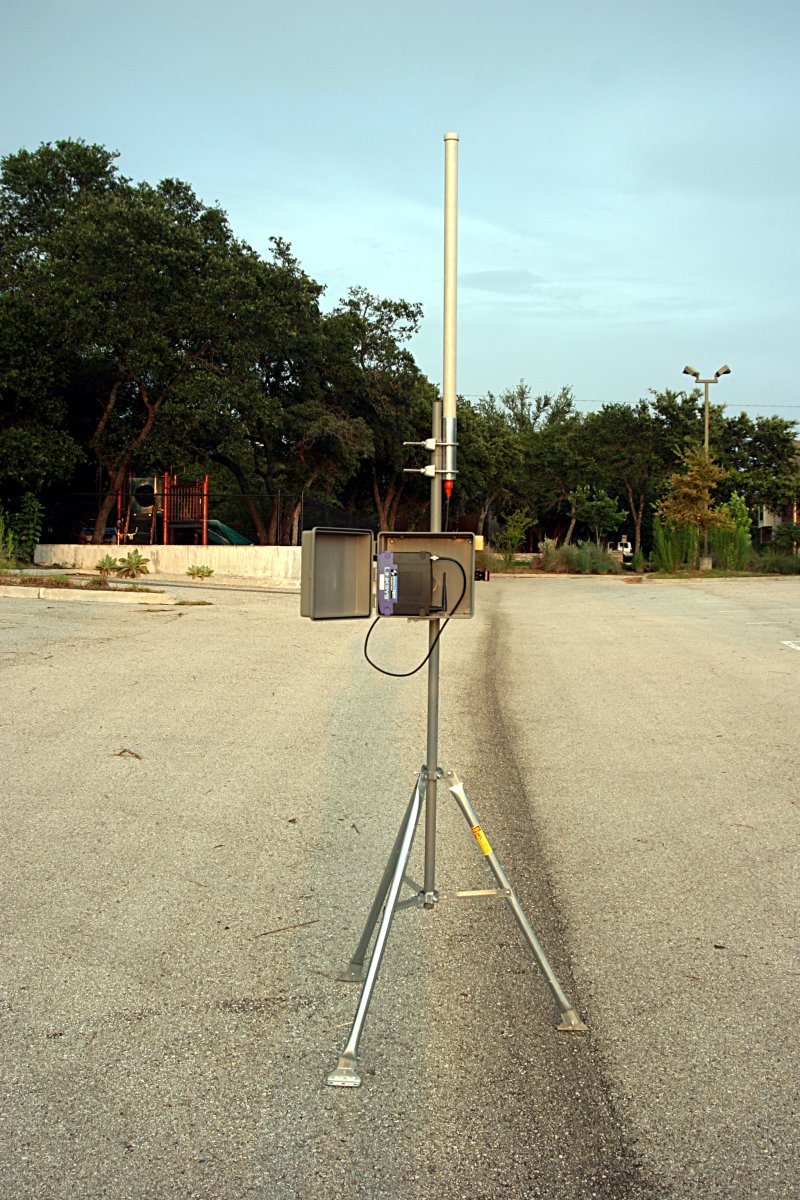 With simple modified antennas the modest output power from the WRT54G (100 to 200mW) can be used to reach distances of many miles or tens of miles with directional antennas. Mounting the router on a mast in a sealed enclosure can reduce losses from long cable runs while running off 12V power makes them compatible with ham radio power sources including solar and wind power.
The example to the left is from NG5V located on hsmm-mesh.org and consists of an omni-directional external antenna and a lawn sprinkler controller box from a popular home improvement store.
Did you know that … Frequencies used by channels one through six of 802.11b and 802.11g fall within the 2.4 GHz amateur radio band. Licensed amateur radio operators may operate 802.11b/g devices under Part 97 of the FCC Rules and Regulations, allowing increased power output but not commercial content or encryption.
I hope to acquire a few more WRT54G routers and put together a mesh network in the Katy TX area as a resource for experimentation and education in an area not normally touched upon by regular amateur radio operators. Who knows what the future holds & it behooves us to investigate this technology and bend it to our own needs.
The Amateur is Progressive … He keeps his station abreast of science. It is well built and efficient. His operating practice is above reproach.
Geomagnetic data reveal unusual nature of recent solar minimum
An interesting article appeared on physorg.com yesterday regarding changes in the Earth’s magnetic field and its relation to solar activity. Although short on detail it hints at significant changes going on within our sun.
Since the mid-1800s, scientists have been systematically measuring changes in the Earth’s magnetic field and the occurrence of geomagnetic activity. Such long- term investigation has uncovered a number of cyclical changes, including a signal associated with 27-day solar rotation.
This is most clearly seen during the declining phase and minimum of each 11-year solar cycle, when the Sun’s magnetic dipole is sometimes tilted with respect to the Sun’s rotational axis. With the Sun’s rotation and the emission of solar wind along field lines from either end of the solar magnetic dipole, an outward propagating spiral-like pattern is formed in the solar wind and the interplanetary magnetic field that can drive 27-day, and occasionally 13.5-day, recurrent geomagnetic activity.
Recurrent geomagnetic activity can also be driven by isolated and semipersistent coronal holes, from which concentrated streams of solar wind can be emitted.
During the most recent solar minimum, which took place from 2006 to 2010, however, several researcher groups noticed 6.7-day and 9-day recurrent changes in geomagnetic activity, and similar patterns in the interplanetary magnetic field, and the solar wind. Using modern data covering the previous two solar minima, these higher-frequency occurrences were judged to be unusual.
Love et al. analyzed historical geomagnetic activity records from 1868 to 2011 and find that the 6.7-day and 9-day recurrent changes were actually unique in the past 140 years.They suggest that the higher-frequency changes in geomagnetic activity are due to an unusual transient asymmetry in the solar dynamo, the turbulent, rotating plasma deep within the sun which generates the magnetic field.
More information: Geomagnetic detection of the sectorial solar magnetic field and the historical peculiarity of minimum 23-24 Geophysical Research Letters, doi:10.1029/2011GL050702 , 2012
Provided by American Geophysical Union
“Geomagnetic data reveal unusual nature of recent solar minimum.”
March 19th, 2012. http://www.physorg.com/news/2012-03-geomagnetic-reveal-unusual-nature-solar.html
Big Week, Small Handheld

Exultate Festival Choir and Orchestra Performing Handel’s Messiah at Benson Great Hall, Arden Hills, MN on 03/11/12.
What a week and a half it’s been! Last weekend we sang three performances of Handel’s Messiah. The last one, pictured here, was the best — truly out of this world.

NØIP walking near the Duluth Lift Bridge, 03/13/12.
Afterward, without even changing out of my suit, I drove to Duluth with my wife to stay in a bed and breakfast for a couple nights. It wasn’t purely vacation; since this is a busy week for me, I did have to get some work done on this trip. Still, it was sufficient to give me newfound vigor upon my return. A day and a half back in Granite Falls allowed me to do some calling and get some other work done, and then it was back to the Twin Cities for two recording sessions to make a 3-CD set of Handel’s Messiah.

Wouxun KG-UV6D Dual-Band Radio
During this time I tested out my new handheld, which arrived just a couple days before it all began. I went with the dual-band (2m/70cm) Wouxun KG-UV6D (ham radio version), available here. If you buy one of these you’ll want to purchase the USB programming cable to set up your Wouxun using your computer. You may also want to buy an adapter or two to connect antennas to it. I’ve included some photographs in the slideshow below showing two such adapters — 
This radio is working great! Setting up channels using my laptop was a snap, and the controls on the radio itself are pretty simple, too. Using a larger “rubber duckie” antenna I’m able to hit the repeater 12 miles away in Montevideo (though I’m not sure yet how I sound “You sound like you’re sitting right next to me,” I’ve just been told.). Using the car-top antenna I’m full-quieting on the repeater 30 miles away in Marshall, and I can hit the repeaters a little farther away in Willmar, too (though I’m not sure yet how I sound on them). I made a few contacts in Duluth and the Twin Cities this week, and heard good reports each time. So far all I’ve used is 2m, and I’m looking forward to a 70cm contact. While I’m still a confirmed HF CW man, I’m glad to finally have a VHF/UHF handheld that works! If and when my son gets his Technician license, I’ve promised him that I’ll buy him a matching Wouxun KG-UV6D. It would really come in handy around here for him and I to each have one of these.
Click to view slideshow.
All photographs taken by my faithful beloved XYL, Monica, except for the stock photo of the KG-UV6D.


Making a Type C Triode – Amazing Glasswork!
Ron Soyland is at it again and creating a Type C Triode vacuum tube. For a look at other creations click on Making a Spherical Audion Tube by Ron Soyland
A general purpose triode originally made for use by the Royal Air Force (Great Britain) in 1918 and designed by Captain H. Round of the British Marconi Co. around 1913. It is a triode that was meant for high gain high frequency use and has a 3 volt directly heated cathode.
PC power supplies for Amateur Radio equipment?
 I’ve noticed a few spirited discussions regarding modifying computer power supplies for use with Amateur Radio equipment. On the surface it seems as though they supply the perfect solution: Inexpensive, high current, regulated 12V DC supplies for a fraction of the cost of specialized amateur equipment. Is it really is as straight forward as lopping off a molex connector and replacing it with an Anderson Powerpole?
By design PC power supplies are designed to output a fairly well regulated 3.3V & 5V to the PC motherboard and 12V to the motherboard, fans and hard-drive motors. Modern units are typically rated anywhere from 75W to 1200W which should be a measurement of the output power available from all the 3.3, 5 and 12 volts. Since this isn’t a lab grade power supply you can expect marketing hyperbole has perhaps inflated the power output figures.
Back when my job was to build PCs I had an issue with a server not being able to start its complete complement of disk drives. When I opened the case I found a 300W desktop supply board had been used in place of the 800W board … sometimes you don’t even get what you pay for!
Before you convert your first PC power supply there are two issues that may, or may not, cause a problem depending on your unit.
The first is load regulation or the ability of the power supply to maintain its rated voltage under load. If the output voltage drops too far your rig will shutdown, distort or fail to provide its rated output power.
The second issue is due to the high frequency switching circuits used in switch mode supplies. Depending on the individual power supply there can be adequate to no filtering to prevent radio frequency interference being broadcast to your receiver. Toroids on the input and output lines can help to reduce interference.
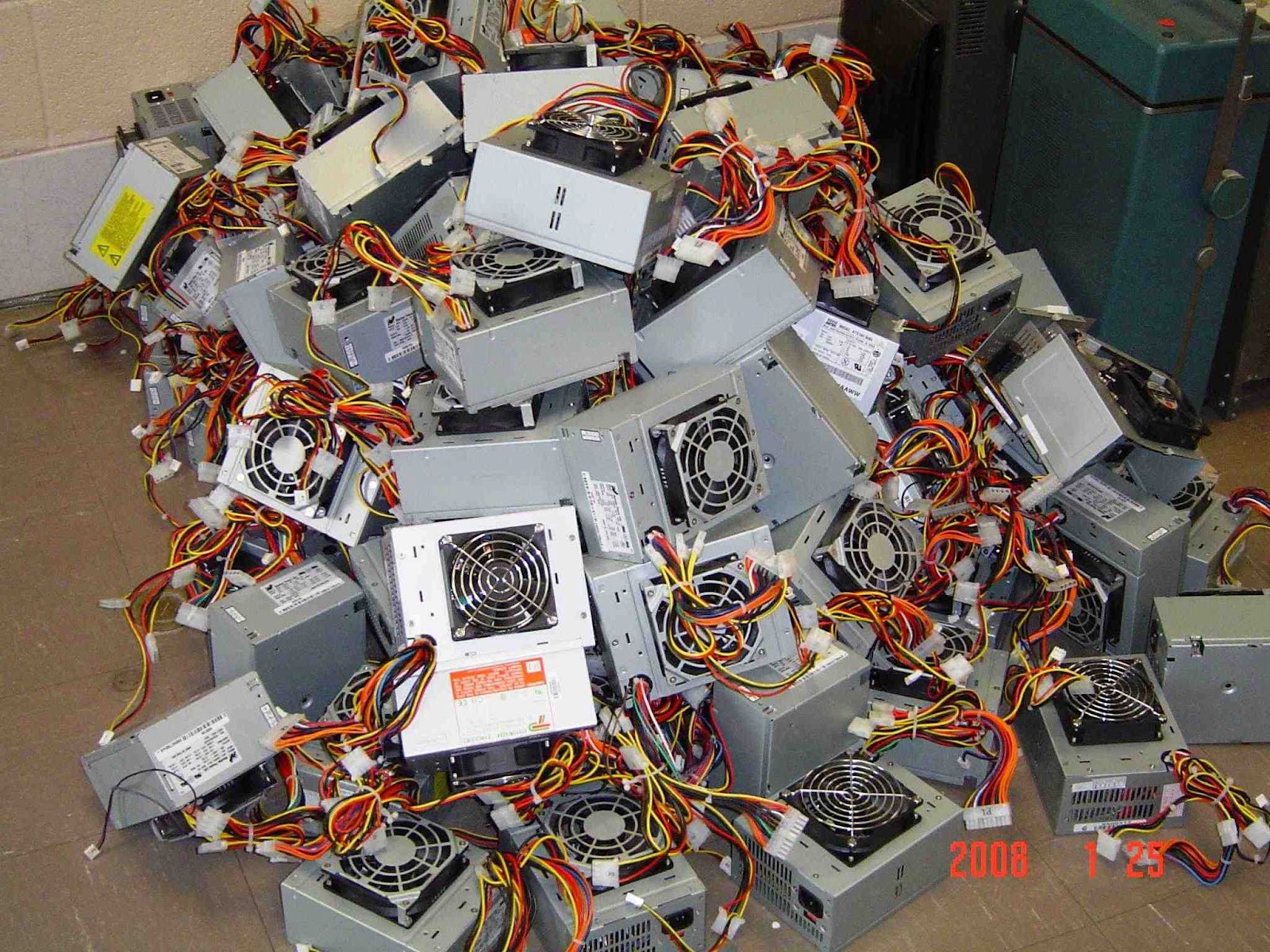 Because of construction differences between models and even between batch numbers for the same model you can never be certain how the power supply you purchase, or recycle, will perform. For the most part people’s experiences have been positive but I have heard of power supplies that were unusable because of RF interference or such poor load regulation that the 12V rail dropped to 11V under load.
Without a motherboard presenting a load and supplying the power-on signal there are a few changes that need to be made to the power supply. Modern power supplies will not enable the 12V output unless the power-on wire is grounded and a load should be placed on the 5V line to help with regulation. Additionally there is usually an adjustment that can be used to raise the voltage above 12V
The following links detail the steps required to convert a PC supply for use with amateur radio equipment. Whether this represents a good investment of your time will depend on your desire to do-it-yourself and the quality of the power supply you begin with. I’ve heard strong opinions either way but I’ll just say that, if luck favors you, you’ll save some money and learn a few new skills in this exercise.
Computer Power Supply Converted for Ham Use
CONVERTING COMPUTER POWER SUPPLIES (Advanced with theory)
Converting Computer Power Supplies to stabilized 13.8 V DC 20 A
ARES Center Stage at 2012 MNVOAD Training Conference
 I’m off and running with the online ARRL course on Emergency Communications! Already I’m learning new things. Take VOAD’s, for instance — I’d never heard of them in my life, but now, thanks to this course, I’m signed up to attend the 2012 MNVOAD Training Conference.
What is a VOAD? VOAD stands for “Voluntary Organizations Active in Disaster.” The first VOAD (and still the main VOAD) was NVOAD (National VOAD), born in 1970:
Hurricane Camille led to the formation of NVOAD. After Hurricane Camille, it became clear that voluntary agencies were responding to the needs of disaster victims in a fragmented, uncoordinated manner. Representatives from several voluntary agencies began to meet on a regular basis to share their respective activities, concerns, and frustrations in disaster response. On July 15, 1970, representatives from seven voluntary agencies came together in Washington, D.C. to form NVOAD. (FEMA course IS-288, “The Role of Voluntary Agencies in Emergency Management,” 2-11)
Those first seven agencies were the American Red Cross, Christian Reformed World Relief Committee, Mennonite Disaster Service, National Catholic Disaster Relief Committee, Seventh Day Adventists, Society of St. Vincent De Paul and Southern Baptist Disaster Relief. Now there are nearly 50 agencies involved, including the ARRL:
The mission of NVOAD is to foster more effective service to people affected by disasters. NVOAD, itself, does not deliver disaster response and recovery services. NVOAD coordinates planning efforts by many voluntary organizations responding to disaster. Member organizations provide more effective service and less duplication by getting together before disasters strike. Once disasters occur, NVOAD or an affiliated state VOAD encourages members and other voluntary agencies to convene on site. This cooperative effort has proven to be the most effective way for a wide variety of volunteers and organizations to work together in a crisis. (4-9)
The state VOAD movement began five years after NVOAD was born:
Not long after the development of NVOAD, State and regional VOAD organizations were created to ensure an effective response to disasters at the State and local levels. The first State VOAD was formed in 1975. The VOAD movement initially grew without much order and without official sanction or direction from NVOAD. However, in 1988 NVOAD developed formal procedures for chartering State and local VOAD members. At this time, there are chartered State VOAD organizations in almost all the U.S. states and territories, and there are a growing number of local VOADs. (4-13)
The Minnesota VOAD has 37 member organizations, including the ARRL — and this year, RACES/ARES is taking center stage at the 2012 MNVOAD Training Conference on Saturday, March 24. The keynote speaker is Peter Angelos, KCØKRI:
9:00-10:00 Keystone Session – Pagami Creek Fire Response – Peter Angelos
The Lake County Emergency Management response to the Pagami Creek Fire (September 2011) and the role Lake County RACES/ARES played is a good example to illustrate effective and successful use of affiliated volunteer organizations in incident management. This presentation will outline a brief description of the incident, the specific support that RACES/ARES provided for logistical and situational communication, and most importantly–the organizational practices and principles that lead to success.
I’m looking forward to hearing what Mr. Angelos has to say about how RACES/ARES helped fight the Pagami Creek Fire.
But perhaps even more valuable for me will be the rest of the training day, which has nothing to do with Amateur Radio. After all, the whole point of VOAD is to learn how to work with one another efficiently and effectively when the time comes!


EICO Model 625 Tube Tester
I attended the Greater Houston Hamfest and as I walked past the tables of equipment I wondered if interest in vacuum tube equipment was starting to wane. Compared to the last few years the prices of collector quality gear had held steady but parts and restorable gear seemed to be going for less. I’d like to know your thoughts if you’ve noticed trends one way or the other.
I was happy to pick up a EICO Model 625 tube tester for $15. It is in good condition and appears to work well. The roll of settings for each tube is in good condition and a little searching on the internet supplied settings for older tubes like the number 78 in the picture below.
 |
| EICO Model 625 Tube Tester with a number 78 tube |
The EICO 625 is not a top of the line tester but it does basic tests and will let you know if a tube is functioning and an idea of the life left in it. It was sold in kit form for $34.95 in 1958 which is roughly equivalent to $274 in 2012.
 |
| Inside the EICO 625 from diyaudioprojects.com |
The EICO 625 is fairly unique in having its own 6H6 diode tube to rectify the 30V filament voltage. It provides DC for the neon short-indicator bulb. If the tube is suspected of having a short then there is a fairly comprehensive series of tests than can be administered to isolate shorted elements.
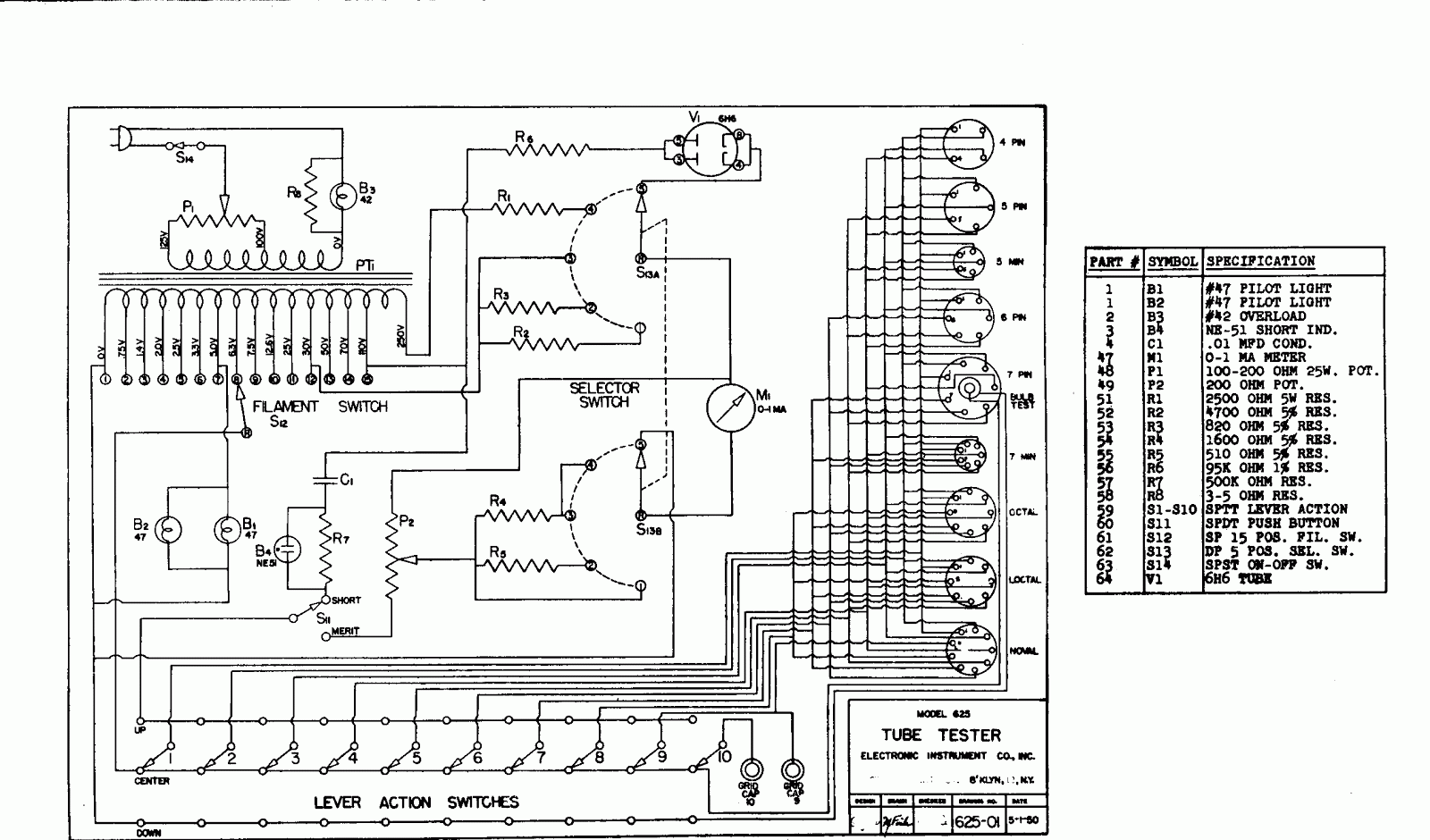 |
| EICO Model 625 circuit diagram |
Here is the complete TUBE TEST DATA 1/1/78 for the EICO Model 625 Tube Tester
Excellent information on servicing and calibrating your Classic emission tube tester.













