Posts Tagged ‘6m’
 Vatican Magic
 July 23rd, 2015 |
  Author:
  |
| courtesy: K7CW |
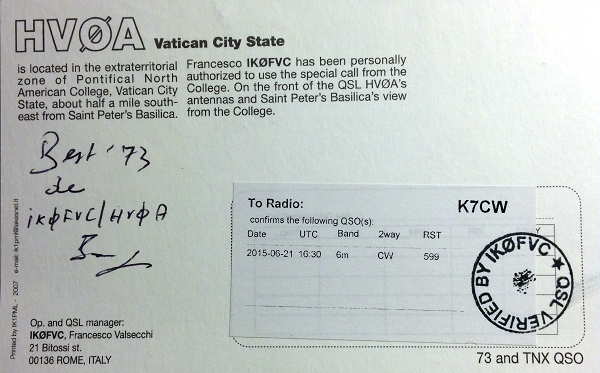
June 21st was one of the better days of this year's poor Sporadic-E season. Stations in the western part of North America had an early-morning opening to the Caribbean as well as to South America, when YV1KK was worked by stations in the PNW region.
Here's how it happened here. I hadn't been paying attention to it, but N5DG had worked HVØA. Somebody mentioned that HVØA was going to QSY to 50.078 and was going to be looking for NA. I thought this choice of frequency was odd because some Europeans are not authorized to use frequencies below 50.080. But, I decided to go down there and check it out, because doing that has often paid off (re the CYØX QSO which brought me to start doing this). The propagation to the Caribbean and northern South America was demonstrably quite good (I worked my first YV), so checking out this European spot made even more sense.
I swung my beam up to a heading that I thought was good enough for Italy and tuned down on .078. Fortunately, there were no beacons coming through on that frequency, so I could concentrate on digging out any weak signal that was there. I slowly tuned around .078 and, for a while, heard nothing. After a few minutes, I began to sense that there was some tonal quality to the noise (musical noise). It was just there as no more than a hint, but I slowly tuned it so that it matched the frequency of my CW sidetone. I hoped that the other station (if there was one) would also have his filters set the same way. When I thought I had it about right, I switched in all my CW filters to the tightest setting (50 Hz) on both my transceiver and also my JPS NIR-12 outboard DSP filter. When I did this, the signal to noise ratio improved so well that I immediately started copying, "CQ NA CQ NA de HVØA HVØA" He was solid copy, but I needed those tight filters. I got his attention on the first call! He called me back using K8CW and gave me 599. I'm sure he was receiving me well, but probably didn't believe I was a 7. He kept calling me K8CW and I kept correcting him. I gave him a 599, too, but it was just a jerk-knee response that someone might do upon being the object of a miracle. But he was solid copy. After our QSO, I stopped hearing him. I logged him at 1631Z. The spotting record shows that N5DG and K7CW were the only North American stations to work HVØA on June 21 on 50 MHz. So, that's my side of the story.
 |
| courtesy: K7CW |
No magic for me that day but kudos to Paul and his fine station, as well as to Francesco, for the heads-up operating and being on top of the short propagation window that morning!
 |
| courtesy: K7CW and https://www.qrz.com/ |
These are the moments that 6m diehards live for, especially those on the west coast ... reminding us once again why the 'magicband' deserves its well earned moniker.
Summer Es
 |
| courtesy: http://www.dxmaps.com/ |
There is no doubt about it.
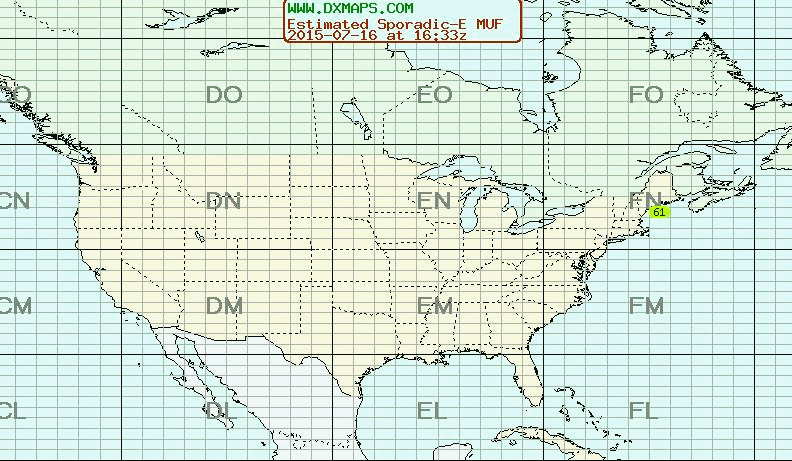
This summer's Sporadic-E season has been the worst in memory, for myself and for most North American six-meter fans. My last log entry, and the last time that I heard a signal on 6m, was on July 7th. During a 'normal' season, rarely a day goes by without an opening in some direction. Often, the band will be open for several days in a row. It was only a few summers ago that the PNW region had propagation to Europe (extremely rare) for three days in succession!
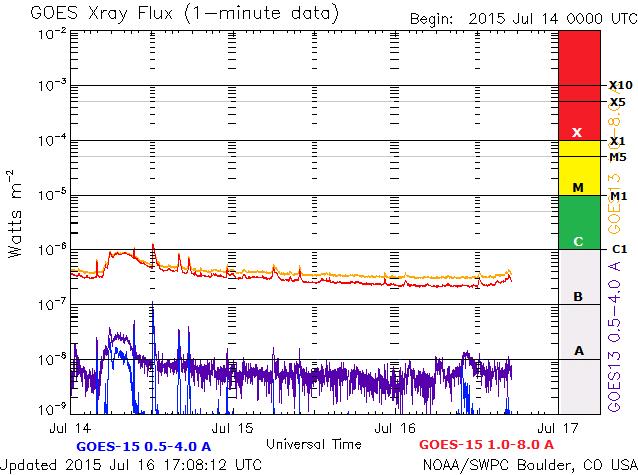
There has been much speculation as to why this season is particularly poor. Is it the early higher-than-normal temperatures being experienced this summer? Is it the constant bombardment from the sun, with several solar flares during the prime weeks as well as an almost continuous coronal hole streaming? Is it all just a normal part of the cyclical behavior of most natural phenomena? Whatever the reason, time is running out for this year.
After operating on 6m for over 40 years, the peak conditions always seem to happen during or close to the first week of July ... but, living up to its 'sporadic' classification, I have seen some spectacular openings right up until early August. In fact, my longest 2m Es contact (Oklahoma) was made on July 24, so there is still some time left for the band to exonerate itself.
 |
| courtesy: http://www.swpc.noaa.gov/ |
One great opening over the pole will make the poor conditions just a distant memory!
Summer Solstice Magic

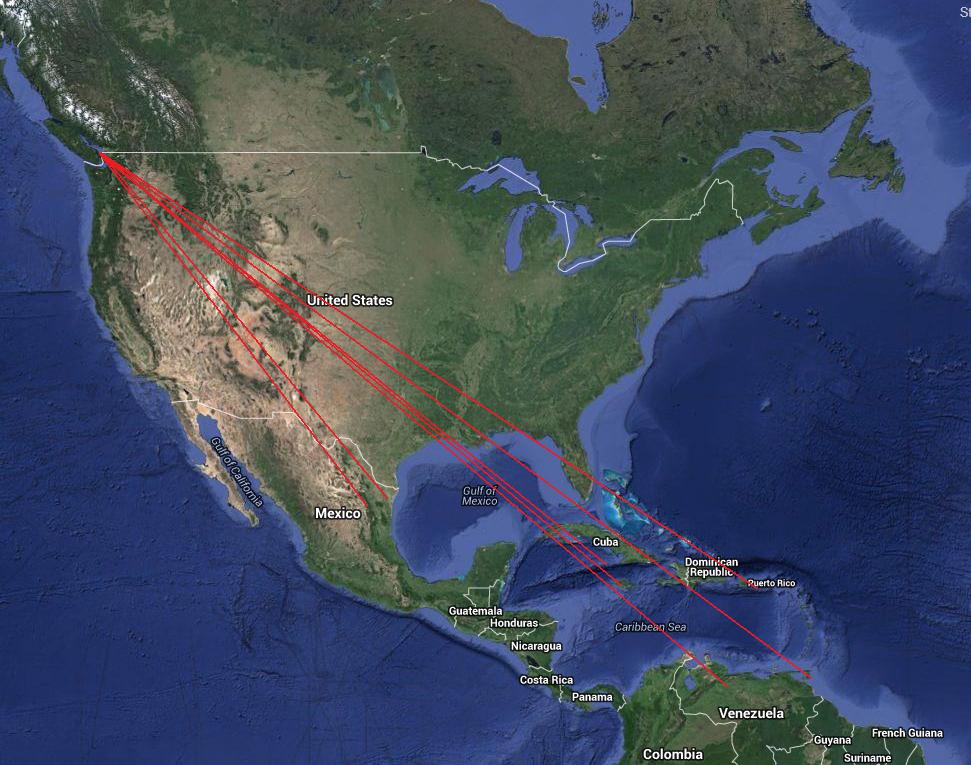
A loud NØLL in Kansas was the first station heard this morning at around 0600 local time but I suspect the band had been open even earlier, judging by the strength of the signals. It didn't take long for the band to stretch out further and not too much later, signals from the Caribbean were making it into southern British Columbia, as well as many parts of North America.
At times the band seemed as crowded as 20m CW during the Sweepstakes as so many of the CW stations congregate in the 20KHz slot just below 50.100MHz. Before breakfast, the following stations were in the log:
ZF1EJ Cayman Islands
9Y4D Trinidad
YV1KK Venezuela
6Y5WJ Jamaica
KP4EIT Puerto Rico
XE2MVY Mexico
XE2X Mexico
WP3C Puerto Rico
NP4BM Puerto Rico
 |
| courtesy: https://www.google.ca/maps |
At times, several in band 'growly' carriers with polar flutter were heard as well as weak signals from some of the 49MHz videos still operating in central Europe.
It will be interesting to see if we have a repeat of this prop tomorrow (Monday) but I rather suspect much of this was the result of two well-placed solar flares earlier in the morning and will not be repeated ... I hope I'm wrong!
Fluorescent Light QRN

A recent posting on the ON4KST 6m Chat page brought up the question of QRN coming from fluorescent lighting.
Lefty, K1TOL, had a lot of QRN coming from his neighbour's garage, about 1,000 feet away. He solved the problem by changing the ballasts, purchased at Home Depot. This is the ballast that solved his problem, so if you are having similar difficulty, perhaps this will be of benefit.
Sometimes just changing to a different bulb type (manufacturer) will solve the problem as well but from what I have read, you get what you pay for and likely the bargain-bin bulbs are not the quietest.
Summertime CBer
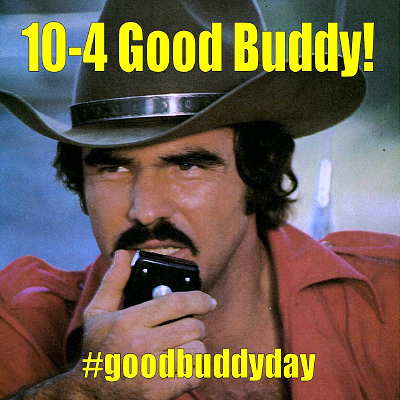
As much as I hate to admit it, for a few short weeks every summer, I become ... get ready for it now ... a CBer! Now I'm not talking about what might typically come to mind when thinking about CBers ... for me it's more of a love-hate relationship. You see, the 27MHz CB band, and 27.385MHz in particular, happens to make one of the best indicators of Sporadic-e openings on the face of the planet. Unlike the vast empty wasteland that 10m becomes during the summer, the 11 meter band is jam-packed full, with thousands of operators ... and some days it seems as if they are all on the 27.385 MHz (LSB) calling frequency.
With my receiver quietly running in the shack, the frequency can suddenly jump to life, with hundreds of stations calling each other in a matter of seconds. Sometimes it's like a switch has suddenly been thrown to 'ON'. This is not too hard to understand as the present suspected cause of Es is sudden high speed wind-shear within the E-layer. Have a quick listen to what the calling frequency can suddenly sound like:
Now the beautiful thing is that strong Es on 11 meters usually heralds the possibility of 6m also opening via the same mode ... usually 30 minutes or so later if it's going to happen. Often a CQ on a seemingly 'dead' 6m band in the direction of the 11m Es, will produce a response from an equally surprised operator at the other end.
I don't think I've ever heard Es on the 6m calling frequency without hearing Es on 11 meters beforehand. It's been my experience that the band always opens from low to high, in terms of frequency, so it just makes sense to listen lower (11m) to get a heads-up for what is likely soon to follow on the magic band. As well, knowing that there is 'zero' Es on 11m, can let you rest assured that nothing will be happening on 6m via Es ... at least for the time being.
If you haven't already tried it and have a second receiver that can be put to use as an 'Es-monitor', you might be pleasantly rewarded. Even though knowing that the band will soon open might rub a bit of the magic away, I think it's still well worth it!
Where’s The Magic?
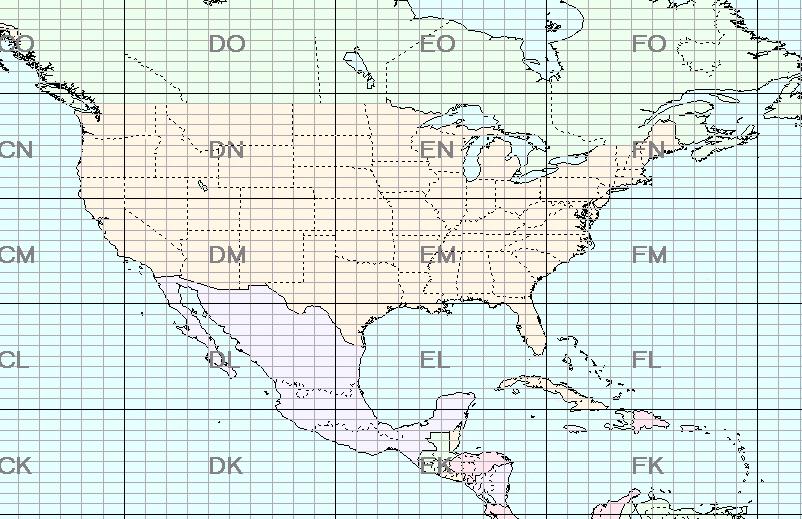 |
| courtesy: http://www.dxmaps.com/ |
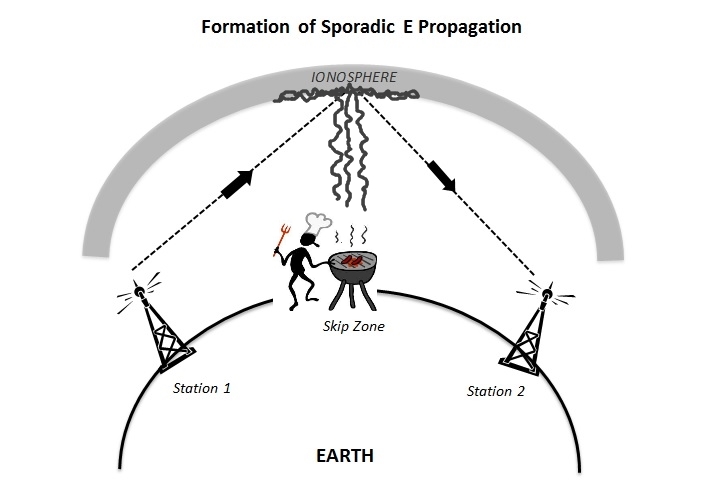
Most 6m diehards understand that the cause of summer Es is high-speed wind shear events, way up in the E layer region but a new theory suggests otherwise:
 |
| courtesy: nz3m.com |
Sixbox QRP rig for 6m
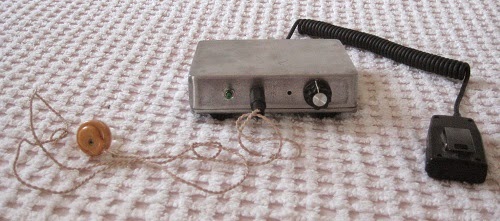 |
| Sixbox 6m AM rig – a simple design |
Several years ago I designed and built a derivative of my 2m Fredbox but for 6m AM. The same basic design would easily translate to a 10m version. Both bands could be useful for cross-town natters, especially when both 10m and 6m behave like VHF bands, which is in the quieter sun years and at night on 10m. The Sixbox is simple and certainly capable of further development.
Treat the design as a starting point. A 10m version of the RX has copied transatlantic USA AM stations well, but this is NOT a rig for DX use. It is better suited to cross-town/inter-village natters.














