 |
 Time to put the K2 package up for sale.
 17 June 2013 | by
KIO2 AUX I/O module
KAT2 ATU
KBT2 (purchased 10/10/2011 installed spring of 2012)
KNB2 Noise blanker
73cnc.com machined weighted vfo knob
VFO knob with tuning dimple as a spare knob
All manuals for the above options and K2
EC2 enclosure with
KAT100-1 ATU
K102 host control Aux I/O
KPA100 100 watt amp
All interconnecting cables between K2, EC2 and PC.
Additional items
K6XX visible LED tuning indicator ( it has not been installed but it’s the complete kit ready to go)
A&A Engineering 1 amp smart charger for the KBT2 keeps the battery topped up and ready to go.
At this point I am trying to come up with a fair price for all the above.
Mike Weir, VE9KK, is a regular contributor to AmateurRadio.com and writes from New Brunswick, Canada. Contact him at [email protected].
Japan– DX # 87

I was hearing Japan stations all weekend, and tried to work several without success, until, on Sunday evening around sunset, I found JA7NVF on the 15 meter band. It might not have been a difficult catch using normal power and a normal outside antenna; but with 3 watts of power and an “indoor” 50 ft piece of “random wire” for an antenna, it was a challenge. At least the first time…..
The “first” contact was difficult but about an hour later, the “second” contact was a “piece of cake”. I was not hearing any response to his calls, from anyone, and did it “just because I could”. This time it was a 599 contact. I happily added my QRP @ 3 W, this time, to the ending of the exchange
I’m extremely happy with this new DX station in the log book. (#87)
Although Japan is only 6,331 miles from me, (I’ve worked 7,500 miles twice) I never expected to work this part of Asia. I rarely hear them on the air. I’m assuming he was pointed towards California, and I was lucky enough to catch the “second bounce” towards the East coast. He (JA7NVF) isn’t operating with a normal “beam”, he uses something ” Special “, and it works very well.
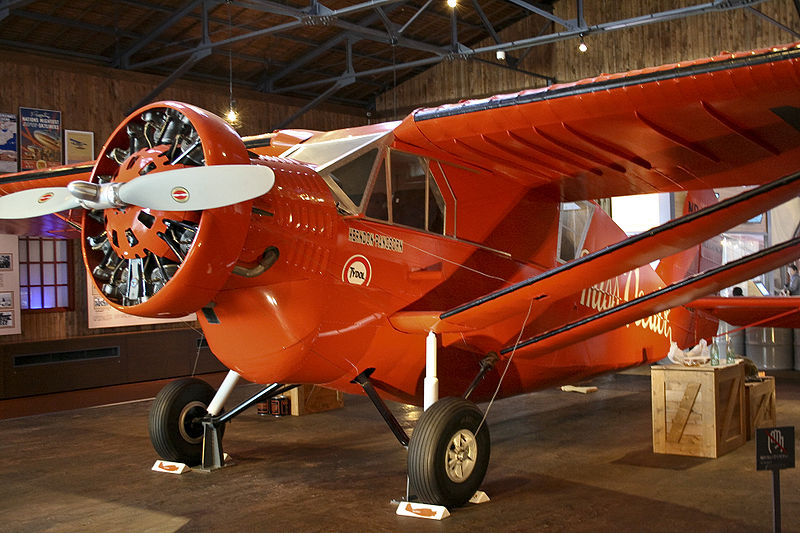
Naomi lives in the city of Towada Aomori near Lake Towada . He’s an electrical engineer who has been with the Army Corp of Engineers at the Misasa Air Force Base for 22 years.
Naomi’s antenna farm is several miles north of his home and near the air field where the first “non-stop” flight across the Pacific Ocean was achieved on Oct. 3rd, 1931. The pilots Clyde Pangborn and Hugh Herndon flew a “modified” aircraft from Japan to the coast of Washington. The airplane was called Miss Veedol .
I’ve always found those early flights in small planes to be especially interesting. This flight is a milestone since it barely made it off the ground due to extra fuel, and also, out of necessity, the “landing gear” was “jettisoned” soon after takeoff. Yes, you read that correctly; it was intentionally “dropped” off the aircraft to reduce drag and increase mileage. However, it wasn’t intentional when the landing struts didn’t “fall off”. There was only “one way” to correct this issue. Herndon climbed “outside” the aircraft (in mid-flight) and manually “dropped it”. At the very beginning of the flight planning, they had intentionally decided to “crash land” the aircraft in the State of Washington.
They did; and managed to walk away from the wreckage. Most of the damage was done to the propeller and as any good pilot will tell you—” any landing you walk away from is a good landing”.
How’s that for guts?
I also worked another couple of good stations yesterday: CO2IR in Cuba (mailbox below) and ZW7REF in Brazil.


John Smithson, Jr., N8ZYA, is a regular contributor to AmateurRadio.com and writes from West Virginia, USA. Contact him at [email protected].
QRP Success: 7Z and JT5
As I have written before there are several strategies for the QRP DX'er to employ, not the least of which is to call needed DX entities during a contest. The reason being that demand for any given station is diluted by the fact that there are so many stations on the air. Accordingly the pileups are smaller, generally speaking. As I look at my QRP needed list, many Asian countries are on the list simply because there is reduced activity from these entitites and the paths are tough. Normally, when openings occur, the pile-ups are huge and the operators are on for a limited time. I've learned to ignore spots for DX like HZ, JT, VU, etc.., at least from South Texas, as jumping into those pile-ups, with QRP power levels, on a normal day is not fruitful. Contests however are different.
Saturday afternoon I fired up my QRP log and logged into the cluster to look for needed countries. I switched my Log Periodic to be in-line with my KX3 and started looked for DX. The first to pop up was 7Z1HL. I had decent copy on him on 15 meteres with a little QSB. The pile-up was relatively small, but for 20 minutes or so, no joy. I had him in the open on several occasions and he wasn't hearing me well enough to answer. Then all of a sudden his signal went up a couple of S-units as the band improved very quickly. The second call after his signal built-up and I was in the log. Wow, I said to myself, 7Z on QRP.
I chased a couple of others after that, 9V and HS, but I couldn't get through the pile-up on 9V and I don't think the HS0 could hear me.
On Sunday morning, I fired up the KX3 again. There was a spot for JT5DX on 15m, honestly before I tuned to his frequency, I wasn't hopeful. When I tuned him in, wow, a solid 59. Maybe the best signal I 've ever heard from JT. First call, in the log. Wow!!
Again, I chased a few others, but suffice to say, I was happy with the weekend. Two relatively tough DXCC entities now safely in the QRP log. QRP IS!!
Mike Crownover, AD5A, is a regular contributor to AmateurRadio.com and writes from Texas, USA. Contact him at [email protected].
Young operators in All Asian contest
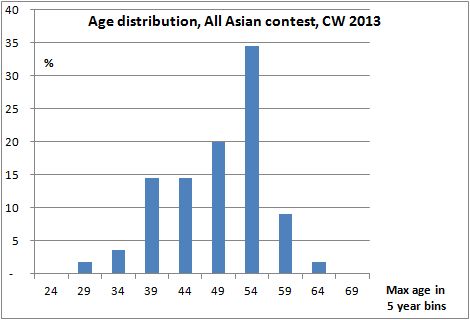
The All Asian DX Contest is one of the more fun ones to participate in. One thing is the DX aspect of it, but I like it also because of the exchange of the age of the operators. In other contests one exchanges boring stuff like serial number 1, 2, 3, … ; the CQ or IARU zone (14 and 18 for me); or the power output. But exchanging the age of the operators gives a little glimpse of the person behind the radio on the other side.
It also makes it possible to make a graph of the distribution of age. I had 62 contacts this weekend, of which 55 were unique. They were mainly in Asiatic Russia and Japan. The average age of the operators was 51.6 years – 7 years younger than me – and the graph shows the distribution. The bar for e.g. 54 is the percentage, 20 in this case, of operators in the bracket 50-54 years and so on.
The graph actually makes me quite optimistic concerning the future of ham radio. There are many young contest operators out there, at least in Asia. This resonates well with what others are saying also. Never before has there been so large activity on the bands as during contests these days.
Sverre Holm, LA3ZA, is a regular contributor to AmateurRadio.com and writes from Norway. Contact him at [email protected].
Fred Whitton
I’ve harped on enough about the Fred Whitton but I thought I’d share this. There were a few photographers around the course. catching you at your finest moment. I’d looked for one of me and there wasn’t one to be found in the original batches sent round. Apparently the camera’s weren’t happy with all the rain and they lost a few photo’s.
Luckily for me they recovered a few and I was in one of them, so here I am struggling up the 3rd pass out of 6. Newlands pass, near Buttermere. Its one of the easier passes and only hits about 25-30% at the very end. Not like Hardknott that is like that for most of it!

Anyway here I am in all my uphill-ness. 50 miles in and 60 to go! It ended up taking me 8 hours and 8 minutes and 50 seconds. If I’d been 8 minutes and 51 seconds quicker I would have got a 1st class time. Maybe next time
Alex Hill, G7KSE, is a regular contributor to AmateurRadio.com and writes from Cumbria, UK. Contact him at [email protected].
Father’s Day
I was able to get on the radio for a bit today. 15 Meters seemed to be alive jumping with “AA” contest stations. I didn’t have much interest in competing in the contest, but it’s always interesting to work Asian stations using QRP power. I managed to work several JA stations, cherry picking my way around, and trying the loudest ones. I also worked a few Asiatic Russian stations. Unfortunately, I did not hear or work anything more exotic.
I attempted to work Met TA3AX on 17 Meters, but this time QRP. Alas, Turkey was not to be had with 5 Watts – today. 😉
I finished the day by participating in the Run For The Bacon, the Flying Pigs monthly QRP sprint. Not a whole lot of activity, probably due to it being Father’s Day, but I did manage to work fellow blogger, Chris KQ2RP, and I also worked Jim W4QO and John K4BAI, twice. Earlier in the day we had another brief contact, so today was able to put John in the log three times today. I think that’s a record.
72 de Larry W2LJ
QRP – When you care to send the very least!
Larry Makoski, W2LJ, is a regular contributor to AmateurRadio.com and writes from New Jersey, USA. Contact him at [email protected].
A trip into the attic.
 |
| Alpha Delta DX-EE with balun. |
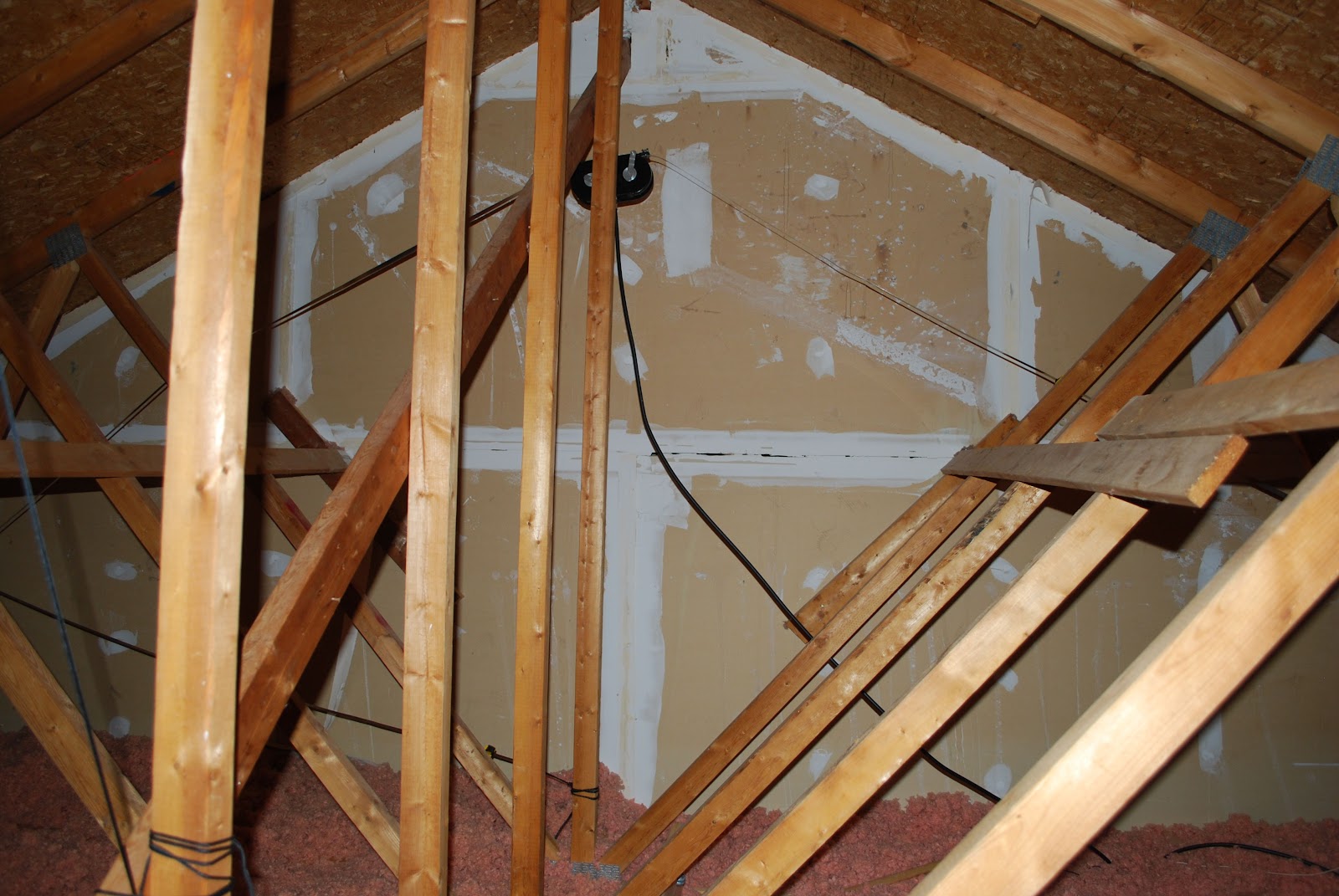 |
| Hy-gain noise antenna |
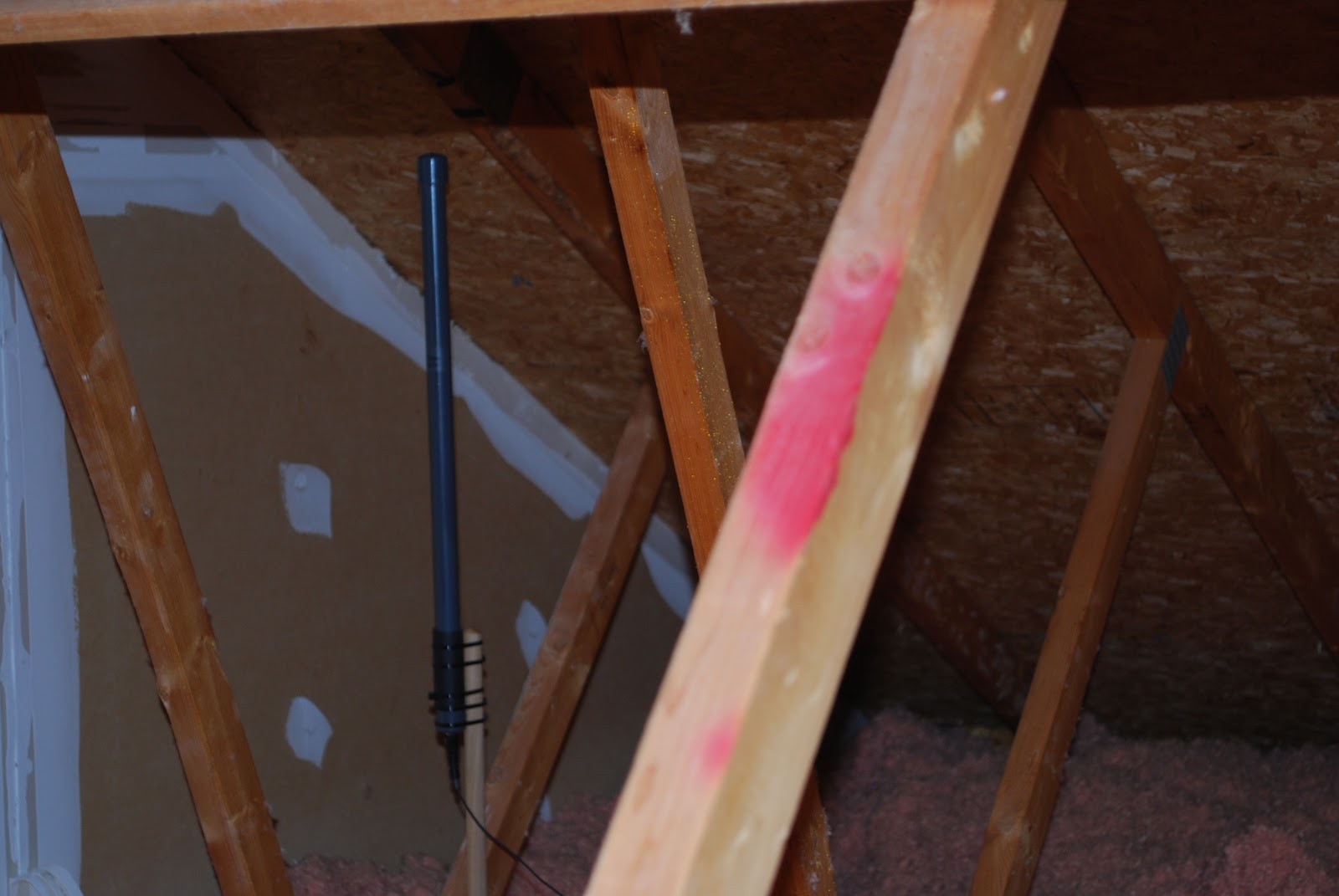 |
| H-900 active antenna |
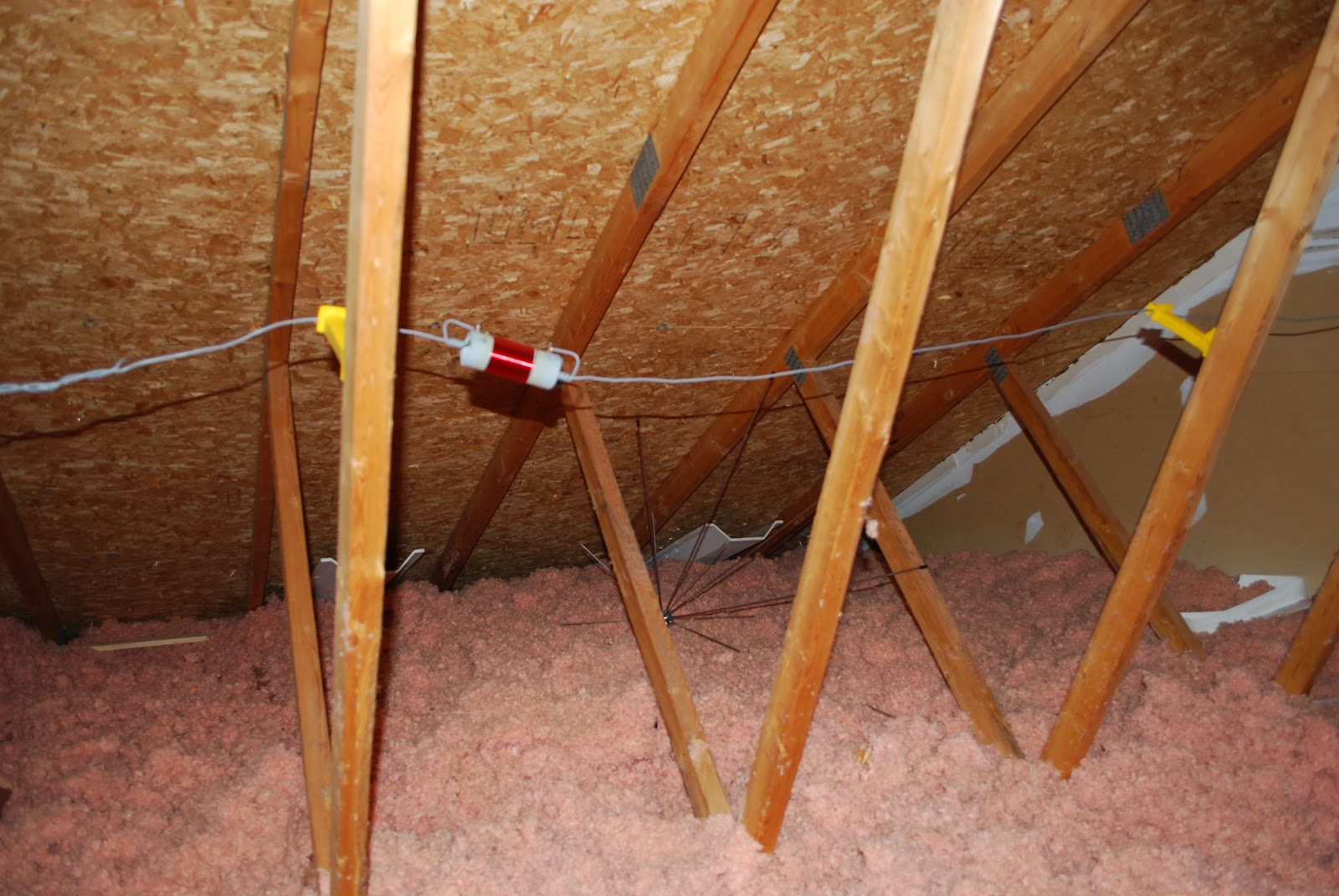 |
| Sagging 40m trap |
Mike Weir, VE9KK, is a regular contributor to AmateurRadio.com and writes from New Brunswick, Canada. Contact him at [email protected].
 Ham Radio Deluxe |
 W5SWL Electronics |
 Ham Radio Prep |
 KB3IFH QSL Cards  Hip Ham Shirts  HamRadioAuctions HamRadioAuctions Reliance Antennas Reliance Antennas Enigma Shop Enigma Shop |  morseDX  Ni4L Antennas  R&L Electronics R&L Electronics antennas.us antennas.us QRV QRV |
- Matt W1MST, Managing Editor
