 |
 Announcing Technician License Class – Oct 19/26
 11 July 2013 | by
  Ham Radio Two-Day License Class
Monument, Colorado
Sat Oct 19 and Sat Oct 26 (8 AM to 5 PM) 2013
Location: Tri-Lakes Monument Fire Station 1
The Technician license is your gateway to the world-wide excitement of Amateur Radio …
- Earn your ham radio Technician class radio privileges
- Pass your FCC amateur radio license exam right in class on the second day
- Multiple-choice exam, No Morse Code Required
- Live equipment demonstrations
- Learn to operate on the ham bands, 10 Meters and higher
- Learn to use the many VHF/UHF FM repeaters in Colorado
- Find out how to participate in emergency communications
There is a $25 registration fee for the class.
In addition, students must have the required study guide:
HamRadioSchool.com Technician License Course $19.95
Advance registration is required (no later than one week before the first session, earlier is better!)
To register for the class, contact: Bob Witte KØNR
Email: [email protected] or Phone: 719 659-3727
Sponsored by the Tri-Lakes Monument Fire Radio Association
For more information on amateur (ham) radio visit www.arrl.org
or www.wedothat-radio.org
Bob Witte, KØNR, is a regular contributor to AmateurRadio.com and writes from Colorado, USA. Contact him at [email protected].
Encryption Is Already Legal, It’s the Intention That’s Not
Fresh from the Unless You’ve Been Living In a Cave, You’ve Heard of This department, there’s been much ado over the FCC Petition for Rulemaking seeking encryption for emergency communications. I won’t go into the details of the petition as you can read that several places elsewhere. Technically encryption on amateur radio bands is illegal. However, in reality the FCC has been letting it happen for years and the ARRL has turned a blind eye to it. D-STAR uses a proprietary vocoder that takes an analog voice signal and converts it into a data bitstream. The algorithm isn’t publicly documented and you can’t decrypt it, unless you buy a proprietary chip.
Some may quote § 97.309 (4)(b) which basically says one can transmit an “unspecified digital code” as long as the digital code is not intended to obscure the meaning of the communication. Presumably the people who created and use D-STAR don’t intend to obscure the meaning of the communication, so perhaps it is within the law.
So, say I create a new digital communication mode. It features a compression algorithm and I just happen to XOR the data stream with a 10 million bit pseudorandom bitstream to randomize it so a long stream of zeros or ones won’t screw up a modulator. I document the algorithm and the 10 million bit key on some corner of the Internet. It’s technically publicly documented, but in practice no one will go to the trouble of attempting to build a decoder. I’ve achieved encryption in a roundabout way. Whether my intentions were to obscure the meaning of the communications or make a modulator-friendly bitstream is anyone’s guess. But with the inaction over the D-STAR vocoder and the wording of § 97.309 (4)(b), intention rules the day. So while this debate over the petition is being framed in a discussion of encryption, it’s really the intent to obscure communications that’s at the heart of this.
I don’t have a horse in this emcomm race, but I’m not in favor of allowing obscuring messaging. If the FCC does allow it, others are going to want to use it for their noble causes, like preppers under the guise of “homeland security”.
(D-STAR is a registered trademark of Icom, Inc.)

Anthony, K3NG, is a regular contributor to AmateurRadio.com.
Pizza Box Computer Screen Sunshade
Its always difficult to see a computer screen in bright daylight. Here in Florida, there are numerous pavilions with roofs over them and that helps a lot. Something extra is usually needed on a bright sunny day. I had a pizza today and while I was waiting for it to come out of the oven at the Pizza shop, I asked the cook if I could buy a couple of extra boxes. I told her what they were for and she gladly gave them to me. The $4 tip didn’t hurt that situation I’m sure!

I’ll make the next one look prettier.
I’m sure that I’m not the first one to come up with this idea. But here is my version of the Pizza Box Sunshade.

The interior of the box is pretty dark. Note the clear packing tape holding the sunshade together.

I did this job by myself, so I didn’t have anyone to hold the box in place while I applied the tape.
Using ordinary paper staples was a mistake, they leave sharp places to stab your fingers with.

Cheap and workable, the Sunshade should last a while. I’ll collect pizza boxes to keep me supplied.

It took 3 Pizza boxes to make up this sunshade, and it was worth every bite of Pizza!
I took this photo with a flash to show the interior of the sunshade.
73 de AA1IK
Ernest Gregoire
Ernest Gregoire, AA1IK, is a regular contributor to AmateurRadio.com and writes from Florida, USA. Contact him at [email protected].
Fair?

Paul Stam, PC4T, is a regular contributor to AmateurRadio.com and writes from the Netherlands. Contact him at [email protected].
The radio amateurs are coming! Oslo Mini Maker Faire
“Have you dreamt about sending radio signals via the ionosphere? Or what about studying moon bounced echoes? Visit the radio amateurs and you can learn about analog and digital radio communications, antennas and electronics. There are 5-6000 radio amateurs in Norway, and they probably represent the oldest maker hobby.”
This was the enthusiastic introduction that we were given on the web pages of Oslo Mini Maker Faire. It was arranged at Norwegian Museum of Science and Technology on April 6-7, 2013 in collaboration with the University of Oslo. There were close to 4000 visitors during the weekend and about 100 exhibitors. Our joint stand between the radio amateurs of the Asker/Bærum and Oslo clubs also had a constant stream of visitors.
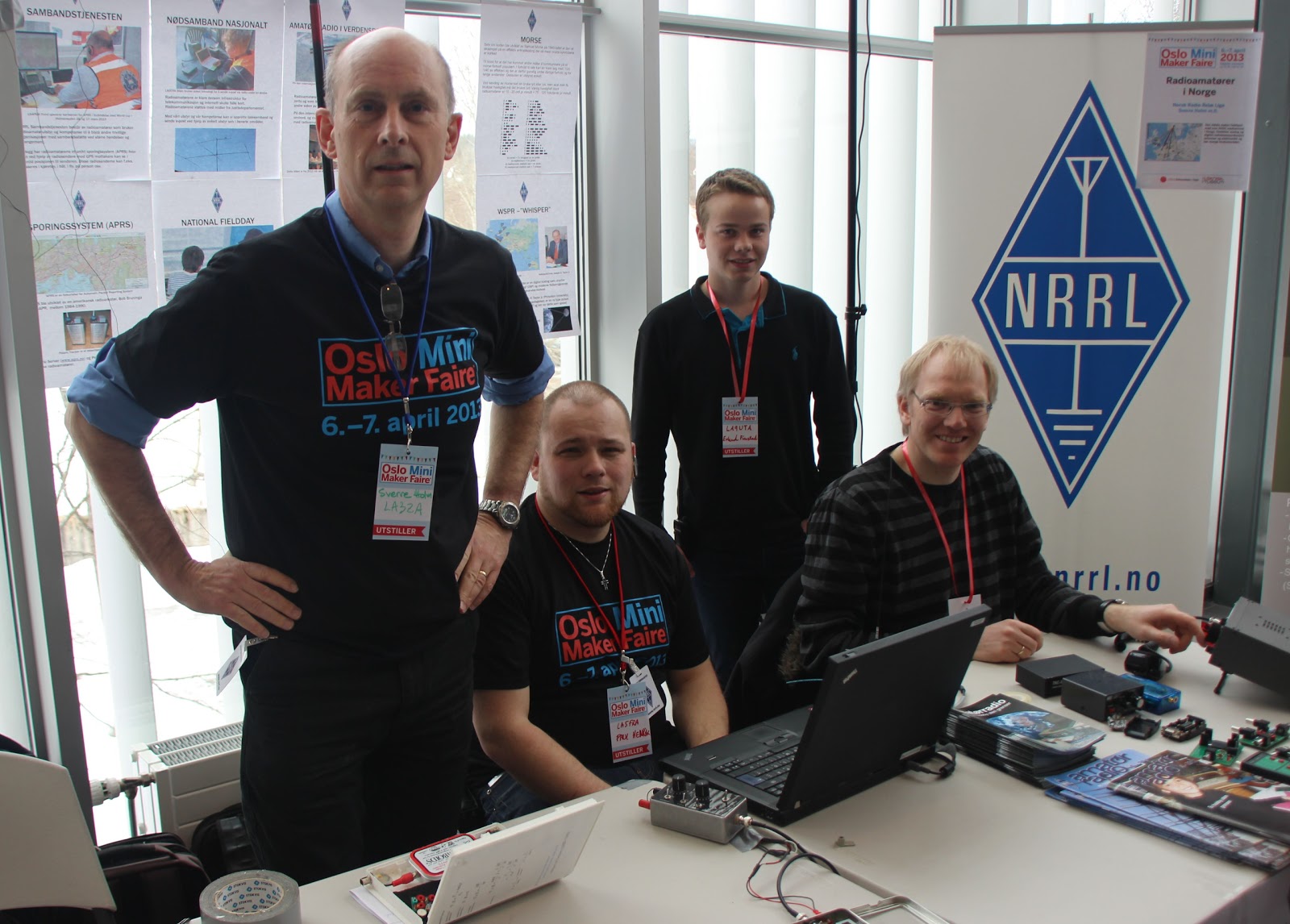 |
| LA3ZA, LA5FRA, LA9UTA and LA8OKA at the stand (photo LA5FRA) |
Our stand was only active on the first day, and it was manned by LA8OKA Martin, LA5FRA Paul Henrik, and LA9UTA Erlend in addition to me who served as the liaison to Oslo Mini Maker Faire since my employer, the Department of Informatics at the University of Oslo was a sponsor of the Faire. There was also a good deal of curious radio amateurs that stopped by during the day.
We had a couple of Elecraft K2’s, several home-brewed electronics projects, the possibility to send your own name in Morse code, and several posters that covered everything from emergency communications and APRS to radio amateurs on the space station.
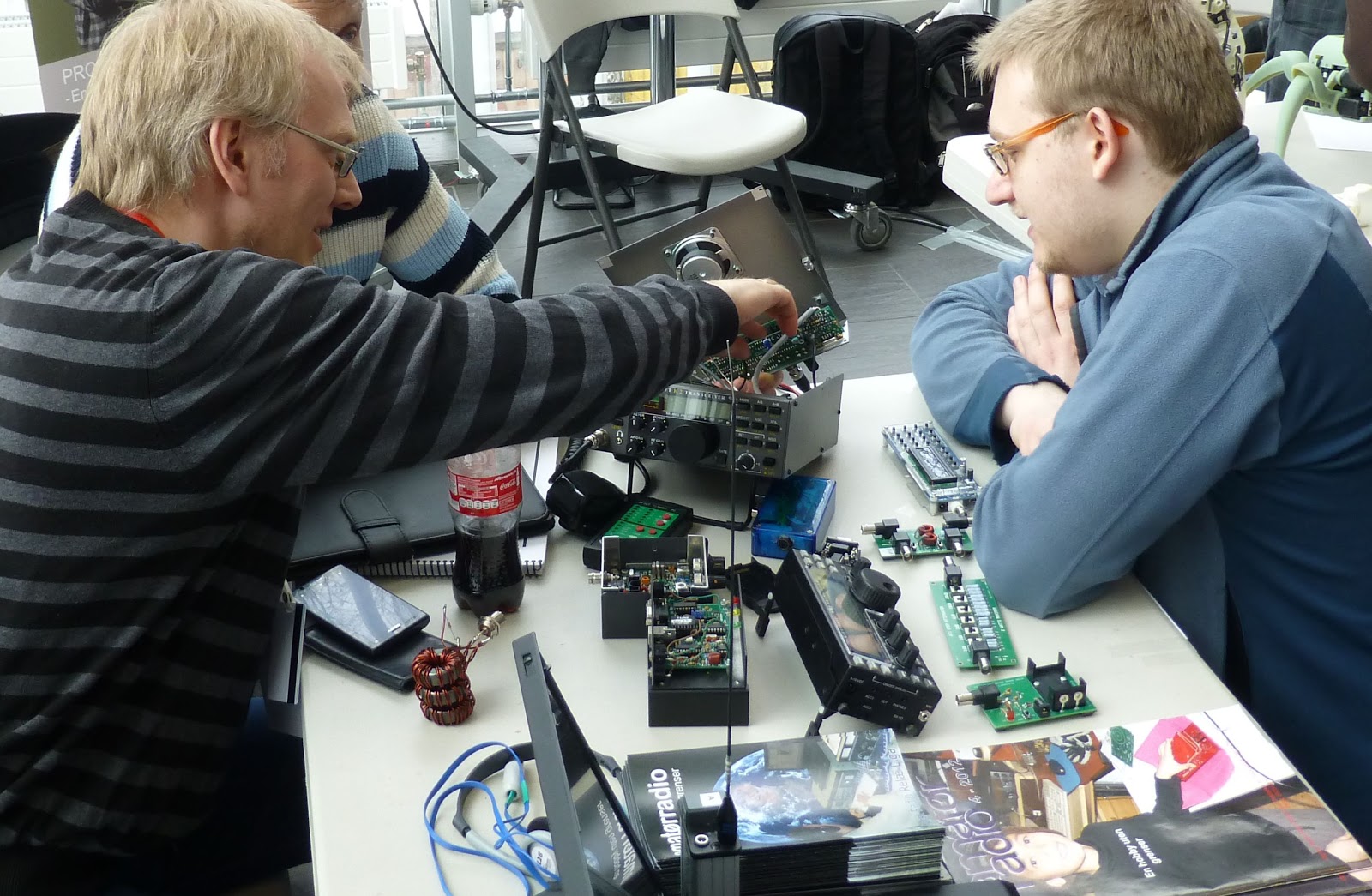 |
| LA8OKA explaining the innards of the K2 |
We also had a 0.15 W WSPR transmitter that we had hoped could transmit out through one of the large windows. The intention was that we could follow its reports on the internet, but there turned out to be too much metal in the window frames and the curtains so radio waves would neither enter nor exit – whether it was HF, VHF, or GPS-frequencies. Therefore we ended up explain the fascinating aspects of radio propagation from posters instead.
There was much interest in our stand, and many expressed that they found ham radio to be exciting. Several were also interested in ham radio courses. Among pan cake robots and other robots, 3D printers, Star Wars-enthusiast, computer gamers, 3D photo, advanced Lego builders and Norway’s largest smoke ring canon, this was finally a place where people like us with as nerdy an interest as radio felt quite normal.
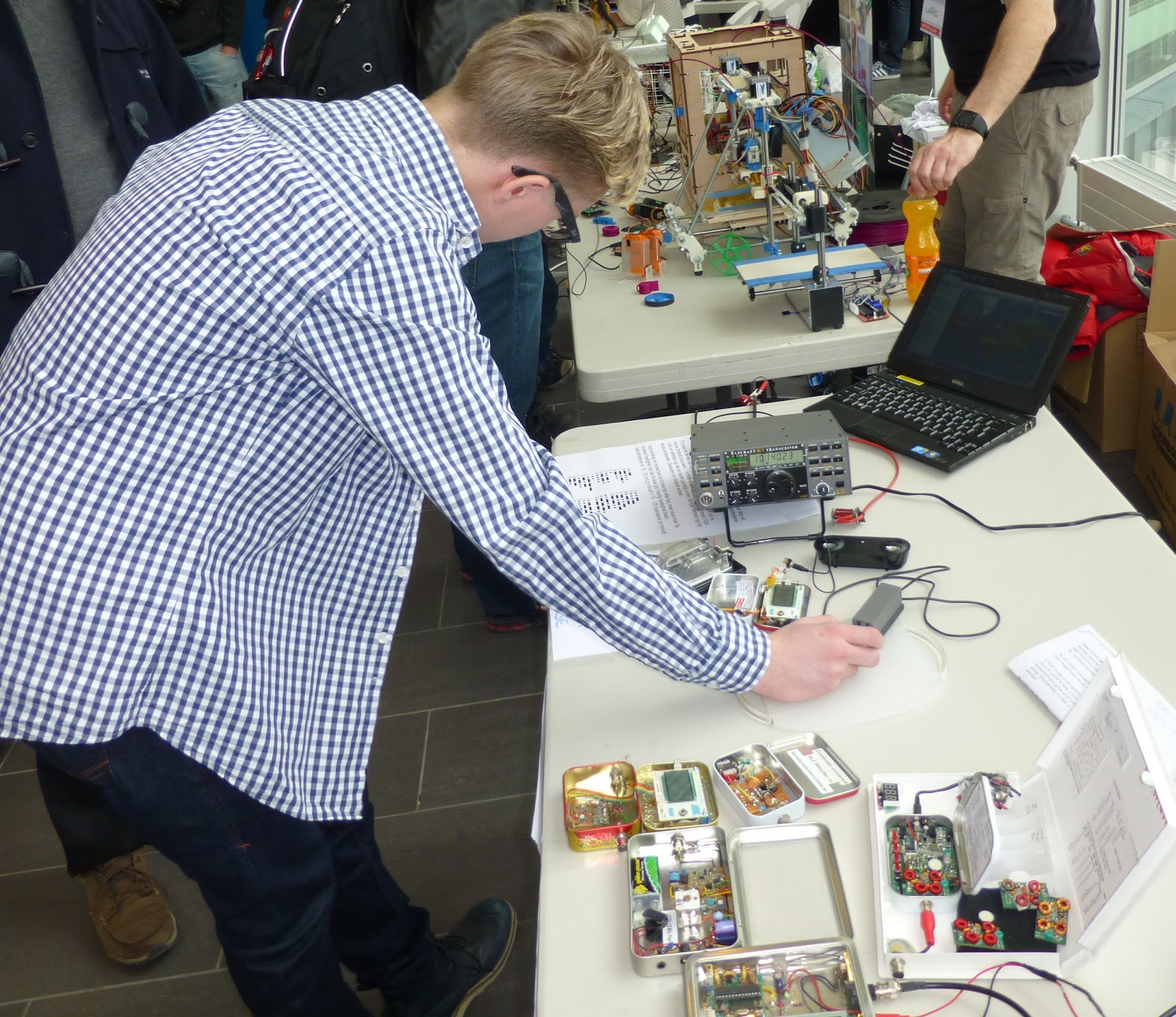 |
| Trying out Morse, in the background a 3D printer |
This was therefore a perfect place for radio amateurs to take part and since it most likely will be arranged again we should be prepared to take part next year also.
Sverre Holm, LA3ZA, is a regular contributor to AmateurRadio.com and writes from Norway. Contact him at [email protected].
Good-bye, old friend.
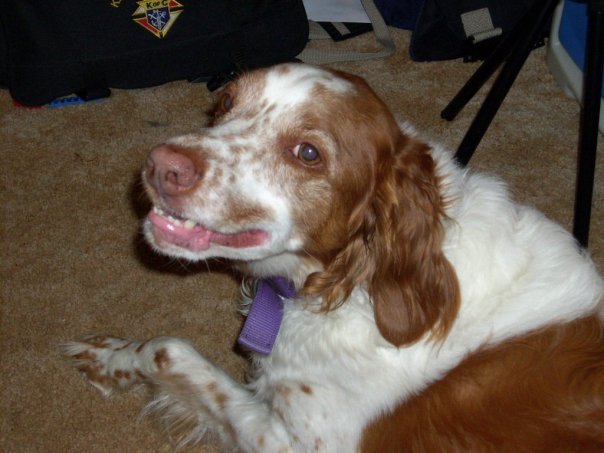
Larry Makoski, W2LJ, is a regular contributor to AmateurRadio.com and writes from New Jersey, USA. Contact him at [email protected].
WG2XPN 70MHz beacon heard in Europe
Via Dave, WW2R/G4FRE it was good to hear that yesterday, the WG2XPN 70MHz experimental beacon, run by Brian WA1ZMS was heard in Europe on 70.005.
The beacon was heard in GJ, I, DL and IS0 – at a distance of over 7300km. Jo, CT1HZE suggested that this could be as many 4 hops of Transatlantic Es.
Excellent DX!
Tim Kirby, G4VXE, is a regular contributor to AmateurRadio.com and writes from Oxfordshire, England. Contact him at [email protected].
 Ham Radio Deluxe |
 W5SWL Electronics |
 Ham Radio Prep |
 KB3IFH QSL Cards  Hip Ham Shirts  HamRadioAuctions HamRadioAuctions Reliance Antennas Reliance Antennas Enigma Shop Enigma Shop |  morseDX  Ni4L Antennas  R&L Electronics R&L Electronics antennas.us antennas.us QRV QRV |
- Matt W1MST, Managing Editor
